






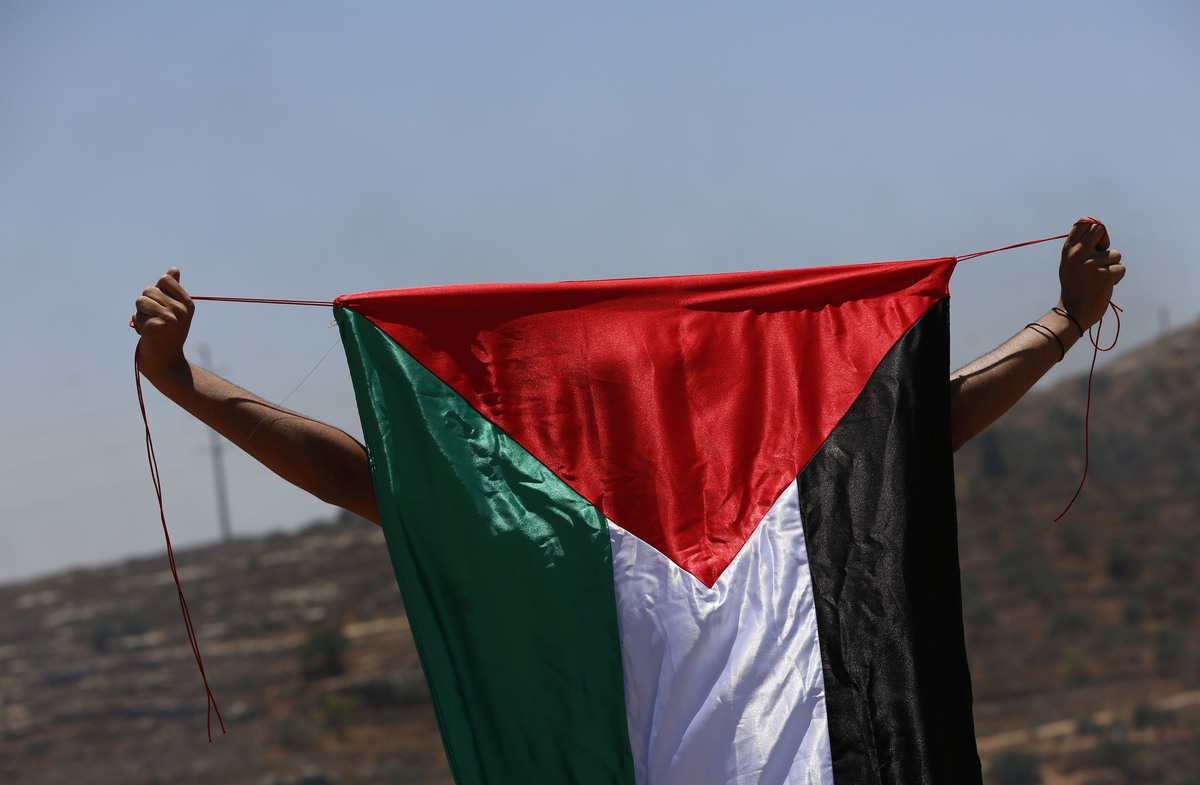
Dr. Tahseen Al-Asttal: The document presents a practical and applicable solution that requires a sincere commitment from all parties that places the supreme national interest above all other considerations.
Majed Hadib: The document will not achieve success because it was delayed too long and no longer meets the needs of the public, which no longer needs theorizing or lengthy texts.
Mohamed Gouda: Although the document came late, it could represent a serious opportunity to rebuild the political system amidst enormous challenges.
Dr. Jamal Harfoush: The proposed document has the potential to create a real impact if it is built upon politically, popularly, and media-wise.
Talal Okal: What distinguishes the current initiative is its timing, linked to the relative optimism surrounding the possibility of reaching an agreement to stop the war and manage the "day after."
Adnan Al-Sabah: The current Palestinian situation has become beyond the capacity of initiatives alone to resolve it. What is required is popular pressure on the parties to the division.
A group of national, political, academic, and trade union figures from the Gaza Strip are launching the Palestinian National Salvation Document today, Tuesday. The document aims to put an end to the 18-year-old division and unify Palestinian ranks in the face of the existential challenges threatening the national project, in light of the ongoing war of extermination the Palestinian people have been subjected to for nearly two years.
In an interview with "I," the initiative's initiators believe this document represents a comprehensive effort based on the Palestine Liberation Organization as the legitimate representative, calling for a sincere national commitment that places the supreme interest above all other considerations.
The document calls on the international community to shoulder its responsibilities to halt the war of extermination in Gaza, which poses an existential threat to the Palestinian people. It seeks to present a political and practical vision based on legitimate national rights and international law, while taking into account the reality of the suffering and the urgent need for rescue.
In separate interviews with "I," writers, political analysts, specialists, and university professors explained that the document emphasizes the necessity of national unity and ending the Palestinian division. However, it faces the challenges of chronic division, weak political will, and regional pressures. Despite its delay, it could represent an opportunity to build a unified political system if supported by popular mobilization and a strong will.
Meanwhile, some criticize the delay in issuing the National Salvation Document, which has been delayed for years due to division and a devastating war in Gaza, amid the silence of intellectual elites.
Unifying ranks to face fateful challenges
Dr. Tahseen Al-Astal, head of the media committee and spokesperson for the Palestinian National Salvation Document and deputy head of the Palestinian Journalists Syndicate, affirmed that an active group of national, political, academic, union, popular, and social figures from Palestinian civil society are launching a Palestinian National Salvation Document from the Gaza Strip today, Tuesday, in an attempt to end the Palestinian division and unify ranks in the face of the fateful challenges threatening the Palestinian national entity and existence.
Al-Astal explains that the document calls on the international community to assume its legal and moral responsibilities and exert immediate pressure to halt the genocidal war being waged against the Palestinian people in the Gaza Strip, which has become an existential threat to the Palestinian people and their just national project.
Al-Astal emphasized that the document represents a new political launch with a clear vision that meets the aspirations and sacrifices of the Palestinian people. It is based on legitimate national rights and legitimacy, as represented by the Palestine Liberation Organization (PLO), and is grounded in international law and agreements, while taking into account the reality of suffering and the urgent need for salvation and rescue.
Al-Astal points out that the document does not replace any national or political component, but rather represents a comprehensive effort aimed at achieving comprehensive Palestinian consensus, putting an end to the state of division that has persisted for more than 18 years, and working to unify Palestinian ranks in the battle for reconstruction and unify all national energies to confront current challenges.
A political and practical vision that takes into account the dimensions of the painful reality
Al-Astal asserts that the document's primary objective is to present a political and practical vision that takes into account all aspects of the painful reality experienced by the Palestinian people and the existential threats targeting their existence and national entity, represented by the Palestine Liberation Organization (PLO), as the sole legitimate representative of the Palestinian people.
Al-Astal points out that the document is the result of in-depth discussions and debates among a large number of national, trade union, and academic figures, who presented their visions and agreed on a formula that meets the minimum aspirations of all components of the Palestinian people.
Al-Astal explains that these figures are presenting the document in their personal and corporate capacities, but they wield broad influence at various levels. He emphasizes that the document is based on the Palestinian National Independence Document, the Palestinian National Charter, and the Palestinian Basic Law.
Regarding the timing of the document's release, Al-Astal explained that the continued international impotence and silence in the face of the ongoing massacres perpetrated by the Israeli occupation in the West Bank, Gaza Strip, and Jerusalem, which threaten the very existence of the Palestinian people on their land and target their entire national project, necessitated the release of the document to protect whatever can be salvaged from this just national project. He called for an end to the internal disputes that have drained the Palestinian people over the long years of division and served the occupation without compensation.
Putting the supreme national interest above all else
Al-Astal explained that the Israeli occupation and its extreme right-wing government are constantly working to entrench and perpetuate divisions, undermining the unity of the Palestinian people and tearing them apart. He emphasized that the document presents a practical and applicable solution that requires a sincere commitment from all Palestinian parties that places the supreme national interest above all other considerations.
Al-Astal affirms that the document considers the Palestine Liberation Organization to be the legitimate, unifying body for all Palestinians, and that it is the basis for any comprehensive national action.
Regarding the document's work program, Al-Astal indicated that it will be presented to the Palestinian media and community on Tuesday, and will be widely disseminated among the Palestinian people. It will also be sent to President Mahmoud Abbas and to all Palestinian factions without exception, in recognition of the role, sacrifices, and political programs of these factions, which are respected by those who drafted the document.
Al-Astal stresses the need for all programs to be based on the commitments of the Palestine Liberation Organization, international law, and international conventions and norms.
Al-Astal affirms that popular participation is a key element in the document's success, calling for the use of all forms of popular pressure to ensure the document's adoption at all official and popular levels. He recalls the popular movements witnessed in the Gaza Strip and other Palestinian territories on March 15, 2011, to demand an end to the division, which were circumvented and confiscated in favor of continuing the division.
An initiative from the midst of death, destruction and pain
Al-Astal asserts that the document emerged from Gaza, from the heart of destruction and pain, carrying a message of hope and strength to the entire nation, and that it places the people and the nation above all other considerations.
Al-Astal emphasized that the next steps are clear and include the implementation of a practical and organized action plan to ensure the document's dissemination and popular support, while continuing to pressure for its official adoption. He added that the document's success hinges on the Palestinian people's awareness and serious participation in protecting the national project and holding accountable anyone who ignores these crucial efforts.
Al-Astal points out that the document presents a clear plan to answer many questions and establishes practical foundations for implementation on the ground if the popular and official wills converge around it.
Al-Astal asserts that this historic moment calls for serious consensus and unity behind a clear political project that guarantees the Palestinian people their right to freedom, construction, and reconstruction. He adds that despite the pain, Gaza has proven its ability to offer a new vision, leadership, and hope.
The "National Rescue" initiative is too late.
For his part, writer and political analyst Majed Hadeeb asserts that the National Salvation Document initiative comes at a very late date, particularly after two years of devastating warfare against the Palestinian people in the Gaza Strip, which has resulted in the deaths and displacement of thousands. Furthermore, it comes after more than 18 years of political division that has left the Palestinian people in a state of confusion and disarray.
Hadib believes that the intellectual, cultural, media, and academic leaders behind this document could have put forward similar initiatives during the years of division, or even at the beginning of the ongoing war. However, they remained silent despite the Palestinian people's repeated calls for action and solutions to save what can be saved.
He stressed that the document currently being proposed will not achieve success because it was too late and no longer meets the needs of the Palestinian public, which no longer needs theorizing or lengthy texts, but rather urgent and decisive decisions.
We need real leaders from among intellectuals and academics.
Hadeeb explains that the current document calls for restoring national unity and forming a unity government, but these demands have been overtaken by accelerating events, and Palestinians no longer have the luxury of time to wait for them to be discussed or amended before launching them as an action plan. Hadeeb warns that maintaining the status quo will give the Israeli occupation, led by Netanyahu, an opportunity to implement its plans for displacement and genocide.
Hadib believes that the Palestinian people will not succeed in changing the status quo without genuine leaders, including intellectuals, academics, and prominent figures, who can serve as a beacon to guide young people and chart the path to restoring the Palestinian cause to its Arab and international stature and protecting what remains of the people's existence on their land.
The release of the document comes at a pivotal historical moment.
For his part, writer and political analyst Mohammed Joda asserts that the release of the "National Salvation Document" comes at a pivotal historical moment for the Palestinian cause, given the ongoing aggression, genocide, and unprecedented ethnic cleansing in the Gaza Strip, which pose a real existential threat to the Palestinian people and their national project as a whole.
Joudeh explains that the timing of the document's release is doubly important due to the deep political divisions among Palestinian factions, which hinder any unified national effort and weaken the Palestinians' ability to address the international community with a unified position that reflects their sacrifices and legitimate rights.
Joudeh asserts that the loss of trust between Palestinian citizens and their leadership institutions, coupled with the worsening political vacuum, has created an urgent need for unified national initiatives that adopt a comprehensive vision to reorganize the Palestinian internal affairs and give Palestinians hope that they can overcome the crises.
Joudeh points out that accelerating regional and international transformations may impose solutions on Palestinians that are inconsistent with their aspirations. This calls for a unified Palestinian position that protects national rights and rejects any external dictates that undermine fundamental principles.
He describes the document's quality as a "cry for national salvation," although it comes late. However, it could represent a serious opportunity to rebuild the Palestinian political system on the foundations of unity, partnership, and comprehensive national legitimacy, amidst formidable challenges.
Challenges that threaten the document's ability to achieve its objectives
On the other hand, Joudeh warns of a number of challenges that threaten the document's ability to achieve its goals, most notably the chronic division between Fatah and Hamas, which remains an obstacle to any comprehensive national project. He also notes the skepticism and misgivings among some political forces, who may view any new national initiative as an alternative or competitor to the existing leadership, weakening the chances of a successful outcome.
Joudeh asserts that regional and international pressures may seek to thwart any independent Palestinian project that does not align with their agendas. This is compounded by the weakness of civil society institutions, whose influence is declining, as well as the complex situation on the ground in the Gaza Strip, which makes it difficult to organize the popular and mass movement required to ensure the success of the document and end the division, given the ongoing bombing, siege, and destruction.
However, Joudeh believes the document has a real chance of making a tangible impact if it gains broad popular support, reflecting the Palestinians' urgent need for national unity and a unified political discourse. He emphasizes that its success depends on transforming it into a concrete program of action that goes beyond slogans and statements to offer practical solutions that can be implemented on the ground.
Joudeh explained that the required steps for the next phase include launching a comprehensive national dialogue involving all factions, forces, and social groups to discuss the document and develop its provisions, in addition to forming a national consensus body to monitor the implementation of the document's provisions, which includes representatives from the various components of the Palestinian people.
Joudeh stresses the need to link the document to a clear strategic vision for renewing the Palestinian national project and activating the PLO's role as an umbrella organization for all Palestinians. He also emphasizes the need to mobilize the necessary regional and international support for the document and present it as a unified position to the world. He also emphasizes the need to leverage it as a real pressure tool on the leadership and factions to engage seriously in ending the division and achieving comprehensive national unity.
Joudeh asserts that the document represents an important opportunity to attempt to break out of the current dire Palestinian reality. However, it requires, above all, a sincere national will, broad public participation, and a serious political commitment from all parties to transform it from a mere initiative into a tangible reality that transforms the entire Palestinian landscape.
The timing carries deep strategic and national connotations.
For his part, Professor Dr. Jamal Harfoush, Professor of Scientific Research Methods and Political Studies at the University of the Academic Research Center in Brazil, stresses that the release of the "National Rescue Document" at this particular time carries profound strategic and national implications. He believes that it comes at a critical moment for the Palestinian cause, amid a systematic genocidal war being perpetrated against the Palestinian people in the Gaza Strip, an unprecedented political deadlock, and an internal division that has weakened the national structure and undermined popular confidence in existing institutions.
Harfoush asserts that this document represents a collective cry of conscience in the face of the division, hesitation, and inaction that have plagued the Palestinian reality for years. He emphasizes that Palestinian unity is no longer a political option that can be negotiated, but rather has become an existential necessity that protects the Palestinian people and their national project from attempts at liquidation and marginalization.
Harfoush explains that the document's challenges are numerous and complex, foremost among them the resistance of forces benefiting from the ongoing division, who reject any comprehensive national project that might redirect the compass from maintaining an illusory authority to a genuine liberation project. He also notes the weak political will of some Palestinian elites and the absence of binding mechanisms that would transform the document from a mere declaration of intent into a practical, implementable plan.
Intersecting agendas at the expense of Palestinian rights
Harfoush asserts that the complexities of the regional and international situation are exacerbating the situation, as multiple agendas intersect at the expense of Palestinian national rights, and external pressures are being used to deepen the division and weaken any serious efforts to heal the national rift.
Despite this, Harfoush emphasizes his belief that the document has the potential to have a real impact if it is built upon politically, popularly, and media-wise. He asserts that its value lies in its being more than just a theoretical text, but rather a true embodiment of a popular will that transcends factions and narrow calculations, and stems from the depths of national suffering.
Harfoush points out that this impact will not be achieved automatically, but rather requires courageous practical steps, most notably the adoption of the document by unifying national authorities, foremost among them the Palestine Liberation Organization, subjecting it to a comprehensive public debate, and forming an independent follow-up committee comprised of national figures known for their integrity and competence, tasked with transforming the document's provisions into a workable, executive roadmap.
Harfoush calls for activating peaceful, civil popular pressure to enforce the document, particularly on the factions and political forces that have long hesitated to leave the divide. He also calls for presenting the document to the international community as a responsible Palestinian initiative that affirms the Palestinians' seriousness in rebuilding their unity and representative institutions.
Harfoush stresses the importance of launching a comprehensive media, educational, and awareness program that will deepen the document's presence in the collective Palestinian consciousness and transform it into a national covenant document that everyone can rally around. He asserts that the document is not the end of the road, but rather a new beginning for a true national salvation project that requires everyone to take a step forward toward the homeland, far removed from narrow factional and personal interests.
Initiatives that do not influence Palestinian decision-makers
Writer and political analyst Talal Okal asserts that launching national initiatives to achieve Palestinian reconciliation is nothing new, noting that this isn't the first time such initiatives have been announced. While they express responsibility and national sentiment, they unfortunately have had no real impact on Palestinian decision-makers.
Awkal believes the timing of releasing such a document is always appropriate, especially given the critical circumstances the Palestinian people are experiencing. However, what distinguishes the current initiative is its specific timing, linked to the relative optimism among some regarding the possibility of reaching an agreement to stop the war. This could later open the door to serious consideration of the question of the "day after," particularly the need to activate the Palestinian role in managing its own affairs and prevent gaps that could be exploited by other forces, including the Israeli occupation.
Awkal explains that such responsible national initiatives express the conscience of Palestinian public opinion and its aspirations to end the division and achieve internal reconciliation. However, in reality, they have failed over the past years to effect any real change at the level of Palestinian decision-makers. Otherwise, the internal Palestinian situation would be radically different from what it is today.
Awkal believes that despite the sincerity of intentions and the multitude of mechanisms tested over many years, tangible results will remain dependent on the unfolding developments on the ground in the Gaza Strip and the repercussions of this war, which will cast a shadow over the entire Palestinian cause and its future. He asserts that any internal efforts will be fruitless unless they are supported by genuine changes to the political equation and facts on the ground.
Initiatives and documents alone will not work.
For his part, writer and political analyst Adnan Al-Sabah asserts that the scale of the humanitarian and tragic catastrophe facing the Palestinian people everywhere has surpassed the limits of traditional solutions, emphasizing that initiatives and documents alone will be ineffective unless they are transformed into real action on the ground.
Al-Sabah explains that the most severe situation today is represented by the ongoing killing, destruction, and massacres that Palestinians in the Gaza Strip are experiencing. However, the tragic reality is not limited to Gaza alone, but extends to Palestinians abroad and in the diaspora, who are exposed to harsh conspiracies, especially in Syria and Lebanon. Palestinians in the territories occupied in 1948 also face a crisis of organized gangs and organized crime, while Palestinians in the West Bank live under the burden of the settlement onslaught, the policy of Judaization, and the seizure of land in its most heinous forms.
Al-Sabah points out that all these accumulated challenges render any documents, papers, or initiatives merely a repetitive attempt that will fail to achieve the desired results unless they are translated into practical steps. He recalls that the Palestinian people have historically suffered from numerous divisions, and that the current division, which has been ongoing for two decades, is being managed today, with no serious efforts being made to end it, despite the signing of numerous agreements in various parts of the world, without any actual consensus being achieved.
Real popular pressure is required.
Al-Sabah asserts that the current Palestinian situation has become beyond the capacity of initiatives alone to resolve, emphasizing that what is required today is genuine popular pressure and effective field action that will force all parties to the division to return to the common national square—the square of the people, the cause, and the homeland—and to the reality of the blood flowing like rivers in Gaza, and the hunger, the remains, and the destruction that has affected all aspects of life.
Al-Sabah stresses that these initiatives are necessary, but they will remain merely formal unless the masses take action to pressure the parties that created the division and are perpetuating it at the expense of the original cause and the rights of the Palestinian people. He calls on everyone to return to the people's side, away from the narrow factional considerations that have brought the Palestinians to this painful reality.




Share your opinion
The National Rescue Document: A Message of Hope or a Repetition of the Repeated?