





Dr. Khalil Tafakji: The Israeli government is pushing the settlers to the forefront as an "executive tool" without taking direct responsibility before the international community.
Abdullah Abu Rahma: Settler attacks are taking place according to an organized and systematic plan, in implementation of the "decisive plan," and displacement has begun with the Bedouins and is expanding to the villages.
Abdul Hadi Hantash: What is happening resembles a "rolling snowball," and the next phase portends a greater escalation in the West Bank, given the collusion between the army and the settlers.
Dr. Saeed Shaheen: The settlers' rampage and crimes are part of a settlement plan sponsored by the right-wing government to force Palestinians to emigrate, fearing a "bloodbath."
Samir Anabtawi: What is happening is in line with a plan to transform the conflict in the West Bank from a liberation struggle for a people groaning under occupation to a "civilian" struggle between Jews and Arabs.
Imad Musa: Netanyahu's clear goal in this escalation is to appease the extremist settlers to ensure his continued rule and regain his strength at the ballot box.
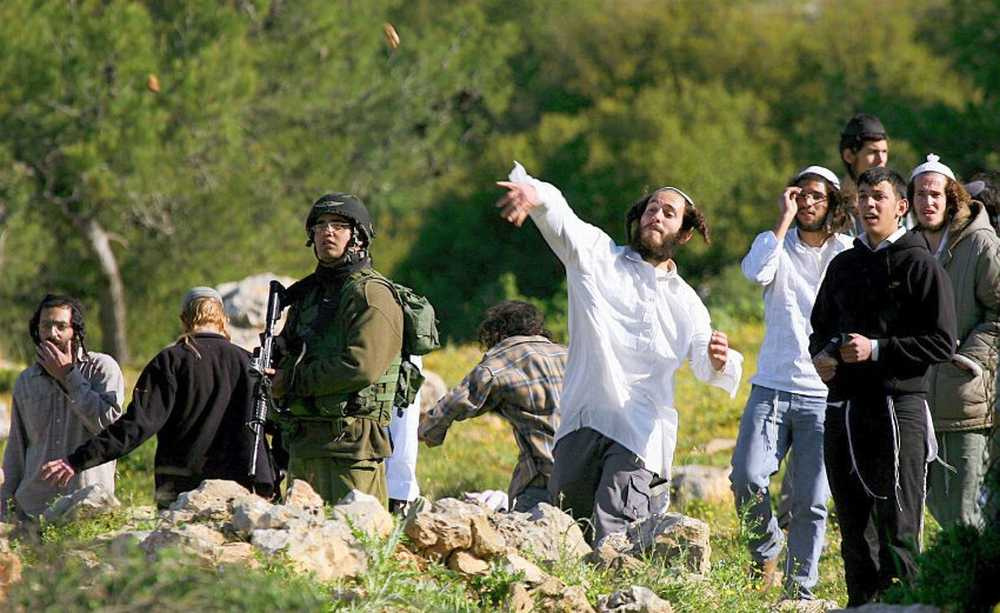
The West Bank is witnessing a dangerous escalation in settler attacks, which have targeted numerous villages and towns in recent days, particularly those east and north of Ramallah. There are fears that these attacks will escalate systematically, forcing residents to emigrate.
In separate interviews with "I," officials, experts, writers, and political analysts say that settlers are being used as an executive tool to advance Israeli occupation plans aimed at annexing lands and displacing their original owners, without bearing direct responsibility before the international community.
They point out that this policy, which is based on incitement, protection, and financial support, reveals the true face of a colonial settlement project seeking to impose new facts on the ground. Attention is now focused on war crimes in Gaza. This escalation is accompanied by a wave of bloody attacks targeting villages and Bedouin communities in the West Bank, where killing and forced displacement have become clear means of forcing Palestinians to leave their lands for the benefit of settlement expansion.
In light of these developments, officials, experts, and writers believe that the current phase requires urgent Palestinian action to reorganize its ranks, unify popular and official efforts, and expose these crimes at the Arab and international levels. This will ensure the survival of threatened communities and strengthen their resilience in the face of the displacement and settlement machinery that threatens both the land and the people.
517,000 settlers in the West Bank and 235,000 in Jerusalem
Settlement expert Dr. Khalil Tafakji asserts that Israel's settlement policy in the West Bank clearly relies on settlers as an instrument of implementation for the settlement project, with direct support from the Israeli military. This is done to circumvent international pressure and appear unofficial in its repression and displacement operations.
Tafakji explains that the Israeli government is pushing the settlers to the forefront as an "implementing tool" for its annexation policies and the emptying of the land of its indigenous inhabitants, without the government itself bearing direct responsibility before the international community.
Tafakji points out that the number of settlers in the West Bank has increased from approximately 115,000 at the time of the signing of the Oslo Accords to more than 517,000 today, in addition to approximately 235,000 settlers in Jerusalem, reflecting the significant expansion of settlement projects.
Tafakji points out that this increase did not come about by chance, but rather is an extension of the Matityahu-Drobles plan, which was developed in 1979, with the goal of bringing the number of settlers in the West Bank to one million.
Tafakji asserts that this policy is not limited to settlements alone, but also includes killings, assaults, and forced displacement. He believes that the ethnic cleansing of Bedouins in the West Bank is part of a plan to gather Palestinians into isolated cantons with the aim of tightening Israeli control over more than 60% of the West Bank.
A great danger threatens the Bedouin existence
Tafakji points out that there is a significant threat to the Bedouin presence in the targeted areas, as efforts are underway to concentrate the Bedouin in specific areas, serving the Israeli plan to reduce the area within which the Bedouin can move and gain complete control over their lands.
Tafakji expresses his deep regret for the delay in Palestinian action to support these Bedouin communities, whether financially, politically, or even in terms of media coverage. He emphasizes that the Khan al-Ahmar experience represents a rare example of the success of popular and international pressure, which led to its recognition as an existing village, rather than as a nomadic Bedouin community, while retaining its lands.
Tafakji calls for official Palestinian recognition of these villages as existing residential units with local authorities, and for them not to be treated as mere Bedouin communities. This would open the door to a repetition of the displacement scenario experienced by Palestinian villages within the 1948 territories, which were only recognized after long years of struggle and popular and international pressure.
Tafakji asserts that confronting this policy requires a clear political decision that supports the Bedouins' survival, strengthens their resilience, protects their lands from confiscation, and prevents the annexation of more of them to the settlements and outposts that are consuming Palestinian land day after day.
Israeli policy has gone through gradual stages.
For his part, Abdullah Abu Rahma, director of the Popular Action Department at the Wall and Settlement Resistance Commission, asserts that the escalating attacks carried out by settlers in the West Bank are being carried out according to an organized and systematic plan, aimed at displacing or killing Palestinians, in implementation of what their extremist leader, Bezalel Smotrich, has dubbed the "decisive plan."
Abu Rahma explains that the essence of this plan is based on imposing three options on Palestinians: either forced departure, remaining a servant of the occupation, or being killed. Facts on the ground prove that the only two options being implemented are displacement and killing. There is no room even for the idea of turning Palestinians into servants, because the settlement project is based on the complete erasure of Palestinian existence.
Abu Rahma points out that this policy has gone through gradual stages, beginning years ago with intimidation campaigns, racist slogans, arson attacks, and assaults. It then moved to silently targeting Bedouin communities, with 32 Bedouin communities displaced since October 7, 2023, without any adequate response. They exploited the world's preoccupation with the genocidal crimes in Gaza. He noted that these Bedouin communities were the beginning, and that the targeting is being expanded to include villages.
A dangerous bloody escalation by the settlers
Abu Rahma explains that the current phase is witnessing a more dangerous bloody escalation, with villages being directly targeted, as happened recently in Kafr Malik, Al-Mazra'a Al-Sharqiya, and Sinjil. These attacks were carried out by heavily armed settlers, under the protection of the Israeli army, with the aim of spreading terror, breaking the will of Palestinians, and forcing them to leave their land.
Abu Rahma asserts that the international community's silence and the inaction of some institutions have encouraged the settlers to persist in their attacks, which now directly confront the landowners, who have no choice but to believe in their right and their will to defend their ancestral land.
Abu Rahma stresses the need to unify Palestinian efforts across all components and escalate organized popular action within a comprehensive national plan. He also emphasizes the need to not limit ourselves to mere reaction or defense, but rather to engage in activities and initiatives that undermine settler attacks.
Abu Rahma asserts that the Bedouin communities that were silently displaced were a lesson to be learned, calling for not leaving villages alone to face the attacks of settler militias. He points out that the Commission and the Popular Protection Committees are working with all their might to provide the elements of steadfastness, but that this is insufficient in the face of the scale of the onslaught. What is required is a unified national effort that goes beyond individual and institutional action and establishes a comprehensive resistance plan that will halt the plans for displacement and the liquidation of the Palestinian cause.
Settler attacks are not random events.
For his part, Abdul Hadi Hantash, an expert on land and settlement affairs, asserts that the crimes committed by settlers in the West Bank are not random incidents, but rather represent a fundamental pillar of the Israeli occupation's objectives. He points out that the settlers are an arm of the occupation government, which employs them as a primary tool to implement its annexation and displacement projects, emptying the land of its indigenous inhabitants.
Hantash explains that the brutality of today's settlers is nothing new, but rather an extension of the approach of the armed Zionist organizations that practiced displacement and murder against the Palestinian people in 1948. Although the names differ, the primary goal remains the same: seizing as much Palestinian land as possible for the benefit of the settlement project.
Hantash asserts that the occupation authorities not only turn a blind eye to these crimes, but also provide them with official cover, in addition to direct government support. This includes supplying settlers with weapons and providing them with daily protection during their raids on villages and roads and attacks on Palestinians. Furthermore, huge budgets are allocated to these settler organizations to assist them in implementing pre-planned plans.
The occupation deploys additional combat units in the West Bank.
Hantash points out that what is happening in the West Bank today resembles a "rolling snowball," with increasing escalation. The more these crimes continue to unfold, the greater their scope and scope, amidst the occupation's policy of multiplying attacks through collaboration between the army and settlers, thus achieving the strategic goal of annexing large swaths of Palestinian land and emptying them of their inhabitants.
Hantash points out that the occupation has recently intensified the deployment of additional combat units in the West Bank, confirming that there are new plans being implemented, similar to the destruction and mass killings that took place in the Gaza Strip. He cites what is happening today in the Palestinian refugee camps, which are being subjected to fierce attacks similar to those carried out in Gaza, with the aim of breaking the will of the Palestinians and pushing them to leave. This is a tactic that is being repeated by the tool used by the Israeli occupation government: the settlers.
Hantash warns that the coming phase portends further escalation in the West Bank, given this collusion between the army and the settlers. He stresses the need to expose these schemes to the world and put an end to this policy that targets the Palestinian presence on their historic land.
The right-wing government sponsors settler violence.
For his part, Dr. Saeed Shaheen, a professor of political media at Hebron University, warns of the danger of Israeli society's drift toward fascism and racism, particularly among colonial settlers sponsored by the state and protected by the far-right government and bloody religious Zionism. He asserts that this dangerous slide reinforces the deeply held belief among Palestinians that achieving a just peace with these "savages," backed by Israeli government ministers and security and military leaders, has become nearly impossible.
Shaheen points out that the settlers' rampage and crimes are part of a settlement plan sponsored by the right-wing government to force Palestinians into forced migration, which will lead to a bloodbath similar to what is happening in Gaza.
Shaheen explains that the systematic criminal behavior perpetrated by settlers against Palestinians in the West Bank and East Jerusalem now aims to create a terrifying and repellent environment for the indigenous inhabitants of these areas. This is prompting Palestinians to seriously consider defending themselves by all available legitimate means, even as the far-right government continues to give the green light to carry out premeditated attacks within a clearly defined plan.
A dangerous settlement approach parallel to the atrocities in Gaza
Shaheen points out that this plan seeks to force Palestinians to emigrate from their lands, through intensified attacks, harassment, and terrorizing them, in a blatant attempt to implement biblical settlement projects to impose a new reality based on the construction of a so-called "Greater Israel" devoid of Palestinian presence, especially in Areas C and B of the West Bank, with the aim of stifling the Palestinian dream of establishing a viable independent state and ending any chance of implementing the two-state solution principle. He warns that this dangerous settlement approach runs parallel to the atrocities being committed in the Gaza Strip, but with different methods and tools to achieve the same goal.
Shaheen calls for the creation of a unified Palestinian front capable of confronting this critical phase, by forming a comprehensive national framework under the umbrella of the new Palestine Liberation Organization (PLO), which must embrace all Palestinian forces without exception, within common national denominators that guarantee unity and prevent further divisions.
Shaheen asserts that the escalation of settler attacks and the absence of international protection could push the situation in the West Bank and Jerusalem into a bloodbath similar to what is happening in Gaza, unless neighboring countries and the international community intervene to heed President Mahmoud Abbas's calls for urgent international protection for the Palestinian people.
Shaheen believes that reforming the Palestinian political system and developing a unified struggle strategy are among the most important steps toward confronting the displacement and ethnic cleansing projects implemented by the occupation government and its settlers.
Settler attacks under official Israeli sponsorship
Writer and political analyst Samer Anabtawi says that the brutality perpetrated by settlers in the West Bank did not come as a surprise. Rather, it was anticipated and pre-planned by the extremist Israeli political and security leadership, which directly supports the settlement presence and its expansion by supplying settlers with weapons, training, and money, in addition to providing them with protection during their repeated attacks on external roads and Palestinian villages surrounding the settlements.
Anbatawi asserts that the recent bloody attacks, including the killing of three young men in the village of Kafr Malik, east of Ramallah, and the killing of two other young men a few days ago in Mazra'a al-Sharqiya, north of Ramallah, are part of this systematic plan to support settlements and impose a reality that makes life difficult for Palestinians and forces them to emigrate and leave their lands.
Anbatawi explains that this policy falls within the framework of the Israeli political project aimed at transforming the conflict in the West Bank from a liberation struggle for a people groaning under occupation into a mere "civilian" conflict between Jewish and Arab citizens, as stated in Israeli military statements, which described the recent settler attacks on the town of Kifl Haris as "clashes between civilians," when in reality they were armed attacks by extremist settlers against defenseless Palestinian villages, under the protection of the same army.
American sponsorship and international and Arab silence
Anbatawi points out that what is happening today in the West Bank is occurring in parallel with the war of extermination being waged in the Gaza Strip, with the flames of Gaza covering up the displacement and destruction of the Palestinian presence being planned for the West Bank under American sponsorship and international and Arab silence. He emphasizes that this plan did not begin after October 7, 2023, but was already prepared in advance and was temporarily reduced in intensity with the outbreak of the war, only to return today with greater force as the Netanyahu government and extremists like Ben-Gvir and Smotrich seek to exploit the moment.
Anabtawi warns that the current settlement project aims, in practice, to annex approximately 61% of the West Bank and place the remainder into isolated cantons, as a prelude to subsequent comprehensive annexation and the complete elimination of the historical Palestinian presence. This brings to mind the 1948 Nakba, but in a new and more comprehensive form.
Anbatawi calls for confronting this project by rebuilding Palestinian power through ending the division, unifying ranks, and strengthening the Palestinian internal front politically, economically, and security-wise. He also calls for exposing these schemes to the world and garnering popular and international legal support to confront the annexation and displacement plans. He emphasizes that this project targets all of Palestine, from the river to the sea, and extends regionally to achieve Israeli security, political, and economic hegemony over the entire region.
Genocide and ethnic cleansing in the West Bank in a deliberate manner
In turn, writer and political analyst Imad Musa warns that Benjamin Netanyahu's far-right government is proceeding with its strategy of expanding settlements and practicing genocide and ethnic cleansing in a slow, deliberate manner, without attracting the attention of the international community, which is currently preoccupied with the genocidal crimes in Gaza.
Musa explains that the occupation never halted its settlement activities before October 7, 2023. Rather, their pace intensified after the outbreak of the war, as the Israeli government succeeded in distracting the international community from what was happening in Gaza while simultaneously working to consolidate settlement projects and Judaize more Palestinian lands in the West Bank.
Musa points out that Netanyahu's clear goal in this escalation is to appease the extremist settlers on whom he relies for his political alliance, ensuring his continued rule and regaining his power at the ballot box in the future. He notes that this plan will escalate further with any potential ceasefire agreement in Gaza.
Warning against repeating the scenario of the Dawabsheh and Abu Khdeir families
Musa asserts that the West Bank, particularly Palestinian villages and camps, will witness systematic destruction in the coming period, in a blatant attempt to undermine the right of return, erase the refugee issue from international political and legal memory, and implement colonial settlement plans.
Musa links this to the systematic attacks on the United Nations Relief and Works Agency for Palestine Refugees (UNRWA), which has been given the green light by settlers to engage in further violence against villages adjacent to the settlements.
Musa warns against a repeat of the previous arson attacks perpetrated by settlers against the Dawabsheh family in the village of Duma, south of Nablus, and the burning of the child Mohammed Abu Khudair in Jerusalem. He asserts that the lack of accountability has encouraged settlers to adopt this terrorist approach as a means of terrorizing Palestinians and forcing them to leave their land.

PALESTINE
Mon 14 Jul 2025 12:32 pm - Jerusalem Time
Settlers Escalate...Decisive Plan of Fire and Blood
Tags
MORE FROM PALESTINE

Share your opinion
Settlers Escalate...Decisive Plan of Fire and Blood