





Muhammad Abu Allan: The greatest influence on the course of negotiations at this stage comes from the US president more than the resistance operations themselves.
Shadi Al-Sharafa: The resistance is destroying the illusion of complete deterrence and dismantling the equations that the Israeli security establishment has sought to establish.
Dr. Jamal Al-Shalabi: The recent strikes confirm that the resistance still exists and has a say in any negotiations, and that the scenario of a long guerrilla war is now strongly on the table.
Dr. Thaer Abu Ras: The operations carried out by the resistance in the Gaza Strip significantly contribute to enhancing the chances of reaching a ceasefire agreement.
Dr. Rifaat Sayed Ahmed: Resistance operations improve the conditions for negotiating a ceasefire and may force Israel to accept it.
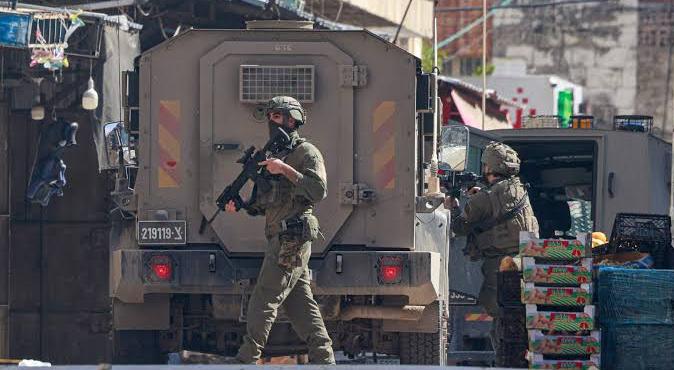
While attention is focused on the indirect negotiations between the occupying state and the Palestinian resistance, and the accompanying hope of reaching a ceasefire agreement/open massacre of innocents in the Gaza Strip, the Palestinian resistance has been scoring important points in the field confrontation with the occupying forces, despite the major shortages in equipment and supplies. The resistance has been able to deliver several painful blows to the occupying army, particularly in Khan Yunis, resulting in dozens of deaths and injuries among the ranks of the aggressor occupiers.
These heavy losses recently inflicted on the Israeli army in the Gaza Strip by resistance fighters armed with explosive devices and rifles were not the first of their kind during the war of extermination that has been ongoing for more than 21 months. However, their timing differs from previous periods, as they were carried out during the ongoing negotiations in Doha, as if the resistance was "negotiating with fire" on the ground. Furthermore, Israeli media coverage of these special operations is no longer subject to strict censorship as it was in the past, and news from the Gaza Strip is now being relayed to the Israeli public. This helps raise voices in Israel demanding the return of the detainees and an end to the war in the Strip, which is costing them more and more soldiers every day.
Writers, analysts, and experts who spoke to "I" said that the operations carried out by the resistance in the Gaza Strip are significantly contributing to enhancing the chances of reaching a ceasefire agreement. They pointed out that the recent strikes confirm that the resistance still exists and has a say in any negotiations, and that the scenario of a prolonged guerrilla war is now strongly on the table.
They emphasized that the resistance undermines the illusion of complete deterrence and dismantles the equations the Israeli security establishment has sought to establish. However, they noted that it lacks the leverage to change the equations and force Israel to halt the war. They noted that the greatest influence on the course of negotiations at this stage comes from the US president, more than the resistance operations themselves.
Growing impact inside Israel due to the killing of soldiers
Israeli affairs expert Mohammed Abu Allan said that the killing of Israeli soldiers in the Gaza Strip is having a growing impact within Israeli society, but it has not yet reached the level of decisive influence on political decisions or the course of the prisoner exchange negotiations underway in Doha and the ceasefire.
He added, "The most significant impact so far has been the growing voices within Israel calling for the return of the prisoners or an end to the war, amid a growing conviction among the Israeli public that the war has exhausted its objectives and is no longer yielding tangible gains on the ground."
Abu Allan considered the recovery of the remaining living prisoners a top priority for Israeli society.
He pointed out that Israeli Prime Minister Benjamin Netanyahu remains committed to his declared war goals, despite the difficulty of achieving them. He is imposing impossible conditions on Hamas in negotiations, such as the movement's withdrawal from the political scene, the surrender of its weapons, and the displacement of its leaders from Gaza.
He explained that the resistance operations, which have resulted in the deaths of 41 Israeli soldiers since the end of the last ceasefire, have not yet brought about a fundamental shift in the Israeli political position, nor have they led to an acceleration of negotiations or the conclusion of a prisoner exchange or ceasefire agreement.
Abu Allan added, "Perhaps the greatest influence on the course of the negotiations at this stage comes from US President Donald Trump more than the resistance operations themselves, which, while still ongoing, have declined in intensity and scope relative to what they were in the past."
The political level's priority is to achieve the war's objectives.
Abu Allan emphasized that the death of any Israeli soldier represents a great loss for Israeli society, but at the political leadership level, particularly among the extreme right, the priority remains achieving the war's objectives, even if it comes at the expense of soldiers' lives.
Abu Allan pointed out that the statements of ministers such as Bezalel Smotrich and Itamar Ben-Gvir are the most explicit. They are not content with simply demanding the achievement of the war's objectives, but are also seeking to occupy the Gaza Strip and resettle there, which means that the lives of soldiers are not a priority for them.
He emphasized that even the Israeli opposition, led by Yair Lapid, Benny Gantz, and Avigdor Lieberman, showed little concern over the deaths of the soldiers, having previously expressed the need to recover the captives first and then continue the war against Hamas.
Abu Allan concluded by saying, "The only factor that Israelis currently agree on is the return of the prisoners. Even if the war continues under the pretext of eliminating Hamas, the price, even if it is in soldiers' lives, does not seem to be an obstacle, especially after the October 7 attacks, which made Israelis willing to pay any price to fight Hamas because they feel it is an existential threat."
Political and strategic implications within Israel
For his part, Israeli affairs expert Shadi Al-Sharafa said that developments on the ground have had a significant impact, particularly as the Israeli army is expressing increasing fear of any form of military rule over the Gaza Strip.
He explained that the reason for this fear stems from the Israeli military establishment's awareness of the difficulty of controlling two million Palestinians, in addition to the losses incurred by the occupation army, a point highlighted by the Israeli Chief of Staff, Zamir, during a cabinet meeting.
Al-Shurafa pointed out that these developments have political and strategic implications within Israel. Continued resistance operations gradually weaken the legitimacy of the war, especially in the absence of tangible achievements or what is known as a decisive victory. This, he said, transforms the cost of the war into a domestic burden for Israel.
He added: "Strategically, the resistance is shattering the illusion of complete deterrence and dismantling the equations that the Israeli security establishment has sought to establish." He explained that the war that began with the goal of "annihilating Hamas" is now being translated on the ground into a mutual war of attrition, thanks to the resistance's steadfastness.
Israeli intransigence declines
In the same context, Al-Shurafa noted that the terms of the negotiations have been clearly affected, as Israel has shifted from a position of outright rejection of negotiations to indirect acceptance of them, and from rejecting the idea of a prisoner exchange deal to discussing interim settlements, and even recently accepting the idea of a gradual exchange deal, after having previously demanded the return of the prisoners without compensation.
He stressed that these transformations are the result of the resistance's steadfastness and the continuation of armed conflict.
However, Al-Shurafa called for not exaggerating the portrayal of what is happening as an absolute victory, nor for surrendering in the face of Israeli plans, emphasizing that the continuation of the fighting does not necessarily mean victory, but that the battle must also be employed politically, not simply as a battle of steadfastness.
Al-Shorfa emphasized that Palestinian losses are enormous, and that the situation in Gaza is catastrophic. This requires an independent and revolutionary Palestinian political will that rejects the logic of compromise and refuses to allow negotiations to become merely a technical humanitarian issue. Rather, they must be part of a comprehensive liberation project.
The failure of the Israeli political and military strategy and leadership
In turn, Professor Jamal Shalabi, a political science professor at Hashemite University in Amman, said that the strikes carried out by the Palestinian resistance, specifically Hamas, will have a significant impact on Israel and its ally, the United States, in one way or another.
He pointed out that the resistance's ability to reach Israeli soldiers, after more than 21 months of destruction, killing, and complete air and military control of the land and air, confirms the failure of the Israeli strategy and its political and military leadership to achieve its goals.
Dr. Shalabi added: "The emergence of the Palestinian fighter after all this time, announcing his presence in the heart of the battle, is the greatest evidence of Israel's impotence and failure."
He pointed out that this message is not only directed at Israel's political and military leaders, but also reaches the Israeli public, revealing that the achievements and information promoted by the leadership are neither accurate nor true.
He emphasized that a sense of doubt has begun to creep into the Israeli public and into Israel's close and distant allies, as Hamas is today loudly proving its ability to wage a long-term guerrilla war, which will be costly economically and financially, and more importantly, in terms of human and military resources.
Dr. Al-Shalabi explained that these operations constitute a bargaining chip in the hands of the resistance, which is now fiercely negotiating for survival.
The core of the problem is ensuring that Israel does not return to war.
He said that despite the passage of more than twenty months since the start of mediation efforts, the negotiations have not yielded any tangible results. Despite the US President's statements that a ceasefire would be achieved within two weeks, the facts on the ground have proven that matters are more complicated.
He continued: "The core of the problem is not the number of prisoners or abductees, but who can guarantee that Israel will not return to war? Israel violated the previous agreement at the beginning of this year, and it is unclear who has the capacity to provide genuine guarantees that this will not happen again."
Al-Shalabi asked: Is the US president capable of serving as a genuine guarantor before public opinion, the United Nations, and mediators, specifically Qatar and Egypt, if Israel receives the living prisoners and the bodies of the soldiers?
He emphasized that, despite this, the Palestinian resistance is proving today to be a difficult factor in the negotiating equation. He added that Hamas's presence cannot be ignored, even if negotiations are made to keep it out of the picture. Ultimately, it is an integral part of the Palestinian people and the fabric of the Gaza Strip.
Dr. Al-Shalabi believes that the recent strikes confirm that the group is still present and has a say in any future negotiations. He also believes that a long-term guerrilla war scenario is now firmly on the table, an option neither the United States nor Israel desires.
Al-Shalabi concluded by saying: "Hamas today clearly declares that it is renewing itself, that it is here to stay, and that it will not be excluded from post-war calculations. Moreover, attempts to displace Gaza and empty it of its population will remain impossible."
Growing internal pressure within Israeli society
For his part, international affairs expert Dr. Thaer Abu Ras emphasized that the operations carried out by the Palestinian resistance in the Gaza Strip significantly contribute to enhancing the chances of reaching a ceasefire agreement, pointing to several internal and external factors driving this trend.
He said there is a general feeling within Israeli society that the war in Gaza has not achieved its objectives, and that the Israeli government has failed to reach a genuine political solution for the Strip, giving the resistance greater scope to strengthen its capabilities and organize its ranks.
Abu Ras added: "There is increasing internal pressure from Israeli society, as most opinion polls show that the majority of Israelis support a ceasefire." He emphasized that resistance operations contribute to strengthening this trend, as Israelis do not like to see their soldiers killed, especially if they feel it is happening without clear justification.
Abu Ras emphasized that Israel is also under tremendous international pressure, particularly from the United States, which is seeking to end the war in Gaza and focus on other regional issues, most notably the Iranian issue.
The failure of the Israeli project in the Gaza Strip
He said: "From this standpoint, ending the conflict in Gaza has become a strategic priority for Washington, which increases pressure on Israel."
Abu Ras explained that the Israeli project in the Gaza Strip, as the Israelis and their allies feel, has failed.
He pointed out that Israel's plan was based on "ethnic cleansing" of the Gaza Strip, building settlements there, and even changing the names of some coastal sites to names associated with October 7.
He added that political and field realities forced Israel to accept a withdrawal to the previous ceasefire lines, even in the face of unprecedented American support.
Abu Ras emphasized that the rising number of Israeli soldiers killed is exacerbating internal anger and increasing calls for an end to the war, which strengthens the chances of reaching a final ceasefire agreement.
Resistance operations carry significant moral dimensions.
For his part, Egyptian strategic expert and nationalist thinker Dr. Rifaat Sayed Ahmed believes that the impact of the operations carried out by the Palestinian resistance has profound moral dimensions, clearly demonstrating that the resistance remains viable despite the blows it has suffered.
He stressed that the resistance operations send a powerful message to the Arab and Islamic world that the option of resistance has not ended, and that the Palestinian people have no other choice but this option after having lost everything.
Dr. Sayed Ahmed pointed out that the continued resistance, despite the passage of more than 600 days since the launch of Operation "Breaking Dawn," is a clear indication of the failure of attempts to eliminate it and sends renewed messages to Arab armies calling on them to support the resistance with advanced weapons.
He considered that the resistance had proven its ability to inflict pain on the enemy despite relying on its own capabilities.
The Egyptian expert pointed out that support and funding are available across various seas and through various channels, emphasizing that the resistance is not only defending Gaza or Palestine, but the entire Arab and Islamic nation, and is the first line of defense against the Israeli project.
He added, warning: "If the resistance is eliminated, the enemy will then turn to the Arab regimes and armies."
He emphasized that resistance operations improve the conditions for negotiating a ceasefire and could force Israel to accept it if it adopts realistic strategic thinking.
Dr. Sayed Ahmed concluded his remarks by emphasizing that negotiations are being conducted under fire, and that the resistance is capable of continuing, just as the occupation is.

PALESTINE
Sun 13 Jul 2025 9:06 am - Jerusalem Time
Qualitative attacks...the resistance negotiates with fire

Tags
MORE FROM PALESTINE



Share your opinion
Qualitative attacks...the resistance negotiates with fire