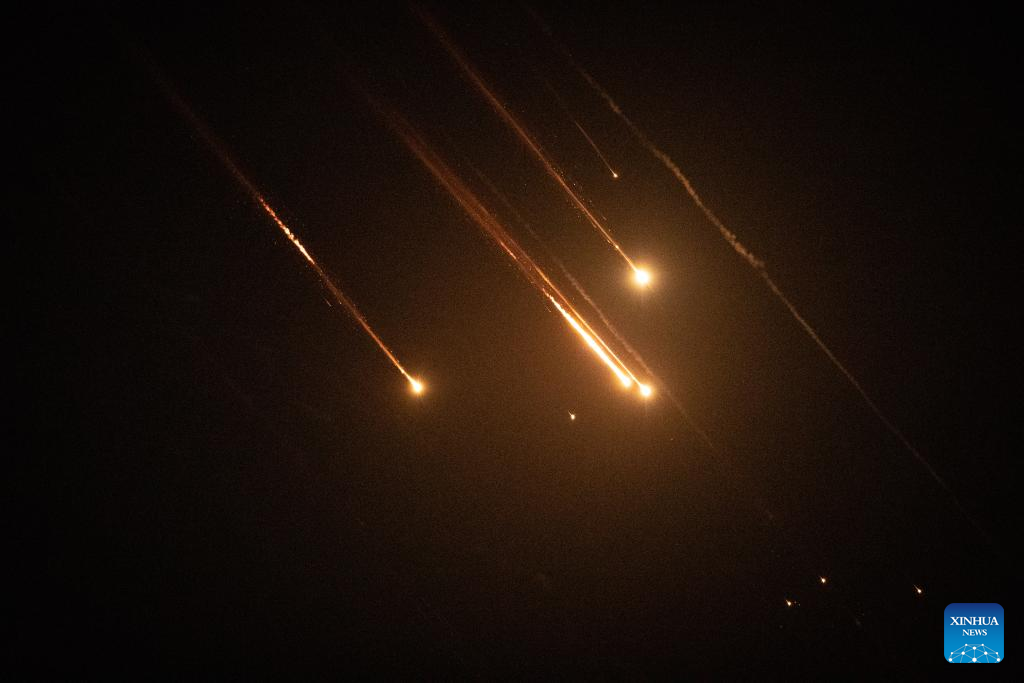







As Israeli Prime Minister Benjamin Netanyahu prepares to meet US President Donald Trump at the White House, partly to celebrate what Trump and Netanyahu describe as a resounding victory over Iran, The Telegraph has revealed that Iran struck five Israeli military bases during the 12-day war, causing significant damage. Iranian missiles also appear to have directly hit five Israeli military installations during the war, according to radar data reviewed by the newspaper.
It should be noted that the Israeli authorities did not announce these strikes, and they cannot be reported from within Israel due to strict military censorship laws.
These strikes will further complicate the verbal battle between the opponents, as both sides seek to claim absolute victory.
American academics at Oregon State University, who specialize in using satellite radar data to detect bomb damage in war zones, shared the new data with The Telegraph.
Data indicates that five previously unreported military installations were hit by six Iranian missiles in northern, southern, and central Israel, including a major air base, an intelligence gathering center, and a logistics base.
When The Telegraph contacted the Israeli military on Friday, it said it would not comment on missile interception rates or damage to its bases. An Israeli military spokesperson said, "What we can say is that all units involved maintained operational continuity throughout the operation."
These raids on military facilities are in addition to 36 other raids known to have penetrated Israeli air defense systems, causing extensive damage to residential and industrial infrastructure.
These included Iranian missile strikes in Israel; seven strikes on oil and electrical installations; the destruction of part of the Weizmann Institute, one of the country's leading scientific research centers; extensive damage to the Soroka University Medical Center, a hospital located next to the Ben-Gurion University campus in Beersheba; and raids on seven densely populated residential areas, displacing more than 15,000 Israelis.
According to the newspaper: "Despite the extensive damage to residential property across the country, only 28 Israelis were killed—a testament to the country's sophisticated warning system and the disciplined use of shelters and safe rooms by residents."
According to an investigation conducted by The Telegraph, while the vast majority of Iranian missiles were intercepted, the percentage of missiles that successfully reached their targets increased steadily during the first eight days of the 12-day war.
Experts say the reasons for this are unclear, but they may include rationalizing Israel's limited stockpile of interceptor missiles, improved Iranian missile launching techniques, and the potential use of more advanced missiles by Iran.
Although the Iron Dome is Israel's most well-known air defense system, it is actually designed to protect against short-range projectiles such as mortar shells and is only one part of Israel's "multi-layered" air defense system.
According to experts, the "David's Sling" air defense system, optimized to intercept drones and missiles with ranges up to 300 kilometers, is at the intermediate level. At the upper level is the "Arrow" system, which engages long-range ballistic missiles before they re-enter the atmosphere.
Most importantly, the Israeli systems were supported throughout the 12-day war by two US-made THAAD land-based missile defense systems and sea-based interceptor missiles launched from US assets in the Red Sea.
The United States is estimated to have launched at least 36 THAAD interceptor missiles during the war, at a cost of approximately $12 million per missile.
In densely populated Israel (population 9.7 million), the breach of its renowned missile defense systems came as a shock, with authorities forced to issue notices warning that Israel's air defenses were "not well-designed" to intercept missiles.
The displacement of 15,000 people is particularly notable as they were distributed to hotel accommodation across the country, and this (housing) issue was reported freely.
There was also growing skepticism within the country about the targeting of military targets. As Channel 13 correspondent Raviv Drucker, one of Israel's most well-known journalists, said last week: "There were many [Iranian] missile strikes on IDF bases and strategic sites, and we still don't report on them to this day... This has created a situation in which people don't realize how precise the Iranians are and the extent of the damage they have caused in many places."
Corey Sher, a researcher at Oregon State University, said his unit is working on a more comprehensive assessment of missile damage in both Israel and Iran and will publish its findings in about two weeks.
He added that the radar system data they used to assess the damage measured changes in the built environment to detect explosions, and that absolute confirmation of strikes requires either field reports at the relevant military sites or satellite imagery.
Analysis of Telegraph data shows that the combined US and Israeli defense systems performed well overall, but allowed about 16% of the missiles to pass through by the seventh day of the war. This is broadly consistent with a previous Israeli military estimate of the defense system's success rate of 87%.






Share your opinion
Iran attacked five Israeli military bases during the 12-day war.