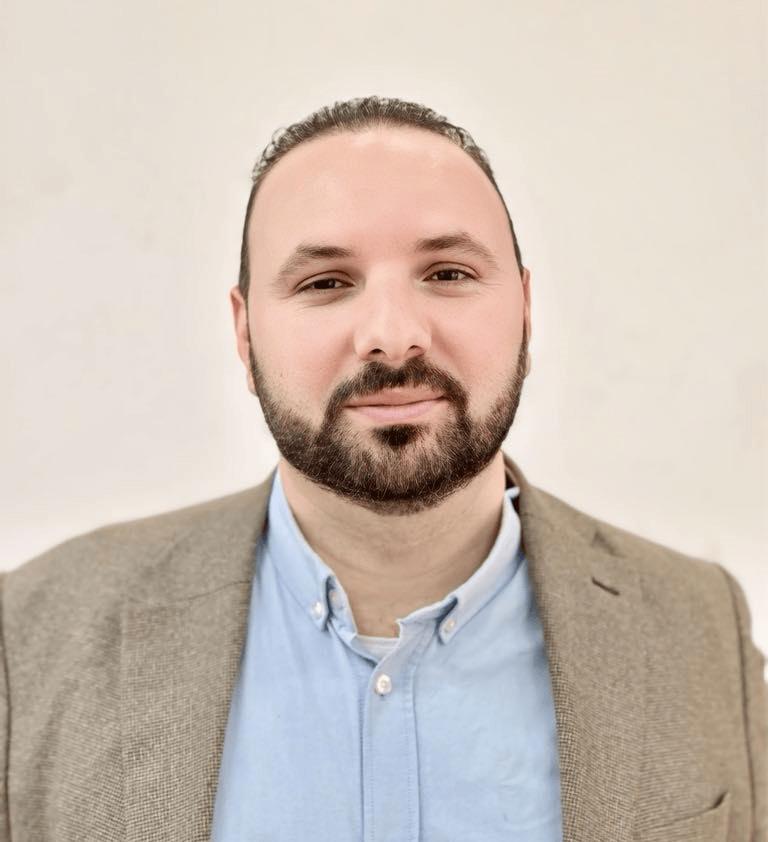







Written by: Raed Mohammed Al-Dabai: Head of the Political Science Department, An-Najah National University
The results of the First World War contributed to the temporary advancement of social democratic forces and the reformist left in Europe, and to the demise of major monarchies such as the Hohenzollerns in Germany, the Habsburgs in Austria-Hungary, and the collapse of the Ottoman Empire. However, economic failures and the absence of programs capable of offering convincing alternatives to the people after about a decade contributed to the return of ships to the right-wing nationalist side, and the emergence of extremist radical forces that led the world to World War II. Meanwhile, the results of the Second World War led to the emergence of the social democratic movement again, and the emergence of what is known as the “Glorious Era” in which the social democratic parties led their countries for more than thirty years, by presenting clear programs and tangible alternatives, based first on ideological reviews that led to the transition from doctrinal socialism to reformist socialism, through what is known as the “Bad Godesberg” program, and through social, political, and economic programs based on the welfare state, curbing unemployment, and adopting a mixed economy that maintains public oversight. On strategic sectors without eliminating economic competition, progressive taxes and solidarity financing, programs based on gender equality, social justice, expanding the base of workers and unions, investing Marshall Plan funds for tangible reconstruction, and building grassroots alliances with civil society, which led to the advancement of social democratic forces in Europe, after their success in translating these programs into tangible policies, which succeeded in attracting the poor, workers, and the middle class in general, which led to the decline of various far-right forces. There are other examples of the advancement of the right and the decline of the left, as happened in the United States in 1980, with the arrival of Reagan, and Trump’s return to power in 2025, and Bolsonaro’s victory in the Brazilian presidency in 2018, and the Bharatiya Janata Party in India in 2014, and the Five Star Movement in Italy, and the growth of the populist right in Germany to become the second force in the last elections 2025, by adopting a market economy, raising the slogan of fighting corruption, achieving security, and preserving religious and family values, with promises that the citizen would reap tangible results, and building Alliances with businessmen and owners of large companies affected by taxes.
What the previous lines are trying to say is that gaining the trust of citizens and the legitimacy of their representation is not achieved through the failure of the opponent alone, nor through raising slogans with all their diversity, beauty and purity, nor through singing the praises of the glories of the past, or clinging to the fringes of possessing legitimacy, which, like other values, erode with the passage of time. Rather, it is achieved through offering convincing solutions to the people, and advancing tangible and simplified programs that address the roots of crises and build bridges of alliances with influential societal forces.
The major changes and strategic transformations that the Middle East region in general, and the Palestinian cause in particular, are undergoing, as well as the catastrophic consequences of the October 7 operation – even as stated by a number of Hamas leaders – on the Palestinian cause in general, and on the foundations of our people’s steadfastness, and the mechanisms of Israeli dealing with the Palestinian cause, are very similar to those circumstances that contributed to the advancement of some forces and the decline of others at various points during crucial historical junctures, as well as the consequences of the Israeli-Iranian war and its repercussions on the map of forces in the region, and require the Palestinian national movement to adopt policies that rise to these challenges. However, what is striking about the matter is that the Palestine Liberation Organization and the Fatah movement, which practically constitute the backbone of the Palestinian national movement, as well as the various national and Islamist forces and factions on the Palestinian arena, are dealing with these changes with the logic of fate and destiny, and postponed waiting until God decrees a matter that was done, without taking the initiative, presenting programs, or even attempting to take steps that would contribute to reducing the losses, as the current conditions are from the age of the Palestinian cause, and they may be the most dangerous. Since the Nakba of 1948, the insistence of the religious right-wing government in Israel to resolve the conflict by exploiting the favorable historical opportunity requires taking realistic steps and presenting convincing programs with a tangible impact on the citizen and various social classes, including the poor and the middle class. The simplest issues that emerged during the past period, including the fuel and cooking gas crises, demonstrated the extent of the societal imbalance and the absence of societal and official forces whose duty is to protect citizens and organize their lives during times of crisis. They also revealed the extent of the gap between the citizen and decision-makers, and revealed the absence of a national plan to manage national crises.
The Palestine Liberation Organization and the Fatah movement have a favorable opportunity to transform this tragedy into a unifying national opportunity, by investing in the historic moment, through a programmatic transformation, based on realistic, applicable policies, capable of restoring citizen confidence, investing social capital, and investing the energies of our Palestinian people in the homeland and in the diaspora, adopting modern, influential, and tangible communication tools with the masses, and rebuilding social alliances with various sectors, especially workers and farmers, for whom it is time to elect unions that truly represent them, and launch from among their ranks, and calling on all Palestinians to participate in shaping future national directions, by involving our people in the diaspora, and investing their human energies in all places of their presence. At the level of the Palestine Liberation Organization, it is necessary to leave the stagnation in place, and this does not mean adopting populist policies, or policies that are not well thought out, but rather it means doing what is possible, influential, and effective, and perhaps among them is building the Palestinian National Council in a way that makes it a true representative of the sectors of our Palestinian people, with all its components, factions, sectors, and elites of women and men, and it is This is possible through organizing real and transparent elections for its representative components, including unions, syndicates, and sectoral institutions, and building it on an institutional basis, not clientelism, on the basis of ability, not loyalty, and on the basis of openness and enlightenment, not isolation, individual relationships, and cunning. The PLO, which possesses the legitimacy and ability to open up to all its people, remains their sole legitimate representative. In every lecture about the PLO, I ask my students in the Palestine Studies course about the names of the members of the PLO’s Executive Committee. They can barely name one or two at best. The problem is not with the generation, but with the absent institution, the individual approach, the lack of influence, and the absence of the most important institutions of the nation from their leadership role. The PLO must present tangible social, political, and economic programs that are felt by the people of the camp, the countryside, and the city. The people of the Jenin, Tulkarm, and Nur Shams camps, against whom a geographic genocide is being practiced, based on eliminating the camp as a topography, a memory, and a spatial space that incites the occupation and renews the right of return. It must present a practical program for the people of the Gaza Strip. Gaza is based on unity of representation, unity of arms, unity of decision-making, and a vision for reconstruction, just as the social democratic parties did in Europe after World War II, and gained the trust of the masses for thirty years after that. The PLO is not required to do the impossible, and it is fully aware of the magnitude of the changes and challenges facing the region and the Palestinian issue. What is required is to leave the spectator seats and take the initiative and leadership and touch the needs of the citizens, and assume its natural role as the sole legitimate representative of our people, because the citizen who cannot find a morsel of bread, cannot return to his home, and cannot provide a cooking gas cylinder, cannot be convinced of any legitimacy that does not provide him with his dignity and clean morsel of bread.
Fatah also has a historic responsibility in light of the exceptional circumstances and the expected transformations in the region. Fatah, which grew like a flower in a barren desert, is the backbone of the Palestinian national movement. It bears the responsibility of strengthening performance and enhancing the steadfastness of the citizen, which requires the movement to adopt social, political and economic programs and to lead the Palestinian popular resistance in the field. Fatah is also in dire need of rebuilding its internal house and uniting its members with the law of love, dialogue, tolerance and open doors, and of rallying its ranks according to its internal regulations and through its movement institutions, because Fatah, with its influence and the consequences of what is happening inside it, is a public Palestinian affair that transcends the boundaries of the internal Fatah house.
In conclusion, whoever says that the justice of our cause alone is capable of bringing our people to safety should review history, and whoever believes that silence, anticipation and waiting will lead to the passing of this dark cloud should open their eyes to see what is happening in Jerusalem, and the geographical changes taking place in the West Bank, what the leaders of the extreme right declare and practice daily, for history has been in many cases a graveyard for truth, justice, silence and hesitation, and what the occupation wants is clear and obvious to anyone who sees the light and the sun: “More land for the Jews, and fewer Arabs on it.”
Share your opinion
The Palestinian National Movement and Waiting for Relief