






Dr. Ahmed Rafiq Awad: Israel has begun to realize the difficulty of fully achieving its declared goals, which is driving it to try to "drag the United States by the nose" into this confrontation.
Major General Wassef Erekat: The Trump administration found itself in an internal embarrassment with the escalation of demands not to be directly involved in the war, coupled with Russian warnings not to be drawn into the confrontation.
Dr. Amjad Bashkar: Expanding the war could push these major powers into deeper intervention to defend their strategic interests in the region.
Nizar Nazzal: Washington itself doubts the ability of B-2 bombers to strike the Fordow facility, which opens the possibility of the dangerous option of using tactical nuclear weapons.
Dr. Aql Salah: The two-week deadline is merely a maneuver to give Israel and the United States sufficient time to complete military, logistical, and intelligence preparations for a comprehensive attack.
Firas Yaghi: Trump remains convinced of the possibility of intervening to save Israel by striking Fordow, but he is unaware of the profound geopolitical implications of such an intervention.
The confrontation between Israel and Iran is witnessing an unprecedented escalation, entering a complex phase that threatens to spark a regional conflict that could escalate into a third world war.
In separate interviews with "I", writers, political analysts, specialists, security experts, and university professors believe that Israel is seeking to drag the United States into a war against Iran, in light of the increasing internal and external pressure on Washington. However, the option of direct American military intervention remains subject to careful calculations, at a time when Moscow and Beijing are warning of catastrophic consequences that could destabilize the entire Middle East and even expand into a third world war.
Israel sees Iranian influence as a strategic threat surrounding it.
Writer and political analyst Dr. Ahmed Rafiq Awad argues that Israel, backed by the United States and the colonial West, is determined to strip Iran of its nuclear and missile capabilities and end its regional influence in the Middle East.
Awad explains that the joint Israeli-Western project is based on a strategic vision that views Iran as a comprehensive threat not only to Israel, but also to Western interests in the region, including oil resources, US bases spread throughout the region, and waterways vital to global trade.
Awad points out that Israel views Iran's growing influence as a strategic threat encircling it from all sides, like a "ring of fire" formed by Iran's proxies in the region. This is what drives Tel Aviv to work to remove this ring and destroy the capabilities that pose a future threat to it.
Awad points out that Israel is currently continuing to strike at Iran's nuclear program and ballistic missile infrastructure, which Tehran relies on to maintain a balance of deterrence against the major powers.
Awad asserts that Tel Aviv is also attempting to overthrow the Iranian regime itself, taking advantage of extensive American and Western support, both through arms supplies and the political and diplomatic cover these countries provide in international forums.
Awad believes that the failure of the nuclear talks in Geneva between Tehran and the European Troika constitutes further evidence that the West is not seeking a political settlement as much as it is seeking to escalate pressure on Iran in order to completely weaken it.
America's entry into the war is governed by complex internal and external considerations.
But despite this extensive Western support, Awad points out that Israel has recently begun to realize the difficulty of fully achieving its stated objectives, whether by destroying Iran's nuclear program, missile capabilities, or toppling the regime. This is what is driving it today to attempt to "drag the United States by the nose" into the depths of the military confrontation, especially if it is subjected to powerful Iranian attacks that directly threaten its existence.
Awad warns that the United States' direct involvement in the confrontation is still governed by complex internal and external considerations in Washington. However, he does not rule out the possibility that Washington could fall into this trap if it feels that Israel's security is seriously threatened.
Awad asserts that the escalation on the ground will determine the shape of the next phase: if Israel succeeds in significantly weakening Iran, it may accept a ceasefire and return to the negotiating table. However, if Tehran holds firm and continues to withstand the strikes, the scenario of a continued war will open dangerous doors.
Awad points out that this escalation could lead either to a broader regional war encompassing most Middle Eastern countries, or even to a comprehensive third world war if major powers like China and Russia intervene directly, especially since the collapse of the Iranian regime would profoundly harm the interests of Beijing and Moscow.
According to Awad, the demise of the Iranian regime would disrupt China's Silk Road project and deprive China of vital energy imports from Iran. It would also represent a major loss for Russia, which relies on its alliance with Tehran to counterbalance US hegemony.
Awad asserts that the possible scenarios are open to very dangerous possibilities: either a devastating regional war, a wider world war, or perhaps a humiliating settlement imposed on Iran if it is subjected to crushing strikes, forcing it to sacrifice its nuclear and missile projects in exchange for preserving the existing political regime in Tehran.
Israel is living in a dangerous dilemma
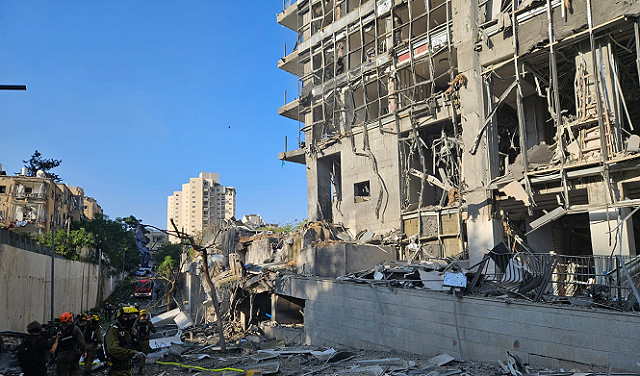
For his part, retired military, security, and strategic expert Major General Wassef Erekat says that Israel is facing a dangerous dilemma as the aggression against Iran enters its second week. The declared objectives of the military operation have shifted from eliminating the Iranian nuclear and missile threat to less ambitious goals, amid Iran's resilience and swift response, which has confused decision-makers in Tel Aviv and Washington alike.
Erekat explains that Israel, driven by a close alliance with the Trump administration, launched its attack on Iran through a deceptive plan based on surprise, shock, and awe. It began its operations with the assassinations of Iranian scientists and military leaders and the partial destruction of several nuclear facilities, giving Israel the impression that it was close to achieving its goals in record time.
This apparent success, according to Erekat, later prompted Netanyahu to add a more audacious goal: toppling the Iranian regime through a vast network of Mossad agents inside Iranian territory.
According to Erekat, however, the equation quickly changed, less than 18 hours after the initial strike, when Iran responded with an intense missile barrage targeting Israeli territory in more than 18 rounds, inflicting direct losses on Israel. This violent response transformed Israeli enthusiasm into a state of anxiety and terror, as Israelis witnessed, for the first time, a war that reached deep into their cities and paralyzed their economic and social lives.
According to Major General Erekat, the Israeli War Council was forced to reframe the objectives of the aggression. Instead of the initial goal of completely eliminating the nuclear and missile programs, the goals were now limited to "inflicting serious damage" to these programs and "weakening the Shiite axis" in the region, with preparations to address outstanding issues through political and diplomatic means.
The Israeli bet on a coup in Tehran failed.
Erekat believes this change in plans reflects Israeli decision-makers' renewed conviction of Iran's unexpected deterrent power and the failure of their bet on an internal coup in Tehran.
Erekat points out that the Trump administration found itself in an internal dilemma, with mounting demands from both the Democratic and Republican parties to avoid direct involvement in a new war. This was coupled with clear Russian advice to the US president, warning him against being drawn into a confrontation that could escalate into a regional nuclear conflict.
According to Erekat, this pressure prompted Trump to back down from his threat to give Iran a two-week deadline to resolve the situation. He later declared that the complete elimination of Iran's nuclear program "may not be necessary," a clear indication that the US administration is aware of the difficulty of achieving a direct military solution.
According to Erekat, Iran has moved from the "shock recovery" phase to the "effective confrontation" phase, and now to the "exhaustion" phase, which is considered the most dangerous for Israel and which it greatly fears due to its inability to endure it for long periods, given its limited human and economic capabilities. He compares 92 million Iranians to 9 million Israelis, and Iran's area is 75 times larger than Israel's.
6 possible scenarios for the course of the escalating crisis
Major General Erekat presents six possible scenarios for the course of the escalating crisis: First, the Israeli aggression will continue in its current form, with intensified raids and bombing until the maximum level of tolerance is reached, in the hope of drawing the United States into the war directly.
The second scenario, according to Erekat, is to intensify the soft war through assassinations, cyber attacks, and targeting major political and military leaders, while attempting to push Iran toward a coup.
Erekat points to a third scenario: expanding US support through Washington's intervention with greater support, while mobilizing Iran's support fronts, such as Hezbollah in Lebanon, the Iraqi resistance, and the Houthis in Yemen.
The fourth scenario, according to Erekat, is an expansion of the aggression with American and European support, which could draw regional countries into military participation, further escalating the conflict.
Erekat addresses the fifth scenario, which is the crisis spiraling into a loss of control and sliding into an open global confrontation whose course is difficult to control.
The sixth scenario, according to Erekat, involves broader international intervention. If the parties become convinced that neither side is capable of resolving the conflict, they will be prompted to accept a ceasefire and open negotiations to consolidate a truce that could later lead to comprehensive peace agreements.
Erekat asserts that Israel is currently facing the most dangerous strategic test in its history. It may find itself facing unplanned scenarios, particularly given the complexities of the international landscape and the growing international sympathy for the Iranian position following Israel's preemptive strike. This places the entire region on the brink of a volcano that could erupt at any moment.
American maneuvering and deception in dealing with Tehran
For his part, political science professor Dr. Amjad Bashkar asserts that since the beginning of the recent military escalation between Israel and Iran, the United States has relied on evasion and deception in its dealings with Tehran. Washington authorized a preemptive Israeli strike, and Washington continues to employ this approach, albeit with different tactics and procedures at the current stage.
Regarding the possibility of targeting Iran's Fordow nuclear facility, Bashkar points out that Israel does not possess the military capability to destroy these nuclear facilities unilaterally, as Tel Aviv has been betting since the beginning of the war that the United States would join its side if the confrontation escalated.
Bashkar explains that Israel encountered a completely different reality on the ground, with Tehran quickly filling the military leadership vacuum left by the assassinations and regaining the initiative less than 24 hours after the initial strike.
Bashkar points out that Pentagon assessments have confirmed that destroying the Fordow facility may require the use of a limited nuclear tactic, an option that raises many questions about its dangerous repercussions.
Iran has broad strategic options.
Bashkar points out that Iran has very broad strategic options, of which it has only used 20% so far. He stresses that targeting US military bases spread across the region would be easier for Iran than directly targeting Israel, with the possibility of expanding the scope of operations to include the Strait of Hormuz and Bab al-Mandab. Furthermore, Iran's proxies in the region have not yet directly entered the battle, but it is likely that these proxies would be ready for violent intervention in the event that the United States becomes directly involved in the war, which would lead to an expansion of the scope of the confrontation.
On the other hand, Bashkar points to Russian President Vladimir Putin's warnings of a third world war, noting a clear shift in the tone of China, Pakistan, Russia, and North Korea, which has shifted from calls for de-escalation to increasing military and logistical support for Iran.
Bashkar believes that expanding the war could push these major powers into deeper intervention to defend their strategic interests in the region.
Bashkar asserts that Israel's success in this confrontation will grant it a position of leadership and dominance in the entire Middle East, in addition to opening the door to dangerous plans aimed at displacing Palestinians from both Gaza and the West Bank.
US ground intervention in Iran will fail
Bashkar warns that any direct US ground intervention in Iran would be doomed to failure, citing Washington's previous experiences with ground wars that ended in heavy losses. He explains that Iran possesses multiple strengths, most notably its vast geographic area, equivalent to the combined area of the Levant, Turkey, and Iraq (approximately 1.65 million square kilometers), along with the Iranian people's rigid ideology and the lack of an organized opposition capable of being exploited by the West.
Bashkar asserts that US military pressure may open the door to a return to the diplomatic track, but it will not impose any substantive concessions on the Iranian side.
Bashkar points out that Israel is now under severe pressure at both the military and economic levels, with a financial deficit exceeding 35 billion shekels to date. The Iron Dome system is also suffering, with its missiles running out as the escalation continues, making the continuation of the war more costly and more protracted.
The Fordow nuclear facility is extremely complex and deeply fortified.
For his part, Nizar Nazzal, a researcher specializing in Israeli affairs and conflict issues, explains that Iran's Fordow nuclear facility is so complex and deeply fortified that it cannot be destroyed by any conventional air attack.
Nazzal points out that this massive fortification makes it virtually impossible for Israel to target or damage the facility with air power alone, as destroying it would require direct ground intervention, something that is not possible under the current military and political circumstances.
Nazzal points out that the United States itself doubts the ability of its B-2 strategic bombers to successfully carry out the mission, raising questions about the possibility of Washington resorting to the more dangerous option of using tactical nuclear weapons to penetrate and destroy the heavily fortified facility. This explains the recent Russian warnings.
According to Nazzal, Russian President Vladimir Putin's warnings do not come out of nowhere, but rather reflect Moscow's concern that any US-Israeli attempt to destroy the Fordo facility using a tactical nuclear weapon could lead to a large-scale war.
Although Nazzal does not believe the world is on the brink of a third world war in the traditional sense, he believes this escalation could turn into a raging regional war involving multiple international powers.
In his reading of the likely course of events, Nazzal believes the United States is heading toward direct intervention in the conflict, which will in turn push other parties to enter the arena. He also expects Iran to raise the escalation level by closing the vital Strait of Hormuz and mobilizing its regional allies, most notably Iraqi factions and Lebanese Hezbollah.
Pakistan's entry into the confrontation line
Nazzal points to the possibility of Pakistan entering the confrontation, which would also directly involve China, given its deep economic and strategic interests with Iran, particularly within the framework of the Silk Road project.
Nazzal asserts that Israel currently finds itself in a dilemma of constant exhaustion between action and reaction, accompanied by internal economic paralysis and increasing pressures on Israeli society, which can no longer tolerate this state of affairs.
According to Nazzal, Israel is now faced with two bitter choices: either escalate to overthrow the Iranian regime through a large-scale military operation that could drag the entire region into a full-scale war without achieving its goal, or seek to cool the conflict, which he considers a highly unlikely prospect at the current stage.
Nazzal believes the next phase will be extremely complex, filled with smoke and fire, given the absence of any real indications that this crisis is imminently contained. This portends an expansion of the regional conflict, which will have profound repercussions for the future of the entire Middle East.
Israel is unable to attack the Fordow reactor.
Writer and political researcher Dr. Aqel Salah says that Israel is incapable of launching a direct military attack targeting Iran's Fordow nuclear reactor because it lacks special bombs capable of penetrating deep underground layers, as well as aircraft capable of carrying such bombs—weapons available exclusively to the United States.
Accordingly, Salah points out that Washington itself will launch this strike, and the decision has already been made to launch the strike in the near future.
Salah explains that the expected scenario is for the United States to use bunker-buster bombs to destroy the upper layers of the facility, then use tactical nuclear bombs to completely destroy the reactor.
Salah asserts that this action constitutes a blatant attack on the sovereignty of an independent state and constitutes a joint war crime between the United States and Israel.
Analyzing the dimensions of the scene, Salah points out that the administration of US President Donald Trump was a key partner in preparing for this war by manipulating negotiations with Iran for two months, before turning against Tehran and giving Israel the green light to launch a surprise attack. This was part of a comprehensive plan aimed at igniting internal unrest in Iran, through the deployment of secret agents, the use of drones, and the assassination of Iranian scientists, in an attempt to bring down the regime from within, similar to what happened in Syria. However, this attempt failed to penetrate the solid structure of the Iranian regime.
Coordinating work with some regional parties
Salah believes that Trump's two-week deadline for Iran is merely an additional maneuver, allowing Israel and the United States sufficient time to complete military, logistical, and intelligence preparations for a comprehensive attack, as well as to coordinate with a number of regional actors and prepare for simultaneous strikes in Iran, Lebanon, Yemen, and Iraq to ensure the crippling of Iran's response capabilities and the achievement of complete surprise.
Despite Russian President Vladimir Putin's warnings of a third world war, Salah downplays Moscow's ability to deter the United States, noting that Russia is currently militarily and economically exhausted by the war of attrition in Ukraine and its loss of influence in Syria. Therefore, Putin's statements do not go beyond seeking political and diplomatic solutions that avoid the logic of escalating into a world war.
Regarding the possible scenarios, Salah believes that a return to negotiations is unlikely after Washington's deception of Tehran. Meanwhile, the option of a temporary ceasefire is unacceptable to the Iranians, who realize that any truce would be exploited to prepare for a new round of war.
Salah rules out the possibility of a successful internal coup in Iran, given Tehran's early detection and thwarting of such attempts.
direct US military strike
According to Salah, the most likely scenario is a direct US military strike targeting the Fordow reactor specifically, with full Israeli support.
According to Salah's assessment, this strike aims not only to eliminate Iran's nuclear program, but also to end the Iranian missile threat, which has reached deep into Israel in an unprecedented manner. For the first time in its history, the battle has moved into Israel's interior, and its cities and military sites have been directly destroyed.
Salah emphasizes that this war led to an unprecedented decline in Israel's deterrent power, demonstrated to the world that Israel was now vulnerable to Iranian missiles, and demonstrated that striking and defeating Israel was now possible, after decades of waging wars on the territory of its adversaries, far from its home front.
Salah points out that this war profoundly undermined Israeli national security and demonstrated that the complete elimination of the Iranian nuclear project is impossible, even with the use of massive military force. It also exposed Israel's vulnerability to Iran's regional allies and confirmed that Iranian support for its allies in Palestine, Lebanon, Yemen, and Iraq will remain a key element in the region's future power equations.
Israel faces extremely complex scenarios
For his part, writer and political analyst Firas Yaghi believes that Israel faces extremely complex scenarios regarding its military options for destroying Iran's Fordow nuclear facility, which is fortified deep within the Iranian mountains and constitutes an operational complex difficult to penetrate by conventional means.
Yaghi points out that Israel is considering several possible scenarios for carrying out its attack. The first scenario relies on the possibility of using American GBU-57 bunker-buster bombs, which can only be carried by American B-2 strategic stealth bombers, which are not available to the Israeli Air Force. Indeed, delivering these aircraft and bombs to Israel would require months of training and qualification for Israeli pilots, making this scenario practically impossible in the near term.
The second, more dangerous scenario, according to Yaghi, is that Israel would resort to a tactical nuclear strike against Fordo, which would open the door wide to a nuclear conflict in the Middle East. Iran could respond to Israel in a similar manner and declare itself an official nuclear power, threatening to escalate the conflict to a catastrophic level.
Yaghi asserts that the Americans are also considering a scenario of launching successive strikes using B-2 aircraft to gradually penetrate the rock layers protecting Fordow. However, this tactic carries enormous radioactive risks due to the possibility of 60% enriched nuclear material leaking into the air and water, threatening to contaminate the entire Arabian Gulf and Indian Ocean. This explains Washington's reluctance to pursue this option.
Internal conflicts in the United States
In addition, Yaghi points out that internal conflicts within the United States over direct support for Israel are a hindering factor, as the White House is embroiled in a political struggle between advocates of full support and those who warn of the repercussions of intervention on American interests globally.
Yaghi points out that Russian President Vladimir Putin has explicitly warned that such zero-sum nuclear options could open the door to a third world war. Putin has also categorically rejected the possibility of assassinating Iranian leaders like Khamenei, believing that slipping into such scenarios would push everyone toward the abyss.
As for US President Trump, Yaghi believes he remains convinced of the possibility of intervening to save Israel by striking Fordow. However, he is unaware of the profound geopolitical implications of such an intervention, which could lead to a shift in regional and international alliances and cause some of Washington's allies to withdraw their support as a result of the damage to their strategic interests caused by the policy of military adventurism.
If Israel remains alone in the battle, Yaghi expects the war to be protracted and exhausting for Tel Aviv, given the vast disparities in human and geographical capabilities between the two sides. Iran's population is 92 million compared to Israel's 9 million, and its area is 75 times larger. In this case, Israel will attempt to seek a unilateral ceasefire after exhausting its forces. However, the question remains: who will fire the "last bullet" in this scenario? Here, Yaghi believes that Iran will hold this card, which raises great concern in Israel.
The most dangerous scenario
The most dangerous scenario, which would detonate the region, according to Yaghi, is a direct American military intervention alongside Israel. This would lead to Iran targeting American bases in the Indian Ocean, the Arabian Sea, Iraq, and Syria, while trying to avoid targeting American bases inside the Gulf states to avoid expanding the front prematurely. If the confrontation escalates further, Iran will resort to closing the Straits of Hormuz and Bab al-Mandab, and threaten to destroy the region's oil infrastructure, which would pose an unprecedented strategic threat. Indeed, it seems that Iran and its allies have decided that if the Fordow reactor is targeted, the Dimona reactor will be targeted, and the export of oil from the region will be prevented for three days, to begin with.
Yaghi asserts that the United States is working to form an expanded international coalition that includes countries such as Canada, Australia, Britain, Germany, and Italy, with attempts to include France, which is reluctant and reluctant. In contrast, Russia and China will find themselves forced to support Iran in an undeclared manner, considering Tehran a strategic ally against Western hegemony. Putin clearly indicated this when he said, "We and Iran are fighting the same enemies."
Possibility of reaching an international agreement
In contrast, Yaghi explains that there is another scenario, which involves the possibility of reaching an international agreement. However, this has so far been hindered by Israeli-American intransigence, which insists on the terms of Iranian surrender. Meanwhile, Tehran asserts that it will not relinquish its right to enrich uranium on its territory to 3.67%, and completely refuses to discuss its missile and strategic capabilities.
According to Yaghi, a possible and realistic scenario is for the US and Israel to declare a unilateral cessation of hostilities after the attacks have been exhausted. However, Yaghi asserts that Iran would reject such a situation, which would enshrine the principle of "permanent freedom of movement" on the part of Israel and the US to launch strikes whenever they wish, thus maintaining the state of intermittent war.
Yaghi believes the situation is sliding toward further escalation, given the absence of any compromise between the two sides. He points out that Israel, with full American support, views this escalation as a golden opportunity to achieve comprehensive regional control, a sentiment expressed by the Israeli Chief of Staff, who said, "We are not waiting for danger; we are going to eliminate it."
Share your opinion
The Israeli-Iranian confrontation is escalating. Is "Doomsday" approaching?