






Washington - Saeed Erekat
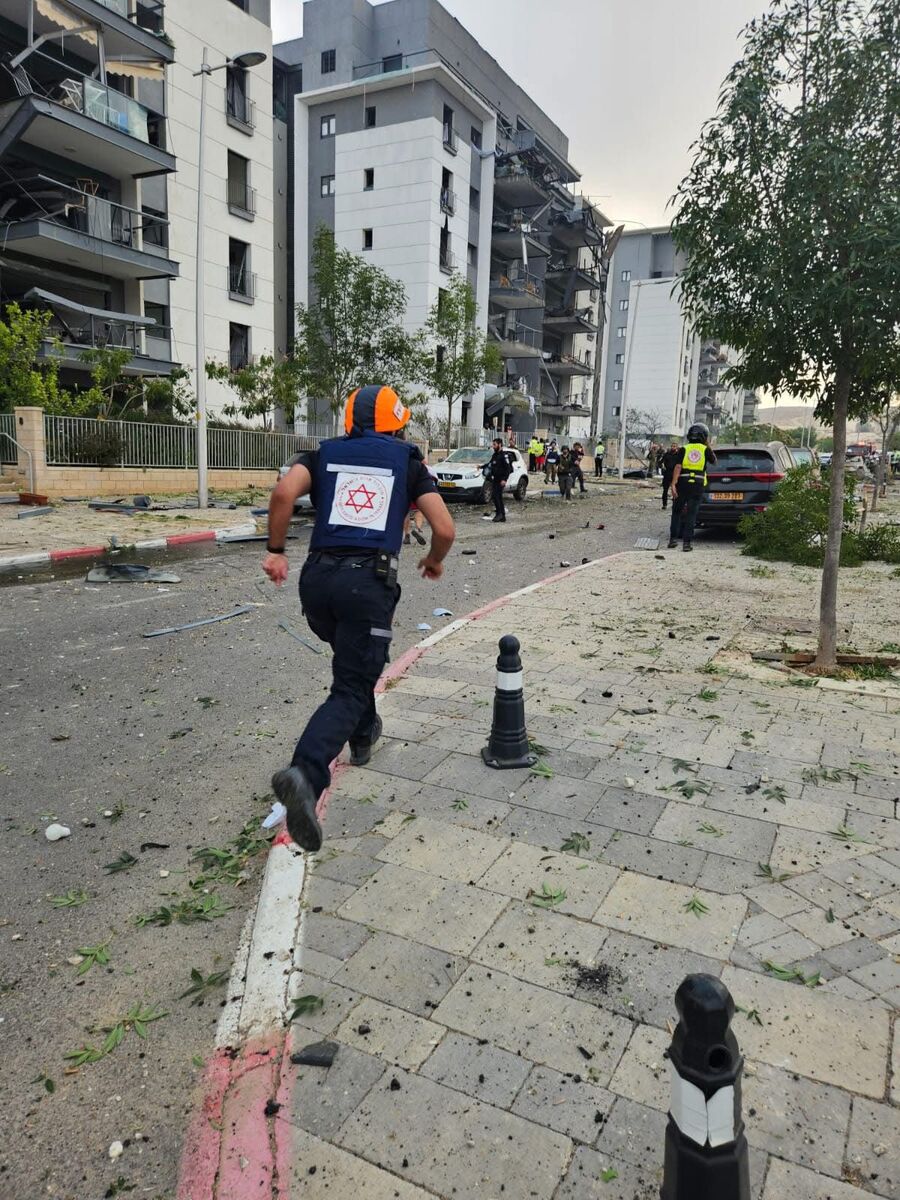
The Wall Street Journal reported Friday that since last week, Israeli warplanes have launched successive raids on targets across Iran, testing the limits of what air power alone can achieve in conflicts.
Military thinkers say that missiles and bombs, although important in modern warfare, are rarely enough to achieve victory alone, especially if the strategic objectives of the warring nations are large-scale.
In this case, Israel stated that its goal was to prevent Iran from developing nuclear weapons, either by physically destroying its capability or by forcing it to abandon its nuclear ambitions as part of a negotiated settlement. Israeli politicians also called for the overthrow of the clerical regime in Tehran.
Israeli Prime Minister Benjamin Netanyahu is pushing the United States to join him in his war on Iran, enhancing his chances of achieving his goals. For example, American bunker-buster bombs have the best chance of destroying the Fordow facility, Iran's fortified underground uranium enrichment facility.
The White House announced on Thursday that President Trump will decide within the next two weeks.
The newspaper notes that Israeli policymakers are counting on the ability of air power to achieve victory without the need for ground operations, except perhaps for the deployment of small forces of special forces and intelligence officers to assist in airstrikes.
For Israel, it has little choice. It lacks the capabilities to launch large-scale ground operations far from its borders and against a much larger adversary. The United States has the capability, but the Trump administration has shown great reluctance to deploy ground forces in any foreign war.
If Israel succeeds, with or without US assistance, it could prompt a serious reassessment of the capabilities of its modern air force, whose effectiveness is enhanced by drones and more advanced surveillance and intelligence-gathering technologies. But skeptics abound.
There are few, if any, precedents for a large-scale armed conflict in which two nations trade blows solely through air power. This approach, in the absence of ground forces, "absolutely changes the course of any war—you can't physically seize things, you can only physically destroy them," Phillips O'Brien, a military historian who teaches war studies at the University of St. Andrews in Scotland, told the newspaper.
Both sides must view the enemy state as a functioning machine and identify the components, such as military production or command and control, whose destruction can lead to victory. "That's never easy—and that's why there are so few" purely aerial wars, O'Brien said.
The Wall Street Journal quotes Ofer Friedman, a former Israeli officer now at King's College London, as saying: "If you have limited political objectives that don't require a presence on the ground, then theoretically you can achieve victory even with air power alone." The problem is that we don't know what Israel's true objectives are now. Israel's broad range of targets, from military and nuclear facilities to pillars of regime power such as the police and economic assets such as oil refineries, makes it difficult to determine the breadth of Israel's strategic objectives.
While Israeli aircraft dominate the skies over western Iran, according to the US administration, and "strike targets at will," according to Netanyahu's claims, analysts say Tehran's best hope is to hold out until the time allotted to Israel's costly and logistically exhausting air efforts runs out.
As for how this war might end, experts speculate on at least four ways it could end.
Israel—especially with US help—may succeed in physically destroying much of Iran's nuclear program, which could take Tehran many years to rebuild.
Alternatively, the mounting damage might force Iran's leaders to cave in and sign an agreement abandoning uranium enrichment. Third, the Iranian regime might collapse, taking its nuclear ambitions with it.
But the outcome could also be disastrous if the regime holds firm and does not reverse its enrichment, and if the damage to its nuclear facilities is not fully reversed. Tehran may reform its nuclear program with greater resolve, less international oversight, and at sites that are less likely to be targeted.
Even if Fordo is destroyed, a war may only buy time until Iran tries again to build a bomb. This, too, would be a gain for Israel, depending on the length of any delay. In the time gained, other events may intervene. The Iranian government may collapse or change its course.
It's worth noting that when Israel used airstrikes to destroy nuclear reactors in Iraq in 1981 and Syria in 2007, it hindered both countries' nuclear weapons programs. But in Iraq, "the short-term effect was success, and the long-term effect was to push Iraq into covert operation with its future programs," Michael O'Hanlon, a scholar at the Brookings Institution in Washington, said in a commentary for the newspaper.
Military historians say there are few examples of air power alone bringing about regime change. Experience suggests that it also requires ground forces—or at least a competent allied rebel force on the ground.
When a US-led coalition ousted the Taliban in Afghanistan in 2001, it cooperated with local military forces known as the Northern Alliance. US ground forces were also quickly deployed. (The Taliban returned to power 20 years later when the US withdrew.)
Israel's airstrikes on Iran could weaken the government's prestige and undermine its internal mechanisms of control and repression. However, there is currently no indication that an opposition force exists in Iran that could dislodge the regime, whether through armed rebellion or mass protests. But even if Iran's Supreme Leader, Ayatollah Ali Khamenei, loses power, it could be to the detriment of another pillar of the regime, the Islamic Revolutionary Guard Corps (IRGC), leading to a hardline military government, analysts say.
Air wars are difficult. Established military thought recognizes that controlling the skies is vital to winning a conventional war, but it is not sufficient.




Share your opinion
Israel tests the theory that it is impossible to win a war with air power alone.