






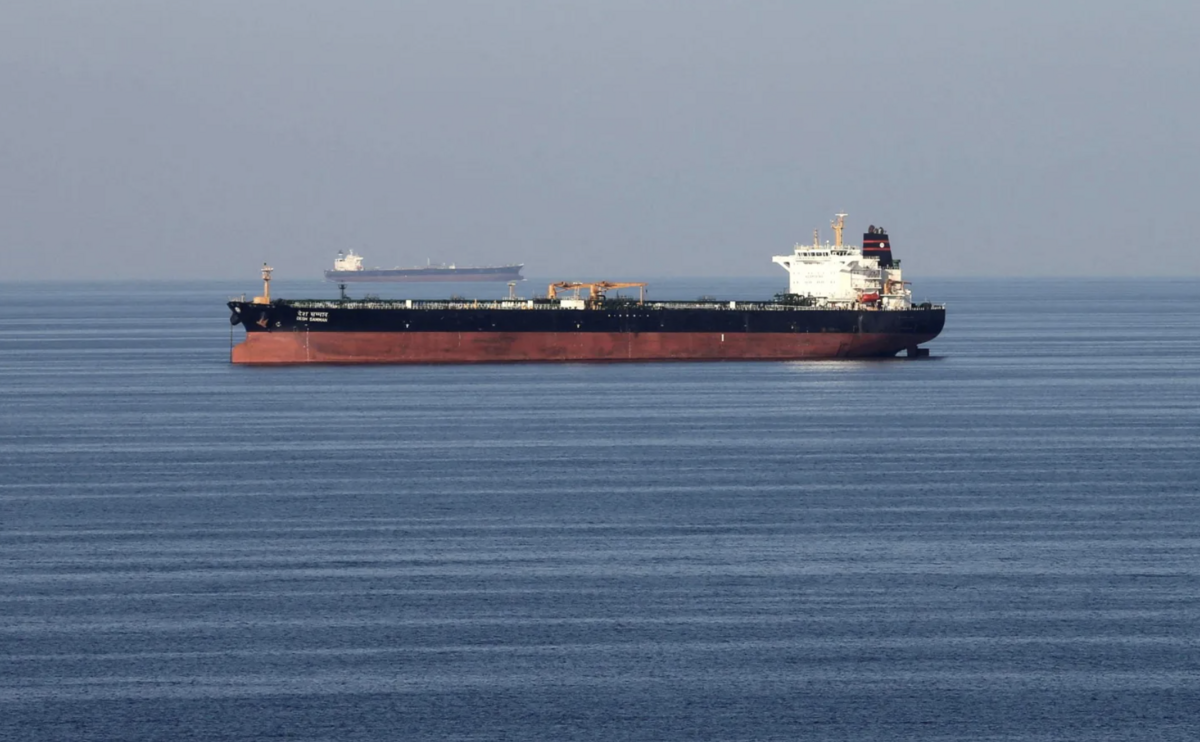
Iran and Israel traded accusations during a session of the United Nations' International Maritime Organization (IMO) of endangering commercial activity in the Gulf and Red Sea waterways, as the military conflict between them escalates.
During a session of the Security Committee of the Organization of the Islamic Revolution, the Iranian delegation stated that Israel had expanded the scope of its "illegal attacks" in recent days to include petrochemical and gas infrastructure in Assaluyeh on Iran's Gulf coast.
"These actions directly jeopardize the security of international maritime navigation and the global energy supply chain," Iran added in a speech to the organization's delegates, which was broadcast live.
She added, "If the international community does not take urgent and concrete measures to stop this illegal aggression, the risk of escalation at sea becomes imminent."
Tehran has previously threatened to close the Strait of Hormuz to shipping in response to Western pressure. Closing the strait could impose restrictions on trade and impact global oil prices.
Maritime sources said today that maritime agencies are advising commercial vessels to avoid Iranian waters surrounding the Strait of Hormuz. Vessels heading to the Strait of Hormuz seek to minimize risks and sail close to the coast of Oman for most of the journey.
The Gulf of Oman is 200 miles wide, most of which is in international waters. It is bordered by the Sultanate and Iran, as well as the UAE and Pakistan, which have territorial waters extending 12 miles into the Gulf.
It will still be necessary to make trips through the Strait of Hormuz itself, which is 21 miles wide at its narrowest point.
Former Iranian Economy Minister Ehsan Khandouzi said that oil and liquefied natural gas tankers should not transit the Strait of Hormuz without Iran's permission.
Iranian Supreme Leader Ali Khamenei rejected US President Donald Trump's call for unconditional surrender today, while Trump said his patience was running out without offering any indication of his next move.
The Israeli delegation told delegates that the IMO's fundamental principle of global maritime safety is under "open and aggressive threat" from Iran, including through its support for the Houthi movement in Yemen, whose attacks have significantly disrupted maritime traffic through the Suez Canal and the Red Sea in recent years.
She added, "Iran has turned our entire region, and the Red Sea in particular, into a war zone. Through its political, financial, and military support for the Houthi rebels, Iran is enabling a campaign of maritime terrorism against civilian vessels."
She said that Iran "seeks to weaponize the world's busiest sea lanes... and impose its will through violence."


Share your opinion
Iran and Israel trade accusations of threatening shipping lanes in the Gulf and Red Sea.