






Raja Al-Khalidi: The current situation requires immediate and comprehensive interventions, most notably supporting local development, international support, and launching emergency programs aimed at supporting small farmers and workers.
Shaher Saad: We in the trade union movement fear the worsening economic crisis, which will directly impact the living conditions of Palestinian families.
Dr. Mahmoud Abu Suwai: Freedom of movement is one of the fundamental freedoms inherent to human beings, and it may not be confiscated or restricted without a clear and strong legal justification.
Ayham Abu Ghosh: Preventing Palestinian workers from going to their jobs inside Israel deprives the Palestinian market of monthly cash flow estimated at approximately 1.5 billion shekels.
Hazem Al-Qawasmi: Many families are no longer able to earn a living due to unprecedented unemployment and the prolonged closure of the Israeli labor market.
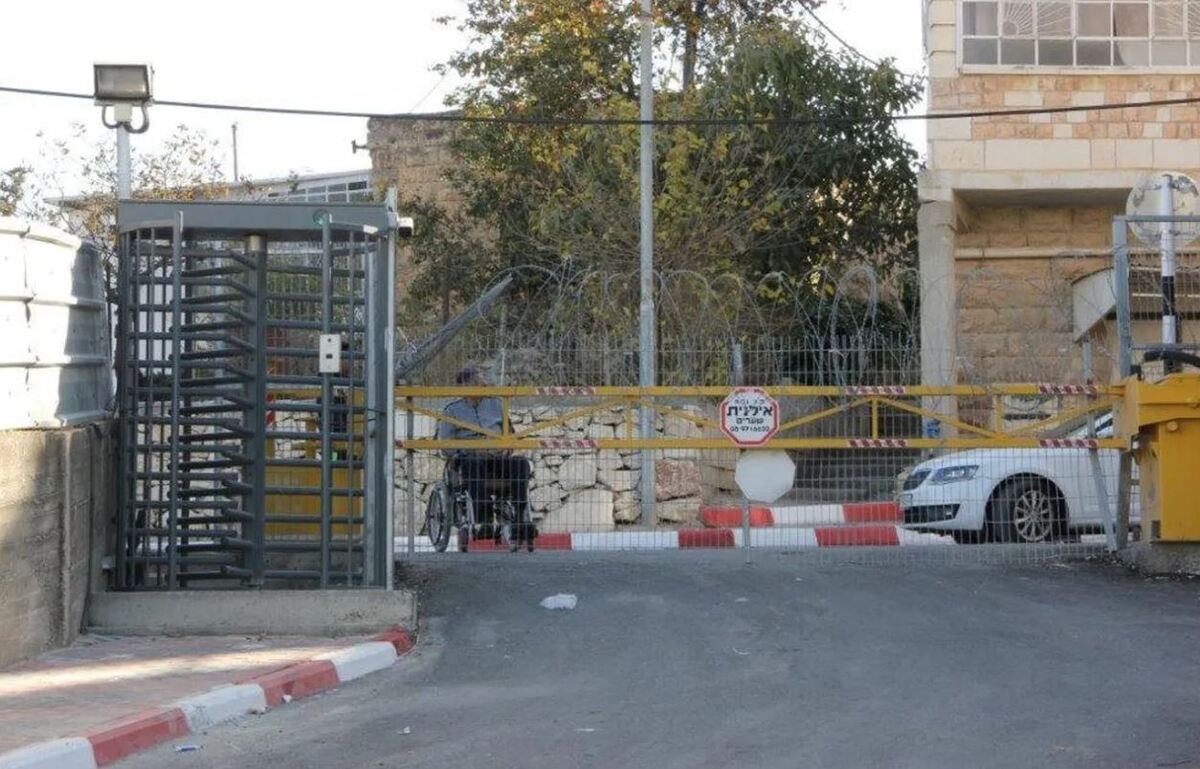
Closing the checkpoints and gates erected by the occupation army at the entrances to the cities, villages, and refugee camps in the West Bank has become the first and easiest measure taken by this army, whether there is a war or not. However, closing them in times of war seems more than justified, and even a security and military necessity for the decision-makers in the occupying state, whether in the war of extermination it has been waging against the Gaza Strip since October 7, 2023, or the war with Iran that the occupying state initiated a few days ago.
There are no accurate statistics on the number of gates that the occupation forces use to close the entrances to cities, villages and camps, although some have spoken of a thousand gates. Nor is there a fixed number of checkpoints that the occupation soldiers set up on the roads - some of which are permanent and others are "flying" - but what is clear and established is that more than three million Palestinians in the West Bank are besieged in their homes and prevented from moving from one village to another or from one city to another, and even within a single village or city. The West Bank is thus transformed into a series of prisons that confiscate human freedom and paralyze the already exhausted economy.
Writers, analysts, and specialists who spoke to "I" confirmed that the closure of the West Bank, whether internally, with foreign countries, or within the 1948 territories, and the restriction of Palestinian freedom, violates international conventions and human rights laws. They emphasized that freedom of movement is a fundamental human freedom, and may not be confiscated or restricted without a clear and strong legal justification.
They said that many families are no longer able to earn a living due to unprecedented unemployment and the prolonged closure of the Israeli labor market. They emphasized that the current situation requires immediate and comprehensive interventions, most notably support for local development, international assistance, and the launch of emergency programs aimed at supporting small farmers and workers.
Escalation of closure policies, imposition of barriers and gates
Economic researcher Raja Khalidi, Director General of the Palestine Economic Policy Research Institute (MAS), said that the West Bank has been witnessing an escalation in closure policies and the imposition of barriers, gates, and concrete blocks by the Israeli occupation authorities in various areas of the West Bank, particularly at the entrances and exits of cities and on the roads connecting Palestinian communities.
Khalidi pointed out that these Israeli measures aim to restrict movement and access, as well as the crossings separating the West Bank, the 1948 territories within the occupied territories, and occupied Jerusalem. These checkpoints have become a primary tool for dominating and imposing sovereignty over all aspects of Palestinian life, in addition to placing significant economic pressure on various sectors and economic activities, which are now dependent on the opening or closing of these checkpoints.
Khalidi addressed the economic developments in light of the comprehensive closure of the West Bank. He said the first development relates to the Palestinian banking system. On June 10, the Israeli side threatened to cancel the legal exemption that Israeli banks had relied on to process shekel currencies with Palestinian banks. This threatens Palestinian banks with the Israeli financial system, as approximately 53 billion shekels ($15.2 billion) pass through this system annually, and its disappearance poses a risk to the financing of basic services such as food, fuel, and electricity.
Cash pressures and immediate losses
He continued: "The second development relates to monetary pressures and immediate losses. The financial decisions issued by Finance Minister Smotrich will lead to the emergence of a cash-based, shadow economy in the West Bank. This coincides with the Palestinian Authority's delay in paying employee salaries, which will lead to a growth in the black market."
Khalidi emphasized that the third development concerns the withholding of clearance funds. The average monthly withholding of clearance funds is estimated at approximately 300 million shekels, equivalent to 40% of the Palestinian Authority's revenues. The total withheld during the war exceeds 800 million shekels, and so far throughout the year, it amounts to approximately 2 billion shekels.
The fourth development, according to Khalidi, is the ongoing economic contraction. He said, "According to the Palestine Monetary Authority's forecasts, economic growth in the West Bank and Gaza Strip is expected to contract by approximately 1.8% in early 2023, with per capita income declining to $4,344 annually. This is in addition to a 26% decline in real GDP in the West Bank in 2024."
He added, "Finally, inflation," noting that the inflation rate rose to 5.9% in 2023, coinciding with the decline in the value of the shekel and a rise in import prices.
Future risks of continued closure
Al-Khalidi noted the future risks of the continued closure, which are as follows: First, unemployment rates are expected to rise to 30%-35% in the West Bank if the comprehensive closure continues, based on previous estimates by the Palestinian Central Bureau of Statistics.
Second, the erosion of the investment environment due to economic instability and the disruption of projects. Third, the disintegration of agricultural and industrial production chains. Fourth, the threat to local food security and the rise in prices of basic commodities. Fifth, the increased likelihood of internal migration from marginalized villages and the outward migration of young minds.
Al-Khalidi stressed that the current situation requires immediate and comprehensive interventions at multiple levels, most notably:
• Supporting local development by encouraging local production, home economics and solidarity.
• International support to pressure for lifting restrictions on the movement of people and goods.
• Rebuilding supply chains by establishing decentralized distribution centers to ensure continuity of supply.
• Targeting affected groups by launching emergency programmes aimed at supporting small farmers and informal workers.
• Enhancing economic resilience by developing flexible financing tools and supporting small projects.
The occupation government is waging an economic war against the Palestinians.
For his part, Shaher Saad, Secretary-General of the Palestinian Workers Union, said that the closure imposed on the northern governorates, which includes movement and roads between cities, towns, and villages, is having a significant impact on Palestinian economic activity. It is a war waged by the occupation government against the Palestinian people, with the economic strangulation increasing.
He pointed out that the 80,000 workers in the West Bank are suffering daily losses estimated at 10 million shekels, in addition to the ongoing closures.
He explained that there are more than 1,000 iron gates and military checkpoints manned by the occupation forces that prevent or impede the movement of citizens between the cities, villages, and towns of the northern governorates. For example, the road between Beit Furik and Nablus takes 10 minutes, but with the presence of the checkpoint, it now takes two to three hours due to arbitrary procedures of searches and arrests.
Saad pointed out that 40,000 workers are working illegally inside the occupied territories, at least 10,000 of whom commute daily from their homes to their workplaces and back.
Agriculture has been dealt a severe blow.
He explained that many sectors were directly affected, including agriculture, which suffered a severe blow, with some seasonal agricultural products now subject to destruction due to their inability to reach the Palestinian market. This, in the long term, contributes to the structural destruction of this sector, which is one of the vital sectors contributing to the concept of food security in the Palestinian food basket.
Saad warned that the transportation sector is not only facing closures but also extortion related to fuel and petroleum products, which have become the vital lifeline for the sector. This will lead to a reduction in services and open the way for further exploitation.
Saad pointed to the public sector's role in the Palestinian labor market, which has become a major source of buying and selling during the ongoing curfew. This has paralyzed economic activity in Palestinian markets, with no salaries for employees and no income for workers in the occupied territories, negatively impacting the West Bank economy.
He said: "When there is no commercial activity in the markets, many employers have terminated the services of their workers due to the weak activity in the Palestinian labor market, which will have an impact on the remaining trade sector that employs the workforce.
The necessity of involving all segments of society in an emergency plan
Saad expressed the union movement's continued fear of the worsening economic crisis, which is directly impacting the economic situation of Palestinian families, with direct exposure, threatening civil peace within Palestinian society and causing us, as a union movement, to lose control over this reality as these needs increase.
Saad warned of the serious consequences resulting from the living conditions. He said, "Not everyone can bear these losses and not work. The closures also indirectly impact the prices of products and goods, which are rising day by day."
Saad continued: "Added to all of the above are the West Bank workers who enter and return to the occupied territories daily, and whose movement is obstructed by checkpoints or even by being pursued at the separation wall. Here we are talking about 40,000 workers working illegally in Israel today, including at least 10,000 workers who commute daily."
Saad addressed a message to the Palestinian government to involve all segments of society in an emergency plan that seeks to persevere within the limited available capabilities within the closed geography plan. This is a methodology that preceded the Palestinian people in the 1967 phase in confronting the occupation in order to persevere and survive within limited resources.
Saad concluded by saying, "As a union, with all our cadres, we are prepared to join all committees at the national and community levels to contribute to developing plans for this offensive by the occupation to wipe the Palestinian cause off the map. Justice cannot be achieved in the distribution of limited resources to vulnerable segments of society without the involvement of the trade union movement."
Paralyzing daily life in the West Bank
In turn, academic and lawyer Dr. Mahmoud Abu Suway, who specializes in public law, emphasized that in light of the current situation, especially after the outbreak of the Israeli-Iranian war, the Israeli occupation authorities have moved to impose a tight security cordon, reaching the point of comprehensive closures of some areas in the West Bank through the use of iron gates and concrete blocks, in addition to partial closures and tightening the noose on citizens through thorough inspections at military checkpoints and the creation of stifling traffic jams, especially regarding movement between governorates, or even within a single governorate and the surrounding villages and neighborhoods. This has naturally led to the disruption of the movement of residents and prevented many citizens from reaching their places of work, universities, hospitals for treatment, or performing their social duties, paralyzing daily life in the West Bank in general in many areas.
He explained that these measures would inevitably disrupt the economic cycle and negatively impact the Palestinian economy as a whole.
Abu Suwai pointed out that freedom of movement is a branch of personal freedom, which is one of the fundamental freedoms inherent to human beings and which may not be confiscated or restricted without a clear and strong legal justification.
Freedom of movement within and outside one's country
He explained that freedom of movement includes the right of an individual to move from one place to another within his country, and to leave and return to it without restriction. Article (13) of the Universal Declaration of Human Rights stipulates that “everyone has the right to freedom of movement and to choose his residence within the borders of each state.” It also stipulates that “everyone has the right to leave any country, including his own, and to return to his country.” This was confirmed by the International Covenant on Civil and Political Rights in Article (12), which included a reference to the right of every individual to freedom of movement and to choose his residence within the state, explaining that this right may not be restricted except in exceptional cases related to national security or public order, conditions that do not apply to what is currently happening in the West Bank.
He said, "Based on this, states, including the occupying power, must guarantee freedom of movement for citizens and not impose restrictions on this right except in their best interests, in accordance with legal standards." He emphasized that the Israeli occupation authorities must respect the provisions of international human rights law, even within their relationship with Palestinian citizens in the West Bank.
He added: "Despite the occupation authorities' claim that the purpose of these closures is security and military considerations and defensive reasons, these arguments are flimsy and do not fall within the legal justifications for restricting this right, in accordance with the aforementioned international agreements. This is especially true given that the ongoing war is taking place outside the borders of the West Bank, and the free movement of individuals within the West Bank will in no way affect the security or military repercussions of the ongoing war."
The closures are not related to any military necessity.
He continued: "Therefore, the continued closure of checkpoints and the prevention of Palestinians from moving freely has nothing to do with any actual military necessity, but rather falls within the internationally prohibited policy of collective punishment, which the occupation authorities have repeatedly imposed on Palestinians under the pretext of military and security necessity.
He stressed that this policy constitutes a clear violation of international humanitarian law, particularly Article (33) of the Fourth Geneva Convention, which clearly and explicitly prohibits the imposition of collective punishment on civilians, which applies to the case of violations affecting the freedom of movement of Palestinians.
Abu Suwai emphasized that all measures taken by the Israeli occupation authorities, including closures, restrictions at checkpoints and gates, and the closure of entrances to villages and cities, disrupt the daily, economic, educational, and social life of Palestinians. These measures are in flagrant violation of international law, particularly international humanitarian law and international human rights law.
A major contraction in the economy due to the Israeli war
"It's no secret that the Palestinian economy is suffering a significant contraction due to the Israeli war on the Gaza Strip and the West Bank, which has lasted for more than a year and eight months, and which has resulted in a significant increase in poverty and unemployment rates," said economic journalist Ayham Abu Ghosh.
He added: “In the West Bank, the economic crisis has deepened due to several factors, due to occupation measures aimed at economic strangulation and creating a repellent environment. Therefore, the occupation has followed several systematic policies, including: preventing Palestinian workers from going to their jobs within the Green Line, which has deprived the Palestinian market of monthly cash liquidity estimated at approximately 1.5 billion shekels, in addition to withholding Palestinian tax funds (clearance tax), which has prevented the government from disbursing full salaries, meaning that the markets are deprived of nearly a billion shekels per month. In addition, obstacles have been created for Palestinians of 1948 from shopping in the West Bank, as well as targeting the infrastructure of Palestinian cities, villages and towns, depriving Palestinians of their agricultural and water wealth in Area C and elsewhere, and erecting checkpoints that restrict movement and have negative repercussions on the movement of goods and individuals.”
The closure appears to be for security reasons, but its goal is to strangle the Palestinian economy.
Abu Ghosh believes that the occupation's decision to impose a comprehensive closure on the West Bank, while seemingly a security-related measure, is in fact a tool to continue strangling the West Bank economy. This will lead to further pressure on various commercial establishments, especially since more than 90% of them are small businesses with a limited investment base and are unable to cope with crippling crises for an extended period.
Abu Ghosh emphasized that the economic impact of this closure depends on its duration and continuity. The longer it lasts, the more disruption to the economic cycle, the greater unemployment and poverty it will cause. We may also witness disruptions to the supply of goods and services to Palestinian urban centers.
In the long term, Abu Ghosh added, "If these closures continue for a long period of time, they will lead to fundamental changes in the structure of the Palestinian economy, particularly transforming Palestinian cities into less desirable commercial destinations, and instead shifting toward a local economy. This means isolating villages and towns from urban centers, which could lead to an economic blow to the cities that contain commercial centers."
Regarding public finances, Abu Ghosh emphasized that these measures will further deplete the Palestinian Authority's public revenues, as total taxes depend primarily on consumption, which will inevitably decline given the current constraints.
The West Bank has become a big prison
For his part, economic advisor Hazem al-Qawasmi asserted that the West Bank has become a large prison, with 138 rooms—the number of municipalities now completely separated from one another. Not only have the eleven governorates been separated, but each municipality is now separated from the neighboring municipality.
He added: "What's even worse is that residents of villages adjacent to municipalities are unable to reach major cities, shop, or attend to their daily needs. It doesn't matter what we call these divisions and sieges—whether we call them enclaves, cantons, or apartheid."
Al-Qawasmi asserted that the Israeli army now controls every corner of the West Bank by remote control, using military checkpoints and iron gates. It closes off cities and villages whenever it pleases, just as it does today, and opens some whenever it pleases. There is no force or entity compelling it to do anything.
Al-Qawasmi continued: "Even if the Palestinian economy collapses even more than it already does, no one cares about what's happening in the West Bank, with people being impoverished, unemployed, and financially and economically strangled."
A large part of the population has become poor, indebted and unemployed.
He pointed out that many Palestinian families are no longer able to secure their daily sustenance due to unprecedented unemployment, the prolonged closure of the Israeli labor market, and the deteriorating situation of the Palestinian private and public sectors.
He said that a significant portion of the Palestinian people has become poor, indebted, and unemployed, threatening dire economic, social, and security consequences, the signs of which are already looming on the horizon in Bethlehem and other cities that are beginning to experience a shortage of petroleum and its derivatives.
Al-Qawasmi emphasized that although the Palestinian market could withstand an additional three months if the Israeli-Iranian war continues, it is vulnerable to a sudden and devastating collapse, especially given the presence of an extremist Israeli government that is indifferent to the lives of Palestinians and uses every means to besiege and starve them in order to displace them and liquidate the Palestinian cause.


Share your opinion
The "West Bank closure" deprives Palestinians of their freedom and destroys their exhausted economy.