





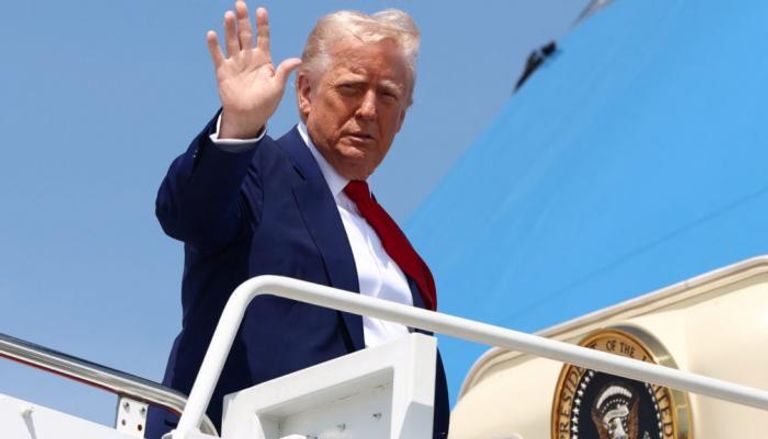
US President Donald Trump said on Wednesday that US personnel were being evacuated from the Middle East because it "can be a dangerous place," adding that the United States would not allow Iran to possess a nuclear weapon.
Reuters reported earlier on Wednesday that the United States was preparing to partially evacuate its embassy in Iraq and would allow military family members to leave some locations across the Middle East due to increased security risks in the region, according to US and Iraqi sources.
The four American sources and the two Iraqi sources did not clarify to Reuters the nature of the security risks that prompted this decision. Reports of the potential evacuation led to a more than 4% increase in oil prices.
A US official stated that the State Department had authorized voluntary departures from Bahrain and Kuwait.
The State Department updated its worldwide travel advisory Wednesday evening to reflect the latest developments in the US situation. On June 11, the State Department ordered the departure of non-essential US government employees due to escalating regional tensions, according to guidance.
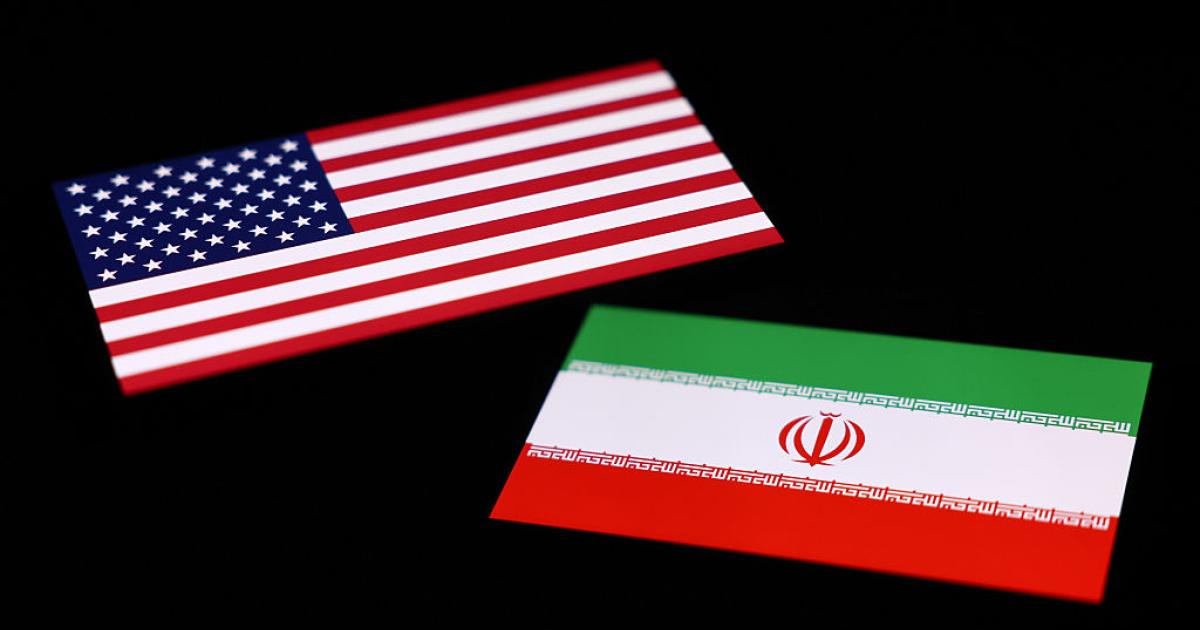
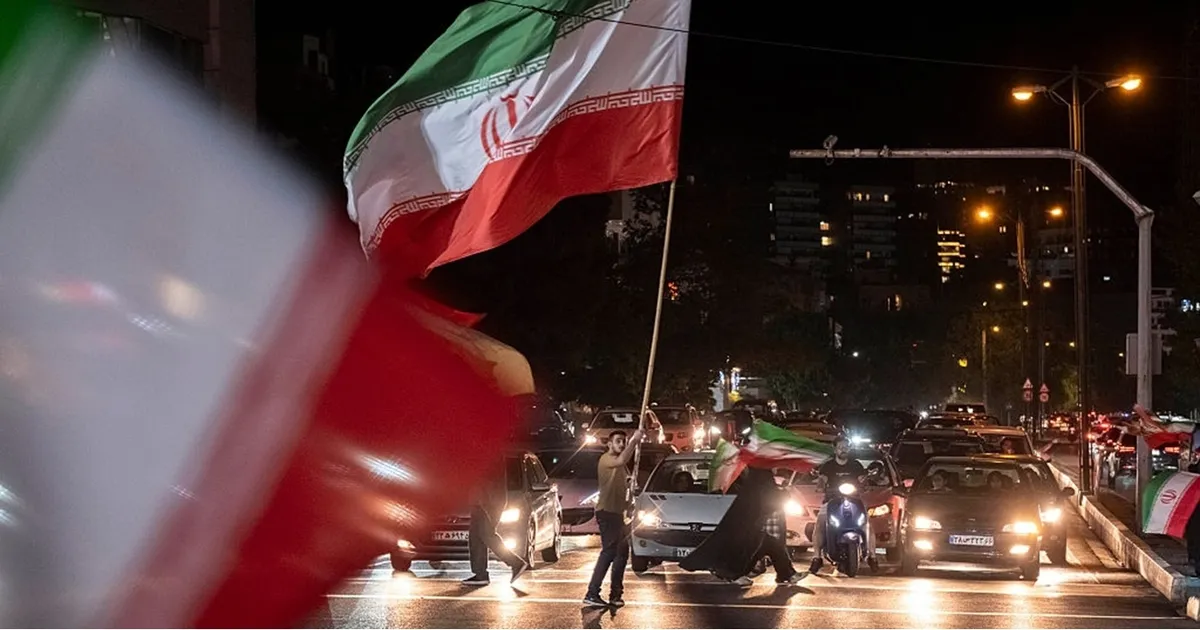
The US decision to evacuate some employees comes at a volatile time in the region. Trump's efforts to reach a nuclear agreement with Iran appear to have reached a dead end, and US intelligence indicates that Israel is preparing to launch an attack on Iranian nuclear facilities.
"They're being evacuated (from the Middle East) because it can be a dangerous place, and we'll see what happens. We've issued a notice to get out," Trump told reporters.
When asked if anything could be done to de-escalate tensions in the region, Trump said, "They can't have a nuclear weapon. They simply can't have a nuclear weapon."
Iran has consistently stated at the highest levels that it has no intention or plan to possess nuclear weapons.
Trump has repeatedly threatened to strike Iran if the stalled talks over its nuclear program fail, and in an interview published earlier Wednesday (and reported by the Al-Quds newspaper), he said he has little confidence in Tehran agreeing to halt uranium enrichment, a key US demand. Iranian Defense Minister Aziz Nasirzadeh also said on Wednesday that if Iran is attacked, it will respond by striking US bases in the region.
The US Embassy in Kuwait announced in a statement on Wednesday that it "has not changed the status of its employees and remains fully operational."
It is noteworthy that the United States has a military presence throughout the major oil-producing region, with bases in Iraq, Kuwait, Qatar, Bahrain, and the United Arab Emirates.
A US official stated that US Defense Secretary Pete Hegseth authorized the voluntary departure of military family members from locations throughout the Middle East. Another US official explained (to Reuters) that this primarily concerns family members in Bahrain, where most of them are stationed.
A third US official said, "The State Department is planning to conduct an orderly departure from the US embassy in Baghdad. The goal is to do so through commercial means, but the US military stands ready if assistance is requested."
The official Iraqi News Agency quoted a government source as saying that Baghdad had not recorded any security indicators that would require an evacuation.
Another US official said there had been no change to operations at Al Udeid Air Base in Qatar, the largest US military base in the Middle East, and that no evacuation order had been issued for employees or families associated with the US embassy in Qatar, which was operating as usual.
Oil futures rose $3 on reports of the Baghdad evacuation, with Brent crude reaching $69.18 per barrel.
Earlier on Wednesday, the UK Maritime and Transport Agency warned that rising tensions in the Middle East could lead to an escalation in military activity, potentially impacting shipping in vital waterways. It advised ships to exercise caution when sailing through the Gulf, the Gulf of Oman, and the Strait of Hormuz, all of which border Iran.
The British Foreign Office said it is monitoring the situation and will keep its embassy in Iraq under constant review following the US moves.
Iraq, a rare regional partner for both the United States and its arch-foe Iran, hosts 2,500 US troops, even though Tehran-backed militias are linked to its security forces.
Tensions have been escalating within Iraq since the start of the war on Gaza on October 7, 2023, with Iranian-aligned armed groups in the country repeatedly attacking US forces, although the attacks have subsided since last year.
Israel and Iran also exchanged fire twice last year—the first direct attacks of their kind between the region's arch-enemies—as missiles and drones flew through Iraqi airspace.
Israel, a key regional ally of the United States, has also struck Iranian-linked targets across the region, including Iraqi militant groups operating inside Iraq and neighboring Syria. In recent months, the United States has deployed more military assets to the Middle East, including B-2 bombers, which have since been replaced, and extended the deployment of a second aircraft carrier, which has since departed.
The next round of nuclear talks between Iran and the United States is scheduled to take place in the coming days, and Iran is expected to present a counterproposal after rejecting an offer from Washington.
A senior Iranian official told Reuters that the military threat has always been part of US negotiating tactics with Iran.
The official warned that "any military action against Iran, whether by the United States or Israel, would have dire consequences."
Iran's mission to the United Nations posted on its website on Wednesday: "Threats of 'overwhelming force' will not change the facts: Iran does not seek a nuclear weapon, and US militarism only fuels instability."
This statement appeared to be a response to an earlier comment by General Michael "Eric" Kurilla, commander of US Central Command, that he had presented the president with a "wide range of options" to prevent Iran from acquiring a nuclear weapon.
Kurilla postponed his testimony to US lawmakers on Thursday due to tensions in the Middle East, according to other US officials.

ARAB AND WORLD
Thu 12 Jun 2025 9:28 am - Jerusalem Time
Washington withdraws some of its employees from the Middle East amid escalating tensions with Iran.
Tags
MORE FROM ARAB AND WORLD
Details of the Iranian-American Memorandum of Understanding: A Roadmap to End the War and Lift Sanctions
Race Against Time: Trump Leads Intensive Diplomatic Efforts to Prevent an Iranian-Israeli Confrontation
Tehran announces completion of final framework agreement with Washington under the leadership of Mojtaba Khamenei
Share your opinion
Washington withdraws some of its employees from the Middle East amid escalating tensions with Iran.