







Dr. Hussein Al-Deek: Witkov is seeking to reach an agreement, but he clashes with Netanyahu's approach regarding a temporary truce and the continuation of the war.
Awni al-Mashni: Although Netanyahu is able to "create justifications" to thwart any agreement, his margin for maneuver has become "extremely narrow."
Dr. Jamal Harfoush: The failure to identify a legal guarantor for the implementation of the provisions of the Witkoff proposal before a competent international court or body undermines its credibility.
Suleiman Basharat: Witkov's efforts aim to reach an interim agreement that goes beyond a temporary truce, but falls short of a complete end to the war.
Dr. Dalal Erekat: The continued military escalation, in parallel with talk of a ceasefire, reveals Israel's use of Gaza as a tool for regional and international pressure.
Dr. Abdul Majeed Sweilem: American seriousness and Hamas' flexibility make it likely that an agreement will be reached soon to avoid a regional explosion.
All eyes are on the US efforts led by Middle East Special Envoy Steve Witkoff and his optimism about reaching an agreement on the Gaza Strip, raising questions about whether there is any real hope of ending the war or whether it is merely a temporary truce.
In separate interviews with Al-Quds, writers, political analysts, experts, university professors, and specialists say that this proposal comes amid mounting international and regional pressure to avoid a wider regional explosion, especially with ongoing tensions between Israel and parties such as Yemen and Iran.
They point out that while Hamas has announced a general framework including a ceasefire and prisoner exchange, challenges remain due to the divergent approaches between the parties, raising questions about the seriousness of the agreement and its ability to achieve a permanent solution.
They believe the main dilemma lies in the Israeli approach, which seeks a temporary truce focused on releasing prisoners while military operations continue, while the Palestinian approach calls for a comprehensive and permanent cessation of hostilities, along with the reconstruction of Gaza and the launch of a political process.
These efforts are viewed by writers, analysts, specialists, and university professors as an attempt to mitigate international criticism of Israel and restore its image, while maintaining regional stability that serves American interests, especially in light of other regional issues such as Yemen and Iran.
However, analyses highlight the seriousness of US efforts to advance the agreement, supported by Palestinian flexibility demonstrated by Hamas in dealing with mediators, which increases the likelihood of reaching a compromise. However, the absence of binding international guarantees and clear accountability mechanisms raises concerns that the agreement is merely a temporary truce serving Israeli political and military objectives, without a solution that ends the war. The question remains: Will Witkoff's proposal be a step toward a just peace, or merely another stage in managing the crisis?
The Palestinian Approach: Stop the War and Reconstruct
Dr. Hussein Al-Deek, a writer and political analyst specializing in American affairs, says that intensive efforts led by US Middle East envoy Steve Witkoff are seeking to reach an agreement to stop the war in the Gaza Strip. However, these efforts are clashing with Israeli Prime Minister Benjamin Netanyahu's political approach.
Al-Deek points out that Netanyahu is seeking a temporary truce aimed at releasing Israeli prisoners only, while the war continues. Meanwhile, the Palestinian approach calls for a permanent and comprehensive cessation of hostilities, the reconstruction of the Gaza Strip, and the launching of a Palestinian political process.
Al-Deek points out that the main problem lies in the conflict between the two approaches, with the US administration exerting pressure on the Palestinian side, which he described as the "weaker party," while avoiding pressuring Netanyahu and his government.
Al-Deek explains that Washington is exploiting its regional actions, including in Syria, Iran, Yemen, and Lebanon, to ease pressure on Israel in the Palestinian-Israeli conflict. This weakens its position vis-à-vis Netanyahu and limits its ability to impose a comprehensive and lasting agreement to end the war.
Al-Deek believes that this trade-off between regional issues reflects an American strategy that prioritizes Israeli interests over just solutions.
Al-Deek points out Hamas's flexibility in dealing with international initiatives, responding to pressure from Qatari and Egyptian mediators. However, the fundamental dilemma remains the position of Netanyahu and his government.
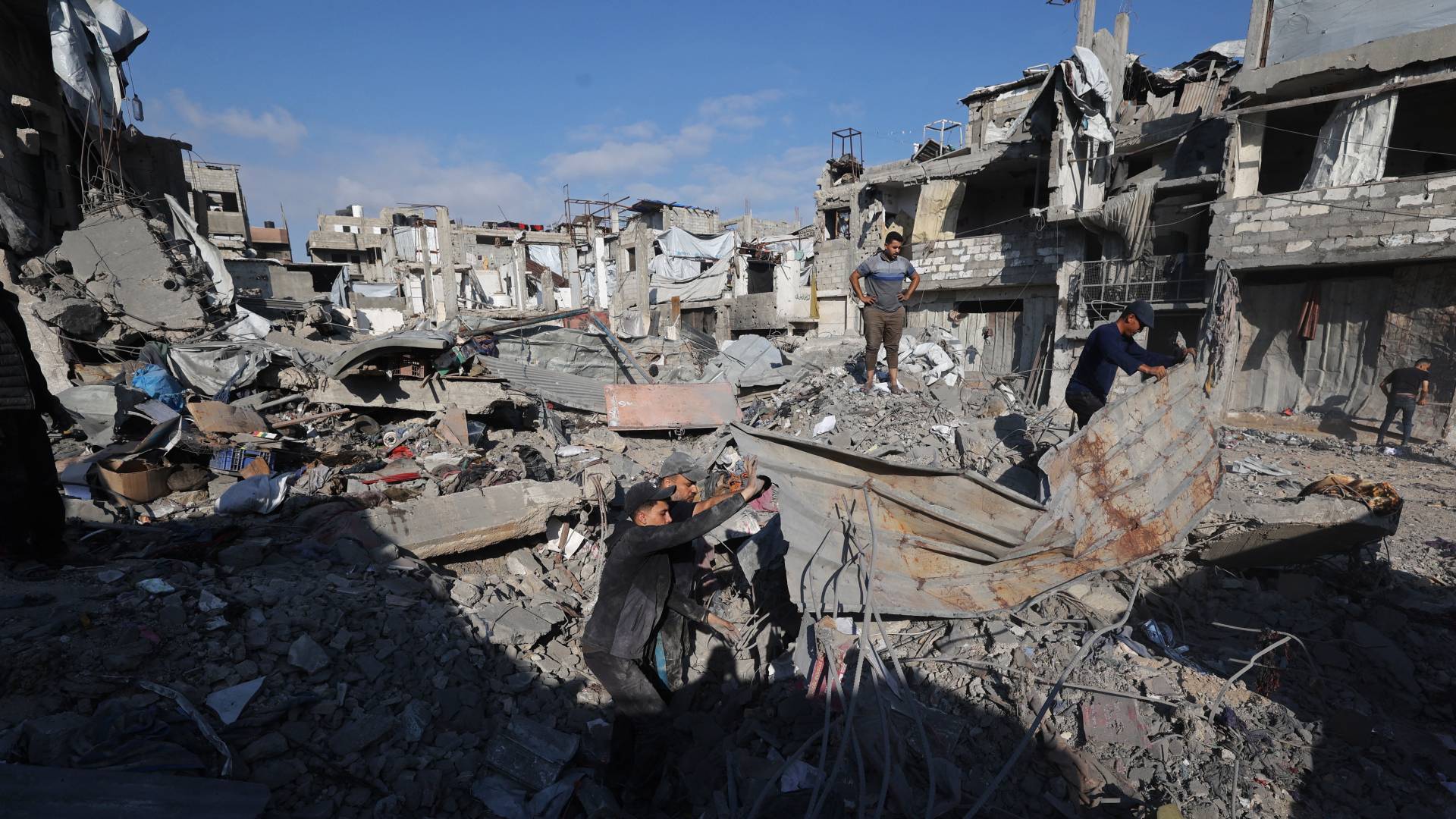
Al-Deek points out that Israel seeks escalation and control, as it continues its military operations in the Gaza Strip and the West Bank, including massacres and unilateral measures such as land confiscation and annexation decisions, particularly in Area C, which aim to eliminate any future Palestinian political entity.
Continuing negotiations... and war, destruction, and genocide
According to Al-Deek, Israel is adopting a traditional strategy that combines continuing negotiations for many years while maintaining other military and political options, including war, destruction, and annihilation in Gaza.
Al-Deek explains that this strategy is not new, but has been repeated since the signing of the Oslo Accords with the Palestine Liberation Organization, as Israel continues to negotiate without abandoning its options of aggression.
Al-Deek believes that the current negotiations could extend for a year or more, while military operations in Gaza continue, revealing a systematic evasion.
Al-Deek asserts that Netanyahu is not facing a dilemma in stopping the war itself, but rather in achieving the goal of displacement, which enjoys the support of the majority of Israeli society, according to opinion polls, which support resuming the war after the release of Israeli prisoners.
Al-Deek points out that this position reflects a deeply rooted ideological vision within the Israeli right, supported by currents within the American right that embrace religious and historical narratives about the "Promised Land" and the "return of the Messiah."
Al-Deek asserts that Israel, as a civil institutional state, adopts a future strategic vision that combines all options—negotiation, war, and annexation—to achieve its supreme national interests, without ruling out any option.
Al-Deek explains that what is happening is not merely a maneuver, but rather a combination of multiple options aimed at strengthening Israeli hegemony, making reaching a fair agreement difficult in light of weak American support for the Palestinian cause.
The war in the Gaza Strip has reached its "final outcome."
For his part, writer and political analyst Awni Al-Mashni asserts that the war in the Gaza Strip has reached its "final outcome," noting that all political and security data indicate that its objectives have been exhausted.
Al-Mashni explains that Israeli security leaders acknowledged that "nothing else could be done" in Gaza, while Israel's allies, including the US administration, reached a similar conclusion: the war must be stopped immediately.
According to Mishni's analysis, the sole motivation for the continuation of the war lies in the adherence of Israeli far-right leaders, led by Prime Minister Benjamin Netanyahu and Finance Minister Bezalel Smotrich and National Security Minister Itamar Ben-Gvir, to the idea of displacing the Palestinians.
Al-Mashni points out that these leaders refuse to acknowledge the failure of the displacement plans, which they considered a "historic opportunity" that would not be repeated for decades.
Al-Mashni points out that ending the war without achieving displacement means, for them, confronting an inevitable reality: the establishment of a Palestinian state.
Netanyahu faces international and domestic pressure
Al-Mashni asserts that Netanyahu is facing increasing international and domestic pressure, along with the position of the Israeli security establishment and the United States, which makes it difficult for him to continue his evasiveness.
Despite Netanyahu's ability to "create justifications" to thwart any agreement, Al-Mashni believes that the margin for maneuver has become "extremely narrow," as neither the world nor the Israeli domestic situation can tolerate the continuation of the war.
Al-Mashni notes that the region is approaching an imminent agreement within "critical hours or days," warning that the "ideological blindness" of the racist Israeli right is the only justification for the continuation of the war.
Al-Mashni points out that any surprises Netanyahu might create will not be able to change the reality that requires a ceasefire as the most realistic option.
A temporary political truce in favor of Israel and America
For his part, Professor Jamal Harfoush, Professor of Scientific Research Methods and Political Studies at the University of Brazil's Academic Research Center, warns that any agreement that does not include accountability for perpetrators of crimes under international law and does not put a definitive end to the war in Gaza cannot be considered a "true end to the war of extermination." Rather, it is merely a "temporary political truce" that serves American and Israeli political interests.
Harfoush asserts that US Special Envoy Steve Witkoff's statements expressing optimism about the imminent conclusion of an agreement, along with Hamas's announcement of a "general framework" including a ceasefire, an Israeli withdrawal from Gaza, and a prisoner exchange, are part of Witkoff's amended proposal. However, the proposal suffers from the absence of a clear international legal framework governing the agreement.
Harfoush points out that the failure to identify a legal guarantor for the implementation of the provisions of the Witkoff proposal before a competent international court or body undermines its credibility.
Harfoush explains that similar conflicts are usually subject to binding international guarantees, something the current agreement lacks, leaving it vulnerable to violations.
Harfoush points out that the announced framework does not include any clause regarding holding Israel accountable for crimes documented in UN reports, such as the report of the Human Rights Council's Commission of Inquiry and the Amnesty International report.
Harfoush questions whether "stopping the killing" necessarily means "ending the genocide" without achieving justice, emphasizing that any agreement that ignores criminal accountability remains incomplete and fails to address the roots of the conflict.
In analyzing the American role, Harfoush explains that the administration of President Donald Trump is adopting a mix of overt diplomacy and tactical positions biased toward "Israel's security."
Unprecedented internal pressures in Israel
Harfoush believes that Witkoff's statements do not necessarily reflect a unified position of the US administration, but rather are being used as a tool to alleviate domestic and international pressure, especially with the rise of voices opposing support for the Israeli war.
Harfoush points out that the Trump administration, through this agreement, seeks to restore the United States' image in the eyes of global public opinion, which has been negatively affected by its open support for Israel in a war that has left more than 100,000 dead and wounded.
Harfoush discusses the Israeli political situation, noting that Benjamin Netanyahu's government is facing unprecedented domestic pressure from the extremist religious Zionist movement, making the agreement a tool for recalibrating Israeli internal discourse rather than a step toward genuine peace.
Harfoush explains that there is a rejection within the Israeli security cabinet, led by figures such as National Security Minister Itamar Ben-Gvir and Finance Minister Bezalel Smotrich, of any agreement that includes a comprehensive cessation of operations without the "complete eradication of Hamas," rendering the agreement unworkable.
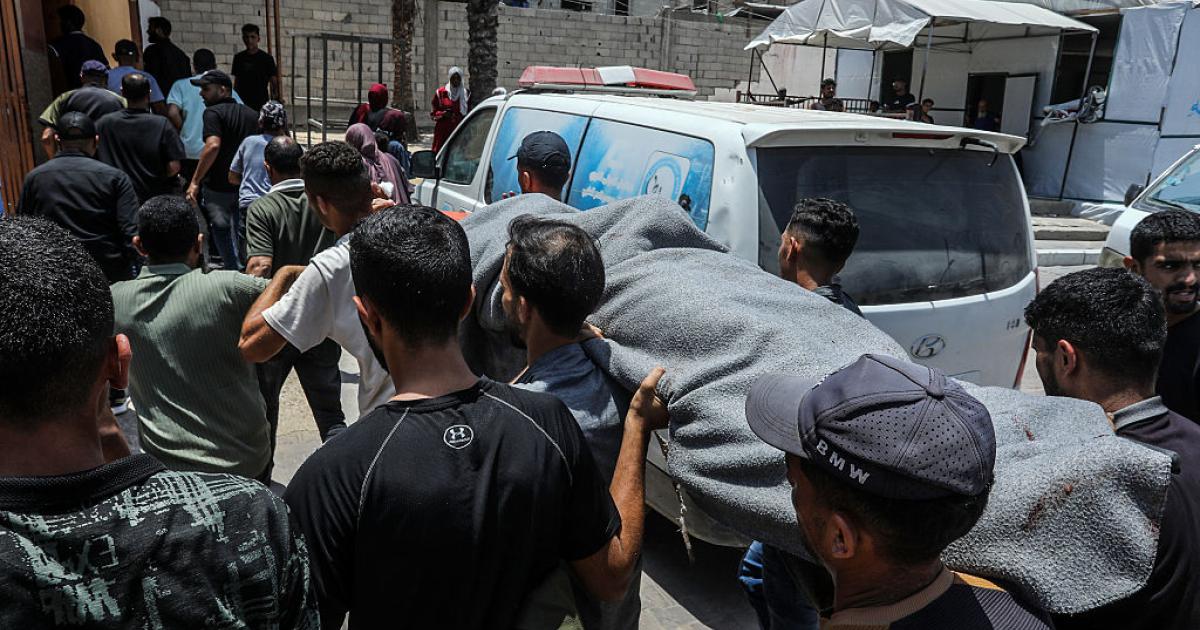
Despite leaks about the terms of the agreement, Harfoush asserts that Israeli military operations have not ceased, with massacres continuing in Rafah and the Gaza Strip environs, indicating that the "intent to calm" does not reflect a change in systematic military behavior.
Hamas and the "steadfastness tactic"
Harfoush believes this reality confirms that the proposed agreement is a "conditional political truce project" that lacks legal transparency and elements of transitional justice.
Regarding Hamas, Harfoush explains that it is adopting a "steadfastness tactic," appearing positive toward mediators and declaring its readiness for a ceasefire, but it is aware that Israel is not negotiating in good faith.
Harfoush points out that the movement considers any agreement that is not internationally guaranteed to be interpreted later as a surrender, not a political victory.
In the short term, Harfoush expects a conditional, time-limited humanitarian truce agreement, with the opening of aid crossings. In the medium term, there is an attempt to float the Netanyahu government by announcing an agreement that will never be implemented. In the long term, indirect negotiations may continue, cementing the status quo, while ruling out a "final agreement" without UN and Security Council intervention with guarantees under Chapter VII.
Harfoush points out that the current scene is complex, with American interests, the Zionist security vision, resistance tactics, and global popular pressure intertwining.
Harfoush asserts that what is being proposed now is a "restricted negotiation process" rather than a just peace agreement, emphasizing the continuation of "genocide in a new political guise" in the absence of accountability and justice.
Improving Israel's deteriorating international image
For his part, writer and political analyst Suleiman Basharat believes the United States is seeking to reframe the war on the Gaza Strip in order to obscure the bloody and tragic humanitarian situation that has become a source of sharp criticism of Israel, thus affecting its international image and relations with European countries.
Basharat explains that this motivation is leading Washington, under the administration of President Donald Trump, to seek alternative channels to break the war equation while preserving American and Israeli interests in the region.
According to Basharat, the United States is seeking to improve Israel's deteriorating international image as a result of the military operations in Gaza, which have drawn widespread criticism due to the human losses and extensive destruction.
Basharat points out that the continuation of the war in its current form could jeopardize American interests, prompting the United States to implement plans to resolve regional issues such as the agreement with the Houthi Ansar Allah in Yemen and negotiations with Iran.
Basharat asserts that keeping the war in Gaza unresolved will negatively impact America's strategic vision in the region.
Basharat explains that US efforts, led by envoy Steve Witkoff, aim to reach an interim agreement that goes beyond a temporary truce but falls short of a complete end to the war.
War turns into other forms
Basharat points out that the war may not cease in its traditional form, but may morph into other forms, with its effects continuing to impact key issues such as the resistance's weapons, the humanitarian situation, the entry of aid, and the Israeli military presence in Gaza. Furthermore, the displacement plan remains present in the Israeli and American imagination, but Palestinian steadfastness is confronting it.
Basharat asserts that the Trump administration will not bypass Benjamin Netanyahu's government, but will instead work to strengthen Israel's ability to impose its power and restore its deterrent image.
Basharat explains that this support reflects an American desire to preserve Israel's regional standing, even if this requires continuing the war in various forms, such as concentrated bombing operations or the elimination of resistance leaders.
In contrast, Basharat points out that the Palestinian resistance, led by Hamas, is seeking to alleviate the humanitarian crisis in Gaza, where Israel and the United States have attempted to create a rift between the resistance and Palestinian society through policies of starvation and withholding aid.
Brakes to prevent mass displacement
Basharat says that the resistance is working to put in place restraints to prevent a mass exodus, realizing that the success of this plan could lead to the elimination of the resistance.
Basharat believes the success rate of the interim agreement is high at the present time, but he warns that this agreement resembles the interim agreements adopted by Israel and the United States with the Palestine Liberation Organization after the Madrid Conference.
Basharat explains that prolonged negotiations allow Israel to establish a new reality in Gaza while pressuring the resistance to make concessions, particularly regarding its weapons.
Basharat believes that the United States and Israel are seeking to change the nature of the war without ending it, focusing on achieving long-term goals such as displacement and weakening the resistance.
Basharat believes that the proposed interim agreement may temporarily mitigate the bloodshed, but it will not completely halt the war, which will only intensify the conflict in new forms that serve Israeli and American interests.
Three basic conditions for any agreement to be considered "real"
Dr. Dalal Erekat, professor of diplomacy and conflict resolution at the Arab American University, cautions against the expressed optimism of US envoy Steve Witkoff regarding a near-term ceasefire agreement in Gaza, and Hamas's announcement that it has reached a preliminary agreement with him and is awaiting Israel's response.
Erekat says that past experience shows that Israel often uses truce negotiations as a cover for redeploying its forces, rather than as a gateway to ending the aggression.
Erekat outlines three basic conditions for any agreement to be considered "real": first, an immediate and comprehensive cessation of aggression against both Gaza and the West Bank; second, the establishment of a clear mechanism to hold perpetrators of crimes accountable and prevent their recurrence; and third, a commitment to a political roadmap that establishes a fundamental solution to the conflict rather than merely managing the crisis.
Erekat explains that declaring "optimism" or an "approaching agreement" is not enough in light of the ongoing aggression, systematic destruction, and targeting of civilians without accountability. She emphasizes that any agreement lacking these elements will be nothing more than a temporary truce that serves the continuation of Israel's hegemonic project.
Erekat points out that Israel is declaring through its actions, not its words, that it is above international law and that it is capable of imposing facts on the ground without deterrence.
No safe haven, no international protection
Erekat explains that the continued military escalation amid talk of a ceasefire reveals Israel's use of Gaza as a tool for regional and international pressure.
Erekat believes that Israel is sending two messages: the first to the Palestinians, that there is no safe haven or international protection, and that the options are limited to displacement or acceptance of the imposed reality; and the second to the world, that "Israel's security" justifies crimes against humanity.
Erekat asserts that the Israeli escalation is not merely military, but rather part of a narrative war aimed at delegitimizing Palestinian identity and existence.
Erekat warns that international silence constitutes complicity paving the way for a replication of the Nakba through contemporary mechanisms. She calls for a decisive international stance that shifts from a crisis management logic to a just solution that ends the occupation and restores full Palestinian rights. She points out that the proposal of an international peace coalition could be an opportunity if it is serious and practical.
US fears of a regional explosion
For his part, writer and political analyst Dr. Abdul Majeed Sweilem believes that the United States is making strenuous efforts to impose a ceasefire agreement in the Gaza Strip, driven by fears of a regional explosion that could threaten its interests.
Suwailem explains that Washington realizes that failure to reach an agreement could lead to an escalation of tensions in the region, especially with the increasing exchange of shelling between Yemen and Israel, and the possibility that Israeli Prime Minister Benjamin Netanyahu will launch a limited strike against an Iranian reactor, which could prompt an Iranian response that would conflict with American interests at this stage.
Suwailem points out that the United States seeks to avoid the risk of regional escalation, particularly with Yemen and Iran, and believes a ceasefire in Gaza is necessary to protect its strategic interests.
Suwailem explains that the Americans are pressuring Netanyahu to accept an agreement, but at the same time, they are trying to meet his conditions and ambitions, which are "unfulfillable" demands that are difficult to agree to.
However, Suwailem expects a compromise between the demands of Hamas and Israel, noting that the optimism expressed by US envoy Steve Witkoff reflects the seriousness of US efforts.
The US administration is serious about pushing the agreement forward.
Suwailem believes that the American efforts are not evasive, emphasizing that time does not permit manipulation, as the Americans view the situation with Yemen and Iran as a major threat that requires an urgent solution.
Suwailem explains that the US administration is serious about pushing the agreement forward, while Netanyahu may resort to evasion, but he will not be able to evade it for long due to mounting US pressure.
Suwailem believes that Netanyahu will face a "big problem" with the Americans if he continues to refuse, because the agreement serves American interests more than Palestinian ones.
Suwailem points out that Hamas supports a balanced and acceptable solution, and that the movement is prepared to reach an agreement that ends the aggression.
Suwailem believes that American seriousness, coupled with Hamas's flexibility, makes it likely that an agreement will be reached soon, one that will avoid a regional explosion and achieve temporary stability, despite the challenges posed by Netanyahu's position.


Share your opinion
Witkov is optimistic about a deal in Gaza: a real hope for an end to the war or a temporary truce?