







Dr. Ahmed Rafiq Awad: Comparing the child Ward to the image of the "Napalm Girl" is neither possible nor fair due to the different political, societal, and historical circumstances.
Daoud Kuttab: The situation in Palestine is more complicated due to Israel's control over the media narrative, which has reduced the ability to see the full truth.
Nabhan Khreisha: Despite their temporal and geographical differences, the two images reveal the ugliness of wars and their devastating impact on innocent people, with a sharp contrast in international reactions.
Dr. Irene Said: The only possible solution is not Witkoff's proposal, but rather holding an Arab summit to formulate a unified vision for addressing what is happening in Gaza.
Muhannad Abdul Hamid: Despite the difference in time, the two crimes are similar in that they target the innocence of children, and the killers belong to forces that ignore human values.
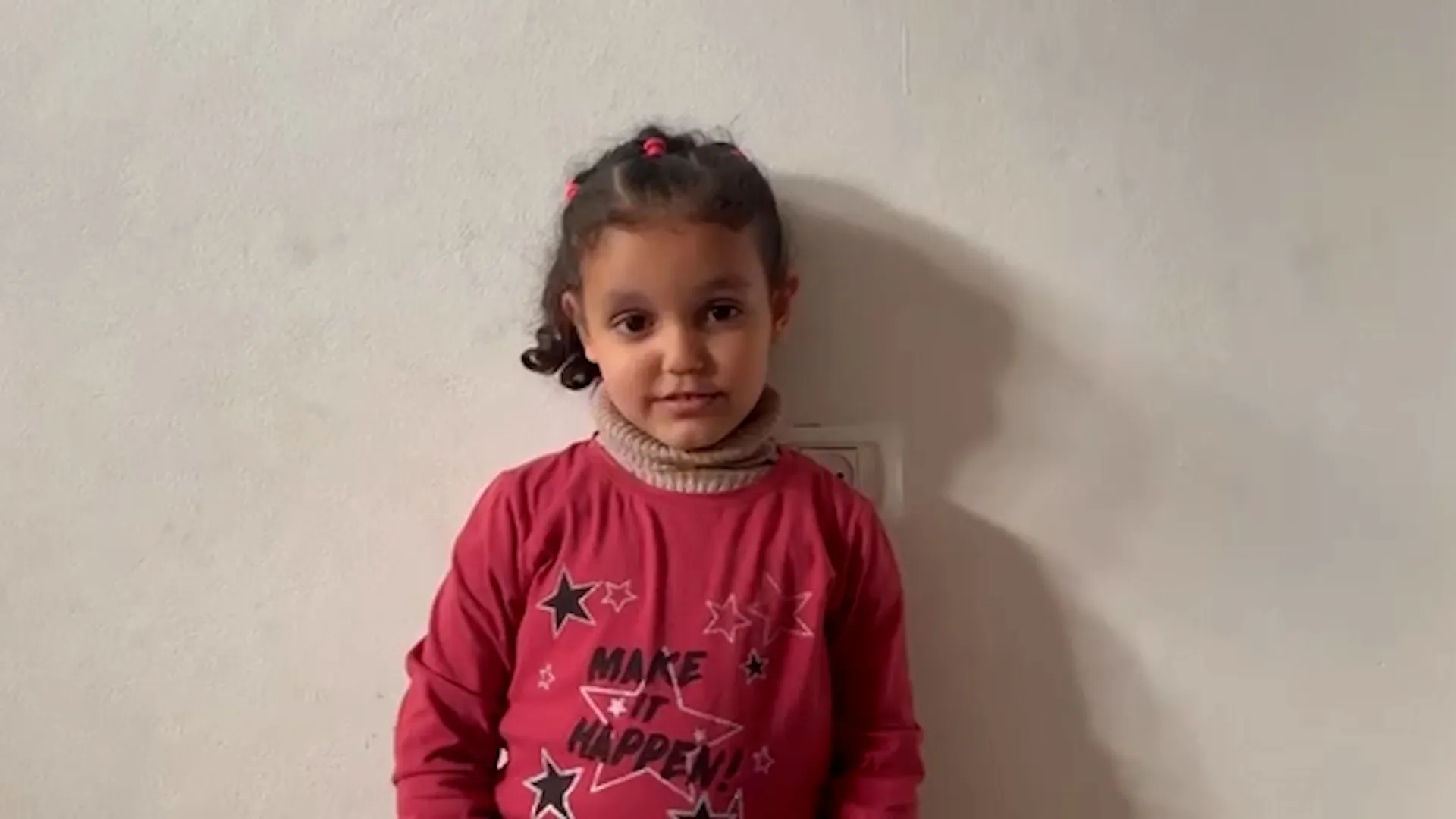
The human tragedy is renewed in the image of the Palestinian child Ward Sheikh Khalil, known as the "Child of Fire," who survived an Israeli airstrike on the Fahmi al-Jirjawi School in the al-Daraj neighborhood of Gaza City, after her entire family was killed and injured. This image brings to mind the image of the Vietnamese child Phan Thi Phuc, the "Napalm Girl," whose photograph was taken in 1972 as she fled naked from her village after a napalm bombing, and which was instrumental in bringing the war to a halt.
In separate interviews with Al-Quds, writers and political analysts say that despite the time difference between the two images, they embody the horrific nature of war and the targeting of innocent children. However, they reveal a stark contrast in international reactions. Phuc's image helped mobilize global public opinion against the Vietnam War, while Ward's image has passed without mobilizing sufficient political will to halt the Holocaust and the war of extermination against Gaza.
They explain that, in the context of the Vietnam War, the image of the "Napalm Girl" came at a time when American public opinion was immersed in resentment over a costly war in human and economic terms, supported by global liberation movements and socialist forces. That image, along with courageous journalistic investigations such as the My Lai massacre report, ignited popular and political pressure that forced the United States to gradually withdraw its forces.
In Gaza, according to writers and analysts, horrific images of dead and wounded children, including a widely circulated image of Lorde caught in the crossfire, are instantly circulating across media outlets and social media platforms. However, they face a wall of international silence, as Israel enjoys strong Western support, particularly from the United States, which is content with timid condemnations without applying real pressure to halt the genocide.
They say the absence of global leaders supporting the Palestinians, coupled with Israel's control of the media narrative by barring foreign journalists from entering Gaza and killing dozens of them, limits the impact of the horrific images.
Although they assert that the global conscience has been awakened in part by popular movements and global solidarity, writers and analysts believe that the absence of effective international pressure, coupled with continued support for Israel, is prolonging the suffering in Gaza, leaving children like Ward as victims of a merciless war.
Unfair comparison between Ward and "Napalm Girl"
Writer and political analyst Dr. Ahmed Rafiq Awad asserts that comparing the famous Vietnamese "Napalm Girl" photo, which contributed to ending the Vietnam War, with the photo of the Palestinian survivor Ward from Gaza, is neither possible nor fair due to the differences in political, societal, and historical circumstances between the two cases.
Awad explains that the "Napalm Girl" photo, taken during the Vietnam War, came at a time when American public opinion had reached its peak of anger over the ongoing war, which lasted for an entire decade and cost the United States thousands of lives and enormous economic burdens, amidst the Cold War and the indirect confrontation between the United States and the Soviet Union and China.
Awad believes that "this image was not the primary reason for stopping the war, but rather the result of a general state of American popular discontent with the futility of the war and its failure to achieve its goals. Furthermore, the Vietnamese rebels were receiving military and logistical support from superpowers like the Soviet Union and China, which made continuing the war an impractical option."
The Vietnam War was halted by major strategic factors.
Awad points out that the ceasefire in Vietnam took place a year after the girl's photo was taken, explaining that "that photo was just one of the pressure factors, but the decision to stop the war was based on strategic considerations far greater than just being affected by the photo."
Comparing the situation in Gaza and the image of the surviving Palestinian girl, Ward, Awad asserts that "the reality is completely different," saying, "Israeli society is increasingly moving toward extremism, dominated by rabbinic Torah ideas that consider the war eternal and existential, between two faiths and two peoples."
Awad continues: "The war on the Palestinians is not as costly to Israel as the Vietnam War was to the Americans. The Israeli public is convinced that this land is the 'Promised Land,' and therefore, for them, stopping the war would mean making substantial concessions, which is not what they want."
Awad points out that Israel is not under any real international pressure to end the war, and that no global coalition has emerged to effectively support the Palestinians. He asserts that "the images of massacres and violations, despite their brutality and shock, have not led to a halt to the aggression. Rather, Israel has received greater support from certain quarters."
Awad points out that the issue is not related to "global conscience," as is often promoted. Rather, the motivation behind the recent European movement is not purely humanitarian, but rather related to security and political interests, such as maintaining social peace and some countries' fears of waves of illegal immigration and potential violence should instability in the Middle East continue.
Witkoff's proposal is vague and full of details.
Awad explains that "the presence of large Muslim communities in a number of European countries has created popular pressure on governments, pushing them to adopt somewhat progressive positions, but these are still insufficient to have a real impact." He emphasizes the importance of "transforming this movement into organized lobbies and effective parties capable of pressuring European and American decision-makers."
Regarding the latest US proposal put forward by envoy Steve Witkoff, Awad describes it as "vague and full of ambiguous details that could derail any agreement." He points out that Israel claims to have agreed to a proposal different from the one Hamas agreed to, reflecting a fundamental disagreement over the interpretation of the proposal's provisions.
Awad asserts that there is still no clarity on the proposal's key provisions, such as: Will there be a permanent ceasefire? Will there be Israeli withdrawals? Will Israeli prisoners be released all at once or in stages? He comments, "The devil is in the details, and the intensity of the ambiguity casts doubt on the seriousness of the initiative."
Awad asserts that "what Gaza is experiencing today is not just a war, but a true genocide and systematic ethnic cleansing," expressing his hope that the parties will reach a comprehensive agreement that stops the Palestinian bloodshed and protects what remains of Palestinian dignity and existence in the Gaza Strip.
Painful similarity between "The Fire Child" and "The Napalm Child"
For his part, writer and political analyst Daoud Kuttab says there is a painful similarity between the suffering of the Palestinian child Ward Sheikh Khalil, known as the "Child of Fire," and the Vietnamese child Phan Thi Kim, who became famous in the photograph of the "Napalm Child" during the Vietnam War.
The writers explain that the ugliness of the two wars shares a devastating impact, emphasizing the crucial role the media plays in exposing these atrocities and stirring the global conscience.
Writers point out that the 1972 photo of the napalm-struck girl in Vietnam contributed significantly to public pressure within the United States, forcing the US government to end the war after years of fighting.
In contrast, some writers argue that the situation in Palestine is more complex due to Israel's control over the media narrative. Israel has barred foreign journalists from entering Gaza and killed more than 200 journalists, according to human rights statistics, reducing the world's ability to see the full truth about events.
Witkov is just a "postman."
Writers assert that the media has recently begun to intensify its coverage of the situation in Gaza, with an increase in the length and quality of reports, which has contributed to exposing the Israeli narrative that has long justified the massacres.
However, some writers argue that the internal Israeli movement to stop the war does not stem from genuine solidarity with the Palestinians, but rather from Israeli society's conviction that the release of prisoners is contingent on ending the war.
Writers have strongly criticized the position of US envoy Steve Witkoff, describing him as a "postman" who delivers messages without exerting real pressure on Israel to stop the war, despite the fact that the United States has the power to change the course of the war.
The writer expressed hope that the global media and political awakening, which has begun to expose "the depth of Israeli lies," would continue. He emphasized that the continuation of this momentum could lead to a radical change in the way the Palestinian issue is addressed.
A picture of a rose that did not translate into actual action from the international community.
Journalist Nabhan Khreisha, for his part, draws a tragic comparison between the Palestinian child Ward Sheikh Khalil, who was dubbed the "Child of Fire" after surviving an Israeli airstrike in the Gaza Strip that left her feet completely burned, and the Vietnamese child Pha Thi Kim Phuc, who became famous in the 1972 "Napalm Girl" photograph, when photographer Nick Ut captured a photograph of her fleeing naked from her village after a US napalm bombing.
Khreisha believes that these two images, despite their temporal and geographical differences, reveal the ugliness of war and its devastating impact on innocent people. However, he points to a sharp contrast in international reactions to them.
Khreisha explains that the image of the little girl, Ward, who was walking on her burned limbs, searching for safety amidst the rubble, sparked widespread interaction on social media platforms, but did not translate into actual action from the international community. In contrast, the image of Pha Thi Kim Phuc was a historic turning point, igniting a wave of global outrage, particularly in the United States, which led to mounting political pressure that forced the US administration to begin gradually withdrawing its forces, bringing the Vietnam War to an end after years of fighting.
Khreisha raises a pressing question: Why did Ward's image fail to achieve a similar impact? Has the nature of the media changed, or is the balance of global political power determining the reactions?
Complex geopolitical contexts in Palestine
Khreisha points out that the difference between the two cases lies not only in the human tragedy, but also in how the world reacts to the victims. In the Vietnam War, the image of the napalm-struck child became a global symbol of brutality, helping to shift public opinion and push governments to make crucial decisions. In Gaza, however, the horrific images of injured and dead children, including Ward, document Israeli violations, but they do not lead to a fundamental change in the course of the war or a halt to the bombing.
Khreisha attributes this difference to complex geopolitical contexts, where Israel enjoys strong Western support, particularly from the United States, which is content with timid condemnation or overt bias rather than exerting real pressure to end the aggression.
In a related context, Khreisha called for more serious action from Arab states, emphasizing that statements of condemnation alone are insufficient. He called for the activation of economic and diplomatic tools in international forums, such as the Security Council and the International Criminal Court, to pressure Israel to halt the "holocaust" engulfing Gaza.
An unprecedented humanitarian disaster in Gaza
Khreisha points out that the images coming out of the Gaza Strip reveal an unprecedented humanitarian catastrophe, as Israeli aggression destroys people and property, threatening the very foundations of life in the stricken Strip.
Khreisha addresses the "Witkoff Paper," the US initiative aimed at a temporary ceasefire, prisoner exchange, and reconstruction of Gaza. He explains that Hamas has expressed openness to the proposal, but demands a comprehensive cessation of hostilities as a prerequisite, given the ongoing Israeli aggression that does not differentiate between civilians and combatants.
Khreisha points out that Israeli Prime Minister Benjamin Netanyahu is evading and obstructing the ceasefire to appease extremist factions within his government and maintain the stability of his wobbly ruling coalition.
Khreisha believes that the continuation of the war in Gaza depends on the will of the international community, which must exert real pressure on Israel to end the aggression.
"When will the lives of Palestinian children become as valuable as those that stopped a war more than fifty years ago?" Khreisha asks sadly, warning that international silence could lead to the obliteration of what remains of Gaza if the global conscience does not awaken soon.
There is a striking similarity between Gaza and Vietnam, especially the genocide.
For her part, Egyptian academic and political analyst Dr. Irene Said believes that the war on Gaza bears striking similarities to the Vietnam War, particularly in its genocidal policies targeting civilians before combatants, with the goal of eliminating resistance.
Saeed explains that the Vietnam War erupted against the backdrop of a Western ideology aimed at confronting communism and repelling Soviet influence after World War II. This ideology finds a similar echo in Zionist thought, which pushes Israel toward establishing its settlement project by obliterating Palestinian identity.
Saeed points out that Israel seeks to erase Arab identity not only in Gaza, but also in the West Bank, including Jerusalem, by imposing a Jewish character on Islamic and Christian holy sites.
Saeed asserts that the far-right's incursions into Al-Aqsa Mosque represent a deliberate provocation of Muslim and Arab sentiments, fueling an escalation of the war, which was one of the triggers for the outbreak of Operation "Noah's Flood" in October 2023.
Saeed explains that these policies reflect an Israeli vision aimed at eliminating everything Palestinian.
Saeed points out that wars, whether in Gaza or Vietnam, are similar in that there is a lack of parity between the warring parties, whether in terms of military and logistical capabilities or the ability to mobilize political and diplomatic support.
The scale of the genocide in Gaza has become unbearable.
Saeed points out that the scale of the material and human destruction in Gaza, particularly affecting children and women, is causing immense psychological and physical devastation and continues unabated. This is similar to many wars, but in Gaza, the scale of the genocide has become unbearably large.
Saeed asserts that the complexities of the political landscape make it difficult to achieve any progress toward restoring the situation to what it was before October 2023.
Saeed emphasizes that the only possible solution is not the proposal of US envoy Steve Witkoff, but rather the holding of an ongoing Arab summit, based on Egyptian efforts and the support of Arab brethren, to formulate a unified vision that includes diplomatic efforts to address the situation in the Gaza Strip, deliver humanitarian aid, and pressure the West to push for political solutions. She commends Egypt's efforts in leading Arab efforts that have contributed to the internationalization of the Palestinian cause, creating a relative balance in the face of Western support for Israel.
Saeed asserts that the absence of this collective action will prolong the suffering in Gaza, calling for intensified Arab efforts to confront Israeli policies and halt the genocide.
The era of the rise of anti-colonial liberation movements
Journalist Muhannad Abdel Hamid offers a moving comparison between the Palestinian child Ward Sheikh Khalil, known as the "Child of Fire," and the Vietnamese child Phan Thi Phuc, the "Child of Napalm," emphasizing that both were victims of horrific war crimes that reveal the cruelty of a power that disregards children's lives, the laws of war, and the most basic human rights.
Abdul Hamid believes that the two crimes, despite their time difference, are similar in that they targeted the innocence of children and in the nature of the killers, who belong to forces that disregard human values.
Abdul Hamid explains that the Phan Thi Phuc massacre, documented in 1972 during the Vietnam War, occurred at a time of rising anti-colonial liberation movements, supported by the presence of democratic and progressive forces within the colonized countries and the support of the socialist system. At that time, uncovering crimes such as the My Lai massacre, which claimed the lives of 504 Vietnamese civilians, took a long time due to limited media coverage.
The role of American journalist Seymour Hersh
Abdul Hamid points out that American journalist Seymour Hersh's investigation into the massacre, published in Life magazine, required courageous efforts from journalists within the colonial powers, but it played a crucial role in mobilizing American public opinion against the war, contributing to its end.
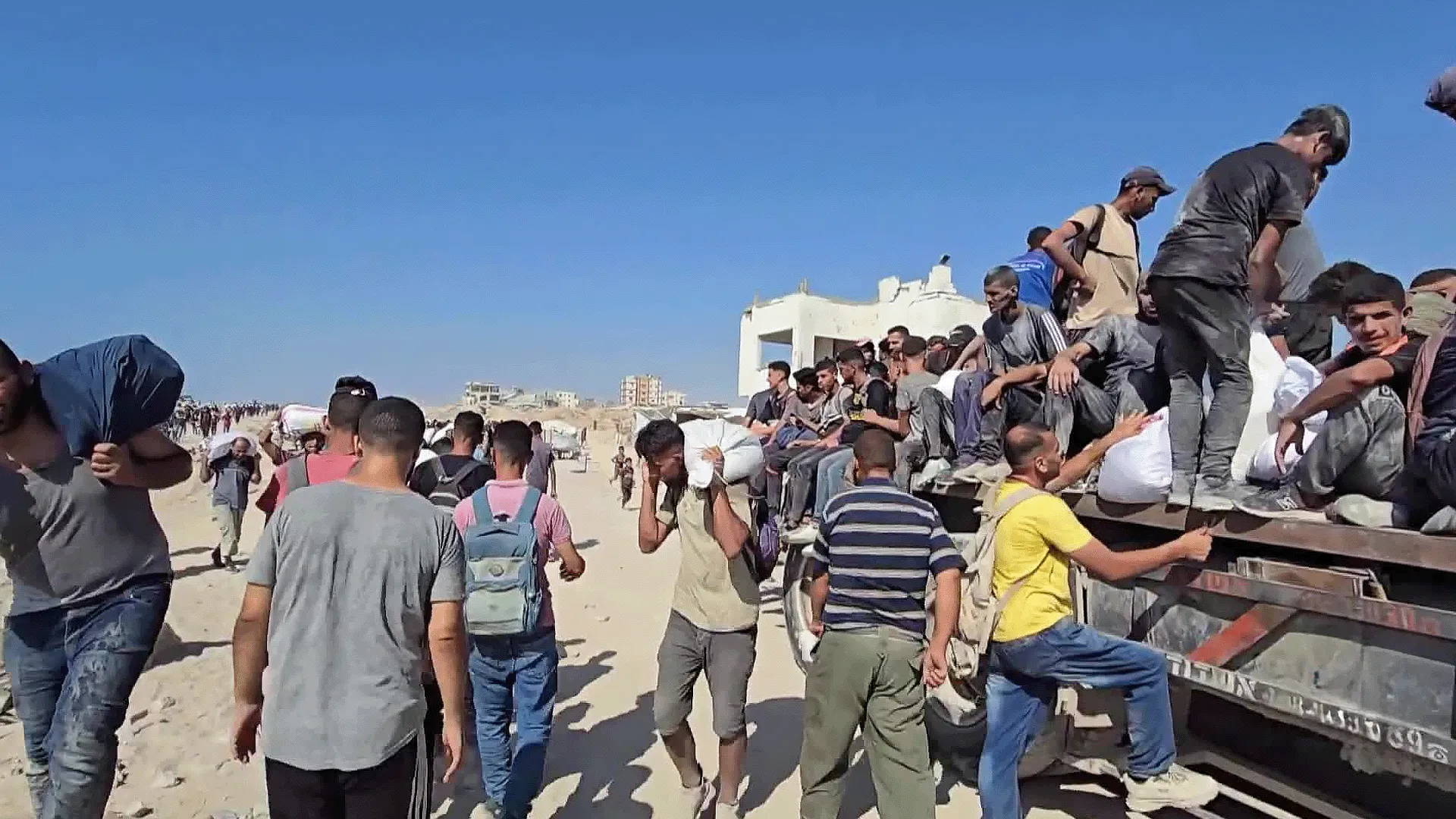
In contrast, Abdel Hamid asserts that the war of extermination in Gaza and the ethnic cleansing in the West Bank are being broadcast live around the clock via the media and social media platforms, with the world watching moment by moment the crimes of murder, destruction, and displacement, and the images of starving children crowded around pots of food, clutching their utensils in the hope of a single scoop, only for many to return empty-handed, with the signs of misery and oppression in their eyes.
Abdul Hamid cites horrific scenes such as the tragedy of Dr. Alaa Al-Najjar, who lost her nine children in an Israeli airstrike, and hundreds of mothers bidding farewell to their children, victims of war, as well as the two girls, Hind Rajab and Ward Sheikh Khalil, who have become symbols of the suffering of Palestinian children.
Abdul Hamid asserts that the United Nations and human rights organizations are not lacking in knowledge of the details of the war of extermination, Israeli displacement plans, or the consequences of starvation.
The two savage and helpless halves of the world
Abdul Hamid describes the world today as divided into two worlds: the first is the international system dominated by administrations like the Trump administration, which supports projects to displace Gaza and transform it into a "tourist riviera." This is a world where half is brutal, supplying Israel with bombs and money, and the other half is incapable of taking any initiative.
The second world, according to Abdul Hamid, is the world of peoples, solidarity movements, and people of conscience who defend human rights and freedom. These people have expressed solidarity with the Palestinian people and exerted pressure and sanctions on Israel and its supporting governments, but they have begun to face punishment for their positions.
Abdul Hamid asserts that the international system has failed to halt the war on the Gaza Strip, emphasizing that ending the war depends on the initiatives of anti-war states, popular movements, and forces supporting the Palestinian people's right to life.
Abdul Hamid points to the importance of Palestinian initiatives supported by Arab and international organizations to achieve tangible progress.
Abdul Hamid asserts that continued international silence and the absence of real pressure will prolong the suffering in Gaza, calling for urgent action to halt the war of extermination and protect innocents from its ravages.


Share your opinion
The "Fire Girl" in Gaza and the "Napalm Girl" in Vietnam...the same tragedy, 53 years apart