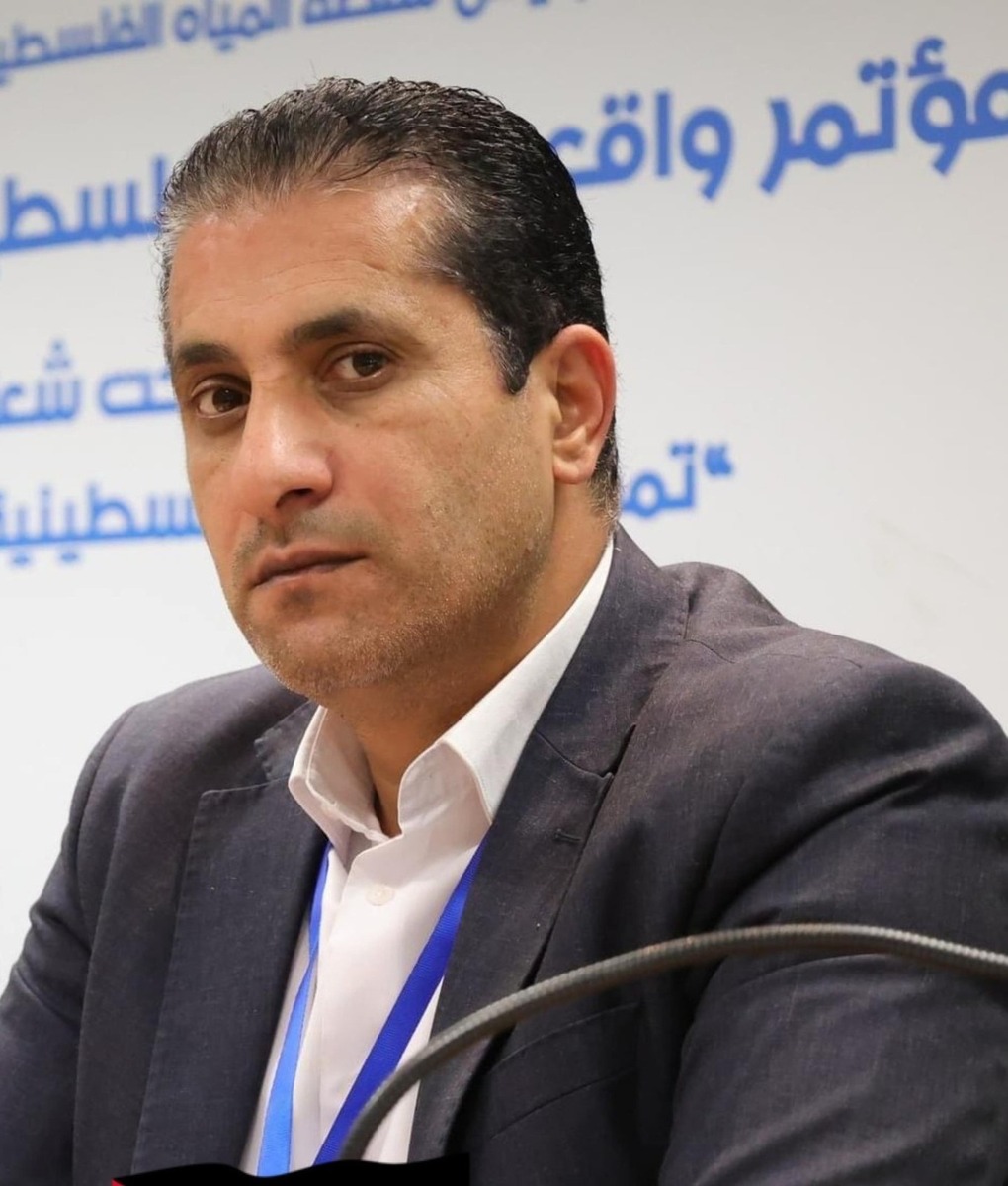






Amin Al-Hajj
In the early hours of yesterday morning, Israeli occupation forces carried out a coordinated raid targeting dozens of money exchange and jewelry shops in the West Bank, confiscating millions of shekels and various financial assets under the pretext of "combating the financing of terrorism."
This incident cannot be considered an exception in the current context. Rather, it is an extension of a series of repeated interventions, which have previously included the closure of medical and development institutions in the heart of Ramallah and elsewhere. The frequency of these operations brings to the fore a profound question about the limits of the role exercised by the Palestinian Authority, and places us before a philosophical dilemma that goes beyond the procedural framework to the question of the state and its legitimacy in light of the exposure of its sovereignty.
In modern political thought, taxes represent one of the foundations of the social contract between the state and the citizen. The citizen pays them not because the state forces him, but because in return the state provides him with protection, infrastructure, justice, and equal opportunities. Thus, the tax system becomes a political, financial, and economic tool for achieving society's goals and objectives. Taxes have been linked to the sovereign authority of the state since ancient times, and have evolved with the development of the state from an authoritarian entity to a contractual entity. The individual pays taxes as a sign of solidarity with the state, and in return, the state is responsible for protecting him and ensuring a decent living for him. Thus, taxes become a collective financing process for the state for the public good. However, this principle assumes the existence of a sovereign state that controls its borders and protects the property of its citizens.
The Palestinian Authority, since its inception, has acted as a state, building administrative and tax institutions. However, this occurred within a political and economic context restricted by interim agreements, most notably the Oslo Accords and the Paris Economic Agreement. These agreements deprived the Authority of the elements of sovereignty and kept it hostage to a "higher" will that controls the levers of the Palestinian economy, and possesses the "right" to intervene in markets, control crossings, and control the tax funds themselves, known as "clearance funds." However, these funds are subject to the whims of the occupier, and are withheld or delayed accordingly. In this sense, the Palestinian citizen does not pay taxes to a state that owns its decisions, but rather to a restricted administrative system.
In the Palestinian case, the Palestinian Authority collects taxes, but it is unable to protect taxpayers. It does not control the crossings, nor can it prevent the occupation from storming cities and confiscating funds, nor can it prevent the destruction of citizens' property, whatever the pretext. This means that the Palestinian is fulfilling his role as a citizen, but the Palestinian Authority is not fulfilling its role as a state!
Today's events reveal the security aspect of this problem. Companies that pay their taxes in full, or operate under official licenses from the relevant ministries, have found no one to deter the occupation from raiding them and confiscating their assets and funds. Meanwhile, the security services, whose budgets are largely based on local taxes, have stood helpless, even absent, from protecting those supposedly under their control.
Hence, the discussion of taxes becomes a discussion of sovereignty. Either there is a state that protects and serves its citizens, and the tax becomes part of a collective responsibility to build a shared future, or the tax becomes a burden that citizens forcefully pay to an institution that has no power to defend or protect them.
This is not a call for chaos or tax evasion, but it is legitimate to raise fundamental questions about the relationship between citizens and government, between taxation and protection, and between duties and rights.
What we need is not just reform, but a profound review: Are we building an actual state, or merely a functional civil administration under occupation? Can financial obligations continue to be imposed on citizens without providing a minimum level of protection and sovereignty?
When taxes transform from a tool of empowerment into a tool of submission, supposed sovereignty becomes a mere slogan, robbing citizens of their confidence in their institutions, and perhaps even in the very idea of the state. What happened today and before was not just a military operation and piracy, but a political, economic, and security warning that places us before a major and straightforward question: Do we still have a genuine national project worth funding, or has the time come to redefine the relationship between citizen and nation, between power and people, between money and dignity?

OPINIONS
Wed 28 May 2025 9:29 am - Jerusalem Time
A state without claws... and a citizen without protection
Share your opinion
A state without claws... and a citizen without protection