





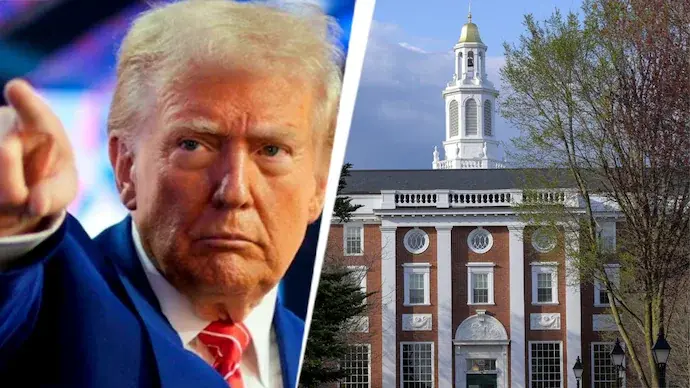
The conflict between Harvard University and the administration of US President Donald Trump reached a climax on Tuesday, in a battle that Trump launched on April 11. The White House decided to deprive the oldest university in the United States, founded 140 years before the founding of the United States, of its funding. This decision came after Harvard rejected the administration's demands to control the university's policies, staff, and curriculum, particularly the prosecution of students who participated in protests supporting the Palestinian cause.
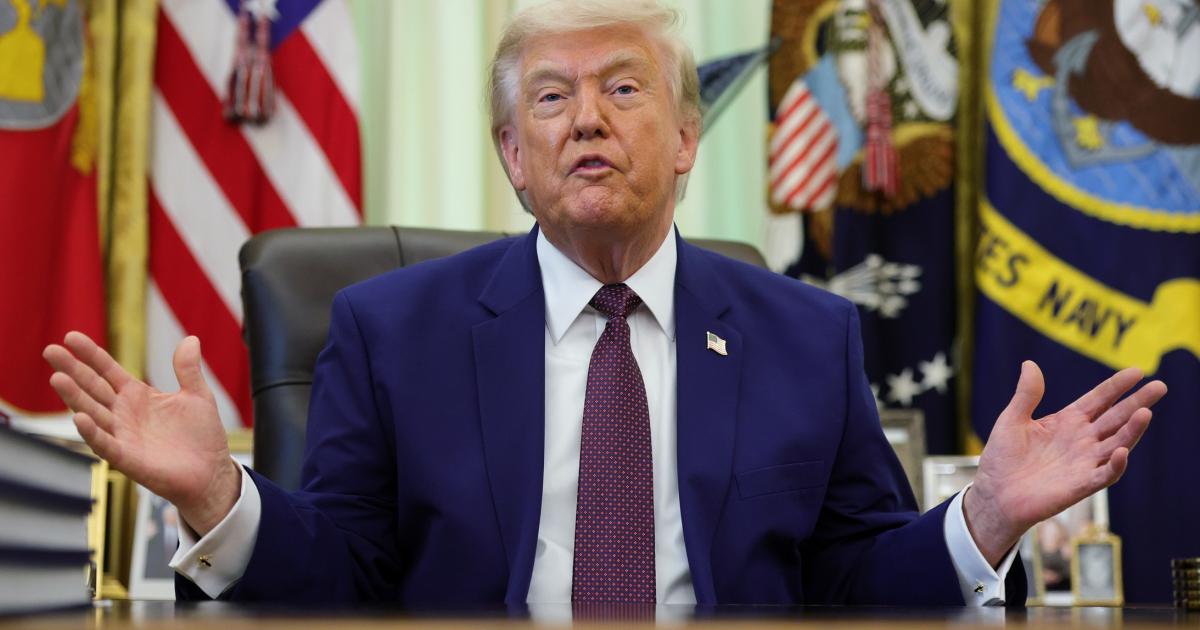
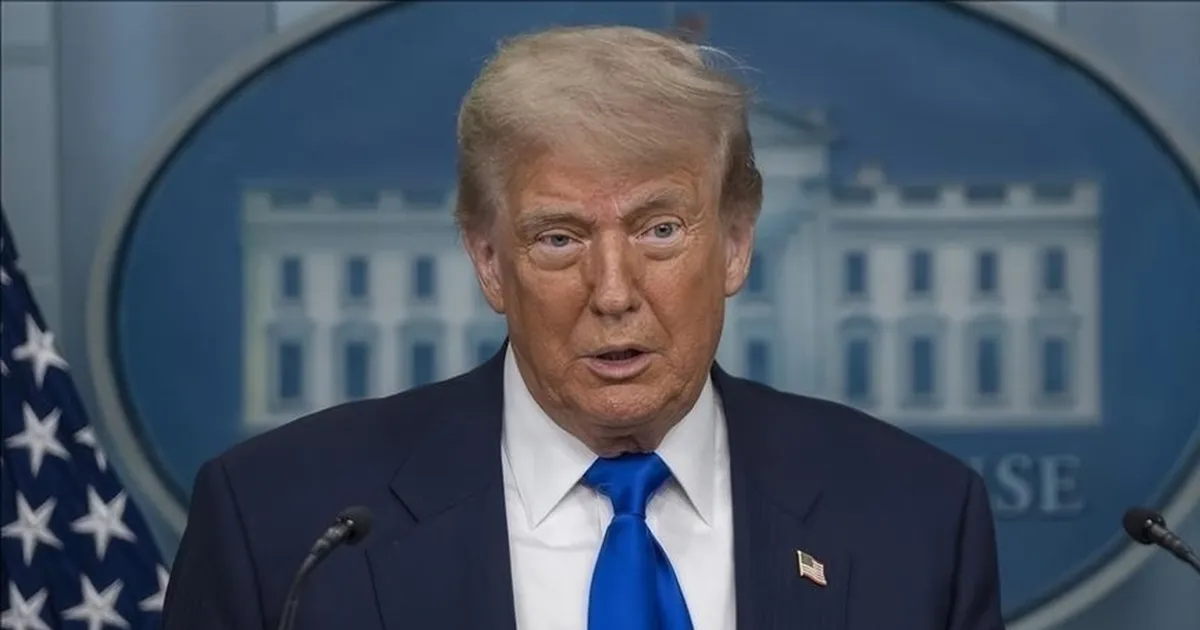
President Donald Trump stated on May 25 that he wanted to know the "names and countries of origin" of international students enrolled at the university to determine "how many extremists and troublemakers should not be allowed to return to our country." He also said he was considering terminating the remaining federal grants and contracts with the university.
It's worth noting that the Trump administration has targeted several prestigious universities, including Harvard, ostensibly for their handling of student protests related to the Gaza war and their Diversity, Equity, and Inclusion (DRI) initiatives.
The Trump administration announced last April that it had decided to bar Harvard University from receiving $2.2 billion in annual grants and a $60 million multi-year contract, citing its refusal to comply with administration demands regarding the institution's prosecution of students who protested Israel's war of extermination in Gaza.
Harvard University President Alan Garber stated that the university will not comply with a series of directives that align with the administration's political agenda for higher education and that jeopardize the institution's independence.
"The administration's decision exceeds the authority of the federal government," Garber said in a previous letter to students and alumni. "It violates Harvard's First Amendment rights and exceeds the legal limits of government power under Title VI of the Civil Liberties Act of 1964." He added, "No American government—regardless of party—should dictate to private universities what they can teach, who they can admit and hire, and what fields of study and research they can pursue."
In response, Harvard University filed a lawsuit against the Trump administration, challenging the government's decision to freeze funding to the university. Garber argued at the time that by freezing the funds, the Trump administration had "jeopardized" research that included efforts to improve children's cancer survival, understand how cancer spreads through the body at the molecular level, predict the spread of infectious disease outbreaks, and alleviate the pain of wounded soldiers on the battlefield.
For its part, the Department of Education detailed its expectations of Harvard University in obtaining federal funding in a letter to Garber on April 11. The list included reducing the powers of students and faculty members who do not comply with the changes recommended by the administration; hiring an external entity to audit the university for "viewpoint diversity" and submitting the report to the federal government; adopting merit-based hiring and admissions policies; reporting any foreign student who commits a conduct violation to the Department of Homeland Security; and discontinuing any diversity, equity, and inclusion programs.
The administration then claimed that, due to concerns about anti-Semitic harassment, the administration had also requested that the university hire someone from outside the university—with government approval—to overhaul the Divinity School, the Graduate School of Education, the School of Public Health, the School of Medicine, the Program in Religion and Public Life, the FXB Center for Health and Human Rights, the Center for Middle Eastern Studies, the Carr Center for Human Rights, the Department of Near Eastern Languages and Cultures, and the Harvard Law School International Human Rights Clinic.
Garber said the government's demands were not so much about preventing anti-Semitism as about "government regulation of intellectual conditions at Harvard."
"These goals will not be achieved by claims of authority, separate from the law, to control teaching and learning at Harvard and dictate how we operate," Garber added. "Addressing our shortcomings, fulfilling our commitments, and embodying our values is our responsibility as an academic community; we define it and we commit to it."
Last month, Columbia University caved to administration demands to reform its policies related to security and protests, as well as to review its Middle East Studies department and prosecute pro-Palestinian activists, after threatening to withhold $400 million in federal funding. Several other universities across the United States are currently facing federal investigations that could lead to similar demands for changes to academic, social, or cultural policies.
The Trump administration announced last March that it was reviewing Harvard University's $9 billion in federal funding. The grants support research at the university and its 11 affiliated hospitals, including Massachusetts General Hospital, the Dana-Farber Cancer Institute, and Boston Children's Hospital. Research at the university has directly led to the development of life-saving vaccines, treatments, policies, and programs for millions of people in the United States and around the world.
According to its website, "Harvard University is home to the world's most cutting-edge medical, scientific, and technological research." Without federal funding, this work would grind to a halt, and researchers would lack the resources to complete ongoing projects or fund new ones in the many fields Harvard supports, including cancer, heart disease, neurological diseases, obesity and diabetes, infectious diseases, and transplantation.
Earlier this month, the Department of Homeland Security announced that it had revoked Harvard University's accreditation under the Student and Exchange Visitor Program, stripping the university of its authority to sponsor international student visas for the 2025-2026 academic year. The university almost immediately filed a lawsuit to challenge the move.
“This revocation continues a series of retaliatory government actions against Harvard University for our refusal to surrender our academic independence and submit to the unlawful control of our curriculum, faculty, and students by the federal government,” Garber said in his letter to Harvard students, staff, and faculty. “We condemn this unlawful and unjustified action.” Just hours after Harvard filed its lawsuit, a federal judge temporarily blocked the Trump administration’s attempt to bar Harvard from enrolling international students.

ARAB AND WORLD
Wed 28 May 2025 9:25 am - Jerusalem Time
The battle is raging between Trump and Harvard University
Tags
MORE FROM ARAB AND WORLD

Share your opinion
The battle is raging between Trump and Harvard University