







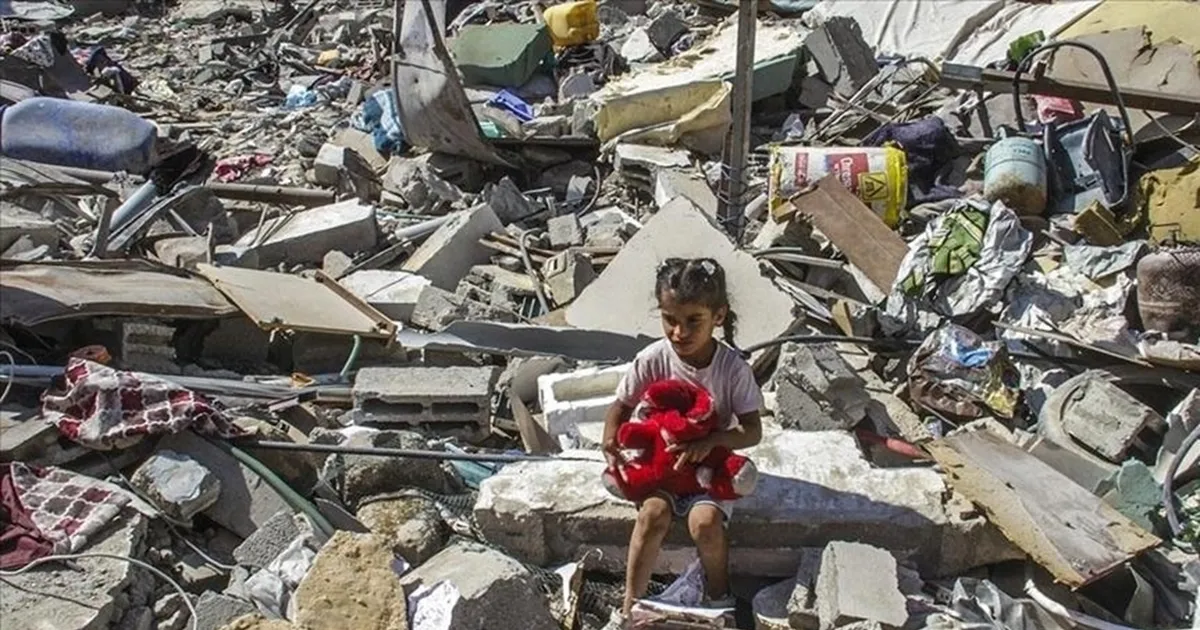
The Israeli Supreme Court has approved 18 requests submitted by the Israeli government since the beginning of the war on Gaza to postpone consideration of petitions against the ban on Red Cross delegates visiting Palestinian prisoners in Israeli jails. The Supreme Court approved all Israeli practices in Gaza, including starving Gazans, denying medical treatment, and disappearing individuals.
The court upheld the government's requests and supported them with a three-judge panel: Chief Justice Yitzhak Amit, Deputy Chief Justice Noam Solberg, and Justice Dafna Barak-Erez. The three justices abstained from hearing the petitions, thereby endorsing the widespread war of genocide in Gaza and the transfer policy, as these practices "could not have been implemented without a clear green light from the Supreme Court," according to a report published by Haaretz.
Contrary to the image portrayed by opponents of the government's "judicial reform" plan to weaken the judiciary, human rights lawyers hold few high expectations of the Supreme Court. "The court hardly poses an obstacle to the state's targeting of Palestinians. Over the years, Supreme Court justices have approved policies of assassinations, home demolitions, land confiscation, settlement construction, expulsion, and administrative detention without trial," the report asserted.
Since the beginning of the war on Gaza, the judges have refrained from criticizing the government and its practices, demanding responses to petitions, and rejecting actions that clearly contravene Israeli and international law.
“We know that the Supreme Court has a history of legitimizing the occupation, but we are in a situation we have never seen before,” said Osnat Cohen-Lifshitz, legal director at the Israeli human rights organization Gisha, according to the report. “The Hague court and all relevant UN bodies are talking about an unprecedented humanitarian catastrophe (in Gaza), while the Supreme Court is not content with rubber-stamping Israel’s actions, but is glorifying the army and the government,” she said.
Legal expert Barak Medina observed that "the court's approach has changed dramatically. Targeting Palestinian civilians who were not suspected of involvement in the fighting, detaining Palestinian citizens for long periods without judicial process and under inhumane conditions, preventing the transfer of food and humanitarian equipment, cutting off electricity, and using the bodies of terrorists as 'bargaining chips'—all of these and other actions are not recognized by law as acts that target human rights."
The Israeli Supreme Court rejected petitions demanding that foreign journalists be allowed into the Gaza Strip to cover the war closely. The petition, filed by the Foreign Journalists' Organization, asserted that "preventing media coverage contradicts the basic principles of a democratic state and infringes on freedom of the press, freedom of expression, and the right to information." The Israeli Attorney General requested a postponement of consideration of this petition.
A petition filed by Physicians for Human Rights and the Center for the Defense of the Individual called for the government to establish a system for evacuating wounded and sick Gazans, following the widespread targeting of hospitals and clinics in the Strip and the prevention of the entry of medical equipment into the Strip. However, the Supreme Court was satisfied with the Israeli government's pledge to resolve the matter, and then dismissed the petition after the two organizations requested that it remain open to monitor the government's commitment.
The Supreme Court also rejected petitions against the revocation of entry visas from foreign workers in international humanitarian organizations, and rejected petitions against the Israeli Prison Service regarding its request to address the spread of scabies among Palestinian prisoners. The court also refrained from intervening in the poor conditions of Palestinian prisoners who were arrested before the war.
Supreme Court justices approved the withholding of the bodies of martyrs from the Arab community, claiming they constitute bargaining chips with Hamas, and authorized the demolition of dozens of buildings in the West Bank based on security claims.
The Supreme Court continues to stall on a petition filed by five human rights organizations since March of last year against the starvation of Gaza residents. The report noted that legal experts view the handling of this petition as evidence of the "disintegration of the Israeli judicial system."
Against the backdrop of the Israeli authorities' refusal to allow humanitarian aid into the Gaza Strip, the organizations demanded in their petition "free and unimpeded entry for all relief shipments, equipment, and humanitarian personnel." However, the authorities repeatedly requested that consideration of the petition be postponed. On March 27, Justices Amit Solberg, Barak David Mintz, and Justices Barak David Mintz issued a ruling in which they supported the government's position that there are no restrictions on the entry of food supplies into Gaza and that there is no food shortage in the Strip. This is despite Israel having closed all crossings into the Strip since March 2, while the world is witnessing widespread famine and warnings of its worsening.
Amit did not address the famine in Gaza in his ruling, but Mintz, a settler who is described as a symbol of the far-right presence on the Supreme Court, argued in the ruling that the current war is classified under Jewish law as "helping Israel escape from injustice."
Solberg, another settler known for his right-wing views, wrote in the resolution that "there is no justification for our intervention," and that it is necessary to question whether the crime of starving the population of Gaza is a matter worthy of judgment. "Excessive humanity, which is not focused on its purpose, misses its target. Humanitarian aid that reaches Hamas like ripe fruit is a contradiction: the humanitarian turns into the animal. The fighting cannot end. Such humanity does not carry within its wings the message of peace, but perpetuates pain and suffering."
The Supreme Court continues to stall on a petition filed by five human rights organizations since March of last year against the starvation of Gaza residents. The report noted that legal experts view the handling of this petition as evidence of the "disintegration of the Israeli judicial system."
Against the backdrop of the Israeli authorities' refusal to allow humanitarian aid into the Gaza Strip, the organizations demanded in their petition "free and unimpeded entry for all relief shipments, equipment, and humanitarian personnel." However, the authorities repeatedly requested that consideration of the petition be postponed. On March 27, Justices Amit Solberg, Barak David Mintz, and Justices Barak David Mintz issued a ruling in which they supported the government's position that there are no restrictions on the entry of food supplies into Gaza and that there is no food shortage in the Strip. This is despite Israel having closed all crossings into the Strip since March 2, while the world is witnessing widespread famine and warnings of its worsening.
Amit did not address the famine in Gaza in his ruling, but Mintz, a settler who is described as a symbol of the far-right presence on the Supreme Court, argued in the ruling that the current war is classified under Jewish law as "helping Israel escape from injustice."
Solberg, another settler known for his right-wing views, wrote in the resolution that "there is no justification for our intervention," and that it is necessary to question whether the crime of starving the population of Gaza is a matter worthy of judgment. "Excessive humanity, which is not focused on its purpose, misses its target. Humanitarian aid that reaches Hamas like ripe fruit is a contradiction: the humanitarian turns into the animal. The fighting cannot end. Such humanity does not carry within its wings the message of peace, but perpetuates pain and suffering."


Share your opinion
Report: Israeli Supreme Court legalizes war of extermination in Gaza