






Dr. Raed Abu Badawiya: These statements and UN and international reports documenting genocide and forced displacement constitute strong evidence before the International Court of Justice.
Yasser Manna: Golan's statements contribute to dismantling the official Israeli discourse from within and increase pressure to reevaluate what is happening.
Dr. Aqel Salah: These statements limit the achievement of the war's objectives and portray Israel as a criminal state, which increases international pressure to hold it accountable.
Antoine Shalhat: These statements reflect the expansion of the phenomenon of demands to stop the war and extend to Israeli public opinion.
Dr. Saad Nimr: Golan's statements were a great shock to Israeli society because they revealed the naked truth about the nature of the war.
Naaman Abed: These developments require comprehensive Palestinian coordination to capitalize on Golan's statements and others to isolate Israel internationally and force it to halt its war of extermination.
Israel is witnessing significant shifts in public opinion and political discourse regarding the war on the Gaza Strip. Voices from former military and political leaders have begun to strongly criticize the grave violations of international humanitarian law. The most recent statement by the head of the Israeli Democratic Party, Yair Golan, exposes the genocidal nature of the war and lays bare Israel and its narrative regarding the Gaza Strip.
In separate interviews with Al-Quds, writers, political analysts, experts, and university professors say that these statements reflect a crack in the official Israeli narrative regarding the war of extermination.
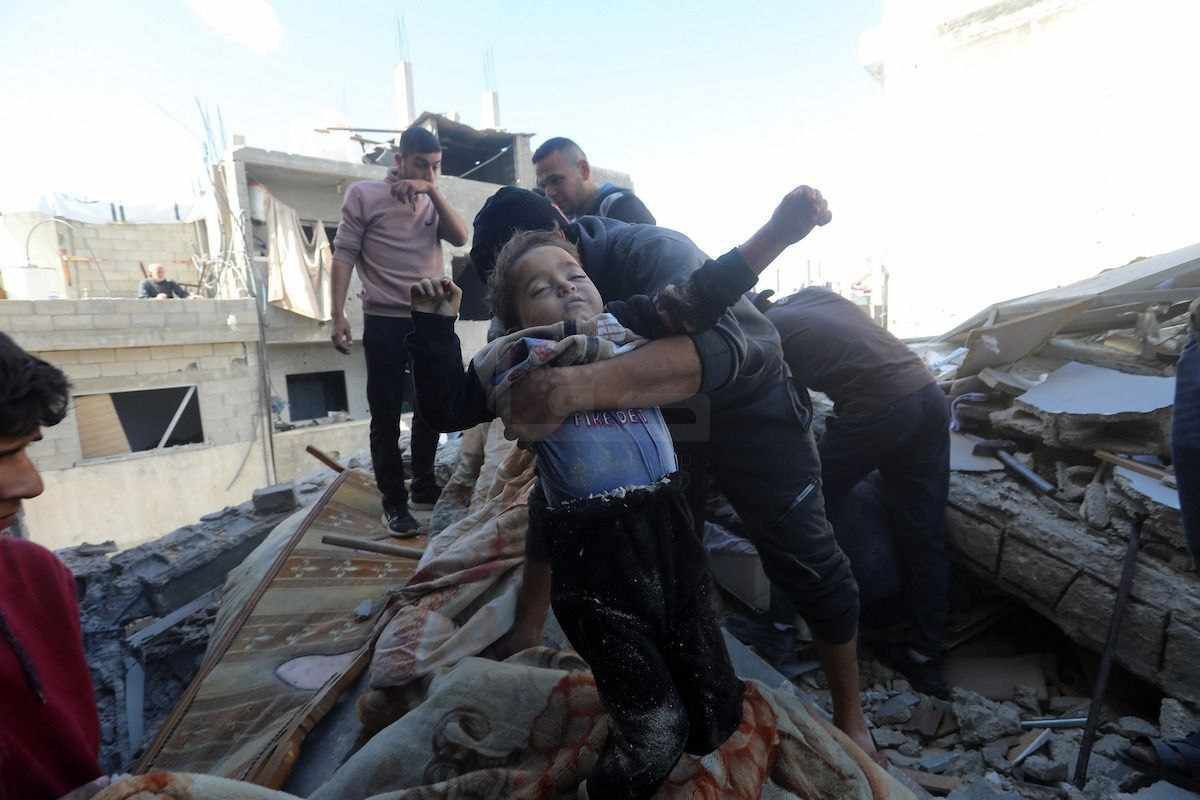
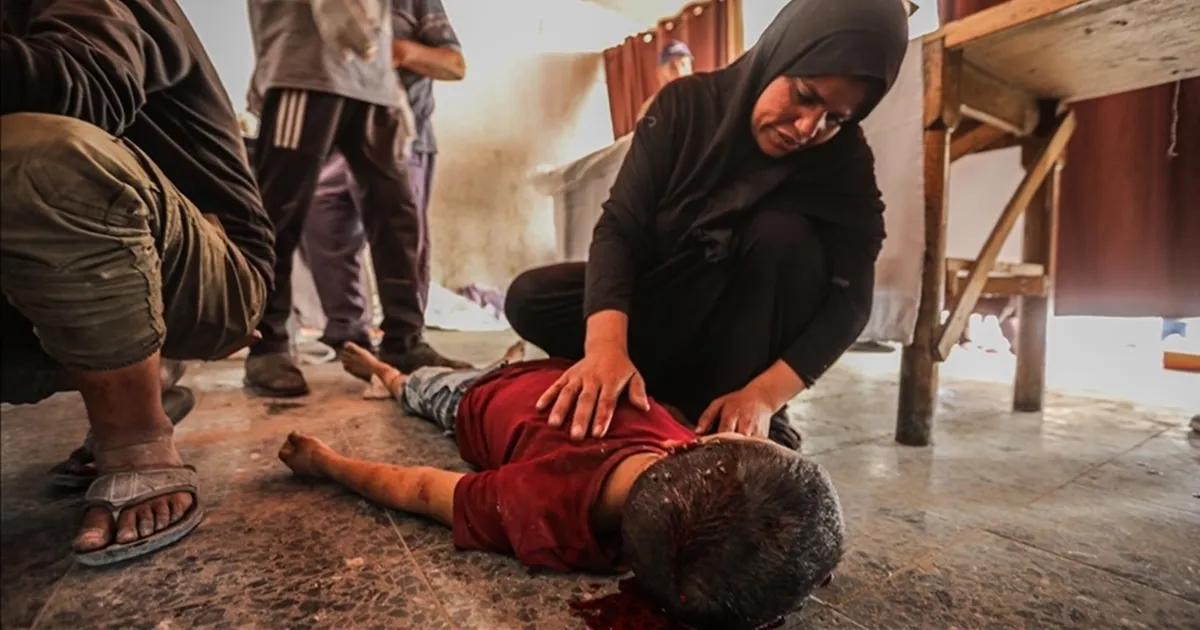
They point out that these statements coincide with demonstrations in Tel Aviv and other Israeli cities demanding an end to the war, with images of Gaza's children being held up. Meanwhile, the Israeli government continues to exploit the conflict to advance its political interests, ignoring domestic and international pressure.
They assert that these policies, which cater to the extreme right, exacerbate the moral and political crisis and reinforce accusations of genocide documented in UN and international reports. This bolsters legal cases against Israel in international courts, amid mounting pressure as Western countries reassess their positions to pressure Israel to halt the war.
Noticeable changes in the Israeli street and the international community
Dr. Raed Abu Badawi, professor of international law and international relations at the Arab American University, says there have been notable shifts in Israeli public opinion and the international community's response to the war on the Gaza Strip. He points out that these changes are not limited to military leaders, but extend to former political and security voices who have begun to criticize the gross violations of international humanitarian law and human rights in Gaza.
Abu Badawiya points to statements by former Israeli Prime Minister Ehud Olmert, who spoke explicitly about Israel's actions in Gaza, describing them as bordering on "war crimes," reflecting an internal rift in the official Israeli narrative.
Abu Badawiya explains that this shift is clearly evident on the Israeli street, where a recent poll showed that 67% of Israelis support an end to the war, alongside demonstrations in Tel Aviv and other Israeli cities where pictures of Gaza's children are being held up to demand an end to the conflict.
Abu Badawiya points out that these moves reflect a growing awareness in Israeli society of the strategic cost of war. However, the Israeli government, led by Benjamin Netanyahu, continues to use war as a political tool to advance its personal interests and maintain the ruling coalition, reflecting a priority to remain in power over humanitarian considerations.
Satisfying the right by continuing to commit war crimes
Abu Badawiya asserts that Netanyahu's continued pursuit of this approach ignores domestic and international pressure, as he insists on appeasing the extreme right by continuing to commit war crimes in full view of the international community.
Abu Badawiya points out that statements by former Israeli officials, along with UN and international reports documenting genocide and forced displacement, constitute strong evidence supporting the case filed by South Africa against Israel before the International Court of Justice.
Abu Badawiya asserts that this evidence, reinforced by human rights reports and satellite imagery, increases the chances of legal accountability, but the most pressing question remains: to what extent will this pressure contribute to stopping the crimes?
Abu Badawiya explains that the recent period has witnessed significant changes in the international stance, as Western countries, which historically provided a protective umbrella for Israel, have begun to reevaluate their positions.
Abu Badawiya points to the European Union's moves to discuss suspending trade agreements with Israel, European countries' talk of imposing sanctions due to human rights violations, and political statements supporting recognition of a Palestinian state.
Abu Badawiya believes that these moves reflect a growing realization that traditional legal means have been insufficient to halt the aggression, prompting the international community to resort to non-legal tools such as political and economic pressure.
Signs of a divergence between American and Israeli interests
Regarding the American position, Abu Badawiya points to a partial shift in American policy toward the Middle East, particularly under the Trump administration, as signs of a divergence between American and Israeli interests emerge.
Abu Badawi explains that Netanyahu's continued disregard for proposals for a comprehensive deal or an end to the aggression could prompt the United States to reduce its support in international institutions, such as the Security Council, as a means of pressuring him.
Abu Badawiya asserts that these changes could escalate if Netanyahu persists with his current approach, potentially leading to broader Western sanctions encompassing political, diplomatic, and trade tools.
Abu Badawiya points out that the ability of these pressures to stop the war depends largely on the American position, which remains the most influential factor.
Abu Badawiya expresses cautious optimism that continued international and domestic activity may prompt Israel to reevaluate its policies, especially if economic and diplomatic pressures escalate. However, he cautions that achieving a genuine cessation of the crimes requires more concerted and coordinated pressure at the international and regional levels.
Golan's statements are a strong blow to the official narrative.
For his part, writer and expert on Israeli affairs, Yasser Manna, asserts that the statement by former Israeli officer and Deputy Chief of Staff Yair Golan, in which he said that "a rational state does not kill children as a hobby," represents a powerful blow to the official narrative justifying Israeli military operations in the Gaza Strip under the pretext of "security necessities."
Manna points out that this statement is not just a passing remark, but rather carries profound implications that may contribute to reshaping the public debate within Israel about the feasibility of continuing the war and its strategic cost.
Manaa points out that Golan's statement is facing fierce attacks from Israeli government ministers, led by Itamar Ben-Gvir and Bezalel Smotrich, who promote extremist rhetoric that amounts to calls for genocide.
Despite the limited scope of this phenomenon currently, Manna believes that the recurrence of such statements from within the security establishment could create a moral rift within the Israeli military, particularly given the war's failure to achieve "victory" or "deterrence." On the contrary, it has deepened the crisis facing Israel both domestically and internationally.
Manaa asserts that Golan's statement could represent a relative turning point, opening the door for former political and military figures to question the continuation of mass killings, which do not serve Israel's strategic interests but rather undermine them.
Implicit acknowledgment that Israel is practicing genocide
Manaa believes that the success of this phenomenon in bringing about real change depends on the accumulation of critical voices from within the security establishment, along with the ability of civil society and the opposition to exploit them to form an effective moral and strategic pressure group.
In the context of international accountability, Manaa explains that confessions like Golan's take on added significance because they come from figures who were part of the military decision-making process.
Manaa points out that Golan's statement carries an implicit admission that Israel is practicing genocide in Gaza and has lost its mind, transforming into an entity that thrives on feelings of hatred.
According to Manaa, these statements could be used as legal documents in genocide documentation cases before bodies such as the International Criminal Court in The Hague, especially if supported by human rights reports, satellite imagery, and field testimonies proving that children are repeatedly targeted in their shelters or during displacement.
Manaa asserts that the credibility of these confessions stems from the fact that they come from figures like Golan, who cannot be accused of ideological hostility toward Israel but were part of the decision-making process.
Manna points out that such statements contribute to the internal dismantling of official Israeli discourse, which increases international and domestic pressure to reevaluate Israel's policies and practices in the conflict.
Golan's statements came as a shock to Netanyahu's government.
In turn, writer and political researcher Dr. Aqel Salah says that the statements made by the leader of the Israeli Democratic Party, Yair Golan, accusing the occupation army of killing children out of revenge during the Gaza war, came as a shock to the far-right government led by Benjamin Netanyahu, sparking widespread anger among senior Israeli officials.
Salah points out that Golan's statement is not the first of its kind, as it was preceded by a statement by former Defense Minister Moshe Ya'alon, who described Israel's actions in Gaza as "massacres and war crimes."
Salah asserts that these statements, issued by prominent Israeli leaders, constitute official admissions of the commission of horrific crimes, which further expand the circle of protest and opposition within Israel and undermine the credibility of the official narrative that justifies the war on security grounds.
Salah explains that these statements undermine the stated objectives of the war and portray Israel as a criminal state violating international law, which increases international pressure to hold it accountable.
Salah points out that Golan's statements and others are encouraging the West and international organizations to condemn Israel, with countries such as Britain, France, and Canada beginning to demand an end to the war and the entry of humanitarian aid.
Salah points out that some European countries are considering imposing sanctions on Israel, including restrictions on arms exports, as Spain has done with its arms export ban, in addition to the European Union's review of its economic partnership with Israel.
"Red card" for Israel
Salah believes that these moves are a "red card" for Israel, as they expose the ugly nature of its practices and hinder the continuation of the war if these positions are built upon in international forums.
Salah asserts that Israeli statements, whether opposing the war or supporting the massacres, such as those issued by Ben-Gvir and Smotrich, constitute official condemnations that demonstrate genocidal intent, making them powerful legal documents for holding Israel accountable before courts such as the International Criminal Court.
Salah explains that the Golan phenomenon has a powerful impact on Israel domestically, regionally, and internationally, embarrassing its supporters, particularly the United States, and putting pressure on the Trump administration, which has expressed a desire to stop the war and allow aid into the country.
Salah asserts that these statements, with their frankness, constitute legally admissible testimony that can be used to prosecute Israeli leaders, especially since they come from "within the Israeli household."
Salah calls for leveraging these voices to expand the circle of demands to halt the war of extermination and to pressure Netanyahu and his government through Palestinian and Arab coordination with international bodies to isolate and hold Israel accountable. He points out that the violent reactions from a number of Israeli officials underscore the importance of these statements as a document for international condemnation.
The phenomenon of demands to stop the war in Israel is expanding.
For his part, writer and political analyst specializing in Israeli affairs, Antoine Shalhat, asserts that the statements of former Israeli officer and head of the Israeli Democratic Party, Yair Golan, in which he described the killing of children in Gaza as driven by a "lust of revenge that knows no bounds," represent a new and important turning point in Israeli domestic discourse.
Shalhat explains that these statements reflect the expanding phenomenon of calls to end the war, which is no longer limited to military or political elites but extends to the Israeli public, where these voices are expressing growing concern about the moral and humanitarian cost of the conflict to the world.
Shalhat points out that what distinguishes Golan's statement is his explicit admission that Israel is committing war crimes, describing the war in Gaza as potentially "a war of extermination par excellence."
Shalhat believes this acknowledgment carries new implications, as previous calls to halt the war in Israel often focused on concerns about endangering the lives of Israeli prisoners in Gaza, rather than concern for the lives of Palestinian civilians.
Of particular importance in the context of international accounting
Shalhat asserts that this phenomenon is witnessing a significant expansion, as reserve soldiers and officers, along with military analysts, former commanders, and politicians, have begun to express their rejection of the continuation of the war, which has not achieved its strategic objectives but has instead deepened Israel's moral and political crisis.
Shalhat emphasizes that statements like those made by Golan are particularly important in the context of international accountability, as they can be used as conclusive evidence and testimony to document the genocide.
Shalhat explains that confessions issued by prominent Israeli figures, who were part of the military or political establishment, acquire double value because they come from "inside the house," enhancing their credibility before international judicial bodies.
Shalhat points out that these testimonies carry great weight because they come from people with direct knowledge of the war's aims and context.
Shalhat believes that these confessions, if they continue to emerge and expand, could lead to further developments within Israel, especially if public awareness of the nature of the war, as Golan described it, grows.
Signs of a crack in Israeli public opinion
Shalhat points out that Israeli public opinion is beginning to show signs of cracking, with a growing number of voices arguing that the war is nothing more than a process of mass destruction aimed at annihilation, without clear strategic or security justification.
Shalhat emphasizes that these statements should be used internationally to strengthen legal documentation files, especially in cases brought before courts such as the International Criminal Court.
Shalhat points out that what is new in Golan's speech lies in the fact that it places Israel before a moral mirror, presenting war as it really is: a killing for the sake of killing, driven by a desire for revenge rather than legitimate military objectives.
Shalhat expresses cautious optimism that the continuation of these critical voices within Israel may contribute to reshaping the public debate, which could pressure decision-makers to reassess the continuation of the war.
However, Shalhat emphasizes that the success of this phenomenon depends on its ability to expand and influence broader Israeli circles, including civil society and the opposition, to form an effective pressure front.
premeditated intent to commit genocide
Dr. Saad Nimr, a professor of political science at Birzeit University, says that the statements of former Israeli military officer Yair Golan, the leader of the Israeli Democratic Party, describing Israel's actions in Gaza as motivated by a murderous intent rather than achieving military objectives such as liberating prisoners or eliminating Hamas, were a major shock to Israeli society because they revealed the naked truth about the nature of the war.
Nimr explains that these statements are not the first of their kind. Several Israeli voices, including former leaders and Knesset members, have begun describing the war as "absurd" and lacking clear objectives, with increasing criticism of the way the military operations are being carried out, which they consider a war of extermination.
Nimer points out that Golan's statements, which sparked strong reactions within Israel, caused considerable confusion because they revealed a premeditated intent for genocide, in line with the statements of extremist ministers such as Itamar Ben-Gvir and Bezalel Smotrich, who affirm a clear intent to eliminate and displace Palestinians.
Nimr asserts that these confessions by Golan and others constitute strong legal documents that can be used as evidence before the International Court of Justice to prove the crime of genocide, because international law requires a clear intent to commit such crimes, a fact confirmed by the statements of Golan and other officials.
A crack in the official Israeli narrative
Nimr explains that these critical voices within Israel, despite their belated arrival, reveal a crack in the official narrative promoted by the Israeli government, which claims that its army is "the most moral in the world," as Chief of Staff Zamir stated.
Nimr considers this claim a fallacy, as the world, including Europe and the United States, has come to realize that Israel violates international law, humanitarian law, and the Geneva Conventions, especially in light of the clear violations that have sparked escalating international reactions in recent days.
Nimr asserts that the impact of Golan's statements and others has begun to translate into tangible reactions in Europe and beyond, as international pressure to hold Israel accountable for its violations has increased.
Nimr points out that these statements bolster the legal cases filed against Israel, especially in light of the existence of international and UN reports supporting the accusations of genocide and forced displacement.
Nimr asserts that continued documentation of these confessions will remain a powerful weapon in international legal forums.
Nimr believes that the violent Israeli reactions to Golan, whether from officials or other parties, reveal a desperate attempt to cover up Israel's true face in the war.
Nimr points out that Golan's statements, along with those of other voices within Israel, indicate the beginning of a shift in internal consciousness, but they face fierce resistance from the government, which continues to justify its crimes.
A storm of criticism within Israel
For his part, writer and political analyst specializing in international relations, Noman Abed, asserts that the statements made by Israeli Democratic Party leader Yair Golan, in which he accused the Israeli occupation army of killing children "as a hobby" during the Gaza war, were a major shock because they directly revealed the intent of genocide.
Abed explains that these statements, which sparked a storm of criticism within Israel, are not the first. They were preceded by statements by opposition leaders, former ministers, and former prime ministers who criticized the Israeli government's actions. However, Golan's statement is the most daring, as it accuses the army, considered a sacred symbol in Israel, of committing war crimes.
Abed points out that the actions of the Israeli army, documented by its own soldiers through videotaped targeting of children, civilians, and displaced persons' tents, and the cold-blooded destruction of homes, confirm the validity of Golan's accusations.
Abed asserts that these actions, which are documented and attributed to specific individuals, constitute internationally prohibited violations and reflect the Israeli government's impotence and the dominance of feelings of revenge in its decisions.
Abed explains that Golan's statements, which described the government as threatening Israel's very existence, drew sharp criticism from ministers such as Itamar Ben-Gvir and some opposition figures, who demanded Golan apologize, recognizing the seriousness of these statements to Israel's and its army's international image.
Using genocide as a method to kill an entire people
Abed asserts that Golan's statements, along with those of ministers such as the leader of the Zehut party, who described every child in Gaza as an "enemy" and called for the occupation and settlement of the Strip to wipe out its population, prove the existence of a premeditated intent to commit genocide, a fundamental element in establishing this crime under international law.
Abed explains that the systematic starvation policies, such as the closure of crossings and the ban on food imports, publicly acknowledged by Israeli ministers, confirm this intention. They have repeatedly stated that they are preventing the entry of "corn of wheat" into Gaza, which constitutes conclusive evidence of the use of genocide as a method to kill an entire people because of their Palestinian affiliation.
Abed points out that these statements have caused confusion within Israel, especially since they are consistent with growing international accusations that Israel is committing genocide.
Abed points to the escalating European stance against Netanyahu's government, such as the Spanish parliament's decision to ban arms exports to Israel, the British Foreign Secretary's criticism in parliament of the policies of genocide and starvation, and the European Union's review of its economic partnership with Israel.
Abed addresses the insistence of countries such as France, Britain, and Canada on supporting the two-state solution and recognizing the Palestinian state, reflecting a shift in the international position in favor of the Palestinian cause.
Abed points out that these developments require comprehensive Palestinian coordination between the official leadership, factions, civil society, and human rights committees to leverage Golan's statements and others to isolate Israel internationally, continue pressure to prosecute Netanyahu and his government, and compel it to halt its war of extermination.
Abed asserts that Netanyahu's continued obstruction of any ceasefire agreement, driven by extremist ideologies and personal interests, further isolates Israel, especially as Europe attempts to regain influence in the Middle East by supporting the Palestinian cause, amidst divergence from US policy.

Share your opinion
Golan's Confessions: Acknowledgment of Genocide and Conclusive Evidence Before the International Court of Justice