







Dr. Hussein Al-Deek: The absence of binding international guarantees, especially from the United States, makes reaching an agreement more difficult, thus continuing the suffering of the Palestinians.
Nizar Nazzal: There is a chance for a temporary truce, but a comprehensive agreement is unlikely at the present time.
Dr. Irene Said: Talk of the possibility of reaching an agreement is an attempt to buy time to expand the Israeli military incursion and intensify strikes in Gaza.
Nour Odeh: The possibility of Trump offering guarantees against returning to war is unlikely unless Hamas agrees to harsh conditions.
Dr. Suhail Diab: Israel is facing increasing pressures pushing it toward flexibility, most notably American pressure due to the shift in its stance toward Netanyahu.
Fayez Abbas: Netanyahu is exploiting the limited aid entry into Gaza to buy time and ease international pressure on him.
Amid talk of a new proposal for a ceasefire, albeit a temporary one, it appears that Israeli intransigence and disregard for Palestinian demands to halt the war in Gaza, coupled with Hamas's demand for binding American guarantees to end the aggression, are further complicating the prospects for reaching a comprehensive agreement.
In separate interviews with Al-Quds, political analysts, experts, and university professors believe that Israel, with American approval, is seeking to achieve strategic objectives in the Gaza Strip. Israeli Prime Minister Benjamin Netanyahu is exploiting the limited humanitarian aid flow to ease international pressure on Israel. Talk of negotiations coincides with a military escalation, revealing an intention to buy time.
Writers, analysts, specialists, and university professors predict the possibility of a temporary truce, including the release of a limited number of prisoners. However, a comprehensive agreement remains elusive due to Israel's refusal to withdraw or end the war, exacerbating the humanitarian catastrophe in Gaza as the aggression continues. They cast doubt on the reliability of American guarantees, given Washington's history of breaking agreements.
Hebrew media reported that Israel had presented a new proposal to Hamas, which includes the release of ten living prisoners and half of the bodies in one day, along with a two-year truce, and the beginning of the entry of humanitarian aid immediately after the agreement is signed. The deal also includes Israel's withdrawal from areas it occupied in Operation Courage and the Sword, but it refuses to withdraw from the Netzarim and Philadelphi corridors, and is offering to negotiate a ceasefire during the truce.
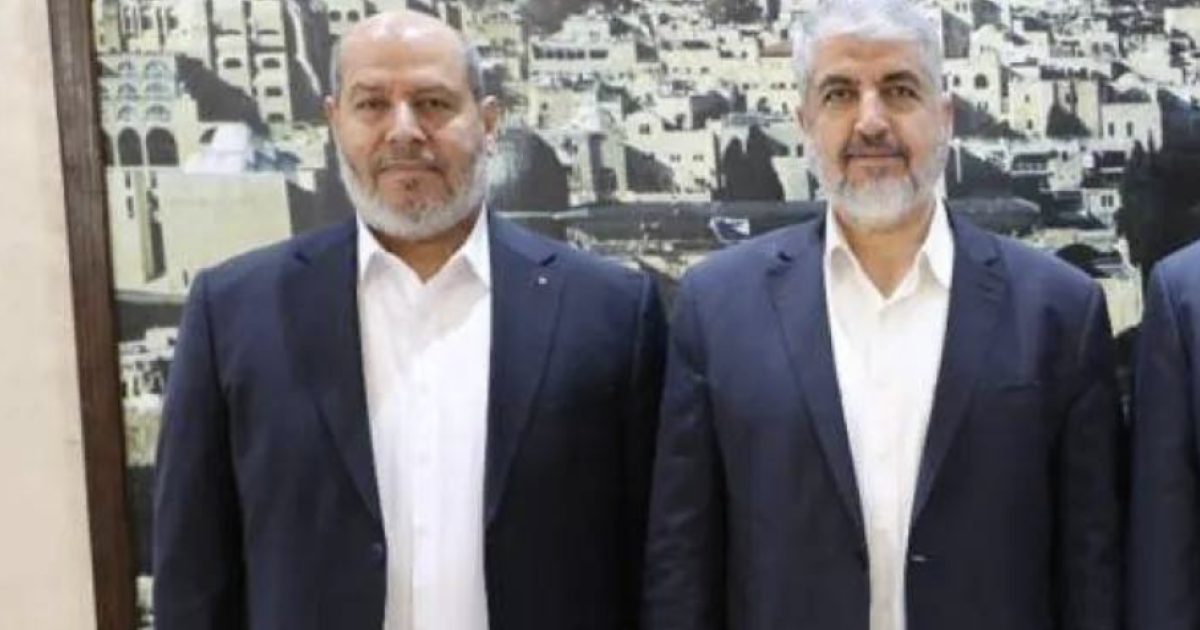
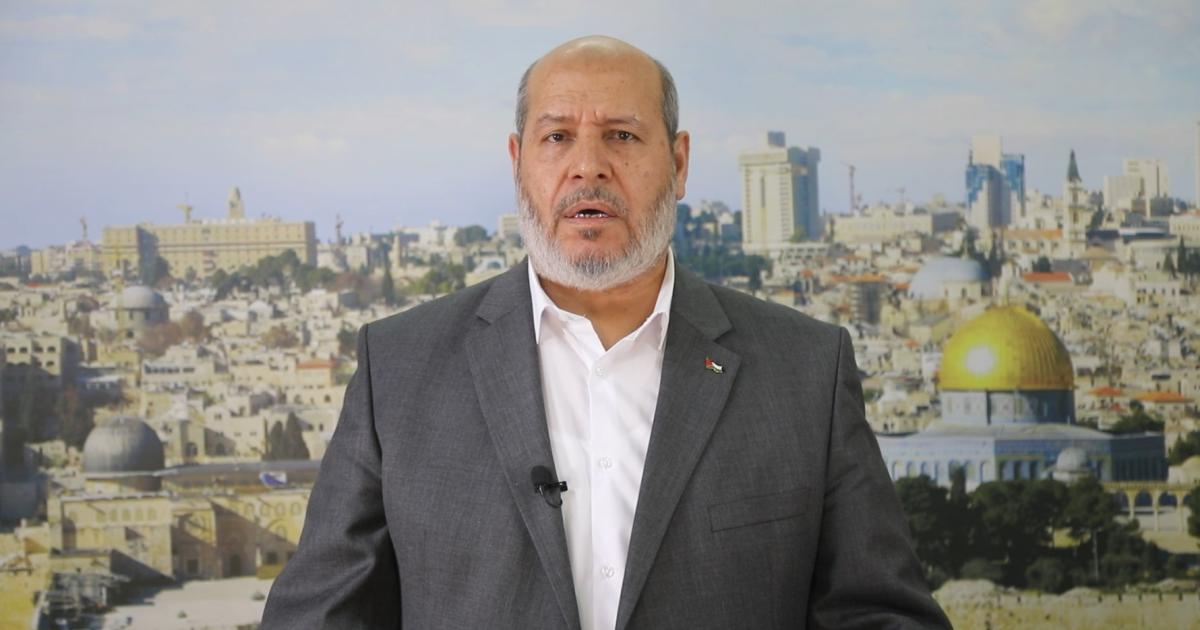
In contrast, Hamas is sticking to clear demands, including US President Donald Trump declaring a ceasefire, providing personal guarantees that Israel will not resume the war after the prisoners are released, and Trump's Middle East envoy, Steve Witkoff, signing the deal and shaking hands with Hamas leader in Gaza, Khalil al-Hayya.
The problem is Israel violating the agreements.
Dr. Hussein Al-Deek, a writer and political analyst specializing in American affairs and international relations, says that the new proposal presented to Hamas in the Doha negotiations represents a positive step, but the main obstacle remains the position of Israeli Prime Minister Benjamin Netanyahu and his government, which refuses to stop the war and obstructs agreements.
Al-Deek explains that the problem lies not with Hamas, which has expressed a willingness to negotiate, but with Israel, which is violating agreements and refusing to provide guarantees to end the aggression against the Gaza Strip.
Al-Deek points out that Egyptian, Qatari, and even American mediators have become convinced that Netanyahu is the main obstacle to the negotiations.
Al-Deek asserts that the central issue in these talks is not the number of prisoners, the timetables, or issues such as disarming Hamas, the departure of its leaders, or the handover of the Gaza Strip to the Palestinian Authority, but rather a permanent ceasefire.
Al-Deek says, "Netanyahu refuses to end the war or offer any binding guarantees, and the US administration is unwilling to offer guarantees to stop the war, while Hamas and the Palestinian people insist on ending the aggression as a basic condition."
Al-Deek explains that even if all 58 remaining prisoners held by the resistance are released, Israel will continue the war to achieve its strategic goals, which include controlling large areas of Gaza, establishing settlements, forming an administration loyal to the occupation, and displacing as many Palestinians as possible.
Al-Deek points out that these goals, supported by Netanyahu and US President Donald Trump, face international obstacles, particularly regarding forced displacement, as no country has officially declared its willingness to receive displaced Palestinians from Gaza.
Al-Deek explains that there are American efforts to negotiate with countries, such as Libya, to host approximately one million Palestinians in exchange for releasing billions of dollars frozen from the former Libyan government's assets in American banks. However, all attempts have been unsuccessful so far, confirming the consistency of the American and Israeli positions on the war's objectives.
Excluding a temporary truce or a permanent cessation of war
Al-Deek asserts that the United States continues to negotiate with other countries to achieve this goal, but international and Arab opposition to the displacement has forced Trump to publicly back down from the plan, despite its tacit continuation, as American and Israeli press reports indicate.
In assessing the possibility of halting the war, Al-Deek rules out the possibility of such a halt under the current circumstances, whether through a temporary truce or a permanent ceasefire, noting that this goal may not be achieved unless the Netanyahu government leaves office.
Al-Deek points to Israeli media talk of possible elections within a year, which could alter the political landscape. However, he asserts that the continuation of the war reflects a consensus between the Trump administration and Netanyahu on its objectives, with the exception of displacement, which faces international resistance.
Al-Deek explains that the core issue remains a cessation of hostilities, a demand the Palestinian resistance insists on and one Netanyahu and Israel categorically reject.
Al-Deek warns that the absence of binding international guarantees, particularly from the United States, makes reaching an agreement more difficult, prolonging the conflict and deepening the suffering of the Palestinian people amid Israeli goals aimed at changing the demographic and political reality in Gaza.
Conflict resolution strategy rather than conflict management
For his part, Nizar Nazzal, a researcher specializing in Israeli affairs and conflict issues, asserts that Israel is adopting a strategy aimed at resolving the Palestinian-Israeli conflict once and for all by liquidating the Palestinian cause and the Palestinian people, rather than managing the conflict as it was in the past.
Nazzal points out that Hamas is responding positively to proposals for a ceasefire in the Gaza Strip, but Israel, under the leadership of Prime Minister Benjamin Netanyahu, is adhering to a policy of "temporary truces" and refusing to commit to a comprehensive cessation of hostilities, the primary goal of the Palestinian resistance.
Nazzal asserts that Israel's central goal is to resolve the conflict completely by stripping the Palestinian resistance of its leverage, particularly the issue of Israeli prisoners. Israel also seeks to free Hamas prisoners without making any substantive concessions, such as a ceasefire or a complete withdrawal from the Gaza Strip, which would allow it to resume military operations later.
"Israel is not explicitly saying it will agree to a ceasefire in exchange for the release of all prisoners," Nazzal says. "Rather, it is relying on temporary truces, such as a 50- or 60-day ceasefire, because it does not want a comprehensive commitment to end the war."
Temporary truce to allow humanitarian aid in
Nazzal asserts that there is a chance of reaching a temporary truce that might include the entry of humanitarian aid and the release of a limited number of Israeli prisoners, but that a comprehensive agreement is unlikely at this time.
Nazzal notes that Hamas may accept a limited truce, but will be cautious in reducing the number of released prisoners, aware that Israel will exploit any decrease in its prisoner numbers to intensify its targeting of the Gaza Strip, which will become "empty of prisoners" and thus an easier target for military operations.
Speaking about international guarantees, Nazzal cautions against relying on American and Israeli promises, noting that both parties have a proven track record of reneging on agreements.
Nazzal cites the Doha Agreement of January 17, which Israel signed under American, Egyptian, and Qatari sponsorship. However, Netanyahu backed out of implementing the second phase of the agreement, which included political steps such as withdrawal and a ceasefire.
Netanyahu works for his own personal interests
"Netanyahu is working for his own personal benefit," Nazzal says. "A ceasefire would mean the fall of his government, the collapse of his political future, and even facing prosecution."
Nazzal criticizes the verbal guarantees provided by the United States and its refusal to provide binding written guarantees, saying, "Trump withdrew from the nuclear agreement with Iran in 2018, which shows that relying on American guarantees is a losing proposition."
Nazzal points out that reports of "momentum" in the Doha negotiations, according to Israel's Channel 13, are inaccurate, emphasizing that the main obstacle remains Israel's refusal to stop the war and fully withdraw from Gaza.
Nazzal stresses that the situation remains complex, with a wide gap between Hamas's demands for a comprehensive cessation of hostilities and Israel's rejection of this condition.
Nazzal believes that Israel will resume fighting even if a temporary truce is reached, presenting Hamas with difficult choices, as any concession could weaken its position in the ongoing war against the Palestinian people.
US-Israeli maneuver to uproot Hamas
For her part, Egyptian academic and political analyst Dr. Irene Said explains that the current phase is witnessing a US-Israeli maneuver aimed at uprooting Hamas, emphasizing that this goal remains the primary priority for both Washington and Tel Aviv, at the expense of humanitarian values and international law.
Saeed points out that the United States has ignored the humanitarian catastrophe in the Gaza Strip and has taken no action to rein in its strategic ally, Israel, reflecting a retreat from its purported American values and a disregard for international norms.
Saeed points out that this maneuver is manifested in portraying a clash between US President Donald Trump and Israeli Prime Minister Benjamin Netanyahu, despite the fact that any disagreement between them is limited.
Saeed explains that Trump deliberately avoided visiting Tel Aviv during his recent tour of the Middle East, with the aim of weakening the Gulf states' position in his calls to pressure Netanyahu.
Saeed asserts that the conflicting American and Israeli statements, and talk of a return to negotiations and the possibility of reaching an agreement, are merely attempts to buy time and exploit it to expand Israel's military incursion into Gaza and intensify its systematic attacks against the Palestinians.
Trump is trying to achieve apparent balances.
Saeed believes that the coincidence of talk of resuming negotiations with Israeli orders to expand the war reveals the intentions of both sides.
Even allowing limited humanitarian aid into the country, according to Saeed, reflects Trump's attempt to achieve a superficial balance following his economic tour of the Gulf, which went against political expectations. These steps are little more than tactics to improve Israel's image, while the war continues with no real intention of ending it.
Saeed proposes three parallel paths to resolve the complex situation. The first is implementing the outcomes of the Arab Summit, which are consistent with the decisions of the March 4 Summit and are characterized by their effectiveness and practical applicability.
The second path, according to Saeed, is to strengthen Cairo's efforts to lead the main negotiations in their second phase, while seizing the initiative.
Saeed points to the third path, which involves urgent Gulf action to exert direct pressure on Trump to push him to end the war.
Saeed stresses that these paths require close Arab coordination to confront the US-Israeli strategy.
Saeed stresses that the lack of American and Israeli will to end the war, coupled with the continued military escalation, further complicates the crisis.
Saeed warns that the continuation of these maneuvers will exacerbate the humanitarian catastrophe in Gaza, calling for urgent international and Arab action to halt the aggression and impose just solutions.
Israel and media leaks
For her part, Nour Odeh, a writer and political analyst specializing in diplomatic affairs and international relations, says that mediators are concerned with limiting leaks about the ongoing Doha negotiations regarding the Gaza Strip, while Israel excels at using media leaks to shape a particular narrative that dominates discussions.
Awda believes that talk of an "Israeli proposal" or an "American proposal" overlooks objective factors that indicate a chance for a limited agreement, driven by the United States' active engagement and President Donald Trump's desire to achieve a symbolic achievement in the form of the return of the bodies of four American-Israeli citizens held in Gaza.
Awda points out that this potential agreement will not be comprehensive and will not meet the aspirations of the Palestinian side, especially Hamas, which realizes that a comprehensive ceasefire is not on the table now.
Awda explains that Trump is pursuing his own personal interests through this achievement, alongside his attempt to "save Israel from itself" by easing its international isolation, as evidenced by the limited and insufficient humanitarian aid trucks allowed into Gaza.
Awda believes this move aims to polish Israel's image, which faces accusations of starving more than two million Palestinians, half of whom are children.
Awda warns against relying on Trump's assurances that the war will not resume, questioning his willingness to offer such assurances, which could be interpreted as granting legitimacy to Hamas.
Awda explains that the US administration's statements emphasize strict conditions, including preventing Hamas from governing Gaza, requiring its leaders to leave the Strip, granting Israel the right to target them, and disarming Hamas.
Awda asserts that the United States does not oppose the war or the extent of Palestinian casualties, pointing to its silence regarding the displacement, killing, destruction, and emptying of camps in the West Bank, which reflects the absence of any substantive disagreement with Israel regarding the ongoing "war of extermination."
American and Israeli moves are tactical, not strategic.
Awda explains that the US and Israeli moves remain tactical, not strategic, and do not imply a change in US policy toward the Palestinian issue.
Awda rules out the possibility of Trump offering guarantees that he will not return to war unless Hamas agrees to strict conditions, such as disarming, the departure of its leaders, and its exclusion from governing Gaza.
Awda points to an additional dilemma facing Trump: Israel's refusal to allow any Palestinian party to govern the Gaza Strip, coupled with his renewed talk of displacement and control over the territory, complicates the possibility of reaching a sustainable solution.
Awda asserts that the negotiations are taking place in a vicious circle, with the most that can be expected being a scenario similar to the situation in Lebanon, involving a de-escalation of the war or a temporary truce that allows Israel to retain its ability to attack, assassinate, and bomb.
"Unfortunately, Palestinian, regional, and international factors are still not yet ripe for ending the war," Odeh said, emphasizing that the current situation reflects the ongoing challenges facing achieving a just solution that meets the Palestinian people's need to halt the genocide and begin reconstruction.
The Doha negotiations are a platform for reopening all issues.
Political science professor Dr. Suhail Diab says that the ongoing negotiations in Doha regarding the situation in the Gaza Strip have witnessed qualitative developments. They are no longer limited to discussing specific proposals, such as the Witkoff proposal or the Israeli proposal, but have become a platform for reopening all issues and presenting new options, including the possibility of reaching comprehensive deals or a long-term truce extending to two years.
Diab explains that these negotiations reflect the significant pressures facing both Israel and the Palestinian negotiator, pushing both sides to search for a "magic equation" to resolve the current crisis.
Diab points out that the negotiations are characterized by three major developments. First, the reopening of all points of contention for discussion, something Israel had previously rejected, reflecting a shift in its position under internal and external pressure.
The second issue, according to Dabbab, is Israel's willingness to discuss the terms of a ceasefire, despite its lack of explicit commitment to ending the war, which opens the door to new possibilities.
The third development revolves around the split of negotiations into two tracks: a formal track at the negotiating table, and an informal track involving contacts between Witkov and Netanyahu, and Witkov and Arab mediators. This track is the most effective on issues such as the delivery of humanitarian aid and advancing negotiations toward a possible deal.
Israel faces increasing pressure
Diab explains that Israel is facing increasing pressures pushing it toward flexibility, most notably American pressure resulting from the shift in US policy toward Netanyahu, in addition to Houthi attacks that Israel is unable to confront on a security level.
Diab points out that the Israeli security services are convinced that it is impossible to recover Israeli prisoners alive through military operations, which reinforces the need for a negotiated solution.
In contrast, Diab explains that Palestinian negotiators face similar pressures, most notably the worsening humanitarian crisis in Gaza, which forces Palestinians to consider flexible and creative proposals.
Diab points out that the decline in popular and official Arab support, coupled with internal tensions between Palestinian factions, particularly between Hamas and the Palestinian Authority, further complicates the position of the Palestinian negotiator.
Diab asserts that both parties are negotiating under extremely sensitive circumstances, as if they are "on the brink of a catastrophe" that could lead to disaster if an agreement is not reached.
Given the American, international, and regional need to find a solution, Diab expects progress toward an agreement in the coming hours or days, supported by Western pressure from Britain and France, efforts from Qatar and Egypt, and even contributions from China and other parties.
In outlining a possible solution, Diab proposes a "magic equation" based on three pillars. The first pillar is an indirect truce or partial ceasefire between Israel and Hamas, without discussing whether to end the war or continue it. This formula has been tried before, but it has not succeeded on its own.
The possibility of adopting a model similar to the Lebanese agreement
The second aspect, according to Diab, relates to American guarantees, which should specify the conditions for Israel's return to military operations if the war is halted, indicating the possibility of adopting a model similar to the Lebanese agreement. The United States should also provide guarantees to the Palestinians to prevent Israel from returning to a full-scale war or policies of "genocide," a major Palestinian and Arab concern.
Diab points to the third aspect, which requires Hamas's willingness to discuss sensitive issues such as the "day after" in Gaza, including the future of the resistance's weapons.
Diab expects the negotiations to move toward a three-way agreement, including a direct agreement between Israel and the Palestinians, and side agreements between Israel and the United States, and between Israel and the Palestinians, providing reassurance to each party without conflicting with other agreements.
Despite the challenges resulting from conflicting assurances between the parties, Diab expresses cautious optimism about the possibility of reaching a formula that would enable the parties to "coexist" with the agreement, thus overcoming the current crisis.
Israeli proposals have not changed.
For his part, Fayez Abbas, a writer specializing in Israeli affairs, said that the Israeli proposals presented to Hamas have remained unchanged since the start of the initial negotiations, noting that Israel, under the leadership of Prime Minister Benjamin Netanyahu, refuses to commit to a comprehensive ceasefire in the Gaza Strip.
Abbas explained that the initial agreement included the release of detainees in exchange for a two-month truce, with a plan to move to a second phase that would include the release of all detainees, a cessation of hostilities, and an Israeli withdrawal from the Gaza Strip. Netanyahu rejected this phase, demanding the release of all detainees, living and dead, the disarmament of Hamas, the end of its control over Gaza, and the deportation of its political and military leaders from the Strip.
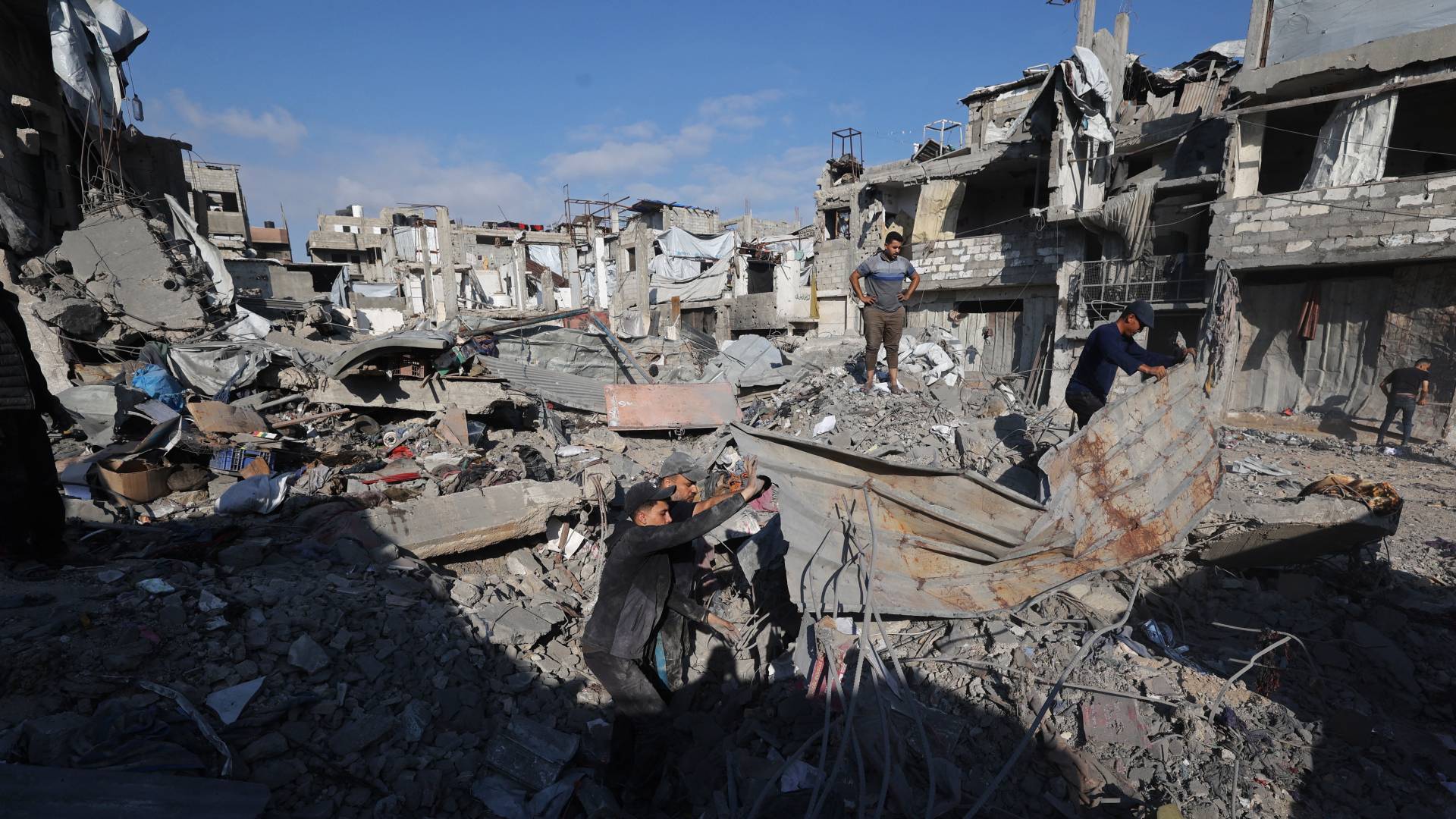
Abbas points out that Israel has not backed down from its positions, but has intensified its military operations, prevented the entry of humanitarian aid for extended periods, and launched a large-scale ground operation to occupy the entire Gaza Strip. He asserts that Israel has no intention of withdrawing even if a ceasefire agreement is reached and the detainees are released.
Abbas points out that Netanyahu is exploiting the limited aid deliveries to the Gaza Strip to buy time and ease international pressure, but he is paying no attention to world public opinion or UN resolutions as he continues his plan to occupy the Strip and forcibly displace its population.
Abbas explains that this plan faces a major obstacle, as countries refuse to cooperate with a government that includes figures like Itamar Ben-Gvir on the displacement issue.
Netanyahu's desire to take revenge on the Palestinian people
Abbas asserts that Netanyahu's continued war reflects his desire to "take revenge" on the Palestinian people after the October 7 attack, noting that the recent military operations in Gaza lack any clear military significance and are merely aimed at escalating collective punishment.
Abbas explains that US President Donald Trump is the only one capable of forcing Netanyahu to stop the war, but he shows no real interest in doing so.
Abbas considers Trump's statements about the need to allow food into Gaza during his visit to the Arabian Gulf to be nothing more than "lip service" that does not reflect a serious intent to end the conflict.
Abbas asserts that Trump's announcement of ceasefire guarantees may only be possible if he decides to enforce them, as Netanyahu lacks the courage to oppose him.
Abbas warns that the absence of international sanctions on Israel only strengthens its commitment to its occupation plans, making a halt to the war or an Israeli withdrawal unattainable at the present time.


Share your opinion
A new proposal on Gaza: Israeli intransigence obstructs a comprehensive agreement.