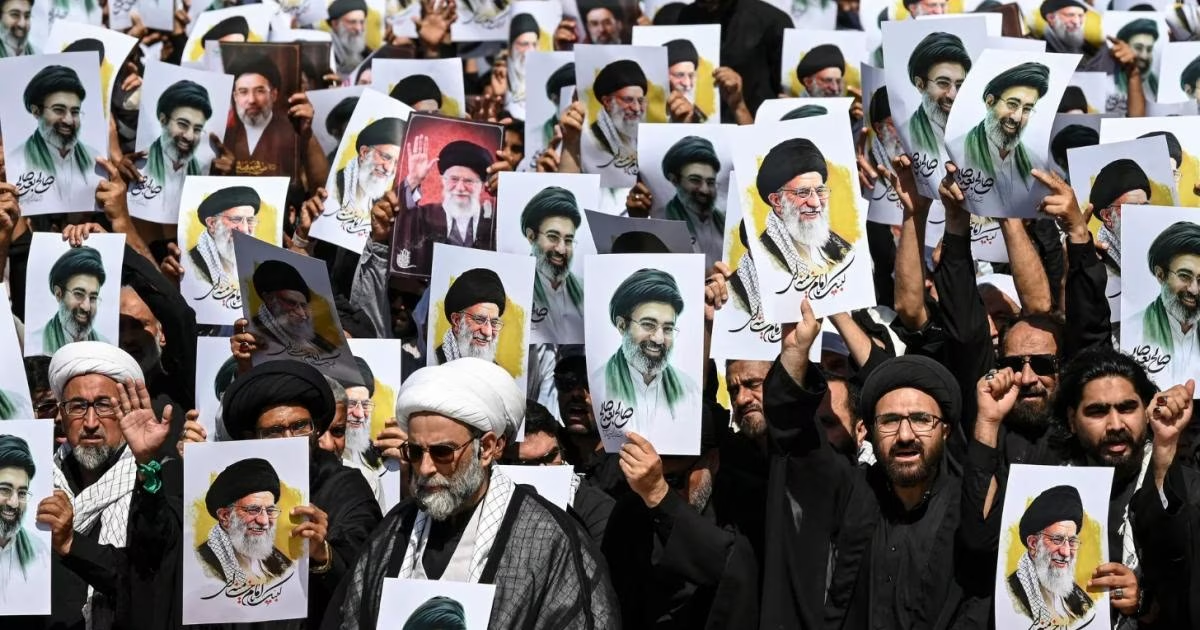







Informed sources revealed complex diplomatic details that preceded the announcement of a temporary ceasefire between the United States and Iran, at a time when the region was preparing for a comprehensive military confrontation. Reports confirmed that the Iranian Supreme Leader, Mojtaba Khamenei, was directly and unprecedentedly involved in managing the negotiation process, with his personal approval considered the cornerstone of reaching this agreement.
The dramatic shifts began last Monday when Khamenei instructed his negotiators to seriously pursue an agreement, for the first time since the escalation of tensions. This directive coincided with the expiration of an ultimatum issued by US President Donald Trump, who openly hinted at harsh military options against Tehran.
Despite the escalatory rhetoric adopted by Trump and his threat of 'total destruction,' back channels witnessed intense activity that even circles close to the US administration did not anticipate. Sources indicated that an atmosphere of ambiguity prevailed until the last moments before the official truce was announced.
Meanwhile, US forces in the Middle East had completed their preparations to carry out extensive airstrikes targeting vital infrastructure in Iran. Sources stated that coordination between the White House and the Pentagon reached its peak, amidst regional anticipation of an Iranian reaction that could affect Washington's and its allies' interests.
Regional capitals witnessed a state of alert, with reports of civilians evacuating some Iranian areas in anticipation of imminent bombing. In contrast, Washington's allies cautiously monitored the stalled negotiations, which some parties initially described as 'chaotic.'
US envoy Steve Witkoff led a series of intensive contacts from inside the White House, initially expressing his rejection of Iranian proposals he described as catastrophic. However, the entry of Pakistani mediators helped overcome obstacles and convey mutual messages between Washington and Iranian Foreign Minister Abbas Araghchi.
Egypt and Turkey played supporting roles in bridging the views between the two sides, while China exerted quiet pressure on Tehran to choose the diplomatic path. By Monday evening, a preliminary draft for a two-week ceasefire had materialized and received initial acceptance from the American side.
Due to security concerns, communications with the Iranian leader were conducted through intermediaries to convey sensitive messages and ensure his safety. Observers described Khamenei's green light to the negotiators as the 'biggest breakthrough' that spared the region a devastating conflict, especially with the Foreign Minister's role in convincing the military establishment to de-escalate.
On Tuesday morning, Trump returned to verbal escalation, warning of 'erasing an entire civilization,' which raised doubts about the collapse of talks. But participating sources confirmed that the negotiating momentum continued behind the scenes, away from the sharp media statements aimed at domestic consumption and political pressure.
US Vice President JD Vance entered the crisis by making contacts from Hungary with the Pakistani side to ensure the stability of the truce terms. At the same time, Israeli Prime Minister Benjamin Netanyahu was pressuring Washington to ensure no concessions were made that would affect Tel Aviv's security or grant Tehran strategic gains.
By Tuesday midday, the outlines of the agreement began to emerge publicly with Pakistani Prime Minister Shahbaz Sharif publishing details of the proposed offer. Despite pressure from the hardline wing in Washington to reject the agreement, Trump decided to proceed after phone consultations with Netanyahu and regional leaders.
Military orders were issued to US forces to halt offensive preparations immediately upon the approval of the truce, leading to an immediate de-escalation of field tensions. The Iranian Foreign Minister later announced his country's full commitment to the agreement, declaring a symbolic step of opening the Strait of Hormuz to international shipping.
Despite this temporary diplomatic success, the future remains fraught with risks, with core issues such as the nuclear program and ballistic missiles remaining unresolved. Analysts believe that the current truce is merely a 'warrior's rest' to test intentions before entering into more complex negotiations.
US Vice President is expected to lead his country's delegation in upcoming negotiation rounds to solidify the de-escalation and transform it into a permanent agreement. The coming days will be the real test of the parties' ability to adhere to the truce terms and avoid any provocations that could return the region to square one.
The Iranian Supreme Leader's approval to give the green light to the negotiators represented a fundamental breakthrough in the course of the crisis that almost turned into a comprehensive confrontation.
شارك برأيك
Truce Backstage: How Mojtaba Khamenei and Trump Led the Region from the Brink of War to a Two-Week Agreement?