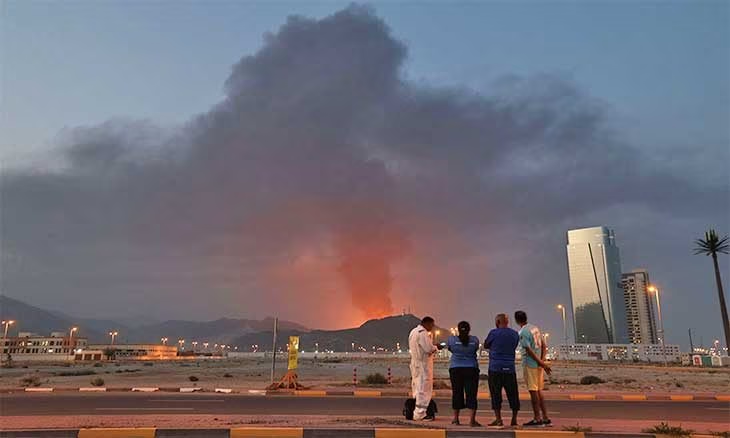







The direct military confrontation between Iran and the American-Israeli alliance entered its seventh day, amidst unprecedented field escalation that included targeting US bases in the Gulf region with ballistic missiles and drones. Sources reported that the Gulf Cooperation Council countries, in conjunction with the European Union and Jordan, issued statements condemning what they described as reckless Iranian attacks, while Tehran affirmed that its operations are in response to the aggression that began on February 28th and resulted in the martyrdom of Supreme Leader Ali Khamenei and prominent military commanders.
In light of this crisis, Gulf positions emerged reflecting the extent of the geopolitical predicament, as the UAE announced it had been subjected to over a thousand attacks without changing its defensive stance, while Saudi Arabia, Qatar, and Kuwait hinted at taking measures to protect their sovereignty. Observers believe that these countries find themselves in the heart of a conflict they did not seek, where military operations are managed with a logic that prioritizes Israel's security over regional stability, threatening Gulf infrastructure and economies that have become caught in the crossfire between Washington and Tehran.
Internationally, signs of division in the Western camp began to clearly appear, as Spain and Portugal announced their categorical refusal to use their military bases as launchpads for attacks against Iranian territory. British Prime Minister Keir Starmer also favored the diplomatic path over military involvement, at a time when air traffic tracking platforms detected intensive movements of American refueling aircraft heading towards the Middle East via alternative routes in northern Europe.
Economically, the war and navigation disruptions in the Strait of Hormuz caused a massive 25% jump in global energy prices, prompting the Kremlin to announce an increase in demand for Russian energy. The US budget is suffering from severe depletion, costing up to one billion dollars daily, coinciding with massive losses to the Israeli economy estimated at billions of shekels weekly, amidst reports of a gradual depletion of strategic ammunition stockpiles for the occupation forces and the United States.
Analysts believe that the deep objectives of this war go beyond the Iranian nuclear file to an attempt to liquidate the Palestinian issue and subject the region to complete Israeli hegemony. Arab capitals fear that the elimination of the Iranian regime will lead to an imbalance of power that will give Netanyahu's extremist government a green light to expand its geographical and political influence, placing Arab countries before difficult choices between engaging in the conflict or bearing the exorbitant cost of neutrality.
Who gave you permission to turn our region into a battlefield? This war places Israel's security and interests above all other considerations.
شارك برأيك
The Arab Predicament Worsens as War on Iran Enters its Seventh Day, Targeting US Bases in the Gulf