







This year marks three decades since the end of the war in Bosnia and Herzegovina, a conflict in which around 100,000 people were killed. The war peaked in the Srebrenica massacre in July 1995, where Bosnian Serb forces, led by General Ratko Mladić, known as the "Butcher of Bosnia," committed a massacre against more than 8,000 men and boys within a "safe area," according to the United Nations classification.
In the following decades, the International Criminal Tribunal for the former Yugoslavia heard hundreds of testimonies and issued convictions against dozens of Bosnian Serb political and military leaders, including those convicted of genocide. Meanwhile, Bosnia and Herzegovina, along with foreign donors, invested significant funds in studying genocide, recovering victims, and commemorating their memories.
Many Bosnian survivors of the 1992-1995 war saw striking similarities between their experiences and the suffering of Palestinians. Many took to the streets and spoke out publicly against the genocidal war in Palestine. However, a significant number of Bosnian intellectuals, particularly those specializing in war crimes and genocide, chose silence. This silence not only harms efforts to achieve justice for Gaza but also undermines the field of genocide studies.
Before we explore the reasons behind Gaza becoming a taboo subject for some Bosnian researchers, it should be noted that not everyone is silent. There is a small group of Bosnian academics, who are also activists for Palestine and human rights, who have chosen to speak out.
Among them are professors and university researchers—such as Lejla Krešević, Sanela Čekić Bašić, Gorana Milinarević, Jasna Vitašković, and Sanela Kapitanović—who emphasized that there is a moral responsibility that demands not remaining silent. They have set an example by participating in protests and making public statements.
Belma Buljubasic, a professor at the Faculty of Political Science at the University of Sarajevo, criticized European political leaders and others who express sympathy for Srebrenica while simultaneously justifying Israel's actions in Gaza as "self-defense." She argued that this duality reveals a troubling pragmatism that undermines both solidarity and accountability.
In a recent interview, Edina Pečirević, a genocide studies specialist at the University of Sarajevo—Faculty of Criminal Justice and Security, stated that the ongoing genocide in Gaza clearly reflects the same dynamics that occurred in Srebrenica: from dehumanizing people to ideological mobilization, and then international complicity.
Ahmad Alibabić, director of the Center for Advanced Studies and a professor at the Faculty of Islamic Studies at the University of Sarajevo, has been outspoken in his positions. Last year, he participated in organizing a seminar titled: From the Balkans to Gaza: A Critical Analysis of Genocide, which discussed the dynamics of contemporary mass violence by comparing the Srebrenica massacre, the siege of Sarajevo, and the ongoing genocide in Gaza.
Nedžara Ahmadashvili, a journalist and media researcher based in Sarajevo, did not hesitate to draw comparisons between Gaza and the experiences of Bosnian survivors from besieged Sarajevo and Srebrenica.
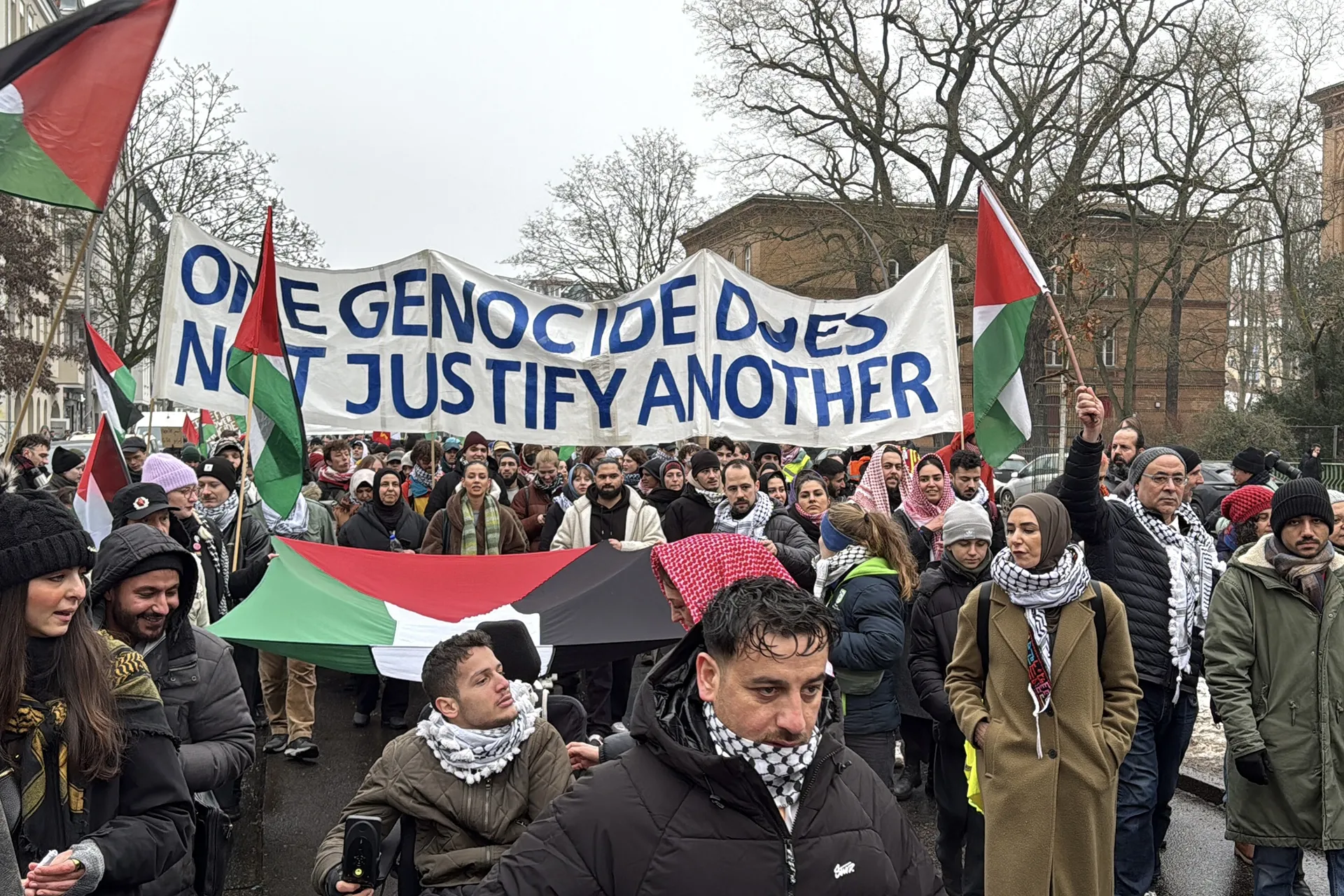
For several months, members of the "Women's Anti-Militarism Collective in Sarajevo" organized protests in the city center, where they recited the names of children killed in Gaza, linking the war crimes in Palestine to the atrocities experienced in Sarajevo.
These individuals responded—each in their own way—to the call of the late Palestinian thinker Edward Said, who always urged intellectuals to "speak truth to power," connecting local memory to global justice and resisting selective truth narratives.
Silence, as Said pointed out, is not a neutral position; it is a political choice that perpetuates harm.
However, Said's call did not move everyone. Ironically, many Bosnian researchers in the field of genocide remained conspicuously silent, even as their colleagues from genocide researchers abroad—including Israelis: Omer Bartov, Amos Goldberg, Shmuel Leiderman—publicly accused Israel of committing genocide in Gaza.
This stance did not change even after the "International Association of Genocide Scholars"—the largest academic body specializing in the field—issued a resolution last August classifying Israel's actions in Gaza as genocide.
Despite this, many researchers at the "Institute for Research of Crimes Against Humanity and International Law" at the University of Sarajevo, law faculty professors, and researchers at the "Institute of Islamic Traditions of Bosniaks" continued to avoid commenting on Israeli war crimes in Gaza.
At the institutional level, the "Institute for Research of Crimes Against Humanity" only issued a statement
شارك برأيك
Funding and pressures... What lies behind the silence of Bosnia's experts on Gaza