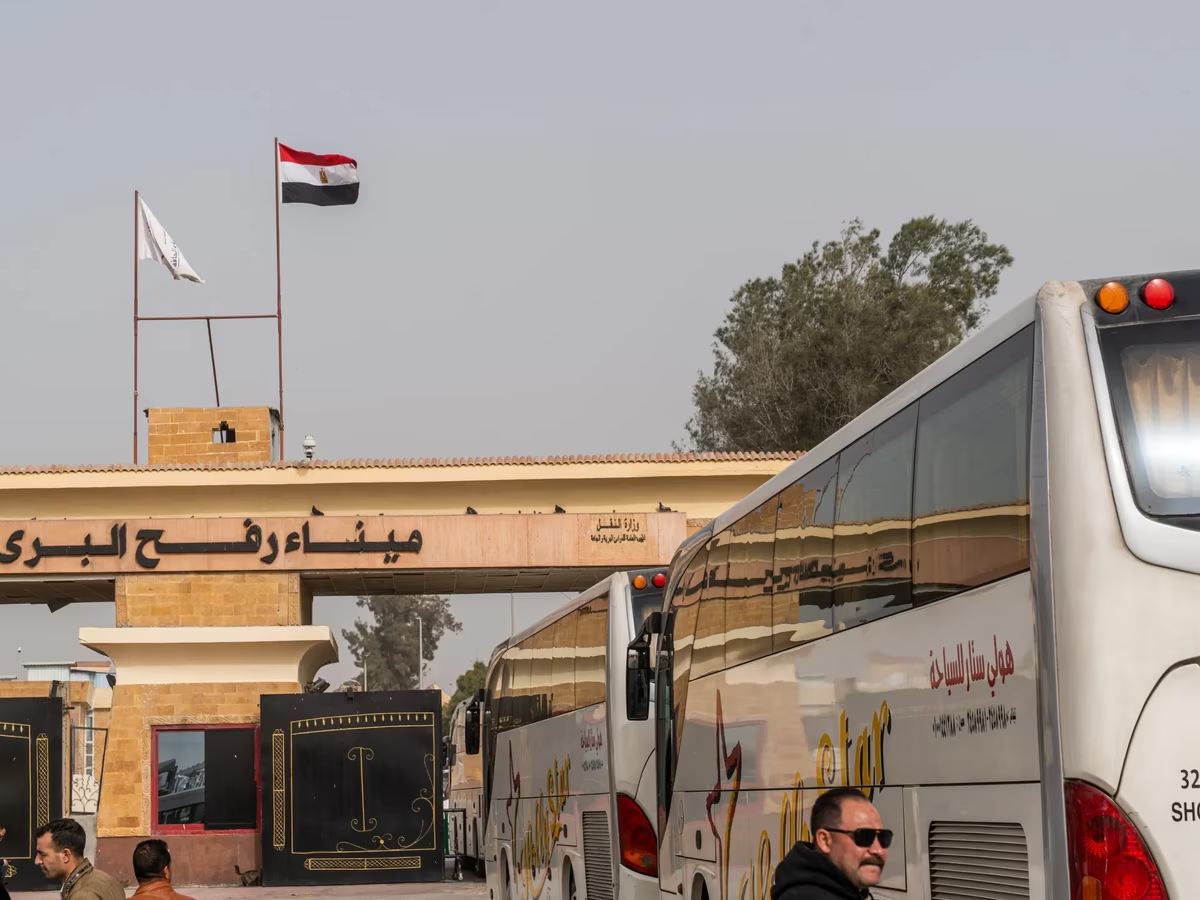







Israeli authorities decided today, Monday, to reopen the Rafah and Kerem Shalom crossings, designated for the movement of individuals and the entry of humanitarian aid into the Gaza Strip. This decision came after a sudden closure imposed by Israel last Sunday, justified by the military escalation and security tensions witnessed in the region with Iran.
The Israeli Coordinator of Government Activities in the Territories (COGAT) clarified, via an official statement, that the Rafah land crossing will resume receiving limited movement of individuals in both directions. Sources confirmed that operations at the crossing will be subject to previously established mechanisms, with the condition of prior coordination from the Egyptian side and the World Health Organization.
Regarding the Kerem Shalom crossing, the statement indicated that work will resume there starting Tuesday for the gradual entry of trucks and relief aid. This move comes after an assessment of the operational situation and the lifting of some security restrictions imposed following recent Iranian missile attacks on Israeli targets.
Occupation authorities had claimed that the closure of the crossings would not negatively impact the humanitarian situation within the Strip, alleging that the available quantities of food exceeded the needs of the population. However, these claims contradict field reports confirming the Strip's urgent need for a continuous and regular flow of basic and medical supplies.
Operations at the crossings are based on the terms of the ceasefire agreement concluded in October 2025, which explicitly stipulated the opening of the Rafah crossing under the supervision of a European mission and Egyptian-Israeli coordination. The agreement also included increasing the pace of aid to reach about 600 trucks daily, covering food, fuel, and shelter supplies.
Despite these understandings, data indicates that Israel has turned the crossings into a tool for political and military pressure in recent months. International organizations, including Human Rights Watch, have documented a sharp decline in the number of trucks allowed to enter, threatening the collapse of the remaining humanitarian infrastructure in Gaza.
Statistics issued by human rights sources indicate that the average number of incoming trucks has sharply decreased since last February, falling from 4,200 trucks per week to less than 600 trucks. This sharp decline coincided with military operations targeting the Iranian front, exacerbating the living crisis.
In a related context, the Government Media Office in Gaza revealed that more than 3,000 Israeli violations of the ceasefire agreement have been recorded since its signing. The office clarified that the compliance rate for the entry of agreed-upon trucks did not exceed 36%, with only about 50,000 trucks entering out of the 139,000 trucks that were supposed to arrive.
Humanitarian teams face severe difficulties in performing their duties due to Israeli restrictions on the entry of vital equipment such as generators and spare parts. The United Nations Office for the Coordination of Humanitarian Affairs confirmed that this prohibition has led to widespread malfunctions in the health and sanitation sectors and debris removal.
Historically, the Rafah crossing has witnessed a series of repeated closures since the truce came into effect, with Israel linking its opening to complex political and security issues. The crossing remained almost completely closed for long periods before being partially opened in February 2026 for humanitarian cases and the wounded only.
Coordination efforts also suffered successive setbacks, most notably last April when Israel completely closed the crossing, causing the suspension of patient evacuation operations. These measures deprived thousands of injured people from receiving necessary treatment abroad, amidst warnings of an imminent health catastrophe.
All trucks passing through the Kerem Shalom crossing are subjected to precise and complex Israeli inspection procedures, leading to delays in aid delivery for several days. International organizations consider these bureaucratic and security measures to be a deliberate obstacle preventing the satisfaction of the increasing needs of the besieged Strip's residents.
According to press reports, international pressure, especially from the US, played a role in the partial reopening of the crossings in previous periods. However, the total commercial and relief shipments remain significantly lower than pre-latest military escalation levels, keeping the humanitarian situation critical.
In conclusion, observers believe that Israel's 'open and close' policy aims to keep the Gaza Strip in a state of living instability. The crossings remain the only lifeline controlling the fate of millions of Palestinians, in the absence of genuine international guarantees obliging the occupation to open them permanently and unconditionally.
The closure of the crossings will not affect the humanitarian situation, as the quantities that have entered exceed the food needs of the population.
שתף את דעתך
Israel reopens Rafah and Kerem Shalom crossings after temporary closure following escalation with Iran