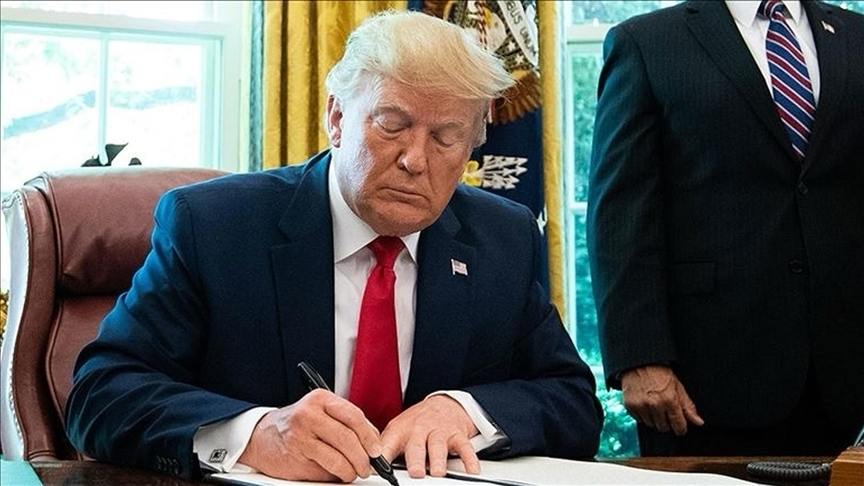







Several US lawmakers have criticized US President Donald Trump for launching a military strike against Iran without congressional approval. Republican Representative Thomas Massie said, "This is unconstitutional," while Democratic Representative Jim Himes, a member of the Intelligence Committee, commented on the president's announcement of the military strike, saying, "In accordance with the Constitution we defended, my concern for this matter is before the bombs fall."
CNN revealed that the Trump administration briefed senior Republicans before carrying out strikes on Iran, but did not notify Democrats. NBC reported that US House Speaker Mike Johnson and Senate Republican Leader John Thune were briefed on the US attack on Iran's nuclear facilities. In a statement, Johnson described the US strike as an example of an "America First" policy of strength.
For his part, US Senator Chris Murphy, a member of the Senate Foreign Relations Committee, revealed that he had reviewed the intelligence and found that there was no evidence that Iran posed an imminent threat to the United States, making the attack "illegal." He said, "Donald Trump is a dangerously weak and reckless president who has put the United States on the path to a war in the Middle East that the country does not want, that is not permitted by law, and that our security does not require."
Murphy considered that Trump was lured "by warmongers and those who profit politically and financially from them." He said in a statement on Sunday: "Our president knows nothing about history. History tells us that US arrogance about the effectiveness of military action is, in all circumstances, wrong." He added: "Trump was lured into these strikes by the perennial warmongers in the Middle East—those who know how to start conflicts but absolutely do not know how to end them, and those who profit politically and financially from endless wars." He emphasized that Congress has the right to declare war, and said: "We must vote as soon as possible on legislation that clearly prevents Trump from dragging us into a conflict in the Middle East that could cost countless American lives and waste trillions of dollars."
Independent Senator Bernie Sanders also criticized Trump's decision at a rally in Oklahoma, asserting that it was unconstitutional and that only Congress has the authority to declare war. The crowd at the event chanted, "No more wars." Democratic Senator Jeanne Shaheen, a member of the Senate Foreign Relations Committee, pointed out that Trump had not notified Congress. Senator Jack Reed, the top Democrat on the Senate Armed Services Committee, described the US strike on Iran as "Trump's gamble" in a statement. He said, "This was a big gamble by President Trump, and no one knows if it will pay off." He added, "It is easier to start wars than to end them, and we are at a dangerous juncture that could lead to significant instability in the region and beyond."
Meanwhile, Republicans, led by the Senate Majority Leader and the Speaker of the House of Representatives, defended Trump's decision. Senator John Thune, Republican of South Dakota and the majority leader, said in a statement that military action against Iran was justified. He added, "The regime in Iran, which has pledged 'Death to America' and wiping Israel off the map, has rejected all diplomatic avenues for peace." House Speaker Mike Johnson also supported the airstrikes, saying, "Military operations in Iran should serve as a clear reminder to our adversaries and allies that President Trump means what he says, and that they are the implementation of America First through strength." Senator Lindsey Graham, whom the Associated Press reported last week was leading the push for Trump to enter the war, said, "The decision was right, and Iran deserved it."
The Washington Post reported that the Trump administration informed Senate Minority Leader Chuck Schumer of the US strike on Iran before announcing it, but "the notification was superficial and lacked any details."
שתף את דעתך
US lawmakers criticize Trump for striking Iran without congressional approval