




Today, Monday, Israeli forces stormed sections (3, 2, and 1) of Gilboa prison.
According to the Prisoners' Club, these forces began searching a group of rooms, indicating that a state of tension prevails in the prison.


Mon 02 Oct 2023 1:12 pm - Jerusalem Time

Today, Monday, Israeli forces stormed sections (3, 2, and 1) of Gilboa prison.
According to the Prisoners' Club, these forces began searching a group of rooms, indicating that a state of tension prevails in the prison.
Mon 02 Oct 2023 12:40 pm - Jerusalem Time

Citizens suffocated and a Palestinian teenager was arrested, today, Monday, during confrontations with Israeli occupation forces in the Arroub camp, north of Hebron.
The occupation forces fired live bullets, stun grenades and toxic tear gas towards the citizens, causing dozens of them to suffocate. The occupation soldiers also arrested another teenager whose identity was not known.
Mon 02 Oct 2023 12:24 pm - Jerusalem Time

Sephardi Chief Rabbi of Israel Yitzhak Yosef has said that the mental faculties of secular Jews who eat unkosher food are "impaired," and therefore it is "difficult for them to comprehend things."
His comments were released by Israel's Channel 13 on Sunday. The rabbi added that, "I observe everything happening within the secular community. They are in a state of jeopardy. They do not find satisfaction in life; everything is driven by the desires of this world."
"They are poor souls...they are jealous of us. They see the haredi sector, with its holidays and children, it is all jealousy," the rabbi continued. "And the hate is developed from jealousy." He also called on religious organizations to promote the ultra-Orthodox lifestyle to secular Israelis.
Opposition outrage by chief rabbi's comments
His statements have sparked a political uproar, with strong condemnations coming from the opposition.
Opposition leader MK Yair Lapid commented that Yosef has misrepresented his role, saying, "he is not the Chief Rabbi of Israel but rather the rabbi of a vocal minority that condemns millions of Jews who serve in the army, risk their lives, work, and support this nation. In one aspect, he is correct - they felt somewhat foolish tonight when they realized they are the ones funding his salary."
Yisrael Beytenu chairman MK Avigdor Liberman, also commented, "The sole foolishness with your statements is the fact that the secular public is funding and paying a salary to someone as uninformed as you." A member of his party, MK Yulia Malinovsky, added, "Based on Chief Rabbi Yosef's statements, even consuming kosher food alone doesn't ensure profound wisdom.
Mon 02 Oct 2023 12:20 pm - Jerusalem Time

Today, Monday, the Israeli occupation forces tightened their military measures around the city of Nablus.
According to local sources, these forces closed the checkpoint between the city of Nablus and the northern town of Asira, and the street linking Ignisnia and Zuata, and prevented citizens from passing through them, in order to secure the settlers’ incursion into the Mount Ebal area.
She pointed out that the occupation forces tightened their military measures at the military checkpoints at the entrances to the city, and impeded the movement of citizens, as vehicles were being searched.
Mon 02 Oct 2023 12:16 pm - Jerusalem Time
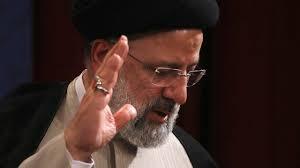
Iranian President Ebrahim Raisi denounced Sunday any attempts by regional countries to normalize relations with its arch-enemy Israel as "reactionary and regressive."
The remarks came amid ongoing U.S.-brokered negotiations between Israel and Saudi Arabia to establish formal ties, with the United States saying Friday that the two countries are moving toward the outline of a deal.
"Normalizing relations with the Zionist regime is a reactionary and regressive move by any government in the Islamic world," Raisi said during an international Islamic conference held in Tehran.
An Israeli delegation is expected to arrive Sunday in Saudi Arabia, days after the first official visit by an Israeli minister to the kingdom.
Saudi Arabia also sent a delegation Wednesday to the occupied West Bank for the first time in three decades in a bid to reassure the Palestinians ahead of the prospective deal.
Raisi on Sunday further labelled any normalization attempt as the "foreigners' desire," while stating that "surrender and compromise" regarding Israel were not on the table.
"The only option for all the fighters in the occupied land and the Islamic world is to resist and stand against the enemies," he said, reiterating Iran's position that Jerusalem must be "liberated."
In 1967 Israel occupied and then annexed east Jerusalem, which the Palestinians see as the future capital of their proposed state.
An agreement between Israel and Saudi Arabia would follow the U.S.-brokered Abraham Accords which saw Israel establish diplomatic relations in 2020 with three Arab countries.
Last month, on the sidelines of the United Nations General Assembly, Raisi said any "relationships between regional countries and the Zionist regime would be a stab in the back of the Palestinians."
Shiite-dominated Iran and Sunni-majority Saudi Arabia, two regional powerhouses, resumed relations, severed since 2016, under a China-brokered deal announced in March.
Mon 02 Oct 2023 12:06 pm - Jerusalem Time

European Union foreign affairs chief Josep Borrell announced on Monday that all of the bloc's foreign ministers are meeting for the first time outside its borders, in the Ukrainian capital, Kiev.
The meeting comes at a time when Kiev seeks to join the European Union in the future, in light of the Russian invasion of Ukraine, which is now in its twentieth month.
“We are holding a historic meeting of European Union foreign ministers here in Ukraine, the candidate country and next member of the European Union,” Borrell said in a statement on social media. “We are here to express our solidarity and support to the Ukrainian people.”
He added, "Ukraine's future lies within the European Union."
For its part, Kyiv welcomed the meeting.
“This is a historic event because it is the first time that the Foreign Affairs Council meets outside its current borders, outside the borders of the European Union, but within the future borders of the European Union,” Ukrainian Foreign Minister Dmytro Kuleba told reporters alongside Borrell.
As for French Foreign Minister Catherine Colonna, she saw the meeting as a message to Moscow that reflects the bloc's determination to stand by Ukraine.
"It is an expression of our firm and permanent support for Ukraine, until it is able to prevail," she told reporters in Kiev. "It is also a message to Russia that it should not rely on the possibility of exhausting us."
In turn, Dutch Foreign Minister Hanke Bruins Sloat stressed that "it is really important that we meet here today to express our solidarity with Ukraine."
In 2014, Ukrainians overthrew the pro-Moscow regime in a popular pro-EU uprising.
Ukrainian President Volodymyr Zelensky pressed to accelerate Kiev's accession to the bloc as a response to the Russian invasion.
Mon 02 Oct 2023 12:00 pm - Jerusalem Time

The Prisoners' Club held the occupation prison administration fully responsible for the life of prisoner Mahmoud Hassan Abu Dhari (55 years old), from the city of Dura/Hebron, who has been facing a deterioration in his health condition for several days, and to this day there is no final diagnosis of his health condition.
The prisoner Abu Dhari, who has been detained since 2003 and has been sentenced to life imprisonment, was transferred yesterday from Raymond Prison to Soroka Hospital urgently, and then the prison administration returned him late last night to prison, but his health condition deteriorated this morning. He was transferred again to the prison clinic.
The Prisoners' Club confirmed that the prisoners informed the prison administration that if he is not transferred to the hospital again and his health condition is seriously diagnosed and the necessary treatment is provided to him, there will be protest steps, as the prisoners continue to demand that he be transferred to the hospital since the morning.
The Prisoners' Club considered that what is happening to the prisoner, Abu Dhari, is only part of the process of the systematic crime of medical negligence (slow killing), which the prison administration continues to practice at several levels and with its various tools, most notably the processes of procrastination in diagnosing the disease and providing treatment.
It is noteworthy that Abu Dhari is one of hundreds of prisoners facing the crime of medical negligence (slow murder).
Mon 02 Oct 2023 11:52 am - Jerusalem Time

On Monday, the Israeli Supreme Court in Jerusalem decided to reconsider the petition submitted against prisoner Kayed Al-Fasfous, who has been on hunger strike for the 61st day in a row.
According to the Prisoners and Ex-Detainees’ Affairs Authority, the court’s decision was based on the illegality of canceling the previous appeal and that the appeal must be heard despite the non-attendance of the appellant prisoner Al-Fasfous, due to his deteriorating health condition.
The Commission indicated that this decision is a retaliatory and arbitrary decision, despite the presence of the prisoner’s lawyer and legal representative.
Mon 02 Oct 2023 11:45 am - Jerusalem Time
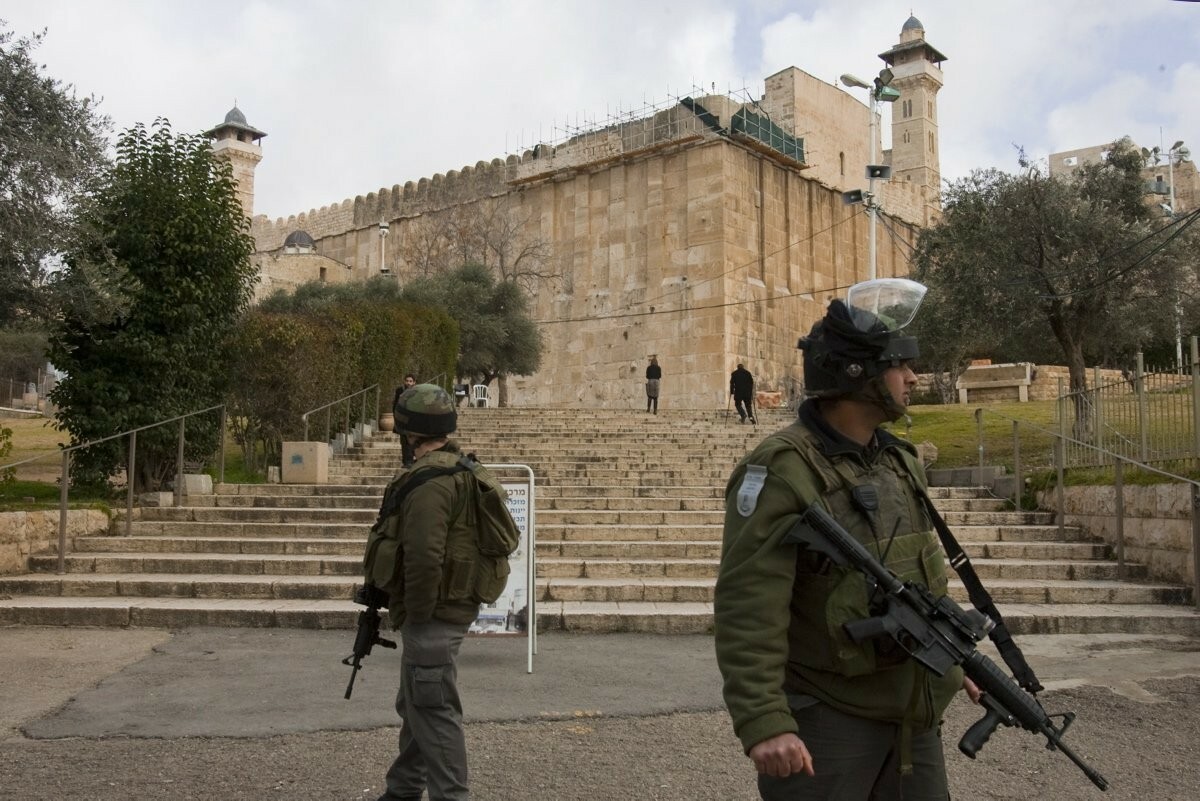
Today, Monday, the Israeli occupation forces closed the Noble Mosque of the Patriarchs to Muslim worshipers, under the pretext of Jewish holidays.
The Director General of the Hebron Endowments, Nidal Al-Jaabari, explained that the occupation will close the Ibrahimi Mosque until ten o’clock in the evening tomorrow, Tuesday, considering this a blatant infringement on the sanctity of the Mosque, and a provocative attack on the right of Muslims to access their places of worship.
Al-Jaabari called on the international community in general, and the Islamic and Arab countries and institutions related to cultural, heritage and religious affairs, led by UNESCO, to put its decisions into effect, given the seriousness of what is happening in Jerusalem and the Al-Aqsa and Ibrahimi Mosques.
The occupation forces also tightened their security measures and closed all military checkpoints and electronic gates leading to the Ibrahimi Mosque, to secure the settlers’ celebrations of the Jewish Throne Day in the Mosque and its squares.
Eyewitnesses confirmed that the occupation forces intensified their presence at all entrances leading to the Mosque to secure settlers’ access to the city of Hebron and archaeological areas, under the pretext of celebrating Jewish holidays, and closed some markets in the Old City.
Mon 02 Oct 2023 11:35 am - Jerusalem Time
Opinion Writer
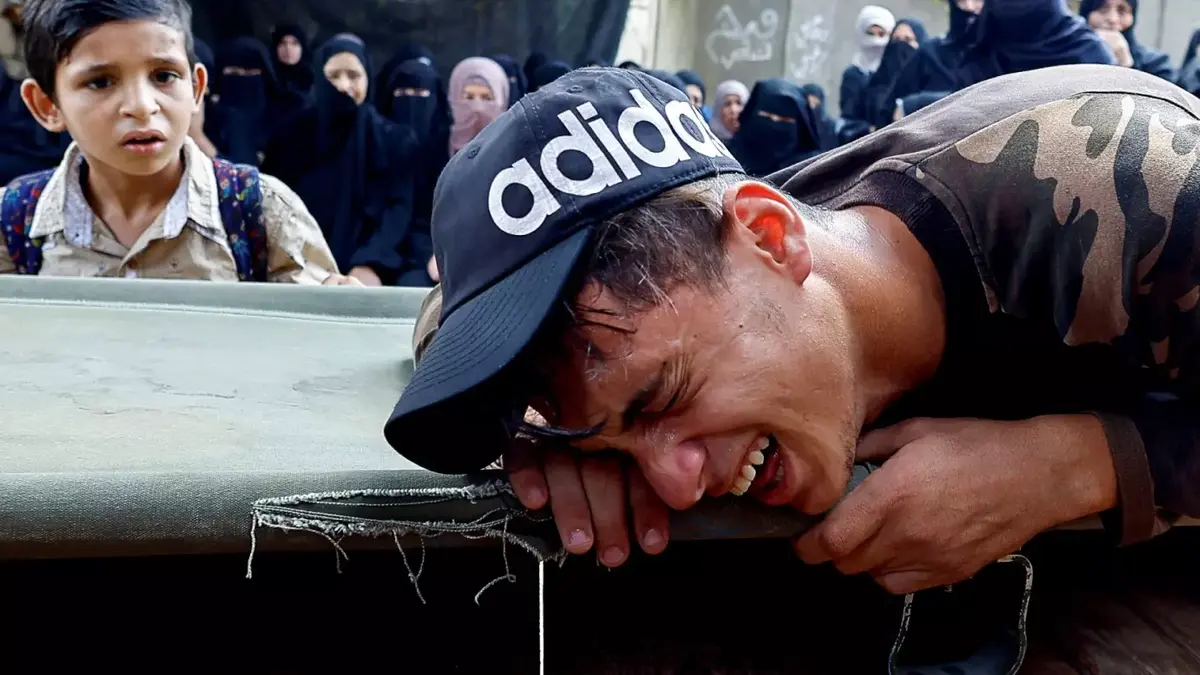
This time around, the day is overshadowed by the 50th anniversary of the 1973 war known as the Yom Kippur War. Of all of Israel's wars, this was the most traumatic for Israelis, and the old Israel is searching for its soul now under that shadow.
The broader religious and traditional meaning of Yom Kippur and the days leading up to it are always a time of soul-searching, and above all a time when we seek forgiveness for sins we have committed.
The ceremonial rituals are saturated with clichés, including the blessing of wishing others that they be "inscribed for a good year" - which is how people greet one another on the street, instead of saying "shalom" (peace) as the holiday approaches.
Israel is supposed to atone for its collective sins on Yom Kippur and Jewish Israelis are supposed to atone for their individual sins - yet this has never properly happened in any year, and this year less so than ever.
It has never occurred to Israel to ask for the most significant forgiveness of all the kinds it ought to be seeking: that is, asking forgiveness from the Palestinian people. Israel has never asked forgiveness for its sins towards the Palestinians committed in 1948, nor for those committed against them continuously since 1948, nor even for the sins it has committed against them during this past year, as demanded by Jewish law and tradition every year.
Moreover, this past year was a very hard one for Israel and the Palestinians, a year in which Israel has been ruled by the most extreme right-wing government in its history.
This is the year when not only is there nothing to be said about asking forgiveness from the Palestinians, but it is also the year in which Israel has lost all shame for the crimes it has committed against them.
This is the year when government ministers, referring to a Jewish criminal convicted of burning a Palestinian family alive as they slept in their home, have called the perpetrator a saint and a victim. The campaign demanding the release of Amiram Ben-Uliel went viral in Israel and in a matter of days raised more than $400,000 through crowdfunding to support action on his behalf.
This is the forgiveness many Israelis are seeking - for a man who willfully set a house on fire in the middle of the night and was convicted in a court of law, itself a rarity in the Israel of 2023 where Jews are almost never brought to justice, whether soldiers or civilians, for their crimes against Palestinians.
Some Israelis have already moved ahead a notch and are seeking forgiveness from the murderer rather than his victims. They not only deny that he is a murderer; some believe that, because the Palestinians he killed were innocents, including an infant, he is made holy by this act. This is what happens when all shame is lost.
A real spiritual self-examination for every Israeli, as Yom Kippur entails, or at any other time of the year, would necessarily involve an accounting for actions vis-à-vis the Palestinian people. On the national level, such an accounting has not even begun.
Even when Israel was signing agreements like the Oslo Accords, exactly 30 years ago now, there was no question of taking responsibility nor any request for forgiveness: these things were not even on the table.
A truth and reconciliation commission in the post-apartheid South African mode is completely far-fetched in Israel's case; no more than a fantasy, completely detached from reality. It is not difficult to imagine the potential positive impact on relations between Israel and the Palestinian people of a move on Israel's part to take responsibility for its crimes.
Cruel, discriminatory regime
After over 100 years of Zionism, which for the Palestinians has meant 100 years of dispossession, oppression, killing, destruction, humiliation, loss of rights and loss of dignity, in Israel there is no whisper of a thought about taking responsibility and seeking to atone, as Jews are bound to do by Jewish law on the holy day of atonement when these lines are being written.
On the contrary, just as the killer Ben-Uliel is the victim in the eyes of extremist Israelis, most Israelis see themselves as the victim, and only as the victim, in the context of their relations with their real victims, the Palestinians.
Only by falsely positioning themselves as the victims can Israelis cope with their past, denying and repressing it as few nations have managed to deny their past along with their present. A nation of immigrants took control of a land already inhabited for hundreds of years, suppressed its inhabitants, deprived them of their land and possessions, expelled some of them and oppressed the rest, seized control of the land and established a state which is by definition a state where Jewish supremacy exists.
This year, Israel also lost any shame over defining Zionism as Jewish supremacy. As Israel is pushed into a corner by an extreme right-wing government, an impressive protest movement has taken to the streets month after month to fight for democracy.
Yet this impressive protest ignores the question of the society's inherent Jewish supremacy, and demands only a return to the status quo ante, meaning democracy for the Jews in the Jewish state controlling a land in which two nations of equal size are living.
One nation lives under a democratic regime that is currently in danger, and the other nation lives under one of the worst military dictatorships in the world. Few nations anywhere live under such a cruel, predatory and discriminatory regime. Yet this is ignored by the democratic protest movement so admired by nearly everyone.
Entire nation in denial
For more than 100 years we have been depriving the Palestinians of their land, their property, their way of life, their culture and their dignity. While the methods of operation have changed over the years, the intention remains constant. The aim was and continues to be to try to arrange for as few Palestinians as possible to stay here, if any at all.
This is the true meaning of a "Jewish and democratic" state. This is the only way to settle the contradiction between Jewishness and democracy in the reality of a binational state. In 1948, Israel expelled hundreds of thousands of people, and even if some of them technically fled in terror, in either case, they were never given an opportunity to return. Israel then imposed military rule on the remaining Palestinians residing within its domain, terming them "Israeli Arabs".
A few months after the military regime within Israel came to an end, in 1966, it was replaced by a military occupation of the Palestinian territories that has continued ever since. Nearly seven million Palestinians live under Israeli control in various ways, in Israel, the West Bank and Gaza.
Conditions of deprivation in all areas of life for Palestinian citizens of the state; military tyranny for the stateless Palestinian subjects in the West Bank and East Jerusalem; and prison conditions for Palestinians in the Gaza Strip, the world's largest cage for human beings.
Brutality is the only means of preserving all of that. There is no nonviolent way to preserve such a violent reality.
The military regime employs cruel violence on a daily basis. War crimes are perpetrated hourly in cooperation with armed settler militias. And Israelis view all of that with denial and repression. They lie to themselves and remain complacent, or morbidly indifferent. Most do not know and especially do not want to know the reality, while most of the Israeli media does their part by not disturbing Israelis with a true portrayal of the reigning immorality they are refusing to see.
This is how we reached this state of affairs, in which an entire nation is living in denial. This is how we have ended up where we are now, so that when the day of atonement approaches, no one thinks about asking forgiveness from Israel's greatest victim.
Mon 02 Oct 2023 11:23 am - Jerusalem Time
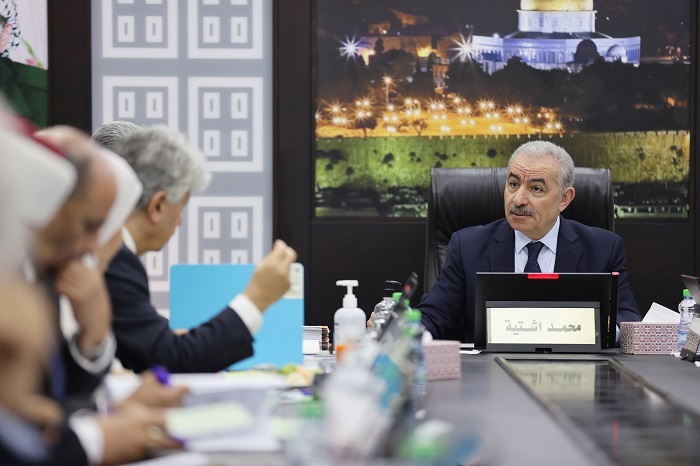
Prime Minister Muhammad Shtayyeh said, “There is an attempt by the current Israeli occupation government and its predecessors to annex areas called “C,” stressing that they are an integral part of the territory of the entire State of Palestine.”
Shtayyeh indicated in his speech at the beginning of the government session today, Monday, in Ramallah, that the Council of Ministers will discuss today strengthening the steadfastness of our people in areas called (C), and empowering our infrastructure in those areas.
He said: "Since the beginning of our work, we have given these regions a major priority in various fields, and today we are renewing the launch of programs related to these regions, and all ministries are working to make them successful, each according to their specialty."
Shtayyeh indicated that the Council of Ministers will discuss the latest draft of the Civil Service Law to be a modern and advanced law that addresses some of the failures and some loopholes in the previous law, and it will be submitted to President Mahmoud Abbas for approval and issuance.
The Council also discusses the draft spatial plan for the lands of the State of Palestine, and the recommendations of the Ministerial Committee related to the project that has been working on for three years. It also discusses expanding trade horizons with brotherly Jordan via the Karama crossing, and relevant recommendations for discussion with the brothers in Jordan.
Mon 02 Oct 2023 11:22 am - Jerusalem Time
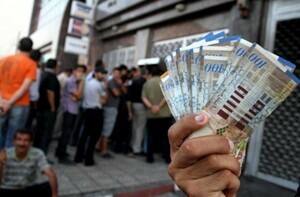
Today, Monday, the Ministry of Finance announced the date for disbursing the salaries of public employees for the month of September, tomorrow, Tuesday, 10/3/2023, at a rate of 90% of the September salary, with a minimum limit of 2,000 shekels.
The Ministry confirmed in a statement that the rest of the outstanding dues are owed to the employees and will be disbursed when financial capabilities allow.
Mon 02 Oct 2023 11:07 am - Jerusalem Time
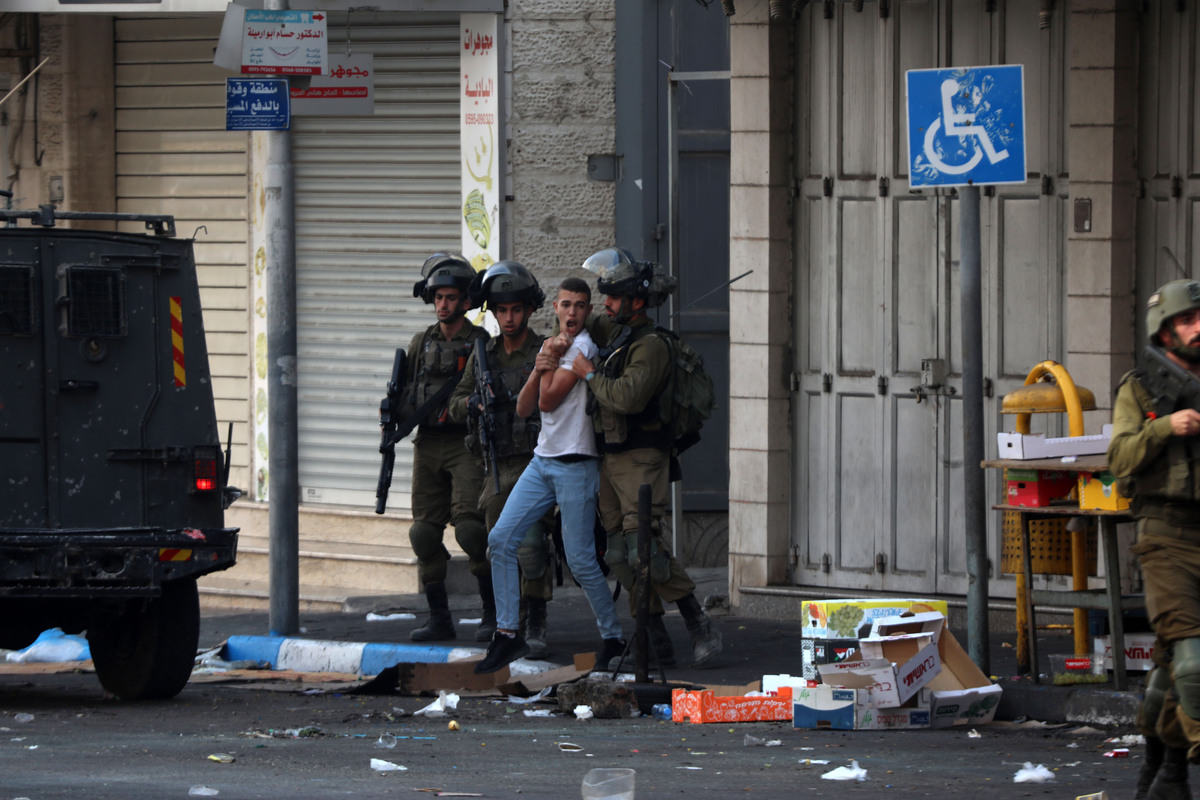
A young man was injured today, Monday, after the Israeli occupation forces attacked him in the town of Arraba, south of Jenin.
According to the Red Crescent, these forces stormed the town and severely beat the young man, and he was transferred to Jenin Governmental Hospital.
Mon 02 Oct 2023 10:49 am - Jerusalem Time

Today, Monday, Israeli special forces kidnapped two young men from the Zahrat al-Fanjan landfill, south of Jenin.
Eyewitnesses reported to Al-Quds.com that these forces used vehicles with a Palestinian license plate, ambushed the two young men, and immediately upon their arrival to their workplace, they surprised and arrested them.
According to local sources, the detainees are Suhaib and Ali Al-Saadi.
The occupation forces stormed the area, detained the workers present, and subjected them to field investigation.
Mon 02 Oct 2023 10:42 am - Jerusalem Time

The Israeli occupation authorities inaugurated a Judaism museum beneath the Umayyad palaces, dozens of meters away from the blessed Al-Aqsa Mosque in the occupied city of Jerusalem, with the aim of promoting the false Biblical narrative.
The museum is an old building seized by the occupation authorities, near the wall of Old Jerusalem. It was restored and opened recently, under the supervision of the Israeli Ministry of Tourism, the Ministry of Judaization of Jerusalem, and the occupation municipality, in addition to the Temple Heritage Fund.
It contains a clear Judaization of the features of the city and the surroundings of Al-Aqsa Mosque, and a promotion of the alleged so-called “Temple”, with the aim of changing the features of Al-Aqsa Mosque and changing the identity of Jerusalem, and it is dozens of meters away from Al-Aqsa Mosque.
The museum leads to a photo exhibition that the occupation claims is the history of the city of Jerusalem, and claims that ancient Al-Aqsa was a passageway to the alleged “Temple.” It also displays a picture showing the placement of offerings in the Dome of the Rock Mosque, and then passing through the Way of David, according to their alleged narrative. The tour includes a screening of a film in three languages. , Arabic, English and Hebrew, promotes the alleged “temple”, and hints at the presence of a Christian church around the Dome of the Rock Mosque.
Mon 02 Oct 2023 10:10 am - Jerusalem Time
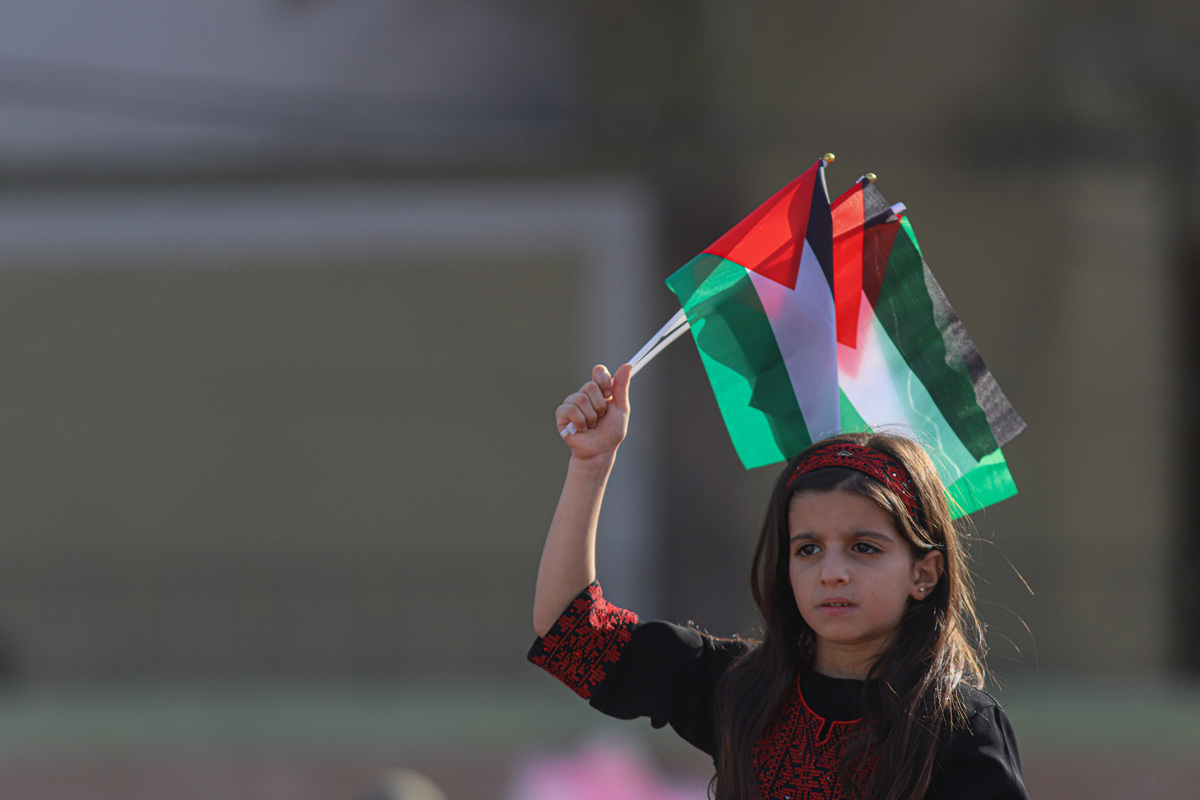
The Central Bureau of Statistics said on Monday, “The population in Palestine reached 5.48 million people, as of the middle of this year.”
On the occasion of World Housing Day and Arab Housing Day, which came under the slogan: “Humanizing cities is one of the pillars of mental health for members of society,” the “Statistics Office” reviewed the most important indicators of housing conditions in Palestine related to indicators of sustainable development.
78% of the population resides in communities classified as urban, 14% in the countryside, and 8% in camps, while the estimated population density in the middle of this year reached 910 individuals/km2 in Palestine (575 individuals/km2 in the West Bank compared to 6,102 individuals/km2 in the Gaza Strip). Gaza).
81% of families live in homes owned by a family member
81% of families have their homes owned by a family member, 87% in the West Bank, and 70% in the Gaza Strip in 2022.
The percentage of families who live in rented homes in Palestine reached 7% (5% in the West Bank, compared to 10% in the Gaza Strip), while the percentage of families who live in homes without compensation or in exchange for work is 12% (7% in the West Bank, compared to 20% In the Gaza Strip), during the year 2022.
More than half of families live in apartments
The total number of families in Palestine who live in apartments reached 54%, while 43% of families live in dwellings classified as a house, less than half a percent of families live in a “villa,” and 3% of families live in other dwellings such as a separate room, or One tent, or another in 2022.
On average, 1.5 people reside per room in Palestinian housing
The average housing density (number of people per room) in Palestine reached 1.5 people/room in 2022 (1.5 people/room in urban and rural areas, compared to 1.8 people/room in camps), while the average housing density at the region level was 1.4 people/ A room in the West Bank, compared to 1.7 persons/room in the Gaza Strip.
5% of families in the West Bank live in crowded housing, compared to 9% in the Gaza Strip
5% of families in Palestine live in housing units with high housing density (3 or more individuals per room), (5% in the West Bank, compared to 9% in the Gaza Strip), and at the level of type of settlement, it reaches 6% in urban and rural areas, and increases To 9% in the camps in 2022.
The average number of rooms in a dwelling will reach 3.5 rooms in 2022 in Palestine, while the average is 3.5 rooms in urban areas and 3.6 rooms in the countryside, compared to 3.2 rooms in camps. As for the number of rooms in a dwelling in both the West Bank and Gaza Strip, it will reach 3.5 rooms, during Year 2022.
Only 4% of the population of the Gaza Strip have access to safe, pollution-free water
Regarding safely managed water sources (defined as improved sources, used in the home, available when needed, and free of contamination (free from E-Coli bacteria)), data indicate that 40% of the population in Palestine have access to safely managed water. (66% in the West Bank, compared to 4% in the Gaza Strip). This percentage, depending on the type of community, reached 36% in urban areas and 67% in the countryside. This percentage decreased to 25% of the population in the camps in 2020.
59% of families live in homes connected to a sewage network
28% of Palestinian families in 2020 reside in homes connected to cesspits, and 12% of families rely on closed pits to dispose of wastewater, while a sewage network is available to 59% of Palestinian families, and 2% of families use other methods of sanitation. This percentage reached 96% in camps, 64% in urban areas, and 10% in the countryside, respectively.
Most residences have improved sanitation
99% of Palestinian families in 2020 have improved sanitation, which includes (a toilet connected to a public sewage network, or a toilet connected to a cesspit, or a toilet connected to a closed pit). As for the type of community, 99% of families residing in urban areas and camps have sanitation. Improved health compared to 97% in the countryside.
The number of licensed residential units will increase in 2022
The number of licensed housing units in Palestine (new and existing) reached 23,148 licensed housing units, with an average area of 167.3 m2, distributed among 21,447 licensed housing units in the West Bank, with an average area of 167.0 m2, and in the Gaza Strip, 1,701 licensed housing units with an average area of 171.0 m2, according to administrative records. Building permit statistics for 2022
Mon 02 Oct 2023 10:08 am - Jerusalem Time
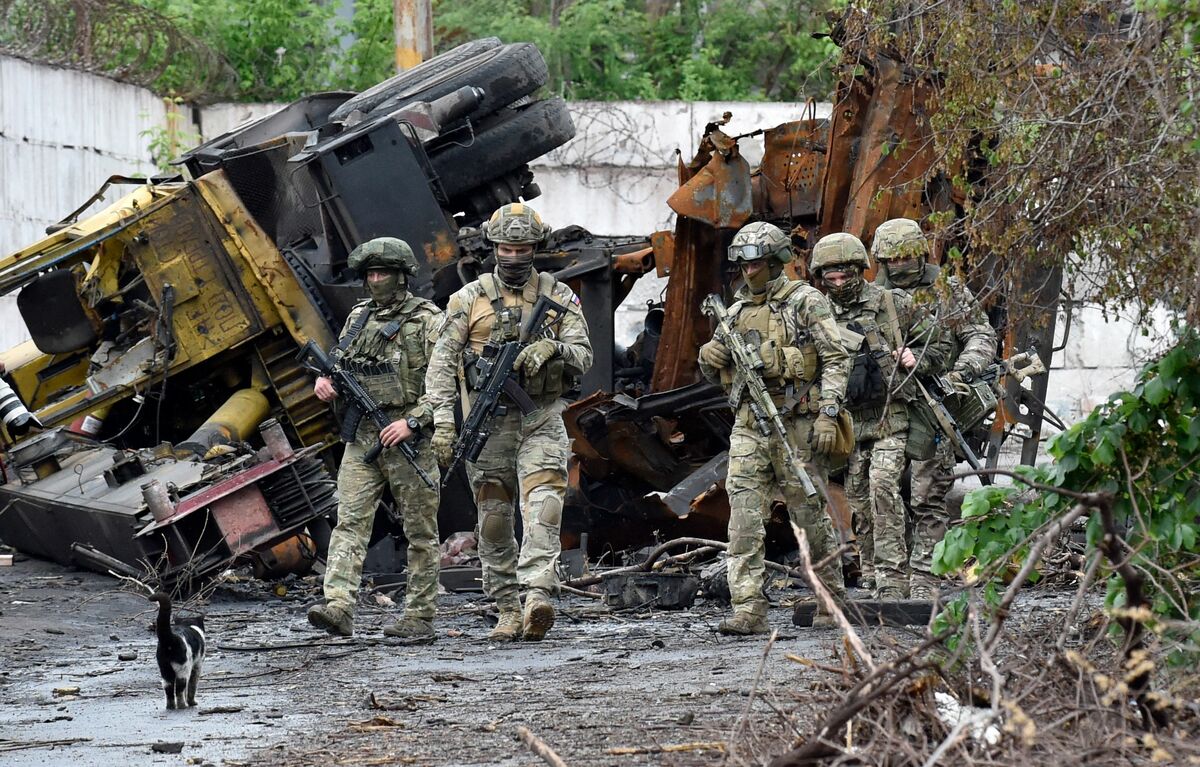
NATO announced that about 600 British soldiers will be deployed in Kosovo to strengthen the bloc's presence in the former Serbian province, which witnessed armed clashes last week.
The soldiers are from a reserve force placed at the disposal of "KFOR" (the NATO force deployed in Kosovo) at the end of the week, to confront developments and renewed tension in the region.
NATO spokesman Dylan White said: "The United Kingdom is deploying about 200 soldiers from the 1st Battalion of the Princess of Wales's Royal Regiment to join a British unit of 400 soldiers currently training in Kosovo, and this will be followed by additional reinforcements from other allies."
He added, "The decision comes in the wake of the violent attack on the Kosovo police on September 24 and the increasing tensions in the region," without explicitly referring to a statement issued by Washington on Friday in which it warned of a Serbian military buildup on the Kosovo border.
White said that NATO again called for calm on Sunday and called on Belgrade and Pristina to resume dialogue as soon as possible as “the only way to achieve sustainable peace.”
Last Sunday, a Kosovo police officer was killed in an ambush carried out by a group of Serbs, followed by gunfire between police special forces and the armed group that killed three of the gunmen who had taken refuge in an Orthodox monastery in the village of Banjska near the border.
The incident is the most serious escalation in Kosovo in years.
Serbia does not recognize Kosovo's independence declared in 2008, after a bloody war during the 1990s between Serbian forces and Albanian rebels that ended with NATO intervention.
Mon 02 Oct 2023 9:56 am - Jerusalem Time
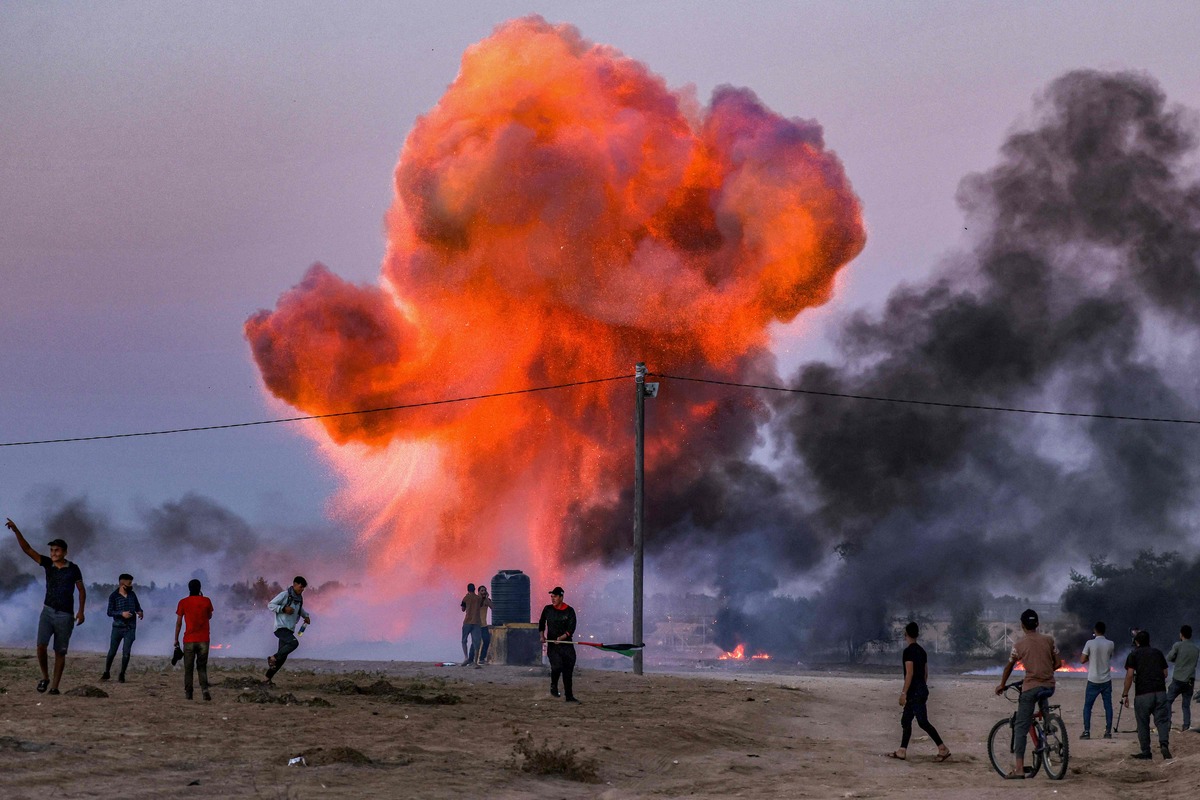
The Hebrew newspaper Haaretz reported on Monday that the Israeli government is considering taking a series of measures with the aim of preventing a security escalation with the Gaza Strip, for fear of harming the ongoing talks with Saudi Arabia to reach a normalization agreement mediated by the United States.
According to the Hebrew newspaper, among what is being studied is increasing the share of Gaza Strip workers who are allowed to work in “Israel,” and easing the conditions for bringing goods into the Strip.
Haaretz pointed out that Israel is holding talks with Qatar, with the aim of transferring financial aid to the Hamas government in Gaza, to pay the salaries of its employees.
The newspaper says that in recent weeks, Hamas has increased its pressure on Israel through violent marches on the border fence.
A Western diplomat who recently visited the Gaza Strip told the Hebrew newspaper, “These pressures come due to the worsening economic distress in Gaza, the cut off of international aid transferred to the population, and the increasing difficulties facing the Strip,” noting that the United Nations bodies working in Gaza, including UNRWA , is facing difficulties in collecting donations from the international community.
The Israeli security establishment estimates that Hamas initiated the marches and encouraged them to pressure Israel to take immediate measures to improve the economic situation, whether in the form of decisions to increase the workers’ share or in the form of the flow of financial payments from Qatar.
The newspaper says that since Operation “Guardian of the Walls” (Saif al-Quds) in May 2021, it has refrained from launching missile attacks towards “Israel,” and has not participated in any of the rounds of fighting between Islamic Jihad and “Israel,” due to economic considerations, including The decision of the previous Israeli government to allow the entry of workers from Gaza for the first time in more than a decade. The current government continued the same policy and increased the number of workers, and is currently studying increasing them from 15,000 to 20,000 workers as a first stage if calm is maintained.
According to the Hebrew newspaper, the Qatari ambassador, Mohammed Al-Emadi, has made extensive contacts in recent days to try to prepare solutions that will calm the region, and perhaps one of his achievements is the reopening of the “Erez” checkpoint, for the passage of workers from Gaza to “Israel.”
The newspaper pointed out that the continuation of the current Israeli government, with the same policy as the previous government regarding the entry of workers, and the possibility of strengthening other economic measures to improve the situation in Gaza, has so far been accepted by the pillars of the government, including the extreme right wing led by Bezalel Smotrich and Itamar Ben Gvir, but not It is clear how long they will continue to support this line, but it is expected that Prime Minister Benjamin Netanyahu will insist on this if the matter is put up for discussion in the government due to the desire to maintain calm in the Palestinian territories, especially in light of continued contacts with Saudi Arabia.
US President Joe Biden told Netanyahu during their meeting in New York last week that preventing violent escalation against the Palestinians will help the US administration strengthen communications with Saudi Arabia, and senior officials in the Biden administration during the past months sent similar messages emphasizing linking the situation with the Palestinians to achieving progress. In normalization with Saudi Arabia and other Arab countries.
Mon 02 Oct 2023 9:48 am - Jerusalem Time
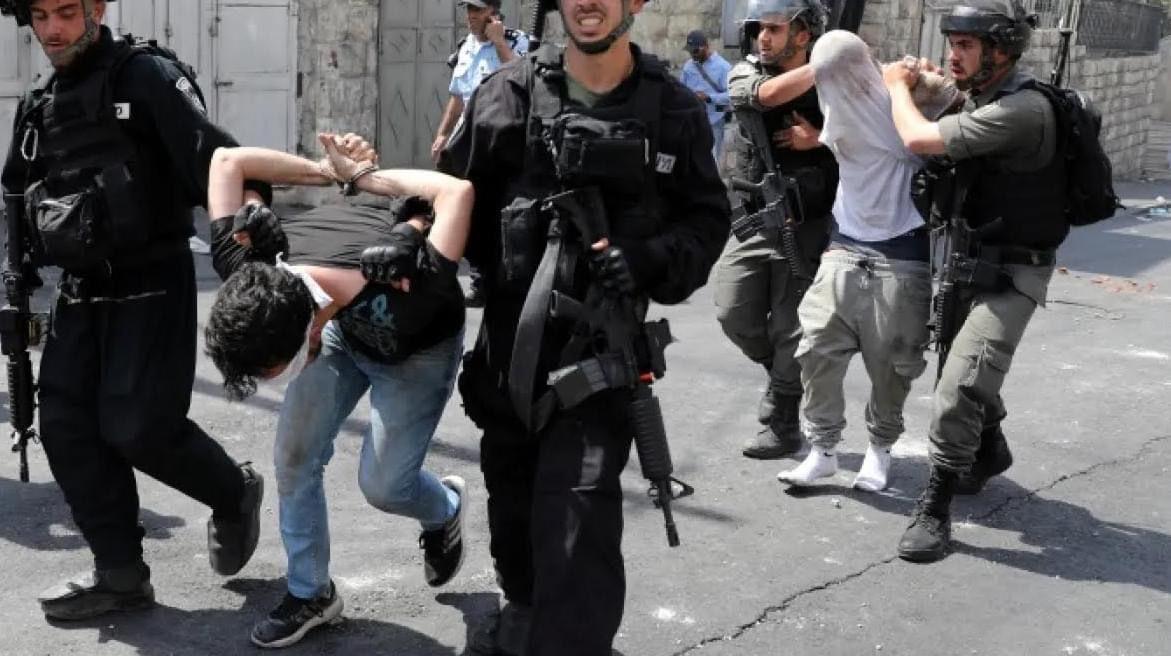
Today, Monday, the Prisoners and Ex-Prisoners Affairs Authority published painful details to which the two brothers, Haroun Alqam (16 years old) and Mahmoud (12 years old) from the Shuafat camp in occupied Jerusalem, were subjected to them while the occupation forces arrested and interrogated them.
The Commission’s lawyer, Heba Agbariyah, said that on 07/03/2023, forces from the Alimar Police stormed the two prisoners’ house at four o’clock in the morning, arrested them, tied them up, blindfolded them, then took them to the military jeep, and brutally beat them with their hands, feet, and sticks on the head. And all over the body without taking into account their young age.
She added: "They took them down to the Al-Mascobiyya interrogation rooms, forced them to kneel for about 3 hours, and prevented them from talking to each other. If they tried to communicate with each other, they were punished by beating them. At around eight o'clock in the morning, they brought each one into an interrogation room."
In this context, the lawyer quoted Haroun as saying: “They interrogated me from eight in the morning until five in the afternoon. I did not confess to anything, so they beat me as punishment. The next day, they brought me and Mahmoud into the same investigation room, and they interrogated us at the same time. Because I did not confess, they started beating Mahmoud in front of me and threatening me.” If I did not confess, one of them put the sword in my brother’s head and shouted at me, saying, “Confess, or we will kill your brother Mahmoud.” Then I broke down and cried and told them that I would confess on the condition that you leave my brother and release him. Then they took Mahmoud out of the investigation room and returned him to the Al-Mascobiyah rooms, and the investigation continued with me. Until nine at night.”
She continued: "Mahmoud spent another night in Al-Maskobiyya prison, and on the third day in the morning, Haroun and his brother Mahmoud were taken to court. During the session, Mahmoud was released and Haroun's detention was extended."
She added: “After the court ended, they returned Haroun to Investigation 4, and threatened him if he did not complete his confessions as they wanted, they would re-arrest and torture his brother. He remained in Al-Maskobiyya Prison for 25 days, after which he was transferred to the Cubs Section/Damoun Prison.”
Haroun says: “The conditions in Al-Maskobiyya Prison are very difficult, as we are often beaten by the jailers. My son, Malek Deeb, and I were beaten because we asked for food. The jailers dragged us from the room to the clinic, where there are no cameras, and there we were beaten arbitrarily and without... Mercy".
It is noteworthy that the young man, Haroun Alqam, is currently detained in Damoun Prison, and no judgment has been issued against him yet, as a court is scheduled to be held for him on 10/17/2023.
Mon 02 Oct 2023 9:34 am - Jerusalem Time
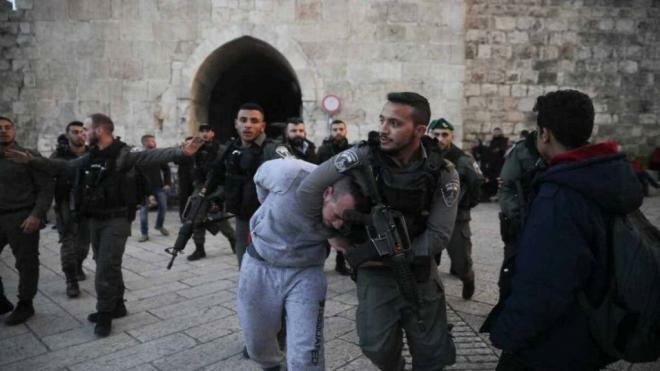
Today, Monday, the Israeli occupation forces arrested three citizens north of occupied Jerusalem.
According to local sources, these forces stormed the town of Al-Issawiya and arrested: Karim Ahmed Obaid, Muhammad Fawzi Obaid, and Majd Wadih Obaid.
Mon 02 Oct 2023 9:32 am - Jerusalem Time

The civil trial of Donald Trump and two of his sons, who are accused of massively inflating their real estate assets for years, begins Monday in New York, threatening his economic empire and paving the way for a legal marathon for the candidate to obtain the Republican Party nomination for the 2024 presidential elections.
The 77-year-old former president and his lawyers have hinted that he may attend at least the first hearings before the New York State Supreme Court. Trump was called as a witness.
Trump announced that he would appear in court on Monday. “I will go to court tomorrow morning to defend my name and reputation,” he said on his “Truth Social” platform on Sunday, describing the New York prosecutor as “corrupt” and the judge as “deranged.”
Trump cannot be sentenced to prison in this case, but this trial will provide a preview of the legal events that are likely to derail his campaign for the Republican nomination.
Trump is criminally accused in four different cases that have not yet affected his popularity with the Republican base. In particular, he must appear as of March 4 before a federal court in Washington. He is accused of trying, while in the White House, to overturn the result of the 2020 presidential election, which Joe Biden won.
He will then face trial in New York State on charges of tax fraud, and then in Florida because of his negligent handling of secret documents after his departure from the presidency.
Judge Arthur Engoron said that Trump and two of his sons, Donald Jr. and Eric, committed "repeated" financial "frauds" in the first decade of this century by inflating the value of the financial and real estate assets of their company, the Trump Organization, by between $812 million and $2.2 billion. Between 2014 and 2021.
He stressed that the documents presented by the Public Prosecutor “clearly” show “fraudulent assessments” by Trump of the assets of his group, which includes various companies that include residential real estate, luxury hotels, golf clubs, and many others.
As a result, the judge ordered the withdrawal of business licenses in New York State from Donald Trump and his sons Eric and Donald Jr., in addition to the confiscation of the companies targeted in the case.
Will Thomas, a professor of commercial law at the University of Michigan, said that implementing these sanctions “would represent a massive blow to Donald Trump’s ability to do business in New York State.”
Trump made his fortune during the 1980s in the real estate sector, gambling and casinos. If these licenses are withdrawn from him, he will be at risk of losing control over many of the leading companies in his empire, such as Trump Tower (“Trump Tower”) located on the famous Fifth Avenue in New York.
This building is at the heart of the charges brought against Trump by Attorney General Letitia James, as he is suspected of inflating the area of his three-story apartment in Trump Tower three times, and raising the value of Building No. 40 on Wall Street from 200 to 300 million dollars.
The plaintiff also requests that Trump be found guilty of other violations of financial laws and be fined $250 million.
The former Republican president has always rejected these accusations, and considered Attorney General James, an African-American Democrat, “racist,” while Judge Engoron described him as “deranged.”
According to the indictment, the billionaire and his two sons deliberately “inflated” the value of these assets in order to obtain, among other things, loans on better terms from banks between 2011 and 2021.
Trump responded via Truth Social, saying that the banks had never complained about the loans they provided to him.
He stressed that he repaid these loans “in full, with interest, without default, and without any victims.”
It is expected that the trial will be largely technical and that dozens of witnesses will be called to it, including three of Trump’s children, Donald Jr., Eric, and Ivanka, who were initially included in the case but will not be prosecuted in the end.
It is also expected that the list of witnesses will include the former CFO of the Trump Organization, Alan Weisselberg, who spent time in prison after admitting to tax evasion in another case affecting the group, and former Trump lawyer Michael Cohen, who has become one of his fiercest opponents, in addition to employees of the banks that lent to him. And others.
These legal troubles do not prevent Trump from being far ahead of his rivals in opinion polls to obtain the Republican Party nomination for the 2024 presidential elections.
Mon 02 Oct 2023 9:30 am - Jerusalem Time

Today, Monday, a group of settlers demolished an agricultural room east of the town of Yatta, south of Hebron.
According to local sources, settlers demolished an agricultural room owned by citizen Ghassan Dhaher Daajneh in the Al-Maraba area in Ain Al-Bayda, east of the town.
The sources indicated that the occupation forces stormed the villages of Susiya and Manizil in the town of Yatta, and the town of Al-Samou, and set up strict barriers on the roads leading to their entrances, and obstructed the passage of citizens.
Mon 02 Oct 2023 9:19 am - Jerusalem Time

Opinion Writer

The security deliberations session held by Israeli Prime Minister Netanyahu yesterday, in which the Minister of Defense, the Chief of Staff, senior army commanders, and the head of the Shin Bet participated, addressed the security challenges facing Israel at this stage and ways to confront and prepare for them, especially in light of the protests that Israel is witnessing against so-called judicial reform.
It is known that these deliberations remain secret due to the decisions taken regarding them, which are considered confidential and cannot be published. Therefore, we note that Netanyahu did not invite Ben Gvir, Minister of National Security, for fear of his leaking the information and decisions that were taken and discussed during this session. Although it was reported that these deliberations focused on the Iranian threat facing Israel, it is certain that the focus was also on the dangers posed by other fronts to the occupying state, including the southern fronts with Hezbollah and the northern fronts with Syria and its alliance with Iran, as well as the situation in the West Bank. Western and Gaza Strip.
The situation in the West Bank and the Gaza Strip, including Jerusalem, stands at the mouth of a volcano, capable of exploding at any moment, especially in light of the crimes committed by the occupying state, which have affected and continue to affect people, trees and stones, in addition to the violations and attacks committed by herds of settlers, the continuation of cancerous settlement, the confiscation of lands, and the establishment of... Settlement outposts and the legalization of many of them and other crimes and violations of human dignity at the military checkpoints spread throughout the West Bank.
It is not unlikely that Israel will launch an aggressive war to solve its internal crisis on the one hand, which is important for the current government, the most right-wing, extremist and racist in the history of the governments of the occupying state, in order to end the protests that are expanding day after day and week after week. Waging a war, whether limited or widespread and on several fronts, will not lead to ending the division in Israeli society, even if it may stop its repercussions until the end of this aggressive war.
In all cases and possibilities, if Israel embarks on an aggressive war, its losses will be double, especially since there is a strong possibility of unity in the battlefields of confrontation with the occupying state, to confront this aggressive war on all fronts, or at the very least to provide various aid to any front targeted by the state. Occupation in this war.
Therefore, Israel will think more than once about waging an aggressive war because its losses will be many times what it expects, and it will often content itself with what it is currently carrying out of attacks from time to time on Syria under the guise of targeting Iranian force positions, incursions and attacks in the West Bank and Jerusalem, and continuing the imposed siege. On the Gaza Strip, with increased work by Gazan workers working inside Palestine to prevent escalation from Gaza
Mon 02 Oct 2023 9:18 am - Jerusalem Time
Opinion Writer

Some may be surprised that the result is an introduction to the conversation about the future of the Israeli project in Jerusalem. The discussion here begins from the point of judging this project as an inevitable failure. But the truth that must be understood in the introduction to the discussion in this context is that historians agree that the laws of history do not change, and as long as there is a project that conflicts with the laws of history, it cannot continue or develop. A radical change must occur to it, represented by either its downfall or a change in its identity, and both cases effectively mean the end of the project, and this is the case in the Israeli project in Jerusalem.
We focus here on Jerusalem as a fundamental focus with its own specificity and nature that differs from other aspects of the project that began at the end of the 19th century and culminated in the founding of Israel in 1948. It then developed until it reached the peak of its strength in the 1980s, when Israeli tanks were entering the Lebanese capital, Beirut. Easily; Then he began to face the existential challenges that led him to the crisis he is experiencing today.
Jerusalem is at the heart of the Israeli project
First, it should be made clear that Jerusalem is theoretically considered the millstone in the Israeli project around which the idea of a national homeland for world Jews revolves. The Zionist movement that first established Israel took its name from Mount Zion in Jerusalem, and the national anthem of Israel - which was written in 1878, 70 years before its establishment - concludes with the word “Jerusalem.” It is not surprising, therefore, that Jerusalem is the subject of consensus among various segments of Israeli society, whether from a religious standpoint among religious movements, or from a historical national standpoint among secular movements.
But the presence of Jerusalem at the heart of the Israeli project does not necessarily mean that Israel will succeed in translating its centrality into practice on the ground or in changing its nature. This is because the Zionist movement’s project was based on an incorrect perception that this land (Palestine) was already empty of inhabitants. This turned out to be incorrect when the first pioneers of this project began to explore the land of Palestine and understand its nature and the possibilities of establishing a Jewish national homeland there. It later became clear to them that it is inhabited by an ancient and profound history and civilization. This is what led Jabotinsky, in the famous historical novel in the late 19th century, to send a telegram to his leaders in the Zionist movement describing Palestine by saying, “The bride is beautiful, but she is married to another man.”
The same applies more clearly to the city of Jerusalem. Jerusalem was never devoid of indigenous people, and even when it was invaded, it remained largely within the same human groups that had always inhabited it, and its Arab character remained constant throughout history.
Ethnic cleansing failed
Historically, Israel could only do as the pioneers of the early Zionist project imagined it in one way, which was the genocidal and complete annihilation of the Palestinians. In fact, there is no relatively successful experience in human history with this concept except the experience of European colonization of North America and Australia, where a people cannot remove an entire people from the land except by literally erasing them, as the Europeans did with the indigenous people in North America and Australia between the 16th and 18th centuries. This was no longer actually possible during the 19th and 20th centuries with the social and conceptual changes that humanity experienced with the Industrial Revolution.
In other words, it can be said that Israel, as imagined by the pioneers of the Zionist movement, was established at the wrong time. Because it wanted to implement 16th century concepts in the 20th century, and this does not make sense. Therefore, the ethnic cleansing movement carried out by Zionist gangs in Palestine during the Nakba was not sufficient to completely empty the land of its population. This process proved to be unsuccessful in emptying all Palestinian lands of the indigenous population. The Palestinian citizens known today as “internal Arabs” or “internal Palestinians” remained to constitute 20% of the total population in Israel. Israel failed to completely change their identity, and over time they became a chronic headache for Israel. This was demonstrated in the events of 2021 in the Green Line areas, in which Palestinians with Israeli citizenship engaged in a violent confrontation with the occupation government and its settlers.
On the other hand, when Israel was established, it needed Jerusalem to gain religious and national legitimacy among Jewish communities around the world, and thus be able to convince them to immigrate to it, but it failed the day after its establishment in 1948 to obtain all of Jerusalem. It was satisfied with the western part of the city, which did not contain any of the sacred religious sites, but the successive Israeli governments at the time were keen to declare that its capital was Jerusalem, despite Tel Aviv’s superiority over it in economic, industrial and social terms, especially since Jerusalem is located in the heart of the conflict zone and on the borders. Directly to the armistice line. When the opportunity came for Israel to occupy East Jerusalem and annex all areas of religious importance, it did not wait a single moment, and on June 7, 1967, its army was able to storm East Jerusalem, occupy all the holy places, and tighten control over the entire city.
Pretending that Palestinians do not exist
Although the dream of a “land without people” was already over, Israel insisted on dealing with East Jerusalem with the same logic. It announced the annexation of the land without the residents, and considered the residents merely foreign residents of the city. This is because, in short, it was not able at that time to implement the dream of genocide like America and Australia in the 16th century. Nor was it even able to implement the same process of ethnic cleansing that occurred in the Nakba of 1948. She was forced to resort to the method of neglecting the presence of the Palestinian population in Jerusalem, trying to imagine a reality that does not exist, in a behavior similar to the behavior of a child who closes his eyes when afraid, thinking that what he fears does not exist.
To implement this vision, Israel resorted to pressuring Jerusalemites with measures to withdraw identities, prevent urban expansion, and other measures that aimed to push them to leave the city voluntarily in the end, considering that the only solution to the dilemma of their presence in Jerusalem. What is strange is that it acted with Jerusalem on the basis that it had already succeeded in expelling the Palestinians from it! Therefore, from the first moment of the occupation of East Jerusalem, it grouped the two parts of the city together in all its statistics to convince itself that the number of Jewish residents in the Jerusalem municipality is 3 times the Palestinian population. Which suggests that Jerusalem is a Jewish city, while forgetting that the statistics related to East Jerusalem still, to this day, give a clear numerical advantage to the Palestinians, who still constitute the overwhelming majority there. Especially in the Old City and around the blessed Al-Aqsa Mosque, that is, in the heart of the historic city, which is the heart of the Israeli project from the religious, national and historical aspects.
At the same time, Israel resorted to a clear distinction in services between the east and west of the city, forgetting that East Jerusalem is organically linked to the Palestinian surroundings in the West Bank and cannot be cut off from it. This policy led to the confirmation of the fact that Jerusalem is in fact two cities, even though Israel claims that it is one city. In fact, the East Jerusalem area turned into a very fragile and weak side for Israel, as most of the infiltration operations that led to armed operations in the heart of the Green Line areas passed through Jerusalem.
Failure to separate Jerusalem from its surroundings
When Israel tried to stop this by building the separation wall in 2003, events moved to a new stage in which operations were launched from Jerusalem itself and from the Jerusalemites themselves, simply because experience proved that the city cannot be separated from its surroundings and reality. It also cannot be neglected that Palestinian Jerusalemites, who do not have any legal affiliation to this state, are still the majority in the eastern part of Jerusalem. Indeed, their percentage reaches approximately 40% of the total population in both parts of the entire city. This clearly indicates the failure of the project to annex the land without annexing the population, which took place in 1967. Also, everything that the Palestinians went through in Jerusalem over the course of 5 decades only led in the end to the explosion of the entire Jerusalemite society, as happened in the Al-Aqsa Intifada in 2000. The gift of Jerusalem in 2015, and all the events that followed in 2017, 2019, and 2021.
The bottom line is that the Israeli project in Jerusalem has no horizon and cannot succeed. Indeed, the calls of the extreme right in Israel to repeat the events of the Nakba will not work at this time and are nothing more than illusions. What could have worked yesterday cannot work today. Whoever lives in a long dream must come a day when he wakes up to a reality that is completely different from what he dreamed of, and then Israel will have no choice but to do in Jerusalem what it did previously in Gaza. It has no choice but to withdraw from East Jerusalem, at least in any way, to save its very existence.
Mon 02 Oct 2023 9:17 am - Jerusalem Time
Opinion Writer
On October 6, Egypt celebrates the fiftieth anniversary of the October War, and this was the fifth experience in which the Egyptian army fought a regional war.
When Gamal Abdel Nasser was a military commander, he participated in the Battle of Fallujah. He tried to prevent the Nakba against the Palestinians, but without any success, due to the Arab regimes at that time conspiring against the Palestinian people.
After 1952 and Abdel Nasser seized power in Egypt, the Egyptian army was attacked by Israel, France and Britain in 1956 in the Battle of Sinai, where they were all defeated by the Egyptian army.
The Egyptian adventure in Yemen failed in the early sixties, when the Egyptian President sent his forces to Yemen to help his allies in Sanaa at the time.
The Egyptian army suffered its largest historical loss on June 5, 1967, when Israel attacked the Egyptian army in Sinai and forced it to withdraw from there via the Suez Canal, which led to a comprehensive national setback. Egypt lost the Sinai Desert and the Gaza Strip, and Syria lost. Also the Golan Heights, and the Jordanian army withdrew from the West Bank and Jerusalem, so that Israel took complete control of all the lands of Palestine.
Immediately after the setback in June 1967, Gamal Abdel Nasser announced that he took responsibility for the setback and resigned from the presidency of the republic in Egypt.
But the million-man demonstrations prevented his resignation, which forced him to return and take the reins of the initiative and the presidency of the republic, after which he carried out massive purges that included the General Staff and the Ministry of Defense, led by Field Marshal Abdel Hakim Amer, who committed suicide immediately after the war.
After a short period of setback, in late 1967, Egypt, with the support of the Soviet Union in that period, began a massive modernization process for the Egyptian army, and the war of attrition began between Egypt and Israel, which lasted more than three years.
Israel targeted the Egyptian interior, especially in Port Fouad and Port Said, using modern Phantom aircraft supplied by the United States.
The Egyptian president at the time also supported an Arab resolution held at the Khartoum Conference, which called for the implementation of Security Council Resolution 242 for withdrawal from all areas occupied in June 1967, but Israel continued to procrastinate and claim that this decision does not include withdrawal from all lands, but rather from concrete lands that can be Negotiated after the Egyptian attack in the war of attrition stops.
At the same time, the government of Golda Meir did not undertake any negotiations with the Egyptian side. After the massive military support it received from the United States at the time, it continued to strike the Egyptian depths, reaching many areas across the Suez Canal, where the Egyptian side suffered heavy losses in lives and equipment. Israel also suffered heavy losses from the Egyptian army.
Internationally, during the Cold War, the Soviet and American camps viewed that war as a testing field for the weapons of both parties.
Israel was unable to resolve the battle, and on July 6, 1970, both sides agreed to accept Rogers’ initiative to stop the war of attrition between Egypt and Israel, after which the state of no war and no peace between the two parties would continue.
On the twenty-eighth of September, that is, two and a half months after accepting the Rogers initiative, the world was shocked when Egyptian President Gamal Abdel Nasser passed away, and he died of a sudden heart attack when he was fifty-two years old.
Immediately after the arrival of Sadat, the Egyptian army continued preparations to return the Sinai Desert and the Egyptian lands that were occupied in 1967, and in its speeches it was pleading with Israel and the world to try to reach an agreement that might lead to a comprehensive Israeli withdrawal from all Egyptian regions, but there was no life for whoever it was calling for.
In the revolution’s speeches on July 23, 1971/72/73, Sadat used to say that this year would be the year of decisiveness, but the Israeli government, led by Golda Meir, did not care about these speeches at all, as the Israeli national security theory believed that the Egyptian army was standing He crossed the second bank of the canal, and it was impossible for him to cross the canal, given his inability to do so and the huge military fortifications that were located on the other side of the bank on the Israeli side.
This state of flight and flight continued until October 6, 1973, when the Egyptian army crossed the canal on Yom Kippur, which Israel celebrated a week earlier, when tens of thousands of documents and protocols related to security were leaked from the National Archives. National Government Correspondence Foreign Affairs and Security Committee Command of Staff Military Intelligence and Mossad These documents, which amounted to tens of thousands, shed light on the huge and unexpected intelligence failure of the Israeli security services, especially the Military Intelligence Service, and the error in estimates, ruling out Egypt and Syria launching a surprise war against Israel.
Today, fifty years later, the Israeli media and public opinion are trying to draw lessons from what happened, and why this Egyptian attack was not expected, even though all signs were clear that an Egyptian attack would come soon.
These documents and testimonies of officers and soldiers, fifty years later, unanimously agreed that the Israeli army, at the individual level, was certain that the Egyptian attack was imminent, as the soldiers were looking at the Egyptian bank of the canal and seeing how the Egyptian army was training to cross, but the military leadership did not believe in that. Certificates.
It was later confirmed that the Egyptian army carried out an Egyptian strike similar to what Israel carried out on June 5, 1967, when the Israeli Air Force struck Egyptian airports in Sinai at seven-thirty in the morning, when the pilots were in the dining room eating breakfast. Within this framework, on October 6, specifically on Yom Kippur, which is the official holiday in Israel, the Egyptian Air Force targeted dozens of civilian and military bases in Sinai, with more than four hundred military aircraft at two o’clock in the afternoon, without sustaining any damage. No significant losses.
After a devastating war, Egypt was able to regain part of the Sinai Desert, but Sadat had other goals, goals related to concluding a peace treaty with Israel that was signed later after his visit to Israel and was called the Sadat Initiative.
But the Israelis do not focus on the results of this attack. Rather, they wonder in these documents why they did not expect the Egyptian military attack on Israel from the other bank of the canal. An important word emerged during that period that led to the establishment of an investigation committee called the Agranak Committee, which examined who were responsible for what was called (With indifference), which is neglect and indifference. This expression accompanied Golda Meir for more than a year, until she was forced to resign in May 1974.
As for Moshe Dayan, who served as Minister of Defense during that period, he blamed the army’s military institutions, including intelligence and Mossad, in addition to Golda Meir.
In the end, Eli Zeira is considered the commander of military intelligence, who ignored all the warnings that came to the military intelligence leadership about the Egyptian army’s intentions to attack, as he completely ignored them and did not care about them, and the Mossad leadership, headed by Zvi Zamir, tried to accuse Zeira that the Mossad had information about an Egyptian attack. A surprise came to him a day before the war and during a long period of dealing with the Egyptian double agent Ashraf Marwan, who met a Mossad agent in London the day before the outbreak of the October War, and informed him that Egypt would launch a war at five o’clock in the evening on Yom Kippur.
This is what happened, but the war broke out at two in the afternoon, and these accusations played a role in the documents that were revealed fifty years after the outbreak of the war.
Mon 02 Oct 2023 9:16 am - Jerusalem Time

Opinion Writer

The Arab awakening, which began in the second half of the nineteenth century, against Ottoman tyranny, would not have taken its place and occupied a deep space in history, had it not been for the decline of Astana’s influence and its loss of its possessions in the Balkans, the liberation of large parts of Eastern European countries from its hegemony, and the struggles of states. The young colonial possessions.
The collapse of the Ottoman Empire, its sultan gaining the title of “the sick man,” and the West’s desire to fire the coup de grace upon the Sultanate, enabled the leaders of the Arab awakening to ally with the British and French and join their armies in World War I, in the hope of achieving independence. This beginning laid the foundation stone for subsequent developments, leading to the emergence of national liberation movements against colonialism, especially in the period following World War II.
The Arab nation always found its opportunity for emancipation during the weakness of the major empires. But because of its weak resistance and the fragility of its social structures, it is unable to benefit from resolving the conflict, and thus falls victim to division among adults.
When France fell into the hands of Nazism, at the end of World War II, and the economic power of Great Britain was weakened by the costs of two global wars, national liberation movements broke out against colonialism, not only in the Arab world, but in most Third World countries. These movements were among the most important features of the first half of the twentieth century. Fortunately for these movements, the two new poles emerging at the time: the United States and the Soviet Union, were not willing to provide support to their allies in the war. They aspired to inherit them.
Immediately after the war, the United States proposed an open-door policy, which entailed the right of the British and French colonies to self-determination. The beginning of the fifties, during the era of US President Dwight Eisenhower, witnessed the strategy of removing and replacing traditional colonialism. This came explicitly when the American President spoke about what he called filling the void in the early 1950s, and worked to establish political blocs to achieve this. This was a prelude to the emergence of military alliances and blocs, on a global level, under different names, such as NATO, the Baghdad Pact, the Central Treaty Alliance (Sentu), and the Islamic Alliance.
As for the Soviet Union, it waged an ideological struggle in order to spread its political doctrine, and considered this a way to strengthen its presence on the international scene. From this standpoint, he took a position in support of national liberation movements in the Third World. In the face of this sharp division between the eastern and western camps, the Arabs were allowed to achieve their political independence, and they had some options, to be with this or that team, and their options were multiple, in one way or another, towards the two camps. The golden age of positive neutrality took its place during the period in which international relations were solidified, before the power of the Soviet Union weakened and unipolarity took hold. The defeat of June 1967 was accompanied by a change in the international equation. This change began with what was known as peaceful coexistence between the Eastern and Western camps, and the signing of treaties banning nuclear weapons, between the Soviets and the Americans, leading to the aging of the regime in the Soviet Union. His military intervention in Afghanistan was the final nail in his coffin, in preparation for his dramatic downfall in the early nineties of the last century.
The American Yankee's accession to the throne of dominance was an exceptional event, and had no precedent in history. Such squareness cancels the principle of conflict of wills, which is a human law. Therefore, it could not last long. His era did not exceed more than a decade, after which Russia once again returned to the international stage and reared its head publicly after what was known as the “Arab Spring,” so that new political and global axes were formed in recent years. But a new international order, preparing to emerge, has not yet been formed.
This reading brings us back to the saying that existence does not accept emptiness. In the absence of solid international relations, and the failure of the elders to agree on the division, chaos spreads, honor is violated, and human dignity is underestimated.
But the misery of this stage does not lead to pessimism, as it is a short era that will never last long, and the entire world, including our Arab world, is preparing for a coming stage, which may not be with the same previous maps and customs, but it will witness solidification and clarity in international relations. What will the scene of the next Arab political map be like? Will we be able to cross the tunnel of crisis? Questions that are difficult to answer, because they are governed in the Arab world by a struggle of wills, awareness and the ability to act. This is what we must prepare for now.
In agreement with the Gulf
Mon 02 Oct 2023 9:14 am - Jerusalem Time
Opinion Writer
In politics, conflict is the origin and peace is an exception or is a development from the original situation for various motives. Conflict is an instinct and peace is awareness and vision. The Middle East region has been a place of disputes and conflicts for centuries, narrated by history and recorded by its long journey, and these conflicts have intensified in recent decades.
In the twentieth century there is an intensification of history and its conflicts that have always developed into wars, growing and smaller, longer and shorter. The century began in the region with brutal and bitter Turkish colonization under the name of the “Ottoman Caliphate,” and the peoples of the region who knew its woes and crimes were not liberated from it until after the weakness of the Ottoman Empire and the beginning of the introduction of colonialism. The British and French Western influence extended to the region in the Maghreb, the Levant, and Egypt, and expanded to others.
After that came the stage of national liberation, and resistance movements to colonialism arose in many countries of the region, ending with the evacuation of the colonizers in varying stages, and with multiple challenges according to many data that differ from one country to another. Independence was completed and a Turkish state, an Iranian state, and Arab countries were established, and the Turkish state inherited the Ottoman caliphate. It strengthened a secular Turkish nationalism that was devoid of its minorities, and the Iranian state lived through an identity struggle between turbulent secularism and rising sectarianism, until it gained ground on the so-called “Islamic Revolution” and sectarianism blatantly triumphed.
In the Arab world, conflicts arose over the nature of the state in each country. There were monarchies and republics, and there was a strong wave of military coups that were called “revolutions” in line with the prevailing global discourse at the time after World War II between East and West, communism and capitalism, and the Arab countries were established on stable monarchies and republics. Military with conflicting nationalist discourses, and the conflict with Israel was one of the biggest slogans at the time, both Arab and regional.
Identity conflicts and state conflicts do not end with the stroke of a pen, nor do they suddenly disappear from history. Hence, a conflict has arisen in the region that has continued for decades between three major projects: a fundamentalist project for Turkey, which is searching for a return to its Ottoman colonial legacy and abandoning its secularism with a discourse that has not yet reached its end, and a sectarian project for Khomeini Iran. The two projects sought to target the Arab countries, which represent the third project, which is the Arab moderation project. The means for the two projects to penetrate the Arab countries was through groups, organizations, parties, and militias, until everyone reached the moment of what was known as the Arab Spring.
In that fateful spring, the will of the two anti-Arab projects combined with a Western will to strike the Arab countries and support the seizure of power by fundamentalist groups in them. However, this joint will, even if it triumphed temporarily by spreading “stability of chaos” and overthrowing some Arab republican regimes, was defeated in the end, and Ghalib returned. Arab countries to achieve political stability, although that return has not yet been completed in some countries.
This is an extensive review of what took place in the last hundred years of conflicts and conflicts that manifested themselves in wars of many different shapes and colours, and were accompanied by discourses of varying cohesion, spread and influence, and conflicting ideologies that expressed its intensity and contradictions, intertwining in its ancient, inherited structure with the global influences and partisan interests of each trend, until We have arrived at the present moment.
Today, more than ever before, the possibility of peace is greater than conflict, and peace here is greater than the idea of peace with Israel alone. Rather, it is the idea of peace between the countries of the entire region and their projects and directions. Saudi Arabia, with its size, status and influence, has led this new trend through the vision of Crown Prince Mohammed. Bin Salman, which has become clear to everyone. In many of his ambitions and hopes, he proceeds with a coherent logic and steady steps, starting with Saudi Arabia as a center, then the region regionally, then the world internationally, and the examples are many.
Two expressive examples in this context. The Prince started the “Green Riyadh” project, then developed it into “Green Saudi Arabia,” then moved it to the “Green Middle East,” which is part of his grand vision for the environment and climate in general, as well as the “Economic Corridor” project between India, Saudi Arabia, and Europe. It is A manifestation of his vision published years ago, which sees his country as a link between the three continents. Asia, Africa, and Europe, and the rest of the issues can be measured against this.
Whoever can think about resolving the conflicts of centuries and the extremely complex, intertwined and overlapping conflicts of the past decades is the one who has a future vision capable of transcending, and this is what has happened on the ground in the past few years. The economy has become a priority for all countries in the region, willingly or by necessity, and the interests of consensus, understanding and coexistence have become greater. With many consequences of conflict and struggle for all parties, hence the restoration of warmth in relations with Turkey, the agreement with Iran came under Chinese sponsorship, the involvement of India in major projects came, and talk of peace with Israel came out.
Without the agreement with Iran, it would not have been easy to calm the situation in Iraq, nor constructive communication to end the Yemen crisis, nor return Syria to the Arab League, nor return Lebanon to its normal, small and ineffective status in the region, and without setting economic priorities, commercial interests, and international partnerships, and that the region would be “the new Europe.” “When it was possible to talk about peace.
Saudi Arabia’s demands from Israel and America towards developing a real peace with Israel are declared and legitimate, and can be well understood by all parties. The new Saudi Arabia that is changing the face of the region and the world no longer needs anyone to test its seriousness and influence. The matter has become clear to everyone, and it is ready for all understandings that can be built to achieve it. Major goals, but in return all parties must respond to their declared and legitimate demands, as a lame peace cannot continue in the future.
The Palestinian demands fall within the Saudi demands, and they were previously part of the “Arab Initiative” presented by Saudi Arabia and approved by the Arab countries. Peace with Saudi Arabia is the true end to what has been known for decades as the Arab-Israeli conflict, and Saudi Arabia, with its own strength, its Arab and regional alliances, and its enormous Islamic influence, is capable of drawing this plan. The end, which, if it occurs, will be “the greatest historical agreement since the Cold War,” according to the Saudi Crown Prince’s words in his recent interview with the American Fox News channel.
Finally, everything has a price. Peace has a price, conflicts and wars have prices, and binding agreements are part of peace. Peace is difficult, but it has a good outcome. In agreement with Asharq Al-Awsat
Mon 02 Oct 2023 8:48 am - Jerusalem Time
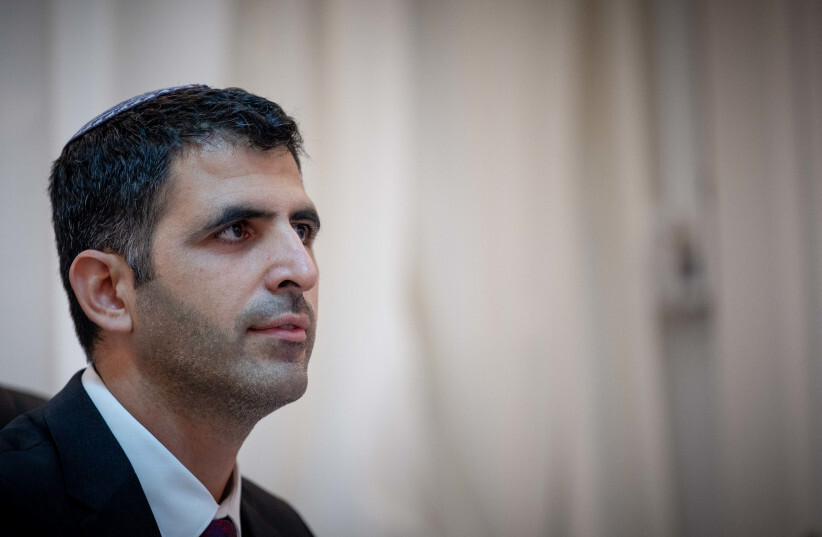
As a sign of warming Israeli-Saudi ties Communications Minister Shlomo Karhi is set to become the second Israeli minister ever to visit Riyadh when he heads there on Monday to attend a Universal Postal Union conference.
He follows in the footsteps of Tourism Minister Haim Katz who was in Riyadh last week to attend a conference of the United Nations World Tourism Organization (UNWTO).
As reported by Hebrew website, Jerusalem Post, the barrier to official Israeli representation, however, was broken earlier in September when a lower-level delegation attended the UN Educational, Scientific and Cultural Organization’s World Heritage Conference.
Karhi is set to address the UPU’s fourth Extraordinary Congress on Wednesday, which is open to the UPU’s 192 member states.
Shlomo Karhi's response to the allegations
A delegation from Israel’s postal service had been expected to join him, but chose to attend the event virtually, Karl’s office reported.
The Extraordinary Congress, which is a plenipotentiary meeting of the UPU’s 192 member countries, will decide on several key proposals aimed at ensuring a sustainable future for international postal services.
Saudi Transportation Minister Saleh bin Nasser Al-Jasser told those assembled on Sunday that by hosting the conference his country had signaled it’s “commitment to strengthen collaboration among member states, develop delivering postal services, promote e commerce, stimulate the digital economy, and incorporate cutting-edge technologies into their postal and logistical operations.”
Mon 02 Oct 2023 8:45 am - Jerusalem Time

On Monday, the Hebrew newspaper Yedioth Ahronoth revealed an increase in infiltration operations across the sea and land borders into “Israel.”
According to the Hebrew newspaper, the numbers recorded during the past two years. It has doubled over previous years.
The arrival of a rubber boat yesterday at the Netanya borders, empty of its passengers, raised fear of a new infiltration operation. Preliminary investigations revealed that the boat, which had clothes, passports, etc., for those on board, who were from Somalia and Turkey, indicated that they may have been drowned, or moved. To another ship before they reach the coast of "Israel".
According to data obtained by the newspaper from the Israeli Immigration Center, the rate of infiltration incidents across the sea and land borders increased, and the first time was in 2018, with 3 incidents recorded, but in 2021 14 incidents were recorded, and in 2022 it occurred until June. From that year, there were 14 events, which means that the general average for last year averaged about 28 events.
Mon 02 Oct 2023 7:55 am - Jerusalem Time
Hebrew media revealed, on Monday morning, that Israeli Prime Minister Benjamin Netanyahu, yesterday, deliberately excluded the minister of so-called national security in his government, the extremist Itamar Ben Gvir, from the security session that was held yesterday to discuss the security situation on various fronts.
According to Israeli Army Radio, Ben Gvir's environment this morning accused Israeli Government Secretary Tzachi Braverman of being the one who pushed Netanyahu not to invite Ben Gvir to the security session.
According to those sources close to Ben Gvir, it was Braverman who raised the issue of not inviting Ben Gvir due to the possibility of him raising the issue of Palestinian prisoners again.
These parties accused Braverman of working to create new crises within the government coalition.
Israeli Army Radio says that these accusations are consistent with accusations made by other ministers against Braverman, who is considered one of the people closest to Netanyahu.
While the Hebrew Channel 12 reported in a report this morning on its website, that contrary to the claim of Netanyahu’s office’s statement about the existence of close cooperation with Ben Gvir, and that he was not invited to yesterday’s meeting because he discussed external security issues and not internal ones within his jurisdiction, the meeting actually discussed issues. From the core of Ben Gvir's powers.
According to the channel, the conditions in Al-Aqsa Mosque and the settlers’ incursions and their impact on the security situation were discussed. The conditions related to the Palestinian prisoners were also discussed and the warning of deteriorating conditions outside it was discussed, in addition to the situation in the West Bank and Gaza Strip, and the desire to provide calm during the Jewish holidays and not give Hamas the opportunity. To exploit it for escalation.
The channel confirmed that there were disagreements that emerged before the meeting between those close to Netanyahu and Ben Gvir, and a tense conversation took place between them before the security session.
Before the session, someone close to Netanyahu, close to Ben Gvir, informed him that the former was tired of the latter and his taking a front contrary to what Netanyahu wants in all discussions, and that he wanted Ben Gvir to trust him and stop challenging his policies.
According to the sources, Netanyahu is ready to talk to Ben Gvir and meet his demands regarding budgets, appointments, etc., but he wants him to give him the calm he needs on security issues.
Ben Gvir’s aide explained to the official close to Netanyahu that he (i.e. Ben Gvir) would not stop talking in security discussions about the necessity of a tougher policy on pressing security issues, while the person close to Netanyahu responded: “If he insists on that, we will fight him, and we have our ways.” ".
While Netanyahu's office refused to respond to this, and confirmed that there were no differences, Ben Gvir's office said that, as a right-wing government, it is required more than ever to work in accordance with the followed right-wing policies.
During the security session, Ben Gvir tweeted the need to change the status quo in Al-Aqsa Mosque, against the backdrop of a letter sent to him from Knesset members who claimed that settlers were facing a state of violence from the Israeli police.
This prompted senior Israeli officials to communicate with their Palestinian counterparts, and they confirmed that there would be no change in the status quo.