PALESTINE

Sat 14 Oct 2023 4:04 pm - Jerusalem Time

Wang Yi: China calls for convening international peace conference with greater credibility, greater influence under UN auspices


Member of the Political Bureau of the Communist Party of China Central Committee and Foreign Minister Wang Yi held a joint press conference with High Representative of the European Union for Foreign Affairs and Security Policy Josep Borrell after the China-Europe High-level Strategic Dialogue on October 13, 2023.


In response to a journalist's question regarding the current situations in Palestine and Israel, Wang Yi said that the current situation in Palestine is very dangerous. This round of conflict has resulted in a large number of civilian deaths and injuries, and the humanitarian situation has deteriorated sharply. The Chinese side condemns the targeting of civilians in all its forms, and rejects any actions that violate international law.


Wang Yi stressed that in the face of the current dangerous situation, the Chinese side believes that the first priority is: first, a ceasefire as soon as possible, to avoid expanding the war without borders, and to avoid further deterioration of the situation; Secondly, adhere to international humanitarian law, make every effort to ensure the safety of civilians, and open the humanitarian relief corridor as soon as possible, to avoid serious humanitarian disasters; Third, all concerned countries must exercise calm and restraint, adhere to objectivity and justice, and push for reducing tension, to avoid a greater shock to regional and international security. Fourth, the United Nations must play a required role in resolving the Palestinian issue, and the UN Security Council must bear important responsibility in this regard, and push for reaching international consensus and taking concrete measures as quickly as possible.


Wang Yi said that the Chinese side is in the process of communicating with relevant parties. We will actively participate in the urgent discussion in the UN Security Council, and support Secretary-General António Guterres' urgent appeal on the protection of civilians. We will also provide urgent humanitarian aid to the Gaza Strip and the Palestinian National Authority through the United Nations channel.


Wang Yi pointed out that the Palestinian issue remained the core of the Middle East issue, and a bleeding wound that is still open in today's world. The source of this issue lies in the failure to achieve the aspiration of establishing an independent State of Palestine for a long time, and the failure to correct the historical injustice suffered by the Palestinian people. Israel has the right to establish its state, and Palestine has the same right. The survival of the Israeli people has been guaranteed, but who cares about the lives of the Palestinian people? The Jewish nation was not displaced in the world, but when will the children of the Palestinian people return to their homes? This world witnesses injustice of all kinds. As for the injustice against Palestine, it has continued for more than half a century and has left many generations suffering. This injustice cannot continue! The solution to this issue is the “two-state solution” and the establishment of an independent state of Palestine. This is the only solution to achieve peaceful coexistence between Palestine and Israel and achieve harmonious interaction between the Arab and Jewish nations. The Middle East region cannot anticipate true peace, and Israel cannot achieve permanent security, unless the “two-state solution” is fully implemented on the ground. The correct way to advance the "two-state solution" is to quickly resume peace negotiations, while activating a positive role for all mechanisms in advancing peace negotiations. The Chinese government's special envoy for the Middle East issue will visit the relevant countries in the region, to make positive efforts to advance a ceasefire, prevent violence, and calm the situation. At the same time, China calls for the speedy convening of an international peace conference with greater credibility, greater influence, and on a broader scale under the auspices of the United Nations, in order to crystallize international consensus on advancing peace negotiations, and to push for finding a comprehensive, just, and lasting solution to the Palestinian issue at an early date.


Wang Yi stressed that the Chinese side, as usual, will stand by peace, justice and international law, stand by the common aspirations of most countries in the world, and stand by the conscience of humanity.


PALESTINE

Sat 14 Oct 2023 2:27 pm - Jerusalem Time

Israeli army admits one of its planes was hit by Palestinian fighters "Qassam" missile

The Israeli army revealed today, Saturday, that an air force plane was hit last Saturday by an anti-tank missile fired by fighters of the Al-Qassam Brigades, the military arm of the Islamic Resistance Movement (Hamas), while Israeli Channel 13 reported that a military helicopter had been shot down on the first day of the “Al-Aqsa Flood” operation, which Launched by Palestinian resistance factions in the Gaza Strip.


The Israeli channel, which published pictures of the burning helicopter, added that it was carrying a number of soldiers from the paratrooper unit to participate in the fighting in the Bari settlement in the Gaza Strip when Al-Qassam members targeted it with an RPG shell.


Al Jazeera explained that the plane was a “Yasour” type, and that this confirmation comes in light of reservations and leaks in Israeli circles and Palestinian platforms, pointing out - quoting Hebrew press sources - that the attack to which the Israeli helicopter was subjected “may have forced its pilot to make an emergency landing, and those who were there survived.” On board, before it fell and was consumed by fire.


Palestinian platforms had previously reported on Israeli media that the resistance had targeted an Israeli helicopter, before confirmation was received today.


On the other hand, the Al-Qassam Brigades said today that “our mujahideen crossed the separation fence east of Khan Yunis and attacked the enemy and destroyed 3 military vehicles, and the clash is continuing.” This comes within Operation Al-Aqsa Flood, which is entering its eighth day, in light of continuous raids launched by the occupation aircraft on the Gaza Strip since Saturday. The past, leaving thousands of martyrs and wounded, including children and women, in addition to widespread destruction of residential buildings and vital facilities.


Source: Al Jazeera + Israeli press


PALESTINE

Sat 14 Oct 2023 2:21 pm - Jerusalem Time

Israeli incitement to kill and target Jerusalemite figures

Social networking sites affiliated with Israeli activists incited the killing of Jerusalemites and attacks on their homes.


The British Middle East Eye website revealed that Sheikh Ikrimah Sabri, the imam of Al-Aqsa Mosque in Jerusalem, is among dozens of Palestinians whose names and whereabouts were published on an extreme right-wing Israeli channel on the Telegram application, to incite their killing.


The sites published the locations of the homes of Jerusalemite activists, through the Google Maps application, and incited the arrival of extremist colonialists to target them and attack those in them.


Among those who were incited against was the martyr Khaled al-Muhtasib, as pictures of his house and the homes of a number of Jerusalem martyrs were published. They also incited to target the Jerusalemite activist Rami al-Fakhouri, the former detainee Hamza Saghir, and the head of the Jerusalem Committee against Judaization, Nasser al-Hidmi.


Citizens expressed their fear that their homes and families would be exposed to crimes by the colonialists, especially in light of the great incitement against our people living inside the apartheid wall in Jerusalem Governorate, which is fueled by the inflammatory rhetoric of Israeli leaders.


PALESTINE

Sat 14 Oct 2023 1:13 pm - Jerusalem Time

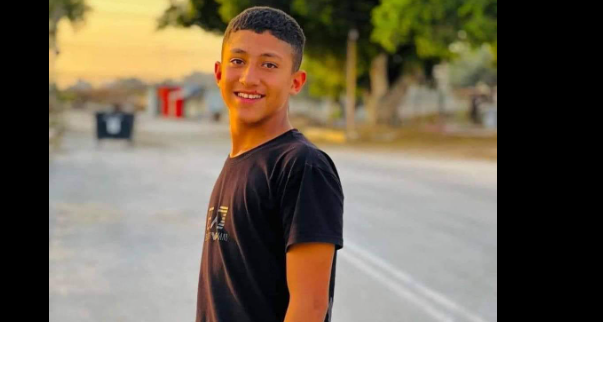
A Palestinian teen died of critical wounds by Israeli army west of Tulkarm

The Ministry of Health announced that the child Omar Ahmed Abdel Rahman Asmar (15 years old) from the town of Zeita, north of Tulkarm, died from his wounds after being hit by Israeli occupation bullets, during confrontations that broke out in the vicinity of the apartheid wall west of the town.


Local sources reported that the child's body will be buried from Ibn Sina Hospital in the city of Jenin, arriving to his hometown of Zeita, to be buried after the afternoon prayer.


With the martyrdom of the child Asmar, the number of Tulkarm martyrs since yesterday, Friday, has risen to six.

PALESTINE

Sat 14 Oct 2023 11:44 am - Jerusalem Time

Saudi Arabia froze the plan to normalize relations with “Israel”

A source close to the Saudi government revealed today, Saturday, that the Kingdom decided to suspend normalization talks with Israel against the backdrop of the Israeli aggression against the Gaza Strip.


The same source confirmed to Agence France-Presse that Riyadh informed the American officials sponsoring the discussions of this decision.


This comment came after Saudi Arabia confirmed its rejection of calls for the “forced displacement” of Palestinians from the Gaza Strip, and denounced Israel’s continued targeting of “defenseless civilians,” in its strongest statement since the outbreak of the war.


The official familiar with the negotiations said, “The Kingdom of Saudi Arabia decided to suspend talks about possible normalization (with Israel) and informed this to American officials” who are sponsoring the discussions.


Saudi Arabia has come a long way in negotiations that have been ongoing for months to reach historic normalization with the Hebrew state under American sponsorship.


The sudden and unprecedented attack launched by Hamas fighters on Israel last Saturday, and the subsequent intense Israeli strikes on the Gaza Strip, complicated the announcement of an expected normalization. Since then, Saudi Arabia has denounced in several statements the Israeli policy that led to the outbreak of the confrontation.


In its first reaction to the Hamas attack, Riyadh affirmed that it was “a result of the continued occupation and deprivation of the Palestinian people of their legitimate rights and the repetition of systematic provocations against their sanctities.” On Friday, it affirmed its rejection of calls for the “forced displacement” of Palestinians from the Gaza Strip and denounced Israel’s continued targeting of “defenseless civilians,” in its strongest statement since the outbreak of the war.


Before the Hamas attack, Saudi Arabia and Israel were close to normalization. Crown Prince Mohammed bin Salman told Fox News last month that it is "getting closer and closer every day." Meanwhile, Israeli Prime Minister Benjamin Netanyahu confirmed from the United Nations podium that his country is on the “threshold” of establishing relations with Saudi Arabia.


He continued, "Such a peace will go a long way toward ending the Arab-Israeli conflict. It will encourage other Arab countries to normalize their relations with Israel." On Tuesday, the Saudi Crown Prince assured Palestinian President Mahmoud Abbas that “the Kingdom continues to stand by the Palestinian people,” explaining that he is working to prevent the “widening” of the scope of the conflict.


More than 1,300 people have been killed in Israel, most of them civilians, since the start of the attack, including 258 soldiers, according to the army's latest toll. The number of wounded has reached more than 3,200, and the number of hostages proven to be being held is about 120.


In the besieged Gaza Strip, more than 2215 Palestinians, including 614 children, were killed and more than 7,696 citizens were injured as a result of the intense Israeli bombing in response to the operation, according to the latest toll from the Hamas Ministry of Health on Friday.


PALESTINE

Sat 14 Oct 2023 11:22 am - Jerusalem Time

French analysts wonder: Why October 7th and what comes after that?

The Palestinian resistance operation on October 7, and the Israeli response to it, attracted great attention from the French media, and from a number of analysts and journalists who looked at its background and tried to anticipate the future development of events in the region and at the level of the Palestinian issue.


Below we publish some of the positions of these analysts and journalists as they presented them, without this, of course, meaning that the Institute for Palestine Studies website has adopted them.


“Israel and Palestine: Diplomacy faces an impasse and fissures”[1]


Under this title, Benjamin Koenig, in the Omanti newspaper, on October 10, analyzed the deliberations of the session held by the Security Council on October 8 to discuss current events, and wrote:


“The Western bloc fully supports Israel. For its part, the Global South seems somewhat reluctant to blindly follow a strategy that has proven to fail not only in Palestine. After the Covid-19 crisis and the war in Ukraine, the Israeli-Palestinian conflict has become an indicator New to global diplomatic divisions: The launch of Operation “Al-Aqsa Flood” and the Israeli response to it reveal these divisions, thirty years after the signing of the Oslo Accords, which were rejected by the Israeli extreme right and rejected by the “Hamas” movement.


On Sunday, October 8, during the emergency meeting of the United Nations Security Council, currently chaired by Brazil, which includes fifteen members, no country wanted to issue a joint statement, and many countries did not want to condemn the attack on Israel without Under any conditions, despite the United States' call to criticize "the heinous terrorist acts committed by Hamas against the Israeli people and their government." Gilad Erdan, Israel's ambassador to the United Nations, also urged council members to "unequivocally condemn the war crimes committed by Hamas." If his American counterpart, Robert Wood, explicitly targeted Russia, the latter is not the only country that does not want to agree with Western positions. Turkey, Brazil, Egypt, Saudi Arabia, and Morocco, for various reasons, refused to take sides, while calling for a halt to the escalation. Russia's ambassador to the United Nations, Vasily Nebenzia, said he had distributed "a message calling for an immediate cessation of fighting, a ceasefire and meaningful negotiations." As for China, which was also criticized by the United States, its Ministry of Foreign Affairs urged “the parties concerned to exercise restraint and end hostilities immediately to protect civilians,” reminding that “the international community must intensify its contribution to the Palestinian issue.” As for Brazil, “ Its position was more credible (than Russia, China, or the West), as it supported the Palestinian struggle, but condemned the killing of Israeli civilians.”


“The impossible exclusion of the Palestinian issue”[2]


Under this title, the journalist in Le Monde newspaper, Benjamin Barthes, who specializes in the Middle East and the Palestinian issue, published an article on the 10th of this month in which he said:


“The attack launched by Hamas on Israel on Saturday, October 7, highlights the grave responsibility borne by those who bet on the emergence of a “new Middle East,” in which Palestine is relegated to the background...


By taking the step of recognizing Israel in the summer of 2020, the United Arab Emirates and Bahrain, followed by Morocco, in effect buried the “Abdullah Plan” formulated by the Saudi Crown Prince, which required the establishment of diplomatic relations with the Jewish state in exchange for its withdrawal from the territories it occupied in 2017. 1967 (West Bank, Gaza Strip, Golan Heights). The old PLO was thus deprived of its right to object to Israeli-Arab rapprochement, which represented one of its rare strengths at the negotiating table.


Thus, it seemed that a new era, post-Palestine, was dawning in the Middle East, and we can place its date of birth on March 27, 2022. On that day, Yair Lapid, the then Israeli Foreign Minister, gathered in Sde Boker, 50 kilometers to South of Beersheba, his American counterpart, Anthony Blinken, and the heads of diplomacy in four Arab countries (Egypt, the United Arab Emirates, Bahrain, and Morocco) to talk about Iran, the regional bogeyman, the war in Ukraine, and in a very limited way about the Palestinians... That summit seemed like a pivotal event, and a moment of transformation between... Two worlds. Then the Saudi-American meetings that took place in recent months, with the aim of normalizing relations between the Kingdom and Israel, reinforced this impression. It was said that Palestine was a thing of the past, and its inhabitants seemed doomed to drift off the screen and become irrelevant. It is this illusion that was shattered on Saturday, October 7, in the raid launched by Hamas commandos on southern Israel, which witnessed bombings, bombings and kidnappings, so that the “new Middle East” seemed very similar, unfortunately, to the old Middle East.


After each of the four wars that destroyed the sandbar (2008-2009, 2012, 2014 and 2021), Israel slightly lifted the lid on the Gaza cauldron. Some permits were distributed to workers to go to work in Israel, and some export licenses were given to the last entrepreneurs still active. But every time the lid was put back on [the cauldron], and the pounding of the infernal machine began anew; On the disastrous October 7th, the boiler finally exploded...


Like a hand grenade whose safety valve has been removed, the Palestinian issue is returning to the forefront again. Those who expected its decline bear heavy responsibility for the massacre of October 7 and 8, and for the bloodbaths that followed. As Israel deploys its punitive arsenal, anger may spread on the streets of the Maghreb and Levant countries, and more certainly, it will spread on these globalized sites represented by social networks. This would be second evidence that the Palestinian issue remains a structural element of Arab identity.


It will likely end up re-trapping the Devil of Gaza in his box, with some dangerous villains in tow. But the Palestinian issue will never stop appearing on the surface. Palestinian intellectual Elias Sanbar likes to say that his father told him on the eve of his death in 1967: “Do not be afraid, never be afraid. We are like a thorn in the world’s throat. No one will be able to swallow us.”


“Eliminating Hamas? Israel faces the challenges of the ground operation in Gaza.”[3]


Under this title, the analyst at Radio France considered the possibility of the Israeli army carrying out a large-scale ground operation in the Gaza Strip, and wrote:


“The Israeli army is bombing Gaza, imposing a siege on the Strip, and calling in hundreds of thousands of reserve soldiers. The goal is: eliminating Hamas...but is the political goal, which is eliminating the “terrorist” movement, achievable?


It raises many questions for Israeli leaders who have only bad choices.

The first relates to the human cost of the ground operation: given the human and urban density of the Gaza Strip, which is inhabited by two million people, there will undoubtedly be a large number of casualties on both sides. Hamas is waiting for the Israelis in every alley, in every tunnel, and in every basement. Wouldn't that price be too high?


There is no doubt that Israeli military superiority will allow the destruction of a large part of Hamas' infrastructure: the missile production workshops that regularly rain down on Israel, the tunnels leading to Egypt or to Israel through which Hamas communicates with the outside world, or the stock of weapons and ammunition that the group possesses. The most complicated matter is the arrest of the movement's leaders...


It all depends on what we mean by eliminating Hamas. On several occasions in the past, Israel was able to behead “terrorist” groups without succeeding in eliminating them.


The danger is twofold in Gaza. On the one hand, the price is too high, both for the Israeli army and for the Palestinian civilian population, an outcome that will certainly not be decisive; On the other hand, victory in Gaza would pose other problems.


What will we do in Gaza after eliminating Hamas, even temporarily? Israel has already gone through the experience of occupying the region, and does not have good memories of it. The new occupation is certainly not what the army wants. But can we leave two million people behind? This risks bringing out the worst of Hamas from Israel's point of view.


In 1957, David Ben-Gurion, the founder of the Hebrew state, saw, as stated in the memoirs of the former French ambassador to Israel, Alain Pierre, that “the Gaza Strip represents a disaster for any regime, whatever it may be, whether it is an Israeli regime, or an Israeli regime linked to the United Nations, Or an international system without Israel.” That was 66 years ago, so is it really different?


“The Israel-Gaza War: Towards a turning point in the region?”[4]


Under this title, on the 11th of this month, journalist Johanna Bouquet on Belgian Radio and Television in French, surveyed the opinions of a number of researchers specialized in Middle East affairs. In response to a question about whether the current events since October 7 mean the end of the normalization of relations between Arab countries and Israel, Didier Le Roy, a researcher at the Royal Military School, answered: “The signing of the Abraham Accords in 2020 launched the normalization processes between the Hebrew state.” And the United Arab Emirates, Bahrain, Morocco and Sudan. For some time, the question has arisen about who will be the next Arab country to approach Israel, and the next on the list was none other than Saudi Arabia. A few weeks ago, Crown Prince Mohammed bin Salman confirmed on Fox News that Saudi Arabia And Israel is getting closer every day to normalizing their relations, and it must be said that the primary goal of the Kingdom of Saudi Arabia is to achieve its strategy for the year 2030 to ensure the economic transformation of the Kingdom. For this reason, the Prince stated: “We need a Middle East that is as peaceful as possible and can attract foreign investors.”


But the Hamas attack, which tarnished its reputation at the international level, caused at least a slowdown in the dynamic of rapprochement between the Kingdom of Saudi Arabia and Israel, and at the maximum paralysis, so that it will now be more complicated for the Kingdom of Saudi Arabia to continue its negotiations with the Jewish state, and it has increased. The political cost of such rapprochement is too much...


Professor Emeritus at the Institute of Political Sciences in Paris, Bertrand Barry, comments on this issue, saying: “In my opinion, the game of the Abraham Accords was a dangerous, even perverse game, because it was a game whose rules were to deny the Palestinian issue and put it under the table... and from a certain point of view “What Hamas did in a terrible way was to remind us that the Palestinian problem still exists.” In response to a question about whether the confrontation would expand and witness Hezbollah’s participation in it, Bertrand Barry himself answered: “At the present time, Hezbollah remains somewhat cautious, as it has no interest in rushing into the fire, and for good reason.” , is that Lebanon is plunging into a serious economic crisis; pushing the country into a war with Israel on top of that seems very costly, and the Lebanese people may not forgive the armed group for this matter. And at the heart of the Lebanese political crisis, Hezbollah depends mainly on its integration into the political game Lebanese, and perhaps tomorrow, his total or partial seizure of power in Beirut. Therefore, by entering forcefully, and more directly than necessary, into the confrontation with Israel, he will risk delaying and even destroying his plans.


But whatever Hezbollah's position, Bertrand Badie believes that the Hamas attack will have repercussions on the restructuring of the region, and Lebanon will necessarily be affected by this restructuring.


Regarding the danger of the West Bank igniting, Didier Le Roy answers: “What could change the situation, and what Hezbollah is closely monitoring, is how the West Bank reacts to the Israeli response, as well as, in general, the way public opinion reacts in the Arab countries. There are two scenarios that could take shape: The first is for the Israeli police and the Palestinian Authority to be able to maintain calm in the streets of Jenin, Tulkarm, or even Ramallah: In this case, it would be dangerous for an actor like Hezbollah to jump into the battle and risk An Israeli reaction would destroy Lebanon. As for the second scenario, it would be to follow the call to start the third intifada that Hamas launched very clearly at the beginning of the process. If we witness an anti-Palestinian Authority uprising in the West Bank and a wave of political violence in mixed cities that would... If it leads to a very strong polarization of certain cities in Israel, then Israel will be more weak, and this may be an opportunity for Hezbollah.”


[1] https://www.humanite.fr/monde/attaque-du-hamas/israel-palestine-pour-la-diplomatie-une-impasse-et-des-fractures

[2] https://www.lemonde.fr/idees/article/2023/10/10/l-impossible-refoulement-de-la-question-palestinienne_6193549_3232.html

[3] https://www.radiofrance.fr/franceinter/podcasts/geopolitique/geopolitique-du-mardi-10-octobre-2023-5498231

 [4] https://www.rtbf.be/article/guerre-israel-gaza-vers-un-tournant-dans-la-region-11269539


By Maher Al-Sharif

Source: Institute of Palestinian Studies

PALESTINE

Sat 14 Oct 2023 11:02 am - Jerusalem Time

'Forced displacement': Why Israel's call to evacuate northern Gaza violates international law?

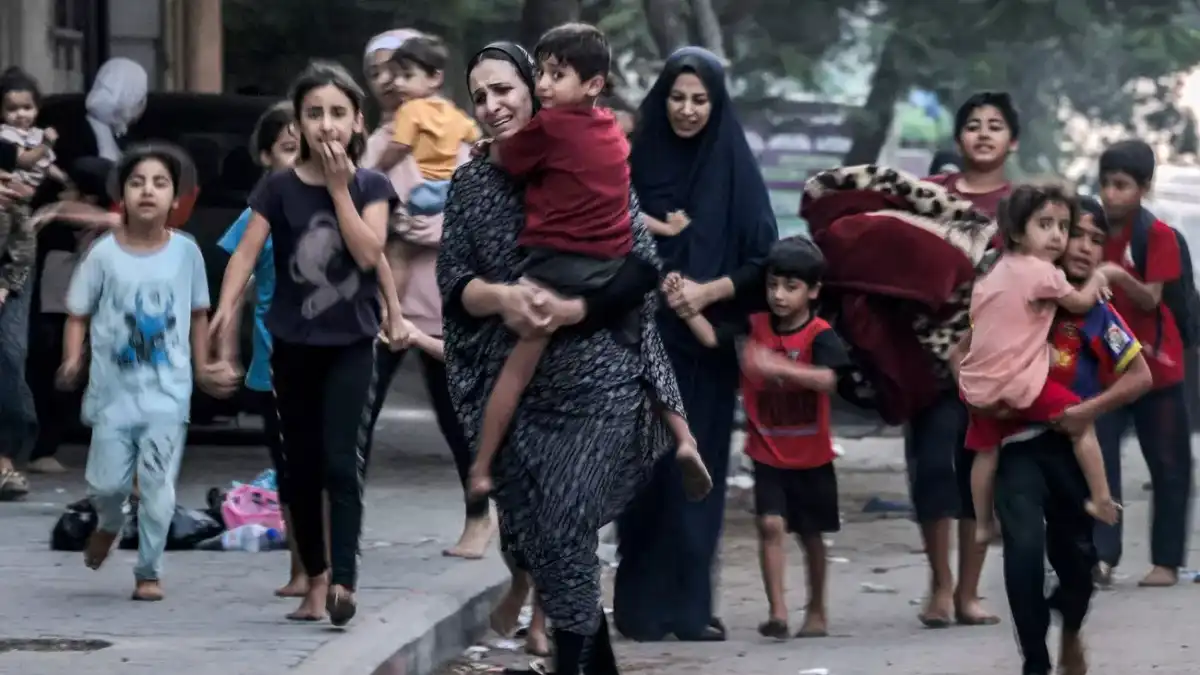
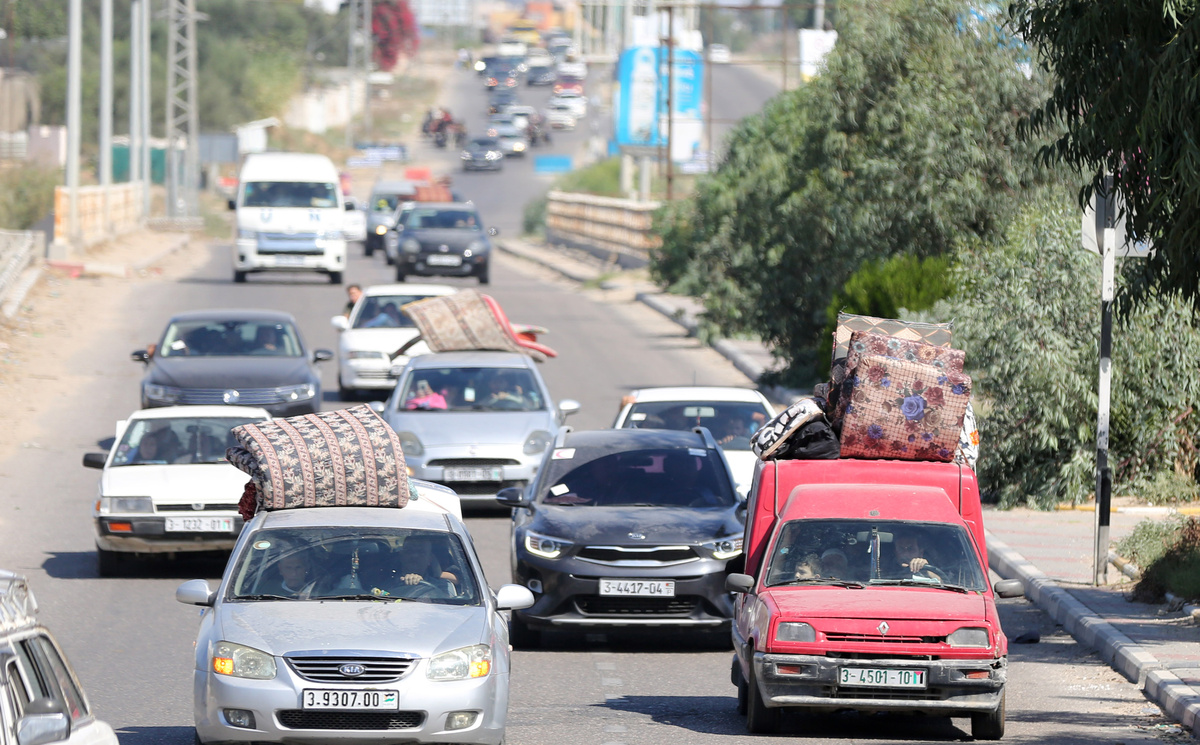
Israel's army at midnight local time on Friday warned the more than one million Palestinians living in northern Gaza to evacuate to southern Gaza "for your own safety and the safety of your families" within 24 hours.


The order asked them to leave Gaza City for any points below Wadi Gaza, a largely rural area in the enclave with few facilities like shelter, ahead of what could potentially be an Israeli ground invasion of Gaza.


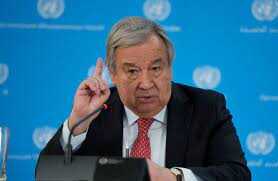
UN Secretary-General Antonio Guterres said that trying to evacuate people out of an area that is under bombardment and under siege is not only "extremely dangerous" but might just be "simply impossible". 

Israel's envoy to the United Nations said on Friday that "the UN should be praising Israel for these precautionary actions". But since being told to evacuate, at least 70 people in the process of leaving, mainly women and children, were killed in Israeli air strikes on the main highway connecting north and south Gaza.

Since the Israeli army told Palestinians to evacuate, Palestinians in Gaza have been torn about what to do, as many fear the worst - a repeat of the Nakba. The Nakba, or "catastrophe" as it is known in English, refers to the ethnic cleansing of some 750,000 Palestinians from their lands and homes in historic Palestine to make way for the creation of Israel in 1948.


Hamas told residents in northern Gaza to not heed Israel's warning, calling it false propaganda, and mosques in Gaza were broadcasting calls for people to stay and resist.


And what will happen to the thousands of wounded being treated in hospitals? Since the Palestinian attacks on Saturday that have so far killed 1,300 Israelis, the bombardment of the Gaza Strip has killed 1,900 and wounded 7,696 Palestinians, including 2,000 children and 1,400 women. 


Doctors Without Borders (MSF) released a statement condemning Israel's evacuation warning, saying that "this represents an attack on medical care and on humanity".

"We are talking about more than a million human beings. 'Unprecedented' doesn’t even cover the medical humanitarian impact of this. Gaza is being flattened, thousands of people are dying, this must stop now. We condemn Israel’s demand in the strongest possible terms," Meinie Nicolai, MSF director general, said in the statement. 


What does international law say?

The United Nations, the World Health Organization and the International Committee of the Red Cross (ICRC) have all denounced the order. 

In fact, the evacuation order forced the International Committee of the Red Cross (ICRC) into making a rare public statement on Friday calling for a pause in the fighting and questioning the legality of such an announcement. 

"Instructions issued by the Israeli authorities for the population of Gaza City to immediately leave their homes, coupled with the complete siege explicitly denying them food, water, and electricity, are not compatible with international humanitarian law.”


The directive from Israel can be likened to an involuntary deportation of the civilian population according to Gissou Nia, a human rights lawyer and director of the Strategic Litigation Project at the Atlantic Council.

“The evacuation order may amount to forced displacement of the civilian population, which is a violation of international humanitarian law."


Nia told Middle East Eye that this "can also amount to violations under the Rome Statute, the treaty that animates the International Criminal Court. The ICC has jurisdiction over the territory of Gaza and the ICC prosecutor does have an ongoing investigation into the situation."

Article 8(2)(e)(viii) of the Rome Statute addressing war crimes prohibits "ordering the displacement of the civilian population for reasons related to the conflict, unless the security of the civilians involved or imperative military reasons so demand".


The order to evacuate seemed more like an ultimatum to Adam Shapiro of Democracy for the Arab World Now, a Washington-based human rights organization.

"It is not just an evacuation order. It is a threat to leave or be killed." 

Shapiro told Middle East Eye that it is "forced displacement, and it is under the conditions of the total siege. It is compulsion." He argues that making such a threat is a violation of international law.


Israel's siege has cut off electricity, water, fuel, food and the delivery of any supplies into the Gaza Strip. The intentional starvation of a civilian population as a war tactic is a violation of the Geneva Conventions.

The ICRC statement mentions the impact the siege has on the legality of such an order.


"The instructions issued by the Israeli authorities for the population of Gaza City to immediately leave their homes, coupled with the complete siege explicitly denying them food, water, and electricity, are not compatible with international humanitarian law," the ICRC statement said.


The organization says that when military powers order people to leave their homes they have a responsibility to ensure the population has access to basic necessities, which is not possible when an area is under a complete blockade. 


"Gaza is a closed area of limited size and resources. People have nowhere safe to go and many, including the disabled, elderly, and sick, will not be able to leave their homes. International humanitarian law protects all civilians, including those who remain. Today, it is impossible for Gazans to know which areas will next face attack," the ICRC said.


By UMAR A Farouq

Source: Middle East Eye


PALESTINE

Sat 14 Oct 2023 10:59 am - Jerusalem Time

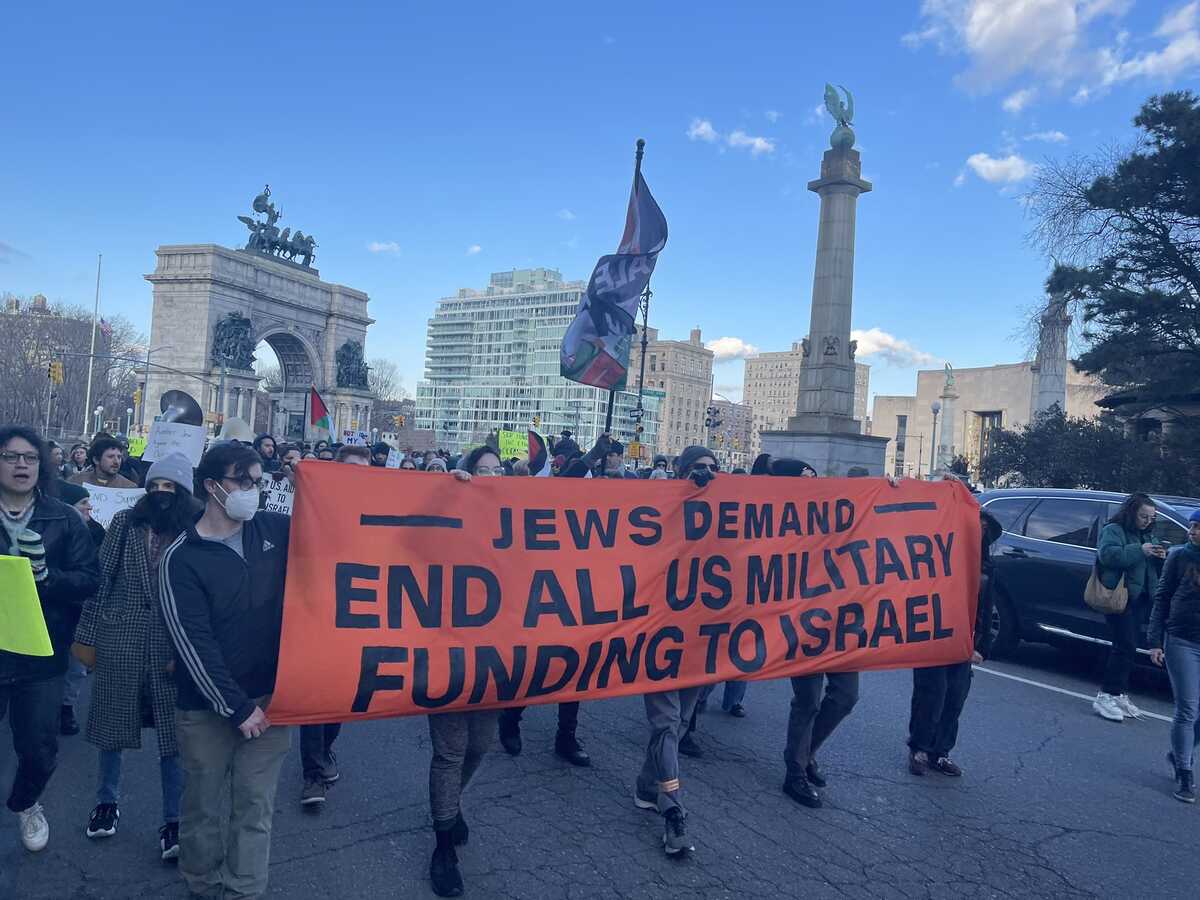
New York Jews demonstrate in front of Chuck Schumer's house demanding end of military funding for Israel

More than a thousand American Jews demonstrated in front of the home of the majority leader in the US Senate, Democratic Senator Chuck Schumer, yesterday, Friday, demanding an end to the Israeli aggression against the besieged Gaza Strip.


According to reports from the New York Police, dozens of demonstrators who called on the United States to end Israeli aid to Israel were arrested (outside Schumer's house).


The protests come on a day of city-wide "Day of Rage" protests against brutal Israeli air strikes in Gaza following unprecedented Hamas attacks, which led to the deaths of more than 1,900 Palestinians, most of them children and women.


According to press reports, hundreds of people gathered in the “Grand Army Square” to participate in the march, which was organized by the “Jewish Voice for Peace” organization – an activist group that describes itself as anti-Zionist.


“Not in our name,” demonstrators chanted outside, according to videos shared on social media.


They carried a large banner reading, “Jews say stop genocide against the Palestinians,” in front of the door of the building where he lives, and a number of police officers were standing near him.


Others carried signs reading, “Zionism is terrorism” and “Stop Israeli apartheid.”


Police were seen escorting dozens of handcuffed detainees to MTA buses.


According to Jewish Voice for Peace, those detained included “rabbis, politicians, scholars and descendants of Holocaust survivors – ranging in age from 20 to 80 years.”


“We demand an end to the genocide of Palestinians in Gaza,” the demonstrators said. “This will not happen again today,” they said.


New York State Assembly members Zahran Kwame Mamdani, of the 36th Congressional District, and Marcella Mittens, of the 51st Congressional District, were among the marchers, according to the group.


Schumer, the highest-ranking Jewish elected official in the United States, known for his strong connection to Israel and the Israeli lobby, AIPAC, will travel to Israel this weekend, where he will lead his Senate colleagues in a show of support for Netanyahu's government, his office announced earlier Friday.


He and the delegation will meet with Israel's new emergency government, including Prime Minister Benjamin Netanyahu, where they will discuss what resources the United States can provide in its fight against Hamas, a spokesman for the senator told the newspaper.


Earlier Friday, pro-Palestinian demonstrators in Manhattan marched from Baruch College downtown through Times Square to the United Nations headquarters on East 45th Street, waving flags and carrying signs demanding an end to the war.


A total number of arrests at the demonstrations will not be available until late Saturday, an NYPD spokesperson said.

OPINIONS

Sat 14 Oct 2023 10:14 am - Jerusalem Time

The Nakba that Israel has started will backfire

David Hearst

David Hearst

Opinion Writer

From the first moments of Hamas’s breakout from Gaza, Israeli Prime Minister Benjamin Netanyahu made one promise that has almost entirely escaped attention.

He told the mayors of southern border towns that Israel’s response would “change the Middle East”. He said the same thing in his address to the stunned nation: “What we will do to our enemies in the coming days will reverberate with them for generations.”


What is in his mind? We know he has long wanted to attack Iran’s nuclear installations. Three years after he was first thwarted in 2010, he told CBS: “I won’t wait until it is too late.” 


We know, too, that he wants to eradicate Hezbollah and Hamas, which he once described to me (when he was in opposition) as aircraft carriers for Iran. 


Since the Palestinian fighters' attack on Saturday, he has used words that mirror former US President George W Bush’s response to the 9/11 attacks. In going after al-Qaeda in Afghanistan, former Vice President Dick Cheney, the power behind the throne, was already thinking about a bigger attack on Iraq.


Is Netanyahu thinking of harnessing the unparalleled support he is currently getting from the international community for his campaign against Gaza for something much bigger, as Bush did in 2001? 

The head of the Israeli opposition, Benny Gantz, has also hinted at a bigger project: “We will win, and change the security and strategic reality in the region.”


Second Nakba

Reoccupying Gaza and finishing off just one Palestinian armed group would not change the strategic reality of the region, and you don’t need an army of 360,000 troops to reoccupy Gaza. This is the greatest number of reserves called up in the history of the country. 


Hamas has a maximum of 60,000 armed men, according to my sources, which alongside other factions, would struggle to make a force a third of that size.


Of course, this could be bluster - the sort of bellicose rhetoric that is Netanyahu’s stock in trade. Vows to change the Middle East have been made frequently by previous Israeli and US officials and have proved to be hollow.

Former Israeli Prime Minister Shimon Peres wrote a book about how Oslo would reshape the Middle East. Former US Secretary of State Condoleezza Rice pointed to “a different Middle East” when she urged Israel to ignore calls for a ceasefire after 11 days of bombing Hezbollah in southern Lebanon in 2006.


But what if a bigger venture is being planned? What would it entail, and what risks would it pose for the region as a whole? 


The first and most obvious answer is a second Nakba, or mass expulsion of a sizeable proportion of Gaza’s 2.3-million-strong population - a figure big enough to alter the demographic time bomb that is in the back of every Israeli’s mind.


To judge by the words of Israel's leadership and the actions of its pilots, a mass exodus is exactly what Israel might be trying to force in Gaza right now


On Tuesday, Israeli Lieutenant-Colonel Richard Hecht told foreign reporters that he would advise Palestinian refugees to “get out” through the Rafah crossing on Gaza’s southern border with Egypt. His office then had to “clarify” what Hecht had said by admitting the crossing was closed. 


The possibility that Egypt might be forced to allow an influx of refugees from Gaza - which happened after both the Arab-Israeli war of 1948 and the 1967 war - was also raised by Al-Azhar Al-Sharif, the largest religious institution in Egypt, which called on Palestinians to remain steadfast and stay put. Why would it put this statement out if the possibility of another mass exodus were not being discussed behind closed doors?

The arrival of one million Palestinians from Gaza in the Sinai could, without exaggeration, have the potential to tip Egypt over the edge after a decade of economic decline under the leadership of President Abdel Fattah el-Sisi. Already, record numbers of Egyptians are taking to the boats. Sisi himself realizes this danger and repeated Al-Azhar’s call.


'Human animals'

There is also little doubt about what effect a mass expulsion of Palestinians would have on the hair-trigger balance between Palestinians and East Bankers in Jordan, which has Israel’s longest - and up until now, quietest - border.

A second Nakba would present the first two Arab countries to recognize Israel with an existential crisis, which could threaten each regime’s ability to control their own state.


And yet, to judge by the words of Israel’s leadership and the actions of its pilots, a mass exodus is exactly what Israel might be trying to force in Gaza right now.

On Monday, Israeli Defense Minister Yoav Gallant described Palestinians as “human animals” on the back of claims that Hamas had beheaded children - claims that cannot be independently verified, and which were not made when Israeli reporters were initially allowed in to see the carnage at Kfar Aza.


The same day, Knesset member Revital Gotliv called on Israel to consider using a nuclear bomb on Gaza, posting on social media: “Only an explosion that shakes the Middle East will restore this country’s dignity, strength, and security! It’s time to kiss doomsday.” 

Then, Giora Eiland, a former general, said Israel must “create an unprecedented humanitarian disaster” in Gaza, and threatened another Nakba: “Only the mobilization of tens of thousands and the cry of the international community will create the leverage for Gaza to be either without Hamas or without people. We are in an existential war.”

On Friday, little doubt remained of Israel’s intentions. The Israeli Army told Palestinians of north Gaza to leave, saying they would not be allowed to return "until we say so". Hamas has told Palestinians in north Gaza to "remain steadfast" and to "stay in your homes".


The second Nakba has started.

On Wednesday, an Israeli army official told Channel 13 that Gaza would be razed to the ground and reduced to a “city of tents” - which is, to be fair, exactly what has happened every night since the Hamas incursion.


Nightly slaughter

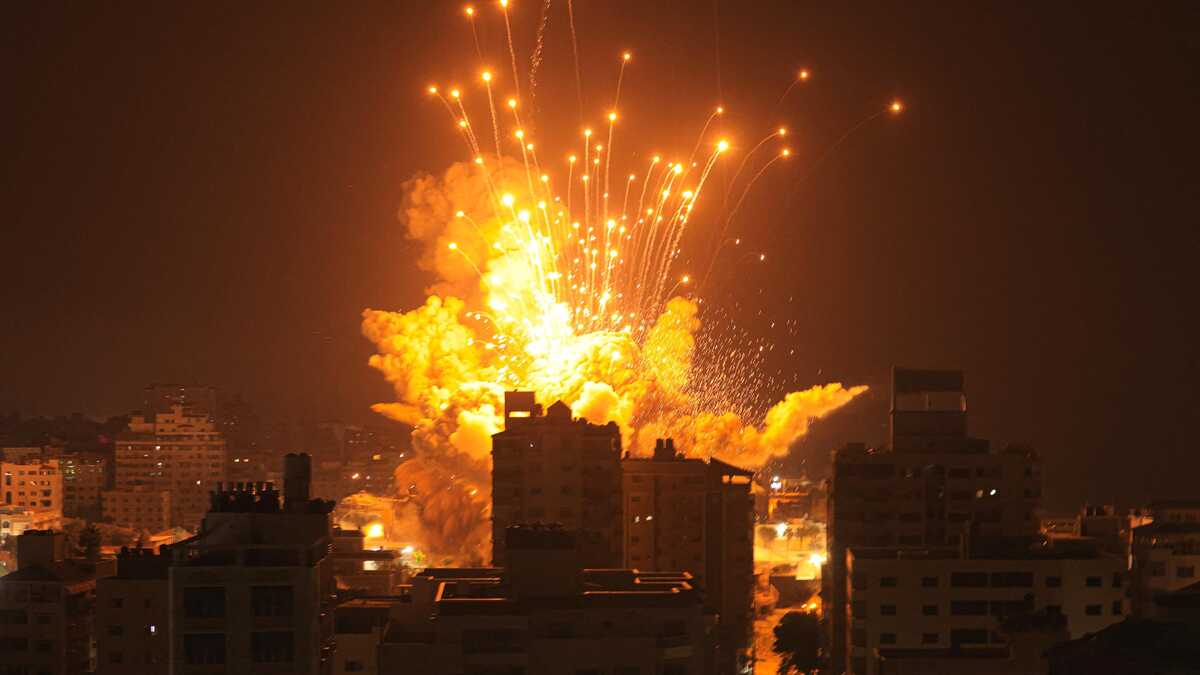
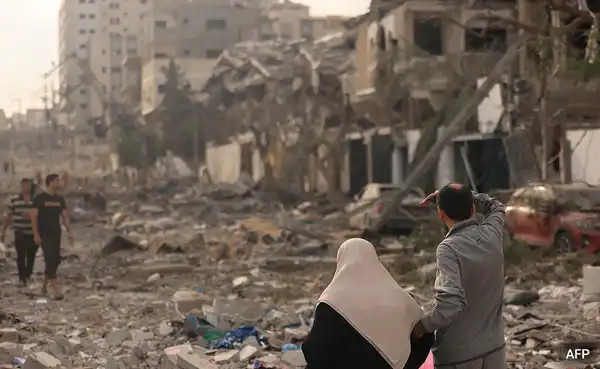
There is a massacre taking place almost every night in Gaza. Whole families have been wiped out by precision bombs. Palestinians in Gaza have been told to evacuate their whole district, only to run into the path of bombs. Districts are not just being bombed once; they are being systemically levelled. 

In previous campaigns, Palestinians in Gaza fled to Rimal, a relatively wealthy middle-class area by the sea. It was regarded as a safe haven because in previous campaigns, Israel had no reason to bomb it. Now, Rimal is being levelled.


This nightly slaughter is not taking place accidentally by indisciplined pilots taking revenge for alleged war crimes committed by Hamas in southern Israel. It is taking place by design. The aim of cutting off electricity, water and food to more than two million people, and subjecting them to this nightly bombardment, is to get them to flee.

There is no place in Gaza safe from this form of genocide. Fourteen medical facilities have been bombed. Since Saturday, 500 children have been killed. 


Ergo, if Israel is not stopped, the course on which it is embarked is to kill not 2,251 men, women and children in Gaza - as was the case in the ground incursion of 2014 - but tens of thousands, a casualty rate high enough to induce another Nakba.


Before that, this policy could have two effects: to start a civil war inside Israel between the Palestinians of 1948 and Israeli Jews, and to trigger a regional war with Hezbollah and ultimately Iran itself.

This could also be in Netanyahu’s head. Crushing Hamas would not change the Middle East, but defanging Hezbollah and Iran as forces that would be willing to try anything against Israel for the next decade, almost certainly would.


In the view of the national religious right, the sooner the Palestinian national cause is crushed, the better

Palestinian fighters shattered in one dawn raid the myth of invincibility Israel had enjoyed since defeating three Arab armies in six days in 1967. Even the 1973 Middle East war did not produce the shock that Hamas did.


Israel is now saying this war is existential. On the streets, Israel feels like a country where there is no authority; where Israelis can take justice into their own hands; where normal citizens, unconnected with settlers or the extreme right, are going around on the streets armed. Such is the general level of hatred and fear, that it could be only a matter of time before Palestinians inside Israel are attacked.


Domestically, those on the extreme national religious right, such as Finance Minister Bezalel Smotrich and National Security Minister Itamar Ben Gvir, have been saying for years now: “Bring it on.” 


This past February, Gantz accused Smotrich of supporting settler violence in the occupied West Bank because he “wants to cause another Palestinian Nakba”. Now, Gantz and Smotrich are sitting side by side in the same cabinet. 

In the view of the national religious right, the sooner the Palestinian national cause is crushed, the better. The national trauma induced by Hamas’s successful incursion is manna from heaven for them. It has produced exactly the conditions they have been waiting for. 


Regional war

On Israel’s borders, the possibility of Gaza triggering a regional war has never been greater. Emotions are running high in all Arab capitals. 

Hezbollah, the best-equipped and trained armed group Israel faces, has its finger on the trigger. There are credible reports that it has started a general mobilization. 


There have already been several days of attacks launched from the Lebanese border, including a confrontation involving fighters claimed by Islamic Jihad, in which three Israeli soldiers were killed. Three of Hezbollah’s fighters were also killed after Israel attacked sites in Lebanon in retaliation. 


If a ground offensive gets going, which could be very soon, the choice for Hezbollah may be either to wait for Israel to finish off Hamas and then come for them - knowing they would effectively be on their own - or join Hamas and the other armed factions in Gaza, while each group retains its effectiveness as a fighting force.

Hezbollah might have very good reasons for wanting to keep the status quo on the Lebanese border, but this is no longer a conflict that any group facing Israel, or any part of the Palestinian movement, can afford to sit out without handing Israel a free pass.


On Thursday, Iranian Foreign Minister Hossein Amir-Abdollahian said that the crimes against the Palestinians would receive a response from "the rest of the [resistance] axis".

Hezbollah would be right to think that the longer this goes on, the more vulnerable each front becomes if they do not act in unison. That could be the one way to force Israel to come to a negotiated ceasefire in Gaza. 


The second lever of constraint is the US. Does President Joe Biden really want to be dragged into a regional war, which would involve every armed group linked to Iran, such as the Houthis - a war for which it is not remotely prepared - at the very time that Ukraine’s counter-offensive has become bogged down, winter is coming, and Russian President Vladimir Putin can taste victory and European battle fatigue?


Does an unplanned regional war in the Middle East, created entirely by an unhinged ally, make any sense for the US? I don’t think it does. Biden has given Netanyahu the brightest of green lights in offering Israel its unequivocal backing, but I do not think the US has war-gamed the possible devastating outcomes of what is taking place in Gaza right now.


Dangers ahead

Off the Lebanese coast, a western battle fleet is assembling as a deterrent to Hezbollah.

Before acting, they should remember what happened just 40 years ago in Beirut, when a truck full of explosives drove into a barracks housing US marines, and minutes later, a similar attack occurred against a French company of paratroopers. Around 300 military personnel died.


Then-US President Ronald Reagan and then-French President Francois Mitterrand intended to mount joint air strikes. In the end, no retaliatory attack took place beyond naval bombardment, because the US defense secretary, Caspar Weinberger, and the secretary of state, George Shultz, could not agree on who was responsible for the bombings.


This time around, the warnings that Biden as vice president gave former President Barack Obama, about starting wars you cannot finish, will be ringing in his ears. 

Both the US Secretary of State Anthony Blinken and the Defense Secretary Lloyd Austin are in the region trying to calm things down, but theirs is mission impossible. Having allowed Israel to light the fuse, they are now trying to contain the explosion.


The Middle East is incomparably weaker today than it was when Bush and former British Prime Minister Tony Blair blithely planned their invasion of Iraq in 2003. Syria, Iraq, Yemen, Sudan and Libya lie in ruins; and Egypt, Jordan and Tunisia are bankrupt. Instability has created huge flows of refugees across the Mediterranean, which even the most hospitable of hosts, Turkey, is now trying to reverse.


If only a third of what I have written comes to fruition, Israel could end up with open borders, inviting constant incursions by armed groups from Lebanon to Jordan to Egypt. At the very least, Israel would lose the quiet it has enjoyed on its longest border with Jordan. 


No one can afford what one man, Netanyahu, has got in his head. No one can afford the blank cheque he has been given by the West to start this operation in Gaza. 


A Gaza campaign that develops into a plan that could change the Middle East could backfire dangerously - and it should be stopped before it is too late.


Source: Middle East Eye

 

PALESTINE

Sat 14 Oct 2023 9:56 am - Jerusalem Time

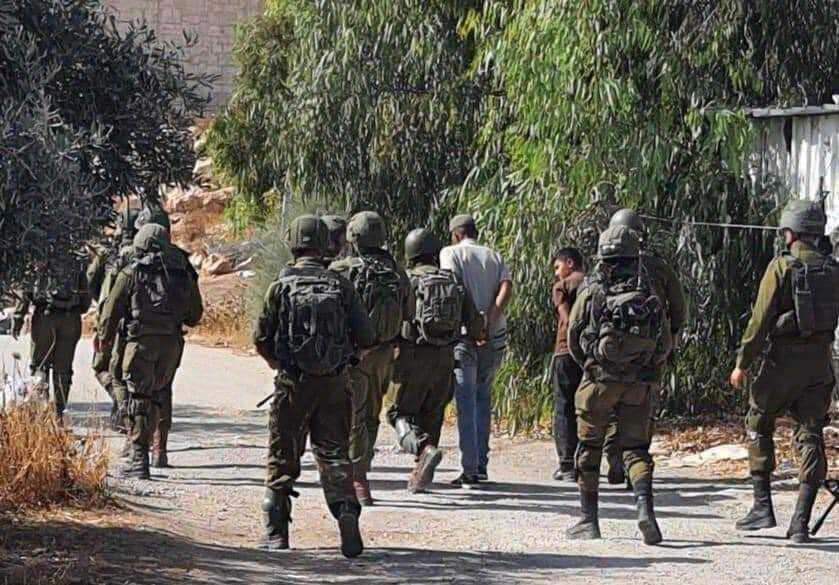
Israeli army abducts 23 Palestinians in West Bank

The Israeli occupation forces launched, at dawn on Saturday, a campaign of arrests against a number of Palestinians, after storming several areas in Nablus, Bethlehem, Jenin and Jericho, at a time when the Israeli authorities fear an escalation of the situation in the West Bank, especially with armed brigades announcing their entry into the “Flood” battle. Al-Aqsa.


In Jerusalem, the occupation forces arrested and detained two young men, Khaled Musleh and Muhammad Abu Shanab, from the Qalandiya camp, north of the city of Jerusalem.


From Ramallah, the occupation forces arrested and detained the following: the liberated detainee Muhammad Sarhan Al-Barghouthi from the town of Kobar, Diya Abu Qara from Al-Mazraa Al-Gharbiyya, Yousef Mashhour Abu Dhaher from the village of Abu Shkhidem, and Fadi Ibrahim Ziadeh, from the village of Bitello.


From Bethlehem, the occupation forces arrested Mahdi Qasim Al-Sheikh, Khalil Al-Sheikh, and Ward Al-Sheikh, all in their twenties, from the village of Marah Mualla, south of Bethlehem, and the young man Ahmed Khamis (24 years old) from the Wadi Shaheen area in the center of the city, and Youssef Jamal Ayyad. And Muhammad Hegazy from Al Saf Street.


From Jenin, the occupation forces arrested the editors, Mahmoud Rashid Al-Fayed, and Jumaa Saad Abu Khalifa, from the Jabriyat neighborhood and Wadi Burqin.


From Hebron, the occupation forces arrested and detained: Moamen Ahmed Al-Shalash (23 years old), Amid Abdel Qader Shalash (16 years old), Muhammad Amin Abdel Qader Al-Rajoub from the town of Beit Awa, Tariq Amr from the town of Dura, Anwar Idais, and Muhannad Hamouda Al-Atrash. Ahmed Al-Sharif, Akram Walid Amr, and Saddam Daana, from the city of Hebron.


UNCATEGORIZED

Sat 14 Oct 2023 9:46 am - Jerusalem Time

Israel-Palestine war: UK leaders are paving the way for ethnic cleansing in Gaza

In moments of crisis, it’s the job of a statesman to resolve problems, not inflame them. It’s their job to show wisdom, to ignore popular clamor, to remind all parties of their obligations under international law, to emphasize our common humanity, and to look for long-term solutions that avoid a return to past horrors.


Statesmanship has been utterly lacking in Britain ever since Hamas broke out of Gaza last week.

Let’s look at the shocking display from Labor leader Keir Starmer on LBC radio on Wednesday. He said that Israel had the “right to defend itself” against the Hamas attack. Then Starmer went a step further when asked about Israeli Defense Minister Yoav Gallant’s grim announcement of a “complete siege” of Gaza, in which Gallant said: “There will be no electricity, no food, no fuel, everything is closed” - adding for good measure that Israel was fighting “human animals”.


Asked whether cutting off water and electricity supplies was a proportionate response to the Hamas attacks, Starmer said: “I think that Israel does have that right. It is an ongoing situation, obviously everything should be done within international law.”


But Starmer of all people, with his distinguished legal background, must know that depriving a population of food, power and electricity amounts to collective punishment, which is illegal under international law. 


There’s a terrible risk here. These remarks from a man seen as the British prime minister-in-waiting have given a green light for future war crimes.


'Unequivocal' support

To be fair to Starmer, Prime Minister Rishi Sunak has been no better. After the Palestinian fighters attack, he went on television to express support for Israel. Then he went on to note that this support was “unequivocal”, which amounts to a blank cheque from Britain to Israel to conduct itself in any way it chooses over the terrifying weeks ahead. 


We have seen humane and responsible talk from leaders of international organizations. In a statement on Tuesday, Martin Griffiths, under-secretary general at the UN Office for the Coordination of Humanitarian Affairs, said: “My message to all sides is unequivocal: The laws of war must be upheld. Those held captive must be treated humanely. Hostages must be released without delay.


"Throughout hostilities, civilians and civilian infrastructure must be protected. Civilians must be allowed to leave for safer areas. And humanitarian relief and vital services and supplies to Gaza must not be blocked. The whole region is at a tipping point. The violence must stop.”


But from Sunak, we had no mention of human rights, let alone the type of call for proportionality that we heard from Irish leader Leo Varadkar, who warned that current solidarity could “fall apart” if Israel goes “too far in terms of its actions in Gaza”.


Meanwhile, British Home Secretary Suella Braverman is doing her best to inflame domestic tensions by suggesting that waving a Palestinian flag could become a criminal offence. 


Apocalyptic talk

The responses from Starmer, Sunak, Braverman, and others are especially reckless because of the horrifying language already being used by senior Israelis. 

Prime Minister Benjamin Netanyahu has said that Israel’s response will “change the Middle East”. Gallant said that Gaza “will never go back to what it was”. A former Israeli general said that Israel “must create an unprecedented humanitarian disaster in Gaza”, adding that the “ultimate tool” was damage to the water system.


This is apocalyptic talk. Israel's right to self-defense does not extend to the wiping out of entire neighborhoods, medieval siege, random slaughter of children, or damaging water supplies. Yet western leaders are going along with all of this.


Some commentators have compared the Hamas assault to 9/11. To my mind, this makes little sense. But I am troubled by the memory of former British Prime Minister Tony Blair’s promise to former US President George W Bush to “be with you, whatever” in the wake of the destruction of the Twin Towers. In the end, that vow of loyalty led to the bloodshed and horror of the Iraq War and its awful aftermath. 


Meanwhile, the bombing in Gaza continues. Some 300,000 people are already in the streets after the destruction of their homes, and the Israeli military has only just begun. The ground invasion could start at any moment. Who knows how many will die.


Some now speak of a second Nakba - only this time, even worse than the tragedy of 1948, with millions of Palestinians potentially being driven from their homes.


In a heartrending tweet on Wednesday, Palestinian playwright Samah Sabawi noted: “I told my family in Gaza to get out when I heard reports the US is coordinating a plan to offer safe passage for civilians out of Gaza into Egypt. My aunty said ‘Do you guarantee we would be allowed to return?’ I couldn’t. I know ethnic cleansing when I see it. She refuses to leave. Death or eternal refugeehood. What would you choose?” 


I pray that I am wrong, but I fear western leaders are now establishing the political foundation that would leave us complicit in massacres, indiscriminate bombing, and ethnic cleansing. Meanwhile, inflammatory and reckless media reporting is establishing the emotional foundation. Never has the time for statesmanship been more needed. 


Source: Middle East Eye 


PALESTINE

Sat 14 Oct 2023 9:33 am - Jerusalem Time

Analysts to "Al-Quds": Israel is trying to restore its image and is failing to break the resistance

A week has passed since the "Al-Aqsa Flood" battle between the Palestinian resistance and the Israeli occupation forces. Writers and political analysts confirm that Israel, during a full week, is trying to restore its image and restore its prestige that was broken by the Gaza fighters. They confirm that Tel Aviv will fail to break the resistance, and that the coming days may There is an escalation, but it will not last long.


Writer and political analyst Samer Anabtawi told Al-Quds.com: “The escalating incidents and massacres that Israel is committing against children and women in the Gaza Strip come to restore the image of the Israeli army, and are also trying to strike the popular incubator of resistance.”


Anabtawi continues, "These massacres come in light of Israeli attempts to impose a scorched earth policy, as matters are worsening and heading for escalation, and there are possibilities for entering new fronts, and the forces and peoples will not remain silent, in light of the Israeli occupation's attempt to implement a new catastrophe for the Palestinian people."


According to Anabtawi, despite the upcoming Israeli escalation in the Gaza Strip, clearly striking the foundations of life there, the resistance, on the other hand, is reacting, and we may witness a battle that may last for weeks, but it is a fateful battle. This coincides with the entry of other fronts into the battle, which puts the army... The occupation faces great challenges and questions as to whether it will withstand all of this.


Bilal Al-Shobaki, professor of political science at Hebron University, confirmed in his interview with “ے” that there are 4 possible scenarios for the “Al-Aqsa Flood” battle: Either the American and Western-backed attacks continue without opening other fronts that the resistance talks about, while destroying the resistance structure in Gaza, which is what Israel aspires to.


According to Al-Shoubaki, there is another scenario, which is more likely to involve the entry of new fronts, especially the West Bank front, which is what Israel does not want, as it is something that may bring it back to thinking again, which is the second scenario, while the third scenario may provoke the Arab countries, especially Jordan and Egypt, if there is one. Mass displacement operations, for Israel to reconsider its calculations, which is a weak option, while the fourth option is to continue stirring the stagnant waters on the Lebanon front, which will push Israel to reconsider its calculations.


According to Al-Shoubaki, it is clear that Israel wants to invest this war with the largest possible number of strikes, but that means that it will continue for a long time, especially if it opens the West Bank front, which may put the Palestinian Authority in the process of losing control of the scene.


Al-Shoubaki points out that the threats of the Israeli occupation against Gaza, a large part of which are rhetoric that comes in the context of psychological warfare, and an attempt to weaken the resistant psyche of the Palestinian people, and it seeks to try to implement its old vision of displacing the Palestinians and making the Palestinian presence a minority, and it is also trying to liquidate the Palestinian issue, where Israel was. It manages the conflict, but for some time it has been trying to end it unilaterally.


As for the writer and political analyst Adnan Al-Sabah, he confirmed in an interview with Al-Quds.com that Israel wants to prove to its audience and voters through the battle it is waging in the Gaza Strip that it is still strong, and it wants to restore its image. Israel has become naked in front of its allies and friends, after it appeared She is unable.


Al-Sabah expects that the next few days, despite the escalation of the war, will witness an end to the battle and a solution found. No one is concerned about an upcoming escalation, but Israel is looking for achievements in front of its people, and it will not be able to eradicate the Palestinian resistance.


According to Al-Sabah, the “Al-Aqsa Flood” battle restored the prestige of the Palestinian cause again, and the next few days will witness a solution that will raise the status of the Palestinian cause, and the resistance will prove that it has the winning cards in its hand.


OPINIONS

Sat 14 Oct 2023 9:29 am - Jerusalem Time

Al-Aqsa flood in the heart of the West Bank

op-ed Al Quds dot com

op-ed Al Quds dot com

Opinion Writer

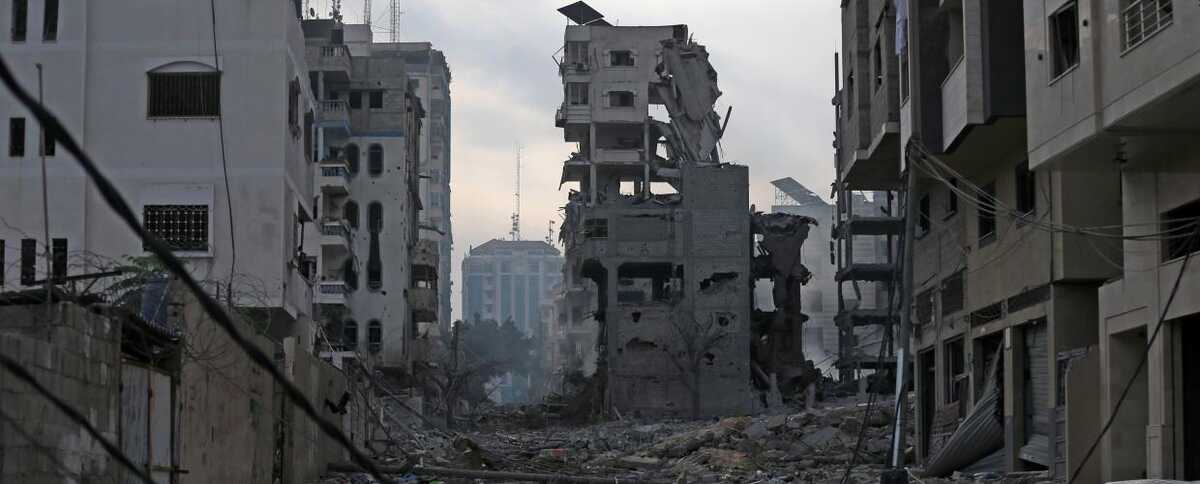
The Israeli occupation destroyed at least 12 huge towers containing hundreds of residential apartments. It also destroyed dozens of buildings, facilities and other homes, turning them into piles of rubble. It also bombed the Gaza Strip with tons of explosives and missiles, which led to the extermination of entire families and 44 citizens from the Shihab family alone, and the bombing of the homes above the heads of their owners, which led to human massacres.


Worst of all is that the occupation authorities will not allow any humanitarian aid to enter, as the Minister of Energy said before the release of all the Israelis held by Hamas. The United Nations Relief and Works Agency for Refugees (UNRWA) said that more than 340,000 Palestinians were displaced from the northern Gaza Strip and the shelters were crowded with them, and called for... 104 million dollars in urgent aid to Gaza and its people. The confrontation does not appear to be only between Israel and Gaza, but it has begun to extend practically and on the ground to the West Bank, where dozens of young men have been martyred over the past days in most governorates, including Jerusalem.


Red Crescent ambulance officer Murad Al-Saadi said that the occupation’s attacks on medical crews led to the killings of at least 11 ambulance officers and the departure of twenty vehicles from service due to being directly hit by fire from the occupation forces. Therefore, the Red Crescent crews organized a protest in front of the Red Cross office in Hebron. .


The occupation forces also carried out a massive arrest campaign in the West Bank and Jerusalem that affected dozens of citizens and imposed restrictions on worshipers in the blessed Al-Aqsa Mosque and prevented many from entering. Likewise, a citizen and his son from the town of Qusra were martyred by settlers’ bullets, in an attack on a funeral procession for four martyrs from the same village. A woman was murdered and her son was injured by bullets from the occupation forces that targeted a car they were in. Sporadic clashes also took place between the occupation forces and resistant youth in different parts of the West Bank, leading to multiple injuries on the Israeli side.


The bottom line is that we in the West Bank and Gaza are one people, and we have one hopes and a common destiny, no matter how different the days and the facts are. We were like that and we are like that in these days and in the future.

OPINIONS

Sat 14 Oct 2023 9:16 am - Jerusalem Time

How Hamas caught Israel by surprise and risked its future

Samuel Ramani

Samuel Ramani

Opinion Writer

Analysis: The scale of Hamas' attack caught the world by surprise, a culmination of the group's meticulous preparations and lost faith in advancing its goals through political means. But the gambit has plunged its survival into question.


In the early morning of 7 October, Hamas fired a rocket barrage of at least 3,000 missiles into Israel. In tandem with other Palestinian militant groups, such as Islamic Jihad, Hamas forces crossed the border between the Gaza Strip and Israel.


Upon arrival, they killed dozens of Israeli civilians and soldiers in Sderot and carried out killings at an outdoor music festival in the border kibbutz of Re’im. Around 1,300 Israelis were killed in total and at least 150 were taken hostage.


Hamas has presented several justifications for the unprecedented scale of its attack on Israel. Osama Hamdan, a senior Hamas spokesperson, claimed that it was a strike against Israeli settlers, who are “part of the occupation and part of the armed Israeli force”.


Mohammed Deif, the commander of Hamas’ military wing, the Izz ad-Din al-Qassam Brigades, linked the attack to Israel’s “desecration” of the Al-Aqsa Mosque in East Jerusalem, the killing by Israel of hundreds of Palestinians this year, and Israel’s obstinacy on prisoner exchanges.


"Hamas saw vulnerabilities in Israel's seemingly impregnable defenses and capitalized on them"


But regional factors also feature in Hamas’ justifications for the attacks. On 7 October, Hamas leader Ismail Haniyeh warned that Israel could not protect Arab states. Haniyeh’s comment was an implicit attack on the Abraham Accords, which saw Bahrain and the United Arab Emirates (UAE) normalize with Israel in 2020, and Saudi Arabia’s negotiations on normalizing with Israel. Deif claimed that Hamas’ actions would put an end to Israel’s air raids against Iranian and Hezbollah assets in Syria.


While these explanations reveal the sentiments that pushed Hamas towards unprecedented armed resistance, other factors also shaped Hamas’ course of action. Hamas saw vulnerabilities in Israel’s seemingly impregnable defenses and capitalized on them.


It also reflected Hamas’ rejection of diplomacy and belief in the superior effectiveness of large-scale military action. Now that Israel has embarked on a devastating full-scale war to target Hamas, the organization’s future is in serious jeopardy.


Why Hamas saw an opportunity to strike Israel

Even though Israel’s intelligence services are widely esteemed as amongst the world’s most effective, Hamas capitalized on critical vulnerabilities within them. As Israel had not faced a large-scale ground assault since the 1973 war, it was inadequately prepared for a ground attack. Israel invested extensively in cyber-capabilities and air defenses while under investing in terrestrial border defenses. 


Hamas capitalized on this vulnerability and prepared extensively to exploit it. It constructed a mock Israeli settlement in Gaza and practiced attacks against it. These preparations allowed Hamas to smoothly carry out a ground assault. The Qassami Engineering Corps reportedly laid explosives on wire fences and barriers and detonated them with ease. The al-Qassam brigades deployed a quadcopter drone over Israeli communication towers by the Gaza border and dropped an improvised explosive device on generators at the base of the towers. This allowed Palestinian militants to swiftly stream into Israel’s borders.


Hamas also believed that a combined ground, sea, and air offensive would catch Israel by surprise. This assumption proved correct. Dozens of Hamas militants briskly stormed Israeli beaches on motorboats and clashed with Israeli forces. While these militants kept Israel occupied at sea, other Hamas fighters entered Israel on paragliders, the first example of their military use anywhere in the world.


Even though paragliders are slow-moving and loud, they only needed to cover a short distance across the Gaza-Israel border and Israel did not have time to develop countermeasures.


In addition to exploiting Israeli defensive weaknesses, Hamas capitalized on Prime Minister Benjamin Netanyahu’s preoccupation with the occupied West Bank. Egyptian intelligence claims that it warned Netanyahu about an impending attack on Israel from the Gaza Strip but he downplayed the risk as the Israeli military was “submerged” in the West Bank.

While Israel denies these reports and the specificity of Egypt’s warnings is unclear, Hamas clearly saw Netanyahu’s diverted focus as an enabler of a surprise attack.


"The 7 October attacks underscore Hamas' complete loss of confidence in diplomacy and reversion to hardline militarism"


A loss of confidence in diplomacy

To corral domestic and international support for a potentially long war, Netanyahu declared “We have always known who Hamas is. Now the entire world knows. Hamas is ISIS.” The 1987 Hamas charter, which calls for Israel’s destruction and contains numerous anti-Semitic tropes, is often cited to provide context for its recent actions.

However, these assessments overlook Hamas’ long-standing involvement in diplomacy. Even though Hamas’ founder Sheikh Ahmed Yassin declared that Israel “must disappear from the map”, he also advanced proposals for a long-term ceasefire if Israel accepted 1967 borders.


In May 2017, the chairman of Hamas’ political bureau Khaled Mashal unveiled a new charter which claimed that Hamas was not a revolutionary movement and would accept a Palestinian state within 1967 borders. Prodded by Egypt, Hamas signed a ceasefire with Israel in May 2021 after its war on Gaza and refrained from large-scale violence even as Israeli Prime Minister Naftali Bennett delayed the prisoner exchange deal’s implementation.


The 7 October attacks underscore Hamas’ complete loss of confidence in diplomacy and reversion to hardline militarism. 

The failed 30 July talks between Hamas and Palestinian Authority President Mahmoud Abbas in Egypt was an early harbinger of this shift. At these negotiations, Haniyeh urged Palestinians to exploit the “window of opportunity” created by “unprecedented internal divisions in Israel” and to escalate its resistance.


The exact reasons for Hamas’ drastic shift away from diplomacy and small-scale escalations are unclear. It is possible that Hamas’ diplomatic involvement was always a time-buying measure. Ali Baraka, a senior Hamas official, claimed that Hamas tricked the international community into thinking that it was focused purely on administering Gaza and had delegated military activities to Islamic Jihad. Baraka claims that Hamas’ “rational approach” was a smokescreen for an eventual return to armed resistance.


It is also plausible that Hamas believed that smashing Israel’s aura of invincibility would convince it out of fear to compromise concerning ongoing settlement construction in the West Bank and the Gaza blockade.

This would prevent a repetition of the 2019-20 economic unrest in the Gaza Strip and further strengthen Haniyeh’s already advantageous position over Mahmoud Abbas in an eventual Palestinian election.

But Israel’s prosecution of a large-scale military intervention, which has already killed over 1,400 Palestinians, could render Hamas’ assessment a miscalculation of epic proportions. 


Hamas uncertain future 

As Israel embarks on a ground invasion of the Gaza Strip, which will cause huge civilian casualties, Hamas faces the prospect of losing power and outright destruction. 


Israeli airstrikes have already killed Hamas’ Minister of the Economy Jawad Abu Shamala and Hamas’ Head of Internal Relations Zakariya Abu Moammar. The assassination of much of Hamas’ senior leadership through airstrikes will likely accompany any Israeli ground invasion.


The extent of Hamas’ ability to resist an Israeli ground invasion is unclear. Hamas reportedly has between 30,000 to 50,000 rockets, which cost a mere $2,000 each to produce and could conceivably overrun Israel’s Iron Dome defenses again.

Iran’s Quds Forces and Hezbollah have reportedly trained Hamas in using readily available products, such as pipes, fertilizer, and sugar, for military purposes. This allowed Hamas to domestically produce Qassam rockets inside the Gaza Strip.


"Now that Israel has embarked on a devastating full-scale war to target Hamas, the organization’s future is in serious jeopardy"


Despite its versatility, Hamas has serious material constraints on its long-term capacity to resist Israel through military means. The tightening of the Gaza blockade could preclude Iran from smuggling Fajr-3 and Fajr-5 missiles to Hamas. There is also no indication that Hamas has precision-guided missiles or anti-ship missiles like the Houthis and Hezbollah.


Given these constraints, Hamas’ survival prospects are amplified by a multi-front war that drags Israel into conflict with pro-Iran militias in Syria, Lebanon or Iraq and bolsters international pressure for a truce.


While the scale and success of Hamas’ 7 October attack caught the world by surprise, it was the culmination of the group’s meticulous preparations and lost faith in advancing its goals through political means.


It is a gambit that has plunged its survival into question and could end its seventeen-year rule over the Gaza Strip.


Samuel Ramani is a tutor of politics and international relations at the University of Oxford, where he received a doctorate in 2021. His research focuses on Russian foreign policy towards the Middle East


Source: The New Arab


OPINIONS

Sat 14 Oct 2023 8:58 am - Jerusalem Time

Israel-Palestine: Why the failed status quo is unsustainable

Chris Doyle

Chris Doyle

Opinion Writer

Assessing the horror of events in Israel and Gaza, the deaths of so many civilians, and so much destruction, is difficult when everything changes hour by hour.

Yet as this crisis deteriorates, what is remarkable is how some simple truths seem to get lost. They require repeating.


This conflict did not start on 7 October. Tensions have been very high all year. The number of Palestinians killed so far in 2023 was the highest since the UN started keeping records.


Likewise, the levels of Israeli settler violence in the West Bank have soared, with an average of 99 attacks on Palestinians a month. Palestinians in both the West Bank and Gaza living under occupation and blockade do not experience calm. Israel’s occupation is itself an aggression.


But importantly, civilians are not targets. Regardless of whether Israeli or Palestinian; Jew, Christian or Muslim, non-combatants should never be targeted in war.

It is a simple proposition, one that also must be highlighted to those who continue, for example, to support the Russian and Syrian regimes. Likewise, a right to resist does not equal a right to target civilians. In this case, Hamas killed over 1,000 Israelis, mostly civilians. This is not legitimate. 


As Human Rights Watch and Amnesty International have stated quite rightly these are war crimes. These attacks are nothing to be celebrated and have been widely condemned. Likewise, taking civilians, including women and children hostage, and then threatening to kill them is plain and simple wrong.


One crime does not justify a crime in response. Each crime, each atrocity should be condemned regardless. Hamas’ attack, however, does not mean Israel can commit more crimes, and vice versa.


The same eternal and indelible legal provisions about civilians apply when Israel bombs and shells Gaza. The targeting of civilians is not permissible and Israel has to make every effort to ensure that civilians are not harmed.

As B’Tselem, the Israeli human rights organization pointed out, this has not been the case. The Israeli prime minister called for revenge, which is not acting in self-defense. On 10 October, an Israeli military spokesperson proclaimed that: “the emphasis is on damage rather than on precision”.


Civilian infrastructure must not be a target. Hospitals, schools, and universities are not legitimate places to bomb. According to Medical Aid for Palestinians, Israel has hit the International Eye Hospital in Gaza. The Ministry of Health reported that Beit Hanoun Hospital went out of service due to heavy shelling. Meanwhile, Gaza’s sole power station stopped working after the fuel needed for electricity ran out. 
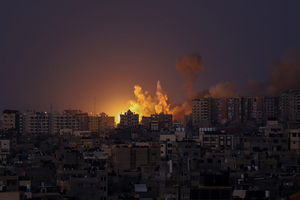

In previous Israeli military operations on Gaza, it has targeted other civilian infrastructure including Gaza’s power station. These are war crimes. The current bombardment is the most savage Israel has ever perpetrated against Gaza, worse even than in 2014. Palestinians have no shelters, no bunkers, and no Iron Dome anti-missile system to protect them.

Collective punishment is impermissible too. To be clear, the 2.3 million inhabitants of Gaza have endured the collective punishment of blockade for over 16 years. The Israeli Defense Minister Yoav Gallant on 9 October ordered for a siege to be imposed on Gaza and said that there would be “no electricity, no food, no fuel – everything shut down. We are fighting against human animals and are acting accordingly”.


Siege is a medieval instrument of warfare, a collective punishment, used in warfare recently in Syria, where it was rightly widely condemned. It must be when Israel does it too. The refusal of the British Foreign Secretary James Cleverly to condemn this in the media is a disgrace.

Starvation cannot be used as a weapon of war. Israel is doing so, and this must end. Instead, safe humanitarian corridors must be opened.


Blocking or suspending humanitarian or development aid to Palestinians living under occupation and blockade is the complete reverse of what should happen. Palestinians are not all Hamas, far from it.

Aid should be delivered on the basis of need. Palestinians in Gaza desperately required humanitarian assistance prior to 7 October, but those needs are many times greater now because of ongoing Israeli bombardments.


EU Commissioner Oliver Varhelyi announced there would be a suspension of EU aid to the Palestinians, though this was later corrected. EU aid is not allowed near Hamas, and there are some of the most stringent controls in any aid program to ensure this. This is punishing the innocent.


Palestinians in Gaza cannot flee, nor should they be forced to flee. Israeli Prime Minister Benjamin Netanyahu told Palestinians in Gaza to leave, triggering the obvious response, where to? Gaza is under an Israeli-Egyptian blockade. There is no port, no airport, and no safe route out of the strip. Israel has also bombed the Rafah border crossing with Egypt.  


Calling on Palestinians to flee does not mean that Israel can just bomb civilians who do not. It does not absolve Israeli commanders of their responsibilities.

Any Israeli attempt to force Palestinians to leave Gaza would risk the serious accusation of ethnic cleansing. They are Palestinians, whose home is in the occupied Palestinian territory that includes Gaza. They are not Egyptian.


Gaza is occupied. The falsehood that Israel’s occupation ended in 2005 with the Israel withdrawal from inside Gaza is still widely propagated. The UN is clear - that Gaza remains under Israeli occupation and therefore Israel as the occupying power has a duty to look after the population under occupation.

As long as Israel maintains control over the territory, it is the occupying power. It does so through controlling the air, sea, and land borders, the latter with Egypt. That Israel can cut off water and electricity should tell you just how such complete control is exercised.


Bringing the hostilities to a rapid conclusion is vital. A cessation of fighting is imperative. The risks of not doing so are catastrophic. This conflict could spread, with increased confrontations in the West Bank.

Worryingly, it could also lead to an escalation between Israel and Hezbollah. It could undermine stability in Jordan, Syria, and Egypt. Left to continue, who knows where it ends.


There is, let us be totally clear, no acceptable military solution to this. Hamas will not achieve freedom and rights for Palestinians through killing Israeli civilians or sending rockets across the border. Israel cannot forever maintain its occupation through force without consequences.

The only way forward is through a political solution, and the sooner the better. The more bloodshed and destruction, the harder this will be. International leaders must secure a credible political process, the like of which this conflict has never seen.


The end result has to be freedom for Palestinians from occupation and blockade, from the regime of discrimination that even the former head of Mossad has determined meets the definition of the crime of apartheid.


Only then will both peoples, Israeli and Palestinian have a chance to live in peace, dignity, and security.


Source: The New Arab

Chris Doyle is the director of CAABU (Council for Arab-British Understanding). He is a regular opinion writer and commentator on the Middle East and has organized and accompanied numerous British parliamentary delegations to the region.


ARAB AND WORLD

Sat 14 Oct 2023 8:50 am - Jerusalem Time

Israeli army: We intercepted Hezbollah drones


The Israeli army announced today, Saturday, that it had intercepted “Hezbollah” drones in southern Lebanon.


The occupation army spokesman, Yonatan Conricus, indicated that "the unidentified objects that were intercepted were drones sent by Hezbollah to Israel."


The Israeli army also said that it attacked a Hezbollah target in southern Lebanon during the night in response to sending marches and launching a surface-to-air missile.


The tensions on the Lebanese border come as the Israeli army continues, for the eighth day in a row, to target the Gaza Strip, which has been besieged since 2006, with intense air strikes that destroyed entire neighborhoods and left thousands of martyrs and wounded among Palestinian civilians.


PALESTINE

Sat 14 Oct 2023 8:47 am - Jerusalem Time

Red Cross: The forced deportation of Gaza citizens is contrary to international law

The International Committee of the Red Cross confirmed that the Israeli occupation's attempt to forcibly deport citizens from the Gaza Strip, and give them 24 hours to move to the south of the Strip, under a siege that deprives them of food, water, and electricity, is not consistent with international humanitarian law.


The committee explained, in a statement, that in light of the Israeli military siege, humanitarian organizations, including the International Committee of the Red Cross, will not be able to provide assistance to citizens, noting that the needs of the people of Gaza are very great, and humanitarian organizations must be able to increase relief operations.


The United Nations Human Rights Office had previously expressed its rejection of what the occupation authorities announced regarding the need for all citizens north of the Gaza Valley to move to the south of the Strip.


It said: The complete siege announced by the Israeli occupation is already leading to a humanitarian catastrophe in Gaza, as estimates indicate the displacement of more than 250,000 people, the cessation of the only electricity station from work, and severe water scarcity.


PALESTINE

Sat 14 Oct 2023 7:56 am - Jerusalem Time

For Ninth Day: Israeli war machine on Gaza claims lives 0f 2,329 + Palestinians

As Operation “Al-Aqsa Flood” - which was launched by the Palestinian resistance and led to the killing of 1,300 Israelis - enters its ninth day, the violent Israeli bombing of the Gaza Strip continues, leaving more than 2,329 martyrs and more than 9,000 injured, most of whom are women and children.


UN official warns that Palestinians are being subjected to "mass ethnic cleansing"


The United Nations rapporteur on human rights in the occupied Palestinian territories, Francesca Albanese, warned that Palestinians are exposed to a “grave risk of mass ethnic cleansing.”


The independent UN rapporteur said, in a statement, “There is a grave danger that what we are witnessing may be a repetition of the 1948 catastrophe and the 1967 setback, but on a larger scale. The international community must do everything to prevent this from happening again.”

ARAB AND WORLD

Fri 13 Oct 2023 11:01 pm - Jerusalem Time

Lebanese Mikati: Israel’s targeting of journalists is disgrace to its black record of killing and aggression

Lebanese Prime Minister Najib Mikati said that the Israeli occupation army’s direct targeting of journalists in its ongoing aggression on Lebanese territory is a new disgrace added to its black record of killing and aggression.


The Lebanese authorities announced that the Israeli bombing of areas in southern Lebanon led to the martyrdom of journalist Issam Al-Abdullah from Reuters and the injury of three other journalists, two of whom were from Al-Jazeera.

PALESTINE

Fri 13 Oct 2023 10:46 pm - Jerusalem Time

UN Chief: The situation in Gaza reached a new dangerous level

United Nations Secretary-General António Guterres said that the movement of more than a million people in Gaza, “through a densely populated war zone to the south of the Strip, where there is no food, water or shelter places, is very dangerous and may not be possible in some cases,” stressing that war has... rules.


Guterres added that the situation in Gaza has reached a new dangerous level, and that hospitals in southern Gaza have reached their maximum capacity and will not be able to receive thousands of new patients from the north.


According to the Secretary-General, the health system in Gaza is on the verge of collapse, noting that 11 health workers were martyred while performing their work, and that 34 attacks occurred on health facilities during the past few days.


He added that the entire Gaza Strip is facing a water crisis, as infrastructure has been damaged and electricity is not available to pumping and water desalination stations.


The Secretary-General emphasized that United Nations staff and partners are working around the clock to support the people of Gaza.


The Secretary-General stressed the need to ensure immediate humanitarian access throughout Gaza, to bring fuel, food and water to all those in need. “Even war has rules,” he said.

PALESTINE

Fri 13 Oct 2023 10:08 pm - Jerusalem Time

Israeli army confirms the presence of at least 120 prisoners in Gaza

The Israeli occupation army said on Friday that it had confirmed the presence of at least 120 prisoners in the Gaza Strip.


A few days ago, the Islamic Jihad movement said that it held more than 30 prisoners, while Hamas said that it had “dozens of prisoners of different nationalities” as a result of the “Al-Aqsa Flood” battle.


The Israeli occupation announced that about 1,300 people were killed and more than 3,300 were injured during the “Al-Aqsa Flood” operation. The Israeli army said that 258 of its officers and soldiers were killed during the “Al-Aqsa Flood.”


There are more than 5,000 Palestinian prisoners held under poor conditions in Israeli prisons and detention centers.

PALESTINE

Fri 13 Oct 2023 10:04 pm - Jerusalem Time

Türkiye: Forced displacement of the Palestinian people is “completely unacceptable”

“The Israeli army’s announcement that Palestinian residents living in northern Gaza should withdraw to southern Gaza within 24 hours is completely unacceptable,” the Turkish Foreign Ministry said.


Ankara added in a statement that “the forced displacement of the 2.5 million residents of Gaza, who were subjected to indiscriminate bombing for several days and deprived of electricity, water and food en masse in a very limited area, is a clear violation of international law and has no place.” In humanity.


It continued: "We expect Israel to immediately reverse this grave mistake, and to immediately stop its brutal and comprehensive actions against the civilian population in Gaza."

PALESTINE

Fri 13 Oct 2023 10:01 pm - Jerusalem Time

China Foreign Minister: We stand for peace, justice and human conscience on the Palestinian issue

Chinese Foreign Minister Wang Yi said on Friday that China stands for peace, justice, international law, the common aspirations of most countries and human conscience on the Palestinian issue.


The Chinese Foreign Minister's statements came in a joint press meeting following the 12th round of the high-level strategic dialogue between China and the European Union with the High Representative of the European Union for Foreign Affairs and Security Policy, Joseph Borrell.


"This round of conflict has led to significant civilian casualties and a sharp deterioration in the humanitarian situation," Wang said, noting that "China condemns all actions that harm civilians, and opposes any violation of international law."


Regarding the current situation, the Chinese Foreign Minister explained that "the highest priority is to reach a ceasefire, stop the conflict as quickly as possible, adhere to international humanitarian law, and fully ensure the safety of civilians."


He added: “All concerned countries must maintain calm and restraint, adhere to objectivity and justice, and make way for the United Nations to play its assigned role in resolving the Palestinian issue, in conjunction with the Security Council reaching practical measures,” noting that “China is in communication.” With the parties concerned.”


He continued: "We will actively participate in the emergency consultations in the Security Council, and support the call of UN Secretary-General Antonio Guterres to protect civilians," adding that China will also provide emergency humanitarian assistance to the Gaza Strip and the Palestinian National Authority through UN channels.

PALESTINE

Fri 13 Oct 2023 9:54 pm - Jerusalem Time

Israel threatens to bomb Al Awda Hospital in Jabalia

On Friday evening, the Israeli occupation threatened to bomb Al-Awda Hospital in Jabalia, demanding its evacuation.


Local sources in Gaza reported that an evacuation process was underway for patients and medical staff from the hospital, as all medical cases were being transferred to the Indonesian hospital.


These threats come in light of the catastrophic health and humanitarian conditions that the Gaza Strip is experiencing, where the entire health system is on the verge of collapse due to the power outage and the occupation’s failure to allow electricity, water and fuel to be delivered to the Strip since the beginning of the aggression seven days ago, while thousands of wounded are piled up in the corridors of hospitals and health centers that have no capacity. It stops for a moment to receive the wounded of the aggression.

PALESTINE

Fri 13 Oct 2023 9:45 pm - Jerusalem Time

Heavy displacement towards southern Gaza as heavy Israeli bombing continues

Thousands of Palestinians left in cars, motorcycles, donkey carts, and even on foot, accompanied by their children and carrying some of their belongings in plastic bags and some luggage, heading to the southern Gaza Strip after an Israeli order to evacuate.


On Friday, the Hamas movement, which controls the Gaza Strip, refused to evacuate the northern Strip, stressing, “We are steadfast on our land, in our homes, and in our cities... and there will be no displacement or deportation.”


PALESTINE

Fri 13 Oct 2023 9:45 pm - Jerusalem Time

Israeli authorities seize 36 dunums in Azzun

The Wall and Settlement Affairs Commission reported that the occupation authorities seized 36 dunums of citizens’ lands in the town of Azzun, east of Qalqilya.


The authority explained in a brief statement, this Friday evening, that the occupation authorities issued a military seizure order for military purposes targeting a total of 36 dunums, as shown in the maps, and will be allocated to building military fences and roads that prevent citizens from reaching the lands overlooking Nablus Street and adjacent to the town of Azzun.

PALESTINE

Fri 13 Oct 2023 9:43 pm - Jerusalem Time

Saudi Arabia confirms its categorical rejection of calls for forced displacement of Palestinians

The Kingdom of Saudi Arabia affirmed its categorical rejection of calls for the forced displacement of the Palestinian people from Gaza, and its condemnation of the continued targeting of defenseless civilians there.


In a statement issued by its Ministry of Foreign Affairs,, Saudi Arabia renewed its call on the international community to move quickly to stop all forms of military escalation against civilians, prevent a humanitarian catastrophe, and provide the necessary relief and medicine needs for the residents of Gaza, especially since depriving them of these basic requirements for a decent life is considered a threat. In violation of international humanitarian law, and will exacerbate the depth of the crisis and suffering that this region is witnessing.


Saudi Arabia called for “lifting the siege on the brothers in Gaza, evacuating injured civilians, adhering to international laws and norms and international humanitarian law, and advancing the peace process in accordance with the resolutions of the Security Council and the United Nations, and the Arab Peace Initiative, which aims to find a just and comprehensive solution, and establish an independent Palestinian state on the borders of 1967, its capital is East Jerusalem.

PALESTINE

Fri 13 Oct 2023 9:18 pm - Jerusalem Time

Israeli war machine claims lives of 1,869+ Palestinians in Gaza

For the seventh day in a row, the Israeli occupation forces continue to commit massacres in the Gaza Strip.


According to the latest statistics, the number of martyrs rose to at least 1,869 martyrs, and 7,500 were injured with various injuries, including 1,901 children and 1,185 women.


70 martyrs as a result of the occupation forces bombing a convoy of displaced people in Gaza


The government media office in Gaza announced an increase in the number of victims of the Israeli bombing of a convoy of displaced people in the Gaza Strip.


The office said in a statement that the number of victims of the Israeli bombing on the displaced convoy rose to 70 martyrs and more than 200 injured.


Earlier, the Ministry of Health in Gaza announced the death toll of more than 40 and 150 injuries as a result of the occupation targeting displaced people in the Gaza Strip, before announcing the new toll.


Areas in the Gaza Strip are witnessing a large displacement of civilians due to the violent occupation bombing.


The United Nations said that the Israeli army informed it of the need for 1.1 million Palestinians in Gaza to move to the south of the Strip within 24 hours, which received international reactions of rejection and condemnation.


Press sources said that the Israeli occupation forces launched heavy raids on the northwest of Gaza City, and on the Bureij refugee camp in the central Gaza Strip.


The sources indicated that 10 martyrs were recovered after an Israeli bombing of a house in Khan Yunis, south of the Gaza Strip.


Earlier last night, rescue teams and residents recovered 17 martyrs as a result of the bombing of the home of the Abu Madin family in the Bureij camp in the central Gaza Strip.


Rescue teams also recovered 3 martyrs, including a girl, after bombing the home of the Abu Jazar family, west of Rafah, in the southern Gaza Strip.


According to figures issued by the United Nations, the number of displaced people in the Gaza Strip who were forced to flee their homes due to the ongoing Israeli bombing rose by Thursday evening “by 84,444 people, bringing the total number of displaced people to 423,378 displaced people.”


The number of Israeli deaths as a result of Operation “Al-Aqsa Flood” rose to 1,300, while 3,391 were injured since the start of the operation, with 406 injured people still hospitalized, the condition of 105 of whom was described as serious, 184 as moderate, and 117 as minor.

PALESTINE

Fri 13 Oct 2023 9:10 pm - Jerusalem Time

“Tik Tok” tightens its grip on Palestinian content

The social media network "Tik Tok" joined the platforms hostile to Palestinian content, after the European Union warned the company against allowing the publication of "illegal content" or "false information" regarding the war waged by the Israeli occupation on the Gaza Strip.


“Your platform is extensively used by children and teenagers,” European Digital Commissioner Thierry Breton wrote in a letter to Xu Zhizhu, head of TikTok. “You have a special obligation to protect them from violent content (...) which appears to be spreading widely on your platform without any measures.” "Private security."


He added in the message, which was published on the BlueSky and


Addressing the head of the platform owned by the Chinese ByteDance Group, he continued, "Given that many users, especially minors, resort to your platform as a source of information, an appropriate distinction must be made between reliable sources and terrorist propaganda."


The Israeli occupation has been waging a severe war on the Gaza Strip for a week now, and bloody massacres have wiped out entire families.


Similar to the letter he sent on Tuesday to the head of “X” Elon Musk and on Wednesday to the head of “Meta” (Facebook, Instagram) Mark Zuckerberg, the European Commissioner reminded the head of TikTok of his platform’s duties with regard to supervising posts and removing “illegal content.”


These duties have become binding on digital platforms in the European Union under new European legislation related to digital services that came into effect at the end of August.


Many social media platforms, such as Facebook, Instagram, and X, restrict Palestinian content, going as far as banning, freezing accounts, and closing pages permanently.


PALESTINE

Fri 13 Oct 2023 9:06 pm - Jerusalem Time

Israeli settler shoots a Palestinian from zero range, wounding him critically

A settler opened fire on a young Palestinian man from zero range, today, Friday, wounding him critically, in the village of Al-Tuwani, located in Masafer Yatta, south of the occupied West Bank.


A video clip published by the human rights organization "B'Tselem" showed the settler advancing with an M16 weapon towards a group of young men who were trying to confront a terrorist attack by settlers on their village, before an unarmed young man intercepted him and tried to stop him, but the settler shot him in the stomach from zero range. Which led to him falling to the ground, where he was critically injured.


For days now, the settlers, under the protection of the occupation army, have continued massive terrorist attacks on several towns in the West Bank, resulting in the displacement of many communities, especially those located in the east of the West Bank, where the settlers of the terrorist organization “Hill Youth” are most widespread.


In the town of Qasra, south of Nablus, 6 Palestinians were killed by bullets from the occupation and settlers, on Wednesday and Thursday, while it appears that the occupation allowed the settlers to open fire on citizens to prevent escalation.


Three Palestinians were killed in Qusra on Wednesday, and during their funeral on Thursday, settlers attacked the funeral and opened fire randomly on the mourners, leading to the death of a citizen and his son.


Settlers launched terrorist attacks on Bedouin communities in the eastern West Bank, during the past two days, and stole their property after preventing residents from taking their belongings while fleeing to safe areas.