
OPINIONS

Thu 04 Jun 2026 1:29 pm - Jerusalem Time

A New Future, A New Path


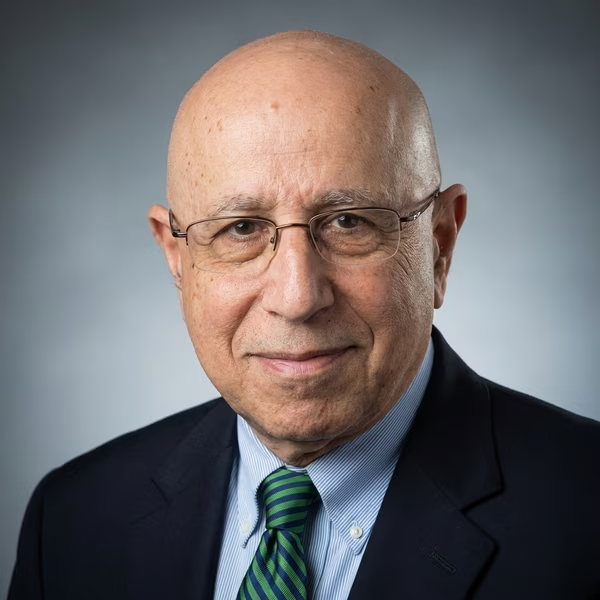
Gershon Baskin

There are moments in the life of nations when the old political language no longer works, old leadership no longer inspires, and old excuses no longer convince anyone. Palestinians are living through such a moment. So are Israelis. The region stands before a rare opening to turn tragedy into a new political horizon.The war in Gaza must genuinely end not only with the silence of guns but with the birth of a new political reality. Otherwise, it will become another chapter in the same failed history: destruction, mourning, promises of reconstruction, more occupation, more extremism, more despair, and then the next explosion. That is not a future. That is a trap.Two political arenas now require immediate work.The first is the Palestinian arena. The Palestinian people must hold new national elections – presidential and legislative – as Palestinian Authority President Mahmoud Abbas promised in his letter to French President Emmanuel Macron and Saudi Crown Prince Mohammed bin Salman one year ago.According to that promise, elections must take place within one year of the end of the war in Gaza. They should happen before the next Israeli elections. Palestinians must not arrive at Israel’s next political turning point with the same exhausted leadership, the same paralyzed institutions, and the same claim that “there is no Palestinian partner.”Those elections must include Palestinians in Gaza, the West Bank, and East Jerusalem. These are not three separate political realities. They are one integral territorial unit – the territory of the future State of Palestine. Any political process that treats Gaza as separate will not create a Palestinian state. It will create another temporary arrangement that collapses under the weight of its own dishonesty.A new Palestinian election law must be passed before elections are held. The principle must be clear: one authority, one law, one gun. No armed group, militia, organization that maintains weapons outside state authority, or party that supports armed struggle should be allowed to run. Democracy cannot be the license to undo itself. It cannot be built under competing guns.This is not a demand made for Israel’s benefit. It is a Palestinian national interest. A state that does not control its weapons is not a state. A government that cannot enforce the law equally on all is not a government. A political system in which armed factions compete with elected institutions is not democracy. It is a formula for civil conflict, corruption, foreign manipulation, and permanent weakness.The Palestinian people deserve better: a democratic, accountable, modern political system that serves citizens rather than factions, protects freedoms, encourages pluralism, and opens a real horizon for independence, prosperity, and peace. Women, young people, civil society, the private sector, professionals, and local leaders must not be decoration in the next Palestinian political system. They must be at its center.The recent Fatah Central Committee elections proved, once again, Fatah’s irrelevance as a vehicle for the future. The old guard reelected itself. The same faces, habits, political culture, and inability to speak to the younger generation, to Gaza, to the diaspora, to women, to professionals, and to people who want dignity and honest government rather than slogans and patronage.Fatah was once a national liberation movement. Today it looks like the party of yesterday. It still carries historical legitimacy, but that is not enough to govern the future. A movement that cannot renew itself cannot renew a people. A leadership afraid of democracy cannot build a democratic state. A party whose internal elections reproduce the past cannot lead a national rebirth.That is why the Palestinian people need new directions, new parties, and a new language of national responsibility. They need movements that speak honestly about freedom, democracy, rule of law, economic development, equality, nonviolence, regional integration, and peace. They need politics that does not confuse militancy with strategy, slogans with achievement, or survival of the leadership with liberation of the people.That is also why ideas such as “New Path,” founded by a large group of representatives of the younger generations like former Fatah activist Samer Sinijlawi, matter. A new Palestinian political path must be built on the conviction that the Palestinian people deserve a democratic, just, and modern system – one that serves citizens rather than factions; protects freedoms; rejects violence as a political tool; and seeks independence through diplomacy, regional partnership, and accountable governance.The European Union must use its influence on Abbas and the Palestinian Authority; Arab countries must do the same. Egypt, Jordan, Saudi Arabia, Qatar, the UAE, and Morocco should speak with one voice: Palestinian national renewal is essential, not just cosmetic political and institutional reforms. Elections must be held. The law must be changed. The old system must open the door to a new generation.The second arena is regional and international. Qatar, Saudi Arabia, the UAE, Egypt, and Jordan must coordinate a serious political campaign toward US President Donald Trump. Recent events have shown that Trump has influence over Israeli decision-making that no other world leader has. No Israeli prime minister – Benjamin Netanyahu or anyone else – can ignore a determined American president, especially if backed by the Arab region and a clear package of security, normalization, development, and peace.The next Israeli government will not voluntarily end the Israeli-Palestinian conflict, accept a Palestinian state, or dismantle permanent occupation. It will move only if there is a powerful external framework that makes the price of refusal higher than the price of agreement. That framework must come from Washington, but it must be pushed, shaped, and supported by the Arab region.The Arab states should tell Trump directly: The time has come to turn points 19 and 20 of his own plan into an action plan. A “credible pathway” to Palestinian self-determination and statehood cannot remain a phrase in a document. A “political horizon” cannot remain diplomatic decoration. These words must become a timetable, a mechanism, and a binding political process.The future Palestinian state must be part of a broader regional architecture: demilitarized, deradicalized, democratic, and developed. It must live alongside Israel within a regional system of security cooperation, economic development, diplomatic relations, and mutual recognition. This is about a new Middle East in which Israeli security and Palestinian freedom are interdependent realities.Palestine will never be free if Israel does not have security. Israel will never be secure if the Palestinians do not have freedom. That must guide the next phase.This will not happen by itself, by Israeli generosity, or by more international statements. It will happen only if Palestinians, Arabs, Europeans, Americans, and peace-minded Israelis act together with urgency and clarity.The sequence is clear. End the war in Gaza for real. Pass a new Palestinian election law based on one authority and one gun. Build new Palestinian political forces. Hold Palestinian elections in Gaza, the West Bank, and East Jerusalem. Push Trump to move Israel toward a real two-state agreement. Embed that agreement in a regional security and economic architecture.Make the promise of Palestinian statehood real – not someday, not after another generation of suffering, but within a defined political process that begins now. Somewhere in that process, Israel will also hold elections and, hopefully, remove the disastrous Netanyahu-Bezalel Smotrich-Itamar Ben-Gvir regime.The region does not need another slogan. It needs a new path. The Palestinians do not need recycled leadership. They need a new future. Israelis do not need another illusion that the conflict can be managed forever. They need to understand their security depends on Palestinian freedom.A new future is possible. But it will not be given to us. It must be made. And it must begin now.
ARAB AND WORLD

Thu 04 Jun 2026 1:23 pm - Jerusalem Time

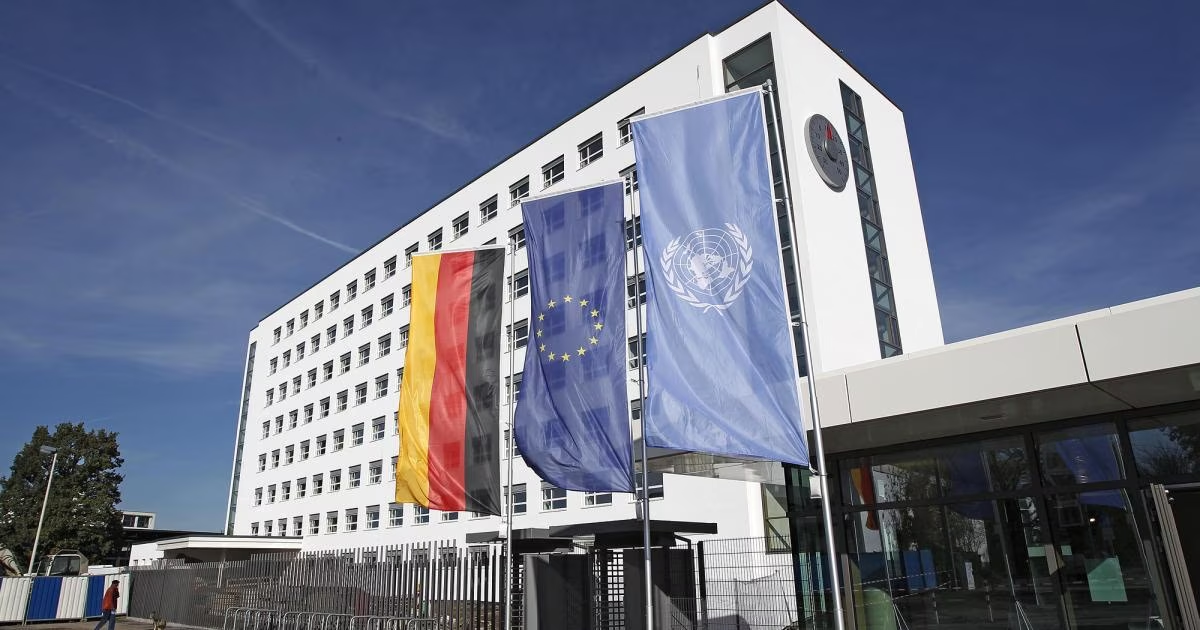
For the first time in its history.. Germany loses the race for non-permanent membership in the Security Council

The halls of the United Nations General Assembly witnessed a major diplomatic surprise, as Germany failed to secure a non-permanent seat on the International Security Council for the term extending between 2027 and 2028. This failure came after fierce competition within the Western European and Other States group, where Berlin was unable to garner enough votes to surpass its competitors on the old continent.

According to the ballot results announced by the international organization, Portugal garnered 134 votes, while Austria received 131 votes, granting them the right to represent the European group in the Council. In contrast, Germany's tally stopped at only 104 votes, which represents its first electoral loss in this race since it began its ambitious participation to be present at the center of international decision-making.

Germany, which represents the largest economy in the European continent and a prominent member of the G7, is considered one of the basic pillars of regional and international security and politics. Despite its long history of occupying this seat for six previous terms, the recent voting results reflected shifts in the balance of power and support within the 193-member General Assembly.

In a related context to the elections, Zimbabwe succeeded in securing the seat allocated to the African continent after obtaining the support of 182 countries, benefiting from being the sole candidate from the continent. Trinidad and Tobago also secured representation for the Latin American and Caribbean region by obtaining 181 votes in a ballot that saw no significant competition for this geographical seat.

As for the Asian group, matters remained pending a second round of voting after none of the candidates managed to decide the outcome from the first round. The Philippines and Kyrgyzstan are competing for the seat allocated to the continent, amid international anticipation for what the upcoming decisive rounds will yield to complete the structure of non-permanent members for the next phase.

It is scheduled that the five countries that will be finally chosen will begin their official duties on January 1, 2027, where they will replace Pakistan, Somalia, Greece, Denmark, and Panama. These countries will join the list of current non-permanent members whose membership ends at the end of 2027, namely Bahrain, Colombia, Latvia, Liberia, and the Democratic Republic of Congo.

This shift comes at a sensitive time when the United Nations faces increasing pressure to reform the Security Council and expand the representation of developing countries and major non-permanent states. Germany has been one of the most prominent advocates for this reform for many years, but its recent failure may cast a shadow over its diplomatic efforts aimed at strengthening its leadership role within the international institution.

These results are a diplomatic surprise for Germany, which has held a non-permanent seat on the Security Council during six previous terms and continuously calls for the reform of the international system.

ARAB AND WORLD

Thu 04 Jun 2026 1:23 pm - Jerusalem Time

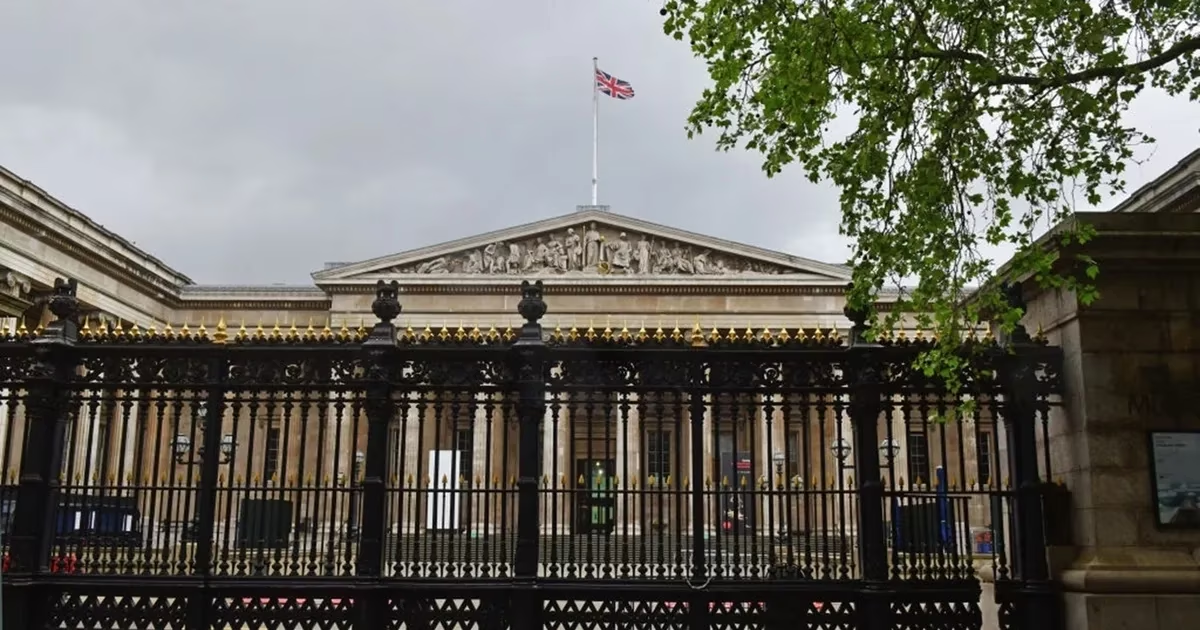
British Museum postpones lecture on 'Jewish History' amid fears of protests

The international cultural scene witnessed widespread controversy following the British Museum's decision in London to postpone an academic lecture dedicated to 'Ancient Jewish History'. This step comes amidst escalating global boycott indicators against the occupying state at both official and popular levels, leading observers to consider the decision a reflection of the international climate rejecting the occupation's policies, even in aspects that appear purely academic or historical.

Israeli security affairs expert, Uzi Rabi, considered what happened at the British Museum a momentous event that goes beyond a mere scheduling glitch. Rabi explained that the museum is not just a lecture hall, but a global cultural institution and a temple of memory and antiquities, noting that postponing the discussion of the ancient 'Kingdoms of Israel and Judah' reflects the conflict's shift from the contemporary political sphere to a struggle over the origin of the historical narrative.

Israeli sources indicated that this postponement represents a kind of 'cultural strangulation' that does not rely on direct censorship orders or judicial decisions, but rather stems from a general atmosphere imposed by popular pressure. These sources believe that venerable cultural institutions now prefer to avoid holding events related to Jewish or Israeli identity for fear of disruption by protesters opposing the occupation's policies and the ongoing war on the Gaza Strip.

In the context of justifying the position, it is believed that the British Museum management seeks to protect its staff and public from any potential security tensions that might accompany the event. However, Israeli criticism sharply rebuked this approach, considering that the true test of culture lies in the ability to withstand 'external noise' rather than succumbing to threats, which raises questions about who has the right to determine what is said within the halls of global museums.

Hebrew reports claimed that the message conveyed to Jews in Britain through this measure indicates that the dissemination of their culture has become conditional on the approval or silence of others. Analysts claimed that turning a lecture on ancient Near Eastern history into a 'security event' reflects a crisis in Western society that has begun to move away from the traditional Israeli narrative, and subjects history to 'political filtering' resulting from the current conflict in the Palestinian territories.

Observers believe that this development is not just a fleeting incident, but part of a broader context of avoiding support for the occupation in major Western capitals, including London. This incident confirms the growing criticism directed at Israel in international academic and cultural forums, where crimes committed against the Palestinian people have become an obstacle to passing any activities that attempt to promote the Israeli narrative, even if they are cloaked in the guise of ancient history.

Postponing this lecture means that Israel is facing cultural strangulation, as a venerable institution prefers to postpone a historical event for fear of threats from opponents.

PALESTINE

Thu 04 Jun 2026 1:23 pm - Jerusalem Time

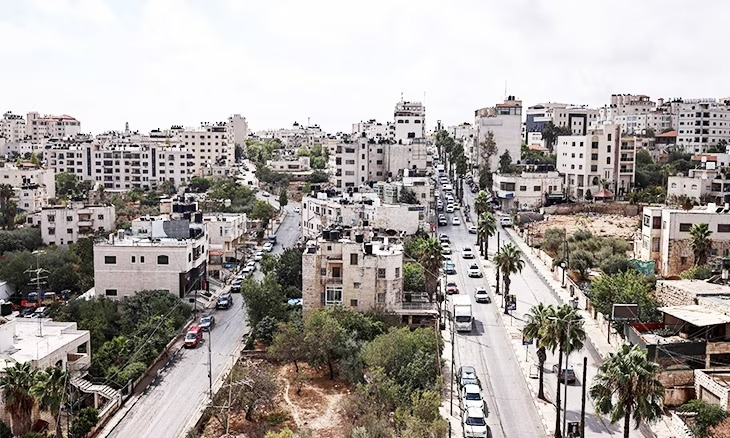
Settlement plan to seize historical lands between Sebastia and Al-Masoudiya in Nablus

The area located between the towns of Sebastia and Al-Masoudiya, northwest of Nablus city, is facing a new settlement threat, as the occupation authorities seek to confiscate vast areas of private agricultural land. Farmer Jawad Ghazal stands as a witness to this encroachment, expressing his shock at the decision to transform his land, inherited from his family, into a settlement park serving settlers and preventing its legitimate owners from accessing it.

Sources reported that the occupation uses the pretext of tourism projects and public parks as a cover to impose its full control over archaeological and agricultural sites in the Nablus countryside. The towns of Sebastia and Al-Masoudiya are among the most targeted areas due to their historical significance, and residents fear that these projects will isolate Palestinian villages and stifle the urban and agricultural expansion of the indigenous population.

Speaking about the daily suffering, Ghazal affirmed that farmers in that area live in a constant state of anxiety due to repeated attacks by the occupation army and settlers. He pointed out that he personally was subjected to abuse and severe beating about a year ago while on his land, considering that these practices primarily aim to intimidate Palestinians and push them to voluntarily leave their properties to facilitate settlement expansion operations.

Observers warned that the establishment of the settlement park would paralyze the movement of farmers and deprive dozens of families of their sole source of livelihood, which depends on the bounty of this land. This step is considered part of a systematic policy to change the demographic and geographical character in the northern West Bank, threatening to cut off geographical communication between the Palestinian towns surrounding Nablus city.

Despite the continuous threats, the residents of the area cling to their historical right to their lands, affirming their continued steadfastness in the face of Judaization schemes. Farmers appealed to the international community for the necessity of intervention to stop the theft of lands that is taking place under misleading tourism pretexts, stressing that this land represents their identity and memory that cannot be relinquished, no matter the sacrifices.

This land is part of our lives and our identity, and we will not give up our right that we inherited from our fathers and grandfathers, no matter the pressures.

ARAB AND WORLD

Thu 04 Jun 2026 1:23 pm - Jerusalem Time

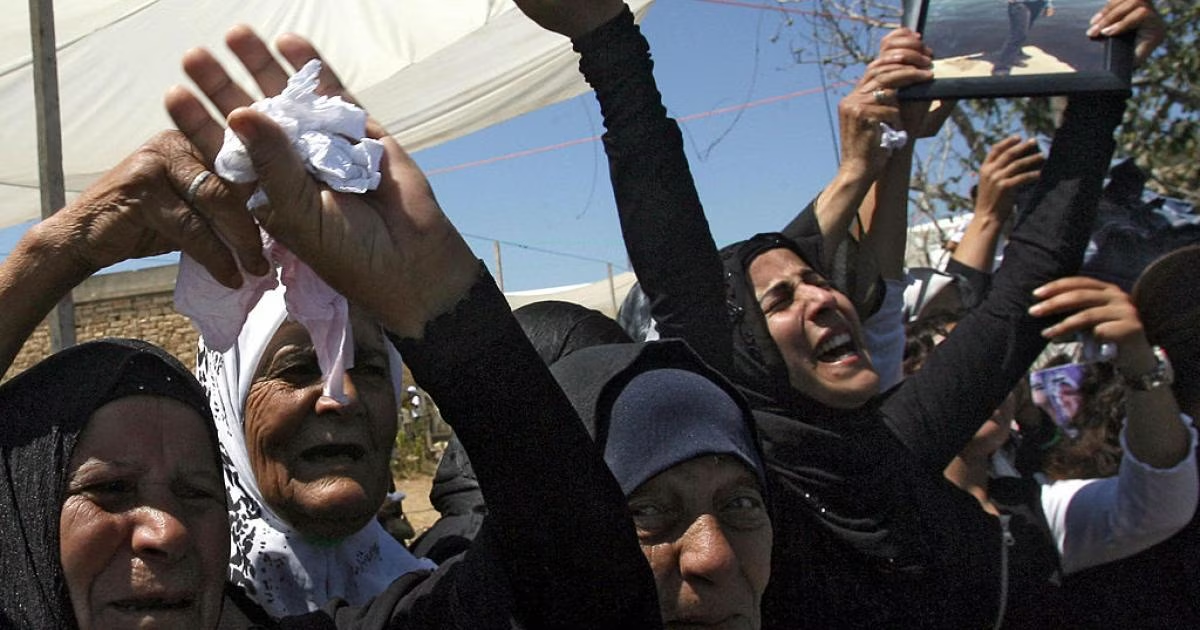
Marwahin Massacre 2006: When Occupation Missiles Targeted White Flags and Children's Bodies

The massacre in the border town of Marwahin, which occurred on July 15, 2006, remains a living testament to the brutality of the Israeli occupation during the July War. On that day, the forced displacement route from the village towards the city of Tyre turned into a mass execution site for civilians, for whom raising white flags above their simple truck offered no protection.

The tragedy began when the occupation army issued strict orders to the residents of Marwahin to evacuate their town immediately under threat of intense shelling. Faced with this threat, the residents initially tried to take shelter in a UN facility, but circumstances prevented them from staying there, forcing them to risk taking the rugged displacement route.

The displaced boarded a 'pickup' truck belonging to a citizen nicknamed 'Abu Kamel', and children filled the back of the truck, clearly visible to any reconnaissance aircraft. Despite witnesses' affirmations of white flags being raised, symbolizing their civilian identity, the occupation's missiles did not hesitate to tear apart the bodies of those on board at the intersection of the town of Tayr Harfa.

This treacherous attack resulted in a horrific massacre that claimed the lives of 23 civilian martyrs, including 14 children and 7 women, according to documentation by international human rights organizations. Entire families were annihilated in this targeting; the Al-Abdullah family lost 13 of its members, while 6 members of the Ghannam family were martyred in a matter of moments.

Marwahin village is located in the Tyre district, atop Mount Balat overlooking northern occupied Palestine, and is inhabited by about 3,000 people from the 'Al-Qleitat' clan. This village is considered one of the sensitive border points that has faced repeated aggressions, but the 2006 massacre remained the deepest wound in the memory of its residents and South Lebanon in general.

Survivors recount painful details of those moments, where the truck's engine broke down minutes before the targeting, making it an easy target for Israeli malice. While 'Umm Kamel' survived because she chose to stay in a neighboring village, she lost her husband and grandchildren who had come to spend their summer vacation in their peaceful village.

The occupation forces were not content with the initial shelling; they prevented rescue and civil defense teams from reaching the site for long hours by targeting anything that moved. The bodies of the martyrs remained in the open for a period before being transported and temporarily buried in a mass grave in the city of Tyre, to later return to the soil of Marwahin after the cessation of aggression.

This massacre comes within the context of the July War, which erupted after Hezbollah's capture of two Israeli soldiers on July 12, 2006. Israel then launched a comprehensive aggression that lasted 33 days, causing massive destruction to Lebanese infrastructure and leading to the martyrdom of about 900 citizens and the injury of thousands.

Historical reports indicate that the Israeli aggression that year was not merely a reaction, but a premeditated military operation aimed at breaking the will of the Lebanese. However, the Israeli 'Winograd' Committee later concluded that the war constituted a major strategic failure for the military and political establishment in Tel Aviv.

Combat operations ended on August 14, 2006, following the issuance of UN Resolution 1701, which stipulated a cessation of hostilities and an expansion of UNIFIL's mandate. Despite the silence of the guns, stories like the Marwahin massacre continued to remind the world of the occupation's blatant violations of international humanitarian law.

Documenting these massacres in the 'Unforgettable Memory' files aims to preserve the Palestinian and Lebanese narrative in the face of attempts to erase it. The massacre in Marwahin is not just a number in the records of war, but a story of children slaughtered while dreaming of returning to their homes in peace.

Marwahin borders the villages of Al-Zaloutiyeh, Shehin, and Ramiya, forming part of the western sector that witnessed the fiercest confrontations and aggressions. The relationship of the people of these villages with their land remains strong, despite their proximity to Israeli settlements built on stolen Lebanese and Palestinian lands such as 'Zar'it'.

Every year, the people of the South remember their victims with tears and prayers, affirming that the right to justice does not expire. The images of the funerals of the Marwahin martyrs, which filled the streets of Tyre and the village later, remain an icon of Lebanese steadfastness in the face of a killing machine that does not distinguish between a child and a fighter.

Marwahin today, with all its pain and hope, remains a witness to a pivotal stage in the history of the Arab-Israeli conflict. Through the sacrifices of its people, it confirms that white flags may be raised in a plea for peace, but in the eyes of the occupation, they are merely a signal to identify new targets for shelling.

The white flags raised above the displaced persons' truck did not deter the occupation army from committing one of the most heinous massacres of the July War.

PALESTINE

Thu 04 Jun 2026 1:23 pm - Jerusalem Time

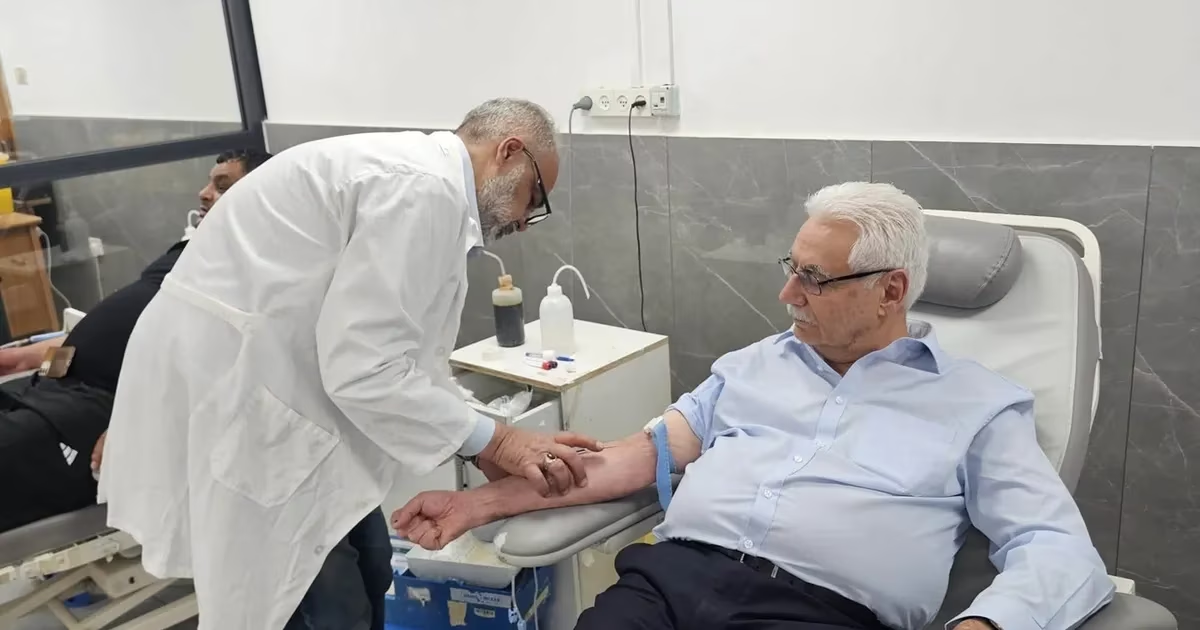
Clearance Crisis Suffocates Health Sector: Depletion of Hundreds of Medicines Threatens Lives of Thousands of Patients in Palestine

The Palestinian Ministry of Health has issued an urgent distress call, warning of a real danger threatening the lives of thousands of patients in the West Bank and Gaza Strip. In an official statement, the Ministry clarified that central warehouses are suffering from a severe shortage of hundreds of essential medicines and medical supplies, placing the health system before an unprecedented challenge that could lead to the cessation of vital services.

Official bodies attribute this escalating crisis to the continued detention of Palestinian clearance funds by the Israeli occupation authorities, which are taxes collected by Tel Aviv on behalf of the Authority. The value of these detained funds has exceeded five billion dollars, as Israel has refused to transfer them for over a year, causing a near-complete paralysis of the general budget and limiting its ability to meet its obligations to suppliers.

According to statistical data issued by the Ministry, 726 types of medicines and medical consumables have reached zero stock in warehouses, including emergency medicines and essential treatments. Reports indicate that 180 types of essential medicines out of 520 have completely run out, which portends the suspension of scheduled surgical operations and a decline in the quality of healthcare provided in government hospitals.

Cancer patients are the most affected group by this crisis, with about 4,000 patients facing an imminent threat to their lives due to the absence of treatment protocols. The Ministry revealed the depletion of 50 types of oncology drugs out of 97 types allocated for this purpose, meaning that more than half of the patients are deprived of their chemotherapy doses and supportive treatments essential for their continued lives.

The crisis has not stopped at medicines only but has extended to laboratories and specialized medical consumables, with 79 types of laboratory materials and 265 medical consumables running out. This severe shortage has led to widespread disruption in diagnostic and surgical services, exacerbating the suffering of patients who rely on dialysis sessions and chronic treatments that require precise and continuous medical follow-up.

Informed sources confirm that clearance funds represent the backbone of the Palestinian economy, accounting for up to 68% of total public revenues. The detention of these funds for more than 15 months has led to a sharp decline in the ability to pay dues to local and international pharmaceutical companies, causing a severe slowdown in supply operations and strategic stock reaching critical levels that threaten the complete collapse of the health sector.

The lives of thousands of patients, including more than 4,000 cancer patients, are now threatened due to the depletion of hundreds of types of medicines and medical consumables from our warehouses.

ARAB AND WORLD

Thu 04 Jun 2026 1:23 pm - Jerusalem Time

Israeli raids target southern Lebanon amid sharp division in Tel Aviv over ceasefire agreement

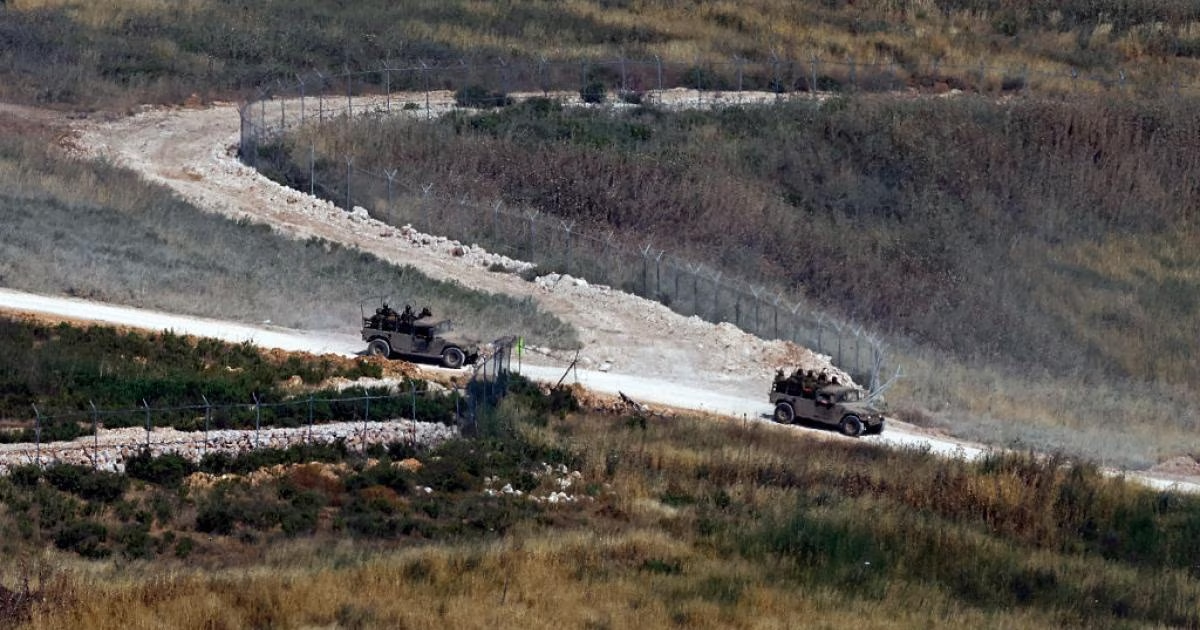
Israeli occupation drones intensified their aerial raids this Thursday morning, targeting several towns and villages deep in southern Lebanon, just hours after leaks about a conditional ceasefire agreement reached under American auspices. Field sources reported that the shelling hit civilian cars and vital sites in the Nabatieh district, resulting in civilian casualties and extensive material damage.

In details of the attacks, an Israeli drone targeted a car on the Zifta-Al-Numairiya road, injuring three people with varying degrees of severity, who were subsequently transferred to the hospital. The raids also hit the Kafr Tibnit roundabout and the emergency intersection between Kafr Rumman and Haboush, in a field escalation that reflects the occupation's insistence on continuing military operations despite international diplomatic efforts.

For its part, the Israeli occupation army confirmed in an official statement the continuation of its operations within Lebanese territory, claiming that the goal is to remove what it described as threats directed against its citizens. This stance raises major questions about the seriousness of commitment to any ceasefire understandings recently announced in Washington, portending a new round of escalation.

On the internal political front in Israel, National Security Minister Itamar Ben-Gvir launched a scathing attack on the agreement, describing it as a 'grave mistake' that would allow Hezbollah to regain its military strength. Ben-Gvir demanded an emergency meeting of the ministerial cabinet ('the War Cabinet') to vote against the agreement, considering the Lebanese state a partner in military operations and not to be trusted.

Ben-Gvir accused Prime Minister Benjamin Netanyahu of succumbing to pressure from the American administration, indicating that Netanyahu's advisors are leading him towards wrong strategic choices. The extremist minister stressed the necessity of saying 'no' to the United States in critical moments, warning that Hezbollah would return next time more dangerous and powerful if this agreement were passed.

In a related context, Israeli Security Minister Yisrael Katz stated that Israeli forces would not withdraw from the positions they had seized in southern Lebanon, specifically the strategic Beaufort Castle area. Katz clarified that military operations would continue against Hezbollah's infrastructure, emphasizing that field action would remain in place based on Israel's perceived security necessities.

Journalistic sources indicated that Katz tried to balance defending the government's decision, based on the importance of the alliance with Washington, with asserting no concession of field gains. This contradiction in Israeli statements reflects the extent of the division within the ruling coalition on how to deal with the northern front and the required security guarantees.

On the Lebanese side, civil defense bodies in the Tyre region issued urgent appeals to displaced persons, urging them to wait and not return immediately to their border villages. The bodies warned of the dangers of war remnants and unexploded bombs at raid sites, emphasizing the need to await official statements that define safe return routes to preserve the lives of citizens.

In the field, Hezbollah announced the execution of a series of military operations during the night hours, targeting gatherings of occupation soldiers in the areas of Yahmar al-Shaqif, Debbine, and al-Qantara. The party also confirmed its confrontation with an advanced Israeli drone of the 'Hermes 450' type in the western sector's airspace, forcing it to leave Lebanese airspace, as part of what it described as defending Lebanese territory.

The agreement is unenforceable, the Lebanese state is not trustworthy, and Hezbollah has not left the area south of the Litani River.

ARAB AND WORLD

Thu 04 Jun 2026 1:22 pm - Jerusalem Time

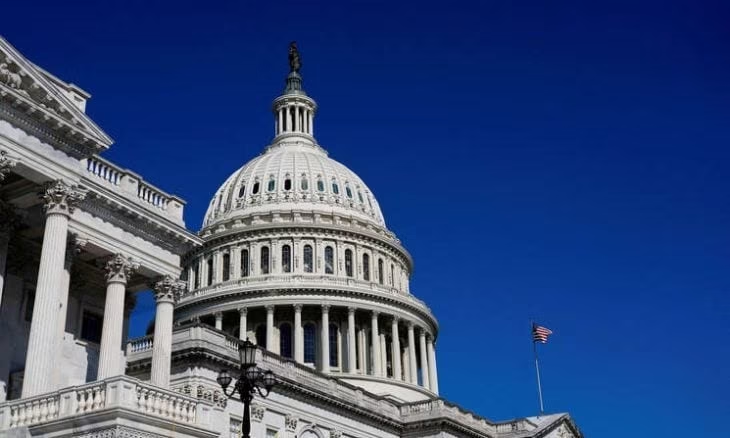
In a historic move, the US House of Representatives votes to restrict military action against Iran

The US House of Representatives set a historic precedent by passing a resolution explicitly calling for a halt to military action against Iran, a move observers considered a direct rebuke to the war policies pursued by President Donald Trump's administration. This move reflects a growing tension within Congress regarding the executive branch's right to unilaterally make decisions of war and peace, away from legislative oversight.

The voting results showed a sharp division, with the resolution passing by a majority of 215 votes to 208 against. The session witnessed a notable breakthrough within the Republican Party after four representatives joined the Democratic bloc. These representatives, Thomas Massie, Brian Fitzpatrick, Tom Barrett, and Warren Davidson, broke party lines to support restricting the president's military powers in the Iranian file.

These developments come at a sensitive time when Washington is witnessing a deep constitutional debate about the scope of the White House's powers in managing external military operations. Lawmakers from both parties are demanding the necessity of establishing controls to prevent a slide into large-scale armed conflicts without obtaining prior and clear authorization from the legislative authority, especially in light of the mutual threats with Tehran.

On another front, the Senate made progress in a parallel legislative path related to the financial settlement bill, where the majority voted 53 to 46 to move forward with discussions. This week is expected to see a series of open votes on amendments to the bill, which primarily aims to secure the necessary funding for US immigration agencies.

In internal electoral affairs, the Iowa primary elections sparked a major surprise with Republican Representative Randall Feenstra's loss to businessman Zach Lahn in the gubernatorial race. The importance of this result lies in the fact that Feenstra had direct and strong support from President Donald Trump, raising questions about the extent of Trump's influence on party bases.

The Democratic Party also made additional gains in Iowa, where Representative Josh Turk secured a comfortable victory over his progressive opponent, Senator Zach Wahls. This victory boosts Democrats' hopes of potentially shifting the balance of power in the Senate during the upcoming general elections, by snatching seats historically counted on the other side.

As for California, uncertainty still hangs over the results of major races, including the state governor and Los Angeles mayor, with reports indicating that vote counting may take several days. However, current Mayor Karen Bass's qualification for the runoff in the mayoral race has been confirmed, amidst anticipation of the final results in this pivotal state.

This vote reflects the escalating division within Congress regarding the administration's powers to use military force without clear authorization.

ARAB AND WORLD

Thu 04 Jun 2026 1:22 pm - Jerusalem Time

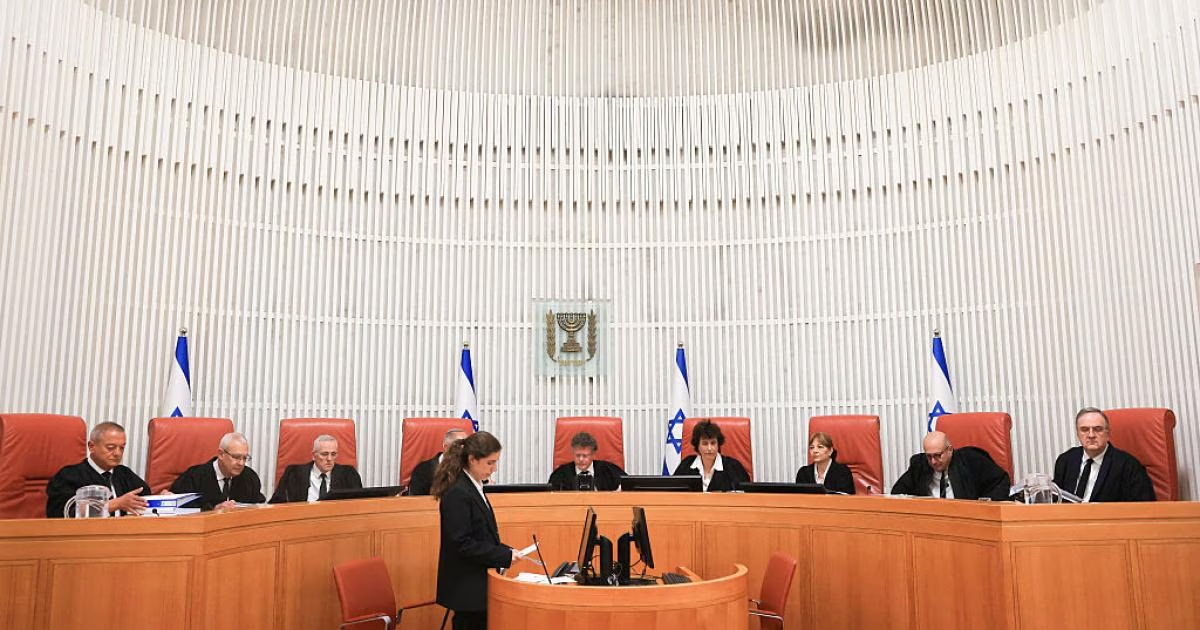
Israeli Supreme Court rules against legality of preventing Red Cross visits to Palestinian prisoners

The Israeli Supreme Court, on Wednesday evening, issued a unanimous and definitive ruling that the government's policy of preventing the International Committee of the Red Cross (ICRC) from visiting Palestinian prisoners in prisons and detention centers is illegal. The court ordered the immediate cancellation of this ban, considering that the measures imposed since October 7, 2023, lack the necessary legal basis for their continuation.

Media sources reported that the court accepted a petition challenging the strict restrictions imposed by the Israeli authorities following the outbreak of the war on the Gaza Strip, which included depriving prisoners of communication with the international committee and preventing the latter from being provided with any information regarding their health conditions or places of detention. Deliberations indicated that these restrictions remained in effect even after Israel recovered a number of its detainees in the Strip.

In the reasoning for the ruling, drafted by Justice Dafna Barak-Erez, the court stressed that the executive authority failed to provide convincing practical or legal justifications to support the continued isolation of prisoners from international oversight. The judge clarified that the court had given the government multiple deadlines to update its position in line with field changes, but the government's responses remained insufficient to prove the legitimacy of this ban.

The judicial body affirmed that the primary pretext initially relied upon by the government was linked to the issue of Israeli detainees in Gaza, but it considered that this link does not constitute a permanent legal basis for depriving Palestinian prisoners of their fundamental rights. The court concluded that the adopted policy starkly contradicts applicable laws and international obligations imposed on the occupying authorities.

For its part, the International Committee of the Red Cross (ICRC) promptly welcomed this judicial decision, affirming its full readiness to resume its humanitarian tasks within Israeli detention centers as soon as possible. The committee clarified in press statements that this ruling restores the اعتبار (credibility/importance) of its pivotal role in monitoring detention conditions and ensuring the treatment of detainees in accordance with international standards approved by the Geneva Conventions.

The ICRC stressed that the Fourth Geneva Convention grants it an inherent right to visit prisoners and conduct private interviews with them without supervision, which represents a fundamental guarantee to prevent violations. It indicated that it would immediately begin coordinating with the relevant Israeli authorities to arrange a schedule of field visits to prisons holding thousands of Palestinian detainees, including those from the Gaza Strip.

Human rights organizations and prisoners had initiated a petition to the court in February 2024, protesting the complete absence of the Red Cross's role and the escalating reports of ill-treatment. This legal action came amidst a wave of international and local criticism of the tragic conditions inside prisons, which witnessed an unprecedented deterioration in the level of medical and living services provided to prisoners.

These judicial developments come at a sensitive time, as the Israeli Prison Service faces increasing accusations of adopting retaliatory policies against detainees since Itamar Ben-Gvir took over the Ministry of National Security. These pressures coincide with human rights reports documenting systematic torture in army detention camps, making the resumption of Red Cross visits a vital step to document and stop these violations.

The government failed to provide a legal basis to justify the continuation of this policy, despite being given repeated opportunities to present its justifications and update its position.

PALESTINE

Thu 04 Jun 2026 9:24 am - Jerusalem Time

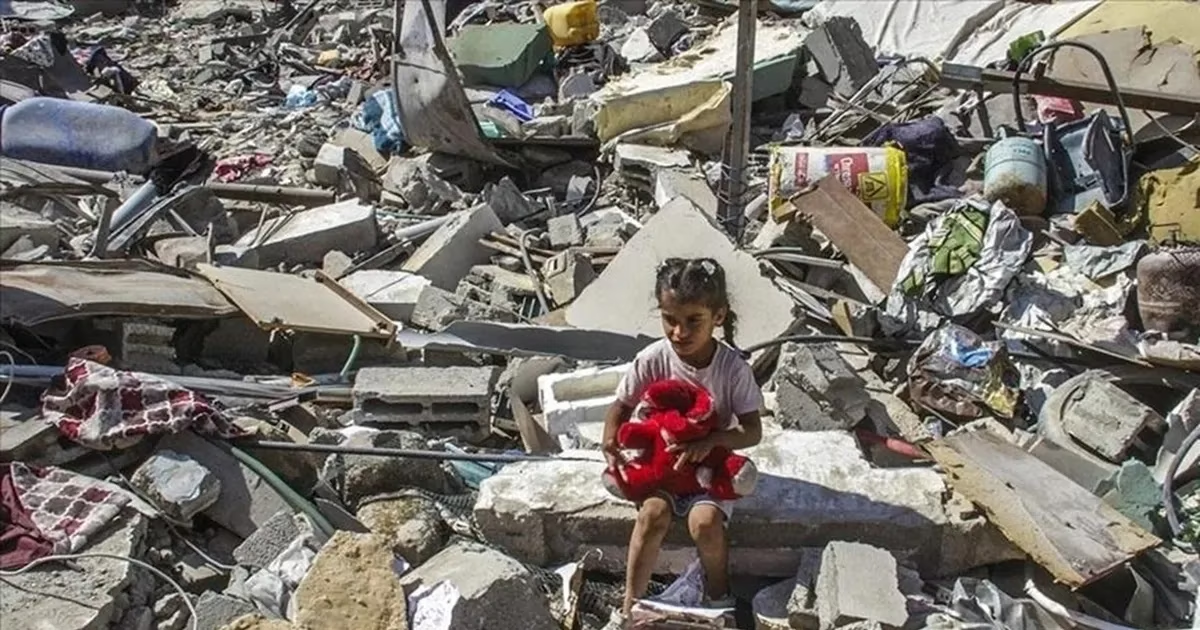
Displacement Plans and Occupation Expansion: Gaza Faces a Strategy of 'Gradual Strangulation'

Amidst the international community's preoccupation with complex regional issues, Israeli Prime Minister Benjamin Netanyahu issued escalating statements paving the way for a new phase of aggression against the Gaza Strip. Netanyahu confirmed that his forces, which previously controlled half of the Strip's area, have expanded their influence to 60%, with clear instructions issued to the army to advance and control 70% of the total area, in a clear violation of previous understandings.

The statements did not stop at the military field dimension but extended to demographic objectives, as Security Minister Israel Katz tweeted, confirming the government's commitment to preventing any civilian or military control by Hamas. Katz clearly indicated that the 'voluntary displacement' project for Palestinians is still ongoing and will be implemented at the time and in the manner Israel deems appropriate, reflecting a complete disregard for international positions rejecting displacement.

This harmony between Netanyahu and Katz reveals a strategy of 'strangling Gaza' through gradual occupation, where the former undertakes the task of military expansion on the ground, while the latter promotes the ultimate goal of emptying the land of its inhabitants. These moves come at a time when Israel continues to use starvation, denial of medicine, and control over the movement of individuals as essential tools of war to subdue the popular base.

On the ground, statistics issued by the Ministry of Health indicate a dangerous escalation in the number of casualties, with May recording 119 martyrs, the highest toll since October. Since the signing of what is known as the 'Trump Agreement,' 933 Palestinians have been martyred and thousands more injured, proving that political agreements have not stopped the killing machine but have turned it into a daily attrition at a calculated pace.

International media reports indicate that what Israel calls 'voluntary migration' is nothing but a systematic ethnic cleansing operation, as forcing residents to leave after destroying their homes and infrastructure and depriving them of food cannot be considered a free choice. The choice between death under bombardment or exile is the epitome of coercion and compulsion practiced against unarmed civilians.

Within the military establishment, voices are emerging pushing for a comprehensive military decisive action, with generals like Yaniv Asor leading a push for a wide-ranging offensive aimed at completely disarming the resistance within a few weeks. Despite preoccupation with other fronts, this option remains strongly on Netanyahu's table, especially with the approaching 2026 election calculations and his need to achieve a decisive 'victory image.'

Multiple strategies are being discussed within Israeli leadership circles, prominent among them the 'gradual plan' which proposes dividing the Strip into geographical and demographic squares to be dealt with separately. This plan is based on evacuating residents from north to south and destroying all remaining signs of life in the evacuated areas to ensure no return, while opening security routes for inspection and external displacement.

The occupation authorities deliberately obstruct any reconstruction projects or the establishment of an organized administrative authority within the Strip, with the aim of perpetuating chaos and making Gaza an uninhabitable place. This approach aims to push families to leave for fear of their children's future, which represents the core of the Israeli plan to liquidate the Palestinian issue through its Gaza gateway.

In contrast, Israeli security elites believe that time is on their side in the absence of real international or regional pressure, and with the army controlling all crossings and entry points to the Strip. Nevertheless, the steadfastness of the people of Gaza on their land remains the sole and primary obstacle to the implementation of these infernal plans, which requires Palestinian and Arab support that goes beyond verbal statements.

The current phase is the most difficult and decisive test for the Palestinian cause, as Netanyahu races against time to transform the temporary occupation into a permanent reality imposed by force of arms. The bet remains on the ability of the Palestinian people in Gaza to thwart displacement plans, considering that their presence on their land is the only key to protecting the future of Palestine and its national identity.

Katz affirmed Israel's intention to expel Palestinians under the guise of 'voluntary migration,' but the choice between humanitarian catastrophe or exile is not a voluntary choice but ethnic cleansing.

PALESTINE

Thu 04 Jun 2026 7:15 am - Jerusalem Time

Occupation withdraws Division 252 from northern Gaza and deploys Division 99 to continue operations

The Israeli occupation army announced on Wednesday the withdrawal of military Division 252 from areas in the northern Gaza Strip, after four months of intensive military operations. These operations caused massive destruction to residential neighborhoods and infrastructure, leaving widespread waves of forced displacement of Palestinian residents in those areas.

Sources reported that the withdrawn division, which comprises more than 10,000 soldiers, has completed its assigned combat missions in the north. A statement by the occupation army clarified that Division 99 will take over in the next phase, to follow up on military activities and ensure continued field control in the area that witnessed fierce confrontations.

The occupation army command claimed that Division 252 forces, during their presence, managed to destroy weapons depots and observation points, in addition to targeting above-ground and underground infrastructure. However, military sources did not provide any independent field evidence to support these claims, amid continuous obfuscation regarding the true extent of losses or details of the remaining military deployment within the Strip.

In a related context, Israeli Prime Minister Benjamin Netanyahu revealed his field ambitions, indicating that Israeli forces currently control about 60% of the Gaza Strip's area. Netanyahu affirmed that the military plan aims to raise this percentage to 70% in the coming period, which reflects the occupation's intention to expand the area of permanent military presence.

These field movements come at a time when reports indicate that Israel had previously announced its control over 53% of the total area of the Strip. The discrepancy in the announced figures shows the extent of confusion or continuous changes in field plans that follow partial withdrawals linked to political understandings or international pressures, including what is known as the former US administration's plan.

Regarding human losses, the toll of the ongoing aggression since October 7, 2023, continues to record catastrophic numbers, with Palestinian medical sources reporting the martyrdom of about 73,000 and the injury of 173,000 others. Statistics confirm that the vast majority of victims are women and children, amid destruction affecting nearly 90% of vital and civilian facilities in Gaza.

Despite the official announcement of a ceasefire that came into effect in October 2025, the field reality indicates the continuation of military operations and intermittent shelling. The occupation also continues to impose strict restrictions on the entry of humanitarian and medical aid, exacerbating the humanitarian crisis and leading to more civilian casualties daily due to hunger and lack of healthcare.

Division 252 completed its mission in the northern Strip, and Division 99 will take over the continuation of military operations in the area during the next phase.

PALESTINE

Thu 04 Jun 2026 7:15 am - Jerusalem Time

Erosion of purchasing power of salaries.. Decline of the dollar doubles the burdens of families in Gaza

The effects of the decline in the dollar exchange rate against the shekel in the Gaza Strip are no longer confined to economic figures, but have extended to deeply impact the living conditions of thousands of families. These families primarily rely on salaries, aid, and external financial transfers denominated in the American currency. With the ongoing war and the deterioration of income sources, the actual value of these funds is eroding against the requirements of the local market, which deals in shekels.

Citizen Wael Al-Hosari recounts the suffering of his family, which used to depend on the income of his wife and daughter from working in international institutions. The decline in the exchange rate has led to an increasing inability to cover basic needs. Al-Hosari explained that the family was forced to forcibly reorder its priorities, by reducing expenses to a minimum and focusing only on food and medicine, while postponing the purchase of any other necessities that were considered normal before the crisis.

In another humanitarian context, the story of child Imran emerges, who needs continuous physical therapy sessions due to an injury he sustained during the war. His mother, Sumaya Salman, says that a donor from outside the Strip covers the treatment expenses through dollar transfers. However, the decline in the exchange rate has reduced the family's ability to provide full sessions, transportation, and medicines, threatening a health relapse for the injured child.

For his part, economic analyst Ahmed Abu Qamar confirmed that the decline of the dollar has direct effects on a wide segment of Palestinians, especially given the local market's reliance on three main currencies. He pointed out that this decline leads to the erosion of personal savings and weakens the purchasing power of employees who receive their salaries in hard currency, especially with the insane rise in commodity prices within the Strip.

Abu Qamar explained that the degree of impact varies among social groups, with the greatest harm falling on families awaiting remittances from abroad or who have dollar-denominated bank savings. In contrast, families who receive their income in shekels and have dollar-denominated obligations may benefit, but the overall framework indicates a decrease in real income and an increase in economic pressures on a society already exhausted by the ravages of war.

In light of these fluctuations, economic experts advise the necessity of diversifying savings and not relying on a single currency to avoid sudden losses. The option of distributing savings among the dollar, shekel, and gold remains the most effective way to reduce risks, although employees who receive their salaries in dollars find themselves with very limited options to face this difficult living reality.

The decline of the dollar was not just a change in currency prices, but turned into a daily burden that affected the standard of living and family stability.

PALESTINE

Thu 04 Jun 2026 7:14 am - Jerusalem Time

A delegation from Ein Arik Village Council visits the Chinese Embassy in Ramallah

A delegation from Ein Arik Village Council met with the Embassy of the People's Republic of China to the State of Palestine today, Wednesday. They were received by Li Xin, Chargé d'Affaires of the Chinese Embassy in Palestine, and embassy advisors. The two sides discussed joint cooperation and ways to enhance it to serve the local community.

The delegation, which included village council members Randa Al-Halawa and Mahmoud Shuqair, and advisory committee members Husni Shilo and Abdullah Awad, and was attended by Mr. Muhammad Alloush, briefed them on the general situation of the town and current needs in the field of infrastructure and projects.

The meeting also touched upon the fierce attack carried out by settler militias in the villages west of Ramallah, specifically Ein Arik village, where settler militias assault citizens and prevent them from accessing their lands, in addition to the spread of pastoral settlement outposts that have begun to control vast areas of the village's lands.

The delegation informed Mr. Xin about the situation in the town and briefed him on the projects that the council is implementing with many specialized bodies, most notably the preservation of heritage sites in the old town, as well as agricultural projects.

The delegation noted that Ein Arik represents a microcosm of the homeland in coexistence, brotherhood, harmony, and joint work among all its people.

They appreciated all the efforts made by the People's Republic of China in supporting the State of Palestine in international forums, as well as its continuous support for the institutions of the State of Palestine and the local community, and the depth of relations between the two countries and the two brotherly peoples.

Chargé d'Affaires Li Xin welcomed the visiting delegation and expressed full readiness for cooperation and support from the People's Republic of China for some of the town's needs, in addition to including them in the upcoming budgets for projects supervised by the embassy for funding and implementation.

Both sides affirmed their keenness to continue cooperation and joint work in the areas of training and programs available through the embassy, contributing to the development of human resources skills.

At the end of the meeting, the village council delegation presented a commemorative gift to Ambassador Li Xin.

PALESTINE

Thu 04 Jun 2026 7:14 am - Jerusalem Time

Netanyahu: Hamas disarmament to be coordinated with US 'Peace Council'

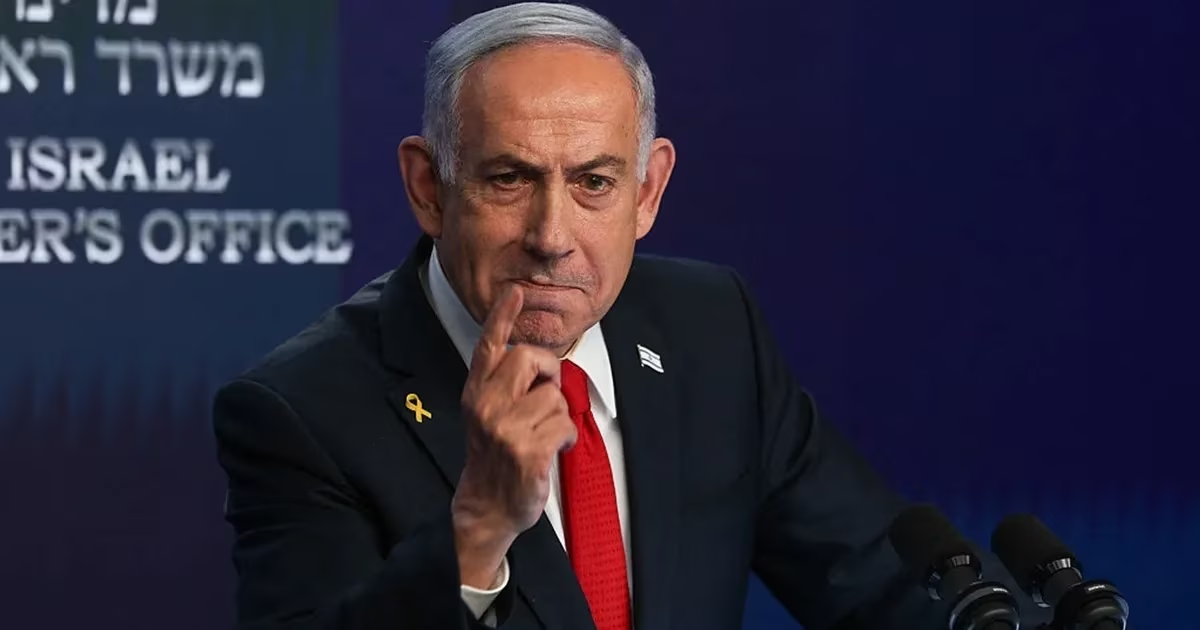
The head of the Israeli occupation government, Benjamin Netanyahu, revealed the mechanisms for coordination with the American side regarding the future of the Gaza Strip, indicating that decisions related to disarming the Hamas movement and the timing of implementing these steps will be made through direct consultations with the "Peace Council." Netanyahu clarified that this council, established by US President Donald Trump last year, is responsible for overseeing the stages of a gradual ceasefire.

Netanyahu affirmed, in an interview with American media, that his government is in the process of determining the nature of the upcoming moves in the Strip in cooperation with the newly established American body, stating: "We will make the decision regarding the timing and type of actions in Gaza in agreement with the Peace Council." These statements come amidst the absence of any immediate official comment from the Council or the US administration regarding the mechanisms of this field cooperation.

It is worth noting that the US administration had approved in mid-January a comprehensive structure for managing what it called the "transitional phase" in the Gaza Strip. This structure includes four main bodies: the Peace Council, the Gaza Executive Council, in addition to the National Committee for Gaza Management and the International Stabilization Force, which are the bodies aimed at shaping the new security and political reality in the Strip.

We must decide when to take action in Gaza, and we will determine its type with the Peace Council.

PALESTINE

Thu 04 Jun 2026 7:14 am - Jerusalem Time

The Health Sector in the West Bank Faces a 'Death Sentence': 80% of Medications Depleted and Debts Haunt the Ministry

The health sector in the West Bank is going through its most critical phase in decades, as medical sources revealed a severe deterioration in medication stocks, affecting the most vulnerable groups. The sources confirmed that the current crisis directly impacts the lives of thousands of patients, amid the Ministry's inability to provide essential treatments due to suffocating financial pressures. Official bodies are preparing to issue detailed statements clarifying the extent of the catastrophe, which could lead to a complete halt of vital services in government hospitals.

Figures released by the Ministry of Health indicate a huge gap in supplies, as the number of available medication types has decreased from 1260 to only 260 types on the shelves. This severe shortage has left more than a third of the essential medicines list with zero stock, including half of cancer medications and delicate medical consumables such as surgical sutures. The Ministry asserts that Israel's continued withholding of Palestinian clearance funds is the direct cause of this paralysis affecting the core of the medical system.

On the ground, the cries of patients and their families have grown louder, as those suffering from chronic diseases such as Crohn's disease and ulcerative colitis face the risk of slow death due to the interruption of biological treatments. Specialist doctors confirm that the absence of these medications, especially 'Infliximab', leads to severe and irreversible health relapses. Palestinian families are living in daily terror, unable to purchase alternatives from the private market, which is also suffering from a scarcity of supplies.

In parallel with the medication shortage, human resources are suffering from a severe salary crisis that has led to a comprehensive strike by doctors and nurses in the public sector since the beginning of May. Services in more than 400 government clinics and hospitals have been limited to emergency and life-saving cases only, exacerbating the suffering of citizens. Observers believe that this strike is a natural result of accumulated financial dues and the inability of employees to continue providing services under harsh living conditions.

In an attempt to contain the situation, the Ministry of Health formed a crisis cell to discuss ways to secure the minimum medical supplies with suppliers and private companies. These efforts face the obstacle of accumulated debts exceeding 2.6 billion shekels, including huge amounts owed to pharmaceutical companies that have lost their ability to import from abroad. The health scene in the West Bank remains dependent on the ability to release the withheld funds, amid warnings that lives do not wait for budgets or postponed political solutions.

All available solutions will not stop the crisis as long as Israel continues to withhold clearance funds, which represents a death sentence for Palestinian patients.

PALESTINE

Thu 04 Jun 2026 7:14 am - Jerusalem Time

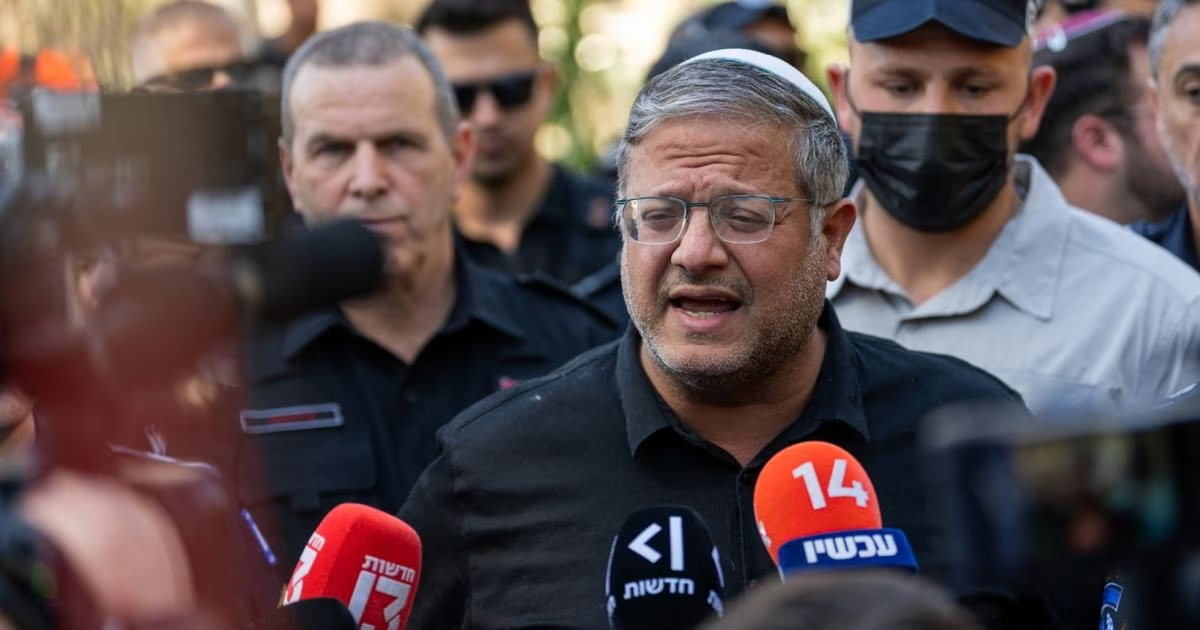
Ben Gvir Vows to Silence Mosque Minarets: Israeli Legislative Moves Spark Widespread Palestinian Anger

Israeli National Security Minister Itamar Ben Gvir has once again stirred controversy and provocation after appearing in a video clip vowing to work towards silencing mosque minarets in the occupied Palestinian territories. The extremist minister claimed that the sounds of the Adhan (call to prayer) disturb him and prevent him from sleeping, affirming his determination to change this reality that has existed for decades.\n\nThese statements come in a heated political context, as the far-right government seeks to impose legal and on-the-ground restrictions on the religious and cultural manifestations of Palestinians. Observers considered Ben Gvir's remarks not merely a personal opinion, but a reflection of governmental trends aimed at curtailing freedom of worship under regulatory pretexts.\n\nOn the legislative front, the Israeli Ministerial Committee for Legislation approved a bill proposed by Ben Gvir's "Jewish Power" party, which aims to regulate the use of loudspeakers in places of worship. The new law requires obtaining prior and complex licenses before broadcasting the Adhan via external loudspeakers, placing mosques at the mercy of security decisions.\n\nThe draft law includes strict punitive provisions, granting the Israeli police broad powers to raid mosques and immediately stop loudspeakers if they are deemed to "violate" standards. The law also allows for the confiscation of sound equipment and the imposition of hefty fines that could exceed $17,000 on the authorities responsible for the mosque.\n\nFor his part, the Imam of the blessed Al-Aqsa Mosque, Sheikh Ekrima Sabri, affirmed his absolute rejection of these measures, which he described as aggressive towards Islamic holy sites. Sabri stressed that the Adhan is an integral part of faith and Sharia, considering that whoever is bothered by the sound of truth should leave the land rather than try to change its identity.\n\nIn a related context, the Chief Justice of Palestine, Mahmoud Al-Habbash, described the Israeli moves as a "declaration of religious war" explicitly targeting the essence of Palestinian existence. Al-Habbash indicated that these desperate attempts fall within a systematic policy to uproot Palestinians from their land and erase their historical and religious connection to their holy sites.\n\nThe reactions were not limited to the official level but extended to ignite social media platforms, where thousands of Palestinians and Arabs expressed their overwhelming anger at Ben Gvir's statements. Activists considered these steps to accelerate the state of explosion in the region, emphasizing that tampering with the Adhan is a transgression of all red lines.\n\nAnalysts believe that the timing of this law reflects the far-right's desire to escalate religious confrontation to win over hardline electoral bases. Concerns are growing that the final approval of the law in the Knesset could lead to a new wave of protests and confrontations in Jerusalem and the occupied interior.\n\nPalestinian territories are witnessing a state of alert amid the continuation of policies targeting national and religious identity, as citizens view the Adhan as a symbol of steadfastness and survival. Popular events confirm that attempts to silence minarets will be met with widespread popular resistance that refuses to compromise on the most basic rights to practice religious rituals.\n\nIn conclusion, the draft law awaits final readings in the Israeli Knesset, amidst international and regional warnings of the repercussions of tampering with the status quo in the holy cities. Ben Gvir's statements remain fuel that ignites the fuse of tension in a region already suffering from continuous on-the-ground escalation and suffocating political pressures.\n\nThe Adhan is an Islamic law and worship, in which the occupation authority has no right to interfere, and whoever claims it bothers them should leave.

OPINIONS

Thu 04 Jun 2026 7:14 am - Jerusalem Time

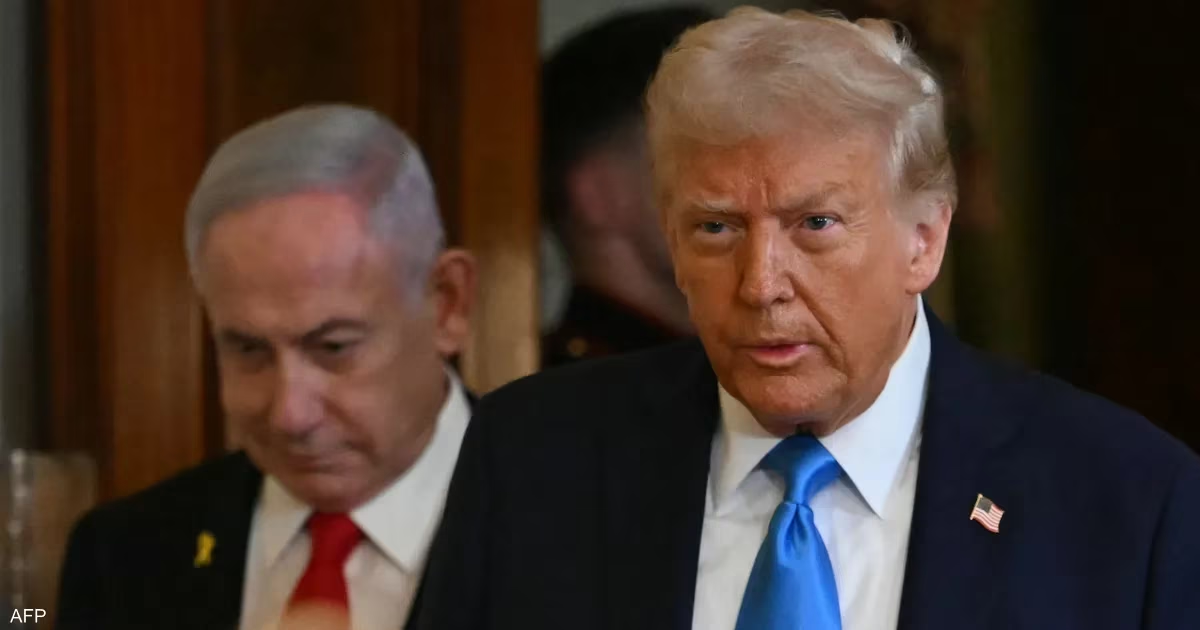
Massie: Trump-Netanyahu rift is mere talk unless Washington stops military aid to Israel

Washington Message

Washington – Said Arikat – 6/4/2026

News Analysis

Republican Representative Thomas Massie reopened the debate about the nature of the relationship between Washington and Tel Aviv, and the seriousness of the American administration in exerting any real pressure on the Israeli government, following reports of a sharp tension between US President Donald Trump and Israeli Prime Minister Benjamin Netanyahu against the backdrop of Israeli military escalation in Lebanon and continued regional tension.

Massie's statements came in response to media reports that Trump had directed harsh and unprecedented criticism at Netanyahu during a phone call between them, expressing his dissatisfaction with Israeli military policies that threaten to expand the scope of the conflict in the region. However, the Republican representative, known for his anti-foreign military aid stances, considered that these statements, no matter how severe, remain without real political value unless accompanied by practical measures.

Massie said that ending the wars Israel is fighting does not require speeches or angry phone calls, but rather a clear American decision to freeze military and financial aid. He believed that the continued flow of American support gives the Israeli government a feeling that it is immune from any accountability or real pressure, which makes public criticism merely media messages that do not change anything on the ground.

He added that the United States possesses enormous leverage if it wanted to use it, noting that stopping aid for a short period would be enough to force Israel to reconsider its military and political calculations. He also linked the continuation of conflicts in the region to global economic repercussions, considering that de-escalating conflicts could contribute to stabilizing energy markets and lowering fuel prices.

Massie's statements come at a time when questions are increasing within American political circles regarding the limits of unconditional support Washington provides to Israel, especially after long months of continuous wars in Gaza and Lebanon and ongoing tension with Iran. While successive American administrations talk about the importance of restraint and avoiding escalation, critics note that American military and political support has not stopped, which weakens the credibility of any warning messages Washington sends to Tel Aviv.

According to reports, Trump informed Netanyahu during the call that his military policies were harming Israel's image and international standing, and that they were increasing its isolation on the global stage. Although this language is sharper than usual in public discourse between the two sides, observers point out that US-Israeli relations have previously witnessed similar disagreements that did not reflect on the volume of aid or the level of strategic cooperation.

This was not the first time that signs of divergence between Washington and Tel Aviv appeared. In recent years, there have been repeated disagreements over the management of regional wars, mechanisms for dealing with the Iranian file, and the future of Gaza, but these disagreements remained within the framework of tactical differences, while the strategic alliance remained unchanged.

Massie's statements reveal a growing rift within the American conservative movement itself regarding the relationship with Israel. After decades of near-complete consensus within the Republican Party on providing unlimited support to Tel Aviv, limited but influential voices have begun to question the political and economic cost of this open commitment. This shift does not reflect sympathy for Israel's adversaries as much as it expresses a growing isolationist tendency within segments of the American right that believe foreign wars drain American resources and embroil Washington in crises that do not serve its direct interests.

In another post, Massie directed direct criticism at Netanyahu, considering that his insistence on prolonging confrontations with Iran raises serious questions about the role he played in pushing the American administration towards more escalatory options. He believed that the continued obstacles to any political settlement reinforce the impression that some Israeli parties do not see an interest in ending the state of war, but rather consider it a means to maintain internal political balances that serve their survival in power.

These accusations are particularly important because they come from a Republican representative who cannot be accused of belonging to the liberal or leftist camp critical of Israel. Therefore, they reflect deeper shifts in the American political mood, where the debate is no longer limited to the moral or humanitarian aspects of wars, but has extended to the question of American national interests themselves. This trend gains strength as fears increase of the United States being drawn into broad regional confrontations that may impose financial and military burdens that are difficult to justify to the American public.

Massie's stance also has a personal and political dimension, as it comes after his loss in the primary elections to a Trump-backed candidate in one of the most expensive electoral competitions in the history of House elections. The race witnessed an unprecedented flow of money from pro-Israel lobbying groups and donors, exceeding $30 million, which brought back to the forefront the old debate about the influence of political money in shaping the positions of members of Congress on Middle East issues.

Massie's experience points to a growing phenomenon in American politics, which is the use of massive electoral spending to punish voices that deviate from the traditional consensus on Israel. Many observers fear that this will narrow the space for democratic debate within Congress, so that the cost of political dissent becomes so high that it pushes many to silence. However, the increasing criticism from figures belonging to different intellectual currents suggests that the debate about the nature of the American-Israeli relationship will not recede, but is likely to expand further in the coming years.

Ultimately, observers believe that the core of the issue does not lie in the severity of the words exchanged between Trump and Netanyahu, but in the more important question: Does Washington have the political will to use its enormous influence over Israel when its policies conflict with American interests? So far, the answer, in the view of critics like Massie, seems to be that the declared disagreements are still closer to managing differences than to exerting real pressure capable of changing facts on the ground.

OPINIONS

Thu 04 Jun 2026 7:13 am - Jerusalem Time

The Importance of Parties in the Process of Arab National Revival

Washington – Said Arikat – 4/6/2026

The discussion about party fragmentation in the Arab world, the review of party experiences, and the importance of political organization in confronting spontaneity, is not merely a narrow organizational or intellectual debate. Rather, it is part of a larger historical question related to the reasons for the stagnation of renaissance, liberation, and democracy projects in the Arab region during the last century.

Since the beginning of the 20th century, with the collapse of the Ottoman Empire and the emergence of modern Arab states under the umbrella of European colonialism, the need arose for organized political frameworks that would express the aspirations of Arab societies for independence and state-building. Thus, the first political parties emerged, whether they were national anti-colonial parties, nationalist parties, leftist parties, or Islamic parties. These parties played a pivotal role in leading national liberation movements and in shaping modern political consciousness.

However, the Arab party experience faced profound challenges from an early stage. After independence, many Arab countries transformed into authoritarian regimes that either marginalized parties, contained them, or completely eliminated them. In other cases, a superficial party pluralism emerged that lacked genuine competition. As a result, parties did not develop as stable democratic institutions, but often remained hostage to charismatic personalities, sharp ideological divisions, or regional, sectarian, and tribal loyalties.

Hence, the discussion about party fragmentation arises. Fragmentation is not a new phenomenon in Arab political life. Nationalist, leftist, and Islamic movements alike have witnessed successive divisions since the 1950s. Intellectual or personal differences often turned into organizational schisms that produced new parties and groups, making division easier than managing differences within a single institution. Over time, this led to the depletion of political energies and the weakening of the ability to build inclusive national projects.

However, acknowledging this problem should not turn into a condemnation of the idea of parties themselves. Modern political history shows that parties, despite their flaws, have been and still are the primary tool for organizing political participation, exchanging ideas, formulating programs, and training leaders. Almost all stable democracies have been built on the existence of strong parties and well-established political institutions, not on individual initiatives or spontaneous movements alone.

For this reason, reviewing party experiences takes on exceptional importance today. Review does not mean self-flagellation or denying history, but rather a critical reading of the entire experience. How did some parties succeed at certain stages? And why did they fail at other stages? How did internal bureaucracy and the absence of organizational democracy affect their decline? What was the role of external repression, and what was the role of self-inflicted errors? Any political movement whose experience is not subjected to continuous review is doomed to repeat the mistakes of the past.

Global political history has witnessed numerous examples of the importance of review. European socialist parties re-evaluated their programs after World War II, and nationalist movements in many countries developed their discourse and tools in response to social and economic transformations. As for intellectual and organizational stagnation, it was often a prelude to decline and regression.

In this context, the question of spontaneity and organization arises. Arab popular uprisings and protests, especially during the last two decades, have proven that masses are capable of spontaneous and rapid action when crises reach a certain level of tension. These moments revealed tremendous energies of creativity, solidarity, and sacrifice. But the same experience also showed the limits of spontaneity.

Spontaneity can ignite the spark, but it is often not enough to build an alternative. It can overthrow an existing reality, but it cannot, by itself, manage a complex transitional phase, formulate a political program, negotiate on behalf of a broad public, or build sustainable institutions. Therefore, many protest movements that succeeded in mobilizing the street later found themselves unable to transform popular momentum into a lasting political project.

This is not just an Arab problem, but a recurring lesson in world history. Great revolutions, from the French Revolution to national liberation movements in the 20th century, did not triumph through spontaneity alone, but required political, trade union, and social organizations capable of transforming general demands into programs, institutions, and laws.

Therefore, the real challenge lies not in choosing between organization and spontaneity, but in finding a healthy relationship between them. Political organization provides continuity, discipline, and the ability to plan, while spontaneity provides vitality, flexibility, and the ability to renew. When one is separated from the other, a crisis arises: organization without vitality turns into rigid bureaucracy, and spontaneity without organization turns into a fleeting wave that quickly recedes.

Hence, the urgent need today is to renew Arab party work, not to abandon it; to build more democratic and open parties capable of accommodating differences, and to learn from the lessons of history instead of escaping them. Historical experience clearly indicates that societies cannot do without organized political frameworks for long, and that the path from protest to sustainable change ultimately passes through organization, institutions, and organized political action.

In conclusion, it does not seem that the future of Arab political action can be built on individual initiatives or fleeting protest movements alone, no matter how important and influential they may be. Historical experiences confirm that political parties remain the most capable framework for organizing popular participation, producing leaders, formulating programs, and transforming general demands into policies and institutions. The need today is not to abolish parties or question their usefulness, but to renew and develop them, and to strengthen their internal democracy, independence, and ability to represent changing Arab societies. The existence of effective and deeply rooted national parties is an essential condition for building a sound political life, consolidating a culture of citizenship, ensuring stability, and opening horizons for peaceful change and sustainable development.

In this context, it must be noted that the Palestinian case, in turn, represents a highly significant example of the problem of organizational fragmentation and its impact on weakening the national project. Since the launch of the contemporary Palestinian national movement, political and military factions and organizations have multiplied to an extent that often exceeded the limits of healthy diversity and legitimate difference. Some of this multiplicity was justified at certain stages due to ideological differences or different historical circumstances, but a large part of it, over time, turned into repeated organizational divisions that weakened the unity of national decision-making and depleted human and political energies. In light of the continued occupation and the escalating existential challenges facing the Palestinian people, the need seems more urgent to overcome secondary divisions and agree on a comprehensive national liberation project that defines common priorities and goals and restores credibility to the unity of the national struggle.

No national liberation project can achieve its goals by relying on slogans or national emotions alone, no matter how legitimate and important they may be. The historical experiences of liberation movements around the world confirm that success has always been linked to the existence of solid organizational frameworks capable of managing internal differences within effective and disciplined institutions. The solidity of organization does not mean isolation or confiscation of pluralism, but rather the ability to unite efforts, direct resources, and coordinate political and popular action according to a clear strategic vision. Without this level of institutional discipline, it is difficult to achieve major qualitative leaps or transform popular sacrifices into sustainable political achievements. Therefore, rebuilding Palestinian national unity on solid organizational foundations remains an essential condition for any real progress on the path to national liberation and the realization of legitimate Palestinian rights.

Perhaps one of the most prominent lessons demonstrated by the October 7, 2023 operation, "Al-Aqsa Flood," is that organization and institutional discipline remain crucial elements in the ability of any political or military movement to create an impact that transcends its direct material size. Regardless of the differing political positions on the operation, its results, and its humanitarian and military repercussions, the events revealed that organized action based on planning, coordination, and accumulated experience is capable of bringing about major transformations in the political and regional landscape. This is a fact confirmed by all historical experiences, where major transformations were not the product of spontaneity alone, but the fruit of long and complex organizational work that was able to transform political will into effective action capable of imposing itself on the course of events. From this perspective, the need for Arab party and organizational frameworks appears more urgent, not as an end in itself, but as the means by which societies can organize their energies and direct them towards clear and sustainable goals.

ANALYSIS

Thu 04 Jun 2026 7:13 am - Jerusalem Time

Netanyahu's Predicament in Lebanon: How the US-Iranian Deal Shapes the Fall?

The Lebanese arena is witnessing a radical transformation in field and political equations, driven by explicit Iranian threats that have placed Beirut's southern suburb on par with northern Israeli cities. This threat of displacement for displacement and destruction for destruction has imposed a new reality whose dimensions Israeli Prime Minister Benjamin Netanyahu seems to be reluctantly grasping.

Netanyahu found no escape from responding to US President Donald Trump's pressure to halt widespread threats, despite his previous claims that the decision to escalate had already been made in coordination with the General Staff. Nevertheless, Netanyahu is trying to keep a loophole for limited operations in the suburb while maintaining freedom to bomb in southern Lebanon, in an attempt to save political face.

Political circles realize that Netanyahu is going through a critical phase where electoral calculations intertwine with personal destiny, which pushes him to practice political "foxiness" to try and circumvent the new restrictions. However, the field reality and the deteriorating conditions of his forces in the south have imposed constraints that cannot be easily overcome, especially with the increasing signs of a war of attrition.

Netanyahu understood well that the new US administration's directions do not necessarily intersect with his military ambitions, as Trump appears ready to freeze the conflict in Lebanon as part of a major deal with Iran. This American approach has caused panic in Israeli circles, especially with reports of contacts between Trump's aides and active Lebanese parties.

At this stage, Netanyahu lost four strategic cards that were cornerstones of his plans. The first was the card of targeting the capital Beirut, which served as a reserve "asset" for pressure when field conditions deteriorated. With Beirut out of the easy bombing equation, the occupation finds itself trapped in a war of attrition with no clear horizon.

The second card that began to fade was the reliance on the role of the official authority in Lebanon or creating an internal Lebanese clash that serves the Israeli strategy. Developments have proven that the active forces on the ground are the ones steering the ship, while the role of official institutions has receded to merely a ceremonial framework that lacks the ability to change the field reality.

The third and decisive card is Hezbollah's establishment of a new engagement equation based on protecting its popular base and civilians in exchange for continued pure military confrontation. If the occupation continues to bomb Lebanese villages, the response will be to target northern settlements, thus preventing the occupation from achieving any security for its settlers.

Netanyahu finds himself facing two bitter choices; either accepting a direct military confrontation with the resistance without the ability to use the weapon of urban destruction, which is what Hezbollah prefers. Or falling under the umbrella of a comprehensive deal that ends the fighting, which observers consider political suicide for Netanyahu, who built his future on the continuation of wars.

Netanyahu's acceptance of the potential US-Iranian deal will not only affect the Lebanese front but will also extend to restrict his movement in the Gaza Strip and the West Bank. This fourth and fatal card is what Netanyahu fears, because it means the end of his political project based on absolute military expansion.

Sources reported that the extent of the reprimand and scolding Netanyahu received from the US administration reflects the depth of the gap in strategic visions between the two sides. Washington seeks regional stability that serves its major interests, while Netanyahu seeks tactical victories that prolong his stay in power.

Given these facts, it appears that Lebanon, which Netanyahu wanted to crush, may turn into the arena that witnesses his resounding political fall. The continuation of a limited and restricted war will inflict heavy costs on Lebanon, but in return, it will exhaust the military and political capabilities of the occupation to the point of collapse.

The new equation imposed by the resistance, supported by changing international circumstances, has taken away Netanyahu's most important weapons: destroying villages and killing civilians for political pressure. Facts have proven that the occupation army has the ability to kill and destroy from the air, but it consistently fails in ground confrontation and direct combat.

If Netanyahu succumbs to the comprehensive deal, he effectively exits the Israeli political equation as a "strong" leader, becoming merely an implementer of international agendas that do not serve his right-wing ambitions. This contradiction between his desires and international reality places him in a narrow corner from which there is no escape but to fall.

In conclusion, the coming days will reveal Netanyahu's ability to withstand these increasing pressures, at a time when the major deal is nearing maturity. Whether he chooses to continue the war of attrition or accept political solutions, the price he will pay will be high on both personal and political levels.

Netanyahu realized that Trump is not currently inclined to be drawn into a war, and that Washington's cards in managing the conflict differ radically from his personal calculations.

PALESTINE

Thu 04 Jun 2026 7:13 am - Jerusalem Time

8 Martyrs in a Series of Raids Targeting Residential Buildings in Gaza City

Eight Palestinian citizens were martyred and others sustained varying injuries early Thursday morning, following a series of airstrikes launched by Israeli occupation aircraft on inhabited residential apartments in Gaza City. These field developments come as Israeli forces continue to violate ceasefire understandings by intensifying aerial and artillery shelling in various areas of the Strip.

Medical sources reported that relief teams recovered the bodies of the martyrs from under the rubble of the targeted buildings, with the raids concentrating on vital and densely populated neighborhoods. The targets included apartments in the Sheikh Radwan neighborhood and Tal al-Hawa neighborhood, in addition to the 'Labed' building located on Intelligence Street northwest of the city, and a home belonging to the Muhanna family in Al-Shati refugee camp.

Video clips documented the first moments following the shelling operations, as thick smoke plumes rose and fires broke out at the targeted sites. Civil defense teams made strenuous efforts to control the fires and search for missing persons under the rubble, amid a severe shortage of capabilities and equipment necessary to deal with the extent of the destruction.

In a related context, Wednesday witnessed the martyrdom of three Palestinians in separate raids targeting the central region of the Gaza Strip. Medical sources confirmed the martyrdom of two citizens in a shelling that targeted a house in Al-Maghazi refugee camp, while the body of an unidentified elderly person arrived at Al-Aqsa Martyrs Hospital in Deir al-Balah after being targeted in the Al-Maghraqa area.

Regarding ground operations, the occupation army continued to carry out extensive demolition operations of buildings and residential facilities in the areas it infiltrates. Local sources in Khan Yunis city, south of the Strip, reported that the army carried out at least ten demolition operations of residential blocks east of the city, coinciding with intense artillery shelling and heavy gunfire.

The destruction operations were not limited to the southern Strip but extended to include the eastern neighborhoods of Gaza City, where Israeli forces carried out two violent demolition operations whose explosions were heard throughout the city. These movements come as part of the 'scorched earth' policy pursued by the army within what is known as the Yellow Line, with the aim of changing the geographical features of the area.

Field reports indicate that the occupation continues to impose strict restrictions on the movement of goods and humanitarian aid, as well as preventing the travel of wounded and sick people to receive treatment abroad. The humanitarian crisis is worsening with the continued tight siege that deprives thousands of families of basic necessities and essential means of livelihood.

Since the start of the genocide war on October 7, 2023, the Palestinian Ministry of Health has recorded catastrophic casualty figures, with the number of martyrs reaching approximately 73,000 and the injured 173,000. Women and children constitute the largest proportion of these victims, amid direct targeting of civilian areas and public facilities.

Continuous military operations over two years have led to the destruction of approximately 90% of the infrastructure in the Gaza Strip, including hospitals, schools, and water and electricity networks. Residents face harsh living conditions in displacement tents that lack the minimum standards of health and environmental safety.

Local sources confirm that the continuation of Israeli violations threatens to collapse any efforts to establish calm, as the occupation continues its systematic shelling, demolition, and destruction operations. Palestinians demand urgent international intervention to stop these violations and ensure the flow of relief and medical aid to save what can be saved in the afflicted Strip.

Medical sources reported an increase in the number of martyrs to 8 and injuries to others in the targeting of residential apartments in Gaza City early this morning.

ARAB AND WORLD

Thu 04 Jun 2026 7:13 am - Jerusalem Time

Tehran threatens to target Emirati energy projects alternative to the Strait of Hormuz

Official Iranian media outlets have issued direct threats to the United Arab Emirates, following reports revealing Abu Dhabi's intention to launch a new pipeline aimed at bypassing the strategic Strait of Hormuz. Iranian sources considered any attempt to circumvent the international waterway to necessarily mean including these vital facilities in the list of military and operational targets in any upcoming confrontation, reflecting escalating tension in the regional energy security file.

These threats come after international press reports about the intention of Abu Dhabi National Oil Company (ADNOC) to build advanced infrastructure to transport gasoline and diesel directly to export ports without the need to pass through the Strait. This Emirati step aims to secure the flow of oil supplies and ensure their arrival to global markets away from the repeated security threats witnessed in the region recently, especially with the increasing intensity of regional polarization.

The UAE currently has a single pipeline connecting production fields to the port of Fujairah on the Arabian Sea, but its limited capacity of about 1.5 million barrels per day does not meet the state's full strategic ambitions. Through the new project, Abu Dhabi seeks to enhance its logistical flexibility, amid a growing conviction among Arab capitals that the security balances in the Strait of Hormuz have fundamentally changed and will not return to their former state before the outbreak of recent military tensions.

For its part, Tehran believes that these economic moves carry political dimensions aimed at weakening its influence and control over the most important waterway for oil trade in the world. Media sources affiliated with the Islamic Republic indicated that the countries of the region are now aware of the inevitability of searching for geographical alternatives, but warned that these alternatives will not be immune from Iranian missile or operational capabilities if the escalation continues in the region's thorny issues.

Building a new export pipeline to bypass the Strait of Hormuz means creating a new target in Iran's attack bank.

LATEST NEWS

Thu 04 Jun 2026 7:13 am - Jerusalem Time

Trump impersonates Agent 007: Political messages with a cinematic flair spark controversy

US President Donald Trump once again dominated the media scene via his private platform 'Truth Social,' after publishing an edited photo showing him as the famous British secret agent James Bond. In this photo, Trump used an old shot from his youth standing in front of a mirror, tagging it 'Trump 007,' a move observers considered an attempt to merge his personal image with symbols of global power and attractiveness.

This interaction was not limited to Trump's personal accounts but extended to the official White House account, which published an illustration showing the President wearing a formal suit and holding a silenced pistol. The image included the slogan 'Make America Great Again' in gold, reflecting an official direction to use popular culture templates to reinforce political messages directed at the American public.

These moves come at a time when the global film industry is eagerly anticipating the identity of the actor who will succeed Daniel Craig in the James Bond film series. 'Amazon MGM' is currently tasked with finding a new star, with prominent Hollywood names such as Aaron Taylor-Johnson and Tom Holland being mentioned to embody the character created by writer Ian Fleming.

Trump is known for his constant tendency to draw comparisons between himself and major historical and iconic figures to enhance his public image among his supporters. He has previously likened himself to rock king Elvis Presley, British leader Winston Churchill, and even, in previous statements, compared himself to Jesus Christ, which always sparks waves of political and religious controversy.

In the context of his intensive digital activity, Trump shared a photo of himself in front of a massive crowd, describing himself as the 'greatest draw' in the current political arena. He also raised questions among his followers by posting an old photo of himself with the late singer Whitney Houston without clear reasons, which analysts see as part of his strategy to always remain in the media spotlight.

On the electoral front, Trump used his platform to celebrate the victory of a group of Republican candidates who received his support in the recent local elections. However, his complete disregard for the loss of Representative Randy Feenstra in Iowa was noted, despite Trump having publicly supported him for the position of state governor, indicating selectivity in presenting political results.

The arena was not without mutual political squabbles, as satirical images comparing Democratic Representative James Talarico to the cartoon character 'Alfred E. Neuman' were circulated. This specific character was used by Trump in 2019 to mock former Secretary of Transportation Pete Buttigieg, reflecting the continued use of caricatures as a tool in partisan conflict.

Communication experts believe that Trump's resort to these methods aims to break traditional political communication molds and reach wider youth demographics. By impersonating 'Bond' or invoking art stars, Trump transforms serious political battles into entertaining material that can be circulated and spread rapidly across various social media platforms.

In conclusion, the use of 'pop culture' symbols remains a double-edged sword in the hands of the American President. While his supporters see it as proof of his wit and closeness to the public, his opponents criticize it as diminishing the prestige of the presidential office. Nevertheless, this strategy succeeds every time in making headlines and imposing Trump's media agenda on public discourse.

The greatest draw... This is how Trump described his ability to rally crowds, coinciding with his impersonation of the famous secret agent.

ARAB AND WORLD

Thu 04 Jun 2026 7:13 am - Jerusalem Time

Lebanese-Israeli Agreement in Washington on Implementing Ceasefire and Security Measures in the South

The US State Department announced in an official statement that the Lebanese and Israeli sides have reached an agreement to implement a ceasefire, concluding a fourth round of intensive negotiations hosted in Washington. This announcement came after two days of discussions aimed at containing the ongoing military escalation and solidifying the fragile understandings reached earlier this year.

The new agreement, sponsored and directly guided by the United States, includes the immediate establishment of experimental zones in southern Lebanon. Under this provision, the Lebanese Armed Forces will assume exclusive and full control over these areas, meaning the termination of any armed presence of non-governmental parties in those specified geographical ranges.

The US statement stipulated that for the ceasefire to continue, Hezbollah must commit to a complete and comprehensive cessation of all its military operations against the Israeli side. The understandings also stipulated the necessity of removing all elements of the group and its military installations from the area south of the Litani River, to ensure the border region is free of any armed manifestations outside the framework of the Lebanese state.

Both Israel and Lebanon affirmed during the talks that there are no mutual hostile intentions at present, with a commitment to continue direct negotiations to resolve outstanding issues. This commitment aims to transform the temporary calm into a sustainable security framework that prevents the region from sliding into a destructive comprehensive confrontation.

In drafting this agreement, the negotiating delegations relied on a technical security framework discussed in the Pentagon in late May. Those discussions focused on the implementation mechanisms for deploying Lebanese forces and ensuring the effectiveness of international and local oversight in areas to be cleared of militants.

For its part, the US administration reiterated its full support for the Lebanese and Israeli governments in exercising their national sovereignty over their territories. Informed sources indicated that Washington would provide the necessary logistical and technical support to the Lebanese Army to enable it to carry out its new tasks in the experimental zones stipulated in the agreement.

In a related context, Lebanese Prime Minister Nawaf Salam stressed that Beirut's primary demand remains the consolidation of a ceasefire throughout the country without exception. Salam clarified in press statements that the government seeks to protect civilians and stop the bloodshed caused by recent military operations in Lebanese villages and cities.

On the diplomatic front, US Ambassador to Lebanon Michel Issa expressed optimism about the course of the talks, describing the atmosphere as positive and constructive. Issa affirmed that there is a genuine desire among the parties to overcome technical obstacles, despite the significant field complexities imposed by the ongoing confrontations on the ground.

These political developments come at a time when the Lebanese arena is suffering from catastrophic humanitarian effects, with official statistics indicating thousands of martyrs and wounded and the displacement of more than one million people. International parties hope that this agreement will contribute to alleviating the severity of the humanitarian crisis and allow displaced persons to return to their homes under security guarantees.

Despite this negotiating progress, Hezbollah still explicitly rejects the principle of direct negotiations with Tel Aviv, considering it a form of unacceptable political concession. Lebanese authorities face a major challenge in balancing their international commitments in Washington with strong internal opposition from political and military forces associated with the party.

The two parties agreed to expedite the establishment of experimental zones where the Lebanese Armed Forces will have exclusive control over the land, excluding all non-governmental parties.

ARAB AND WORLD

Thu 04 Jun 2026 7:12 am - Jerusalem Time

US House approves restrictions on Trump's military powers towards Iran

The US House of Representatives, on Wednesday, approved a resolution put forward by the Democratic Party aimed at restricting President Donald Trump's powers in managing military operations against Iran. The resolution stipulates that the US administration must obtain explicit authorization from Congress before engaging in any additional combat operations, reflecting growing opposition within legislative circles to the aggressive policies recently pursued.

The vote result was 215 votes to 208, with the session witnessing a remarkable shift as four Republican representatives joined the Democratic ranks. This move expresses increasing concern within both parties regarding the repercussions of ongoing military escalation in the Middle East and its impact on supreme American interests.

The Democratic Committee, in an official statement via the X platform, described this vote as a firm message from the American people to the White House about the necessity of stopping what it called an 'illegal war.' The statement affirmed that the time has come to end the conflict initiated by Trump with a unilateral decision, emphasizing the importance of Congress reclaiming its constitutional role in declaring wars.

These political developments come in the wake of a widespread military confrontation on February 28, launched by Washington and Tel Aviv against Iranian targets. Tehran responded at the time with a series of attacks targeting Israeli sites and American interests in the region, before a temporary and fragile truce was reached on April 8.

On the ground, tension remains high in vital waterways, as Tehran announced last March the closure of the Strait of Hormuz to international navigation except with prior coordination with it. Iran considered this step a natural response to what it described as American-Israeli aggression that targeted its sovereignty and vital facilities.

In contrast, the United States has continued to impose a strict naval blockade on Iranian ports since mid-April, including those overlooking the Strait of Hormuz. This blockade constitutes enormous economic pressure, given the strategic importance of the strait in securing global energy supplies and stabilizing international oil markets.

Despite the resolution passing in the House of Representatives, observers believe that the move is symbolic for now, as its enforceability requires Senate approval. Lawmakers also need to secure a two-thirds majority in both chambers to override the 'veto' that President Trump has threatened to use against any attempt to restrict his military actions.

For his part, President Donald Trump expressed cautious optimism about the diplomatic path, indicating in statements to reporters at the White House that negotiations are going well. Trump predicted tangible progress in talks with the Iranian side during this weekend, despite the continued blockade and mutual restrictions.

In response to questions about ceasefire violations, Trump downplayed the importance of recent incidents, describing them as 'not a big deal.' He affirmed that American forces dealt with those movements quickly and decisively, stressing that the administration succeeded in containing any field escalation before it worsened.

The US President indicated that Iran is 'very close' to signing a new agreement that ends the current crisis, without revealing details of the proposed terms. These statements come at a time when international parties are seeking mediation to prevent the region from sliding into an all-out war with dire consequences.

Regarding the possibility of separating regional issues, Trump explained that Washington is trying to isolate the issue of opening the Strait of Hormuz from the ongoing conflict in Lebanon and Israeli military operations there. He affirmed that diplomatic efforts are currently focused on securing the vital waterway as a top priority before reaching comprehensive settlements on other fronts.

This vote represents the latest setback for Trump in Congress, as he faces repeated challenges even from within his Republican camp regarding war powers. With continued legislative pressure, the question remains about the US administration's ability to balance military escalation options with internal political pressures.

It's time to end his illegal and unpopular war he chose to wage on Iran.

ARAB AND WORLD

Thu 04 Jun 2026 7:12 am - Jerusalem Time

Rubio: Mojtaba Khamenei is alive and his role in leading Iran is escalating

US Secretary of State, Marco Rubio, revealed Washington's current assessments regarding the leadership situation in Tehran, confirming that the Iranian Supreme Leader, Mojtaba Khamenei, is still alive and performing his leadership duties. Rubio indicated that the US administration is monitoring Khamenei's broader involvement in managing state affairs and making critical decisions during the recent period.

The head of US diplomacy, during a briefing before the Senate Foreign Relations Committee, explained that Khamenei's influence is witnessing a remarkable escalation, noting that this growing role comes at a sensitive time for the region. Despite this increased activity, Rubio pointed to an observation regarding the mechanism of the Leader's communication with the public and institutions, as he still relies on written messages and intermediaries to convey his directives.

These statements come amid ongoing international speculation about the health of the Iranian leadership and succession arrangements within Tehran. According to diplomatic sources, the American assessment relies on precise monitoring of the movements of power centers within the Iranian regime, which reinforces the hypothesis of Khamenei remaining a central player and a key driver of Iranian policies in the current phase.

I believe there are indications that he is more involved in leading the country at a certain level, although all his statements are issued in writing and through other people.

ARAB AND WORLD

Thu 04 Jun 2026 7:12 am - Jerusalem Time

Trump expects decisive results from negotiations with Iran by end of week, insists on seizing 'uranium'

US President Donald Trump revealed rapid developments in the negotiation process with the Islamic Republic of Iran, indicating the possibility of concrete results before the end of the current week. Trump clarified, during statements made from the Oval Office, that the negotiation process is proceeding very positively, despite his affirmation that the possibilities of failure still exist given the complexity of the issues at hand.

The US President stressed that the draft currently being circulated guarantees the United States access to Tehran's entire stock of highly enriched uranium. This issue is a cornerstone of American demands, as Washington aims through it to strip the Iranian nuclear program of its escalatory capabilities and ensure that it does not return to enrichment levels that threaten regional security.

Regarding regional interference, Trump expressed his explicit desire to isolate the negotiating track related to Lebanon from direct talks with Iran. This desire comes at a time when the Iranian leadership insists on the interconnectedness of issues, considering that any comprehensive settlement must include all burning fronts in the region, which represents a new diplomatic challenge for mediators.

Trump refuted news circulated by media outlets about the cessation of communication channels between the two sides, describing those reports as misleading and inaccurate. He affirmed that meetings and discussions have not stopped throughout the past days, stressing that communication continued daily and intensively to reach a consensual formula that ends the current conflict.

The White House urged the leadership in Tehran to make decisive decisions at this critical time, considering that the time has come to conclude an agreement that ends the crisis. Trump indicated that despite the inability to predict the final outcomes, the rapid pace of talks gives indications of the seriousness of the parties in avoiding further military escalation.

These diplomatic moves come after widespread military confrontations erupted last February, in which the United States and Israel participated against Iranian targets. These operations resulted in thousands of casualties and damage to civilian and military facilities, prompting international powers to intervene urgently for fear of the region sliding into an uncontrollable comprehensive war.

Pakistani mediation had previously succeeded in April in securing a temporary truce, but the political process faced significant obstacles that led to its faltering. This was followed by strict American measures, including imposing a naval blockade on vital Iranian ports, including waterways connected to the Strait of Hormuz, which increased the severity of economic pressures on Tehran.

For its part, the Iranian authorities responded by imposing strict restrictions on international navigation in the Strait of Hormuz, requiring prior coordination with its naval forces for ships to pass. This measure raised global fears of the fragile truce collapsing, especially with the noticeable rise in global energy prices and the escalation of inflation rates due to supply chain disruptions.

Political and economic circles are awaiting the outcome of the coming hours, as a potential agreement represents a lifeline for the global economy, exhausted by the consequences of the war. All eyes remain on the White House and Tehran, awaiting an official announcement that could end one of the most violent rounds of conflict in the Middle East in the last decade.

Under an agreement being discussed with Iran, we will obtain Tehran's stockpile of highly enriched uranium, which has been a key point of contention.

OPINIONS

Wed 03 Jun 2026 8:38 pm - Jerusalem Time

When Occupation Intertwines with the Palestinian Authority: How Did the Palestinian Crisis with Governance Form?

The Palestinian crisis with governance is not the result of fleeting political errors, nor the outcome of a specific government or leadership's performance. Rather, it is a much deeper crisis, formed within a unique historical reality where the authority of occupation intertwined with national authority, making it extremely difficult to separate them. From this intertwining, one of the most complex problems in contemporary Palestinian experience was born: the problem of the relationship between the people and the authority.

In most peoples' experiences, the political relationship is clearly defined. There is a national authority that governs, and a people who observe, hold accountable, and influence its decisions. In traditional occupation cases, there is an occupying power that the people confront as the source of control and oppression. But the Palestinian has lived and continues to live a completely different situation; a situation where national authority intertwines with the authority of occupation within the same political sphere, making it sometimes difficult to define the boundaries of responsibility, capability, and decision-making.

To understand this dilemma, one must go back to how Palestinian consciousness regarding the concept of authority was formed.

For many decades, the Palestinian did not know authority as a national institution representing them, but rather as an occupying authority. The meaning of authority was the military governor, the soldier, the checkpoint, and orders issued from outside society, not from within. Authority exercised control without representation, and imposed decisions without participation. Therefore, a relationship based on caution, rejection, and resistance was formed, more than a relationship based on partnership or trust.

Under this long historical experience, it became ingrained in the collective consciousness that authority is the party that possesses power and imposes restrictions, not the party that expresses the general will or is subject to popular accountability. The Palestinian did not have sufficient historical opportunity to build a normal relationship with an independent national authority, like those that emerged in the experiences of other nations.

When the Palestinian Authority was established, it seemed as if this relationship was poised for change. For the first time, institutions with a Palestinian national identity emerged and managed Palestinian affairs. But the problem was that this authority was not born after the end of the occupation, but rather emerged under it. It carried national features, but it operated within a space whose basic boundaries were still controlled by the occupation.

It was precisely here that the intertwining began, which would form the core of the Palestinian crisis with governance.

On the one hand, there became a Palestinian authority that represented the national framework and managed the daily life of the citizen. On the other hand, the occupation authority remained the ultimate controller of the land, crossings, borders, resources, and a large part of political and security decisions. Thus, the relationship did not transition from occupation authority to an independent national authority, but rather the two relationships became intertwined and superimposed on each other.

Palestinians found themselves facing a new reality they had not known before. The face they see daily is Palestinian, but a significant part of the actual power is still outside Palestinian will. The institutions they deal with are national, but their ability to act is constrained by factors they do not fully control. Thus, in the popular consciousness, the image of the national authority became mixed with the image of the authority that is still subject to the conditions of occupation.

From this arose the dilemma of the political position of the Palestinian people themselves.

Palestinians do not face a single authority, but rather two intertwined authorities. The occupation stands between the people and their full national sovereignty, while the Palestinian Authority stands between the people and the occupation. Therefore, the political relationship is no longer a direct relationship between a people and an authority, nor between a people and an occupation, but rather a triangular and complex relationship in which roles and responsibilities are distributed unstably.

Under normal circumstances, a citizen knows where to direct their demands and where to exercise their right to accountability. But Palestinians find themselves in a foggy reality. When they face an economic, social, or political crisis, it is not always clear where the responsibility of the Palestinian Authority begins and ends, and where the responsibility of the occupation begins and where its effects manifest. Even when they try to identify the source of the problem, they discover that both parties are present to varying degrees within the same scene.

This intertwining not only produced confusion in defining responsibility but also brought about a deeper transformation in the nature of the relationship with governance. The Palestinian Authority, by virtue of its proximity to the citizen, became a daily target for anger and criticism. But the occupation, by virtue of its actual control over many elements of reality, remained present as the primary cause of many crises. Between the two parties, the citizen found themselves unable to build a stable relationship with either.

Over time, the crisis transformed from a performance crisis to a conceptual crisis. The question was no longer only about the authority's efficiency, success, or failure, but about the nature of the authority itself and its position within the existing political structure. The Palestinian, who grew up resisting the occupation authority, found themselves facing a national authority that could not completely separate from the conditions of occupation, so images became mixed and concepts intertwined.

However, the most dangerous consequence of this intertwining appeared in another area: the area of popular influence.

Peoples usually have a clear political address towards which their demands, pressures, and struggles are directed. But Palestinians found themselves facing two centers of power. If they directed their efforts towards the occupation, they collided with the reality that the occupation is not subject to the logic of popular accountability. If they directed their efforts towards the Palestinian Authority, they collided with the limits of its actual capacity under the continued occupation.

Thus, the energy of Palestinian society was dispersed between two parallel paths. Part of it was directed towards resisting the occupation, and another part towards holding the national authority accountable. But neither path alone was capable of achieving the desired change. The occupation retained the keys to basic power, and the authority remained constrained by limitations that restricted its ability to fully respond to the demands of society.

Over time, not only did influence weaken, but the center of influence itself was lost. It was no longer clear to the citizen where they should focus their political efforts, nor which entity actually had the ability to respond to their will. From this arose a large part of the political frustration that prevails in Palestinian society today.

When the center of influence is lost, trust in all political action declines. And when trust in political action declines, trust in the authority itself erodes. Thus, the increasing alienation from authority in the Palestinian situation is not the cause of the crisis, but one of its results. The origin of the crisis lies in that continuous intertwining between occupation and authority, which has made Palestinians live for decades within an ambiguous political space, where sovereignty intertwines with restriction, responsibility with impotence, and national decision with the conditions of occupation.

Therefore, the deepest Palestinian dilemma is not only the dilemma of liberation from occupation, but also the dilemma of building a normal political relationship between the people and the authority. This relationship will not fully stabilize until the state of intertwining that has governed the Palestinian experience for many decades disappears, and governance becomes a pure expression of free national will, not a reality stuck between two authorities and incomplete boundaries of sovereignty.

PALESTINE

Wed 03 Jun 2026 8:16 pm - Jerusalem Time

Volunteer Doctor in Gaza Wins New Jersey Democratic Primary for Congress

American doctor Adam Hamowy, known for his medical volunteering in the Gaza Strip, made a significant political advance by winning the Democratic Party primary election in New Jersey. This victory came in the 12th Congressional District, overcoming an intense media campaign that targeted his reputation and political stances in the final weeks of the electoral race.

Hamowy, a former field surgeon who served in the US Army, secured the competition, surpassing a crowded field of Democratic candidates vying to succeed retiring Representative Bonnie Watson Coleman. These results pave the way for Hamowy to run in the general election scheduled for next November, where he will face Republican candidate Greg Meili in a decisive electoral battle.

Despite attempts by right-wing media to portray him as an Islamic extremist based on old testimony he gave in the mid-1990s, Hamowy affirmed that these accusations are nothing more than outdated stereotypes targeting Muslims involved in public affairs. He succeeded in transforming these pressures into electoral momentum, relying on his long professional history of saving lives in conflict zones.

Hamowy's campaign received broad support from progressive figures in the United States, led by Representative Alexandria Ocasio-Cortez and Senator Bernie Sanders. He also gained the endorsement of the Congressional Progressive Caucus PAC and the 'Sunrise Movement,' which strengthened his strong presence among youth bases and progressive voters.

The independent political action committee 'Ballot Back' played a pivotal role in this victory, having been established to counter the influence of the American Israel Public Affairs Committee 'AIPAC.' The committee poured massive advertising resources that contributed to Hamowy's approval rating jumping from 5% in March to about 19% in May, making him lead the race deservedly.

Hamowy's professional biography stands out as one of the most important pillars of his electoral strength, as he possesses a distinguished record that began with his participation as a field surgeon in Iraq in 2004, where he contributed to saving the life of Senator Tammy Duckworth. This humanitarian role was repeated in 2024 when he traveled to Gaza to provide medical aid to wounded Palestinians under extremely harsh conditions.

During his presence in Gaza, Hamowy drew attention by refusing to leave the Strip immediately after the reopening of the Rafah crossing, insisting on the necessity of securing the entry of more medical teams and humanitarian aid. These field experiences were reflected in his political program, which explicitly calls for an end to military aid to Israel and the adoption of a universal healthcare system.

Human rights and political organizations praised Hamowy's victory, considering that New Jersey voters chose to align with the direct humanitarian narrative about what is happening in Gaza. Informed sources confirmed that Hamowy's experience in treating the injured under bombardment gave great credibility to his anti-war political discourse and demands for international justice.

In contrast, Brad Cohen, Mayor of East Brunswick and classified as a centrist pro-Israel candidate, came in second behind Hamowy. Activist Sue Altman also came in a distant position despite having a wide network of connections, indicating a tangible shift in Democratic voter orientations towards humanitarian and international issues.

Voters were drawn to Hamowy's direct narrative about the war of extermination in Gaza, especially his experience in treating the wounded under bombardment.

PALESTINE

Wed 03 Jun 2026 8:16 pm - Jerusalem Time

Fidan Proposes Comprehensive Regional Security Initiative: Palestinian State a Condition for Occupation's Inclusion

Turkish Foreign Minister Hakan Fidan unveiled a new strategic vision aimed at establishing an expanded regional security system, including several central powers in the Middle East and South Asia. Fidan explained that this initiative seeks to reshape regional relations based on cooperation and respect for the national sovereignty of participating states.

Media sources confirmed that the Turkish vision is based on resolving the Palestinian issue as a mandatory and fundamental prerequisite for any future security arrangements in the region. The Turkish minister stated that lasting stability cannot be achieved without addressing the root causes of the conflict and ensuring legitimate Palestinian rights.

The proposed initiative, in its foundational phase, includes Turkey, Pakistan, Saudi Arabia, Egypt, and the Arab Gulf states. This step aims to create a regional bloc capable of confronting common security challenges and enhancing economic and political integration among its members.

Fidan clarified in press statements that the door would remain open for other parties to join this system in later stages, including Iran and Israel. However, the minister stressed that this accession is subject to strict conditions related to adherence to international resolutions and achieving a just peace.

Regarding the Israeli side, the Turkish Foreign Minister linked any role for Tel Aviv in this framework to the necessity of full recognition of an independent Palestinian state on the June 4, 1967 borders. He indicated that this transformation is the only one that can change the regional perception of Israel and integrate it into its surroundings.

Fidan described the project as a 'golden opportunity' for the region's countries to overcome chronic historical conflicts and build a system of collective stability. He affirmed that Middle Eastern countries now possess the capability and will to play an active role in protecting their national security away from traditional external interventions.

These statements come at a time when international pressure is increasing, especially from the US administration led by Donald Trump, to integrate Turkey into the 'Abraham Accords' path. However, the declared Turkish position insists that any commercial or political rapprochement must be preceded by a radical change in Israeli policy towards Palestinians.

The Turkish minister noted that economic relations between Ankara and Tel Aviv, which previously reached about $10 billion, would remain suspended until military aggression ceases. He demanded an end to the blockade imposed on the Gaza Strip and the immediate securing of humanitarian aid and basic necessities for the population.

Fidan strongly criticized the current political doctrine in Israel, considering that it relies on creating enemies to justify its military expansion in the region. He pointed out that Israeli actions in Gaza, the West Bank, Lebanon, and Syria reflect a desire for hegemony rather than a search for true security.

On the international relations front, the minister provided an optimistic assessment of diplomatic efforts to contain tensions between the United States and Iran. He explained that the mediation led by Turkey in cooperation with Qatar has achieved tangible progress that could lead to an imminent agreement between the two parties.

Fidan believes that the success of the US-Iranian dialogue will positively reflect on all outstanding issues in the region, foremost among them the ongoing war in the Gaza Strip. He affirmed that easing international polarization will contribute to accelerating the achievement of comprehensive political solutions to regional crises.

The minister also touched upon the economic challenges resulting from tensions in vital waterways such as the Strait of Hormuz, and their direct impact on energy markets. He warned that the continued absence of political solutions would lead to further disruptions in global oil prices and maritime security.

In the context of international preparations, Fidan indicated that Turkey is preparing to host the NATO summit next July. The summit is expected to witness in-depth discussions on the alliance's role in the Middle East, with anticipated participation from US President Donald Trump.

The Turkish minister concluded his remarks by emphasizing that Ankara will continue to act on all diplomatic tracks to ensure a ceasefire in the Palestinian territories. He stressed that building any successful security system first requires ending the suffering of the Palestinian people and enabling them to determine their own destiny.

Tel Aviv's recognition of an independent Palestinian state on the 1967 borders represents the fundamental condition that could open the door for its participation in any future regional security system.

PALESTINE

Wed 03 Jun 2026 8:16 pm - Jerusalem Time

Grand Mufti of Oman calls for intensifying fleets to break the siege on Gaza following the release of Omani activists

The Grand Mufti of the Sultanate of Oman, Sheikh Ahmed bin Hamad Al-Khalili, called for the necessity of continuing and intensifying the dispatch of maritime convoys aimed at breaking the Israeli siege imposed on the Gaza Strip, emphasizing that these initiatives have become a tangible tool of pressure and influence on the international stage.

Al-Khalili's statements came during a solidarity visit he made to Omani activists who were part of the "Global Fleet of Steadfastness" participants, and who were released by the occupation authorities a few days ago. The Mufti praised the efforts of the participants, considering that what they did represents a duty that resonates widely beyond geographical borders.

The Mufti affirmed during the meeting that the global resonance created by the fleet necessitates building upon it by accelerating the organization of other similar attempts, to ensure that the issue of the Gaza siege remains alive in the global conscience and to strengthen the steadfastness of the Palestinian people in the face of continuous restrictions.

This global movement has left a significant reaction and had a great impact on the world, and therefore the trend is to accelerate its repetition.