PALESTINE

Sun 05 Jan 2025 1:13 pm - Jerusalem Time

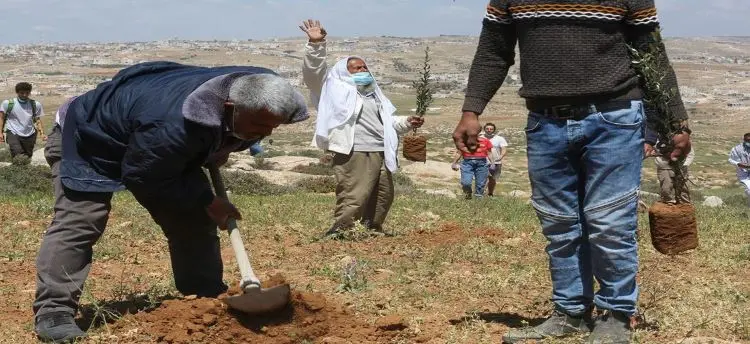
Agriculture: 13.2% of the areas planted with olives were not accessible to their owners

The Ministry of Agriculture reported that the areas that farmers were unable to reach during the last olive season and harvest their fruits amounted to more than 110 thousand dunums (about 13.2% of the area planted with olives in the northern governorates).


The ministry added in a report published during the closing conference of the comprehensive national olive harvest campaign "Al-Fazaa" for the year 2024, today, Sunday, that after this campaign, those areas decreased to about 35 thousand dunums, or about 4.2% of the total area planted with olives.


In the southern governorates, more than 75% of the olive trees were destroyed, and our people in the Gaza Strip were only able to harvest a very small portion of the undestroyed lands.


Regarding the obstacles and serious risks facing farmers during the olive harvest season, the report noted that due to the settlers and the occupation army, farmers were unable to harvest tens of thousands of dunams, or carry out the necessary agricultural operations such as plowing, pruning, and others.


The Ministry indicated that this year it called for mobilizing the spirit of support and challenge to achieve a fruitful olive harvest season by launching a national voluntary campaign (Al-Faz’a) to pick olives, in partnership with all the various government agencies, local and international bodies and institutions to support farmers in reaching their lands and picking the olive produce from their trees, focusing on key areas that are repeatedly exposed to repeated attacks by the occupation forces and settlers, which included areas behind the apartheid wall, near the wall, adjacent to illegal settlements, and on the sides of main roads in areas classified as (C).


The Ministry explained that it was decided to adopt the National Olive Picking Campaign (Al-Fazaa) as one of the Ministry’s permanent annual programmes.

This table shows the areas that farmers were unable to reach and harvest olives in for the 2024 season compared to the 2023 season.

PALESTINE

Sun 05 Jan 2025 1:01 pm - Jerusalem Time

Jordan Valley: Five Palestinian teachers injured after their vehicle was hit by Israeli vehicle

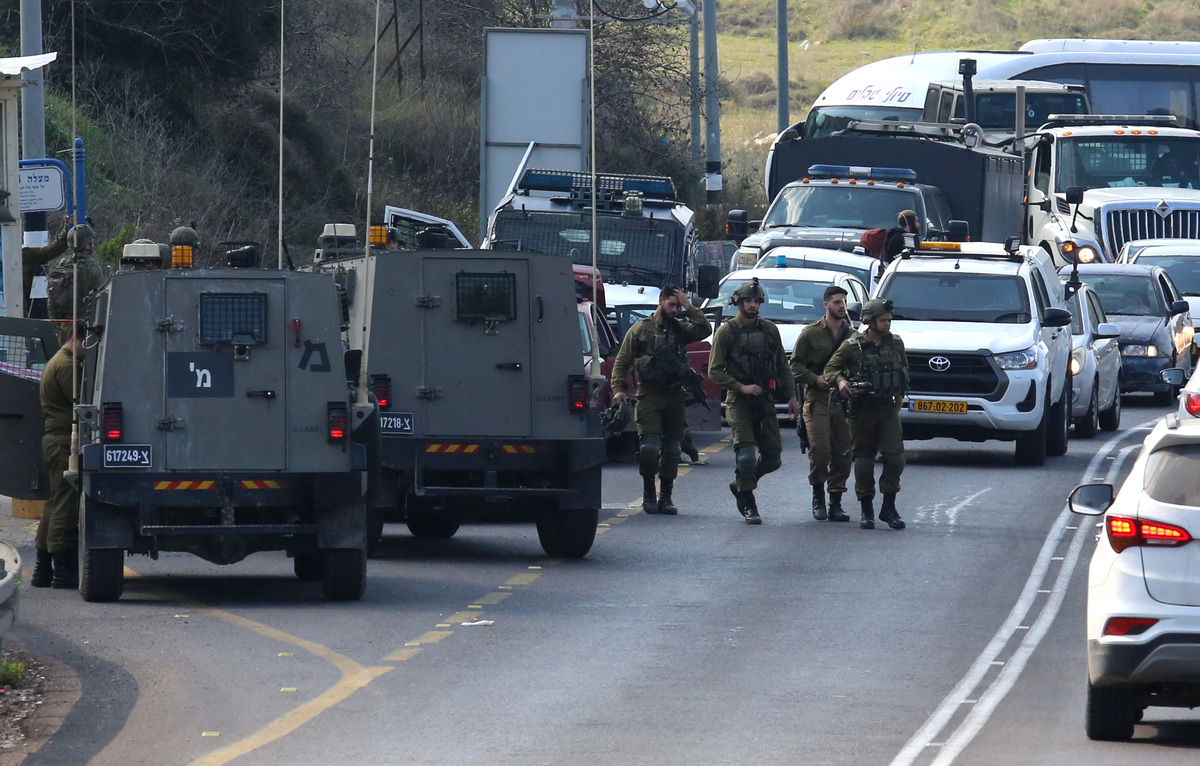
Five teachers were injured on Sunday after their vehicle was hit by an Israeli military vehicle in the northern Jordan Valley.


Local sources reported that an occupation military vehicle hit a vehicle belonging to teacher Mohammed Sawafta, accompanied by four teachers working at Bardala Secondary School, while they were stopped near the village of Ein al-Baida.


The same sources added that the five teachers were transferred to the hospital to receive treatment.


Earlier today, the occupation forces stormed Bardala Secondary School during official working hours, at the instigation of settlers from the newly established pastoral colonial outpost west of Bardala village.

PALESTINE

Sun 05 Jan 2025 12:39 pm - Jerusalem Time

More than 16 thousand attacks by the Israeli army and its settlers during 2024

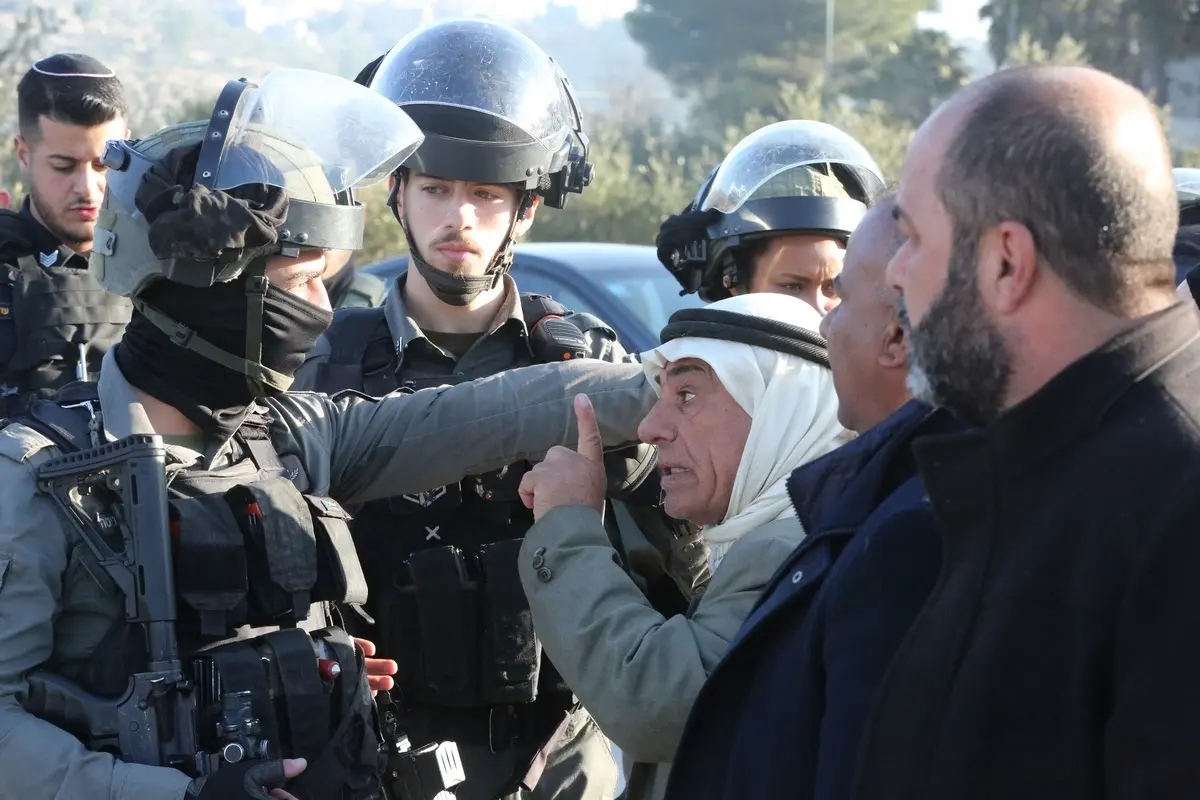
The Wall and Settlement Resistance Commission announced today, Sunday, that violations by the Israeli occupation forces and settlers recorded a record increase last year, 2024.


The Commission stated that the number of these violations reached 16,612 against citizens and their property in various governorates.


The head of the Wall and Settlement Resistance Commission, Minister Mu'ayyad Shaaban, said during a press conference held at the Commission's headquarters, in the presence of the Director of the Government Communication Center, Muhammad Abu al-Rab, that the occupation army carried out 13,641 violations, while the settlers committed 2,971 violations.


The occupation's violations were concentrated in the Hebron Governorate, with 2,934 violations, followed by the Nablus Governorate with 2,531 violations, then the Ramallah and Al-Bireh Governorate, in which 2,224 violations were monitored.


Shaaban explained that the settlers' violations were concentrated in Nablus Governorate with 806 attacks, then Hebron Governorate with 657 violations, and Ramallah and Al-Bireh Governorate with 532 violations.

10 martyrs in settlers’ violations and attacks on more than 14 thousand trees


The Minister stated that 10 citizens were martyred during the past year at the hands of settlers, who caused 373 fires to property and fields in the governorates of Nablus, Ramallah, Jenin and Tulkarm, in addition to 451 violations that resulted in the uprooting, damage, sabotage and poisoning of a total of 14,212 trees, including 10,459 olive trees.


Hebron topped the governorates in terms of the number of damaged trees, with 3,980 trees, followed by Bethlehem Governorate with 3,791 trees damaged and uprooted, then Nablus Governorate with 2,737 trees damaged and uprooted.

Establishing 51 new colonial outposts and starting to settle the status of 13

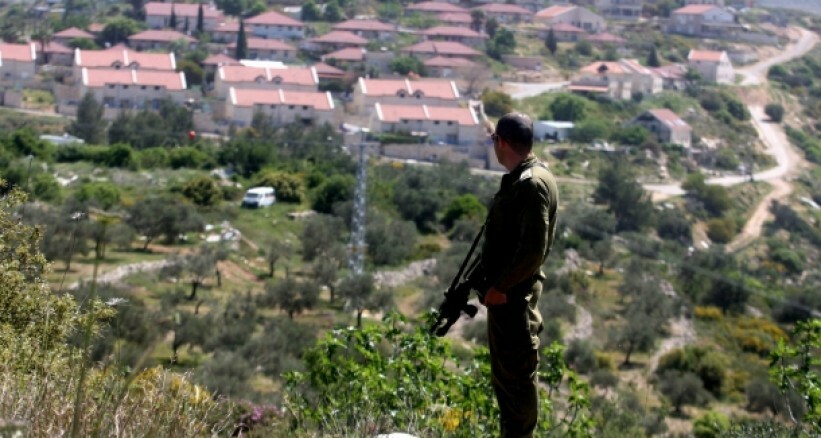
The head of the Wall and Settlement Resistance Commission explained that last year, the settlers established 51 new colonial outposts, 36 of which took the form of pastoral outposts in the governorates of Ramallah and Al-Bireh, Bethlehem, Hebron, Nablus, Jerusalem, Tubas, Jericho, Salfit, and Tulkarm.


He pointed out that the occupation authorities have practically begun to settle the status of 13 colonial outposts, so that some of them will be transformed in the future into colonial neighborhoods or colonies in themselves, through government decisions and amending the borders of colonies.

More than 770 thousand settlers in 180 settlements and 256 outposts

Shaaban pointed out that the number of settlers in the West Bank settlements, including Jerusalem, reached a total of 770,420 settlers by the end of 2024, distributed over 180 settlements and 256 colonial outposts, including 138 outposts classified as pastoral and agricultural.


He said that the occupying state redefined itself in 2024 as the last apartheid state on earth, removing the mask from an ugly face dripping with blood, extremism and racism. It did not stop there, but rather positioned itself as a moving crime machine that is insatiable with killing, theft and tightening its grip on citizens’ necks, to present itself on a platter of the bones and skulls of the innocent and the weak, in a blatant challenge to the simplest rules of ethics of conflicts and relations known to humanity.


He called on all national institutions, official, popular and civil, to join the framework of a national strategy to confront the occupation’s plan, considering it a top national priority to mobilize national and popular capabilities and reproduce new tools that are compatible with the stage and adapt to its difficulties, pointing out that the current stage brings the old-new demand back to the forefront, which is the necessity and quality of real and immediate international protection that protects the Palestinian people and their national capabilities in the face of the occupation’s bullying.

903 facilities demolished and 939 others notified

The head of the Wall and Settlement Resistance Commission stated that the occupation authorities issued 903 demolition notices against Palestinian facilities last year under the pretext of lack of permits, distributed in the Hebron governorate with 180 notices, the Jericho and Jordan Valley governorate with 140 notices, and then the Bethlehem governorate with 126 notices, during which 20 notices were issued targeting the eastern Bethlehem wilderness.


He noted that the occupation authorities carried out a total of 684 demolition operations during the year 2024, during which 903 facilities were demolished in the West Bank, including the city of Jerusalem, and 4,332 people were affected as a result, including 2,320 children.


The demolitions were concentrated in the Jerusalem governorates with 190 demolitions, then the Hebron governorate with 172 demolitions, and the Bethlehem governorate with 68 demolitions.

Seizing more than 46 thousand dunums and approving the construction of 8800 colonial units

On the level of colonial expansion, Mu'ayyad Shaaban said that the occupation authorities seized 46,597 dunums last year, pursuant to a series of military orders issued, including 35 orders to seize land that targeted about 1,073 dunums to establish 12 buffer zones around the settlements, 5 "expropriation" orders that ended with the seizure of about 803 dunums, 8 decisions to declare state lands that targeted 24,597 dunums, and 6 orders to modify the borders of a nature reserve, pursuant to which the occupation seized about 20,000 dunums.


Shaaban pointed out that the "planning committees" of the occupation authorities studied a total of 173 plans targeting settlements established on the lands of the West Bank and Jerusalem.


He added that these committees studied the plans for the establishment of 23,461 colonial units, which resulted in the approval of the construction of 8,800 new colonial units, and the deposit of a total of 14,661 colonial units for subsequent approval. These plans targeted a total of 14,982 dunums of citizens’ lands.

The annexation plan is no longer silent

The head of the Wall and Settlement Resistance Commission, Mu'ayyad Shaaban, stressed that the occupying state has escalated the pace of implementing its goals related to the Palestinian land to unprecedented levels, within the framework of its efforts to control all the lands between the river and the sea in order to decide Jewish superiority, in the context of eliminating the possibility of establishing a Palestinian state, by isolating Jerusalem and emptying it of its authentic Palestinian cultural and civilizational context, and by controlling the strategic joints of the Palestinian geography, through division, looting and tampering, and by controlling the Palestinian way of life and livelihood, through checkpoints and an intensive closure system.


He added that the occupying state continued to implement the annexation plan, specifically in the Jordan Valley and eastern slopes, reaching Masafer Yatta in the far south of the West Bank, by creating a coercive environment that repels the indigenous Palestinian population, using armed settler militias to implement this, in one of the clearest manifestations of the functional exchange between the official institution and the settlers.


Shaaban explained that the year 2024 was distinguished by the legislative environment that embraced colonial terrorism, which was created and developed by the occupying state, through a set of laws and draft laws that it submitted for approval, which pertain to controlling and plundering Palestinian land, so that the result of all of this would be a real annexation and alleged sovereignty over Palestinian land.

ARAB AND WORLD

Sun 05 Jan 2025 12:24 pm - Jerusalem Time

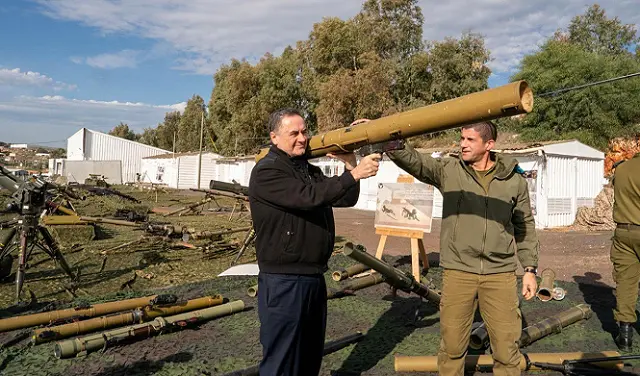
Katz: No agreement with Lebanon "if Hezbollah does not withdraw behind the Litani River"

Israeli Defense Minister Yisrael Katz said on Sunday that the first condition for implementing the agreement with Hezbollah is a complete withdrawal of the party's fighters behind the Litani River in Lebanon.


Katz added that if this condition is not met, there will be no agreement between the parties, and Israel will take steps to "ensure the safe return of residents to the north of the country."


This came during a field tour by the Israeli Minister of Security at the headquarters of the Northern Command, to inspect Hezbollah weapons that the occupation army confiscated during its operations in southern Lebanon.


Katz said, "Israel is interested in implementing the agreement in Lebanon and will continue to enforce it fully and without compromise to ensure that the residents of the north return to their homes safely."


"But the first condition is a complete withdrawal of Hezbollah behind the Litani River, the dismantling of all weapons and the destruction of its infrastructure in the area by the Lebanese army, and this has not happened yet," he added.


He added: "If this condition is not met, there will be no agreement, and Israel will have to work on its own to ensure the safe return of the residents of the north to their homes," he said.


Katz indicated that Israel will not allow a new threat to the northern settlements and to Israeli citizens, and said that the Israeli army continues to take strict measures against Hezbollah's violations.

PALESTINE

Sun 05 Jan 2025 12:16 pm - Jerusalem Time

"Palestinian Health" faces a major shortage of medicines and medical supplies

The Undersecretary of the Palestinian Ministry of Health, Wael Al-Sheikh, confirmed today, Sunday, that the Ministry of Health is facing a major shortage of medicines and medical supplies, as a result of the financial crisis caused by the occupation’s theft of the Palestinian people’s money.


Al-Sheikh explained, in statements to the media, that “120 types of medicines, including 20 types of cancer drugs, have zero stock in our warehouses, and 420 types of medical consumables, 170 of which are specialized for the heart, eyes, and others, have zero stock.”


The Undersecretary of the Palestinian Ministry of Health considered that this reflects a major problem that directly affects the health sector.


Al-Sheikh pointed out that the Ministry of Health's debt is close to 3 billion shekels, the largest part of which is for private and public hospitals.


The Undersecretary of the Palestinian Ministry of Health confirmed that this debt has been accumulating over the past years, and that the Ministry of Finance is making payments to cover this debt, but consumption is more than what is being paid.


Palestinian Prime Minister Mohammad Mustafa pointed out that the Israeli occupation authorities continue to deduct the allocations of the families of martyrs and prisoners, which began in February 2019, and have so far amounted to about 3.5 billion shekels.

PALESTINE

Sun 05 Jan 2025 12:07 pm - Jerusalem Time

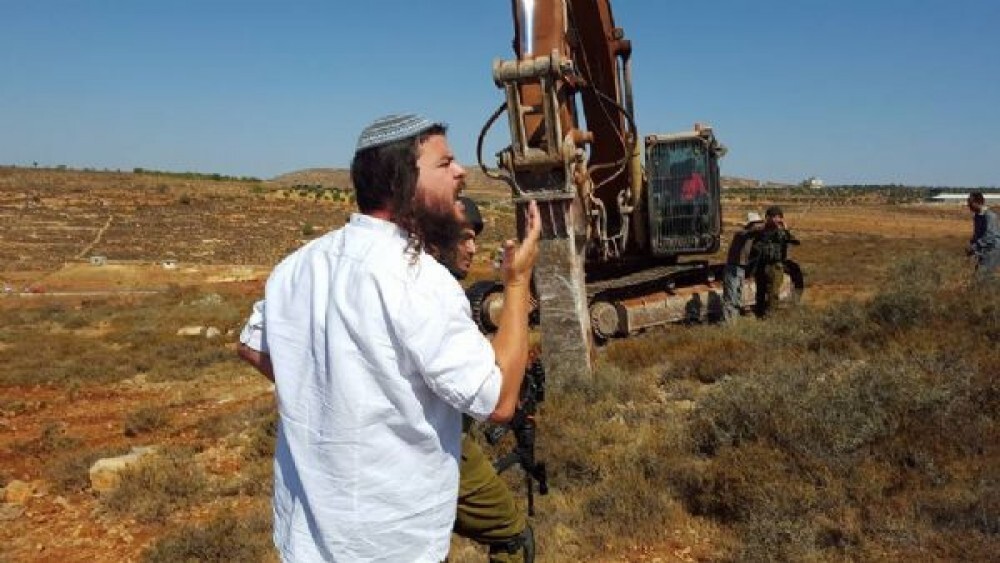
Jerusalem: Settlers bulldoze citizens' lands near Mikhmas village

Today, Sunday, settlers bulldozed citizens' lands near the village of Mikhmas, northeast of occupied Jerusalem.


Local sources reported that a number of settlers proceeded at dawn to bulldoze and plough citizens’ lands near the village of Mikhmas.


Settlers had established the "Sde Yonatan" colonial outpost, adjacent to the "Ma'ale Mikhmas" settlement, on the villagers' lands, and they use the outpost as a starting point for carrying out their attacks on the citizens' lands and property.

PALESTINE

Sun 05 Jan 2025 12:01 pm - Jerusalem Time

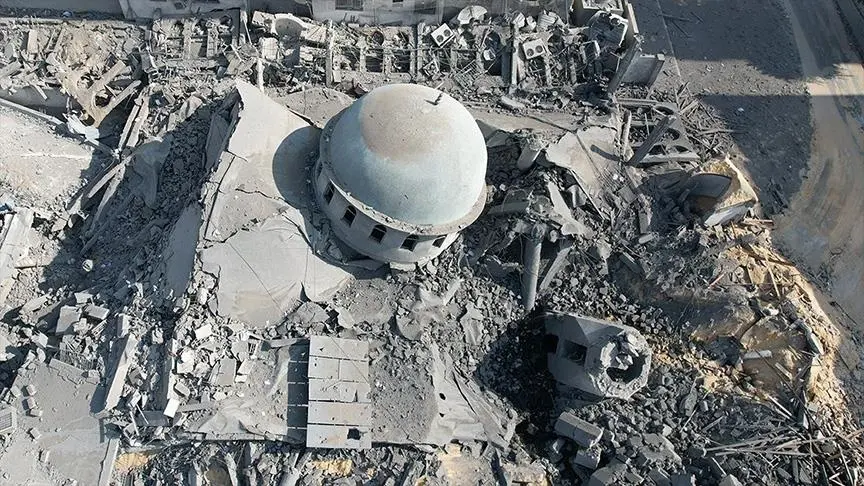
Endowments: Israeli occupation destroyed 815 mosques completely and 151 partially in Gaza

Today, Sunday, the Ministry of Endowments and Religious Affairs issued a special report on the occupation’s violations of Islamic and Christian holy sites in the West Bank and Gaza Strip for the year 2024.


The Ministry of Endowments said in its report that the Israeli occupation, during its ongoing aggression on the Gaza Strip since the beginning of last year, completely destroyed (815) mosques, partially destroyed (151) mosques, completely destroyed (19) cemeteries, and violated their sanctity by attacking them, digging up their graves, and removing the bodies, and targeted and destroyed (3) churches in Gaza City.


She added that the Israeli occupation attacked Al-Aqsa Mosque by allowing terrorist settler gangs to storm it and desecrate its courtyards and benches, with (256) incursions during the past year, during which the settlers practiced Talmudic rituals, which have become practiced on a daily basis, such as the epic prostration that began on 8/13/2024, where this prostration was practiced by Knesset member "Moshe Feiglin" for the first time, in addition to blowing the trumpet and wearing prayer clothes in a clear demonstration of their practice inside Al-Aqsa, which is practiced in a specific place and at specific times in a clear consecration of the temporal and spatial division, and all of this under the supervision and protection of the occupation police, which permanently prevents the guards of Al-Aqsa Mosque affiliated with the Jerusalem Endowments Department from doing their work during these incursions.


She pointed out that the so-called "Temple Groups" had facilitated the Jewish New Year celebrations for settlers inside Al-Aqsa Mosque during the past year, and that "Temple Mount activists" had incited the burning of Al-Aqsa Mosque, by publishing a video clip showing the burning of Al-Aqsa Mosque, and attached to it the comment: "Soon in these days."


On the anniversary of the alleged destruction of the Temple, the settlers performed collective rituals for the first time in the western area opposite the Dome of the Rock, and the eastern area of the Al-Aqsa Mosque is treated as an undeclared “synagogue.”


The ministry explained in its report that the terrorist Ben Gvir, supported by his far-right government, had stormed Al-Aqsa (7) times since he assumed office, and 4 times since the start of the war on Gaza. He issued a number of far-right statements in which he threatened to establish a Jewish synagogue in Al-Aqsa Mosque, in reference to controlling it. He also worked to intensify the Jewish presence through government support and giving it legal cover.


The report indicated that (2567) settlers stormed the blessed Al-Aqsa Mosque on the Jewish holiday of Hanukkah, and during it they committed numerous violations, the most prominent of which was the storming of "Ben Gvir", and Rabbi Yisrael Shalita performed Talmudic rituals, and practiced dancing, singing, and epic prostration.


The Ibrahimi Mosque:

Regarding the Ibrahimi Mosque, the occupation forces practiced their violations on a daily basis, whether by preventing the call to prayer from being made there, which has been made approximately (674) times since the beginning of the year, or by restricting Muslims by preventing them and closing it (10) times during the same period.


The occupation also installed the so-called "candelabrum" and Israeli flags on the roof and walls of the Ibrahimi Mosque, and held noisy parties and Talmudic rituals in the occupied section, and practiced banging on the doors, shouting, cursing and swearing. The occupation also obstructed the celebrations of the Prophet's birthday inside the mosque.


The report indicated that the number of worshipers in the Ibrahimi Mosque during the year 2024 amounted to only 236,530 worshipers, and this number is considered less than expected due to the strict measures imposed by the occupation, including the closure of the entrances to the mosque since October 7, 2023, which hindered the arrival of large numbers of worshipers.


3,381 Israeli soldiers stormed the Ibrahimi Mosque during the year, in a flagrant violation of the sanctity of the religious site and a provocation of the feelings of Muslims. The occupation intensified the checkpoints around the mosque and closed all its entrances, leaving only the market gate, which made it more difficult for Palestinians to reach it.


The report pointed out that despite the Israeli restrictions on movement and the continued closure of the entrances to the Ibrahimi Mosque, it received only 12,663 tourists during the year 2024.


The Ministry of Endowments and Religious Affairs condemned the dangerous plans to be implemented towards the Ibrahimi Mosque, which were announced by a member of the Knesset from the ruling Likud Party in Israel, who called for the nationalization of the Ibrahimi Mosque, controlling it, and placing it completely under Israeli sovereignty by canceling what is related to Palestinian sovereignty over it in the Oslo Accords, and returning it to the hands of Israel by seizing it gradually.


Places of worship:


As for the rest of the places of worship and mosques, the Israeli occupation attacked (20) mosques in different areas in the West Bank, with a clear focus on the Tulkarm and Jenin governorates, either by partially destroying a number of facilities or by desecrating them with writing and mocking Islamic rituals.


The Ministry of Endowments monitored in its report a number of attacks on holy places and Christian worshippers, as extremist Jewish religious groups attacked and spat on Christian pilgrims in the occupied city of Jerusalem, specifically in the area of the Church of the Prison of Christ.


They were also restricted during Christian holidays and prevented from reaching the Church of the Nativity and the Church of the Resurrection.


The Ministry of Endowments and Religious Affairs called on the international community to force the occupation to stop these violations, which have become increasingly frequent, especially with the war of extermination on the Gaza Strip.

PALESTINE

Sun 05 Jan 2025 11:49 am - Jerusalem Time

88 dead in 24 hours, the death toll from the aggression rises to 45,805

The Israeli occupation committed 5 massacres in the Gaza Strip, resulting in 88 dead and 208 injuries arriving at hospitals during the past 24 hours.


The Ministry of Health stated in a statement that the death toll from the Israeli aggression has risen to 45,805 dead and 109,064 injuries since October 7, 2023.


It pointed out that there are still a number of victims under the rubble and on the roads, and ambulance and civil defense crews cannot reach them.


ARAB AND WORLD

Sun 05 Jan 2025 11:15 am - Jerusalem Time

Brazil: Court orders arrest of Israeli soldier accused of war crimes in Gaza

A Brazilian court has issued an urgent order to the police to arrest an Israeli soldier and investigate him on charges related to committing war crimes in the Gaza Strip, based on a criminal complaint filed by a Palestinian human rights organization.

Israeli media reported that the soldier wanted in Brazil is on his way to Tel Aviv, without revealing further details.


Channel 12 Israel quoted relatives of the soldier as saying that he "left the Brazilian border at night to a neighboring country."


According to Brazilian media, the issuance of this judicial order is based on the criminal complaint filed by the Hind Rajab organization a week ago against the suspect, who is currently in Brazil on a tourist vacation.


The complaint accuses the soldier of "participating in the demolition of entire civilian neighborhoods in Gaza during a systematic campaign. These actions are part of a broader effort to impose intolerable living conditions on Palestinian civilians, and constitute genocide and crimes against humanity under international law."


The evidence presented includes videos, geolocation data and photos showing the suspect personally planting explosives and participating in the destruction of entire neighborhoods, and “this material proves beyond a doubt the suspect’s direct involvement in these heinous acts.”


According to the Palestinian organization, the houses that were destroyed as part of the operations in which the soldier participated in the Gaza Strip were shelters for displaced Palestinians. The organization also said that it attached more than 500 documents to the complaint, when it asked the court to arrest the soldier for fear that he would leave Brazil.


According to Hind Rajab's organization, families whose homes were destroyed have joined this case as plaintiffs, and have given power of attorney to the organization's legal defense team, relying on them to pursue justice on their behalf.


About two months ago, news came out about an Israeli reserve officer fleeing Cyprus after the Palestinian organization published his photo and name, and announced that it had filed a complaint against him on suspicion of “committing war crimes,” according to the official Israeli radio station, Kan-Reshet Bet.


In another case, the human rights organization found an Israeli soldier during a trip to Sri Lanka, in which case his name and photo were also published, and he was asked by Israel to leave Sri Lanka for fear of arrest.


The Israeli radio said that "the Palestinian organization directs its activities mainly against Israeli soldiers with dual citizenship, and has not yet achieved any success in arresting soldiers who were outside the country, but the escape of the reserve officer from Cyprus as well as the real increase in the organization's activity certainly raises concerns in the Israeli Foreign and Justice Ministries."


It is noteworthy that the Hind Rajab Organization was established in honor of the memory of the child Hind Rajab (6 years old), who was killed by the Israeli occupation with all her family members in the Tal al-Hawa neighborhood, southwest of the Gaza Strip, last January, when they were trying to save themselves from the bombing.


The organization aims to "take legal action against those responsible for crimes against humanity, war crimes and human rights violations committed by the occupation forces against the Palestinians."

PALESTINE

Sun 05 Jan 2025 11:12 am - Jerusalem Time

Suffocation injuries during Israeli forces' storming of the town of Al-Ram

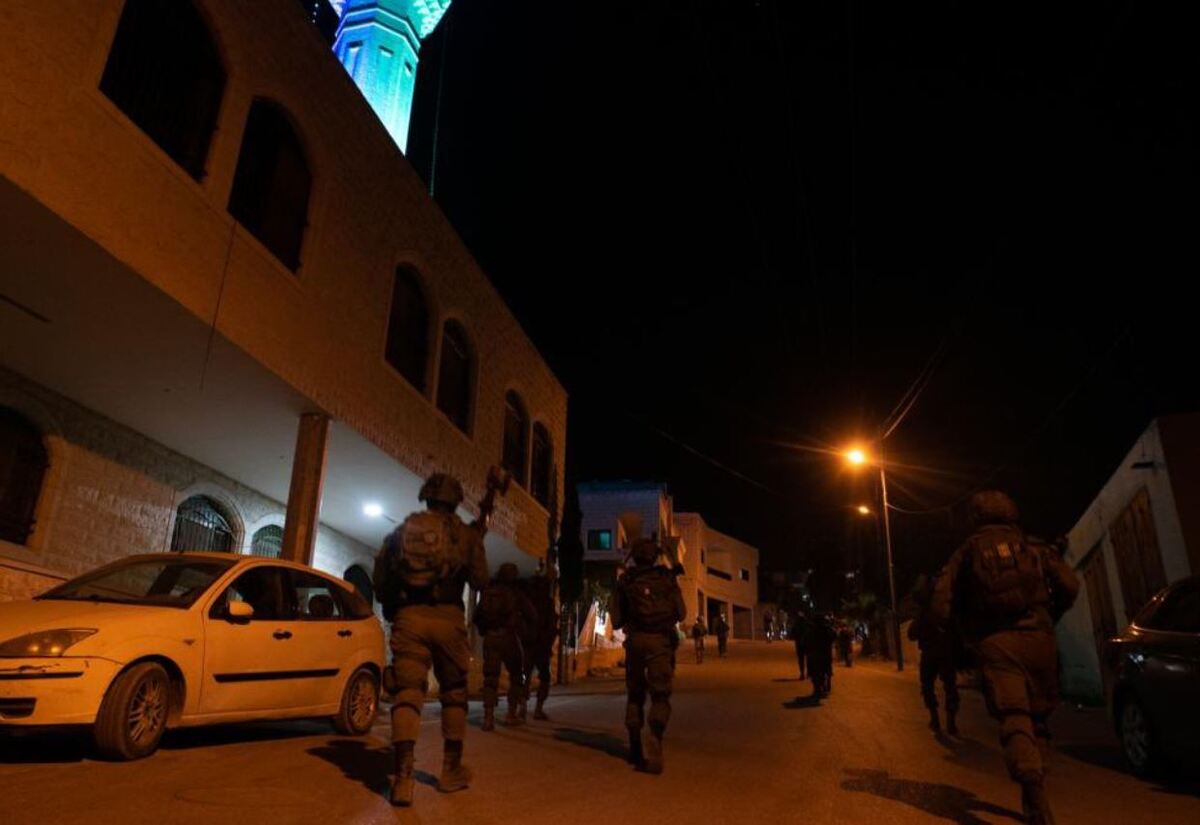
Citizens suffered from suffocation, today, Sunday, after the Israeli occupation forces stormed the town of Al-Ram, north of occupied Jerusalem.


Local sources reported that the occupation forces fired tear gas bombs near the racist separation and expansion wall in the town of Al-Ram, which led to a number of citizens suffering from suffocation due to inhaling the toxic gas.


In a related context, the occupation forces stormed the towns of Issawiya and Silwan in occupied Jerusalem.


Local sources reported that crews from the occupation municipality stormed the towns of Issawiya, north of Jerusalem, and Al-Bustan neighborhood in the town of Silwan, south of Al-Aqsa Mosque.

PALESTINE

Sun 05 Jan 2025 10:38 am - Jerusalem Time

Israeli settlers establish a new colonial outpost south of Nablus

Today, Sunday, settlers established a new colonial outpost on citizens' lands in the village of Qaryut, south of Nablus.


According to local sources, a number of settlers have set up tents in the "Silon" area south of the village, in an attempt to build a new colony on the village's lands. They will start by setting up tents, then "caravans", and then expand the construction little by little.


She added that most of the lands there are owned by a number of expatriate citizens outside the country.

PALESTINE

Sun 05 Jan 2025 10:36 am - Jerusalem Time

82 dead and 296 wounded in Jerusalem since October 2023

The Jerusalem Governorate documented the death of 82 citizens and the injury of 296 others with live and rubber bullets, since the beginning of the comprehensive Israeli occupation aggression against our people on October 7, 2023, until the end of last year.


The governorate reported in statistics issued by the Public Relations and Media Unit, today, Sunday, that 2,060 cases of arrest were recorded from the governorate, and the occupation authorities issued 479 actual prison sentences against detainees from the governorate, and 116 house arrest decisions, in addition to issuing 11 travel ban decisions, and 127 deportation decisions from the city of Jerusalem.


The governorate documented the storming of Al-Aqsa Mosque by 69,017 settlers, in addition to 439 demolitions and bulldozing of homes and facilities.

OPINIONS

Sun 05 Jan 2025 9:38 am - Jerusalem Time

Inhumanity in Israel's dictionary

op-ed "AlQuds" dot com

op-ed "AlQuds" dot com

Opinion Writer

Humanity, which means the value of life, dignity, freedom, and improving living conditions for religious, moral, and social reasons, it seems that Israel has not understood its reality, importance, and impact on humanity. At a time when all people, without exception, deserve respect, dignity, and equality, Israel still insists on dealing with a principle that is completely opposite to it, through tribalism and racism, and continues to violate the basic rights to life and human rights guaranteed by all heavenly laws and religions. Although humanity drives people to save lives, Israel drives destruction, killing lives, increasing the amount of suffering, and diminishing human dignity.


There is a historical quote by the German philosopher, physician, religious scholar and musician Albert Schweitzer, who won the Nobel Peace Prize in 1952 for his philosophy of sanctifying life and for founding and managing a hospital in Gabon, West Central Africa, which says the following:


“Humanity consists in not sacrificing a human being for an end.”


This statement applies perfectly to the reality we are living today. Yesterday, the Al-Qassam Brigades published a new video message from an Israeli detainee, the soldier Liri Elbag, speaking from inside the detention center on the first day of the new year. She says that she is only 19 years old, and that she has her whole life ahead of her. She points the finger of blame at the Israeli government and the army, which does not put the detainees at the top of its priorities, to the point that the world has begun to forget the suffering of the detainees and their presence in dark tunnels. She says that she has a colleague who was seriously injured as a result of the army’s operations and random shelling, and that her survival is linked to the withdrawal of the Israeli army. She asks the Israeli government, and says: I really want to ask you, do you want to kill us? I have realized that our lives are not important to you. I have understood that we are a toy in your hands and that you are toying with our fates and that you will not be able to get us out of here with military operations. End of the message.


Since the beginning of the war, the Israeli street has been well aware that Netanyahu is not interested in a prisoner exchange deal and the release of a handful of detainees, and he is actually sacrificing their lives in order to achieve his party and personal goals and continue the war. Despite his haste, along with the Israeli president, the minister of defense, and the chief of staff, to contact the family of the female soldier who appeared in the video, and to claim that they care about the issue of the hostages and are seeking their release, when compared to reality on the ground, this matter seems completely different from the facts. Israel does not recognize its criminal dictionary based on occupation and the killing of human souls, in any sense of humanity, and instead wears the garb of hatred, malice, and killing.


While the resistance occasionally allows the publication of videos of a number of Israeli detainees, Israel continues its horrific crimes against those it detains, detaining them in completely inhumane conditions, taking them from hospitals, health centers, tents and refugee camps, forcing them to undress in the cold and in harsh and difficult conditions, as revealed by television stations last night, and interrogating them with extreme cruelty, which has led and is leading to the martyrdom of dozens of Palestinian prisoners, without taking into account any humanitarian circumstances, and preventing them from their most basic rights, such as medicine, water and food, and preventing lawyers from meeting them or learning about their conditions.


The issue of Palestinian prisoners who suffer from pain and suffering due to the very harsh conditions imposed on them by the prison administration is one of the important issues in this fierce war. They have the right to their freedom and dignity to complete the rest of their lives outside the prisons, interrogation cells and detention centers, with their families and relatives. Hence, it is necessary to work and put strong pressure on Israel by all the peoples of the world and human rights and humanitarian organizations to stop the suffering and human tragedy of the prisoners. Israel must realize well that it can obtain all its detainees on the condition that it stops the war of extermination and withdraws from the Gaza Strip. Has the message of the soldier Elbaj been received and made an impact? Or will the official Israeli position remain as it is, devoid of any human feelings?

OPINIONS

Sun 05 Jan 2025 9:34 am - Jerusalem Time

Lessons of the "Flood" and its repercussions (1).. A statement on victory and defeat

Dr. Iyad Al-Barghouthi

Dr. Iyad Al-Barghouthi

Opinion Writer

Although the "war" that has been going on since the "flood" has not yet ended, the scene today has enough clarity for some evaluation to extract lessons and morals that may be useful in the coming days and for future events. It also has enough ambiguity for us to realize that what we will come up with now is not final, and certainly not everything.


It is important for anyone who "takes on" talking about the current situation in the region to realize that starting to talk about the "flood", despite it being a pivotal moment in the movement of the issue, is not cut off from the tree of history. Separating it from the context of the issue contains a great deal of "cognitive" injustice to the truth, and historical injustice to the "victim". We are facing an exceptional matter, yes, but it is not abnormal. Equating exceptionality with abnormality is either ignorance in the case of innocence, or collusion in the case of bias. The flood and what followed it are nothing but a link in a Zionist imperialist aggression against Palestine and the region, and this aggression has been confronted for more than a century.


It is also important, perhaps even more important for those who deal with this topic, to be careful about a kind of intellectual neutrality and psychological coherence that makes him closer to the observer than to someone immersed in the event, and distances him from doing so as a defeated person who only sees the strengths of his enemy, or as a victor who only sees his own strengths.


What has happened so far represents a real and radical revolution, not only in strategy but also in symbolism and meaning, which is no less important. We are facing a scene that is intertwined and complex, but it is more “real” and clearer. In this scene, we are faced with a different Gaza and a different Palestine, as well as a different Israel, a different Arab “state,” a different occupation, a different West, a different public opinion, and a different resistance, and in parallel with all of that, we are faced with a different culture and a different intellectual.


In a quick scan of the scene, Gaza is killing, destruction, genocide, sacrifice, steadfastness, transcendence and entry into the conscience of all that is human. Palestine is the compass of man to his humanity, the lever of noble values and the herald of a better world order, and a transition from the (Palestine) issue to the (Palestinian) ideology. Israel is uniquely “superior” in criminality, sitting in the position of a criminal before the international judiciary and the court of history, and a different “global” awareness of it. A completely exposed West, the one that presented itself as a civilization, civility, democracy and human rights, has revealed its other face as a criminal and a killer (or assistant killer) of children and humanity.


An Arab "state" that was created to be defeated, paralyzed and motionless, and if it did, it would be in the opposite direction, it is against the "nation", so its people accepted that there was no need to appeal to it, it is at its best when it is still, perhaps that will break part of the "code" of the lack of pro-Palestine demonstrations in the required manner in the Arab state, it is "asleep, may God curse the one who woke it up". Syria is a dramatic upheaval in the scene, a regime that most of what is inside it indicates the necessity of its departure, and a "nationalist" political position that distorts the picture and slows down thinking about that. What should have gone has gone, and there are doubts about the coming of what should have come, and doors are open in all directions.


In terms of awareness and meaning, there is a different saying about victory and defeat, and there are ambiguous boundaries between it and loss. Loss is a balance of power and defeat is a decision. Loss becomes defeat if its owner considers it the end of the matter and is “comfortable” with it. Defeat is “comfortable” and victory is “tiring.” In not acknowledging loss is the beginning of the road to defeat, and the worst thing about defeat is denying it because that blocks the road to the victory of those who come. In acknowledging defeat there is some victory because it contains something of handing over the banner to those who come.


Loss is a context, defeat is stillness and an end, and the loss that does not lead to defeat is a catch of breath, an insistence on continuing, and an affirmation of the goal. In this sense, we can understand the language that was used in the aftermath of the June 1967 war, such as “setback” (loss), and considering the survival of the regime (or its preservation) an “achievement” as long as it insists on confrontation, despite the painful blow to the army and the state, because what followed that war was a rejection of its results, an insistence on confrontation (Khartoum’s “no’s”) and preparation for it (the war of attrition).


The October 1973 war can also be considered a complete defeat, because it was crowned by normalization, and normalization is not only adopting and celebrating the defeat, but carrying it and handing it over, complete and undiminished, to future generations in the form of an achievement. It is not only abandoning the "weapon", but also guaranteeing that abandonment, believing in it and bequeathing it. This is exactly what Sadat meant when he said that the October War was the last of the wars, and this explains the position of the Arab "state" on what happened and is happening in Gaza and Palestine.


Comparing the 1967 and 1973 wars is a complete dramatic scene. You lose but are not defeated, you win and are defeated. You hold funerals on the occasion of not being defeated (despite the loss) and you celebrate your defeat (despite not losing). The logic of merchants, not the logic of history.


In both of these wars the relationship between inputs and outputs is complicated. In 1967, because you lost and were not defeated (you did not decide to be defeated), the compass continued to work as usual, the enemy remained the enemy and the ally remained the ally. But in the 1973 war, because you used your not losing as a justification for your defeat, and in order for defeat to appear as victory, the enemy had to be replaced and the allies changed, and you became at best a “mediator” between your new friend (your former enemy) and your nation (your former) current neighbors.


This also applies to the Syrian case; in the confrontations that have taken place since 2011 between the regime and its opponents, the regime has lost a lot, as has the opposition: hundreds of thousands of victims, millions of refugees, and the near-total collapse of the state. But all of this did not translate into a defeat for the regime until it decided to do so without losses at the end of 2024.


Defeat has two requirements and a decision, an achievement, or what appears to be so (an image of an achievement), and "courage" or what appears to be so, to convince oneself before convincing others, that the decision to "surrender" was a decision of wisdom and not weakness, and it is not a decision of defeat but rather a decision of half-victory that is completed by its meeting with the half-victory of one's enemy, to become a complete victory for two friends. (To solve the complexities of what may exist of abstraction, one can imagine the October 1973 War).


Returning to the flood and its repercussions, the Israeli achievement did not rise to the level of victory despite being a clear achievement, because the achievement turns into victory when there is a corresponding defeat that the opponent acknowledges and complies with its data, so there is no victor without a defeated one, and the absence of defeat is the absence of victory.


Victory is also linked in history to achievements coupled with morals and the values of chivalry, gallantry and tolerance. This did not happen in the case of Israel in this war. Rather, the exact opposite happened, an achievement coupled with brutality, crime, baseness and deception.


This is what makes the statement that if the "aggressor" does not achieve his goals, he is "defeated" or as if he is, and that if the "resistance" prevents its enemy from achieving his goals, it is victorious, a statement that contains a lot of truth. The loss of the aggressor is part of his defeat unless it is coupled with the complete elimination of his enemy, and the loss of the resistor is part of his determination and proof of his continuation if he does not stop. The loss of the aggressor is a departure from his "obvious" state of superiority, and the loss of the resistor is part of his "obvious" state of weakness, which is also given in advance, and does not mean much if the act of resistance continues.


It is important to take into consideration that talking about loss, achievement, defeat and victory, in the case of Israel, carries additional meanings; Israel is a state unlike any other state, and the Israeli is a human being unlike any other human being. We are talking about an exceptional state and an exceptional human being. These people were designed to excel, and the image of excellence for them is an indicator of their existence, and loss is something foreign to them. Therefore, what is considered a loss for a “normal” state is greater than that for Israel, and Israel’s failure in something is more serious than that because loss and failure are two things “foreign” to it, as is supposed, and they are ultimately an image of defeat for a state that is supposed to be invincible.


Perhaps this explains Israel's complete blackout of its losses in this war and its clear highlighting of its enemy's losses, as well as Hezbollah's full disclosure of its losses. We are faced with two parties, one of which, "Israel", is keen not to show its losses because it understands loss as weakness, and for it it is one. It does not want or accept to appear weak, and is keen to show the losses of its enemy, "the resistance", which it understands as weakness and evidence of its "savagery", which it understands as strength. In return, Hezbollah considers its disclosure of its losses to be an honor to them from a religious perspective, and highlights its readiness to sacrifice and its insistence on continuing despite the losses. It is a war of image and a war of meaning, and it is no less important than a war of weapons in its contribution to achieving victory or defeat.


Finally, in clarifying the meaning of (meaning), the role of the intellectual emerges. The role of the intellectual who interacts with his cause, even when he shows the enormity of the loss, is not to push it towards defeat, especially since experience has proven that defeat does not stop losses in the Palestinian case. We sometimes find ourselves in front of an intellectual who is difficult to understand whether he expects defeat or wishes for it. The intellectual who considers himself the bearer of Palestine, the cause and the meaning, is supposed to keep victory in mind, and then say whatever he wants.

OPINIONS

Sun 05 Jan 2025 9:29 am - Jerusalem Time

Voices of Suffering from Gaza to the Conscience of the World

Bahaa Rahal

Bahaa Rahal

Opinion Writer

“Yesterday we slept standing up, as the rainwater seeped into the tents, drowning us in the mud and clay of the camp, and our limbs froze from the frost,” one of them wrote. “The war has eaten our hearts and souls,” another wrote, while the rest said: “We are no longer able to bear the horrors of the genocide. The scale of the catastrophe is greater than what the camera captured, and more difficult than words can describe. With each day, the suffering increases, the pain expands, and the chapter of torment and oppression expands, between hunger and siege, between cold and rain, between killing and continuous shelling. Our ability to be patient has collapsed, for we are human beings of flesh and blood, and we are not extraordinary as some portray us.”


The lines written by the survivors in Gaza describing the suffering and drawing the beats of pain and suffering they are experiencing show how miserable reality has become, and how Gaza has turned into rubble, and how the impact of their words on us is indelible and unfading. A displaced woman in the camp wrote, when the journalist asked me what the war took from you? I answered it took my health. Another says I don’t want to die of cold. While another writes, the hungry don’t sleep, the afraid don’t sleep, and the cold don’t sleep, so how about the one who has all of this combined!


Scraps written by their owners in the language of the tortured in Gaza, besieged from all sides, who are living the beats of the genocide with all its bloodiness, terror and horrors that have affected all aspects of life, and there is no safe place left in Gaza suitable for living.


A woman in the Baptist Hospital shouted: “All my children are dead,” indicating that they had all died in the bombing, and she began to cry hysterically with pain and wailing in agony.


The world has not heard the voices coming out of Gaza, and even deliberately and intentionally ignores them, hiding behind the corridors of silence and stillness, and not moving to stop the ongoing brutal killing. In the test of the voice of justice, the global conscience has failed, as have all the charters, laws and bodies that have failed to stop the genocide and ethnic cleansing.


Stories of flesh and blood, tormented voices at the height of suffering and the harshness of reality, and cries for help waiting for someone to lift this injustice from them. Is there anyone who will answer?

PALESTINE

Sun 05 Jan 2025 9:08 am - Jerusalem Time

A Palestinian shot dead by Israeli forces south of Jenin

A citizen was killed this morning, Sunday, by Israeli occupation forces' bullets, south of Jenin.


The General Authority of Civil Affairs informed the Ministry of Health of the martyrdom of citizen Hassan Ali Rabaya (40 years old) by the bullets of the occupation forces in Meithalun, south of Jenin.

ARAB AND WORLD

Sun 05 Jan 2025 8:52 am - Jerusalem Time

Hezbollah: Our patience may run out over Israeli violations

Hezbollah Secretary-General Naim Qassem warned on Saturday evening that his party's patience with Israeli violations may run out before the 60-day ceasefire agreement expires.


This came in a televised speech on the occasion of the fifth anniversary of the assassination of the former commander of the Quds Force of the Iranian Revolutionary Guard, Qassem Soleimani, as a result of an American raid in Iraq in 2020.


Addressing critics of Hezbollah's silence on Israeli violations of the ceasefire agreement, Qassem said that his party's leadership "is the one that decides when to resist, how to resist, the method of resistance and the weapons it uses."


He added: "There is no timetable that specifies the resistance's work, and our patience (with Israeli violations) is linked to the appropriate timing to confront the enemy."


He continued, warning: "Our patience may run out (with these violations) before or after the 60 days, and when we decide to do something, you will see it directly."


In this regard, Qassem explained that the ceasefire agreement "exclusively means the area south of the Litani River, and the (Lebanese) state is responsible, along with the sponsors, for restraining Israel's hand and implementing the agreement."


Since November 27, a fragile ceasefire has prevailed, ending the mutual shelling between Israel and Hezbollah that began on October 8, 2023, and then turned into a full-scale war on September 23.


Under the pretext of confronting "threats from Hezbollah," Israel has committed more than 380 violations until this evening, leaving 32 dead and 39 wounded, according to a statistic by Anadolu Agency based on official Lebanese data.


These violations prompted Hezbollah to respond, on December 2, 2024, for the first time since the agreement came into effect, with a missile attack targeting the Ruwaysat al-Alam military site in the occupied Lebanese hills of Kfar Shuba.


The most prominent provisions of the ceasefire agreement include Israel's gradual withdrawal to the south of the Blue Line separating it from Lebanon within 60 days, and the deployment of Lebanese army and security forces along the border, crossing points, and the southern region.


Under the agreement, the Lebanese army will be the only entity allowed to carry weapons in the south of the country, with the dismantling of infrastructure and military sites, and the confiscation of unauthorized weapons.


The Israeli aggression on Lebanon resulted in 4,063 deaths and 16,664 injuries, including a large number of children and women, in addition to the displacement of about 1,400,000 people. Most of the victims and displaced persons were recorded after the escalation of the aggression on September 23.

PALESTINE

Sun 05 Jan 2025 8:19 am - Jerusalem Time

184 Palestinians killed in three days in Gaza and the Indonesian hospital is out of service

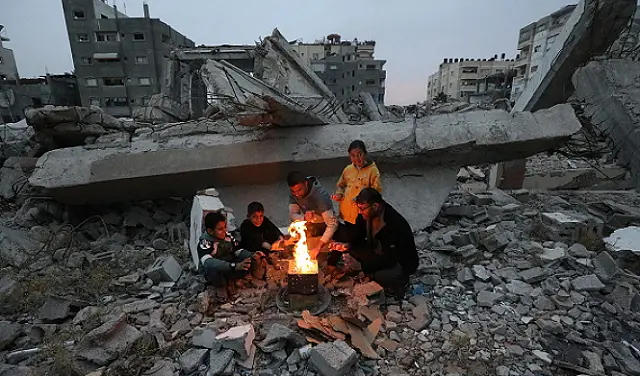
The Israeli occupation killed 184 Palestinians in bombing that targeted various areas of the Gaza Strip within 72 hours, while the Indonesian hospital in the northern Gaza Strip went out of service.


Medical sources confirmed that 66 Palestinians out of the 184 were martyred yesterday, Saturday alone.


A number of Palestinians, mostly women and children, were injured in two Israeli airstrikes that targeted three homes in the Abu Iskandar neighborhood, west of Gaza City.


Palestinian civil defense teams continue to search for people trapped under the rubble, while ambulance crews transferred the injured to the Baptist Hospital in Gaza, where some of their conditions were described as critical.


Local sources confirmed that the occupation aircraft bombed a house in the vicinity of the old Sultan Mosque in Al-Shawa Square in Gaza City, and targeted the Al-Tuffah neighborhood east of the city, which led to injuries.


In the middle of the Strip, local Palestinian websites reported that drones fired at the vicinity of the clinic north of Al-Maghazi camp, and 4 people were killed and others were injured when a drone bombed a tent in front of the gate of a school housing displaced people in Al-Bureij camp.


The Israeli occupation forces fired flares over the Arab Baptist Hospital and its surroundings in Gaza City, causing a state of terror among the medical staff and patients - especially children and women - in the hospital and its surroundings.


Indonesian hospital out of service

In this context, the Ministry of Health announced that the Indonesian hospital was out of service and no longer provided any services to patients or the wounded.


WHO Director-General Tedros Adhanom Ghebreyesus said Kamal Adwan Hospital in northern Gaza is still completely out of service.


Ghebreyesus added in a post on the X website that the organization has not received any updates on the safety of its director, Dr. Hussam Abu Safia, since his arrest on December 27.


He stressed that the organization continues to urge Israel to release him, and stressed that attacks on hospitals and health workers must stop.


Civil Defense Crisis

Meanwhile, the New York Times quoted the International Committee of the Red Cross as saying that rescue workers in the Gaza Strip are facing dangerous conditions and are working without sufficient equipment, vehicles or fuel.


Rescuers are often left alone to extract survivors from under tons of rock, concrete and metal with primitive tools, she added.

PALESTINE

Sun 05 Jan 2025 8:13 am - Jerusalem Time

Decision to block Al Jazeera in Palestine.. Writers and analysts stress the need to preserve freedom of expression

Dr. Ahmed Rafiq Awad: Freedom of expression is an essential part of the democratic system and a sacred issue that must be protected by the constitution and the law.

Jawdat Manaa: Modern technologies make it difficult to block the flow of information

Khalil Al-Asali: The war on Gaza revealed the flaws of the Arab, American and European media

Najah Musallam: Blocking satellite channels creates an environment that restricts citizens’ right to access multiple viewpoints

Daoud Kitab: Closing Al Jazeera is a dilemma. In the age of satellite channels, it has become impossible to block information.

Muhammad Zahayka: Any attempt to limit the flow of information or block satellite channels is like fighting windmills.

Imad Al-Asfar: Blocking is not the best solution and civil peace must be preserved

Fadi Abu Saada: The blocking decision is useless and has a negative impact on the channel


The decision taken by the Palestinian Authority to close the office of the Qatari Al Jazeera channel in Ramallah is still reverberating between supporters and opponents, but this does not mean that all opponents of the decision are satisfied with the media policy pursued by Al Jazeera. There are those who oppose such a punitive measure on the grounds that it is useless in light of the massive flow of information via satellite and digital broadcasting and everything that modern technology allows. They also reject the measure because it was not taken within the legal and judicial frameworks, but rather through a government committee of three ministries.


There are those who believe that freedom of expression is a sacred right that cannot be violated, regardless of the arguments and justifications. If there is one measure that the Palestinian Authority can take, it is to present an alternative media narrative. Is there a country in the world, even those considered the most advanced and democratic in the world, that has not imposed restrictions on media content when it conflicts with its laws and principles governing its domestic and foreign policies?


Analysts and writers who spoke to Al-Quds questioned the effectiveness of the measure taken by the Authority against the office.

Al Jazeera, despite their criticism of what they called the “policy of misinformation and incitement” practiced by Al Jazeera, and they saw that it was safer and better to go to court, stressing the importance of distinguishing between the role of Palestinian correspondents who are known for their professionalism and the editorial policy of the channel.


Freedom of expression is a "gift from God to the people"


Writer Dr. Ahmed Rafiq Awad stressed that freedom of expression is a fundamental and sacred issue, and must be protected by the constitution and the law, considering it “a gift from God to the people.”


“Freedom should never be confiscated,” he added, noting that the absence of freedom of expression greatly harms society and leads to a disruption in its interactions.


Awad continued: “Freedom of expression is an essential part of the democratic system, and it reflects the presence of a system based on the separation of powers and the exchange of roles through elections.”


He explained that "freedom of expression is evidence of the health and vitality of society, and that a society that does not enjoy freedom of expression is in an unhealthy state and unable to overcome its problems through effective dialogue."


He pointed out that practical application may face challenges, as the exercise of this freedom may be surrounded by many restrictions and interpretations that limit its effectiveness.


He explained that freedom of expression in the West, although guaranteed by the constitution and within the framework of democratic systems, is subject to many restrictions, noting that this freedom does not mean at all that a person can freely express his opinion on all topics, but rather there are clear limits that cannot be crossed, even in democratically advanced Western societies.


Criticism of Israel is taboo in the West


He said that there are taboos in the West that include criticizing Israel, the Jewish community, or the issue of societal equality such as women's rights and individual freedoms, as expressing opinions on these issues is prohibited.


He added: "The Western press in times of war becomes very recruited to fit the plans of public policy, which means that the press may lose its independence and one opinion is imposed instead of multiple opinions."


He stressed that freedom of expression in the West does not remain the same, but is subject to multiple interpretations and restrictions that are consistent with political and social considerations, noting that this is the case in most parts of the world.


Awad touched on the closure of satellite channels, websites or newspapers, stressing that it is a controversial step that raises many questions and criticisms. He said, "Such decisions are not related to freedom of expression as much as they are primarily political decisions."


Awad added, “The media are not just neutral media platforms, but are driven by politics and interests, as they are funded by parties with political goals and seeking to achieve specific interests.


Therefore, closing any media outlet is a political decision taken based on the interests and trends determined by the funding parties.


He stressed that freedom of expression is subject to many considerations, such as political, spatial and temporal interests, which makes the issue of closing media outlets an unstable phenomenon, but rather variable according to political conditions.


He stressed that closing satellite channels and websites at the present time is wrong, especially in a world where everyone lives in a "small village."


Blocking does not stop the flow of information due to the development of broadcasting technologies


For his part, Jawdat Manaa, a lecturer in media at a number of universities, said that modern technologies make it difficult to block or prohibit the flow of information to the receiving public, although some countries resort to blocking certain websites or closing media offices for political, security or social reasons.


Manaa pointed out that these measures do not stop the flow of information permanently due to the development of satellite broadcasting technologies.

Manaa explained that blocking or closing media institutions is usually subject to profit and loss assessments, especially during times of military conflict. He cited measures taken by the United States during the Iraq War, where media coverage was controlled to ensure that the content was directed in accordance with the state’s vision.


He also pointed to similar cases in the Anglo-Argentine war over the Falklands Islands, and the ongoing conflict in Ukraine.

Manaa referred to what he described as "the most dangerous cases of media restrictions" in Palestine, where the press is subjected to serious violations during its coverage of the Israeli aggression on the Gaza Strip and the West Bank.


He explained that these violations include targeting journalists' offices with direct shelling, which led to the martyrdom of more than 205 journalists, and the destruction of the media infrastructure in the sector.


Banning Al Jazeera channel between supporters and opponents


Regarding the Palestinian Authority’s decision to ban Al Jazeera in the Palestinian territories, Manaa said that the decision sparked controversy between supporters and opponents, as the Authority sees it as a step to protect national security, while some consider it a restriction on media freedom.


He stressed the importance of discussing the issue in a professional and scientific manner, emphasizing the need to improve media performance and the channels’ commitment to professional standards that ensure neutrality.


Regarding Al Jazeera’s performance, Manaa said that most of its employees have prestigious professional backgrounds.


Manaa stressed that the objectivity of the press is the guarantor of freedom of expression, calling for enhancing professionalism in media work and resolving controversial issues through constructive dialogue between the concerned parties, in a way that ensures a balance between media freedom and protecting national security.


Punishing the media is evidence of the weakness of the authority's argument


In turn, Khalil Al-Asali, editor-in-chief of the Jerusalemite newspaper “Akhbar Al-Balad,” said that access to information and freedom of expression by the media are two sacred rights that must not be violated under any circumstances or justification, whether by the executive, judicial, or parliamentary authorities.


Al-Asali explained that any media outlet that publishes an article, news, or image that does not conform to the position of the ruling authority anywhere, the ruling authority must respond appropriately of the same type, i.e. by publishing only what represents its response without resorting to punishing the media outlet, such as closing it or arresting its owner.


He added, "If the authorities choose to punish the media outlet, this is evidence of the weakness of its argument and its inability to address the reader or viewer on the same level."


Al-Asali pointed out that the recent war on Gaza revealed the flaws of all media outlets, whether Arab, American or European.


He said, "This war has proven that the vast majority of these means, regardless of whether they are electronic, television, or paper, and even social media, the vast majority implement different agendas in favor of certain parties, and this is easy to uncover by knowing the source of funding, whether it is advertisements or direct funding."


He explained that it is not permissible to discriminate between one media outlet and another based on affiliation or orientations.


Media chaos and loss of truth


Al-Asali said: “Despite its diversity and abundance, social media has contributed to creating media chaos, losing the truth, and not accessing correct information, which is more vulnerable to spreading rumors. Therefore, it has completely lost its credibility as a reliable source of information and news.”


He added: Journalists have lost confidence in all foreign media outlets because of their double standards, which calls for the need to search for new standards, pointing out that “what was known for neutrality has become a joke, what was known for objectivity has become a subject of ridicule, and what was known as a noble message has become neither a message nor a noble one, but a black paper, as no standards were respected, nor values were applied, and no one has the right to teach us what is correct media (one who does not have something cannot give it), because there is no correct media and wrong media.”


Al-Asali stressed that the media must respect the reader, provide him with useful information, and broaden his horizons, while leaving the freedom of evaluation and choice to the public.


Protecting national security and preventing inflammatory speech


For her part, Najwa Musallam, a journalist and university lecturer at the Faculty of Media, said, “Restricting access to information is a method that some Arab regimes resort to under the pretext of protecting national security or preventing inflammatory speech.”


She cited as an example the blocking of Al Jazeera channel a few days ago in Palestine and other countries, as governments considered it a source of incitement to sedition and influencing their internal stability.


But she stressed that this step entails great harm, most notably the violation of freedom of the media and expression, which are considered basic rights.


Muslim explained that blocking satellite channels creates an environment that restricts the citizen’s right to access multiple viewpoints.


“Blocking is an impractical tool compared to bypass technologies such as the use of virtual private networks (VPNs), which allow users to easily access blocked content,” she said.


Digital platforms have become the most popular alternative.


“Digital platforms have become the most popular alternative for expression and publishing,” she added. “Anyone can access news, videos and live broadcasts through platforms such as YouTube, Facebook, Instagram and others, making any attempt to block them like trying to prevent water from leaking through a partial dam.”


Instead of resorting to blocking, governments need to adopt more modern media strategies, Muslim explained.


Muslim concluded her speech by saying: “Blocking in the era of open skies is like trying to block out the sun,” noting that “dealing with the media with the logic of persuasion and transparency is the most rational choice that respects the intelligence of the public and its right to knowledge.”


There is no direct benefit from blocking a website or a satellite channel.


Jerusalemite journalist Daoud Kuttab said that in the age of satellite channels it is impossible to block information, and there is no direct benefit from blocking a website or satellite channel.


He pointed out that the role of media funded by governments or royal families does not rise to the level of free professional media.

He added: "We cannot expect any major media institution to sympathize with the Palestinian vision and narrative, as the Palestinian leadership desires."


The book addressed the Palestinian government's decision to close Al Jazeera, describing the decision as a dilemma on several levels, and that it must be discussed in terms of profit and loss at the level of the supreme national interest.


He explained that there is strong evidence and arguments that can be marketed to justify the decision, including complaints submitted by many journalists, and the conclusions of the Journalists Syndicate regarding the unprofessionalism of some reports, including a program that included falsification (using artificial intelligence) of what was happening in Jenin.


Balance between benefit and harm locally and globally


But he stressed that in the final analysis, there must be a balance between the direct benefit of a decision as large as closing Al Jazeera's offices, versus the harm at the local, regional and global levels.


Writers called for the need to separate Al Jazeera's news apparatus from other departments.


He said: "There is no doubt that the news team and its workers have given a lot to the Palestinian cause, and have sacrificed their lives and the lives of their families in order for the truthful Palestinian information and narrative to be conveyed."


He believed that it would have been possible and preferable to boycott the programmes, and to continue dealing with the news department, for example, without limitation.


Kuttab called for the need to pay attention to the national media. He said, "I do not mean here the official media, but it is necessary to support the independent media, not necessarily with money, but rather to provide information, interviews and exclusive news to the independent Palestinian media, so that it becomes an important and credible source for everyone."


Blocking satellite channels is a futile policy that promotes rumors


For his part, media professional Mohammed Zahayka expressed his belief that any attempt to limit the flow of information or block satellite channels is like fighting windmills.


He said: "In the age of cyberspace and the information revolution, the policy of censorship, blocking, or restricting it becomes a blind policy, the harm of which is greater than its benefit. There are always alternatives that can be resorted to, through which information can be obtained and events can be tracked."


Zahayka explained that this ban allows those who spread and promote rumours to take off like bats from their nests and launch arrows of sabotage and destruction, and “we know the serious damage that these rumours can cause in terms of confusion and chaos.”


He said: “I do not think there are clear benefits behind the policy of blocking and withholding news and preventing other opinions. We must learn that freedom of expression is something sacred and that knowing the various aspects of the truth is the best way to establish the concepts of comprehensive freedom and to launch the freedom to reach a healthy and recovering society capable of facing all challenges.”


Zahayka added, "Exchanging different opinions has proven to be the only healthy thing that allows us to reach the truth of things, identify weaknesses and shortcomings, and address and overcome them."


Zahayka concluded his speech by emphasizing that societies cannot advance and achieve their desired goals except through building a free democratic system.


He pointed out that freedom of expression is the key to progress, the secret to advancement, ascension and building advanced civilized societies.


Blocking the media is not the best solution


Media expert Imad Al-Asfar believes that blocking the media is not the best solution, stressing the importance of preventing reaching the stage of making decisions such as blocking, closing, or temporary suspension.


He said: "This requires adherence to laws, ethics, and not harming civil peace.


He added that if any of these principles are violated, the imposition of punishment becomes obligatory, regardless of its ability to deter.


He stressed that criminalizing the act is sometimes important, even if you cannot impose a penalty, pointing out that there are arbitrary closure decisions, but in the case of Al Jazeera, the decisive factor is to resort to professional ethics and to the charter of Al Jazeera itself.


Al-Asfar said, "I did not find anyone, even among the most enthusiastic supporters of Al Jazeera and the most hateful of the authorities, who would acquit Al Jazeera of the charge of inciting against the authorities. Many believe that its broadcasts threaten what remains of our civil peace."


The decision to block Al Jazeera channel is of no real use


In turn, journalist Fadi Abu Saada confirmed that the decision to block Al Jazeera in Palestine has no real benefit, explaining that it would have been better to separate the Palestinian employees of the channel from the editorial line adopted by the Qatari Al Jazeera.


Abu Saada pointed out that Al Jazeera's Palestinian journalists are "patriots and not necessarily affiliated with any foreign agenda," stressing that the protest speech should have been directed at the channel's management, not at the journalists working in the field.


He explained that the decision to suspend Al Jazeera's operations will not prevent the Palestinian public from following it in different ways, and may have an adverse effect in favor of the channel, based on the rule that says: "Everything forbidden is desired."


Abu Saada praised the professionalism of Al Jazeera's Palestinian correspondents, such as Walid Al-Omari, the martyr Shireen Abu Akleh, Guevara Al-Badri, and Najwan Samri, stressing that they represent the pinnacle of media performance in conveying the truth and reality.


In contrast, Abu Saada pointed out that the problem does not lie with the field correspondents, but rather with “the interviewers in Qatar or the reports written inside the newsrooms,” as he considered that there is sometimes a clear tendency to try to “fish in troubled waters.”


PALESTINE

Sun 05 Jan 2025 8:07 am - Jerusalem Time

Hamas announces handing over the formation of the support committee to Cairo.. Writers and analysts warn of the lack of consensus between the factions

Dr. Amr Hussein: Egypt will not accept that one faction alone runs the Gaza Strip without comprehensive consensus among the Palestinian forces

Nizar Nazzal: Failure to issue a presidential decree approving the formation of the committee means that the authority is abandoning any commitment towards it

Firas Yaghi: The nature of the committee’s tasks is similar to the work of municipalities in the West Bank, with an additional focus on relief and reconstruction.

Dr. Saad Nimr: Any absence of Palestinian consensus will lead to the failure of the committee and will allow Israel to impose scenarios that are rejected by the Palestinians

Nabhan Khreisha: Possible pressure from Egypt and Saudi Arabia on the Palestinian Authority to ease its hardline stance towards the formation of the committee

Sari Samour: We may be facing a scenario of cancelling the idea of the support committee entirely and reaching an alternative working formula that is agreed upon


There is increasing talk about forming a community support committee after news that Hamas has submitted a list of names of candidates for its membership, in light of the lack of agreement on its formation with the Palestinian National Authority, which makes seeing it come to fruition without agreement closer to extinguishing national consensus and deepening division, despite its importance in managing people’s affairs after the war on Gaza amid humanitarian challenges.


In separate interviews with “I”, writers, political analysts, specialists and university professors believe that the initiative proposed by Egypt, which aims to alleviate the humanitarian crisis and rebuild the Strip, in light of the lack of consensus between the Palestinian factions, especially between the Fatah and Hamas movements, is hindering the progress of its formation, despite it reaching advanced stages, due to the PLO’s fear that the committee will turn into an alternative to the Palestinian Authority in Gaza, which raises deep political concerns.


They stress the importance of agreeing on the committee as a first step towards ending the suffering of the people of Gaza first, and as an entry point for forming a national unity government, and to block Tel Aviv’s path until it prevents the situation in Gaza from remaining under its control without allowing any unified Palestinian formula to manage the sector.


Despite what has been said about the trend towards its formation without national consensus on it, Egyptian and regional efforts continue in an attempt to find a consensus formula that guarantees the success of the committee as a means of filling the administrative and humanitarian vacuum in the sector, while avoiding the consolidation of the division between the West Bank and Gaza.


Egyptian efforts continue...but Palestinian consensus is needed


The Egyptian writer, political analyst, and specialist in international and strategic relations, Dr. Amr Hussein, confirms that the Egyptian efforts aimed at coordinating the management of the Gaza Strip after the end of the current war are ongoing, but it is necessary to achieve consensus among all Palestinian factions to form a temporary community support committee to manage the affairs of the Strip during the transitional period.


Hussein explains that Egypt, despite what is being said about Hamas handing over the names of candidates to take over the committee’s duties, will not accept that one Palestinian faction manages the Gaza Strip alone, but rather seeks to achieve a comprehensive consensus among all Palestinian forces and factions regarding the names of the candidates for this committee and the nature of its role.


Hussein asserts that this committee will not enjoy international legitimacy unless it is ratified by Palestinian President Mahmoud Abbas, considering that the Palestinian Authority, led by President Abbas, is the only internationally recognized legitimate representative to manage Palestinian affairs.


Hussein points out that the Community Support Committee will bear major responsibilities, including the reconstruction of the Gaza Strip and the management of its daily affairs, including the crossings after Israel’s withdrawal from them. The committee will serve as an interim authority that paves the way for holding comprehensive Palestinian elections and forming a national unity government, which is considered vital to achieving Palestinian unity and putting the internal house in order.


Hussein explains that Egypt proposed forming the committee as part of a plan aimed at preventing Israel from using the absence of a unified Palestinian administration in Gaza as an excuse to continue the war or obstruct the withdrawal.


Hussein explains that the Egyptian initiative, supported by the United States and Qatar, seeks to pressure Israel to accept a ceasefire and the withdrawal of its army from the Gaza Strip, with the committee taking over the management of Gaza and its crossings under international supervision.


Hussein points out that negotiations are still ongoing to determine the mechanisms for implementing this initiative, especially in light of the existing differences between the Fatah and Hamas movements regarding the names nominated for membership in the committee.


Hussein believes that unifying the Palestinian ranks is a priority for Egypt to ensure the success of its plan, stressing that Cairo will spare no effort to achieve this goal, given its importance in supporting the Palestinian cause and preserving the unity of the Palestinian position before the international community.


Hussein stresses that the role of the support committee will not be limited to managing Gaza only, but will extend to restoring life to the Strip and ensuring that citizens return to their homes as quickly as possible after the end of the war.


Community Support Committee in Gaza faces major obstacles


Nizar Nazzal, a researcher specializing in Israeli affairs and conflict issues, believes that the Community Support Committee in Gaza faces major obstacles due to the absence of Palestinian consensus and the lack of clarity regarding the political and administrative authority of this committee. Nazzal believes that the failure to issue a presidential decree approving the formation of the committee by President Mahmoud Abbas effectively means that the Palestinian Authority is abandoning any commitment towards it.


Nazzal points out that the issue of the Community Support Committee is not only related to legal aspects, but also has deep political dimensions from the point of view of the Palestinian Authority, the Fatah movement, and President Mahmoud Abbas.


According to Nazzal, President Mahmoud Abbas adheres to a strategic vision that sees the Palestine Liberation Organization as the body responsible for managing affairs in Gaza after the end of the war, and that the committee reinforces the Palestinian division.


Nazzal believes that forming the committee without national consensus may meet the desire of Israeli Prime Minister Benjamin Netanyahu, who declared since the beginning of the war that he does not want “Fatah Stan” or “Hamas Stan” in Gaza.


According to Nazzal, forming the committee according to the Egyptian proposal without national consensus may mean that it is in line with Netanyahu's vision of separating Gaza from Palestinian geography.


Nazzal points out that the basic principle is the existence of consensus among the Palestinian factions, including Fatah, Hamas, and other active forces.


Nazzal believes that President Abbas's refusal to approve the committee reflects his strategic vision to avoid any steps that might contribute to "separating" Gaza from the unified Palestinian body.


Nazzal believes that even if the Palestinian Authority refuses to form the committee, Egypt may assume responsibility for arranging the situation in Gaza in cooperation with international parties, including the United States, as there are indications of the possibility of involving all Palestinian forces in Gaza.


Nazzal confirms that the committee, as stated in the discussions, will limit its tasks to humanitarian aspects such as relief, reconstruction and providing aid.


He points out that the committee's reference may be the Palestinian government if the Fatah and Hamas movements agree to it, but if the Authority and Fatah continue to reject it, it is likely that the committee will be independent under Egyptian supervision.


Nazzal believes that Israel will agree to the formation of the committee because it is in line with its needs in managing Gaza without taking full responsibility for the population of about 2.4 million people.


Nazzal points out that the committee consists of 15 non-political technocrats, which may make it acceptable to Israel as it focuses on humanitarian issues without political dimensions.


Nazzal does not believe that Israel will oppose the committee's work, especially in light of its military control over more than 50% of the Gaza Strip, if this is established as a fait accompli.


Nazzal points out that Israel will not bear responsibility for managing the details of daily life in Gaza, such as registering births, marriages, or civil transactions, which makes it more inclined to support the committee to ensure the continuity of civil life in the Strip, and Israel will facilitate the success of that committee in cooperation with the United States and Egypt.


Nazzal points out that the committee, according to Hamas’ vision, will be linked to a national unity government formed based on previous agreements, such as the factions’ meeting in Beijing.


Nazzal points out that this government is not the current government headed by Dr. Mohamed Mustafa, but rather a new government that will be agreed upon nationally.


Will the support committee become the de facto government?


The writer and political analyst Firas Yaghi confirms that the Community Support Committee proposed by the Arab Republic of Egypt as a mechanism to manage the Gaza Strip on the day following the cessation of war still faces several challenges, most notably the PLO’s refusal to form it. This means that there will be no presidential decree from President Mahmoud Abbas that will grant it the legal legitimacy necessary to operate, considering that the PLO is the sole legitimate representative of the Palestinian people. However, if it is formed without a presidential decree, it will become the de facto government, as it was previously, the management committee formed by the Hamas movement after 2007.


He points out that the Community Support Committee was proposed to be an administrative body operating in the Gaza Strip under the authority of the Palestinian National Authority, and its tasks will focus on service and humanitarian affairs, including providing relief aid, supervising reconstruction in cooperation with a committee of donor countries, and managing vital sectors such as education and health in coordination with the Authority.


Yaghi explains that the nature of the committee's tasks is very similar to the work of municipalities in the West Bank, with an additional focus on relief and reconstruction.


Yaghi believes that the main goal of forming the committee is to remove the Israeli pretexts that refuse to allow Hamas to manage the affairs of the Gaza Strip, by presenting an independent committee consisting of experts and independents, far from factionalism.


Yaghi confirms that this committee will not begin its work until the war stops and calm returns to Gaza, which is linked to ongoing negotiations at the regional and international levels.


Regarding the legal status of the committee, Yaghi explains that its legitimacy requires the issuance of a presidential decree by President Mahmoud Abbas, in addition to the approval of the Palestine Liberation Organization as the sole legitimate representative of the Palestinian people.


Yaghi confirms that the committee suffers from the absence of national consensus and the rejection of this step by the Executive Committee of the Palestine Liberation Organization, due to fears that the committee will turn into an alternative to the National Authority within the Strip, which is what hinders the issuance of this presidential decree regarding its formation.


Yaghi points out that the lack of national consensus makes the committee appear as a “de facto government,” a scenario that brings to mind the experience of the Hamas government after the coup or military takeover in Gaza in 2007.


Yaghi stresses that the committee needs the support of the PLO, although the strongest and best alternative is to form a government of technocrats through national consensus that would assume responsibility for the West Bank and Gaza Strip as a comprehensive alternative to any temporary committees.


Yaghi points out that Egypt is leading this proposal to form a community support committee with the support of other Arab countries, with the aim of preparing for what comes after the war on the Gaza Strip and not leaving the Gaza arena to chaos, and is working to achieve this through a Palestinian national consensus that allows the formation of the committee as a transitional step.


Yaghi stressed that Egypt seeks to avoid the continuation of the Palestinian division and provide a consensual administration for Gaza affairs, stressing the importance of Egypt's central role in this area, especially in the Gaza Strip, which affects its national security.


Yaghi points out that the committee also aims to pave the way for the post-war phase and the reconstruction of the sector in coordination with the international community.


Yaghi stresses that this proposal represents a temporary solution, but it is necessary to fill the administrative and humanitarian vacuum in the sector, especially in light of the ongoing war and political complications.


He stresses that the success of this proposal is important because it ensures the work of the committee without political or legal obstacles, which contributes to ending the suffering of Gaza and the Palestinian people in the next stage. Therefore, there must be some kind of national consensus at the very least.


The formation of the committee will not achieve any success if it is not based on national consensus.


Dr. Saad Nimr, a professor of political science at Birzeit University, confirms that forming a committee to manage the affairs of the Gaza Strip after the war will not achieve any success if it is not based on national consensus among the various Palestinian factions.


Nimr stresses that the issue goes beyond merely appointing names or defining administrative tasks, noting that the lack of consensus will make the committee’s work impossible in light of the current complications.


Nimr points out that the committee that is supposed to be formed should be purely administrative, and work as a specialized technocratic body to manage the affairs of the sector. Its basic tasks include supervising the entry of relief materials and humanitarian aid, developing programs for the reconstruction of Gaza, returning the displaced to their places of residence, and dealing with various civil issues such as education, health, infrastructure, and maintaining internal security, all with the help of the international community, in a way that ensures the stability of the sector in the post-war phase.


Nimr stresses that the success of the committee depends on the availability of national consensus to support it, stressing that any attempt by the Palestinian Authority or any individual faction to manage the Gaza Strip without comprehensive consensus would be unrealistic.


Nimr stresses that the Palestinian Authority cannot manage Gaza's affairs alone without the approval of all parties, especially Hamas.


Nimr points out that recent Israeli reports confirm that Hamas is still an effective and influential force in the Strip, as it includes about 20,000 fighters, in addition to its cadres working in various civilian fields.


Nimr believes that ignoring these facts or trying to marginalize Hamas in managing Gaza would be a fantasy and would not achieve any stability.


Regarding the committee’s reference and working mechanisms, Nimr stresses that forming a unified national leadership that includes all Palestinian factions is a basic condition for the committee’s success.


Nimr stresses the necessity for this leadership to be the sole reference for the committee, while ensuring that no party or organization makes its decisions alone.


Nimr asserts that any absence of Palestinian consensus will lead to the failure of the committee, which will allow Israel to impose scenarios that are rejected by the Palestinians, such as the continuation of the war or direct Israeli military supervision over Gaza.


Regarding the Israeli position, Nimr points out that Israel does not want Hamas or the Palestinian Authority to exist as sole entities running Gaza.


Nimr believes that forming a civilian committee of an administrative nature for reconstruction may be acceptable for international discussion if Palestinian national consensus is achieved on it, but Israel seeks to avoid recognizing a unified Palestinian government in Gaza, which complicates matters and prolongs the crisis.


Nimr explains that Israeli proposals, such as forming Arab or international forces to supervise Gaza, or imposing direct military rule, are rejected by Palestinians and internationally.


Nimr believes that the only solution is to form a consensus committee capable of managing the affairs of the Gaza Strip with Palestinian approval and Arab and international support, which forces Israel to accept this framework if it is serious about ending the war.


Nimr points to Hamas's clear declaration that it does not seek to rule Gaza again, but rather supports national consensus to manage the Strip, as this position opens the door to formulating a clear Palestinian strategy for the post-war phase.


Nimr stresses that such a strategy will be necessary not only to rebuild Gaza, but also to ensure the stability of the Strip and prevent a recurrence of crises.


The administration of Gaza is the sole responsibility of the Palestinian Authority.


Journalist Nabhan Khreisha believes that the formation of the Community Support Committee in the Gaza Strip, according to the Egyptian proposal, faces major political challenges that may prevent its translation into a practical reality, and it will not see the light of day because of those challenges.


Among the most prominent of these challenges, according to Khreisha, is the refusal of the Fatah movement and the Palestinian Authority to involve Hamas in managing the affairs of the Gaza Strip, considering that this involvement constitutes a consecration of the Palestinian division that has continued for more than 17 years.


This position, according to Khreisha, was the main reason behind the failure of many conferences and initiatives that tried to end the division over the past years, while the Fatah movement insists that the administration of Gaza is the responsibility of the Palestinian Authority alone, which reflects the complexities of the internal political situation.


From another perspective, Khreisha points out that the current Israeli war on the Gaza Strip has a primary goal of ending Hamas’s military power and civil authority. At the same time, Israel strongly opposes the return of the Palestinian Authority to administer the Strip, adhering to a policy it has pursued since the division of the West Bank and Gaza in 2007.


Khreisha believes that this Israeli refusal complicates the situation, especially since Israel has not presented any clear alternatives for managing the affairs of the Gaza Strip after the war. Despite this, international pressures related to humanitarian aid to the Palestinians and the management of civil affairs in Gaza pose a major challenge to Israel, especially with its ban on the work of the United Nations Relief and Works Agency for Palestine Refugees (UNRWA) and its failure to find an alternative body to provide services.


Khreisha believes that the future of the Community Support Committee depends on developments in the political and regional situations, as the first scenario is that the Palestinian Authority will continue its position of rejecting the formation of the committee due to its rejection of any formula that gives Hamas a role in managing Gaza. This scenario may lead to greater complications in the reconstruction efforts and management of the affairs of the sector, especially with the continuation of the war and its disastrous effects.


Khreisha points out that the second scenario relates to possible pressure from Egypt and Saudi Arabia on the Palestinian Authority to ease its hardline stance towards the formation of the committee.


According to Khreisha, this scenario is reinforced by the flexibility of the Hamas movement, which announced in a statement issued last Friday its readiness to implement any national agreements and its openness to formulas that unite the Palestinian people and restore respect for its political system.


Khreisha points out that Egypt, which feels the danger of an escalation of the humanitarian crisis in Gaza and the possibility of Palestinians flowing into Sinai, may be one of the most prominent parties supporting this scenario in order to preserve its strategic security.


The third scenario, according to Khreisha, includes an American role represented by the administration of US President-elect Donald Trump pressuring Israel to accept the participation of the Palestinian Authority in managing the affairs of Gaza or even allowing joint solutions that include Hamas.


Khreisha points out that Trump may seek to end the current war to ease tensions in the region, especially as his administration focuses on other priority regional and international issues.


Khreisha talks about Egypt's vision for the tasks of the Community Support Committee, as according to the proposal, the committee aims to manage various aspects of life in Gaza after the end of the war, including providing humanitarian services and supervising relief and reconstruction work.


Khreisha points out that the committee, whose formation was initially approved during the Cairo negotiations last month, will be formed by a presidential decree issued by President Mahmoud Abbas, with the Palestinian government headed by Mohammed Mustafa supervising its work.


According to Khreisha, the committee includes professional experts in various fields, such as health, housing and public works, and members are selected based on their competencies and experience, with the PLO factions submitting a group of candidates to fill 10 positions on the committee, with the possibility of increasing the number as needed.


Among the committee's tasks, according to Khreisha, are supervising the management of border crossings and coordinating with the international community to ensure the flow of humanitarian aid.


Khreisha touches on the declared Israeli position on Gaza after the war, which Prime Minister Benjamin Netanyahu summed up with the slogan “No role for Hamas and Fatah in Gaza after the war.” This position reflects Israel’s insistence on preventing either party from taking over the administration of the Strip. However, Israel faces great difficulties in providing alternatives to manage Gaza’s affairs, which makes it vulnerable to increasing international pressure.


Three main scenarios for the fate of the committee


Writer and political analyst Sari Samour believes that the future of the Community Support Committee that Hamas seeks to form in Gaza faces national and political challenges, with the absence of national consensus and the absence of a presidential decree supporting it.


Samour points to three main scenarios for the fate of the committee and its potential impact on the Palestinian scene. The first scenario is that the Fatah movement accepts participation in the committee and issues a presidential decree recognizing it, which is the option that was initially proposed.


Samour explains that the second scenario indicates the possibility of forming the committee with the consensus of all Palestinian factions except for the Fatah movement, which makes it a reality that requires regional support, especially from Egypt, which may play a decisive role in this framework if Fatah refuses to join.


Sammour addresses the third scenario, which we may be facing, related to canceling the idea of the committee entirely and reaching an alternative working formula that is agreed upon by the various parties, or even changing the name of the committee to calm reservations and satisfy everyone.


Sammour explains that the Community Support Committee aims primarily to provide services to citizens and take care of their affairs, especially in light of the cessation of the war, but the continuity of the committee, the form of its work, its functions, and even its reference remain questionable, with the possibility of changing its role or canceling it completely, based on political and field developments.


Samour discusses the Israeli position on the Gaza Strip, noting that Israel faces major challenges in achieving its goals. Its repeated attempts to implement alternative governance models such as “village associations” or “Lahd Army” inside Gaza have failed, and it has also sought to exploit tribal and social figures to gain influence, but it has not achieved any tangible results.


Samour believes that Israel is experiencing a state of strategic confusion, and is resorting to a policy of genocide as a means of pressure. At the same time, it realizes that no political or social body can manage the Gaza Strip without the approval of Hamas, as it is the most influential and effective force in the Strip.


Samour points out that Israel seeks to reoccupy Gaza militarily, but it realizes that this option will lead to long-term exhaustion, as popular and armed resistance against the occupation will escalate.


Samour explains that the continuation of the military occupation will not be acceptable to the residents of the Strip, which will lead to permanent resistance operations that will force Israel to withdraw again, as happened in its previous withdrawal in 2005. Therefore, Israel is living in a major dilemma regarding the Gaza Strip.


PALESTINE

Sun 05 Jan 2025 8:06 am - Jerusalem Time

The devil is racing against time to complete the "mission"!

"The mission"...that is the belief that Satan and his disciples embrace, and they have not yet finished completing it, or felt satisfied with the blood of its victims, which brought the Red Sea to the shores of Gaza.


“Save all my children,” a cry rolled like a rock from the tongue of an anxious mother, searching in panic among the wounded for the last of her heart’s clusters, which as soon as she saw it, went into its final slumber, joining its six brothers, who were killed in a raid on their home in Shujaiya, in the crazy campaign that accompanied the negotiations of the absurd deal.


With fire, destruction and killing children, Netanyahu negotiates from an underground bunker, sending his negotiators to Doha with “sufficient powers,” the code name for procrastination to buy more time to complete the massacre.


The cry of the grieving mother, who lost the fruit of her heart, was not the only one that resounded in the desert of wandering, where death, destruction, rubble, disease, hunger and thirst inhabit every house, alley and street in the ghost towns.


Every time there is talk of progress in the negotiations, the number of martyrs in homes, streets, hospitals, and tents increases exponentially.


The tents where the mattresses were soaked in the blood of the children, siblings Dima, Lima and Baraa Bahjat Al-Madhoun, and the brothers Mohammed and Ahmed Walid Al-Bardawil.


The lust for revenge, and nothing else, is what possesses Satan and his assistants, who are adept at the arts of killing, erasing, burning and annihilation, which they practice as worship.


Stop the genocide now...!

PALESTINE

Sun 05 Jan 2025 8:00 am - Jerusalem Time

Injuries and arrests in the West Bank

The Israeli occupation forces injured two citizens and arrested others in the West Bank at dawn and this morning, Sunday.


In Nablus, Red Crescent sources reported that ambulance crews dealt with four injuries caused by occupation bullets, in the abdomen and hand, during the occupation's storming of the Old City, and they were transferred to the hospital.


Large forces of the occupation army stormed the city of Nablus from several entrances, and deployed around the old town, and imposed a military cordon in the area of the Martyrs' Roundabout and the National Hospital. They also stormed the old and new Askar camps, raided several homes, searched them, and ransacked their contents, without any arrests being reported.


In Tulkarm, the occupation forces arrested Ibrahim Jamal Sabarini from the Dhnaba suburb, and Ahmed Mustafa Asas from the Iktaba suburb, after raiding and searching their homes.

ARAB AND WORLD

Sat 04 Jan 2025 10:40 pm - Jerusalem Time

UNIFIL: Israel is deliberately destroying our basic properties

The command of the international forces operating in southern Lebanon (UNIFIL) said that the Israeli occupation army is deliberately destroying its basic properties.


"This morning, peacekeeping soldiers witnessed an Israeli army bulldozer destroying a blue barrel representing the withdrawal line between Lebanon and Israel in Labbouneh, as well as a Lebanese Armed Forces watchtower next to a UNIFIL position in the area," UNIFIL said in a statement on Saturday.


The statement added that "the deliberate and direct destruction by the Israeli army of UNIFIL property and clearly identifiable infrastructure belonging to the Lebanese Armed Forces constitutes a flagrant violation of resolution 1701 and international law."

PALESTINE

Sat 04 Jan 2025 10:18 pm - Jerusalem Time

Israeli occupation confirms resumption of negotiations in Qatar regarding Gaza truce

Israeli Defense Minister Yisrael Katz confirmed today, Saturday, the resumption of indirect negotiations with Hamas in Qatar, in order to release the hostages held in the Gaza Strip, who were kidnapped during the movement's attack on Israel on October 7, 2023.


A statement from Katz's office said he had informed the parents of the hostage, Liri Elbag, whose video was released by Hamas earlier, "of the ongoing efforts to release the hostages, including the Israeli delegation that left yesterday (Friday) for talks in Qatar."


He stressed that Prime Minister Benjamin Netanyahu had given "precise instructions for the continuation of negotiations."


Netanyahu also spoke with the parents of Elbag, 19, who was detained while performing military service at the Nahal Oz base in southern Israel.


His office said in a statement carried by Agence France-Presse that "the prime minister promised (the family) that Israel continues to work tirelessly for the return of Leary and all the hostages (...) The efforts are ongoing, including at this time."


Hamas announced on Friday evening the resumption of indirect talks with Israel in Qatar regarding the truce, noting: “This round will focus on the agreement leading to a complete ceasefire, the withdrawal of the occupation forces from the Gaza Strip and the details of implementation, and the return of the displaced to their homes from which they were expelled in all areas of the Strip.”


Qatar, Egypt and the United States have been mediating talks between Israel and Hamas for months.

PALESTINE

Sat 04 Jan 2025 9:43 pm - Jerusalem Time

Foreign Press Association expresses concern over Palestinian Authority's decision to suspend Al Jazeera

The Foreign Press Association (FPA) expressed in a statement its deep concern over the Palestinian Authority’s decision on the first of this month to temporarily suspend Al Jazeera’s broadcast in the Palestinian territories.


The association, which includes about 500 members representing international media operating in the Palestinian territories and Israel, added that the Palestinian Authority's action raises serious questions about press freedom and democratic values in the region, noting that Al Jazeera was a valuable source of information about the situation in the Palestinian territories, including Gaza.


The FPA called on the Palestinian Authority to immediately reconsider its decision and engage in constructive dialogue with Al Jazeera Network to address any concerns in a manner consistent with international standards of media freedom.

PALESTINE

Sat 04 Jan 2025 9:28 pm - Jerusalem Time

Suffocation injuries during the occupation's storming of Hebron

A number of citizens suffered from suffocation, Saturday evening, during the Israeli occupation forces' storming of the town of Sa'ir, northeast of Hebron.


According to local sources, the occupation forces stormed the Ras Al-Arid area in Sa'ir, and clashes erupted during which soldiers fired live bullets and tear gas canisters at citizens, causing a number of them to suffocate and were treated in the field.


In the same context, the occupation forces stormed the town of Al-Shuyukh, in the Hebron Governorate, and deployed in the middle of the town and around the schools area, amidst the firing of live bullets and sound bombs, without any injuries being reported.

PALESTINE

Sat 04 Jan 2025 9:17 pm - Jerusalem Time

WHO: Israeli attacks on hospitals in Gaza must stop

World Health Organization Director-General Tedros Adhanom Ghebreyesus said that Israeli attacks on hospitals in the Gaza Strip must stop.
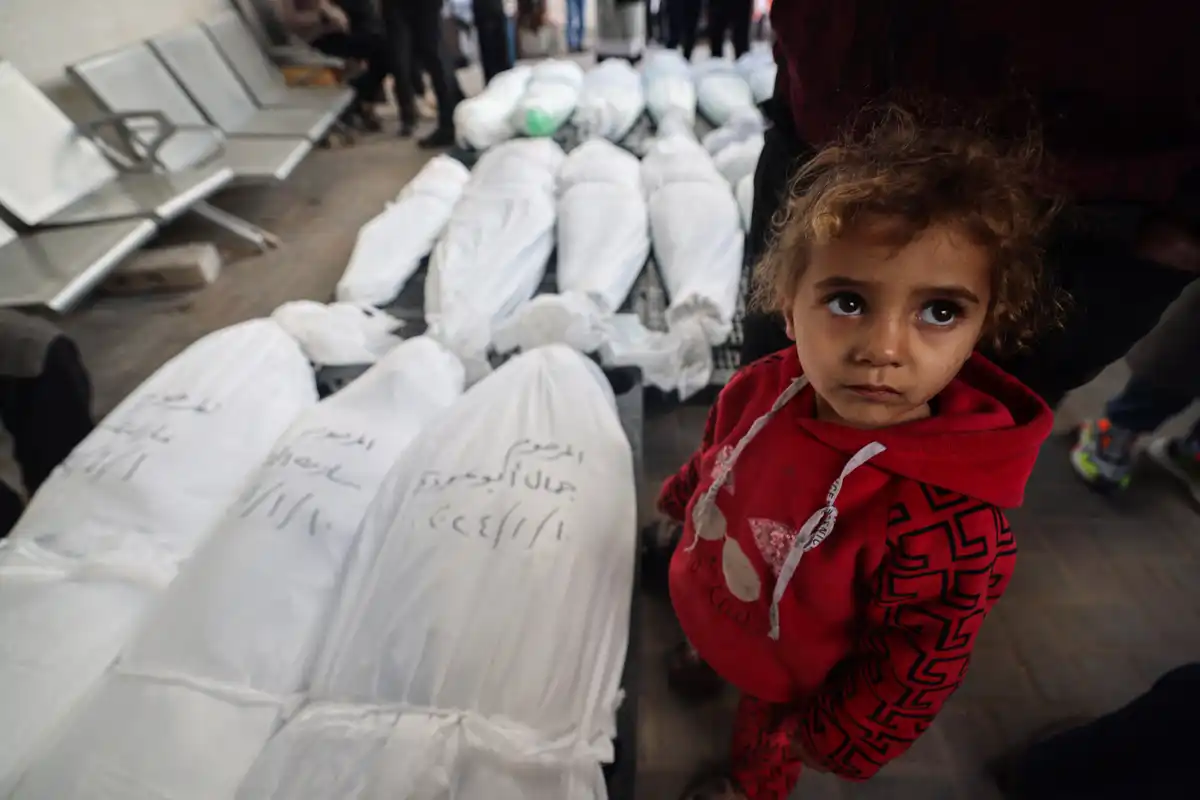

"We have not received any updates on the safety of Kamal Adwan Hospital Director since his arrest," Ghebreyesus added in a press statement on Saturday, stressing that the international organization continues to urge Israel to release him.


He stressed the need to stop attacks on hospitals and health workers.

PALESTINE

Sat 04 Jan 2025 8:58 pm - Jerusalem Time

"Gaza Government": 184 Palestinian killed as a result of 94 Israeli raids in 72 hours

The government media office in Gaza announced on Saturday that the Israeli occupation army carried out more than 94 air strikes within 72 hours, targeting unarmed civilians in the governorates of the Strip, which led to the killing of 184 Palestinians and the injury of dozens of others.


He said in a statement: "In a dangerous and immoral escalation as usual, the Israeli occupation army carried out more than 94 raids, shelling and crimes over the past 72 hours, targeting defenceless civilians and residential areas in the governorates of the Gaza Strip and in Gaza City in particular, in a brutal and deliberate manner."


He added: "The attacks resulted in the martyrdom of more than 184 Palestinians, including dozens of martyrs whose bodies did not reach hospitals due to the destruction of the infrastructure and the inability to reach them under the rubble, and because the occupation prevented ambulances, civil defense, medical crews, relief and emergency teams from reaching these bodies and dozens of wounded."


The government media office continued: "These crimes represent a flagrant violation of all international laws and norms, and fall within the category of war crimes and genocide targeting innocent civilians in the Gaza Strip."


He pointed out that "the occupation is using a scorched earth policy, where it is blowing up entire residential blocks and their residents, causing the destruction of dozens of homes on the heads of their residents, which has led to the fall of a large number of martyrs and wounded, including women and children."


He explained: "These deliberate attacks are part of a series of war crimes committed by the occupation against our Palestinian people, as it practices a policy of mass killing and ethnic cleansing in an attempt to terrorize our Palestinian people and forcibly displace them from their land."


The Government Media Office called on the international community and the Security Council to "assume their legal and moral responsibilities, intervene immediately to stop the aggression and prosecute the occupation leaders before international courts."


He also called on the United Nations to "send independent international investigation teams to document these heinous crimes and bring their perpetrators to justice."


PALESTINE

Sat 04 Jan 2025 7:45 pm - Jerusalem Time

A Palestinian child was injured by Israeli forces’ bullets north of Hebron

A 16-year-old child was shot by Israeli occupation forces, Saturday evening, in the town of Beit Ummar, north of Hebron.


The Palestinian Red Crescent Society reported that its crews transferred a child to the hospital from the town of Beit Ummar who had been shot with live ammunition in the thigh.


According to local sources, the occupation forces stormed the Al-Dahr area in the town and climbed onto the roof of a house, which led to the outbreak of clashes during which the soldiers fired bullets and tear gas canisters, which resulted in a child being injured by live bullets, and dozens of citizens suffering from suffocation, who were treated in the field.

PALESTINE

Sat 04 Jan 2025 7:12 pm - Jerusalem Time

Biden administration urges Hamas to accept ceasefire deal

White House National Security Council spokesman John Kirby said Friday that the Biden administration is urging Hamas to sign a ceasefire agreement that would allow the release of the hostages, while Hamas announced the resumption of indirect negotiations with Israel regarding the truce in Gaza, Friday, in Qatar.


Kirby added that the White House welcomed Israel's decision to send another team to Doha to continue negotiations.


He stressed that America remains committed to working to ensure the maintenance of the ceasefire between Lebanon and Israel.


Hamas announced in a statement on Friday that "indirect negotiations will resume today, Friday, in the Qatari capital, Doha."


The movement explained: "This round will focus on the agreement leading to a complete ceasefire, the withdrawal of the occupation forces from the Gaza Strip and the details of implementation, and the return of the displaced to their homes from which they were expelled in all areas of the Strip."


Qatar, Egypt and the United States have been mediating talks between Israel and Hamas for months that have failed to end more than a year of devastating conflict in Gaza.


The Israeli occupation authorities announced that a mid-level Israeli negotiating team for the hostages held talks on Friday with Qatari mediators, who were also hosting Hamas representatives in Doha for parallel discussions, in an attempt to overcome the ongoing differences between the warring parties.


The talks had been stalled for about a week and a half after Israeli Prime Minister Benjamin Netanyahu recalled the Israeli negotiating team from Qatar for internal deliberations on December 25. Since then, optimism about a deal being reached before US President-elect Donald Trump’s inauguration on January 20, 2025, has waned.


Axios quoted a senior Israeli official as saying that Israel and Hamas are still at an impasse on almost all the issues being negotiated, including the presence of the Israeli Defense Forces in the Netzarim and Philadelphi corridors, the Israeli demand to deport some Palestinian security prisoners released in the deal, the frequency of the release of hostages, and the date for starting negotiations on the second phase of the deal.


The main obstacle to reaching an agreement is the reluctance of the Israeli occupation authorities to agree to a permanent ceasefire.


Last December, Qatar expressed optimism that "momentum" would return to the talks after Donald Trump won the US presidential election.


But a war of words then broke out, with Hamas accusing Israel of setting "new conditions", while Israel accused Hamas of putting "new obstacles" to reaching an agreement.