OPINIONS

Wed 03 Jan 2024 10:01 pm - Jerusalem Time

Israeli Writer| New exposed Israeli lies

Antoine Shalhat

Antoine Shalhat

Opinion Writer

The general Israeli public is not privy to information about the course of the war derived from sources other than the army. Some of the lies promoted by the army are beginning to be exposed by mere facts.

As the brutal Israeli war on Gaza approaches its fourth month, the range of questions being raised in Israel has also expanded, especially from analysts and opinion writers on the right-wing spectrum. These are questions that would shed light on what can be considered an ongoing and gradual failure that followed the greatest strategic failure. Which was revealed by the Al-Aqsa flood attack on October 7. Drawing these questions alone, the following can be noted:


First, although the general Israeli public does not have access to information about the conduct of the war from sources other than the army, some of the lies promoted by the army are beginning to be exposed by the bare facts. For example, those related to dry statistics. The Israeli army published before the end of last year that the frequency of launching rockets and shells from the Gaza Strip towards Israeli territory was on December 7, 1975 and then decreased, thanks to the “military achievements” achieved, to 23 On December 27, it reached 14, which means it was “eroded” by 80%. Immediately afterwards, more than 20 rockets were launched from Gaza towards central Israel. From this, an opinion columnist for the newspaper Yisrael Hayom concluded that the army is lying in order to prevent the loss of “national righteousness.”


Secondly, this Israeli lie is not limited to the alleged losses of the Palestinian resistance, and its reflection on its capabilities and ability to withstand and confront, but also applies to the stages of the war according to its general nature, and each stage separately. What is meant is not only the timetable and the starting and ending points, but also the goals that were set for each stage and the extent of their achievement. 

What is being debated most over the past few days is the end date of what is described as the second phase of the war, when the comprehensive air and artillery bombardment will stop, and the transition will take place to the third phase, which, in the Israeli interpretation, means directing military operations against the Hamas movement and the resistance factions only. 

Recent news circulating in the Israeli media indicates that there is a disagreement between Israel and the United States regarding the start date of the third phase, noting that Washington wants it to begin no later than mid-January, while Israel insists that it begin finishing the second phase. Moving to the third in late January.


In this axis, the conclusions of several analysts on the right-wing spectrum confirm, as can be inferred from what appears in the newspaper “Israel Hayom”, that the frequent talk about moving to the third stage is parallel to the absence of when did the second stage begin? What were its goals? What did you achieve from it? 


Among what was written in one of these analyses: Reports on the progress of the Israeli army in the Gaza Strip have become similar, the achievements are very slow and meager, and the high prices are piling up. The fiery statements regarding the elimination of the Hamas movement and its leaders began to be dominated by ambiguity, and instead other ideas began to emerge, which were rejected by Israel, such as expelling the movement’s leaders, as happened with the leaders of the Palestine Liberation Organization during the war on Lebanon in 1982, and integrating the movement’s fighters into the authorities’ apparatus. Palestinian.


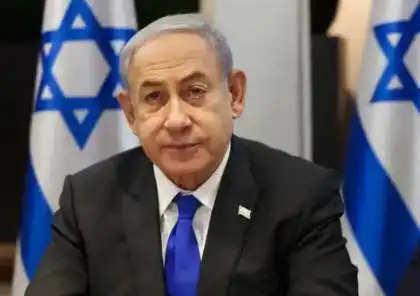
Third, Prime Minister Benjamin Netanyahu and his allies on the extreme right do not hesitate to announce positions that contradict what the United States desires regarding the day after the war. In contrast, right-wing analysts assert that the authors of this declaration have the “luxury” of announcing contradictory positions, but not the ability not to implement Washington’s desires. 


There is no doubt that any reading of the American role in the current war must start from the fact that it will not remain limited to providing support to Israel and supplying it with ammunition during the war, but rather goes beyond that to intervening in formulating a political and strategic horizon for it, and linking the Israeli military objectives to the political and strategic objectives and interests of the United States. In the Middle East.

ARAB AND WORLD

Wed 03 Jan 2024 9:51 pm - Jerusalem Time

White House: We accept the idea that Hamas will continue to exist... Its members are organized as military forces

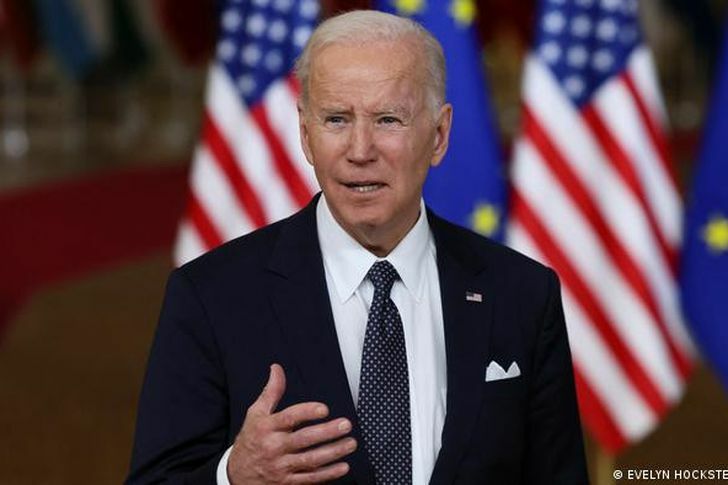
The White House reported on Wednesday that a new conversation took place between President Joe Biden and Israeli Prime Minister Benjamin Netanyahu on Tuesday.


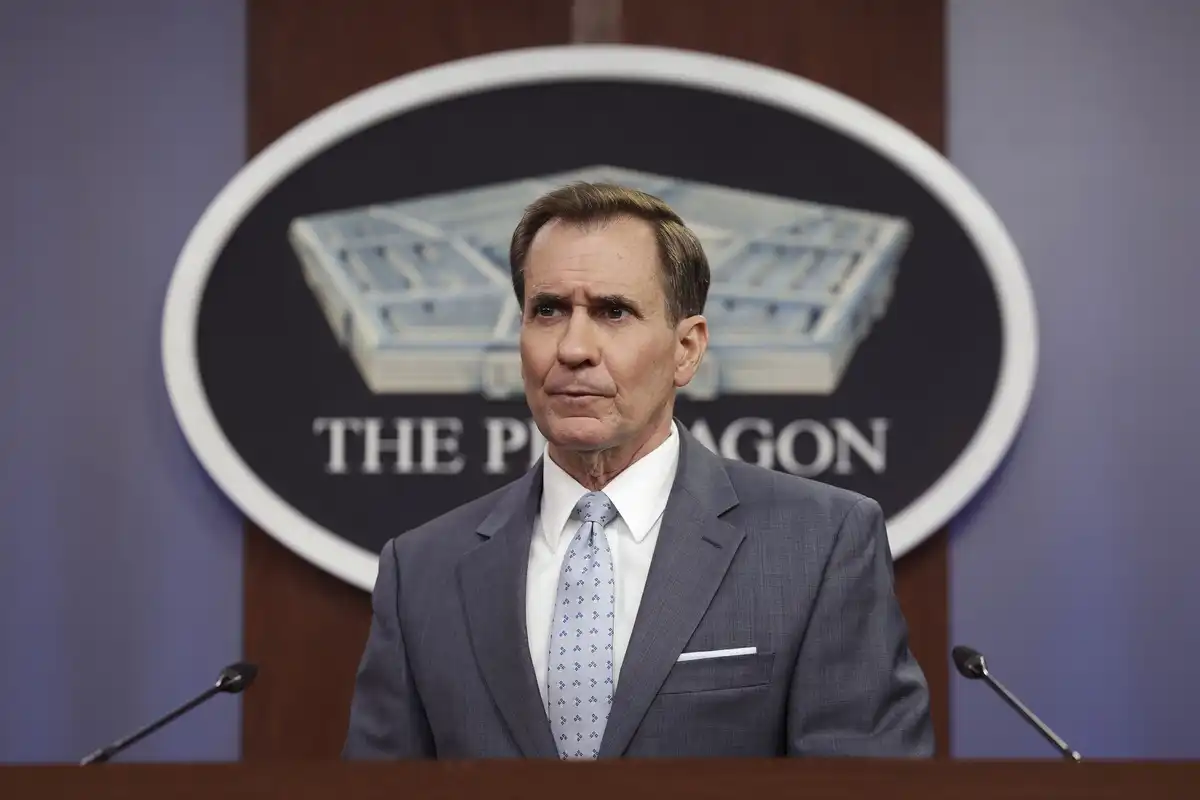
White House National Security Council spokesman John Kirby also said that Washington "will work to maintain a military presence in the Middle East region." He stated that "13 countries joined the coalition for the Red Sea operation."


He said that Washington “believes that the Israeli army is capable of undermining Hamas’ ability to launch attacks inside Israel.” However, he stated that "Hamas still has great capabilities in the Gaza Strip."


He added: "We do not believe that the military attack will eliminate Hamas' ideology, and we accept the idea that Hamas will continue to exist."


He added, "We have no details about Iran's bombings today." He continued: "We do not want the war between Israel and Hamas to expand in the region, but we will work to protect freedom of navigation in the Red Sea."


Kirby said, “Hamas members are organized as military forces and not just a militia with military capabilities and structure,” as he described it.


He stated that "talks to release hostages from Gaza are ongoing and serious."

Before Kirby's statements, the US State Department said, "We were not informed in advance about the attack that occurred south of Beirut, and we do not have information confirming Israel's involvement in it."


It added, "Gaza cannot be a launching pad for attacks against Israel."


It said, "What we want to see at the end of this conflict is to see Gaza and the West Bank under one leadership."


It stated that "Israel has the full right to combat terrorism, but we urge them to abide by international law," noting that "the aid, food and medicine reaching the Palestinians now is insufficient and must be increased."


The US State Department stated that “there should be no forced displacement of the residents of Gaza,” adding: “We were told that the statements of Israeli ministers regarding forced displacement do not represent government policy, and we affirm our rejection of any forced displacement.”


The United States and 11 allied countries urged the Houthis, on Wednesday, to "immediately stop their illegal attacks" on ships in the Red Sea, under penalty of "bearing the consequences," while a report indicated that Washington had prepared options to strike the Houthis.


This coalition of countries said in a statement, "The Houthis must bear responsibility for the consequences if they continue to threaten lives, the global economy, and the freedom of movement of goods in the region's essential waterways."

ARAB AND WORLD

Wed 03 Jan 2024 9:48 pm - Jerusalem Time

Borrell: The solution to the Israeli-Palestinian conflict must be imposed from abroad

The European Union's High Commissioner for Foreign Policy and Security, Josep Borrell, stressed on Wednesday that a possible solution to the Israeli-Palestinian conflict must be "imposed from the outside."


Josep Borrell said in a speech he delivered during a diplomatic conference in the Portuguese capital, Lisbon, that "the Israelis and Palestinians will never be able to reach an agreement."


"What we have learned over the last 30 years and what we are learning now from the tragedy in Gaza is that the solution must be imposed from the outside," Borrell said.


Josep Borrell acknowledged the massive human losses resulting from excessive Israeli bombing of civilians, warning that the numbers of displaced people would reach unprecedented levels.


This comes as voices criticize the role of the European Union and its inability to enforce humanitarian and international laws.


The European official's statements coincided with renewed clashes between Palestinian factions and the Israeli army in Khan Yunis and the northern Gaza Strip, amid continued Israeli bombing of the Strip.


Moreover, clashes continue in the Gaza Strip for the 89th day in light of the continued intense Israeli bombing of various cities in the Strip, amid a worsening humanitarian catastrophe, and increasing escalation in the region.

ARAB AND WORLD

Wed 03 Jan 2024 9:45 pm - Jerusalem Time

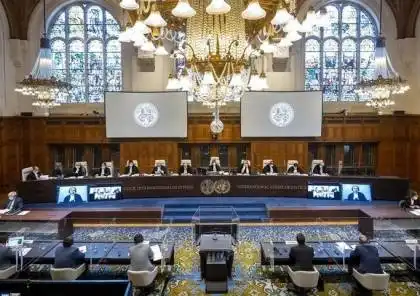
ICJ holds the first session of Israel's trial for committing genocide in Gaza on January 11

On January 11, the International Court of Justice will hold its first session to consider the lawsuit filed by the Republic of South Africa against Israel against the backdrop of accusing the latter of committing genocide in its war on the Gaza Strip.


This came according to what was announced by Clayson Munilla, spokesman for the Ministry of International Relations and Cooperation in South Africa, on Wednesday, in a blog post on the “X” platform.


Monella said that the first session of the trial is scheduled to begin on January 11 in the Dutch city of The Hague, and will continue the next day.

He explained that his country is continuing its preparations in this regard.

South Africa recently submitted a request to open a case before the International Court of Justice against Israel, against the backdrop of its involvement in “acts of genocide” against the Palestinians in the Gaza Strip, according to a statement by the same court.


On November 21, 2023, South Africa suspended its relations with Israel, in protest against its devastating attacks in Gaza.


This was preceded by South Africa recalling its ambassador to Israel, to consult on the attacks on the Strip, which is witnessing an unprecedented humanitarian catastrophe.


In turn, the Malaysian Foreign Ministry described South Africa's decision to file the lawsuit as a "concrete step" towards accountability, and expressed its support for it.


During this trial, the International Court of Justice may issue a decision to stop the Israeli attacks on the Gaza Strip.


Since October 7, 2023, the Israeli army has been waging a devastating war on Gaza, leaving “22,313 dead and 57,296 injured, most of them children and women, massive infrastructure destruction and an unprecedented humanitarian catastrophe,” according to the Gaza Strip authorities and the United Nations.

ARAB AND WORLD

Wed 03 Jan 2024 9:43 pm - Jerusalem Time

Germany: We strongly reject Israeli calls to displace Palestinians from Gaza

Germany denounced the statements of the Israeli Ministers of National Security, Itamar Ben Gvir, and the Minister of Finance, Bezalel Smotrich, regarding the displacement of Palestinians out of the Gaza Strip.


German Foreign Ministry spokesman Sebastian Fischer said: “Such statements do not help solve the problem, and we strongly reject Ben Gvir and Smotrich’s statements.”

He explained that the position on this issue was clarified during the G7 foreign ministers’ meeting in Tokyo, and that forced removal from Gaza and reducing the area of the Strip should also be out of the question.


He pointed out that Germany continues to support the two-state solution, which “remains the only permanent model for peaceful coexistence between Israelis and Palestinians,” and that it has been working in this regard for a long time.

Fisher called for increasing humanitarian aid to Gaza, noting that progress had been made by opening the Kerem Shalom crossing.


In recent weeks, calls have escalated in Israel to deport Palestinians from the Gaza Strip, which faces widespread regional and international rejection.


On Monday, the Israeli Ministers of National Security and Finance, Itamar Ben Gvir and Bezalel Smotrich, announced their support for the “voluntary displacement of Palestinians” from the Gaza Strip, to which Hamas responded in a statement, stressing that the statements of Israeli leaders about the displacement of the residents of the Gaza Strip are “just dreams.” An unenforceable vigilance,” and called on the international community to “intervene to confront it.”


Since last October 7, the Israeli occupation army has been waging a devastating war on Gaza, which as of Tuesday left 22,185 dead and 57,35 injured, most of them children and women, massive destruction of infrastructure and an unprecedented humanitarian catastrophe, according to the Gaza Strip authorities and the United Nations.

Sama News


ARAB AND WORLD

Wed 03 Jan 2024 9:39 pm - Jerusalem Time

Israeli Supreme Court decides to postpone the implementation of a law preventing the removal of Netanyahu

Today, Wednesday, the Israeli Supreme Court decided to postpone the implementation of an amendment to the “Basic Law: Government” aimed at preventing the removal of Prime Minister Benjamin Netanyahu, so that the amendment will enter into force at the beginning of the twenty-sixth session of the Knesset, as “personal legislation that constitutes an abuse of the constituent power of the Knesset.” .


The court’s decision came in support of 6 judges, including the outgoing President of the Supreme Court, Esther Hayut, and the opposition of 5 others, noting that the court had considered the petitions submitted against the amendment, in an expanded judicial body composed of 11 judges, in a session held on Thursday, September 28. the past.


The legislation enacted by the government coalition and approved by the Knesset last March, as part of a plan to weaken the judiciary, aimed to prevent Netanyahu’s removal, by declaring his inability to carry out his duties, in light of his violation of the conflict of interest agreement that stipulates that he is prevented from dealing with judicial changes. Due to his trial on serious corruption charges.


The amendment stipulates that the Prime Minister can be removed by personally declaring his inability, physically or psychologically, to perform his duties, or by the government declaring his inability to carry out his duties for health reasons, provided that three-quarters of the ministers support this step, noting that this task was entrusted to the government’s judicial advisor. 


The Supreme Court had clarified that its decision “does not talk about canceling the amendment, but rather about the date of entry into force of the amendment in order to cancel the personal factor (that the amendment came to prevent the removal of Netanyahu),” and made it clear that the issue revolves around the entry into force of the law, and not the cancellation of the amendment itself to the “law.” Basis: The government,” while the government coalition considers that “the court is not authorized to repeal the Basic Law.”


PALESTINE

Wed 03 Jan 2024 9:16 pm - Jerusalem Time

West Bank: Israel releases 36 Palestinian prisoners

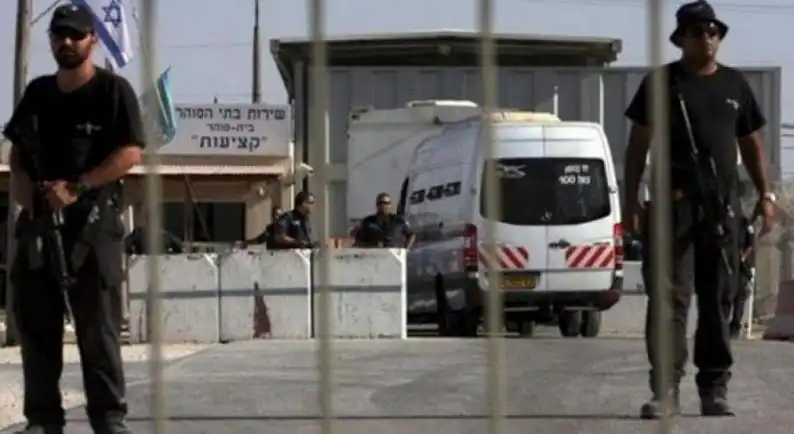
On Wednesday evening, the Israeli occupation forces released 36 prisoners from their prisons from different governorates, at the western entrance to Beit Fajjar, south of Bethlehem.


Member of the Beit Fajjar municipality, Muhammad Al-Kar, said that the occupation forces released 36 prisoners, including 15 from the governorates of Jenin, Tulkarm, and Nablus, and they were hosted in the Beit Fajjar municipal hall.


He added that the prisoners are: Ahmed Rafiq Hanaysha, Hassan Ibrahim Hassan, Hamza Munther Atwa Shabeer, Naji Shaaban Naji, Omar Abu Hassan, Muhammad Yahya Shahwan, Muhammad Shafiq Moin Azouqa, Hazem Hassan, Muhammad Eid Muhammad Abu Raida, Muhammad Nafez Saeed Hoshiya, and Jihad. Muhammad, Fawaz Alaa Fawaz Al-Jabari, Anas Mahmoud Al-Sarisi, Anas Khatatba, and Ali Manasir.


Also among them: Ghaleb Taha Manasrah, Muhammad Hamidat, Muhannad Hisham Al-Sharif, Haitham Hanaysha, Ahmed Jihad Taqatqa, Muhammad Mutee Mallah, Aseed Murshid, Akram Tallawy, Naeem Murshid, Muhammad Abu Mumin, Hassan Ibrahim Adwan, Khaled Musa Ahmed, and Asid Imad Dweikat. Amid Najwan, Salim Abu Zaatar, Nour Al-Fakhoury, Majd Jawdat Lotfi Malaysha, Sharif Omar Al-Azab, Rami Muhammad Radhi Hoshiya, Rashad Ismail Radhi Hoshiya, and Ghassan Al-Batmeh.

ARAB AND WORLD

Wed 03 Jan 2024 9:04 pm - Jerusalem Time

Southern Lebanon: 3 dead in an Israeli bombing that targeted a house

Three Lebanese were killed this evening, Wednesday, as a result of an Israeli bombing that targeted a house in the town of Markaba, south of Lebanon.


The National News Agency reported that the Israeli occupation artillery and aircraft bombed the town of Aita al-Shaab, by throwing an air-to-ground missile at the targeted area, in conjunction with artillery shelling, adding that the bombing also targeted the outskirts of the town of Naqoura and the Labouneh area.

ARAB AND WORLD

Wed 03 Jan 2024 7:47 pm - Jerusalem Time

Hezbollah Secretary General : Today we are more prepared for confrontation with Israel

Hassan Nasrallah said today, Wednesday evening, in a speech, from the southern suburb of Beirut, where the Hamas leader, Saleh Al-Arouri, was assassinated yesterday, Tuesday, that “the Palestinian issue was on its way to oblivion before the ‘Al-Aqsa Flood’.” , which was carried out by the Hamas movement on the seventh of last October, noting that the sudden attack dealt a “severe blow to the path of normalization.”


Nasrallah considered that Hezbollah's involvement in the war and its opening of "the confrontation front since October 8th made Israel lose the element of surprise," adding that "what happened yesterday is very dangerous, because it is an attack on the southern suburbs, and it is the first since 2006."


Nasrallah said that “there is no one in the Zionist entity who has an image of victory yet,” stressing that Israel “is trying to present an image of victory by assassinating Al-Arouri,” whose death he attributed “and his companions to an Israeli aggression on the southern suburbs,” adding that he will deliver another speech today. Next Friday.


He added, "The Al-Aqsa flood brought down Israel's image in the world, which was helped by the Western media," adding that it "confirmed that the Palestinian people cannot forget their land or their cause." He also pointed out that “the real goal of the Israeli aggression is to displace the population of the Gaza Strip.” He also said, "One of the results of the Al-Aqsa flood is that it destroyed the image of America that was promoted and presented in its ugliest truths."


He believed that "one of the results of the Al-Aqsa flood was the rise in support for the resistance and the option of resistance within Palestine and at the nation level." He added, "Israel believed that Operation Al-Aqsa Flood gave it an opportunity to eliminate the resistance in Gaza, the West Bank, and Lebanon."


He stated that "the lack of confidence in the Israeli army affects the essence of the existence of the Zionist entity," adding that "the resistance has become bolder and more prepared for confrontation, and even American intervention will not deter the resistance."


He added, "The Al-Aqsa Flood operation and the past few months represent the most serious challenge to the axis of resistance," adding that "there is no person directing or moving the axis of resistance, and each of its parties decides for itself, according to the interests of its people and their cause independently."


Israeli Prime Minister Benjamin Netanyahu had threatened to assassinate Al-Arouri before the “Al-Aqsa Flood” attack and the war on Gaza. Nasrallah responded to this threat and vowed that targeting any Palestinian figure in Lebanese territory would lead to escalation. Officials in Israel believe that the context of matters has changed and that the Lebanese front is in a state of continuous escalation, after the war on Gaza.

PALESTINE

Wed 03 Jan 2024 5:41 pm - Jerusalem Time

War on Gaza: Series of Israeli raids on citizens' homes leave dozens of killed and wounded

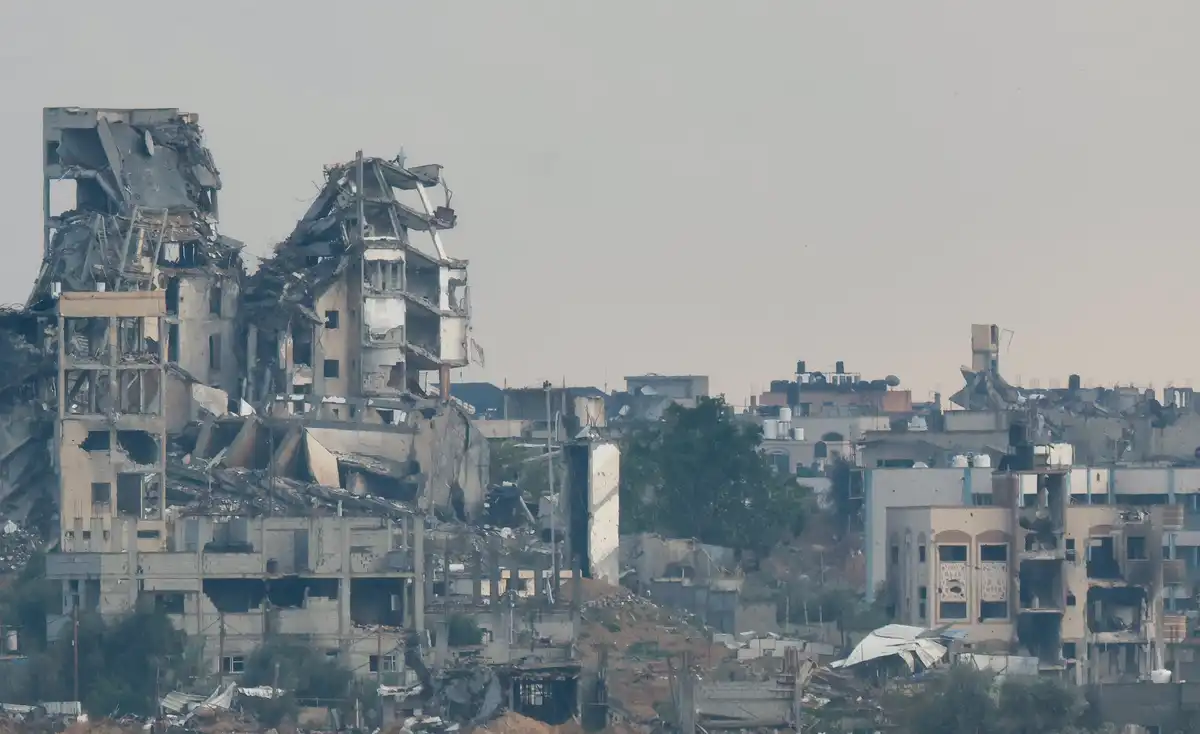
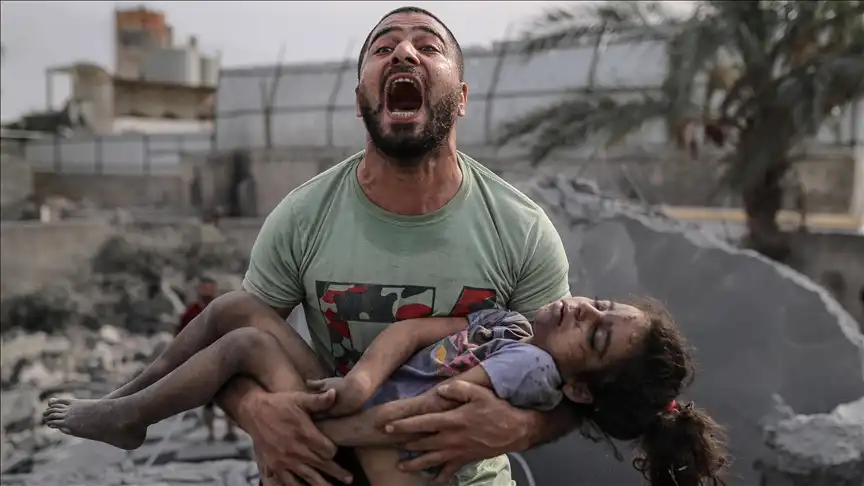
Dozens of citizens were killed, and others were injured, as a result of an Israeli bombing that targeted citizens' homes in the central and southern Gaza Strip.


3 citizens were killed, as a result of military aircraft bombing a group of citizens in the Khirbet Al-Adas area in Rafah, south of the Gaza Strip.


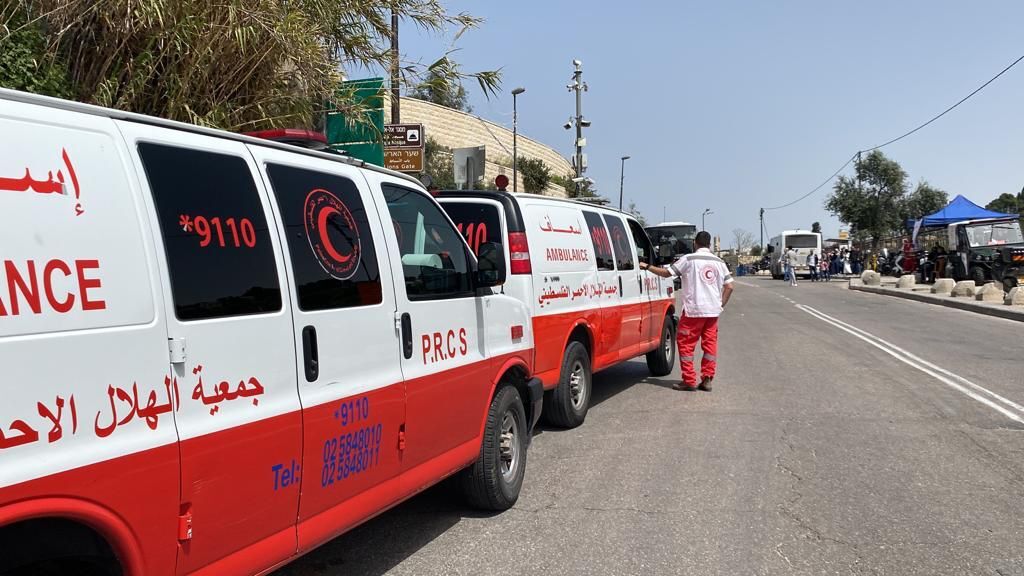
The Palestinian Red Crescent Society reported that several residential buildings were targeted in the vicinity of Al Amal Hospital and the society’s headquarters in Khan Yunis, causing severe panic among the ranks of the displaced people in the hospital.


The occupation also launched raids targeting the homes of citizens in the Central Governorate of the Gaza Strip, which led to the death of dozens of citizens and the injury of others who were taken to Al-Aqsa Martyrs Hospital, while the occupation aircraft bombed a house for the Abu Assad family in Deir al-Balah.


A female citizen was killed, and others were injured, as a result of a raid launched by the Israeli occupation on a house for the Agha family, south of Khan Yunis. A number of citizens were also killed as a result of a house being targeted in the Jabalia camp, north of the Gaza Strip.


Dozens of displaced people were also injured, including seriously, inside Abu Helu Preparatory School in Al-Bureij camp, as a result of occupation aircraft targeting its surroundings.


The occupation forces launched an air raid on the homes of the families of: Al-Ghamri, Abu Rukn, Hamdan, Al-Shanti, and Al-Ansar Mosque, and carried out intense fire belts that targeted the girls’ secondary school, agricultural lands, the vicinity of the dispensary area, Wadi Abu Rashid, and the vicinity of the main entrance to Al-Maghazi camp in the central Gaza Strip.

15 citizens were killed as a result of the continuous Israeli bombardment since the morning on Khan Yunis in the south of the Gaza Strip, while aircraft continued to bomb the Nuseirat camp in its center.

PALESTINE

Wed 03 Jan 2024 5:26 pm - Jerusalem Time

A young man with disabilities was injured by Israeli soldiers east of Yatta, Hebron

A young man with disabilities was injured this Wednesday evening, as a result of Israeli occupation forces firing live bullets at him, east of Yatta, south of Hebron.


Eyewitnesses reported that the young man was injured in the lower extremities while he was on the side of the road near the Arab Al-Najada community in the Bedouin desert east of Yatta, where the occupation forces prevented citizens from reaching him.

ARAB AND WORLD

Wed 03 Jan 2024 4:23 pm - Jerusalem Time

Absence of discussions within Biden administration to limit military aid to Israel

Despite Israel's mass slaughter in Gaza, there are "no serious discussions" within the Biden administration about isolating Israel or placing any conditions on military aid, the New York Times reported earlier this week.


The report detailed President Biden's commitment to supporting the Israeli war on the Gaza Strip, which has destroyed nearly 70% of the Strip so far, saying that "he has engaged in the conflict more intensely than almost any other issue during his three years in office."


American and Israeli media reported that US President Joe Biden held tense talks with Israeli Prime Minister Benjamin Netanyahu and made minimal efforts to get Israel to change its tactics, but he refuses to use any influence that the United States possesses to pressure Israel.


At the same time, Israel acknowledges that the United States is its main supporter and does not want to completely ignore President Biden's proposals. According to reports, Israel has agreed to some steps requested by the United States, including allowing limited aid to be delivered to Gaza, which the United Nations and other relief agencies say is completely out of proportion to the catastrophic humanitarian situation in the Strip, as hundreds of thousands of Palestinians face it. Famine-like conditions.


The New York Times report said that Israeli officials “realize that President Biden is their most important ally amid growing global criticism and realize that he is the only thing preventing the United Nations from imposing sanctions” on Israel. Besides unconditional military support, the United States also provides Israel with political cover and has used its veto power on two separate occasions to reject calls for a ceasefire in the UN Security Council, or worked to water down several resolutions in the Security Council that called for a ceasefire in Gaza.


The Gaza Health Ministry said on Tuesday that the death toll in Gaza exceeded 22,000 on Tuesday, including more than 8,000 children. More than 57,000 Palestinians were injured, and nearly 90% of Gaza's population was displaced.


The Biden administration showed its commitment to supporting the Israeli offensive on Friday by bypassing Congress for the second time since October 7 to deliver more weapons to Israel. The most recent deal reached was the purchase of 155 mm artillery shells and related equipment worth $147.5 million.


IIn turn, Independent Senator Bernie Sanders (from the state of Maine) said in a tweet on the X platform last week: “After more than 20,000 Palestinians were killed and more than 53,000 were injured. Congress must not provide a single additional penny to the extreme right-wing government of Netanyahu to continue its horrific war against men, women and children in Gaza,” but he did not demand a ceasefire.

ARAB AND WORLD

Wed 03 Jan 2024 3:25 pm - Jerusalem Time

Iran: More than 100 dead and 140 injured in two bombings near the grave of Qassem Soleimani

Iranian television reported that an explosion occurred near the road leading to the grave of Qasem Soleimani in Kerman province.


Iranian television also reported that a second explosion was heard on the road leading to the shrine of Qassem Soleimani in Kerman Province, southern Iran.


The Iranian Emergency Authority announced that the death toll from the two explosions near the shrine of Qasem Soleimani in the Kerman province in the south of the country had risen to 73 dead and 170 wounded.


Police and medical aid went to the site after the two explosions occurred on the road leading to the Martyrs' Park in Kerman near Soleimani's grave in southern Iran, on the fourth anniversary of his assassination, according to what was reported by the French news agency AFP.


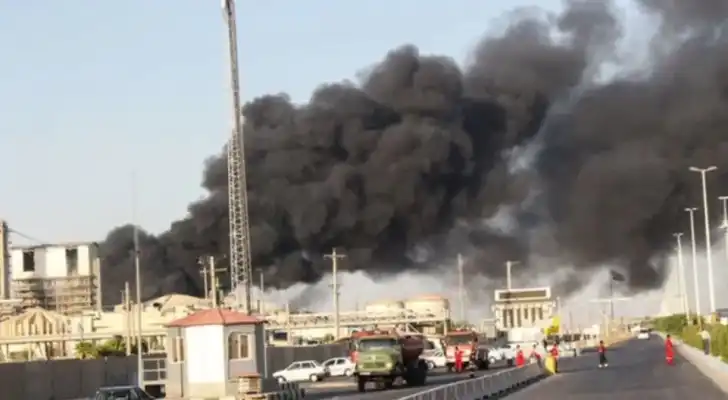
103 people were killed and at least 141 injured, as a result of two successive bombings that occurred near the grave of Qassem Soleimani in the city of Kerman, southern Iran, coinciding with the commemoration of the fourth anniversary of his assassination, today, Wednesday.


In detail, the dead and injured are among those participating in commemorating the anniversary of Soleimani’s death.


Two explosions were heard near the shrine of the late Iranian Major General Qassem Soleimani, according to official television in Tehran, coinciding with the commemoration of the fourth anniversary of his killing by an American air strike in Iraq.


A witness from the city of Kerman said, "The first explosion occurred at the entrance to the 'Kerman Martyrs' cemetery, while the second explosion occurred 20 minutes later in another place," noting that the second explosion was stronger than the first and left a greater number of victims.


He added, "The first explosion occurred before the inspection area through a bag loaded with a bomb, leaving between 20 and 30 people dead, while the rest of the victims were caused by the second explosion."


Iranian television quoted local authorities in Kerman as saying that “the two explosions were caused by a terrorist attack by planting bombs.” While an informed source said, "The two explosions were caused by the detonation of two devices remotely."


State television initially announced that an explosion had been heard near the Sahib al-Zaman Mosque in Kerman Province, where the former commander of the Quds Force in the Revolutionary Guard lies.


Later, television reported that “a second explosion was heard” in the same place.


The footage showed thousands of people on the road, before an explosion was heard from afar, causing panic among those present, many of whom began running to get away from the place.


Smoke could also be seen rising in the background, while members of the security forces imposed a cordon. Scenes on state television showed many ambulances and paramedics at the scene.


The crowds were commemorating the fourth anniversary of Soleimani’s killing by an American air strike at dawn on January 3, 2020, shortly after his departure from Baghdad airport. The deputy head of the Iraqi Popular Mobilization Forces, Abu Mahdi Al-Muhandis, died with him.


Today's explosion comes in the midst of escalating regional tension against the backdrop of the Israeli war on the Gaza Strip.


They also occurred days after Tehran accused Israel of killing the leader of the Revolutionary Guard, Radhi Mousavi, as a result of a strike near Damascus, where he was performing “advisory” tasks within the “Axis of Resistance” in Syria. The two bombings also came the day after the killing of the leader of the Hamas movement, Saleh Al-Arouri, as a result of an Israeli bombing by a drone in the southern suburb of Beirut.

PALESTINE

Wed 03 Jan 2024 3:17 pm - Jerusalem Time

Gaza Health: The war toll has risen to 22,313 dead

The Ministry of Health in the Gaza Strip announced, on Wednesday, that the death toll of Palestinians as a result of the ongoing Israeli war since October 7 had risen to “22,313 dead and 57,296 injuries.”


The ministry said, in a brief statement on the Telegram platform: “The toll of the Israeli aggression has risen to 22,313 dead and 57,296 injuries since the seventh of last October.”


It added, "The Israeli occupation committed 10 massacres against families in the Gaza Strip, claiming 128 dead, in addition to 261 injuries during the past 24 hours."


ARAB AND WORLD

Wed 03 Jan 2024 3:16 pm - Jerusalem Time

Volker Türk: War crimes were committed in Gaza

The United Nations High Commissioner for Human Rights, Volker Türk, said that there are indications that Israel is committing war crimes and crimes against humanity in Gaza.


Turk expressed "real concerns" about Israel's compliance with human rights and international humanitarian law in its response to the October 7 attack.


He added that 70% of those affected by the violent Israeli bombing were women and minors.


Turk added, "It can be assumed that the majority of those affected are civilians." Moreover, he explained, collective punishment of Palestinians constitutes a war crime.


Turk indicated that there are indications that crimes against humanity may have been committed. “Given the heavy and disproportionate bombing, combined with the lack of effective humanitarian assistance, there are real concerns that need to be looked at more closely,” he said.


On the other hand, Turk referred to the resistance’s attack on Israel on October 7 as an illegal act, as it included “indiscriminate shooting at Israel and military action against civilian facilities.”


ARAB AND WORLD

Wed 03 Jan 2024 1:15 pm - Jerusalem Time

War in Gaza or regional war?

By Piere Haski 

By eliminating Salah al-Arouri, a senior Hamas leader, with a drone strike in Beirut, Israel took a calculated risk: that Lebanese Hezbollah and its Iranian allies would not go to war over the death of a member of Hamas. Risky bet.

Israel yesterday struck its strongest blow against the leadership of Hamas, the Islamist movement responsible for the October 7 massacre. But paradoxically, it was not in the Gaza Strip, which had been shelled incessantly for almost three months, that this blow was struck, but in Beirut, the Lebanese capital.

An Israeli drone eliminated the number two in the Hamas political bureau, Salah al-Arouri. He was in the organization's premises, in the southern suburbs of Beirut, the stronghold of its ally, the pro-Iranian Hezbollah. It was Hezbollah which confirmed the death of the Hamas leader and five other people, and which accused Israel.


Salah al-Arouri was an important figure in the organization. Last month, the French-speaking Beirut daily, “L’Orient-le-Jour”, recalled that his installation in Lebanon, from 2018, had marked the rise of Hamas in the country. With political action towards the Palestinian camps in Lebanon, but also a discreet presence of its military branch which worried Israel.

Israeli leaders needed success in their drive to eradicate Hamas after the October 7 attack. They have not achieved it so far in the Gaza Strip, despite the colossal human cost inflicted on Palestinian civilians. The two main leaders of the movement in the territory, Yahya Sinouar, and Mohammed Deif, remain untraceable. The elimination of the number two from the Political Bureau serves a maligned Israeli Prime Minister.


But Israel also took a calculated risk by striking a Hamas leader abroad. This risk is that of pushing Hezbollah a little further on the path to generalized war with Israel, bringing with it a bloodless Lebanon. Hezbollah leader Hassan Nasrallah is giving a highly anticipated speech today.


For almost three months, the risk of opening a front in northern Israel has been omnipresent, with a slow but controlled escalation on both sides. Israel is betting that the assassination of a Hamas leader will not tip Hezbollah into a war which would then change in scale.

Does this risk exist? Everything will depend on Iran. Hezbollah would not take the initiative for such a considerable escalation without the green light from Tehran, which ensures its arming and financing.

Iran had already suffered the blow after the death, on December 25, of the highest ranking officer of the Iranian Revolutionary Guards, General Razi Moussavi, during an Israeli strike in Syria. Tehran declared that Israel would pay “a high price” for this targeted assassination. This is therefore a second hard blow for Tehran, which has managed the escalation of the conflict to the millimeter for three months, without taking the risk of being drawn into it.

Strangely, this sudden rise in tension coincides with the American decision to withdraw the aircraft carrier Gerald Ford which had been in the Eastern Mediterranean since October. He played a deterrent role, and his departure is unexplained and can therefore be subject to contradictory interpretations.

Once again, the Middle East is at a decisive moment, not between peace and war, but between the Gaza war and a regional conflagration.

Source: (FRANCE INTER)

ARAB AND WORLD

Wed 03 Jan 2024 1:10 pm - Jerusalem Time

Newsweek: The Gaza war crushes Netanyahu

According to a new Israeli poll, Prime Minister Benjamin Netanyahu should not remain in power after the end of the war in Gaza.

A report by Newsweek magazine - today, Wednesday - pointed out that Netanyahu's condemnation was resounding in the wake of the attack by the Islamic Resistance Movement (Hamas) on October 7, and the declaration of war on this Palestinian movement, which prompted Israel to launch the most violent air strikes ever on Gaza.


The poll - in which 605 men and women participated, from December 25 to 28, and was published by the Israel Democracy Institute yesterday - showed that 85% of Israelis want Netanyahu (74 years old, who has served as prime minister three different times since 1996) to hand over power to a new person when the war ends.


Benny Gantz (retired general and former defense minister who is currently serving with Netanyahu in the war government) received 23% of support. About 30.5% of participants did not present a preferred candidate.


Among the Israelis surveyed, more than 56% said that continuing the fight against Hamas was the best way to recover the hostages. Only 24% supported the release of all Palestinian prisoners held by Israel in exchange for the release of all hostages, “even if that meant agreeing to Hamas’s demand to stop the fighting.”


Respondents also expressed their dislike of the United States' role in pushing for certain military conditions, including a ceasefire, due to the increasing numbers of civilian casualties, many of whom are children.


About 38.3% said that Israel “should never” respond to the demands of the United States and shift its military strategy to a “different phase” of the war to reduce violent bombing in densely populated areas. About 28% believe that Israel should not take this path.


The American magazine concluded that about 51% (of the Israeli respondents) want their army to take strong revenge on Hezbollah, saying that Israel “must strike a strong blow at Hezbollah now, even at the expense of opening another front in the north.”


Source: Newsweek +Aljazazera

ARAB AND WORLD

Wed 03 Jan 2024 1:03 pm - Jerusalem Time

Hebrew media Reveals the existence of secret talks between Israel, Congo and other countries to absorb Gaza migrants

Hebrew media reported on Wednesday that Israel is holding “secret talks” with the Democratic Republic of the Congo “to absorb (Palestinian) immigrants from the Gaza Strip.”

The Times of Israel news website said, “Israeli officials held secret talks with the State of Congo (Kinshasa) and several other countries to potentially accept (Palestinian) immigrants from Gaza.”

The website quoted an unnamed senior source in the Israeli mini-ministerial council: “Congo will be ready to receive the migrants, and we are holding talks with others.”

It pointed out that Intelligence Minister Gila Gamliel said in the Knesset on Tuesday: “At the end of the war, Hamas’ rule will collapse, there will be no municipal authorities, and the civilian population will depend entirely on humanitarian aid.”


She went on to say: “There will be no work, and 60 percent of agricultural land in Gaza will turn into security buffer zones.”

She added: “The Gaza problem is not only our problem. The world must support humanitarian migration, because this is the only solution I know of.”

These moves come despite public American criticism of calls for displacement from Gaza.

In this regard, US State Department spokesman Matthew Miller said on Tuesday in a statement: “The United States rejects the recent statements issued by Israeli ministers Bezalel Smotrich and Itamar Ben Gvir calling for the settlement of Palestinians outside the Gaza Strip.”

Miller considered, “These are inflammatory and irresponsible statements,” adding that the Israeli government, including through its president, expressed to them “repeatedly and consistently that these statements do not reflect government policy.”

In recent weeks, Israeli calls have emerged to voluntarily displace Palestinians from the Gaza Strip.

On Monday, Ministers Ben Gvir and Smotrich announced their support for the “voluntary displacement of Palestinians” from the Gaza Strip.

Since last October 7, the Israeli army has been waging a devastating war on Gaza, which as of Tuesday left 22,185 dead and 57,35 injured, most of them children and women, massive infrastructure destruction and an unprecedented humanitarian catastrophe, according to the Gaza Strip authorities and the United Nations.

ARAB AND WORLD

Wed 03 Jan 2024 12:52 pm - Jerusalem Time

Hebrew News Paper: Hamas is greater than reducing it to the assassination of Al-Arouri or Sinwar..

The Israeli political analyst in the Hebrew newspaper Yedioth Ahronoth, Nahum Barnea, confirmed that the most worrying reaction to the assassination of Al-Arouri is the future of the occupation prisoners held by the Palestinian resistance in Gaza.


Barnea said in an article published by Yedioth today that the belief that the assassination of Al-Arouri might increase the pressure on Hamas and Yahya Sinwar to complete an exchange deal is “a ridiculous claim; the Israelis can laugh at themselves with it, because the reality says that the assassination of Al-Arouri will delay the completion of the deal or perhaps undermine all negotiations through mediators.


The Israeli analyst described Al-Arouri as "a man who was able to wear two hats: political and military, with great skill until he became a cruel, difficult and deadly enemy."

He added: "Al-Arouri honestly obtained his place on the list wanted for exclusion, and even if he was not personally involved in planning and implementing the events of October 7 (the Al-Aqsa flood battle), the rising wave of resistance in the West Bank bears his full name."


Barnea considered that the messages behind Al-Arouri’s assassination are represented by three basic points: “The assassination conveyed a message to Hamas leaders that the Israeli security establishment’s threats to return to assassinations are not just idle talk, but rather serious and possible threats.”


As for the second message, it was to Hezbollah that “Israel, despite the events of October 7, still knows how to enter deep into Hassan Nasrallah’s house in Beirut.”


The third message is to the Israeli insiders: “Revenge against those responsible for killing Israelis is uncompromising.”


Perhaps, according to Barnea, the fourth message is that “Israel understands well the only language in the Middle East: killing for killing.”


However, the political analyst believes that targeted assassinations are not measured only by the blow that the “enemy” receives, but rather the important question is, “What can this assassination do to Israel? What is the price or what is the cost that it will pay in exchange for the value of the assassination and the benefit from it?!”


Whoever decided to assassinate Al-Arouri in Beirut expected that there would be a violent reaction from Hamas and Hezbollah, but he did not think well about the fate of the detainees and the exchange deal. Although it is true that the chance of reaching an exchange deal was slim even before the assassination in Beirut, but with regard to the lives of the detainees “Any delay may be decisive, and any assassination may lead to a counter-assassination,” according to Barnea.


He continued: "It is not comfortable to admit, but the decision to assassinate was a bet on the lives of the detainees, and time will determine whether this bet was justified."


In addition to the impact of Al-Arouri’s assassination on the Israeli detainees, the other expected scenario is that Hamas will respond to the assassination through operations in the West Bank and Jerusalem and launching rockets from areas “under its control” in Gaza, according to the Israeli political analyst’s article.


He continued: "Even if the events of October 7 did not succeed in fulfilling Yahya Sinwar's hopes of dragging Israel into a war on three fronts, the assassination of Al-Arouri could revive Sinwar's hopes," according to Barnea's opinion.


The political analyst believes that Hezbollah will respond, sooner or later, to the assassination of Al-Arouri, pointing out that the party’s response space is greater than Hamas’ response space.


He explained: “It is possible that (Hezbollah) will violate the rules of the game currently followed in the exchange of fire in the north and risk an all-out war; it can also attack Israeli tourists or Jewish centers abroad. Hezbollah can expand the borders that allow the Palestinian resistance factions in Lebanon to retaliate.” Although all of the party’s options for responding are known, the extent and time that the party can wait before responding remains ambiguous and unknown.”


Barnea also confirms that the assassination of Al-Arouri is not in the interest of the negotiations that the Americans and French have been conducting in Lebanon since the past few weeks. There was hope of reaching a diplomatic settlement that would prevent the war from extending and allow the population to return to their homes on the border. While US Secretary of State Anthony Blinken intended to come to Tel Aviv at the end of the week to strengthen settlement negotiations, he announced, following the assassination, the cancellation of his visit.


In his article, Barnea concludes by confirming one thing, which is that the assassination of Al-Arouri and his assistants, Samir Fandi and Azzam Al-Aqra, “although it will harm the activities of the Hamas movement in Beirut in the short term, it will not change the reality.” Hamas is a greater resistance movement than it can be reduced to any of its dead leaders or are potential dead ones, including Yahya Sinwar.

ARAB AND WORLD

Wed 03 Jan 2024 12:26 pm - Jerusalem Time

Israeli estimates of Hamas' response to the assassination of Al-Arouri

Israeli media reported on Wednesday that concerned circles have estimates that the Islamic Resistance Movement (Hamas) will respond to the assassination of Saleh Al-Arouri, deputy head of its political bureau, on the Lebanese side, with moderate participation from Hezbollah likely.


The Israeli Broadcasting Authority said that estimates indicate that since those who were killed yesterday, Tuesday, in Beirut, are practically responsible on a daily basis for Hamas’ shooting from Lebanon, this means that the movement will prepare a response to the assassination, and this may take some time.


It added, "In Israel they estimate that there will be a response from Hamas from Lebanon in all forms and possibilities in response to yesterday's assassination. At least they will try."


Regarding the Hezbollah issue, the source continued, “The assessment in Israel at the moment is that despite the fact that the attack on Al-Arouri was in the heart of the suburb, they will most likely look for some kind of middle response that will show shooting, but will not lead to war or Large-scale event.


The Israeli Broadcasting Corporation warned that police officers in various police directorates were instructed to increase vigilance in anticipation of attacks after Al-Arouri's assassination.


It indicated that special preparations are being made throughout Israel.

On Tuesday, the Israeli Walla news website quoted an unnamed Israeli official as saying that Israel is preparing for a major retaliatory response by Hezbollah to the assassination of Al-Arouri, including launching long-range missiles at targets in Israel.


On Tuesday evening, the Lebanese News Agency said, “An air strike with three missiles from an Israeli drone targeted a Hamas headquarters in the southern suburb of Beirut, resulting in 7 killed and the injury of 11 others,” while Hamas mourned in a statement Al-Arouri and the leaders of the Al-Qassam Brigades, Samir Effendi and Azzam Aqra’. And 4 other members of the movement.


The Hebrew newspaper Yedioth Ahronoth said that shortly after the assassination in Beirut, Hezbollah fired an anti-tank missile at the Moshav Margaliot area on the Lebanese border.


Last August 28, Hezbollah Secretary-General Hassan Nasrallah warned that “any assassination on Lebanese soil that targets a Lebanese, Palestinian, Syrian, Iranian, or others will have a strong reaction, and we will not allow the Lebanese arena to be opened to assassinations.”


The assassination in Beirut comes at a time when Lebanon's southern border has witnessed daily confrontations and bombing between Hezbollah and the Israeli occupation army since last October 8, resulting in dozens of deaths and injuries on both sides of the border.

PALESTINE

Wed 03 Jan 2024 11:03 am - Jerusalem Time

West Bank: Israeli settlers erect electricity poles to establish a settlement outpost south of Bethlehem

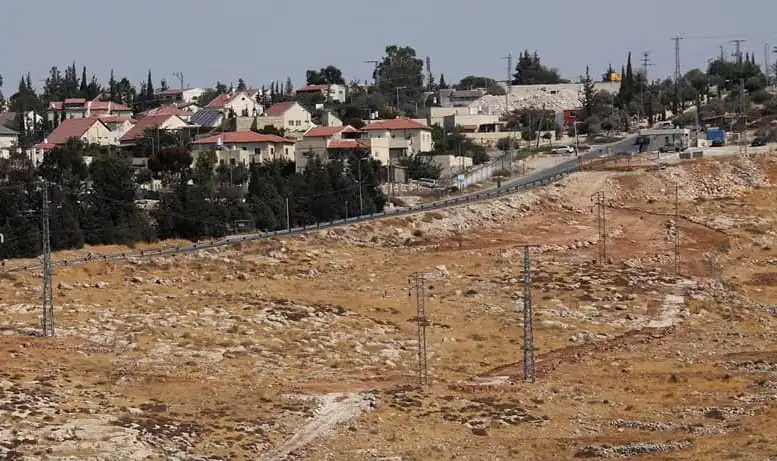
Today, Wednesday, settlers erected a number of electricity poles in the Tuqua Wilderness, southeast of Bethlehem, in preparation for establishing a new colonial outpost.


According to the director of the Office of the Wall and Settlement Resistance Commission in Bethlehem, Hassan Barijiyah: Settlers, protected by the Israeli occupation forces, installed electricity poles in the “Fathura” area in the Tuqu’ Wilderness, in preparation for establishing a new settlement outpost, near the “Tekwa” settlement, which is located on citizens’ lands.


It is noteworthy that the occupation forces and settlers escalated their attacks in the Tuqu’ wilderness area, by pursuing farmers, demolishing their agricultural rooms and tents, and seizing their contents.


PALESTINE

Wed 03 Jan 2024 10:08 am - Jerusalem Time

West Bank: Israeli forces launch an arrest campaign in the West Bank

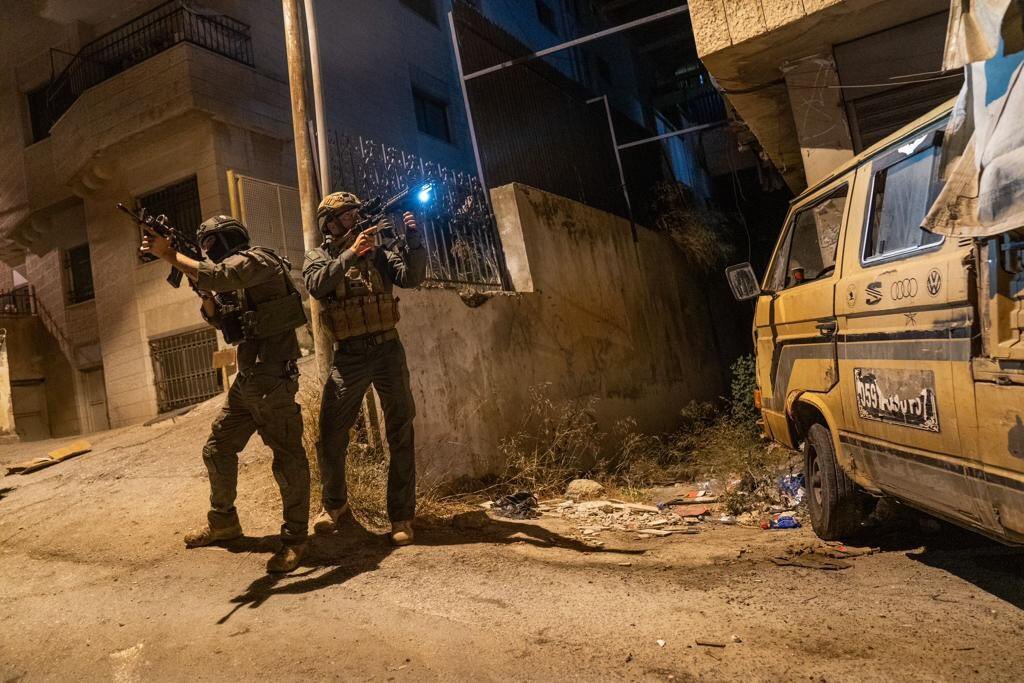
At dawn on Wednesday, the Israeli occupation forces launched a campaign of raids and arrests in various parts of the West Bank, which included confrontations.


ARAB AND WORLD

Wed 03 Jan 2024 10:07 am - Jerusalem Time

Former Egyptian Vice President calls on Arabs to participate in South Africa's lawsuit against Israel: Not joining is an indelible stain

Former Egyptian Vice President, Mohamed ElBaradei, said that the failure of Arab countries to support South Africa’s lawsuit against Israel in the International Court of Justice would be conclusive evidence that Arab regimes “do not represent their people, and are a stain that cannot be erased.”


ElBaradei indicated in a tweet on his account on the “X” website, Tuesday, January 2, 2024, that the International Court of Justice will hold its first session on the 11th and 12th of this month to consider South Africa’s lawsuit against Israel for committing the crime of genocide against the Palestinian people.


ElBaradei confirmed in a post on the “X” platform, “He believes that all Arab countries will participate effectively and through the best legal experts in supporting South Africa’s lawsuit against Israel,” and said: “In short, not participating will be conclusive evidence that the Arab regimes do not represent... its people, and a stain that cannot be erased.”


ElBaradei continued, “South Africa will ask the court to order preliminary measures to stop a ceasefire and any other military operations until the merits of the matter are decided.” He added, “All states parties to the Genocide Convention have the right to participate in the court’s deliberations and present written and oral arguments.” 


ElBaradei, who served as Vice President for months during the term of interim President Adly Mansour in 2013, added that any ruling issued by the International Court of Justice against Israel will have major political, economic and legal consequences.


South Africa's case against Israel

On Friday, December 29, 2023, South Africa submitted a request to the International Court of Justice to initiate proceedings against Israel for carrying out acts of genocide against the Palestinian people in the Gaza Strip, as announced by the International Court.


South Africa's lawsuit against Israel asserted that Tel Aviv's "acts and omissions bear the character of genocide, because they are accompanied by the requisite specific intent to destroy the Palestinians of Gaza as part of the broader national, racial and ethnic group, that is, the Palestinians," the ICJ said in a statement.


For its part, Israel attacked South Africa after the latter filed a lawsuit before the International Court of Justice accusing Tel Aviv of committing "genocide crimes" in the Gaza Strip.


The Israeli Ministry of Foreign Affairs said in a statement that Israel rejects (with disgust) what it described as “the blood conspiracy carried out by South Africa in its application submitted to the International Court of Justice.” It claimed that “South Africa’s argument lacks a factual and legal basis, and constitutes a cheap exploitation of the International Court of Justice.”

PALESTINE

Wed 03 Jan 2024 9:37 am - Jerusalem Time

West Bank: Israeli Massive night raids and military closure of Tulkarm camp

At dawn on Wednesday, the Israeli occupation forces carried out a massive raid campaign in various cities and towns of the occupied West Bank, and declared the Nour Shams camp in Tulkarm a closed military zone and imposed a curfew there.


The occupation forces completely prohibited movement in the camp and prevented entry and exit from it, even for humanitarian cases. The occupation forces also had the authority to shoot anyone wandering around the area.


This came after large forces of the occupation army, accompanied by a number of bulldozers, stormed the city of Tulkarm from its western and southern axes and the Nour Shams camp, east of the city, amid reconnaissance aircraft flying over the city, its suburbs, and its camps at a low altitude.


The occupation forces surrounded the entrances to the camp from its northern side after announcing the imposition of a curfew there until “further notice,” according to leaflets they dropped at the camp. They deployed their snipers on the roofs of a number of buildings in its vicinity. The occupation forces also searched several homes in the camp and subjected their residents to interrogation.


Surrounding a hospital

As a result of the siege imposed by the occupation, violent clashes took place between Palestinian resistance fighters and the occupation forces, and successive explosions were heard at the western axis of the camp.


Immediately after they stormed the city, the occupation forces besieged the Thabet Thabet Governmental Hospital in the city center and the Zakat Hospital west of Tulkarm.


The occupation soldiers prevented ambulances from heading to the camp, under the pretext that it was a “closed military zone,” and attacked citizens’ vehicles parked in the city’s streets.


In the same context, the occupation bulldozers demolished the memorial to the martyr Murad Al-Pasha in the suburb of Dhanaba, east of the city, on the way to the camp, while the occupation soldiers were deployed in the Al-Rashid neighborhood in the suburb, adjacent to the camp.


The occupation bulldozers destroyed the streets of Nour Shams camp, especially the main street, and the streets of a number of its neighborhoods and infrastructure, and destroyed public and private facilities.


It is noteworthy that the occupation forces stormed Nour Shams camp 4 days ago, and a number of roads and infrastructure were destroyed, and several homes were destroyed during that raid.


Storms and arrests

Israeli forces stormed the municipality suburb and the Tahrir roundabout in the city of Hebron, and arrested a citizen in the municipality suburb area.


In the same context, the Israeli occupation forces arrested a citizen from the town of Dura, south of Hebron, after storming the town and searching his family’s home.


The occupation forces stormed the city of Nablus in the northern West Bank from several directions.


An occupation force consisting of 15 military vehicles launched from the occupation camp in the town of Huwwara, south of Nablus, also stormed the area.


The invading forces were stationed in the Al-Makhfiyya area in Nablus, and returned citizens' vehicles that were trying to reach the area.


The occupation forces also arrested a young man from the town of Qarawat Bani Hassan, west of Salfit, after stopping him at an occupation soldiers’ checkpoint west of the city of Nablus.


In a related context, a number of Palestinian citizens suffered from suffocation during confrontations with the Israeli occupation forces in the town of Al-Ram, north of occupied Jerusalem.


The occupation forces fired rubber-coated metal bullets, stun grenades, and toxic tear gas at the citizens, causing a number of them to suffer from suffocation.


Since the start of the Israeli aggression on the Gaza Strip on October 7, the Israeli occupation army has intensified its military operations in the West Bank and increased the pace of incursions and raids into towns and camps, leaving dozens of victims and hundreds of detainees.

PALESTINE

Wed 03 Jan 2024 9:34 am - Jerusalem Time

Political analysts: Al-Arouri’s assassination will ignite the fuse of a major confrontation

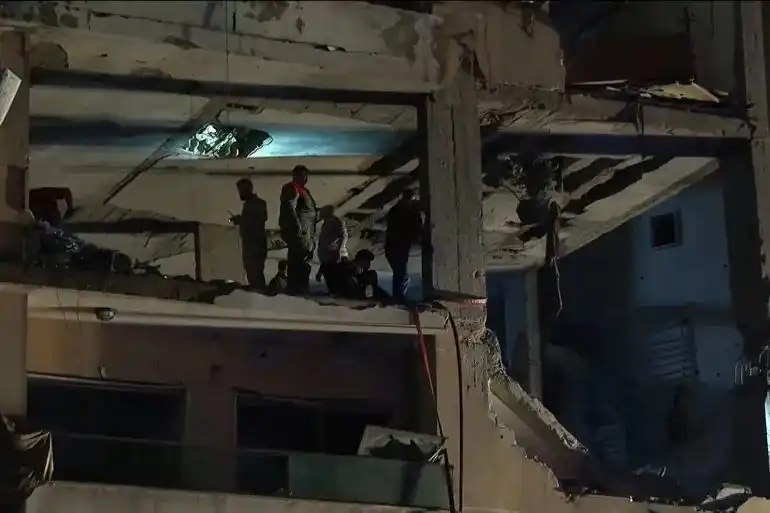
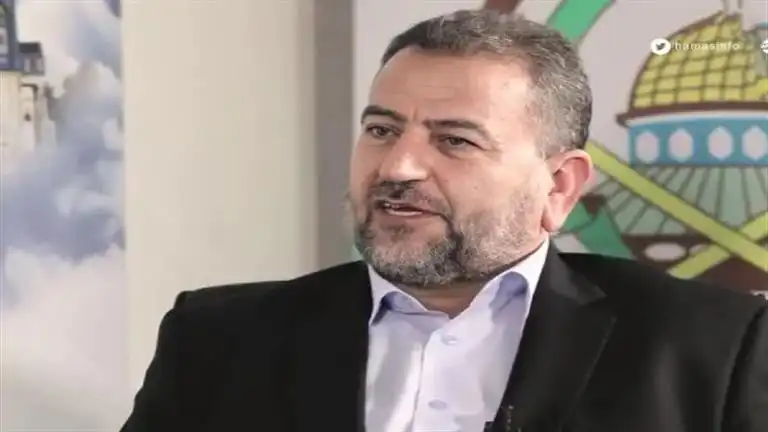
A state of anticipation prevails in Lebanon and the region, following the Israeli assassination of Saleh Al-Arouri, deputy head of the political bureau of the Islamic Resistance Movement (Hamas), two leaders of the Al-Qassam Brigades, the movement’s military wing, and 4 others of its cadres, in an air strike targeting south of the capital, Beirut.


According to analysts, the assassination of Hamas leaders deep inside Lebanon, coinciding with the continuation of the war on Gaza and the confrontations in southern Lebanon, constitutes an unprecedented escalation and portends a major confrontation that may extend throughout the entire region, between the axis of resistance and Israel.


In an interview with Anatolia, Lebanese political analyst Qassem Kassir said that the assassination of Al-Arouri is a large and very dangerous operation, aiming to take the region towards a major confrontation. He added that there is no information about the nature of the response to the assassination yet, but he suggested that there will be an escalation in the confrontation regardless of the situation. Fronts.


For his part, the director of the Yabous Center for Studies, Suleiman Bisharat, said that the assassination puts the conflict at a crossroads, the first of which is the expansion and extension of the conflict to include all arenas, and the expansion of the scope of confrontation. The second, according to Bisharat, is that this assassination will be a price for Israeli acceptance at a high price. Political for Hezbollah and the resistance in Gaza.


Following the assassination, Hezbollah issued a statement in which it mourned Al-Arouri and his companions, threatening that this crime “will never pass without response and punishment.” The party considered the assassination a dangerous attack on Lebanon and its people, and a dangerous development in the course of the war between Israel and the axis of resistance. .


Late on Tuesday evening, Hezbollah fired 3 anti-tank missiles at the Upper Galilee in northern Israel, and said in a statement that its fighters targeted a group of Israeli soldiers in the vicinity of the Al-Marj site with appropriate weapons, killing and wounding its members.


Targeting the Lebanese depth

In turn, political analyst Tony Boulos said that the assassination of Al-Arouri is considered the most violent targeting in the Lebanese interior since the 2006 war, which means that Israel has dropped what was known as the rules of engagement, and no longer has red lines towards confronting Iran in the region, which portends greater targeting.


He stressed that the assassination of Al-Arouri in the southern suburb of Beirut put Hezbollah at a “very dangerous” crossroads, as it was forced to respond to save its face, but at the same time there is a problem that lies in the fact that it does not have an Iranian green light, given that Iran has not yet responded to the killing of the Revolutionary Guard leader, according to Paul.


Last August 28, Hezbollah Secretary-General Hassan Nasrallah warned that “any assassination on Lebanese soil that targets a Lebanese, Palestinian, Syrian, Iranian, or others will have a strong reaction, and we will not allow the Lebanese arena to be opened to assassinations.”


The assassination in Beirut comes at a time when Lebanon's southern border has been witnessing daily confrontations and bombing between Hezbollah on the one hand and the Israeli army on the other since the eighth of last October, resulting in dozens of deaths and injuries on both sides of the border.


The prominent Hamas leader spent more than 18 years in Israeli prisons, and was deported outside Palestine when he was released for the last time in 2010, where he was chosen as a member of the Hamas political bureau, then deputy head of its political bureau in October 2017, and a Hamas official in the West Bank.


Al-Arouri is considered one of the founders of the Izz al-Din al-Qassam Brigades, the armed wing of the Hamas movement, where he began establishing the first nucleus of the movement’s military apparatus in the West Bank in the period between 1991 and 1992.


Source: Anadolu Agency

PALESTINE

Wed 03 Jan 2024 9:33 am - Jerusalem Time

Occupied Jerusalem: Injuries and arrests during Israeli forces storming of Jabal Mukaber

A number of citizens were injured this Wednesday morning during the Israeli occupation forces’ storming of the town of Jabal Mukaber, south of Jerusalem.


According to local sources, confrontations broke out in the town after the occupation forces stormed, accompanied by a bulldozer, to demolish a house and a commercial facility belonging to the Shaqrat family.


Video clips on social media showed occupation soldiers brutally assaulting a number of citizens when they tried to prevent the demolition process.


The occupation forces also arrested a number of young men.

PALESTINE

Wed 03 Jan 2024 9:15 am - Jerusalem Time

War on Gaza on 89th day.. Anticipation of the repercussions of assassination of Saleh Al-Arouri

On the eighty-ninth day of the Israeli aggression on Gaza, the bombing and raids on the Gaza Strip continued, while responses continued to the assassination of the Deputy Head of the Political Bureau of Hamas, Saleh Al-Arouri, and other leaders in Beirut.


Four Palestinians were killed as a result of the occupation bombing a house in the Al-Maghazi camp in the central Gaza Strip at dawn today, while 3 others were killed and 10 were injured as a result of the occupation targeting a house in the Khirbet Al-Adas area, east of Rafah.


The occupation also bombed the Ain Goliath towers in the Nuseirat camp, and the Israeli bombing continued on the south of the city of Khan Yunis, south of the Gaza Strip.


While the confrontations continued in a number of areas, the Israeli army confirmed the killing of an officer with the rank of major from the elite forces in the Engineering Corps during the battles in the northern Gaza Strip.


Meanwhile, responses continued to the assassination of the leader of the Hamas movement, along with the two leaders of the Al-Qassam Brigades, Samir Fendi Abu Amer, Azzam Al-Aqraa, and others, with missiles launched by a drone in the southern suburb of Beirut.


Osama Hamdan, a member of the movement's political bureau, confirmed that all possibilities are open after the crime, stressing that what happened will be met with an appropriate response by the Palestinian people and the resistance.


For its part, the Elysee Palace said, following a phone call made by French President Emmanuel Macron to Israeli Minister Benny Gantz, a member of the Ministerial War Council, that the French President stressed that “any escalatory behavior should be avoided, especially in Lebanon, and that France will continue to deliver these messages to the actors directly or indirectly concerned in the region.”


While Hezbollah Secretary-General Hassan Nasrallah will deliver an expected speech this afternoon, the Israeli Broadcasting Corporation reported that instructions have been issued to the police to increase vigilance in all regions for fear of operations to respond to the assassination of Al-Arouri.


Hezbollah had confirmed in the evening that "the assassination of Al-Arouri in the heart of the southern suburb of Beirut is a dangerous attack on Lebanon, its people, its security, its sovereignty, and its resistance," stressing that "the crime will not go unanswered."

PALESTINE

Wed 03 Jan 2024 9:11 am - Jerusalem Time

West Bank: A general stike throughout the West Bank, denouncing the assassination of Al-Arouri

Today, Wednesday, a comprehensive strike spread across the West Bank governorates, denouncing the assassination of Hamas leader Saleh Al-Arouri, and the occupation’s continuing crimes against our people in the Gaza Strip and the West Bank.


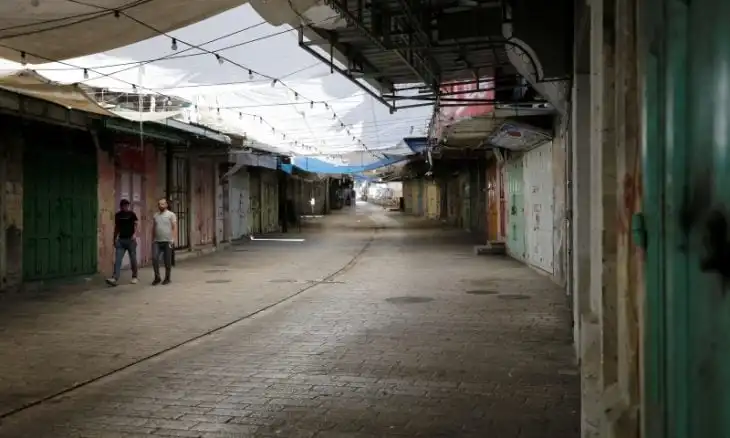
The strike, called by the National Liberation Movement "Fatah" and the national and Islamic forces, paralyzed all aspects of life, and universities, banks, and shops were closed.

OPINIONS

Wed 03 Jan 2024 7:55 am - Jerusalem Time

Netanyahu replies to Biden by assassinating Al-Arouri in Beirut

Translation for "Al-Quds" dot com

Translation for "Al-Quds" dot com

Opinion Writer

By Ibrahim Rayhan

The assassination of the deputy head of Hamas’s political bureau in Lebanon, Saleh Al-Arouri, yesterday evening became the biggest announcement of the intention of Israeli Prime Minister Benjamin Netanyahu to declare war on Lebanon by admitting that the air force had targeted the southern suburbs of Beirut for the first time since the July 2006 war. The eye now is on the party’s response. Which is likely to be nothing less than targeting Tel Aviv based on the Beirut versus Tel Aviv equation that was drawn up by the party and has not been implemented until now.


Events have continued in recent days, indicating an increase in the level of escalation on the southern border between the Israeli army and the party. The belt of fire launched by Israeli occupation aircraft on Kafr Kila and Maroun al-Ras was not the first, and it will not be the last.


In a broader look at the region’s seas, two prominent events emerged:

The first: was the announcement of the withdrawal of the US aircraft carrier Gerald Ford from the Mediterranean Sea.


As for the second: Iran announced the arrival of the destroyer “Alborz,” equipped with long-range cruise missiles, to the waters of the Red Sea and its settlement near “Bab al-Mandab,” where Washington is gathering an international force to stop Houthi operations there.


Events are moving at a speed that rivals the scenes of Egyptian-Qatari diplomacy, which is trying to extinguish the fire in Gaza before it rages throughout the entire region. The two parties to the war, Hamas and Israel, are still clinging to mutual demands that can only be described as a “sounding defeat” for the party that accepts them.


Events have continued in recent days, indicating an increase in the level of escalation on the southern border between the Israeli army and Hezbollah.


The last chapter of the negotiations was when the leader of Hamas in Gaza, Yahya Al-Sanwar, sent a list of demands that were met with Israeli rejection. Al-Sanwar called for a three-stage negotiation:


1- In the first phase, Israeli forces withdraw from the incursion into the Gaza Strip in exchange for the movement’s release of 40 Israeli prisoners (the remaining women and men over the age of 60 who suffer from critical health conditions).


2- In the second stage, launching negotiations to exchange military prisoners in exchange for “zeroing in Israeli prisons.”


3- The third stage is entitled to establish a permanent ceasefire.


Israeli Mossad chief David Barnea discussed Sinwar's offer with the "War Cabinet," which rejected the demands.


The Qatari negotiators consider that the negotiations are still ongoing even if Tel Aviv rejects these demands, albeit slowly and with difficulty, and that the coming days will witness mutual offers from Tel Aviv and Hamas, and they may reach common ground on which they can build to stop the war as quickly as possible, and try to prevent the fire from escalating throughout the entire region, starting with Lebanon.


Biden to Netanyahu: The call is over...


But what is happening in the region? Is Lebanon in the eye of Netanyahu's storm?


To answer this question, we must return to the recent call between US President Joe Biden and Israeli Prime Minister Benjamin Netanyahu.


The Axios website, which is close to US national security circles, reported that the communication was stormy, and the disagreement between the two sides was over the “day after” the war, and over Biden’s objection to Netanyahu’s refusal to transfer tax revenues to the Palestinian Authority. The divergence of views between the master of the White House and the prime minister in crisis at war prompted the former to cut off the call, saying: “The conversation is over,” in an unprecedented step between the decision-makers in Washington and Tel Aviv.


But another reason that was not announced was a major point of disagreement between the two sides. According to an official source in the US National Security Office, Lebanon was present in the call. Netanyahu was insisting on the necessity of “dealing a joint strike against the party in Lebanon.” As for Biden, it was clear that his administration remains committed to its position of rejecting expanding the scope of the war and dragging it towards a direct confrontation with Iran.


The Qatari negotiators consider that the negotiations are still ongoing even if Tel Aviv rejects these demands, albeit slowly and with difficulty, and that the coming days will witness mutual offers from Tel Aviv and Hamas.


Why did Biden withdraw the aircraft carrier?


Netanyahu's intransigence towards Lebanon prompted Washington to leak the news of the "aircraft carrier withdrawal" from the Mediterranean. The explanation for this step is as follows:


First: Washington announced that it is not satisfied with any offensive step taken by Netanyahu against Lebanon. This was after Gerald Ford's arrival in the region was a message of deterrence to Iran and Hezbollah, according to what US Secretary of Defense Lloyd Austin said on the eve of the start of the war on the Gaza Strip.


Second: Biden is trying to pressure Netanyahu internally and on the ground to submit to the White House’s requests regarding “the day after the war” and “not expanding its scope.”


Third and most important: All joint maneuvers in recent years between the American and Israeli armies simulated that America defends and Israel attacks. This withdrawal puts Tel Aviv in a difficult field position, especially if Iran exploits it to increase the level of its factions’ strikes against Israel, especially after the assassination of the commander of the Quds Force in Syria, Brigadier General Reza Mousavi, who has resided in Syria since 1987, and supervises the transfer of weapons to the party and the factions. Pro-Iranian. In addition to this, the almost daily targeting of Iranian bases in Syria.


The American source also indicates that Iran has delivered a message to America over the past few days stating that “the operations of the Axis of Resistance factions against American targets may not remain as they are if Israel launches an operation against the party, and that Tehran may find it difficult to deter the factions from Targeting American bases in the Gulf and Jordan.

Israel quickly responded to America's move. Yedioth Ahronoth newspaper reported that the presence of the aircraft carrier did not affect the course of the conflict in Gaza, and that the end of the war was not on the horizon.


I expected that "the United Kingdom and the United States would issue an unprecedented statement giving the Houthis a choice between stopping attacking commercial ships or confronting the military power of the West."


Displacement versus displacement

In the field, the Israeli Air Force launched violent strikes on the towns of Maroun al-Ras, Kafr Kila, Markaba, and Hula.


The raids were different this time. It targeted the heart of the towns, the most violent of which was the “ring of fire” in Kafr Kila, which led to the death of 3 party fighters from the town. Reading these raids does not mean that Israel wants to lure a violent response from the party against civilian targets, using it as a pretext to expand strikes on Lebanon. To this day, the party is still responding with the “classical geographic beam” to the same rhythm since October 8.


Tel Aviv is also implementing the “displacement for displacement” equation, after tens of thousands of Israelis were displaced from the settlements in the north. This explains the Israeli violence towards Lebanese towns.


These indicators were received by the French Minister of the Armed Forces, Sebastien Lecornu, who visited the base of his forces operating within the UNIFIL forces in Deir Kifa, 10 km from the confrontation line between Israel and Hezbollah, where Lecornu announced to 700 soldiers before sharing the “New Year’s” dinner with them that “our mission can be achieved.” "It could become very dangerous." He added: "Our path will be strewn with doubts in the coming weeks and days, and all of this continues to plunge us into an abyss."


Le Drian and Hockstein on the line of "calm down"


The French minister anticipated two possible visits by the American presidential envoys, Amos Hochstein, and the Frenchman, Jean-Yves Le Drian.


The two envoys, whose dates have not yet been set, are trying to defuse tension in southern Lebanon. The American carries with him a proposal about the land borders and Israel’s withdrawal from the northern part of the town of Ghajar, and the Lebanese establishment of the B1 point in Ras Naqoura, and in his belief that it may push the party to withdraw from the Gaza battle.


As for the Frenchman, it is likely that he will present a political proposal for the party, in coordination with the Americans, rather than the Five-Year Committee. It is not clear what the French offer is, unlike the American one.


However, the deputy secretary-general of the party, Sheikh Naeem Qassem, anticipated the two offers two days ago and said: “Israel is putting forward many proposals related to northern Palestine and southern Lebanon in order to carry out a performance that will help the settlers return to the north in a safe way, and to keep the party away from the south until they are reassured.”


Qassem added: “Israel cannot return the settlers to the north in the heart of the battle, and it cannot obtain any gain in this battle or at its end. It must first stop the war in Gaza in order to stop the war in Lebanon, and with the persistence in bombing civilians in Lebanon, this means that the response "It will be stronger and will be proportional to the Israeli aggression."


  The Red Sea.. Iran, America and Britain


No sooner had the media reported the news of the departure of the American aircraft carrier from the White Sea, than news came of Iran entering the Red Sea. What is happening there is no less dangerous than what is happening here. The British newspaper The Times reported that London is preparing, in coordination with Washington, to launch strikes against the Houthi militias in Yemen.


The newspaper quoted an official source as saying, “The British army will join the United States and perhaps another European country to launch a barrage of missiles against pre-specified targets either at sea or in Yemen itself, where the Houthis are based.” It quoted the source as saying, "Coordinated strikes could include, for the first time, carried out by British Royal Air Force aircraft or the destroyer HMS Diamond."


I expected that "the United Kingdom and the United States would issue an unprecedented statement giving the Houthis a choice between stopping attacking commercial ships or confronting the military power of the West." The source explained to the newspaper that the statement would be the “last warning” to the Houthis, adding: “If they do not respond, the response is likely to be limited but noticeable.”


The Iranian response to the British move came in two parts:


The first: Last Sunday, the Houthis attacked an American battleship with cruise missiles and attack boats. The US Navy was able to sink 4 boats and kill 10 of the attackers.


Second: Iran’s announcement of the arrival of the destroyer “Alborz” to Bab al-Mandab.


Thus, the region became ready for a fierce war. Diplomacy is trying to remove the burning fuse, which is now on the verge of gunpowder piled up inside the barrel. It is likely that Netanyahu will not leave the premiership before turning the tide, or at least trying to turn it. The Al-Aqsa flood changed the whole scene, and it became almost impossible to return to what was before October 7. As for the clarity of the scene, it requires the dust of many battles to settle, raids to break out, missiles and drones to fly, and more blood to flow, not least of which is the assassination of Al-Arouri, for his image to become clear.

Assas Media

OPINIONS

Wed 03 Jan 2024 7:45 am - Jerusalem Time

No settlement... except on the ruins of Netanyahu and Hamas

Translation for "Al-Quds" dot com

Translation for "Al-Quds" dot com

Opinion Writer

By Muhammad Al-Sammak


Since Israel imposed its presence in 1948 by military force and international pressure, the Middle East has never known such a large number of Palestinian casualties and the number of Israeli deaths. The region has never been farther politically and psychologically from peace or settlement than it is now.

However, US President Joe Biden, who placed all his electoral bets on the Zionist-American authority, repeats with a lot of hope (not confidence) that all of this has once again opened the way to a political solution based on the basis of two states: Israel and Palestine. But Palestinian-Jewish sentiments are far from today the principle of living together within the framework of two neighboring states. The bloody trench that was bulldozed by Israeli forces in Gaza is too deep to be filled and too weak to be restored.


A project for a solution based on a “one state” between the Israelis and the Palestinians, similar to the Lebanese formula, was proposed, but this project, which was difficult in the past, has now become impossible.


There are two complementary factors in drawing a picture of the tragic situation of the post-war period in Gaza. The first factor is the unprecedented violence committed by Israeli forces with premeditation and design. And the Arab inability to take any action to repel this violence or even to mitigate it. Therefore, President Biden's statement about the two-state solution is seen as a mere fig leaf to cover up Israeli brutality on the one hand, and Arab impotence on the other hand, and American involvement in covering up both matters.


The two-state solution: an old proposal

Basically, the idea of a two-state solution is not new. She is now a full century old, 77 years old. The United Nations adopted it in 1947, stipulating that Jerusalem would be an international city (internationalization is primarily a Vatican proposal because the Vatican did not want the holy Christian sites to be under the supervision of Israel). But the Arab group rejected this solution at the time because it refused in principle to recognize Israel.


The two-state solution was proposed again at the Madrid Conference in 1991, but without reaching a practical result. It was re-introduced in the Oslo Agreement (Norway) in 1993, but also without results, even though the agreement set a time period, five years, to implement the agreement, which the current Netanyahu government (which includes a group of extreme religious extremists) made of it merely “toilet paper.” ".


Before that, a series of failures continued from Camp David to Taba to the “path to peace” drawn by President Bush and adopted by former US President Barack Obama. However, it collapsed completely in 2014. Can President Biden, a devout Catholic, bring it to light again on the anniversary of the birth of Christ, peace be upon him?


Since Israel imposed its presence in 1948 by military force and international pressure, the Middle East has never known such a large number of Palestinian casualties and the number of Israeli deaths.


The tables turned on October 7

If the miracle is achieved and a Palestinian state is established from Gaza and the West Bank, this will mean that this state is based on an area of only 22 percent of the historical Palestinian land. Under the current project, Israel has the right to maintain a number of large settlements in the West Bank in exchange for granting the proposed Palestinian state lands in other locations, which is called a land exchange. As for the Palestinian refugees, the project stipulates allowing a part of them to return to the new Palestinian state, or to return to their villages in Israel. But what return can be achieved after the torrents of blood that poured in Gaza and the West Bank, which made Palestinian-Israeli coexistence impossible?


Hence, the events that began on October 7 turned the situation upside down and made implementable proposals impossible, unless the nature of authority in Israel and Gaza both changed.


There was a project for a solution based on a “one state” between the Israelis and the Palestinians, similar to the Lebanese formula, but this project, which was difficult in the past, has now become impossible.


For this reason, the settlement projects are now being reconsidered on the basis of changing the Israeli (Netanyahu) and Palestinian (Hamas) political leaders, so that matters turn to elements that are more capable of dealing positively with the settlement proposals that require a retreat from the Israeli and Palestinian sides. As for how this is done, who is responsible for ensuring and implementing it, and who pays for it and bears its consequences, it is until now in the world of the unseen. Neither Hamas nor Netanyahu is willing to voluntarily give up authority or an alternative ruler. Therefore, after Gaza, it is expected that unrest and turmoil will explode in the institutions of power in both Israel and Palestine, and the results resulting from these “programmed” oscillations are supposed to open the way to a settlement that will not be a speck of ash in the eyes, as happened with previous settlement projects.