OPINIONS

Mon 11 Nov 2024 9:10 am - Jerusalem Time

The Arab World's Options for Trump

Ahmed Rafiq Awad

Ahmed Rafiq Awad

Opinion Writer

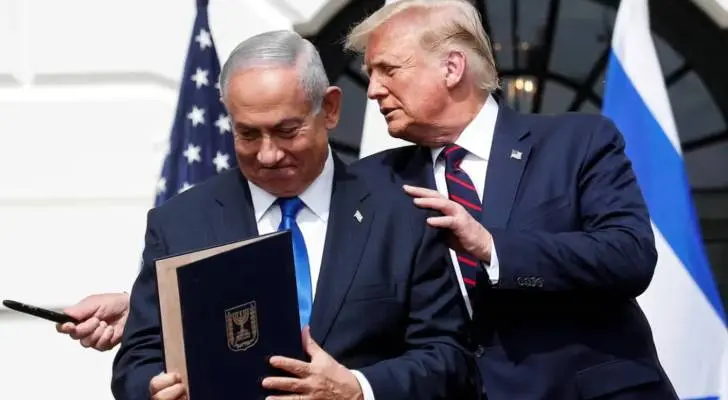
To summarise and summarize the speech, the options of the Arab world - with its local and regional systems, bodies and organisations - to respond to the potential challenges of the second term of US President Trump, are represented by one of the following: either surrender and full or partial dealing with the conditions, pressures and dictates, and thus we all suffer a crushing and overwhelming defeat with no decision, or a complete, rolling, studied or rational confrontation, by avoiding, absorbing or recycling pressures, or rushing to present proposals and initiatives or putting alternatives on the table. And because this requires a long explanation, I say that the confrontation requires rushing to complete coordination between the various Arab systems, regardless of the differences and disagreements between them, because Trump, who wins for the second time at an exceptional moment in American and global history, does not necessarily herald the end of wars except at our expense, and does not come with magical solutions except by eliminating our dreams. There is nothing to indicate that the man comes with more experience, expertise or rationality, and it is not necessary for us to believe that he is a man of settlements and deals, so he rushes to make deals with us.


Deals are made between the powerful and with parties that are similar in interest and harm, and our Arab world is not powerful and is not a party similar to other parties.


I return to my options of surrender and confrontation. The option of surrender is largely achievable, as every regime will want to save its life without looking at the other parties, as each party has its fears, concerns, weaknesses and fragility. The option of surrender is an easier and less harmful option, and therefore it is possible that it will happen right before our eyes. We can imagine how much loss we, the Palestinians, will suffer, in the sense of the disappearance or abandonment of the two-state solution, which becomes impossible as we progress in time, as well as the possibility of annexing the West Bank or parts of it, forced and voluntary displacement, or both, in the Gaza Strip, the West Bank and Jerusalem, the continuation of the occupation as an alternative to a settlement, deepening the separation as an alternative to reconciliation, and searching for practical and local bodies and organizations as an alternative to the unifying bodies.


Surrender means that the occupation project will take whatever funding, legitimacy and permanence it wants, and surrender means returning to square one of the conflict, which clearly means dismantling the land of the Palestinian people and dismantling its ties and unity.


Surrender means free normalization and an Israeli-Western victory over our region and its entire peoples.


As for the moderate, studied and gradual confrontation, in my opinion it means insisting on the Arab vision to resolve all the conflicts in the region, and not allowing aggression, expansion and extremism to advance and win. There are multiple Arab proposals, and I do not want to present them or even express an opinion about them, as they are ultimately an expression of a certain historical stage that lacks the ability, strength and influence, and perhaps the real political will to benefit from the facts of reality and the capabilities of the nation. There are Arab proposals, as I said, Saudi, Egyptian, Jordanian and Emirati, and this is the axis of moderation and economic ability and calm diplomacy with a long and heavy breath. In my opinion, this is another testing moment for this movement to prove itself, and to be an alternative to the other axes that it has criticized and besieged all the time. I believe that this is the right moment for moderation to present itself as capable of flexibility and dealing with unprecedented risks and challenges. It has its sayings, tools and alternatives. It is not enough for this movement to criticize or object without having a political and intellectual alternative in order to achieve representation, legitimacy and reliability.


This is the moment to test this current to stop the bloodshed in Gaza and Lebanon, to break this unprecedented savagery and to break this crazy cycle of blood and fire.


We do not say this in vain, arbitrarily, or to curry favor with anyone, because the arrival or election of Trump, despite all the criminal and racist files that he brings with him, may lead to internal and external wars. The Arab moderation movement is called upon to confront rationally, strongly, and calmly, otherwise the defeat will be general and catastrophic. And whoever has not learned from what happened over the course of 400 days of massacres that did not shake the consciences or hearts of the colonial West, then we should expect the same from our brothers and sisters.


The danger is imminent and severe, and hearts are completely in the throats.

ARAB AND WORLD

Mon 11 Nov 2024 9:07 am - Jerusalem Time

Russia seeks to position itself as a key economic partner for Africa

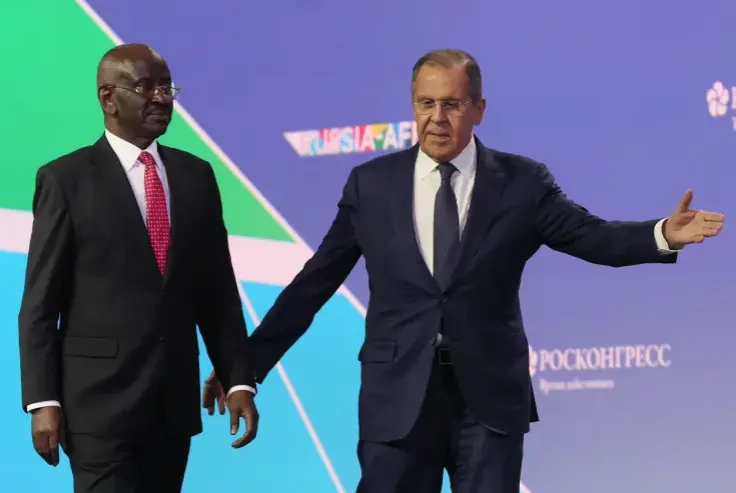
During a Russian-African ministerial conference held yesterday, Saturday, and today in Sochi (southwest of the country), Moscow sought to impose itself as an indispensable partner for African countries, promising to provide them with “full support” in the “multipolar world” promoted by the Kremlin in confrontation with the West.


After Moscow was a major player in Africa during the Soviet era, it has been working for years to re-strengthen its influence in the countries of this continent that did not join the Western sanctions imposed on Russia after its war on Ukraine in February 2022.


Russian President Vladimir Putin stressed today - in a speech addressed to senior officials from about 50 African countries in Sochi - that "our country will continue to provide full support to our African friends in various fields."


In the speech - which was read by Foreign Minister Sergei Lavrov - he said that this support could be in the field of "sustainable development, combating terrorism and extremism, epidemic diseases, solving food problems or the consequences of natural disasters."


The President expressed his hope to strengthen "Russian-African relations as a whole" at the conclusion of this conference, which was held as a continuation of two summits between Moscow and the continent hosted by Russia in 2019 and 2023.


"Not a colonial power"

Lavrov stressed that Russia and African countries are seeing "progress on all axes" of cooperation between them "despite the artificial obstacles" raised by "the entire West," the expression Moscow uses to refer to the United States and its allies.


The Sochi conference comes after a BRICS summit hosted by Kazan (southwestern Russia) last month, during which Putin sought to demonstrate the failure of the West's policy of isolation and sanctions against him.


Russia's strategy to extend its media influence in Africa - particularly through social networks - is based on denouncing "neo-colonialism" and calling for a "more just world order," a discourse that resonates with some African officials.


Malian Foreign Minister Abdoulaye Diop stressed yesterday on the sidelines of the conference that "Russia is not a colonial power and has never been a colonial power. On the contrary, it has been with the African peoples and other peoples in the world to help them get out of the colonial system."


In contrast, many Western officials accuse Moscow of waging an "imperialist" war in the former Soviet republic of Ukraine.


Minerals, Security and Digital Domain

Russian mercenary groups such as the Wagner Group or its successor, the Africa Corps, are active in Africa in support of local governments, while “advisors” according to Moscow work to assist local officials.


This is particularly true in the Central African Republic and the Sahel countries, where growing Russian influence has been accompanied by a decline in French influence.


In 2023, Russia supplied Africans with more than $5 billion worth of weapons, according to state-run Rosoboronexport.

But officials gathered in Sochi believe that support must go beyond security issues.


"The digital space must be developed in Central Africa," with Russian support, Marie-Thérèse Chantal Ngakono, Commissioner for Infrastructure at the Economic Community of Central African States, was quoted by AFP as saying.


Large Russian groups are showing particular interest in exploiting raw materials in Africa, particularly diamonds in Angola and Zimbabwe, oil in Nigeria, Ghana, Cameroon and the Democratic Republic of the Congo, and bauxite in Guinea.


“We have over 75 minerals in Africa, and they are not being properly exploited,” said Yang Piero Omatsayi, founder of Get Age Nation Builders, an organization that works to promote the continent’s progress.


The Nigerian politician continued that "thanks to the partnership with Russia," one of the world's largest exporters of gas, oil and diamonds, "we will be able to put these resources to good use."


But Bakary Sambe, director of the Timbuktu Institute in Senegal’s capital, said this week that the long-term partnership with Russia raises questions, explaining, “Will Russia give Africa the same attention if the war in Ukraine ends?” And does the partnership with Africa represent a “real strategic priority” or a temporary concern linked to its conflict with the West?

OPINIONS

Mon 11 Nov 2024 9:06 am - Jerusalem Time

Rejection of occupation, colonialism and Zionism

Hamada Faraana

Hamada Faraana

Opinion Writer

A state of necessity required by Palestinian, Arab, Islamic and Christian work and effort, to differentiate among European and American peoples between the rejection of Zionism and its fascist, racist Israeli colonial project in Palestine, and between Jews and Judaism.


The racist colonial Zionist movement is working to mix Jews and Judaism, and its Israeli colonial project, as if hostility to occupation, colonialism, racism and their crimes means hostility to Jews and Judaism. It wants, and has worked and succeeded in the process of mixing over the past decades, and the formula of hostility to the colony has been transformed as if it were hostility to Semitism and Jews, as if Zionism is the sole legitimate representative of the Jews, and their leadership, working to do them justice and gather their geographical distribution in the countries of the world, as if the colony is the protector, refuge and site of happiness and stability for the Jews regardless of their nationalities, places of birth and nationalities.


The claim of the Zionist movement is similar to the claim of the extremist Islamic jihadist organizations and factions, that they represent Islam and Muslims, and they are not, although they are Islamic organizations in leadership and content, but their content is ijtihad and not binding, and for this reason they failed to prove their existence and dominance and to spread their thought and orientations, and they failed to impose their coup, jihadist or violent policies and systems on the Arab and Islamic peoples, just as they and other opposing organizations failed to market themselves in favor of undemocratic regimes and to submit to them under the pretext of commitment to those in authority.


The Zionist movement is a political movement par excellence, which employed religion, and employed the suffering of the Jews in Europe at the hands of the Russian Tsardom, the German Nazis, and the Italian Fascism, in favor of its idea of establishing a "national homeland for the Jews" in Palestine, and succeeded in doing so based on its references among the traditional European colonial states: 1- Britain with its decisions from the Balfour Declaration to the Mandate over Palestine, and its employment of facilitating the reception of foreign Jews from the invading Jews, and their handing over of the institutions of Palestine and its joints to the Zionist movement from 1917 until 1948, 2- France with its conventional weapons, nuclear reactor, and atomic weapons, 3- Germany by pushing foreign Jews towards Palestine and providing them with financial compensation in the billions.


These countries and their governments, for the most part, still support the colony despite the occupation, colonialism, and crimes of mass murder and ethnic cleansing against the Palestinians. This is evident in the policies and measures of Germany, the Netherlands, Britain, and France. However, their peoples and youth have begun to realize the nature of the colony and its expansionist project, and this is due to two reasons:


The first is the clear and obvious crimes of the colony.


The second is the suffering of the Palestinian people and understanding their pain and legitimate aspirations for freedom and independence.


The changes among European peoples and even in the United States are positive, but they are not sufficient to be effective and change the policies of their governments that support the colony.

ARAB AND WORLD

Mon 11 Nov 2024 8:59 am - Jerusalem Time

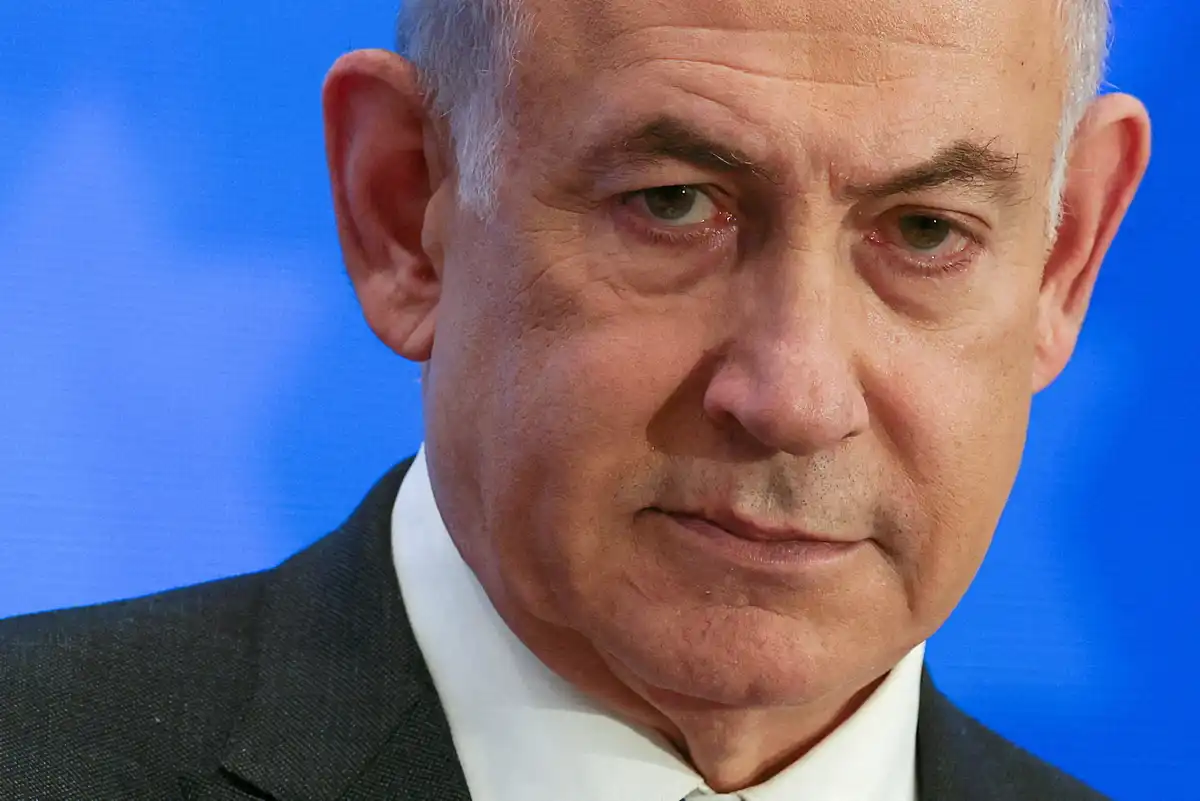
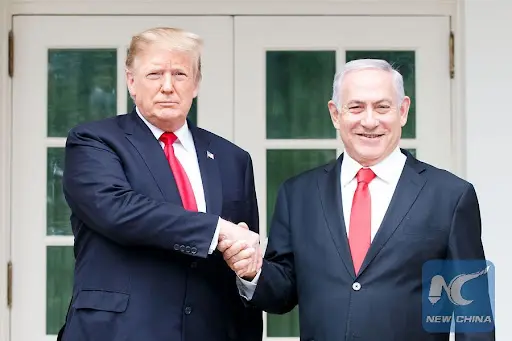
Netanyahu: I spoke 3 times on the phone with Trump in the past few days

Israeli Prime Minister Benjamin Netanyahu revealed on Sunday that he had spoken three times by phone in the past few days with Republican Donald Trump, the winner of the US presidential election held last Tuesday.


"Trump and I spoke three times in the past few days. They were good and very important talks, and there is a common view of the Iranian threat," Netanyahu said at a press conference.


"These were very good and important talks, aimed at strengthening the solid alliance between Israel and the United States," he continued.


Netanyahu added: "We share views on the Iranian threat in all its aspects, and the danger it poses."


He added: "We also see the great opportunities available to Israel in the areas of peace and expanding its scope, and in other areas," he claimed.


Netanyahu was the first to congratulate Trump, after he was declared the winner of the US presidential election last Wednesday.


Netanyahu sent a message to Trump and his wife Melania, a copy of which was sent by his office to Anadolu Agency, beginning with the phrase: "Congratulations on the greatest comeback in history."


"This is a great victory," Netanyahu said, signing the letter with his name and that of his wife Sara, over Democratic candidate Kamala Harris and outgoing Vice President Joe Biden.


Observers believe that Republicans and Democrats are “two sides of the same coin” in supporting Israel, and even compete in this regard, due to the financial and political influence that Jewish lobby groups have in Washington, in addition to the common interests between the two parties.


During his first presidential term, Trump provided significant support to Tel Aviv, and in 2017 decided to consider occupied East Jerusalem the capital of Israel and move the US embassy there from Tel Aviv, which the Palestinians reject and violates relevant international resolutions.


Since the beginning of the genocidal war on Gaza, in October 2023, the Biden administration has provided Israel with strong support at the military, intelligence and political levels.


The genocide resulted in more than 146,000 Palestinian deaths and injuries, most of them children and women, and more than 10,000 missing, amidst massive destruction and famine that killed dozens of children and the elderly, in one of the worst humanitarian disasters in the world.


For decades, Israel has occupied Arab lands in Palestine, Syria and Lebanon, and rejects the establishment of an independent Palestinian state on the borders before the 1967 war with East Jerusalem as its capital.

ARAB AND WORLD

Mon 11 Nov 2024 8:54 am - Jerusalem Time

Between receiving and delivering... the "lame duck" stage, in which neglect and poor performance deepen!

Johnny Mansour: Biden administration will hand Trump a heavy legacy laden with dangerous burdens in Gaza, Lebanon and Ukraine

Adel Shedid: Biden prefers to leave the current crises pending, whether in Lebanon or Gaza, until the next administration takes them over.

Dr. Rifat Sayed Ahmed: The Biden administration will not take effective steps in the transitional phase and “Netanyahu will take over the escalation”

Tarek Wahbi: Biden administration may move towards “crisis management with minimal losses” without seriously seeking to resolve outstanding conflicts

Dr. Muhannad Hafizoglu: The presidential transition in America is often characterized by rising tensions or the outbreak of wars.


US President Joe Biden will leave the White House in about two months, leaving behind major files, internal and external, for President Donald Trump’s administration, most notably the wars in Ukraine and the Israeli war on the Gaza Strip and Lebanon, because after the loss of his deputy Kamala Harris, he and his Democratic Party no longer have any interest in cooling the battle fronts that have opened their war warehouses to provide everything necessary for the continuation of the war, whether in Ukraine, Gaza, Lebanon, or other hot files in the world.


The remaining period of President Biden's term seems to be a "golden" time-out for the Israeli occupation state to continue the war of extermination that it has been waging for thirteen months in the Gaza Strip, and has recently expanded its scope to include Lebanon and other Arab countries. On the contrary, it may be a golden opportunity for the head of the occupation government, Benjamin Netanyahu, to escalate his aggression in intensity and area to include other Arab countries, such as: Syria and perhaps Yemen, Iraq and Iran.


Writers and analysts who spoke to “Y” believe that the Biden administration will not take effective steps in the transitional phase to stop the war in Gaza, Lebanon or Ukraine, but may move towards “crisis management with minimal losses” without seriously seeking to resolve the pending conflicts.


An open ticket for Netanyahu to do whatever he wants in Gaza


Many believe that the transitional period in the US presidency will push the Biden administration to hand over a good and acceptable legacy to President Trump, said historian and Middle East researcher Johnny Mansour from Nazareth.

He added: In fact, the Biden administration stood helpless in the face of Netanyahu's approach in dealing with the political and military issue related to the war on Gaza and Lebanon. He pointed out that the crisis of the Biden administration is that it gave Netanyahu an open ticket to do whatever he wants in Gaza, or rather a green light to implement a project planned for years for the complete ethnic cleansing of the Strip, and the expulsion of nearly two million Palestinians, which strengthens the Jewish demographic base in historical Palestine, which has been flabby in recent years with the increase in the percentage of Palestinian presence, compared to the Jewish presence.


Mansour explained that "the US administration was unable to stop the Israeli bull's rage despite all the scenes of genocide and destruction that Netanyahu is carrying out in the Gaza Strip, and currently in Lebanon, to the point that he is ready to drag the Biden administration into a war with Iran, and here this administration was able to, and this is credited to it for not being dragged into this square. It appeared to the world that it is still able to move the threads of global politics in a manner that suits its current and future interests in the Middle East region."


A resounding slap to the Democrats


Regarding the Gaza Strip, Mansour said that the Biden administration, which was committed to defending Israel, and in the face of the horrific scenes and voices that came out in the United States urging it to do something, and the great loss suffered by the US Vice President and presidential candidate, was a resounding slap in the face to it, which means that Biden will not do anything to rein in the raging Israeli bull.


He said: "We believe that Biden will hand over to Trump a heavy legacy laden with dangerous burdens in the Gaza Strip, Lebanon and Ukraine, in addition to the anger of a large number of countries in the world over the US policy that trampled on all international values by allowing Israel to deal unprecedented blows to international institutions working to create a political and military balance in the world."


Mansour believed that this means that Israel's aspirations go beyond merely dealing with the conflict in the Middle East to the level of directing the management of the region and the world as well.


Mansour concluded by saying: “What the Biden administration has failed to do, intentionally or otherwise, it will not fix during the transitional period, but will remain a lame duck until the reins of government are handed over to someone who has been tried before.”


Biden was not interested in a ceasefire


For his part, Israeli affairs expert Adel Shadid said: US President Joe Biden was not interested in a ceasefire in the previous period, but was committed to supporting the continuation of the war, believing that this was in the interest of Israel and the United States, by seeking to "break the spirit of resistance" within the new Middle East trends.


Shadid pointed out that the current American and Israeli goals are in harmony, which makes the Biden administration in no hurry to end the escalation.


Shadid continued: Biden does not see much benefit in stopping the war, especially at this stage, and it is likely that he will pass the crisis on to the next administration.


He explained that he does not now have to confront the Jewish lobby or a significant segment of Democrats.

He added: "Biden was not worried about the election results, especially after winning the party's nomination and transferring it to Vice President Kamala Harris, which reinforces the belief that Biden may prefer to leave the current crises pending, whether in Lebanon or Gaza, until the next administration takes them over."


"Trump is Israeli in his passions and interests"


For his part, the strategic expert and Egyptian nationalist thinker, Dr. Rifat Sayed Ahmed, said: The Biden administration will not take effective steps in the next transitional phase, noting that "Netanyahu will undertake the violent escalation" by intensifying military operations in Gaza and Lebanon, and the escalation may extend to the Golan and Syria.


Ahmed expected that the region would witness more violent Israeli intervention in the Arab arena, with the possibility of tensions escalating into an Iranian-Israeli confrontation in Iraq or even in the streets of Tehran, but direct US intervention is unlikely.


Ahmed believed that the next administration, led by Trump, would fully support Israel without reducing the levels of conflict in the Middle East, and that any reliance on Trump’s intervention to stop the escalation was a “strategic mistake.”


He pointed out that Trump, whom he described as "Israeli in his inclinations and interests," will not ease the war in Gaza and Lebanon, but will continue to provide full support to Israel, including support for its settlement operations.


Ahmed reviewed Trump's previous positions, such as his assassination of Qassem Soleimani, the "Deal of the Century", and his transfer of the US embassy to Jerusalem, considering that some parties' reliance on Trump to stop the war is "mere wishful thinking", and that the region will continue to suffer from the effects of this US-backed Israeli escalation.


Biden administration will leave thorny issues


Lebanese researcher in international relations, Tariq Wahbi, explained that the United States is not a model of good governance as much as it is a bloc of interests, starting with security and then economic.


With the recent Democratic losses, the Biden administration may move toward what is known as “crisis management with minimal losses” without seriously seeking to resolve the outstanding conflicts in the Middle East and Ukraine, Wahbi said.


Wahbi raised a question about the ability of any American administration to restore stability in the region to what it was before October 7, 2023, adding: "But is there really a roadmap following the ceasefire?"


He pointed out that the guarantees that the next Trump administration will provide may be conditional on its well-known method of financial pressure and dictation, far from any real concession from the Arab parties.


Wahbi believes that the Biden administration will leave thorny issues, such as the crises in Ukraine, Gaza and Lebanon, Syria and Sudan, to the next administration.


Wahbi expressed his concern about the "Trumpian solutions", which tend to focus on the financial dimensions and estimating losses, as if the United States were acting like an insurance company whose primary concern is estimating the cost of crises and the feasibility of financing them.


"The next four years may be difficult to implement and the content until 2028," Wahbi added, expecting difficulty in convincing Biden of solutions before he leaves, despite the efforts of his envoy to the Middle East, Amos Hochstein, who will try to present new solutions to the Democrats before the transfer of power.


Leaving complex files to the Trump administration


As for the Turkish academic and political researcher, Dr. Muhannad Hafizoglu, he said: “The presidential handover and takeover phase in the United States is often characterized by escalating tensions or the imminent outbreak of wars.”


He considered that this period is being exploited by the US administration to evaluate internal and external files that require a new vision.


Oglu explained that during the two-month transition period, the United States is evaluating the hot issues that require new direction, whether within the United States or in its foreign policies.


He explained that this stage allows the outgoing president and team to keep the hot files and complicate them, which increases the challenges for the new team.


Oglu added: The current elections between Biden and Trump make the transitional phase more tense, especially in light of the differences between the two parties.


He expected that the period would witness an escalation in several areas such as Gaza, Lebanon, and Ukraine, in an attempt by the Biden administration to buy time and leave complex files facing the next Trump administration.


Davutoglu stressed that Biden and his team are likely to keep the situation as it is, and may even deliberately increase tensions, which would pave the way for an escalation phase aimed at putting obstacles in the way of the next Republican administration, specifically Trump, who had promised many changes in his electoral policies.

PALESTINE

Mon 11 Nov 2024 8:50 am - Jerusalem Time

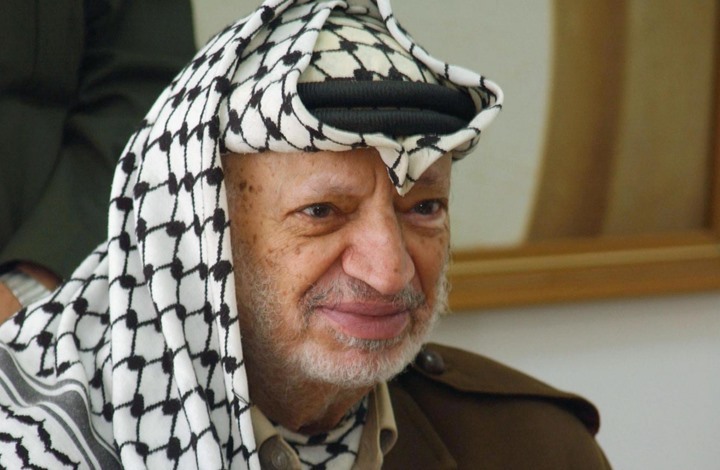
Twenty years in the presence of absence.. abundant blood flowed in the river of freedom

Bassam Zakarneh: Yasser Arafat's absence left a huge void that negatively affected not only the Palestinian arena

Issam Bakr: Abu Ammar, with his charismatic personality and political acumen, has always been a safety valve for national unity.

Dr. Ahmed Rafiq Awad: Arafat was a unique and exceptional leader, distinguished by his unique qualities, and was a maker of events, not a follower of them.

Imad Ghayatha: Abu Ammar was distinguished by his spirit of rebellion against reality, so that the rights of the Palestinian people would always remain at the forefront.

Dr. Qusay Hamed: His leadership acumen was able to prevent a slide into sharp divisions in the fabric of Palestinian society

Akram Atallah: He has a unique ability to formulate a rare symbolism that still has a profound impact on the conscience of the Palestinian people.


The Palestinian cause witnessed dangerous turning points in the two decades following the passing of the late President Yasser Arafat, the “Father of Palestinian Nationalism,” as his absence left an influential void on various levels, in light of the existential war that the Palestinian people are facing.


Politicians, writers and analysts confirmed in separate interviews with “I” that the martyrdom of Yasser Arafat (Abu Ammar) had profound dimensions for the Palestinian people. Arafat was a symbol of Palestinian unity and a global figure that international events could not ignore. His vision represented strength and embrace for the Palestinian people. They pointed out that his personality was unique and event-making, as he was distinguished by his exceptional ability to manage challenges.


They stress that after twenty years, Yasser Arafat's legacy of unity and steadfastness must be preserved, calling for this to be translated into actions to enhance the national position and confront the challenges facing the Palestinian people today.


Deep and sad meanings in the memory of the immortal martyr


Bassam Zakarneh, a member of the Fatah Revolutionary Council, explains that the date of the martyrdom of President Yasser Arafat, “Abu Ammar,” carries deep and sad meanings for the Palestinian people, and it is a black history for the Palestinians.


Zakarna confirms that this anniversary represents a remembrance of the character of Abu Ammar, who was like a second father to every Palestinian. He was known for his embrace of the martyrs and the wounded, and his deep belief in the unity of the Palestinian people, and he is the father of Palestinian nationalism.


Zakarna confirms that Abu Ammar's presence was overwhelming on the international and Arab arenas, as he was not just a Palestinian leader, but a global symbol of unity and steadfastness.


"No one can deny Yasser Arafat's vast influence at the international and regional levels, and his ability to make the Palestinian issue a top priority in global political interests," Zakarna says.


Zakarna asserts that the personality of the late President Yasser Arafat was a unifying force for the Palestinian people, stressing that if Abu Ammar had been alive, the division that the Palestinian arena witnessed after his passing would not have occurred.


He says: "I believe that the division would never have happened under Abu Ammar's presence. He was a source of consensus for all segments of the Palestinian people, and he was always able to unite the word and the ranks."


He stresses that Abu Ammar's absence left a huge void that negatively affected not only the Palestinian arena, but also the positions of Arab leaders and peoples towards the Palestinian cause, which led to a decline in Arab interest and support compared to what it was during his era.


Zakarna points out that the Palestinian cause is suffering today from an unprecedented state of weakness, coinciding with the genocide facing the Palestinian people, especially in light of the absence of a leadership figure of the stature and strength of Abu Ammar.


“The symbolism that Abu Ammar represented cannot be replaced,” Zakarna says. “After his passing, there was an urgent need for a collective leadership to fill his place and restore the Palestinian cause’s momentum and position on the international stage. Unfortunately, the PLO and Fatah have witnessed a significant decline since his absence.”


Zakarna believes that Abu Ammar's great international impact was clear, as he had a strong presence and wide influence on global liberation movements.


Zakarna says: “Abu Ammar managed his international relations shrewdly, investing these relations in the interest of the Palestinian cause, and always placing it at the forefront of the global political scene. There was continuous recruitment to confront American and Israeli pressures, and he knew exactly how to gain the sympathy and support of the international community.”


Zakarna talks about the field role of the late President Yasser Arafat, pointing out that he was always present in the field among his people, especially in critical and difficult moments. Zakarna recalls Abu Ammar’s position during the events in Lebanon, where he was among the fighters, sharing their risks and standing by their side.


Zakarna says: “Abu Ammar was close to the masses. Every Palestinian felt him as a father, and they drew strength and inspiration from him. If he were here today, we would find him among the masses, leading them and strengthening their resolve in Gaza, Jenin, Tulkarm, and Lebanon.”


He stressed that the absence of Yasser Arafat left a void that cannot be easily filled, emphasizing the need to draw inspiration from the lessons of unity and steadfastness that he instilled in the Palestinian people, and to work to restore the strength and status of the Palestinian cause as it was in his time.


Zakarna says: “Today we need to restore the national spirit that Abu Ammar founded, and work hard to reorganize the ranks to confront the challenges that threaten our existence and rights.”


Major repercussions left by Arafat's absence


Issam Bakr, a member of the Central Committee of the People's Party and a member of the Factions Coordination Committee in Palestine, confirms that the impact of the absence of the late President Yasser Arafat on the Palestinian situation was great, and that there are major repercussions left by this absence, recalling the spirit of Yasser Arafat as a symbol of the national cause and as a fighter who devoted his life to achieving freedom for his people.


Bakr points out that Arafat, with his charismatic personality and political acumen, was a safety valve for national unity, as he was able to gather the Palestinian factions under one umbrella, considering that Arafat was a meeting point for the Palestinians, firmly convinced that the fundamental contradiction was with the occupation, regardless of the extent of the internal differences between the parties.


Bakr explains that this base established by Arafat remained the basis of Palestinian national action, as all components agreed on the necessity of confronting the occupation as a priority.


Bakr points out that over the course of twenty years, the Palestinian cause has undergone tremendous local, regional and international changes, describing the period as one burdened with challenges, as the cause suffered from decline and fragmentation, especially due to the Palestinian division that worsened after Arafat’s absence.


This vertical and horizontal division, he says, has had devastating effects on the Palestinian national project, and has allowed the Israeli occupation to double its hostile measures of settlement, Judaization of Jerusalem, demolition of homes, and closure of Palestinian areas and their transformation into enclaves.


Bakr asserts that Arafat had extended his hand for peace until the last moment, but the rise of extremist religious and nationalist forces in Israel, which rely on a discourse denying the existence of the Palestinian people, thwarted all attempts to reach a settlement.


Bakr points out that successive Israeli prime ministers used peace talks as a means of deception and misleading, and had no real intention of achieving a just peace.


Looking at all the stations after Arafat's assassination, Bakr confirms that his loss was a great shock to the Palestinians who stood in amazement at the announcement of his martyrdom, pointing out that the funerals held for him in Paris, Cairo and Ramallah embodied the extent of the loss.


Rebuilding national identity


Bakr stresses that Arafat, with his firm positions in which he refused to compromise on national constants, rebuilt the Palestinian national identity through the PLO, at a time when the occupation tried to erase this identity and return the Palestinians to the status of refugees without national ties.


Bakr says: "Nothing can fill the void left by Arafat, the master of splendid presence. This is what can be said with modesty in the context of trying to assess the loss, a loss on the national, popular and official levels, of his firm positions of not compromising on national constants."


It is believed that Arafat faced this challenge with determination, and was able to establish Palestinian rights in the international arena, shattering the Israeli narrative that sought to deny the existence of a Palestinian people with non-negotiable rights.


Bakr points out that one of Arafat's most important achievements was affirming the unified national identity, which enabled the Palestinians to establish their presence in global geopolitics, especially in the United Nations institutions. Arafat was also vocal in demanding the lifting of the historical injustice against the Palestinian people and the correction of these injustices.


In this context, Bakr believes that the anniversary of Arafat's martyrdom should be an occasion to adhere to the path of national unity, and to emphasize that ending the division has become a matter that cannot be postponed, and that this requires real political will to turn this painful page in Palestinian history.


Bakr believes that the national consensus program, which Arafat emphasized in the Declaration of Independence in 1988 in Algeria, is still the umbrella under which all Palestinian forces meet.


He points out that this programme is based on the right of return, self-determination and the establishment of an independent state with Jerusalem as its capital, citing successive decisions of the Palestinian National Councils.


Bakr stresses that this political program still enjoys the consensus of the Palestinian forces, which was confirmed in the various rounds of reconciliation, calling for building on these foundations to strengthen the continuation of the unity of the PLO as the sole legitimate representative of the Palestinian people, as Arafat was able to build the PLO as a unified framework that includes all Palestinians.


Bakr confirms that the Palestinians do not depend on the individual but on the institution, which is the PLO, the title of the unified Palestinian people and its sole legitimate representative. President Mahmoud Abbas has always declared in this regard his firm adherence to the same goals and his following in the same footsteps that President Arafat had eliminated. There were even translations and movements that led to the recognition of the State of Palestine, obtaining membership in the United Nations and many others, despite the stumbling block of ideologically fueled rejection in Israel with the “ghetto” mentality and denial of the existence of the other, and attempts at uprooting.


Meeting current challenges requires radical changes.


In the context of anticipating future solutions, Bakr believes that confronting the current challenges requires radical changes, starting with dissolving the agreements signed with Israel, and reaffirming that the current stage is a stage of national liberation.


Bakr stresses the need to redirect the function of the Palestinian Authority, which was established by a decision of the Central Council of the Palestine Liberation Organization as a step towards independence, pointing out the importance of changing its function to become a tool for strengthening national steadfastness instead of managing the current crisis.


Bakr believes that the Israeli occupation has exploited the current situation to strengthen its control and expand its settlements, driven by a mentality that rejects coexistence with the Palestinian people and seeks to uproot them.


Bakr believes that the appropriate response should be to turn the tables on the occupation and to free ourselves from the illusions that have been hanging over the political path since the Oslo Accords.


Bakr stresses the importance of unleashing the Palestinian people's energies in a comprehensive confrontation with the occupation, considering that this path is the only way to revive hope among the Palestinian people and achieve their national aspirations.


Major transformations that affected the course of the Palestinian issue


Political analyst Dr. Ahmed Rafiq Awad confirms that during the twenty years following the death of President Yasser Arafat, the Palestinian cause witnessed major transformations and radical challenges that affected its course and future.


Awad explains that one of the most prominent turning points was the decline in the effectiveness of the two-state solution, which was rooted in the Oslo Accords. The agreement became a failed model in achieving Palestinian goals, and at the present time, this solution is witnessing a gradual withdrawal from the international political scene.


Awad points out that the Palestinian issue has noticeably declined on global and regional agendas during Abu Ammar's absence.


Awad asserts that the terrible internal Palestinian division was the most prominent turning point in the events after the martyrdom of Abu Ammar, which has become a real danger, with the possibility of developing into permanent separation, if it is not dealt with carefully. The Israeli arena has also witnessed a political and social upheaval towards extremism, as the idea of coexistence has collapsed, to be replaced by the idea of walls, isolation, and escalating racism.


Over the past two decades, attempts to marginalize the Palestinian cause and abolish the rights of the Palestinian people have increased, according to Awad, but despite these challenges, there are tangible achievements, such as the recognition of the State of Palestine in the United Nations, which established legal and humanitarian recognition of the existence of a Palestinian entity. However, the Palestinian state remains without clear borders, a divided geography, and a scattered demographics.


In the context of the ongoing deterioration, Awad points out that international recognition of Palestine remains surrounded by questions about how to transform it into a reality that ensures stability in the region.


Arafat's passing was an undeniable loss, as he was a unique and exceptional leader, according to Awad, who asserts that the martyr Yasser Arafat played a pivotal role in shaping the modern Palestinian national identity, and that his martyrdom was a turning point in the path to the birth of the Palestinian state as we know it today.


Awad points out that Israel was aware of Arafat's size and power when it decided to assassinate him. He was not just a besieged leader, but was able to besiege the occupation itself and embarrass Israeli policy, which made Israel believe that assassinating him would solve some of its crises.


However, according to Awad, the crisis was not resolved, but rather deepened after his absence. The Palestinian people paid a heavy price and suffered successive disasters as a result of the loss of that leader who was able to bring the parties together and find solutions to the crises, but the people remained steadfast in the face of Israel.


Awad believes that Arafat was distinguished by unique qualities. He was a maker of events, not a follower of them. He was an initiator who did not wait for circumstances, and he possessed a superior ability to maneuver and negotiate in the darkest of circumstances.


Awad describes him as a source of action and movement, capable of turning corners and mobilizing the masses, always maintaining the idea of Palestinian unity, which formed the basis of his strength in facing internal and external challenges.


Awad asserts that the most honest stage in Arafat’s career was the moment of his martyrdom, which established the principles of the Palestinian national movement and proved the strength of the Palestinian struggle. “He was a symbol of national unity, capable of creating hope and solutions, so his martyrdom remains a decisive moment that cannot be compensated for,” Awad explains.


The period following Arafat's martyrdom represents a dangerous turning point.


Imad Ghayatha, a professor of political science at Birzeit University, confirms that the period following the martyrdom of Yasser Arafat represents a dangerous turning point in the course of the Palestinian cause, with the absence of a figure like Yasser Arafat, with his unique negotiating and combative abilities, leaving a void that the Palestinians still suffer from to this day.


Ghayatha explains that Arafat had rare charisma and unique leadership, but his leadership nature did not always conform to the requirements of traditional institutional work, which created a discrepancy in the methods of managing the affairs of the Palestinian cause.


Ghayatha asserts that Arafat was distinguished by his spirit of rebellion against reality, and he challenged the harsh conditions that faced the rights of the Palestinian people in order to keep rights at the forefront.


Although his policies, especially in the last two decades of his life, sometimes seemed like political adventures, Ghayatha confirms that they were carefully considered adventures with deep national dimensions. He was keen to keep the Palestinian cause alive on the international scene, and to emphasize the rights of the Palestinian people, despite the hostility and difficulties he faced.


Ghayatha points out that what we are living today is the legacy of Yasser Arafat, who established a political structure and a national entity, but he also left behind sensitive files and accumulated challenges that need someone to handle them responsibly, and the legacy left by Arafat has not been adequately understood.


Ghayatha believes that despite the presence of leaders who took on the task of completing Arafat’s legacy, these leaders were unable to adequately deal with the complex reality he created, which led to weakness in confronting political changes and international pressures.


Ghayatha stresses that the lessons and morals learned from Arafat’s experience cannot be fully understood or evaluated without working within a solid institutional framework. The absence of institutional work made it difficult to fully benefit from Arafat’s legacy, as Arafat is a founding leader.


Ghayatha stresses the importance of strengthening Palestinian national institutions to ensure the continuity of the struggle and the achievement of national goals.


A pivotal moment in the history of the Palestinian cause


Speaking about the profound impact of the passing of President Yasser Arafat and the effects of his absence over the past twenty years, Dr. Qusay Hamed, Professor of Political Science at Al-Quds Open University, confirms that Arafat’s martyrdom constituted a pivotal moment in the history of the Palestinian cause and the Palestinian people as a whole.


Hamed explains that the disappearance of Yasser Arafat, and the developments that followed, brought about radical changes in the Palestinian scene.


Hamed asserts that after Arafat's departure, the Palestinian people lacked leadership acumen that was capable of controlling internal affairs and preventing the slide towards major challenges, most notably the Palestinian division, which remained a central scene during the past two decades.


According to Hamed, the first challenge that the Palestinian people faced after Arafat’s absence was the necessity of choosing a Palestinian leadership with high political competence and acumen, as the roles he held required a large cadre to fill them. The other challenge was the Palestinian division, which became one of the most dangerous scenes negatively affecting the Palestinian cause.


He explains that the ongoing political and geographical division to this day has had an impact on the internal Palestinian situation and on the position of the Palestinian cause on the international and regional levels.


Hamed says: "If Yasser Arafat were alive, he would not have allowed this division to extend to this extent, given his charismatic personality, the weight of his political history, and his ability to remedy and prevent such an unfortunate division from occurring."


Hamed confirms that Arafat had a unique ability to maintain the unity of the Palestinian ranks, and he was keen to ensure that his compass was clear and directed towards the confrontation with the Israeli occupation, not towards internal conflicts, and he did not allow those differences to control the Palestinian people, and without the Palestinians being lost in internal disputes that would drain their energy and their cause.


Hamed confirms that Arafat had a wide network of international relations, including liberation movements and influential forces in the world, and he was able to keep the Palestinian issue present on the agenda of Arab countries and the international community.


Hamed asserts that Yasser Arafat was not just a political leader, but rather a charismatic figure who carried the burden of the Palestinian cause for more than fifty years, during which Arafat was able to build bridges with various countries, including marginal countries and major powers, and established a strong base of support for the Palestinian cause.


Hamed addresses the flaw in the division that occurred between the Fatah and Hamas movements after Arafat's departure, stressing that the political and geographical division was something that should never have happened.


Hamed says: “We were supposed to rebuild the Palestinian leadership on sound foundations, and to respect the results of the elections, to ensure the participation of all forces in making fateful decisions,” stressing that the Palestinian people are still suffering from the effects of this division, despite the clarity of the diagnosis and means of treatment.


Hamed stresses the necessity of drawing lessons from Arafat's experience, pointing out that Arafat combined political, diplomatic and military work with great skill, taking advantage of all the components of the Palestinian people and its factions, and this ideal combination that distinguished Arafat is still absent from the Palestinians today.


Hamed says: “Arafat held all the strings connected to the Palestinian cause, and we may differ on his style of managing affairs, but he ensured that tasks were carried out efficiently, and no one felt that there was any negligence in supporting the cause.”


Hamed stresses that the Palestinian people need to strengthen their unity and respect the popular will to ensure the continuity of the struggle to achieve their aspirations.


The Godfather of the Palestinian Cause


Writer and political analyst Akram Atallah describes the late martyr President Yasser Arafat as the “spiritual father of the Palestinian cause,” pointing out his unique ability to formulate a rare symbolism that still leaves a deep impact on the conscience of the Palestinian people.


Atallah believes that Yasser Arafat's symbolism was not just a personal trait, but rather a combination of the history of struggle and the battles that Arafat fought in order to revive the Palestinian national movement.


Atallah asserts that Abu Ammar’s absence left the Palestinians in a state of political orphanhood, as if they were unable to manage their own affairs after his passing. This feeling of orphanhood was embodied in a state of internal dispersion and division, as the Palestinians fought over his political legacy, like sons fighting over what their father left them after losing him.


He explains that this fighting has led the Palestinians into a dark tunnel with no apparent way out.


Atallah confirms that Arafat's absence opened the door to a state of weakness and exposure, and the Palestinian arena seemed to lack a unified political system that would bring everyone together under one umbrella.


Atallah believes that this dark tunnel that the Palestinians entered after Arafat’s departure shows the importance of Arafat as a symbol that united the Palestinians. Arafat’s absence brought down the curtain on the settlement project that he had launched in the Palestinian arena, as the political path that Abu Ammar had started ended with his departure. There was no longer a clear path to a settlement, and the Palestinian issue was transformed into internal disputes and quarrels between factions, while what remained of the relations with Israel became more like an autonomous administration that lacked any real political dimension, which contradicts the goals of the Palestinian national movement that was established to achieve independence and freedom.


Atallah asserts that if Arafat were present today, the Palestinian situation would be completely different, as Arafat played roles that united the Palestinians, stressing that his paternal symbolism would have prevented the sharp divisions that the Palestinian arena witnessed after his departure.


Atallah believes that Arafat, as a national leader and founder, had the ability to unite all Palestinian factions, such that no party could challenge his authority or symbolism, even in the darkest of circumstances, pointing out that all factions, even those that disagreed with his political approach, found their place under his umbrella.


Atallah shows that Hamas, for example, would not have challenged Arafat's symbolism in the way that happened after his death.


Atallah asserts that the symbolic power that Arafat enjoyed was sufficient to maintain national cohesion, as he recalled the beginning of the emergence of the Hamas movement in its strong political and organizational form, and how it did not dare during Arafat’s era to take extremist positions in the political challenge.


Atallah stresses that Arafat was the true father of the Palestinians, and was able to make the Palestinian political system a unified entity under his leadership, as he knew how to balance the different forces and unite them towards a common goal.


PALESTINE

Mon 11 Nov 2024 8:46 am - Jerusalem Time

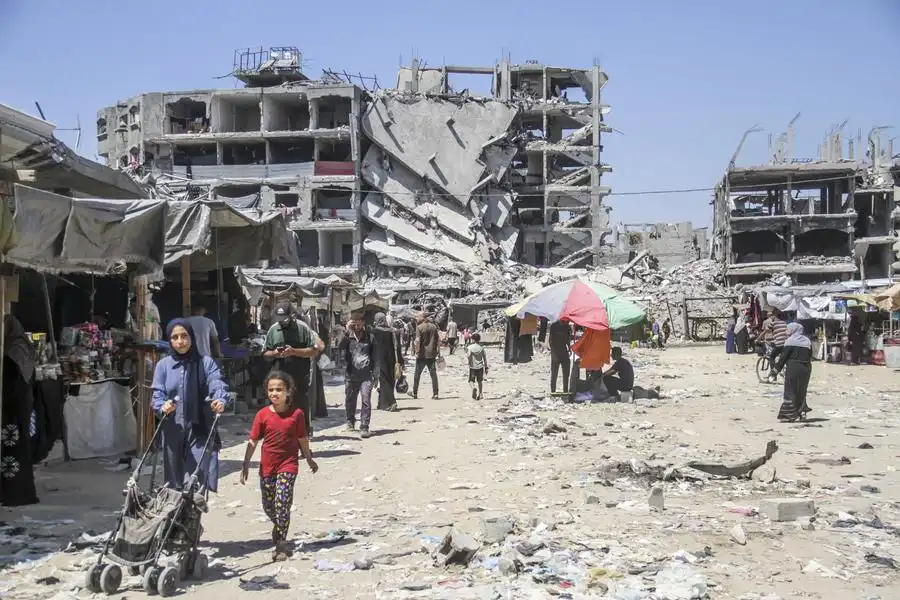
Gaza's heavy night!

What a night like the waves of the sea, casting its curtains with all kinds of heavy worries on hearts laden with the pains of loss, illness, fear, hunger and homelessness.


What a long night that never ends, and the morning is not better than it. The day of those crucified in the fire is no different from their night, and it does not calm the fear of their children, or satisfy their hunger, or quench their thirst, or heal their wounds.


What a night that stretches like the night of the pre-Islamic poet who tried to rule and died trying to achieve it. The hands of the clock in Gaza have stopped, and the diaries of those crammed into the lines of extermination, waiting for their turn at the blazing stove, have frozen in fear and terror from the gloom of the scene and the evil of the outcome.


The experts of the "deadly diet" are creative in presenting recipes, under the instructions of the generals, so that the bodies melt as punishment for their insistence on staying under the roofs of the houses in the neighborhoods rigged with death, in Jabalia, Beit Hanoun and Beit Lahia.


The night of Gaza has become long and drawn out, and the wolves have not been satisfied with the waterfalls of blood, nor have the crows stopped pursuing their prey, even while they are sleeping or playing, or on “hospital beds,” which do not live up to their name after they were taken out of service by drones.


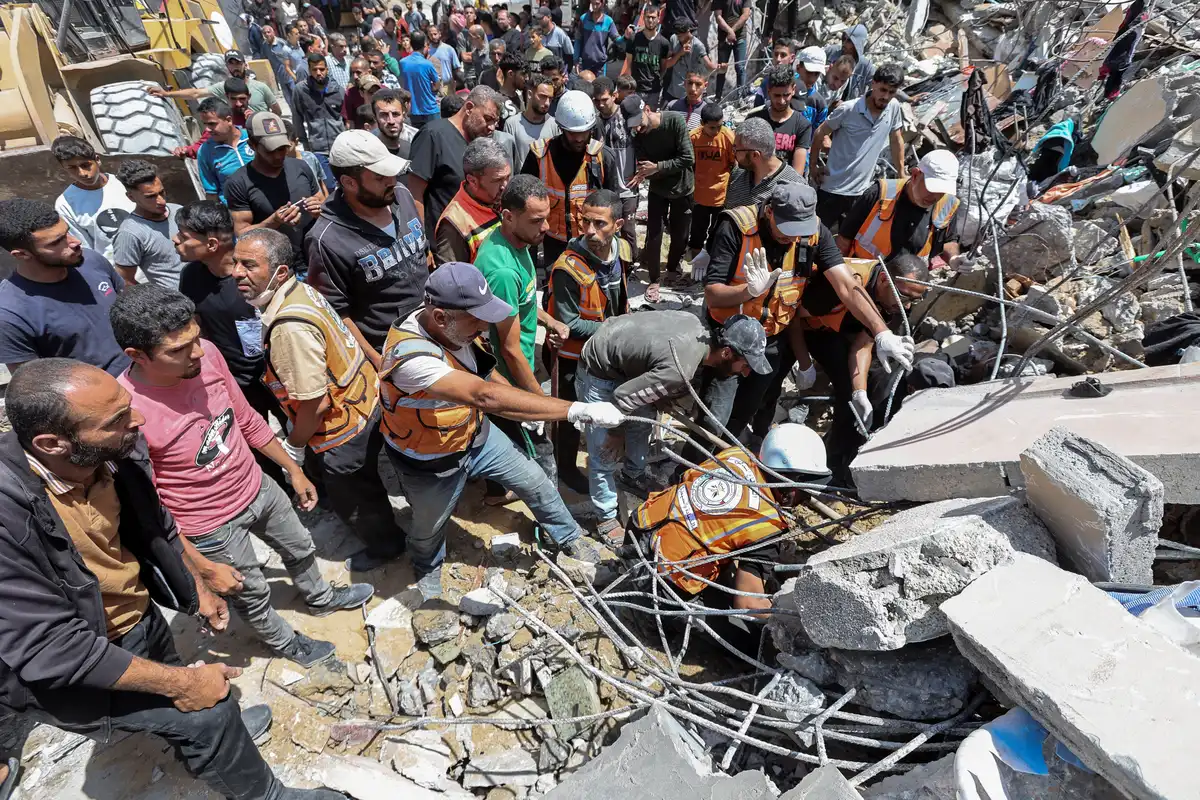
Under the rubble, at these moments, souls gasp, breaths are stifled, and the wounds of fathers and mothers bleed next to sons and grandchildren, breathing their last in silence, like the silence of hidden consciences covering up the raging holocaust of genocide.


Stop the war of extermination now..!

PALESTINE

Mon 11 Nov 2024 8:41 am - Jerusalem Time

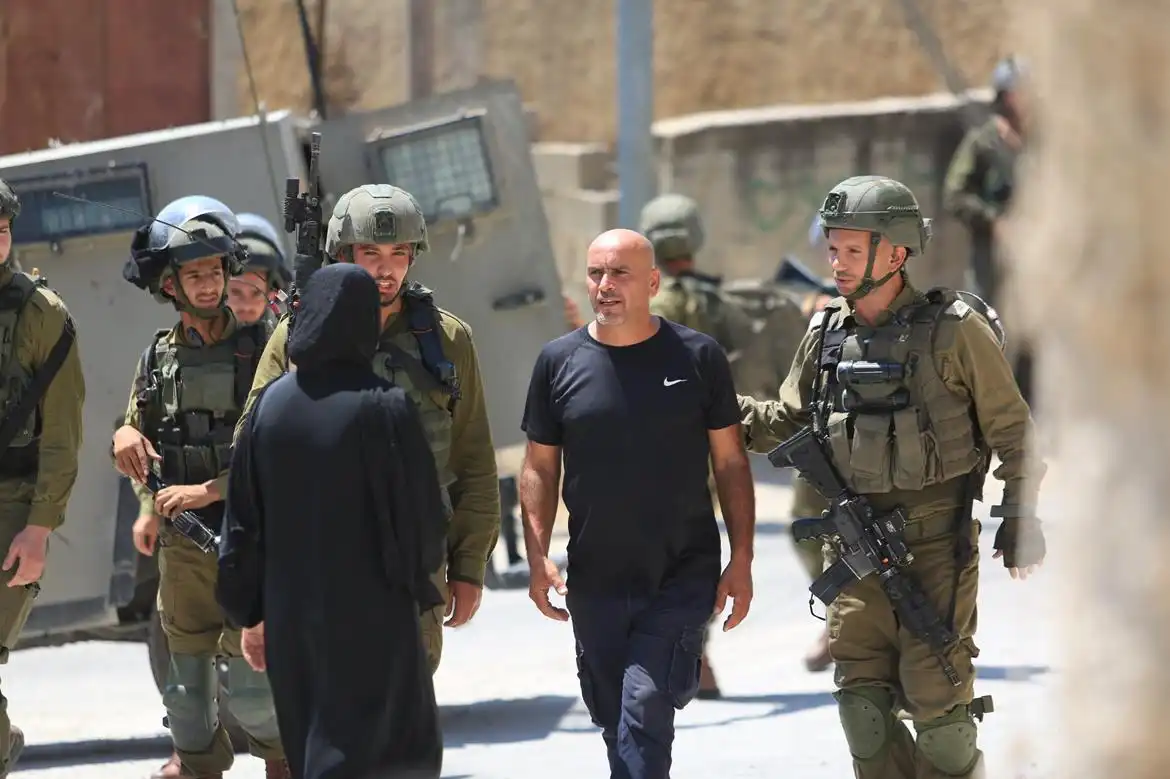
Raids and arrests in the West Bank and occupied Jerusalem

The Israeli occupation forces launched a campaign of raids and arrests in the West Bank and occupied Jerusalem at dawn and this Monday morning.


In Nablus, the occupation forces raided a building in the Rafidia area, and a house east of the city, searched it, ransacked its contents, and arrested the young man Yousef Abu Safi.


The occupation forces also raided a house in the Askar al-Balad area, searched it and arrested the two brothers, Amin and Amir Bahr al-Dam.


The occupation forces also stormed a commercial store in the eastern market area, carried out acts of vandalism inside it, and seized a computer connected to surveillance cameras.


In Bethlehem, the occupation forces stormed the village of Husan amidst intensive security measures and positioned themselves in the middle of the village, specifically near the village council headquarters, and fired tear gas bombs around the Civil Defense headquarters, without any injuries being reported.


In Qalqilya, the occupation forces stormed the village of Azzun and arrested two young men: Muhammad Abdul Karim Salim and Ibrahim Nidal Salim, in their thirties, after raiding and searching their homes.


In occupied Jerusalem, the occupation forces stormed the Shuafat camp and arrested the young man, Muhammad Nizar Muhammad Ali, after raiding his family’s home and tampering with its contents.

PALESTINE

Sun 10 Nov 2024 10:58 pm - Jerusalem Time

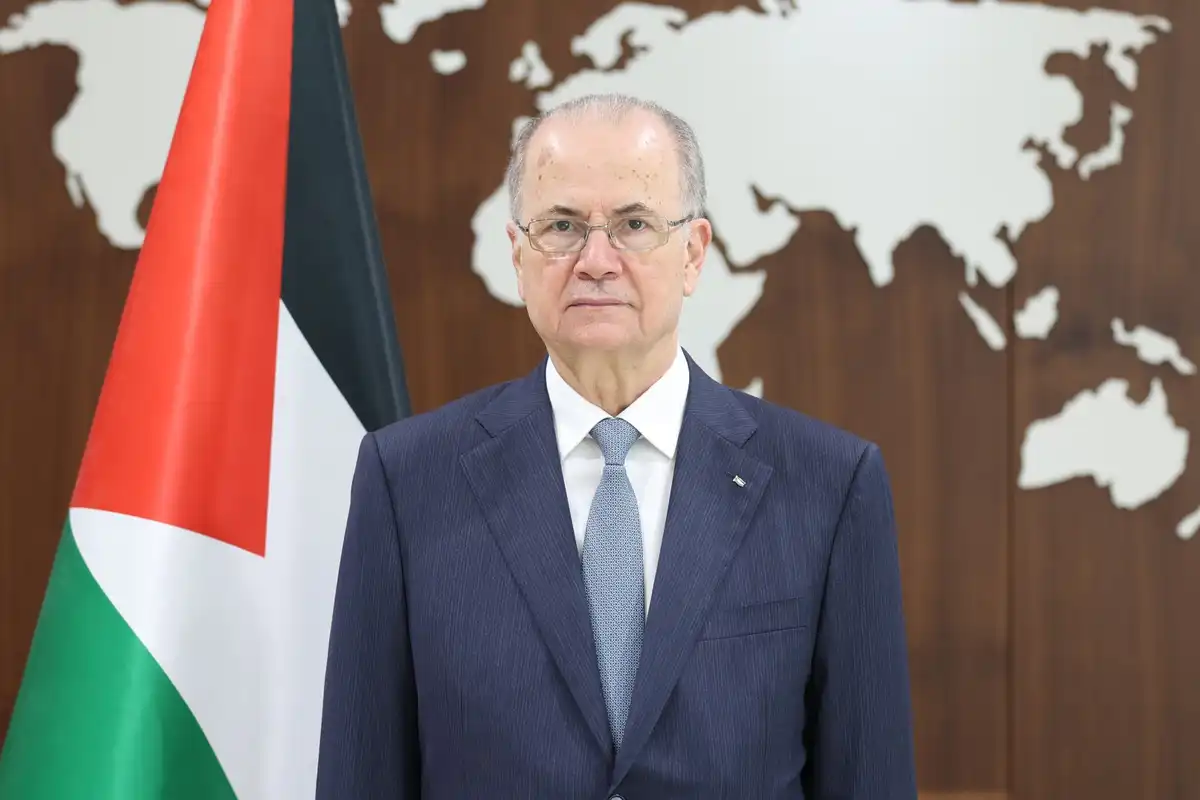
Mustafa calls for adopting a draft resolution in the Security Council to obtain Palestine's full membership

Prime Minister and Minister of Foreign Affairs, Mohammed Mustafa, called for supporting the efforts and vision of President Mahmoud Abbas to hold an international peace conference within a year, as stated in the recent General Assembly resolution on the nature of the Israeli occupation, and to hold a reconstruction conference if the Israeli aggression and war of extermination against our people in the Gaza Strip stop.

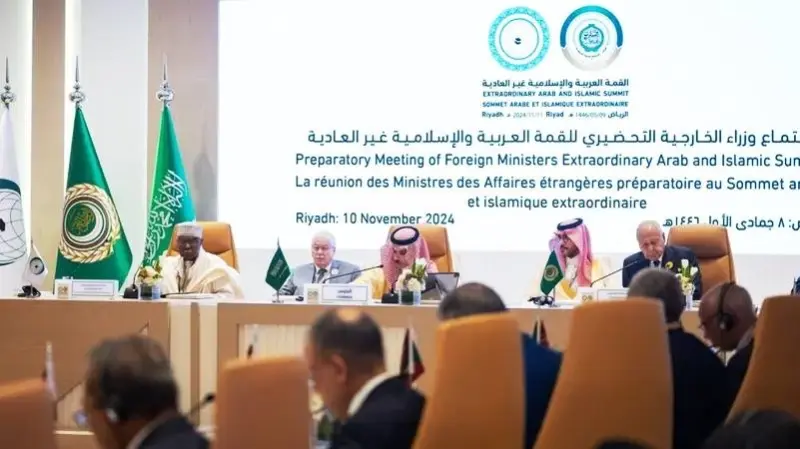
Mustafa reiterated the importance of what the Arab-Islamic Ministerial Contact Committee, headed by His Highness Prince Faisal bin Farhan, has done since the beginning of the war of extermination, calling for the continuation of its work, renewing the committee’s mandate to implement the decisions of the joint summit, and working with the capitals of influential countries, and in international institutions, especially the Security Council, to lead the effort to stop the Israeli war of revenge, increase recognition of the State of Palestine, obtain full membership, and punish Israel for its crimes.

This came during his speech, today, Sunday, at the preparatory ministerial meeting for the extraordinary Arab and Islamic summit scheduled to be held tomorrow, Monday, in the Saudi capital, Riyadh.

The Prime Minister stressed the importance of joint action on practical steps and sanctions against Israel to end its illegal occupation of the State of Palestine within 12 months, as stated in the General Assembly resolution to implement the legal advisory opinion of the International Court of Justice months ago.

Mustafa said: "This requires submitting a draft resolution to the Security Council under Chapter VII of the United Nations Charter, to oblige Israel, the occupying power, to cease fire in the Gaza Strip and allow humanitarian aid into all areas of the Strip, immediately, and implement the relevant Security Council resolutions."

The Prime Minister also called for adopting the submission of a draft resolution to the Security Council for the State of Palestine to obtain full membership in the United Nations, and implementing this resolution as soon as possible, in the days following the summit, and launching steps to freeze Israel's participation in the United Nations General Assembly, on four bases: that it works against the goals and principles of the United Nations Charter, that it represents a threat to international peace and security, and that it is a rogue state that has not fulfilled the requirements for its membership in the United Nations, and based on the advisory opinion issued by the International Court of Justice on 7/19/2024, which considered that the Israeli occupation is illegal and constitutes a system of apartheid and racial discrimination, and that it and its effects must be removed.

Mustafa added: "Within the framework of the legal accountability required to ensure that Israel does not escape punishment, and to provide justice to the victims of our Palestinian people, we call on Arab and Islamic countries to join the genocide lawsuit against Israel in the International Court of Justice, and to work to enhance the speed of the International Court of Justice's ruling on Israel's commission of the crime of genocide against our people."

The Prime Minister continued: "We hope that the sister countries will work with Switzerland, the depositary state of the Geneva Conventions, to implement the General Assembly resolution calling for the convening of a conference of the High Contracting Parties to the Geneva Conventions as soon as possible, and to consult on the outcomes of this conference so that the countries can assume their responsibilities towards punishing Israel for its violations of this convention."

Mustafa addressed His Highness Prince Faisal bin Farhan, and through him to his sister country, the Kingdom of Saudi Arabia, with the utmost appreciation and gratitude for the Kingdom’s initiative to hold the joint Arab-Islamic summit for the second time in a row within a year, with the aim of unifying the Arab and Islamic position to confront the Israeli aggression against the Palestinian people and the Palestinian cause and our Arab and Islamic region, and the extension of this aggression to include the brotherly Lebanese people, and to reach the lands of the sisterly Syrian Arab Republic.

The Prime Minister expressed the State of Palestine's appreciation for the initiative and efforts of the sisterly Kingdom of Saudi Arabia with partners to establish the global alliance to implement the two-state solution, and held the first meeting in Riyadh on October 30 and 31. We call on the alliance to complete its countries' recognition of the State of Palestine and adopt Palestine's obtaining full membership in the United Nations, and to take political, legal and economic measures to push Israel to implement the two-state solution.

Mustafa stressed the State of Palestine's deep appreciation for the efforts of all sister Arab and Islamic countries in supporting the steadfastness of our people on their land, in the face of genocide, displacement and cleansing, and in supporting their legitimate struggle to exercise their inalienable rights.

PALESTINE

Sun 10 Nov 2024 9:40 pm - Jerusalem Time

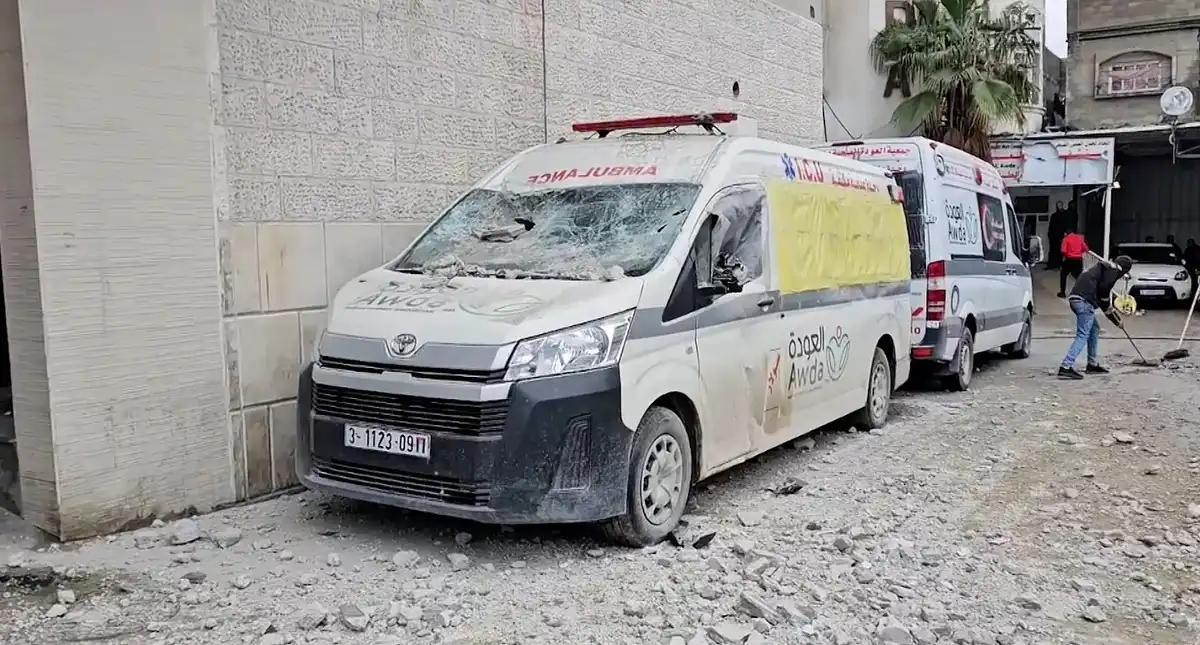
Al-Awda Hospital: 19 injured people transferred to Gaza City

Al-Awda Hospital in North Gaza Governorate reported that 19 injured people were transferred from the hospital to hospitals in Gaza City Governorate, through the International Committee of the Red Cross, in light of the genocide and ethnic cleansing that the governorate has been witnessing for more than a month.


The hospital administration said in a statement: "19 injured people were transferred from the hospital to hospitals in Gaza City, in cooperation with the International Committee of the Red Cross and the Palestinian Red Crescent."


Kamal Adwan Hospital urgently called for the provision of basic supplies and ambulance services, in addition to lifting the siege on northern Gaza, stating that "cases of malnutrition and famine have begun to appear in the region, and northern Gaza is being subjected to a war of extermination, and we are suffering as a result of the deliberate silence on the crimes committed against us."


PALESTINE

Sun 10 Nov 2024 9:38 pm - Jerusalem Time

Unprecedented boycott campaign against Israeli academics and universities

١Israeli universities are witnessing an unprecedented wave of boycotts by academics since the beginning of the war on Gaza, reaching more than 300 cases of boycott, according to data from the Committee of University Presidents, which was published today, Sunday.

Belgium recorded the highest number of boycotts of Israeli academics, reaching more than 40 cases, followed by the United States with more than 35 boycotts, then Britain with more than 20 cases, and the Netherlands with more than 15 boycotts, while Italy recorded more than 10 boycotts following an initiative launched by its academic union.

The boycott of Israeli universities and academics is expressed in many forms, the most prominent of which is the refusal to publish scientific articles, which numbered approximately 50 cases.

About 30 lectures by Israeli academics were also cancelled, while about 30 cases were recorded in which foreign academics refused to give lectures at scientific conferences and study days organised by Israeli universities.

About 30 cases of cancellation or suspension of research cooperation or between Israeli and foreign universities and student exchanges were recorded.

This boycott of Israeli universities included many faculties and scientific fields, including history, law, archaeology, Jewish studies, cultures, natural sciences, and engineering.

The data indicated that "the situation is particularly serious" in Belgium, which cancelled about 15 academic grants, and other cases included refusing to issue recommendations and reports to Israeli researchers and ignoring written or verbal messages from them.

“The academic boycott is one of the central challenges facing Israeli universities, since October 7, in the international arena,” said Emmanuel Nachshon Schlinger, head of the anti-academic boycott team at the Committee of Presidents of Israeli Universities.

He added that the phenomenon of academic boycott is escalating significantly following the war and threatens to target the Israeli academic standing.

ARAB AND WORLD

Sun 10 Nov 2024 9:00 pm - Jerusalem Time

Against the backdrop of Amsterdam clashes.. 4,000 police to secure the France-Israel match

Paris police chief Laurent Nunez announced on Sunday that 4,000 police and gendarmes will be deployed next Thursday to secure a "high-risk" match between France and Israel at the Stade de France in Saint-Denis, in the fifth round of Group 2 of the UEFA Nations League.


Nunez told French channel BFMTV that the deployment of this large number of troops comes within the framework of "strict and unconventional security measures" to secure an international match of this type.

He added that 4,000 police and gendarmerie personnel will secure the stadium's perimeter, as well as public transportation in Paris, with some of them deployed inside the stadium.

Nunez added that about 1,600 security personnel will be deployed inside the stadium in France, including an elite unit of the national police, which will secure the Israeli team. He pointed out that the match is considered "high risk", especially in light of the tense geopolitical situation.

The Paris Police Director also explained that the French authorities are working in coordination with the Israeli embassy in Paris and with some elements of the Israeli police, stressing that these elements "will not participate in securing the event on Thursday."

The security measures come a week after violence in Amsterdam between groups of fans, including Maccabi Tel Aviv fans, during a Europa League match, which drew international condemnation.

"Palestinian flag is forbidden"

The Paris police chief also indicated that entry with a Palestinian flag would be prohibited, and only French and Israeli flags would be allowed. He added that "for fans, there will be a security measure around the stadium with two checkpoints, in addition to identity checks if necessary."

PALESTINE

Sun 10 Nov 2024 7:06 pm - Jerusalem Time

Haaretz: Israeli army carries out ethnic cleansing operation in northern Gaza Strip

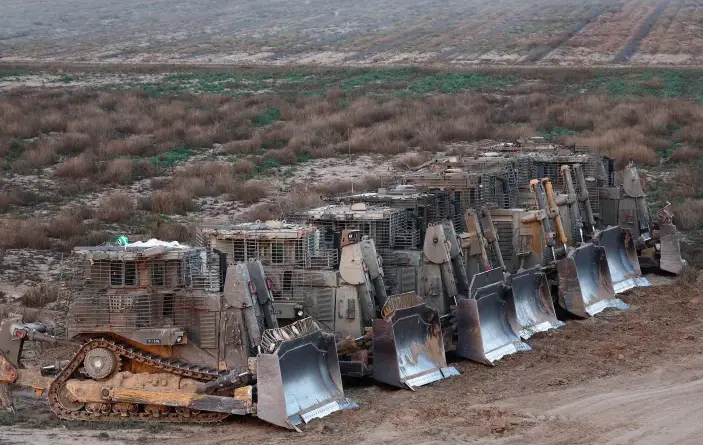
The Israeli newspaper Haaretz confirmed in its editorial on Sunday that the Israeli army is carrying out an “ethnic cleansing operation” in the northern Gaza Strip, which includes forcibly displacing the few remaining residents, destroying their homes and infrastructure, and opening wide roads as part of a plan aimed at separating the northern areas of the Strip from Gaza City.


The newspaper relied on a report by its military correspondent Yaniv Kubovich, who accompanied the Israeli forces on a tour of the area, describing the situation there as looking like a "natural disaster," despite the newspaper's emphasis that what is happening is systematic and intentional destruction.


The newspaper added references to a report published by the British newspaper The Guardian, which quoted Brigadier General Itzik Cohen, commander of the 162nd Division in the Israeli army, denying that residents would be allowed to return to their homes in the northern Gaza Strip, explaining that most of the residents of Beit Hanoun, Beit Lahia, al-Atatra and Jabalia had already been evacuated, and that his forces had received clear orders to carry out this forced evacuation. Cohen indicated that his mission was to "evacuate and cleanse an area," claiming that the evacuation was intended to "protect the residents" and facilitate the movement of Israeli forces.


The newspaper touched on the "generals' plan" drawn up by retired Major General Giora Eiland and some other retired commanders, which calls for displacing the population in the northern Gaza Strip and preventing the entry of humanitarian aid, considering that what Eiland is presenting publicly is part of a strategy implemented by the army under the direction of its military and political leaders, starting with Chief of Staff Herzi Halevi and Southern Command Commander Yaron Finkelman, and with the support of Prime Minister Benjamin Netanyahu, dismissed Defense Minister Yoav Galant, and his successor, Israel Katz.

The newspaper stressed that Netanyahu bears the greatest responsibility for the "war crimes" that also aim to destroy the homes of Palestinians and displace them, as part of the "war of rebirth" that seeks to pave the way for a long-term occupation and the possibility of future Jewish settlement.

Haaretz also touched on the comment of Israeli historian Daniel Beltman, a specialist in Holocaust and genocide studies, who described Eiland as an embodiment of moral collapse and a loss of historical understanding, noting in his article that the “Eiland Plan” falls within the category of “war crimes” ranging from ethnic cleansing to genocide.

In his article titled “Eiland’s Justifications Aim to Cover Up Israeli Crimes in Gaza,” Beltman believes that Eiland is trying to justify the displacement operations through flimsy justifications, considering that Eiland represents the moral collapse of “Israel.”


Beltman pointed out that Eiland has tried to portray the Gaza Strip as an “independent state” since the disengagement in 2005, likening the situation to Germany in the 1930s, but he considered this comparison misleading. Beltman stressed that Gaza is still under the effective control of Israel, which controls the entrances to the Strip, airspace, and territorial waters, which hinders the delivery of basic services such as health and education.

Beltman also denied Eiland's claims about the similarity between the rise of the Nazis and Hamas's seizure of power in Gaza, describing this comparison as illogical, and explained that Hamas seized power in besieged conditions and under Israeli military control, and that it is not a recognized international entity with economic and military capabilities.

Beltman concluded his article by questioning the fate of the Palestinians displaced under the Eiland plan, and pointed out that ignoring the provision of housing, care, and security for the displaced reflects a deliberate intention to oppress the residents of Gaza. He said that the “selective justifications” presented by Eiland aim to evade the fact that “Israel” is committing a war crime in Gaza aimed at ethnic cleansing and changing the demographic composition of the region.

PALESTINE

Sun 10 Nov 2024 6:00 pm - Jerusalem Time

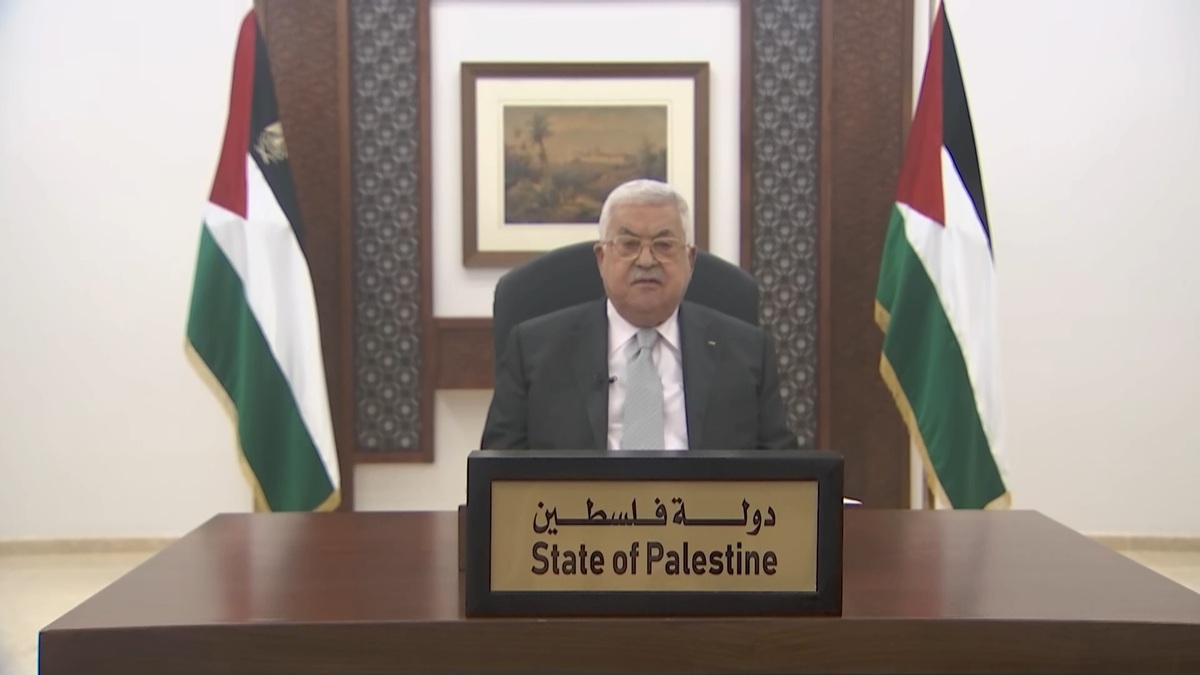
Abbas: Our people cannot be eliminated and the Palestinian cause cannot be liquidated

President of the State of Palestine Mahmoud Abbas said that the Palestinian people cannot be eliminated or dissolved, and the Palestinian cause cannot be liquidated.


The President said, on Sunday evening, on the occasion of the twentieth anniversary of the martyrdom of the symbolic leader Yasser Arafat, that our people in the Gaza Strip are being subjected to a second catastrophe and a war of genocide that history has never witnessed, and the occupation has turned the Strip into an uninhabitable area.


The President stressed that the displacement plan will not pass and we will not allow it to pass with the steadfastness of our people and the support and backing of our brothers and friends in the world, stressing that the leadership will not stop making every effort to stop the criminal war of extermination, until the last soldier withdraws from the Gaza Strip, so that the Strip returns to its natural place in the Palestinian state, and we heal the wounds of our people and rebuild it better than it was.


The President pointed out that the Palestinian issue is going through a difficult phase with the presence of the extreme right-wing government in Israel. The Gaza Strip is not the only one being subjected to a war of extermination and a plan for annexation and displacement, as the West Bank is being subjected to the same plan.


The President stressed that the Palestinian people will remain on their land and will not leave it, and this is the will of Yasser Arafat and all the martyrs of our people, foremost among them the martyrs of the Central Committee of the Fatah Movement.


The President said: We are committed to the option of peace, and we will continue to work to achieve it, stressing that security and stability cannot be achieved except by eliminating the occupation and achieving sovereignty and independence on the land of the Palestinian state, with East Jerusalem as its capital, on the 1967 lines, and finding a just solution to the issue of Palestinian refugees on the basis of the Arab Initiative and Resolution 194.


The President reiterated his rejection of the occupation's decisions to ban UNRWA from operating in Palestine, stressing that the State of Palestine will confront these decisions in coordination with the countries hosting Palestinian refugees.


The President said: Thanks to the steadfastness of our people and their defiance of the occupation's liquidation plans, we will continue to move towards freedom and independence, and the occupation will be held accountable for its crimes and aggression against our people, our land and our holy sites, in international courts.


The President stressed that we are on the path to achieving our national unity under the banner of the Palestine Liberation Organization, the sole legitimate representative of our Palestinian people, and the owner of the independent national decision.


The President stressed the commitment to the legitimate and internationally recognized national goals and rights, pledging to the masses of our great people to continue on the path of freedom and independence, for which our best sons and daughters sacrificed their lives. He stressed that our people and their leadership will not rest until the prisoners gain their freedom.


The President concluded his speech by saying: “Yasser Arafat’s legacy remains in us and we will not deviate from it. We will remain rooted in this land because we are its owners, and the truth of the Palestinian people cannot be obliterated or ignored.”


The following is the text of the President's speech:

O masses of our steadfast Palestinian people, who are standing with pride and dignity on the homeland in the Gaza Strip, the West Bank, Jerusalem, and in the diaspora across the world.

Today we commemorate the twentieth anniversary of the martyrdom of the symbolic leader Yasser Arafat, who carried the banner of the Palestinian national struggle for decades for freedom and independence. Perhaps the most important lesson from the path of this exceptional leader, and the path of the Palestine Liberation Organization, is that the Palestinian people cannot be eliminated or dissolved, and the Palestinian cause cannot be liquidated, and that our people have an ancient homeland upon which they built their history and civilization, this civilization that presented to humanity the message of love and peace.

This anniversary comes while the Palestinian people are going through harsh and difficult circumstances. There is a second Nakba in the Gaza Strip, as our people are being subjected to a war of genocide that history has never witnessed before, hundreds of thousands of martyrs and wounded, comprehensive destruction, displacement, hunger, diseases and epidemics. The occupying state has turned the Strip into an uninhabitable area, and what is happening today in the northern Gaza Strip is the best evidence of that. The sword of forced displacement is still hanging over the necks of the people of Gaza. We say here with all clarity and firmness that this plan will not pass and we will not allow it to pass with the steadfastness of our people and with the support and backing of our brothers and friends in the world. In the West Bank and Jerusalem, our people are facing continuous attacks on them, our land, and our Islamic and Christian sanctities by the occupation forces and terrorist settlers, who are practicing crimes of ethnic cleansing and racial discrimination.

Allow me on this occasion to address in particular the steadfast and steadfast masses of our people in the Gaza Strip, to tell them that we will not stop making every effort to stop the criminal war of extermination, until the last occupying soldier withdraws from the Gaza Strip so that the Strip can return to its natural place in the Palestinian state. We will also not rest until we heal the wounds of our people in the Gaza Strip, and rebuild it better than it was.

Oh, masses of our great people

The Palestinian cause is going through a difficult phase with the presence of the extreme right-wing government in Israel. The Gaza Strip is not the only one being subjected to a war of extermination and a plan for annexation and displacement. The West Bank is being subjected to the same plan, and the right-wing government believes that the conditions are favorable for implementing its expansionist goals at the expense of the Palestinian people and their legitimate rights.

We tell them and others that we have been the sons of this land for thousands of years. We will remain here and will not leave. This is the will of Yasser Arafat and all the martyrs of our people, foremost among them the martyrs of the Central Committee of the Fatah Movement. We assure them all that we will remain faithful to the covenant and that the banner will remain raised.

We have always adhered to the option of peace, we have adhered to it in all difficult and complex circumstances, and even when the other party abandoned it. We do not view peace as a passing phase. We seek to establish a just and lasting peace, and we believe that this peace, and that security and stability, can only be achieved by ending the occupation and achieving sovereignty and independence on the land of the Palestinian state, with East Jerusalem as its capital, on the 1967 lines, and finding a just solution to the Palestinian refugee issue on the basis of the Arab Initiative and Resolution 194. In this regard, we affirm the existence and strengthening of the work of UNRWA and reject the decisions of the occupation authorities to ban its work in Palestine, which we reject and will confront in coordination with the countries hosting Palestinian refugees.

Our heroic people

Thanks to your steadfastness and your confrontation of these crimes and liquidation plans, we are moving towards freedom and independence. International recognition of the State of Palestine is continuing, especially in the European arena, and the occupation is being dragged to international courts, and for the first time it will be held accountable for its crimes and aggression against our people, our land and our holy sites. Today, there is an international coalition of more than a hundred countries that was established through the commendable efforts of the Arab Islamic Committee, the European Union and sister and friendly countries in order to embody the State of Palestine and obtain full membership in the United Nations.

Here we must appreciate the positions of the peoples and countries of the world that support us and work with us in international forums. We also assure you that we are on the path to achieving our national unity under the banner of the Palestine Liberation Organization, the sole legitimate representative of our Palestinian people, and the owner of the independent national decision.

On the twentieth anniversary of the martyrdom of the symbolic leader Abu Ammar, we affirm to the masses of our great people our adherence to the legitimate and internationally recognized national goals and rights, and we pledge to them that we will continue with the same determination on the path of freedom and independence, this path for which the best sons and daughters of the Palestinian people sacrificed their lives, and the heroic prisoners sacrificed their freedom in the prime of their youth, and I tell them that your people and your leadership will not rest until you achieve your freedom.

Yasser Arafat's legacy remains in us and we will not deviate from it. We will remain rooted in this land because we are its owners.

The reality of the Palestinian people cannot be obscured or ignored.

Long live Palestine

Long live the Palestinian people, free and proud

Glory to our righteous martyrs, foremost among them the martyr, leader and symbol Abu Ammar.

Healing for our wounded and freedom for our heroic prisoners

May the peace, mercy, and blessings of God be upon you.

ARAB AND WORLD

Sun 10 Nov 2024 5:57 pm - Jerusalem Time

Saudi Foreign Minister chairs extraordinary Arab-Islamic summit

Today, Sunday, the preparatory meeting of foreign ministers for the extraordinary Arab-Islamic summit began in the Saudi capital, Riyadh, with the participation of Prime Minister, Minister of Foreign Affairs and Expatriates, Mohamed Mustafa.


Prince Faisal bin Farhan bin Abdullah, Saudi Minister of Foreign Affairs, chaired the preparatory ministerial meeting for the extraordinary Arab and Islamic summit scheduled to be held tomorrow, Monday, in the capital, Riyadh.


This summit is an extension of the joint Arab-Islamic summit held in Riyadh on November 11, 2023, based on the directives of the Custodian of the Two Holy Mosques, King Salman bin Abdulaziz Al Saud, and in continuation of the efforts made by Prince Mohammed bin Salman bin Abdulaziz Al Saud, Crown Prince and Prime Minister, and in coordination with the leaders of sister Arab and Islamic countries.


The meeting discussed the agenda of the upcoming summit and discussed the most important issues up for discussion.

ARAB AND WORLD

Sun 10 Nov 2024 5:34 pm - Jerusalem Time

Pro-Palestinian slogans and messages are becoming increasingly bold on American campuses.

As anti-Israeli war protests on Gaza disrupted college campuses across the United States, signs and chants demanded “Divest” and “Ceasefire Now!” This fall, the language of protest has become bolder, as if celebrating the October 7, 2023, attack, and echoing the rhetoric of Hamas, declaring, “Glory to the Resistance!” The mass protests and police and security crackdowns that swept college campuses last spring have dissipated, and campuses have become quieter and more peaceful this fall. But on some campuses, student groups have struck a strikingly more aggressive tone.

Israel’s brutal war on the besieged and devastated Gaza Strip, which has killed more than 44,000 Palestinians, 70 percent of them women and children according to the United Nations, is regularly described as genocide, “but until recently few of these slogans seemed pro-Hamas,” according to the newspaper, which says that “for some, including many in the Jewish community, this is a disturbing shift. But for others, the new rhetoric is the natural evolution of a movement responding to a brutal war now in its second year, with no end in sight.”

The newspaper quotes Mitchell Silber, an associate professor at Columbia University who runs a nonprofit that helps provide security for Jewish communities in the New York metropolitan area, saying that groups often escalate their rhetoric when they don’t achieve their goals, with a small group urging stronger action. “We’re at this tipping point. We’re starting to see a radicalization of their message,” he said. Silber, a former director of intelligence analysis for the New York Police Department, sees a more explicit rhetoric: “blatantly pro-Hamas, blatantly pro-Hezbollah, blatantly pro-Houthi.” The tougher messaging could soon clash with the incoming Trump administration.

President-elect Donald Trump has vowed to crack down on campus protests, and his allies expect the Department of Education to more aggressively investigate college campuses' responses to pro-Palestinian movements.

In May, Trump told donors, “If I’m reelected, we’re going to set this movement back 25 or 30 years.” He also promised to deport foreign students who participate in the protests. “Once they hear that, they’re going to act appropriately.”

The messages sometimes appear on social media including Telegram and Instagram, and sometimes at public events. Colleges have repeatedly said they do not tolerate violence but have also said they respect students’ right to free speech.

The new rules have limited how groups can protest on many campuses, and the large camps that disrupted campus life in the spring are gone. There are also more organized efforts to channel student and faculty concerns about issues in the Middle East into academic discussion, Ted Mitchell, president of the American Council on Education, told the newspaper.

Although fewer students have participated in antiwar efforts this year, many of those who remain are more extreme in their messaging, some observers say, according to the paper, which notes that “at the University of California at Berkeley a year ago, students hung a long banner from Sather Tower, a famous 307-foot bell tower on campus. It read: ‘Stop the Fire Now. Free Gaza,’ with an image of the Palestinian flag. This fall, that banner was gone and a new one was hung in its place, reading: ‘Glory to the Resistance,’ with an inverted red triangle, a symbol used by Hamas to mark military targets and that has become associated with the Palestinian resistance movement.”

Some protesters now refer to the October 7 attacks as the “Al-Aqsa Flood,” a name used by Hamas. On the first anniversary of the attacks, a Columbia University protester, walking through the center of campus amid a noisy crowd, held aloft a banner that included drawings of a hang glider, an inverted red triangle, and the message “Long live the Al-Aqsa Flood/Glory to the Resistance.”

Students involved in protest groups say the move toward more hardline rhetoric is a result of frustration with a war that shows no signs of ending anytime soon.

News from the Middle East has been controversial in recent weeks, with the killing of Hamas leaders, Israeli incursions into Lebanon, attacks on Iranian targets and horrific videos of civilians dying.

Students now believe it will take more drastic action to bring about change, and they are no longer willing to practice “respectability politics,” says Matt Kovak, a Berkeley history graduate student who helps run the campus chapter of Students for Justice in Palestine. “What we’re seeing is a realistic response to people who have been marching and protesting for a year, and these international institutions and the United States have no interest in a ceasefire, a year into the war,” Kovak says.

The paper says that there is no doubt that the majority of activists for Palestine are engaged in completely peaceful protests: calling for a ceasefire, writing divestment proposals, organizing educational seminars and film screenings, creating art and embroidery together. Some groups have hosted vigils for those killed in the war in Gaza; in Colombia, students read thousands of names aloud.

“We have overwhelmingly seen that the student-led protests are peaceful calls for human rights for those in Palestine; of course, they are becoming more urgent as the situation abroad continues to deteriorate,” said Farah Afifi, research and advocacy coordinator for the Council on American-Islamic Relations.

The newspaper claims that the shift (in the intensity of the discourse) is most evident at Columbia University, the center of last year's protests.

For weeks, Columbia University Apartheid Devest, one of the pro-Palestinian groups on campus, has taken a tougher tone through its communications channels. On Substack, the group has praised the leadership of Hamas, Hezbollah, and Ansar Allah (known as the Houthis), all Iranian-backed groups that the United States has designated as terrorist organizations. One post referred to these groups as the Axis of Resistance and said they “effectively utilized a hierarchy and organized structure led by an anti-imperialist political line to carry out operations effectively.”

The Students for Justice in Palestine chapter at California State Polytechnic University in Pomona is one of the chapters that has posted positive messages about Sinwar after his killing by Israeli forces. On Instagram, the group posted a photo of him with the words: “The face of the resistance. Martyred while fighting for our liberation. Rest in peace,” followed by a heart emoji.

On this point, the newspaper attributes to Mia Amari, a Palestinian-American and the branch president, that “last year people were more afraid to speak up.” Now, she said, “people are finally fed up and saying what’s on their minds.”

Asked if this could be read as support for terrorism, she said, “One man’s terrorist is another man’s freedom fighter.” Like other pro-Palestinian activists, she argued that the focus on the October 7 attacks was unfair, and that the day should be understood in the context of a long history of oppression.

A member of the leadership team at Mac for Palestine at Macalester College in St. Paul, Minnesota, made a similar point. Orianne Saxe Bernstein, a third-year student at Macalester, said that terms like “terrorism” “lose their persuasive power among students,” because they are applied to violence committed by Palestinians but not violence committed by Israel.

She said that students’ experiences on campus with the protest movement, including “intense surveillance, violent police, brutal arrests and threats to their education or even their personal safety,” have changed the way they see the Palestinian struggle. She said students realize that they are suffering “only a small part of the extreme oppression that defines Palestinian existence under occupation” and that “this form of oppression is extreme.”

However, she said the group's posts about Sinwar's life were not intended to support Hamas.

ARAB AND WORLD

Sun 10 Nov 2024 5:31 pm - Jerusalem Time

13 killed and wounded in Israeli raid on Damascus outskirts

Syrian media sources reported today, Sunday, that an Israeli raid targeted a residential building in the Sayyida Zeinab area in the Damascus countryside, resulting in 5 deaths and 8 injuries.


The Syrian Arab News Agency (SANA) said that initial information indicates that an Israeli aggression targeted the Sayyida Zeinab area in the Damascus countryside, adding that the raid left a number of dead and wounded.


Israel has not yet claimed responsibility for the bombing, but over the years it has launched hundreds of air strikes on Syrian territory, targeting government forces and targets it says are Iranian or affiliated with the Lebanese Hezbollah.


The pace of raids has increased in recent weeks as Israel's war on Lebanon has intensified since September 23.


Israel has been launching raids on Syria for years, and has intensified these attacks since the start of its war on the Gaza Strip on October 7, 2023.

ARAB AND WORLD

Sun 10 Nov 2024 5:26 pm - Jerusalem Time

Netanyahu: I spoke to Trump 3 times in the past few days

Israeli Prime Minister Benjamin Netanyahu said on Sunday he had spoken with US President-elect Donald Trump three times in the past few days with the aim of strengthening the "strong alliance between Israel and the United States."


"These were very good and important talks," Netanyahu said in a statement. "We agree on the Iranian threat in all its components and the danger it poses. We also see the great opportunities for Israel in the area of peace and its expansion and in other areas."


Netanyahu admitted, for the first time, responsibility for the bombing of the pagers in Lebanon. He said that this operation and the assassination of Hezbollah Secretary-General Hassan Nasrallah were launched despite the opposition of senior officials in the security establishment.


"Before the pager operation, they told me that the United States would oppose it, but I didn't listen," Netanyahu was quoted as saying by the state broadcaster. According to Yedioth Ahronoth, Netanyahu meant that he was told this by dismissed Defense Minister Yoav Galant. This is the first time a senior Israeli official has publicly acknowledged the bombing of communications equipment in Lebanon.

PALESTINE

Sun 10 Nov 2024 3:53 pm - Jerusalem Time

4 Palestinians killed, including a child, in Israeli bombing of Nuseirat and Sheikh Radwan

Four citizens, including a child, were killed and others were injured today, Sunday, in an Israeli bombing of the Nuseirat camp and Sheikh Radwan neighborhood, northwest of Gaza City.


Local sources reported that the occupation warplanes bombed a house in the Nuseirat camp in the central Gaza Strip, which led to the death of 3 citizens and the injury of others.


The occupation warplanes bombed the Turkmani Tower, west of Nusairat.


She added that an occupation drone of the "Quadcopter" type dropped bombs on citizens in the Sheikh Radwan neighborhood, northwest of Gaza City, which led to the death of a child (3 years old) and the injury of his parents.


The occupation artillery launched violent shelling on the areas of Beit Lahia Project, Tel al-Zaatar, and Jabalia Camp in the northern Gaza Strip.


In a preliminary toll, the number of dead since the beginning of the aggression on the Gaza Strip on October 7, 2023 has risen to about 43,603 dead, and 102,929 wounded, the majority of whom are women and children, while thousands of victims are still under the rubble and on the roads, where they cannot be reached.

PALESTINE

Sun 10 Nov 2024 3:50 pm - Jerusalem Time

Prisoners: Israel practices brutal violations against detainees in the Gaza Strip

The Palestinian Prisoners' Affairs Authority and the Palestinian Prisoners' Club said that the Israeli occupation authorities are committing brutal violations against detainees from the Gaza Strip.


The Commission and the Prisoners Club explained in a joint statement, today, Sunday, that these violations are committed by the occupation forces specifically during the process of arresting them, and in the first period of detention inside the camps.


They pointed out that their teams were able to visit about 30 detainees from the Gaza Strip in the Negev and Ofer prisons under difficult conditions and strict restrictions, including a number of medical teams who were arrested from Al-Shifa Hospital in Gaza, whether they were arrested inside the hospital or through the so-called “safe passages.” The detainees’ testimonies once again reflected the level of brutality practiced by the occupation forces against them.


The statement indicated that the visit took place on the 6th and 7th of November, and confirmed the set of systematic and proven crimes that form the basis for all Gaza testimonies, especially with regard to methods of physical and psychological torture, and systematic humiliation.


He continued: Based on the visits that were made to a group of detainees in the Negev prison, the issue of scabies emerged in their testimonies. Hundreds of detainees from Gaza are infected with the disease, as are hundreds of prisoners from all regions. Today, the Negev detainees are actually facing a real health disaster, in light of the continued spread of the disease among the prisoners. This is met by the prison system continuing to carry out systematic medical crimes, by depriving them of treatment, and its intention to put an end to the reasons that have contributed and continue to contribute to the continued spread of the disease.


The detainees also focused on the first period of detention, as a result of the torture they were subjected to in the army camps. Here we review brief testimonies from a number of them.


The prisoner (D.W.), who has been detained since March 2024, during the aggression on Al-Shifa Hospital, reported that he was detained in the Gaza Envelope area for four months before being transferred to the Negev prison, where he faced difficult and extremely harsh conditions. He was detained throughout that period blindfolded and handcuffed, and was subjected to severe beatings, in addition to insults and intimidation using police dogs. The beatings resulted in rib fractures. Today, although the frequency of beatings has decreased, the suffering has doubled after hundreds of detainees were infected with sciatica, which has become a tool of physical and psychological torture.


He added that he has not changed his clothes for 6 months, and that the prison administration deliberately takes away the mattresses and blankets at dawn and returns them late at night, and the crime of starvation is still ongoing, along with many other systematic crimes.


As for the detainee (L.R), he confirmed that out of (145) detainees held in one of the sections of the (Naqab) prison, (100) of them are infected with (scabies), and suffer from extremely difficult conditions, and systematic medical crimes are being practiced against them. His testimony included the same details that all the detainees mentioned about the first stage of detention, as he was subjected to the most heinous types of torture, insults and beatings, through daily assaults, which caused him fractures in the chest.


All detainees also called for the need to work on bringing them clothes before the onset of winter, as the bitter cold began to prevail in the sections, especially in the Negev prison, during the night hours, as the detainees do not have winter clothes, and each detainee only has a light blanket that does not protect him from the cold. The prison administration also deliberately removes the mattresses and blankets at dawn and returns them late at night. What contributed to the continued spread of scabies is the collection of blankets from all sections and from infected and uninfected rooms, and the blankets became a source of the spread of the disease, in addition to the lack of personal hygiene.


Among the detainees who were visited was a detainee who suffered from hearing loss, diabetes, fractures resulting from torture, and pain all over his body. He sent the lawyer a painful message in which he said, “I cannot sleep, from the cold and hunger. I am dying every moment and I do not know what they want from me. I can no longer bear this torture.”

ARAB AND WORLD

Sun 10 Nov 2024 3:28 pm - Jerusalem Time

US freezes shipment of military bulldozers to Israel

Yedioth Ahronoth newspaper reported on Sunday that the United States has decided to freeze a huge shipment of D9 armored bulldozers that the Israeli Ministry of Defense had previously purchased from the American company Caterpillar. The number of bulldozers that had been ordered was 134 bulldozers.


She pointed out that this freeze may be temporary, but its effects began to become clear on the battlefield after the Israeli army was forced to use the available bulldozers, many of which were destroyed as a result of what she described as "heavy consumption" of them during the war on Gaza.


Destruction of homes

The newspaper suggested in a report by its military correspondent, Yoav Zeitoun, that the increasing popular pressure within the United States against supplying these bulldozers resulted in the deal being frozen, due to their use in home demolitions in the Gaza Strip.


He added that this situation poses major challenges to the Israeli army, which relies heavily on this equipment to secure safe paths for its forces on the ground, especially in mined areas.


Soldiers killed

He said that the shortage of bulldozers threatens soldiers in Gaza, pointing to the killing of 21 Israeli soldiers last month in Jabalia, north of the Gaza Strip, quoting military leaders as saying that "most of these soldiers were killed by explosive devices, as a result of the shortage of D9 bulldozers in those operations."


The reporter assumed that the freeze on bulldozer shipments would delay the establishment of new buffer zones in northern and southern Gaza, and even on the northern front on the border with Lebanon, with the Israeli army adopting other alternatives to destroying buildings, including air strikes and explosions.


The report indicated that the Israeli army is facing a shortage of heavy bombs weighing one ton, as the United States froze a shipment containing about 1,300 bombs after half of them arrived, and quoted an Israeli security source as saying that "the delay in these shipments is forcing the army to rent additional equipment from local contractors."


Other weapons influx

However, the report stated that the United States had agreed to complete a huge deal to supply Israel with about a thousand JLTV armored personnel carriers, which would enhance the ability of elite units to move flexibly in different combat zones, especially with the presence of 30 mm machine guns within the equipment of these vehicles.


Zaitoun asserts that the tensions in Israeli-American military relations come in light of the current administration facing internal pressures from human rights organizations, noting that "there are American reservations from the State Department and the Pentagon about meeting all Israeli requests for advanced weapons."

ARAB AND WORLD

Sun 10 Nov 2024 3:17 pm - Jerusalem Time

Maariv: Trump will not give Israel a blank check

Maariv newspaper downplayed expectations that US President-elect Donald Trump would support Israel on sensitive regional issues, particularly with regard to the Iranian file, the war on the Gaza Strip, and efforts to expand the peace agreements, known as the "Abraham Accords." Possible changes At the beginning of the report, written by the newspaper's political correspondent, Anna Brasky noted that many in the Israeli government prayed for Trump's victory, and considered his presidency to be in Israel's interest.


Brasky says that Trump supported Israel during his first term with decisive decisions, such as moving the US embassy to Jerusalem, recognizing Israeli sovereignty over the Golan Heights, and signing the Abraham Accords, which strengthened Israel’s relations with a number of Arab countries. But she raises an important question: “Will Trump be as tough on Middle East issues in his second term, or will he take a more cautious approach?”


She answers this question by saying that it is likely that there will be changes in the positions of the new American president, citing as evidence the fluctuations in the policy of the former hardline Israeli Prime Minister Ariel Sharon, who changed from supporting the settlers to taking the decision to withdraw from the Gaza Strip and dismantle its settlements in 2005 during his second term.


She points out that one of the most prominent questions that attempts to anticipate Trump’s policies relates to his position on Iran. Despite his statements during his election campaign that he does not oppose Israel attacking Iran, and that he will not tie its hands, this position may not necessarily translate into full American support for this step. Advertisement Brasky confirms that “Israel cannot launch such attacks without effective American support, which means that any neutrality on Trump’s part will not be enough” to enable Tel Aviv to attack Iran.


“For Trump, a businessman who prefers deals, opening new negotiations with Iran may be a more attractive option than getting involved in a new war,” she continues. “So, Trump may be inclined to renegotiate a modified nuclear agreement rather than engage in a direct confrontation, which raises concerns among Israeli officials about the possibility of making concessions to Iran.”


The price of expanding the Abraham Accords


Maariv's correspondent also believes that Trump's return to the White House may witness an attempt to revive and expand the Abraham Accords, especially with the focus on concluding a peace agreement between Saudi Arabia and Israel. But the question the newspaper poses is, "What price might Saudi Arabia demand in exchange for normalization?"


She explains that one of the conditions that Riyadh could impose is recognition of a Palestinian state, an issue that could spark widespread controversy within Israel. She points out that Trump’s peace plan, known as the “Deal of the Century,” included the establishment of a Palestinian state on about 70% of the territory as part of the peace agreement, but the ability to actually implement this clause remains questionable.


The writer also draws attention to the fact that “the relationship between Trump and Netanyahu may be an influential factor in American policy towards Israel,” and believes that “despite the close alliance between them in the past, their relationship has gone through difficulties. Benjamin Netanyahu is currently making efforts to re-establish his relationship with Trump, and has risked provoking the Biden administration in the process.” Advertisement She says that “what will happen after Trump is officially inaugurated may reveal whether the relationship between them will return to its best state, especially since Trump may treat Netanyahu either as a true friend or as a former ally.”


The report concludes that Israel is cautious in its expectations regarding Trump’s handling of the Middle East and Israel, especially in light of the lack of clarity about his future plans. “While Israel hopes for comprehensive American support, it realizes that Trump may take more moderate and cautious positions than he has previously, and may prefer to explore new deals that seek to achieve stability in the region without military escalation,” Brasky concludes by saying that “Trump’s return to the White House may not be the same approach that Israel was accustomed to during his first term, and may impose a heavy price on the Israeli government to achieve some of its strategic goals in the region.”

ARAB AND WORLD

Sun 10 Nov 2024 2:41 pm - Jerusalem Time

Yair Golan: Netanyahu seeks settlement in the north despite Hezbollah's strength

Israeli Democratic Party leader Yair Golan said on Sunday that Benjamin Netanyahu's government is trying to reach a settlement in the north, despite not eliminating Hezbollah, while endangering the lives of prisoners and soldiers in the Gaza Strip by refusing a ceasefire on the grounds that Hamas has not been eliminated.


This came in a post on the X platform by Golan, who previously held several military positions, including Deputy Chief of Staff of the Israeli Occupation Army and Commander of the Northern Region.


"Hezbollah, which is much stronger than Hamas, has not been completely eliminated, but the Israeli government is trying to reach a settlement in the north," said the head of the Democratic Party, an alliance of the left-wing Labor and Meretz parties.


He added: "The government itself refuses to reach an agreement to release prisoners, including a settlement in the south, on the grounds that Hamas has not been completely eliminated."


Golan continued: "This is illogical and unprofessional and puts the lives of prisoners and our soldiers (in the Gaza Strip) at risk in vain."


He concluded by saying: "Every Jewish mother will know that the Israeli government prefers its political survival over the security of its children."


On Sunday, the Hebrew newspaper Yedioth Ahronoth said that Minister of Strategic Affairs Ron Dermer headed to Washington to hold talks with senior White House officials regarding reaching a settlement with Hezbollah in the north.


Meanwhile, the Israeli Army Radio said that Dermer secretly visited Russia last week to push for a ceasefire agreement with Hezbollah.


She added in a report: "Dreamer is working with the Americans on settlement negotiations in the north, and Russia is expected to play a major role in the ceasefire."


Netanyahu's government refuses to reach a deal to return prisoners held in the Gaza Strip that includes stopping the war there, amid threats by extremist ministers, including National Security Minister Itamar Ben-Gvir and Finance Minister Bezalel Smotrich, to withdraw from the government if the war in Gaza stops.


ARAB AND WORLD

Sun 10 Nov 2024 2:25 pm - Jerusalem Time

Seoul braces for shifts in Washington policy after Trump's victory

South Korean President Yoon Suk-yeol held a meeting with senior officials on Sunday to study the impact of US President-elect Donald Trump's return to the White House.


Bloomberg reported that Yoon ordered officials to form an advisory body headed by Finance Minister Choi Sang-mok that would focus on policies related to financial, trade and industrial affairs to prepare for possible shifts in U.S. policy.


If the new US administration takes a flexible approach on fossil fuels, it could have a positive impact on the petrochemical sector, Yun said.


On security, Yoon made clear that there could be "structural changes" without elaborating, and called for comprehensive readiness to maintain an active alliance with the United States.

ARAB AND WORLD

Sun 10 Nov 2024 2:01 pm - Jerusalem Time

UAE President, Kuwait Emir call for ceasefire in Gaza, Lebanon

UAE President Sheikh Mohammed bin Zayed Al Nahyan and Kuwaiti Emir Sheikh Meshal Al-Ahmad Al-Jaber Al-Sabah called on Sunday for intensifying international efforts to stop the ceasefire in the Gaza Strip and Lebanon, which have been witnessing an ongoing Israeli war since October 2023.


This came during talks between the two Gulf leaders, at Bayan Palace in the Kuwaiti capital, as part of an open-ended state visit that the UAE President began to Kuwait on Sunday, according to the official UAE news agency, WAM.


The agency explained that the two sides "discussed fraternal relations and paths for developing cooperation and joint work in various fields, in a way that serves mutual interests."


The two sides stressed their "keenness to continue building on the deep-rooted historical relations that unite the two countries and their peoples."


During the talks session, they reviewed "developments on the regional and international arenas, most notably the situation in the Middle East, especially the developments in the Gaza Strip and Lebanon," according to WAM.


President bin Zayed and Prince Mishaal stressed "the importance of intensifying international efforts to cease fire in the Gaza Strip and the top priority of providing full protection for civilians in accordance with the rules of international humanitarian law, and pushing joint efforts to respond to the humanitarian conditions experienced by the population."


They stressed "the UAE and Kuwait's firm stance towards preserving Lebanon's unity, sovereignty and territorial integrity, and their support for the brotherly Lebanese people in various circumstances."


They called for "urgent international action to stop the fire in Lebanon and provide protection for civilians there," according to the Emirati agency.


The two leaders stressed the "need to intensify efforts to prevent the expansion of the conflict in the Middle East region and spare it the consequences of new crises that threaten its security and stability."

PALESTINE

Sun 10 Nov 2024 1:39 pm - Jerusalem Time

Israel prevents citizens from picking olives in the middle of Hebron

Today, Sunday, the Israeli occupation forces prevented citizens in the Tel Rumeida area in central Hebron from picking olives and entering their lands.


Local sources reported that the occupation forces prevented the Qunaibi family from picking olives from their lands in Tel Rumeida, seized the olives, and forced them to leave.


It is noteworthy that the occupation has continued to prevent citizens since the beginning of the aggression against our people on October 7, 2023, from entering their lands to pick olives, which negatively affected the season, which was severely damaged in various governorates.

ARAB AND WORLD

Sun 10 Nov 2024 1:24 pm - Jerusalem Time

Dozens of dead in Israeli raids on Tyre, Baalbek and Jbeil district in Lebanon

Israeli raids on eastern and southern Lebanon and northern Beirut, on Sunday, resulted in dozens of deaths and injuries.


Israeli warplanes launched a raid on a house in the city of Baalbek, eastern Lebanon, according to what was reported by the official Lebanese National News Agency, without prior evacuation warning.


The agency reported that "enemy aircraft launched a raid on a house in the Al-Laqees neighborhood in the city of Baalbek."


Meanwhile, the Lebanese Ministry of Health announced the death of 20 people, including children, in an Israeli airstrike on a town in the Jbeil district, north of Beirut. The ministry said in a statement that "the Israeli enemy's raid on Almat in the Jbeil district led, according to an updated toll, to the death of 20 people, including three children, and the injury of six others."


Earlier today, the National News Agency reported that 17 people were killed in an Israeli bombardment that targeted the village of Deir Qanoun Ras al-Ain in southern Lebanon.


According to the agency, "Civil defense teams affiliated with the Islamic Message Scouts Association, the Islamic Health Authority, and the Red Cross are still searching for a number of missing persons under the rubble in the building that was destroyed by the Israeli enemy in the town of Deir Qanoun Ras al-Ain yesterday evening."

PALESTINE

Sun 10 Nov 2024 12:47 pm - Jerusalem Time

Tel Aviv expects a Security Council resolution calling for an end to the war in Gaza

Channel 12 confirmed, quoting informed sources, that the occupation government expects a resolution from the Security Council calling for a halt to the war in Gaza.


The Hebrew newspaper said on Sunday that the government is likely to issue a Security Council resolution soon to stop the fighting in Gaza and restrict the activity of the occupation army.


She pointed out that the government has concerns about the possibility that Washington will refrain from using its veto to protect Tel Aviv's interests in the Security Council.


Aggression on Gaza

The occupation war machine continues its aggression for the first day after four hundred in the Gaza Strip, where the bombing and shelling of residential buildings has been renewed, especially in the northern part of the Strip.


The Palestinian Ministry of Health in Gaza announced yesterday, Friday, that the death toll from the aggression had risen to 43,552 martyrs, in addition to 102,765 others injured since October 7, 2023.


The number of occupation soldiers killed is rising

According to the latest tally, the occupation army announced that the number of its dead has risen to 782 officers and soldiers in the aggression on Gaza, since October 7, and 368 have been killed since the start of the ground operation on October 27.


According to the occupation army, 5,299 soldiers have been injured since the beginning of the aggression on Gaza, including 3,204 minor injuries, 1,319 moderate injuries, and 776 critical injuries.


ARAB AND WORLD

Sun 10 Nov 2024 12:44 pm - Jerusalem Time

Biden to host Trump at White House on Wednesday

Joe Biden plans to welcome his successor, Donald Trump, to the White House on Wednesday, after the US president pledged a peaceful and orderly transfer of power to the Republican president-elect he lost to in the presidential election four years ago.


Trump, who has never acknowledged his loss in the 2020 election, scored a historic victory on November 5 that returned him to the White House, capping nearly a decade of political activism marked by his hardline positions.


Biden will join a small club of US presidents who have returned power to a predecessor in the White House.


The Democratic president will meet with Trump at 11:00 a.m. (16:00 GMT), according to a White House statement yesterday (Saturday), as the countdown begins for the former president's return to power in January.


Trump won Arizona in the US presidential election this week, US television networks predicted yesterday (Saturday), completing the Republican sweep of all seven swing states.


After four days of counting votes in this southwestern state with a large Hispanic population, CNN and NBC projected that Trump would win 11 electoral votes.


Trump ruled out yesterday (Saturday) the possibility of asking his former Secretary of State Mike Pompeo and the US Ambassador to the United Nations during his term, Nikki Haley, to be part of the administration that he is scheduled to form after being elected president for a second term.


“I will not be inviting former Ambassador Nikki Haley or former Secretary of State Mike Pompeo to join the Trump administration being formed,” the president-elect wrote on his social network, Truth Social.


“I have loved and appreciated working with them in the past, and I want to thank them for their service to our country,” the Republican billionaire added, attaching his message with his slogan “Make America Great Again.”


Democratic leader Nancy Pelosi told the New York Times on Saturday that “if the president had dropped out sooner, there might have been other candidates” besides Harris, adding that Biden’s immediate endorsement of Harris prevented a primary. However, the former House speaker praised the “enthusiasm” Harris generated during her campaign.


The 78-year-old real estate mogul and former reality TV star won by a wider margin this time, despite a criminal conviction, two impeachment attempts by Congress while in office and being accused of fascism by a former official.
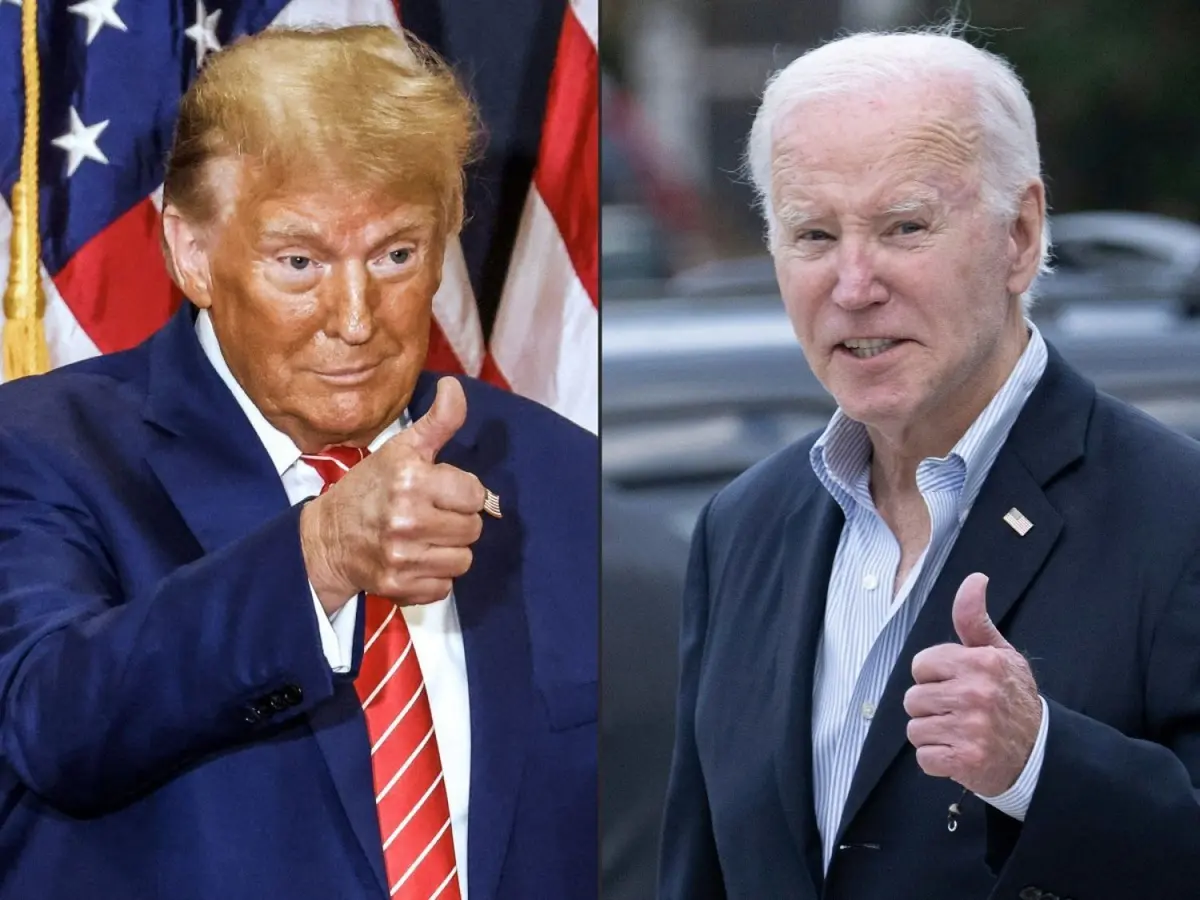

Polls showed that voters' main concern was the economy and inflation, which has risen to high levels under Biden.

Biden, who dropped out of the race in July over concerns about his age, 81, called Trump on Wednesday and congratulated him on his election victory.


Second management

Trump began selecting the people for his second administration, announcing the appointment of his campaign manager, Susie Wiles, as White House chief of staff.


Wiles is the first woman to hold the prominent position, and her position is the Republican president's first appointment in his new administration. Trump described the 67-year-old Florida native as "strong, smart, innovative, loved and respected globally," adding: "Suzy will continue to work tirelessly to Make America Great Again."


Other candidates for positions in a second Trump administration reflect the big changes they are set to make.


“I’m not going to deny vaccines to anybody,” Robert F. Kennedy Jr., a prominent figure in the anti-vaccine movement whom Trump has pledged to give a “big role” in health care, told NBC News on Wednesday.


Elon Musk, the owner of SpaceX, Tesla and Platform X, who has enthusiastically backed Trump, may have a role in the Trump administration by taking on the role of scrutinizing government waste and cutting costs.


Trump is expected to reverse many of the policies that have been associated with Biden. He also returns to the White House as a climate change denier, ready to dismantle Biden’s green policies, and give the go-ahead to drill oil wells.

PALESTINE

Sun 10 Nov 2024 12:37 pm - Jerusalem Time

Al-Qassam Brigades announces the killing of 15 occupation soldiers north of Beit Lahia

The Al-Qassam Brigades announced targeting an Israeli force of 15 soldiers today, Sunday, confirming that they were eliminated from zero distance.


Al-Qassam Brigades said, via its Telegram account, that the Israeli force was eliminated with light weapons and hand grenades west of the Al-Shimaa area, north of Beit Lahia, north of the Gaza Strip.


Al-Qassam confirmed that its fighters reported, after returning from the battle lines, that they had targeted two Israeli troop carriers with "Al-Yassin 105" and "Tandem" shells, and that they had targeted a military bulldozer with a "Thunder" explosive device near the Martyr Imad Aql Mosque in the middle of Jabalia camp in the northern Gaza Strip.


The Al-Quds Brigades noted that it, in cooperation with the Al-Nasser Salah al-Din Brigades, bombed with mortar shells an Israeli occupation command and control center inside the civil administration east of Jabalia camp.