PALESTINE

Wed 13 Nov 2024 9:33 am - Jerusalem Time

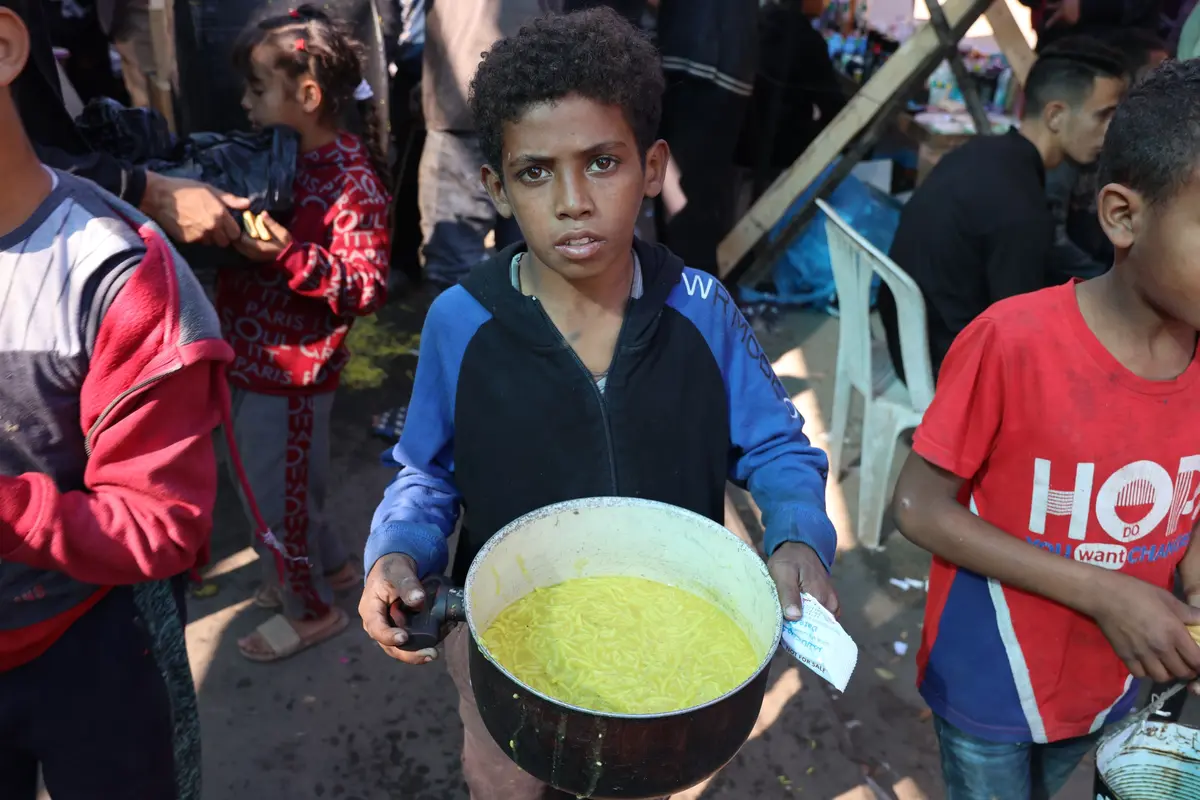
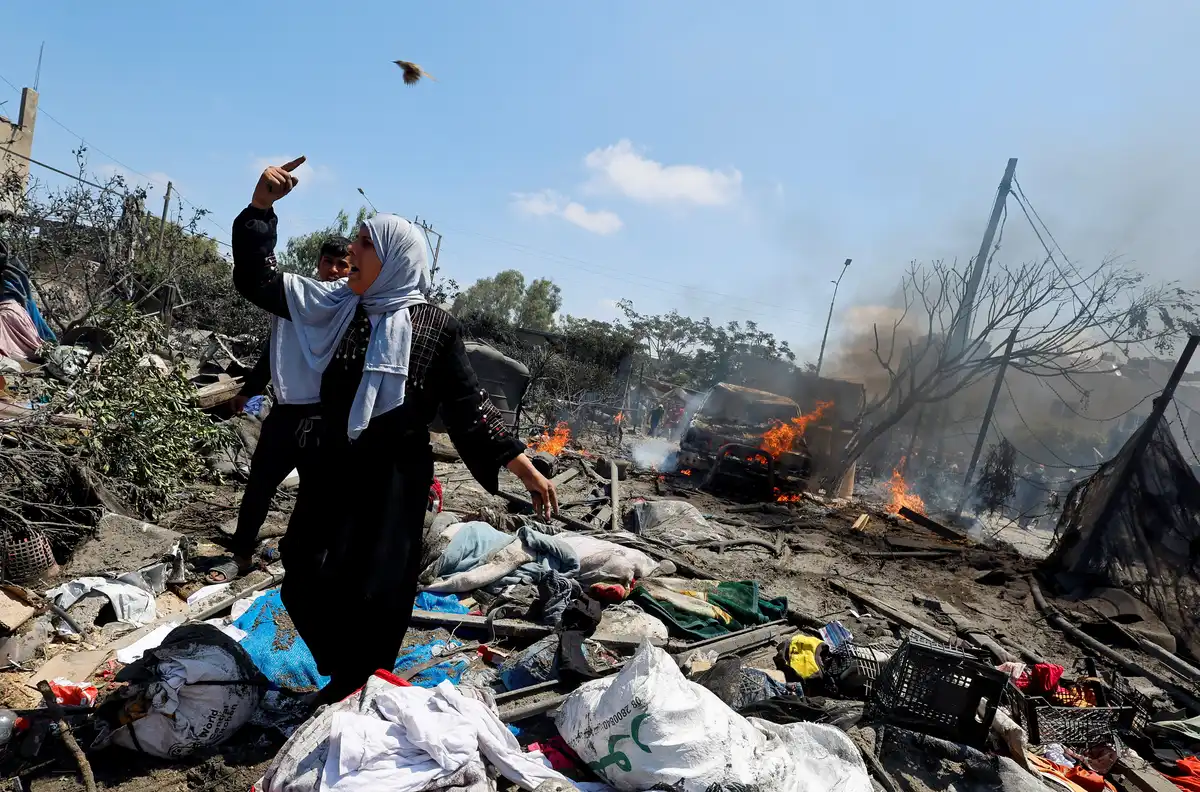
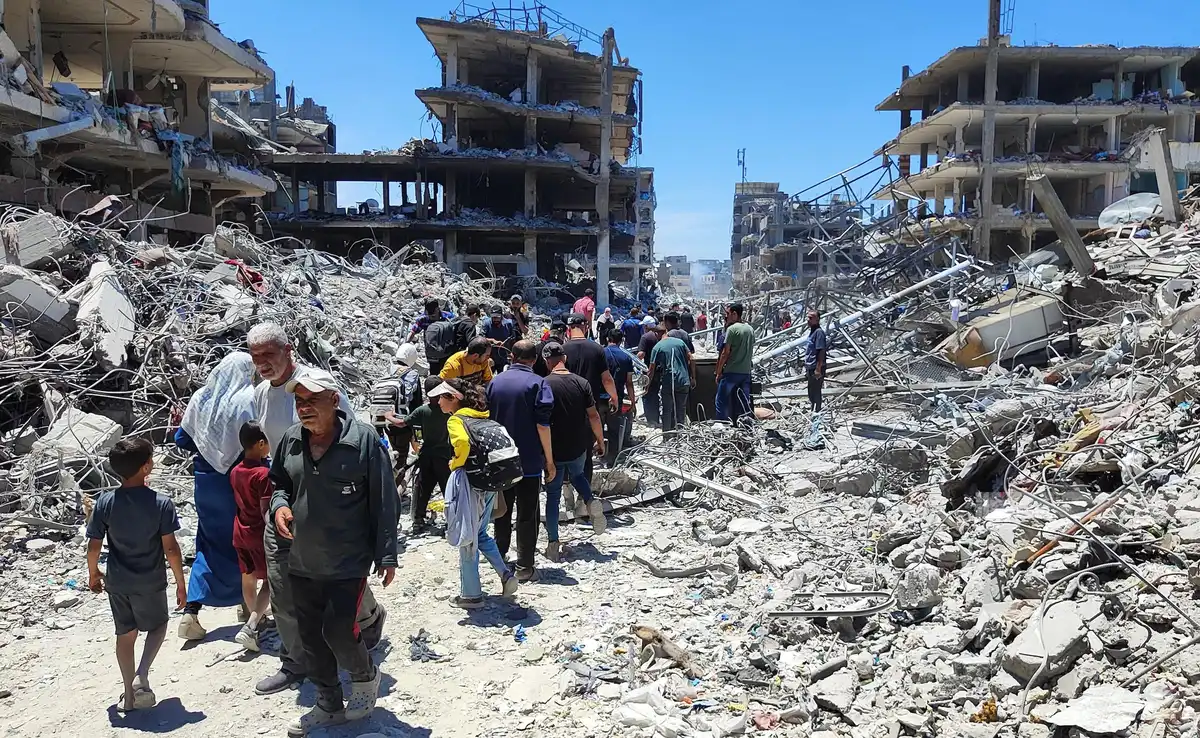
Ethnic cleansing in northern Gaza... keeping Gaza destroyed and hungry!

Majed Hadeeb: What is happening in northern Gaza is related to the “Deal of the Century” that promotes the establishment of confined Palestinian enclaves that would make it easier for Israel to control them

Nizar Nazzal: The intensive Israeli attacks in the northern Gaza Strip, cutting off aid to citizens and starving them are just means to force them to leave

Antoine Shalhat: Israel's goal is to create a new reality in which "Gaza is destroyed and unlivable" and it does not hide its desire to maintain the occupation of the northern Gaza Strip

Yasser Manna: The Israeli plan has been clear from the beginning and aims to create a buffer zone in northern Gaza that is completely free of Palestinian residents.

Talal Okal: Israel seeks to establish a buffer zone in the northern Gaza Strip extending more than five kilometers deep and to generalize the experience to Gaza City

Sari Samour: Israel is determined, through starvation and the “generals’ plan,” to complete the displacement in the north unless it faces real and tangible pressure

The opposite of what is happening in northern Gaza, in terms of the intensification of war and starvation, is a continuous Israeli escalation that aims at forced displacement and deepening the human suffering of the population through strong pressure tools that serve the occupation’s goal of displacement and then starting settlement.


In separate interviews with “I”, writers, political analysts and specialists believe that these Israeli policies are in line with the “Deal of the Century”, which seeks to establish besieged Palestinian reserves that facilitate Israel’s imposition of its control, pointing to the absence of real deterrence towards Israel, especially in light of the changing international balances and the growing global preoccupation with wars and the interests of many countries.


They confirm that the humanitarian situation in Gaza is getting worse, while effective international action remains absent, which places the Palestinian cause in the face of challenges that require national unity and intensified diplomatic efforts at the Arab and international levels.

Three scenarios for the current events in northern Gaza

Writer and political analyst Majed Hadeeb believes that Israeli Prime Minister Benjamin Netanyahu does not have the decisive decision regarding the future of Gaza, because there are clear differences between the poles of his government, even if the most extremist parties seem more stubborn than him, which reflects the internal divisions within the Israeli far right.


Hadeeb explains that Gaza is part of the expected Palestinian state, which is recognized and supported by the majority of the world's countries. This support has increased recently, especially with the positions of the Scandinavian countries that recognized the Palestinian state, and the repeated international emphasis on the necessity of its establishment.


Hadeeb stresses that regional security and the continuation of normalization agreements with Arab countries have become linked to Israel’s position and Netanyahu’s extremist policies, which even exceed the positions of previous Israeli governments, complicating the smooth continuation of the Abraham Accords.


Hadib reviews three scenarios for the current events in the northern Gaza Strip and the ongoing war of extermination there. The first scenario stems from a religious ideological vision that aims to overthrow the idea of a Palestinian state and end all agreements that lead to its achievement, including the Oslo Accords.


The second scenario, according to Hadeeb, is to use military operations to pressure the Palestinians and push them to abandon the idea of an independent state within the borders of June 4, 1967, and instead search for security and livelihood solutions without an independent political entity.


Hadeeb believes that this strategy also aims to block the path of European positions supporting the two-state solution, considering that the European green light for Netanyahu to launch the war on Gaza came with the aim of paving the way for holding an international conference for peace and settlement after the end of the war.


The third scenario, which Hadeeb believes is likely, is related to the “Deal of the Century” plan, which promotes the establishment of Palestinian reserves or enclaves, making it easier for Israel to control them if it sees potential security or economic threats.

A pressure card in future negotiations

Hadib points out that the forced displacement operations in northern Gaza aim to use these events as a pressure card in future negotiations, not as a permanent strategic plan to reoccupy the Strip.


According to Hadeeb, Israel does not seek to occupy Gaza permanently, but rather uses temporary displacement as a means of pressure on the Palestinians, Arabs, and European countries.


Hadeeb stresses that the displacement of the population in the northern Gaza Strip, despite its tragedy, is not a permanent strategy for Israel, but rather a pressure tactic within the framework of security arrangements and future negotiations.


Hadib believes that these events are tools used by Israel to achieve its political and security goals.


Regarding the role of the international community, Hadib stresses that the current international silence is linked to the balance of global powers, as the United States still leads the international system, despite Russia’s attempts to restore its role as a global power.


Hadib explains that many European and Arab countries do not exceed the borders drawn for them due to common interests with the United States, while many Arab regimes avoid taking serious steps against Israel, contenting themselves with protecting their interests and showing their loyalty to Washington, including protecting Israel from attacks.


To confront the ethnic cleansing operations in Gaza, Hadeeb identifies three levels of action: Palestinian, Arab, and international.

In Palestine, Hadeeb calls on the Palestinian Authority and the PLO to form a national unity government based on international legitimacy and the Arab Peace Initiative, while activating the decisions of the Palestinian National Councils, especially the declaration of the Palestinian state in 1988 in Algeria.


He stresses the need for the PLO to resume its international contacts and benefit from the network of relations built by the late President Yasser Arafat to mobilize international support for the establishment of the Palestinian state.


In Arabic, Hadib suggests that Arab countries focus on strengthening the steadfastness of the Palestinians in Gaza by providing the minimum necessities of life, without the need for military intervention.


Hadib points out that the Arab countries have effective means of pressure, such as threatening to stop oil exports or sever diplomatic relations with countries that support Netanyahu's policies, which may lead to a halt to the killing and destruction.

Hamas Calls to Recognize Gaza as Part of Palestinian State

Regarding Hamas, Hadeeb calls on it, especially its leaders abroad, to recognize that Gaza is part of the future Palestinian state, and that it is subject to the Palestinian Authority under political agreements.


Hadeeb holds Hamas responsible for the repercussions of its continued hopes of regaining control over Gaza, as these hopes and attempts to revive them have dangerous repercussions on the Palestinian people as a cause and an existence, as Hamas has become a burden on the Palestinian people and a danger to their cause in light of the chaos it practices in politics and arbitrariness in decision-making.


Hadeeb calls on Hamas to move towards inviting the Authority to retake control of Gaza, while calling on the PLO to take over the negotiations with Israel, with a pledge to abide by all outcomes of those negotiations, especially those related to the prisoner exchange file and the withdrawal from the Gaza Strip, as this is the real step towards restoring the prestige of the Palestinian people and their cause, without diluting or obscuring it with flimsy pretexts and excuses that Hamas provided to Israel due to what it was practicing in contradiction with its strategy and programs.

The Israeli goal goes beyond destroying infrastructure

Nizar Nazzal, a researcher specializing in Israeli affairs and conflict issues, explains that what is happening in the northern Gaza Strip falls directly within what the Israelis call the “generals’ plan.”


According to Nazzal, this plan is based on starving and displacing the population, as it aims to displace all the residents of the northern Gaza Strip towards the center or south, specifically towards areas such as Netzarim or the entire southern Gaza Strip.


Nazzal points out that targeting infrastructure, including hospitals, schools and even displacement camps, aims to make the area uninhabitable, which increases the chances of displacing its population.


Nazzal explains that the Israeli goal goes beyond merely destroying the infrastructure, but rather extends to re-settling Gaza, with a focus on the north of the Strip as a first step.


Nazzal points out that the intensive Israeli attacks in the northern Gaza Strip, the cutting off of aid and the starvation of the population are merely means to force the residents to leave, stressing that this settlement project was among the declared goals of Israeli Prime Minister Benjamin Netanyahu since the beginning of the war.


Nazzal draws attention to what happened on October 26, 2023, when the Israelis began moving towards the Netzarim axis, reflecting the premeditated intention to empty the northern Gaza Strip of its inhabitants and create suitable conditions for settlement.


On the other hand, Nazzal believes that relying on the international community to stop the Israeli madness is a losing bet.


Nazzal points out that the world has become accustomed to seeing large numbers of martyrs and complete destruction of infrastructure in Gaza without serious action, noting that the international community, including the United Nations, the world order, and the official European order, follow the United States in its policies, while the official Arab countries are unable to take decisive positions or use effective pressure cards on Israel or its allies.


Nazzal asserts that Israel, with the support of the major powers, does not face any real international opposition to implementing its plan, pointing out that Donald Trump’s victory and the presence of Republicans in the American political scene strengthen the political environment that allows Israel to continue its policies.


Nazzal stresses that the current situation in the world, where countries such as Russia and China are preoccupied with their own interests, contributes to leaving Gaza alone in the face of the Israeli war machine.


According to Nazzal, what is required now is to strengthen Palestinian national unity as a first step to confront what is happening in Gaza, while Nazzal points to the possibility of the major Arab countries playing a role by using political and economic pressure cards with the United States, as well as by activating diplomacy with other major countries such as Russia and China.


Nazzal warns that Israel, which delayed implementing this plan for 13 months, is now ready to implement it, taking advantage of the current favorable circumstances and tacit international approval for what it calls an existential war.

Israel uses "circumvention" to express its intentions

The writer, political analyst and specialist in Israeli affairs, Antoine Shalhat, confirms that Israel does not hide its desire to maintain a military occupation in the northern Gaza Strip, even if it claims that it will be temporary until the resistance is eliminated.


Shalhat explains that Israel uses a tactic of evasion to reveal its intentions, but it continues with its policy of systematic genocide and destruction, in an attempt to displace the population through a combination of killing and starvation.


Shalhat stresses that the starvation policy being implemented is not limited to the northern Gaza Strip only, but rather includes all areas of Gaza, where the Israeli authorities deliberately prevent the arrival of relief and humanitarian aid, which deepens the suffering of civilians and increases the severity of the crisis.


Shalhat points to reports that Israel is seeking to reach a truce in Lebanon, with the aim of directing all its resources and capabilities to achieve its goals in Gaza without interference or obstacles. If the starvation policy does not work, Israel will not hesitate to use other tools to prevent rescue and relief operations, which will further complicate the humanitarian situation and put civilians in a very dangerous predicament.


Shalhat believes that Israel's ultimate goal is to create a new reality in the Gaza Strip, represented by a "destroyed Gaza" that lacks the most basic necessities of life, such that living there becomes almost impossible. Shalhat points out that some media outlets have begun to talk about a "destroyed Gaza" but under the euphemism "new Gaza."


Shalhat expressed his disappointment at the lack of effective international intervention, stressing that if there had been serious and effective international interventions, the situation in Gaza would not have reached this catastrophic level.


Shalhat believes that the international community has proven its inability to confront the genocide, displacement and starvation practiced by Israel, which reflects the identity of the contemporary world, which is characterized by its inability to curb Israeli policies, especially since Israel enjoys continuous support from the United States.

The key to stopping this tragedy lies with the United States.

Shalhat points out that the key to stopping this tragedy lies in the hands of the United States, which is now free from electoral calculations and its partisan and political interests.


However, Shalhat asks: What role should the Arabs play in defending the Palestinian people?


Shalhat stresses that the absence of a unified and pressuring Arab position allows Israel to continue carrying out its criminal operations without deterrence, and even pushes it to move forward with its plan to occupy northern Gaza.


Shalhat warns that Israel is proceeding with implementing its plan without hesitation, as it has not yet found anything to stand in its way or limit its policies.


Shalhat describes the ongoing war as having turned into genocide and total destruction under the cover of eliminating the resistance, while the world is content with issuing verbal statements of condemnation and denunciation that have no real impact on the ground.

Opening the way for the possibility of resettling settlers

Writer and expert on Israeli affairs Yasser Manna explains that from the beginning, the Israeli plan seemed to have clear objectives, as it aimed to create a buffer zone in the northern Gaza Strip completely devoid of Palestinian residents, which would open the door to the possibility of resettling Israeli settlers as part of a long-term strategy to redraw the demographic landscape in the Strip.


Manna points out that Israel does not hesitate to use the utmost tools of force and violence to achieve this goal, through the forced displacement of the population and imposing a new reality on the ground that leads to emptying it of the Palestinian presence.


Manaa points out that this plan is being implemented amid international collusion and global silence, as Israel relies on the unlimited support it receives from the United States, whether on the political, military or intelligence levels.


Manaa explains that American support provides cover for Israel to continue its war on Gaza without effective international oversight, also taking advantage of the international community’s preoccupation with other crises, such as the escalating tensions in Lebanon and the controversy over the upcoming US presidential elections.


These factors, according to Manaa, contribute to providing a suitable environment for Israel to carry out its military escalation in the Gaza Strip, which takes on the character of a war of extermination manifested in the intensive targeting of civilians and residential areas.


In light of this complex reality, Manna’ stresses that the Palestinians are required to hold on to their land and resist attempts to uproot them, stressing the importance of concerted efforts between the Palestinian factions and the official leadership to achieve true national unity. This unity, according to Manna’, is the key to Palestinian steadfastness and thwarting Israeli plans.


In addition, Manaa points to the need for a broad international movement, mobilizing diplomatic efforts to expose Israeli crimes, and working to conclude a prisoner exchange deal that could contribute to curbing the escalation and opening new horizons for ending the aggression.


Manaa stresses that Israel's success in achieving its plan depends on the strength and steadfastness of the Palestinians in the Gaza Strip, while Tel Aviv is harnessing all its military, political and intelligence capabilities to ensure the success of the plan.


However, Manna believes that Palestinian steadfastness remains the most decisive factor in the battle for existence, despite all the attempts at displacement and oppression practiced by Israel.

Turning the lives of the population into hell

Writer and political analyst Talal Okal explains that what is currently happening in the northern Gaza Strip is a precise implementation of a plan drawn up by Israeli generals, which aims to turn the lives of the residents into hell, leaving them with only difficult choices: either death under heavy bombardment, or a slow death from hunger and thirst, or being forced to flee under a barrage of bombardment, with the accompanying risks of arrest and humiliation at checkpoints and crossings known as “halabat.”


Awkal points out that the Israeli army is deliberately working to disrupt all means of survival and rescue, as it does not allow aid to reach or for hospitals, municipalities, or even civil defense to operate.


The goal, according to Awkal, is to isolate the resistance fighters by isolating them from their popular base and leaving them to face their fate, either death by bombing or surrender as a result of starvation.


Okal explains that Israel seeks to create a buffer zone in the north of the Strip, extending more than five kilometers deep, and that if this experiment succeeds, the Israeli army will work to transfer this model to Gaza City itself, with the aim of pushing its residents towards the south of the Netzarim area.


Awkal stresses that these steps are being taken with full support and coverage from the administration of US President Joe Biden, which gave Tel Aviv a month to complete its mission. After this period expires, Israel seeks to obtain US approval to extend the operations.


Awkal expressed his regret for what he described as international silence, pointing out that the world stands by watching what he considers an ongoing genocide, while the only party capable of stopping this humanitarian catastrophe is the United States, which does not seem to have any hope of changing its position.


Awkal confirms that the field in Gaza and Lebanon imposes the option of compulsory steadfastness, especially in light of the continued complete Arab and Islamic silence.

Separating the north from Gaza under alleged security pretexts

Writer and political analyst Sari Samour asserts that what Israel is doing is implementing a clear and approved plan based on starvation policies and the generals’ plan, and it aims primarily to empty the northern Gaza Strip of its residents and separate this area from Gaza City under alleged security pretexts.


Samour cites reports issued by the Israeli media, which confirm the intention of the Israeli occupation forces to turn the northern Gaza Strip into an area free of civilians under the pretext of securing the borders and enhancing security, in an attempt to impose a new reality in the region.


Regarding international intervention, Samour points out that the world is unable to impose any tangible measures to stop the Israeli aggression.


He points out that Israel has not adhered to UN Security Council resolutions, and that major powers, such as the United States, openly and explicitly support Israel.


Samour explains that Russia, which used to have significant influence, is now preoccupied with the war in Ukraine, while China is facing its own problems, India has close ties with Israel, and the countries that take a neutral position are either ineffective or do not intervene.


Regarding the Arab and Islamic world, Samour describes the situation as one of extreme division, as Arabs and Muslims have been unable to form a unified front capable of pressuring Israel to stop military operations.


Samour asserts that the United States of America is the only party capable of stopping the war, because, in his opinion, it is the one leading this war and bears responsibility for giving the green light to Israel to commit these acts.

Samour points out that Israel would not have implemented these policies without explicit American support.


Samour expresses his pessimism about the possibility of stopping the ethnic cleansing in Gaza, especially in the north of the Strip, unless there is a radical change in the position of the surrounding Arab countries towards their relationship with Israel.


Samour believes that Egypt, in particular, has an important role to play. It can, for example, demand the immediate entry of humanitarian aid, pressure Israel to withdraw from the Philadelphi corridor, and threaten it with strict measures if it continues its policies of ethnic cleansing.


Samour warns of the seriousness of the situation, pointing out that Israel may not hesitate to implement the forced displacement plan even if this requires killing large numbers of the population or all of them.


Samour asserts that Israel is determined to complete its project of forced displacement in northern Gaza unless it faces real and tangible pressure from the international community or a decisive change in the positions of the influential Arab countries.

PALESTINE

Wed 13 Nov 2024 9:25 am - Jerusalem Time

Israeli occupation launches an arrest campaign in the West Bank

The Israeli occupation forces launched an arrest campaign in the West Bank at dawn and this morning, Wednesday.


In Qalqilya, the occupation forces arrested the young man Hadi Ammar Diab, after raiding and searching his family’s home in the Jaidi neighborhood in the eastern part of the city.


In the context, the occupation forces stormed the village of Amatin, east of Qalqilya, and fired sound and gas bombs randomly, and raided and searched several homes, including the home of the two young men Anas and Zaid Bari, who were detained by the occupation for a few hours and then released.


In Ramallah, the occupation forces arrested the freed prisoner Hassan Karajah after raiding and searching his home in the village of Umm Safa, while Ahmed Faris Radi (45 years old) and Muhammad Lutfi Abu Salem (62 years old) were arrested after raiding their homes and tampering with their contents in the village of Al-Lubban Al-Gharbi.


In Jenin, the occupation forces stormed the town of Al-Yamoun and raided the house of the young man Nour Khaled Hawshiya and searched it before arresting him. They also raided a number of citizens’ homes, while clashes took place in the town.


In Nablus, the occupation forces stormed Balata al-Balad east of the city and arrested citizens Nidal Kassab, Adnan al-Koni from the northern mountain area, Ibrahim Hajj Muhammad from the village of Talfit, and Mu’in Fathi Qadous from Burin south of Nablus, after raiding their families’ homes and vandalizing their contents.


Meanwhile, a citizen was injured when the Israeli occupation forces attacked him during their raid on the village of Burqa, northwest of Nablus.


PALESTINE

Wed 13 Nov 2024 9:09 am - Jerusalem Time

Updated: Israel begins demolition and seizure operations in the West Bank and Jerusalem

The Israeli occupation forces began, at dawn on Wednesday, demolition and seizure operations in the West Bank and occupied Jerusalem.


In occupied Jerusalem, the occupation forces, accompanied by several bulldozers, raided the town of Silwan and demolished the house of citizen Naim Al-Ruwaidi.


The house also contains the headquarters of the Al-Bustan Center and the Sumoud Tent, which is the place where the residents of Al-Bustan neighborhood have gathered for years to defend their homes.


In Salfit, the occupation bulldozers demolished a tourist facility, a chalet, in the town of Az-Zawiya, owned by citizen Muhammad Amer, a resident of the neighboring village of Masha.


In Hebron, the occupation forces stormed the town with a number of military vehicles and bulldozed the house of citizen Iyad Abdul Hamid Muhaisen Awad, in the "Beit Za'tah" area east of the town, under the pretext of not having a permit, despite the fact that the owners of the house possess all the legal papers proving their ownership of the land on which the building was built. The house consists of one floor with an area of 100 square meters, and the family was preparing to move into it, and another house.


These forces also demolished a large water collection pond, with a capacity of about 200 cups, in the Thaghrat al-Shabak area north of the town, owned by citizen Younis Naji Bahr, and used for agricultural purposes.


In the northern Jordan Valley, the occupation bulldozers began demolishing a concrete house under construction in the village of Kardala, with an estimated area of 140 square meters, owned by Nasser Suleiman Fuqaha, on the pretext of not having a permit.


The occupation forces had notified the house a few days ago of its demolition, and the Israeli court had rejected the appeal submitted by the house owner to cancel the demolition order.


The occupation forces also seized caravans used for overnight stays by farmers in the village of Bardala.

PALESTINE

Wed 13 Nov 2024 8:49 am - Jerusalem Time

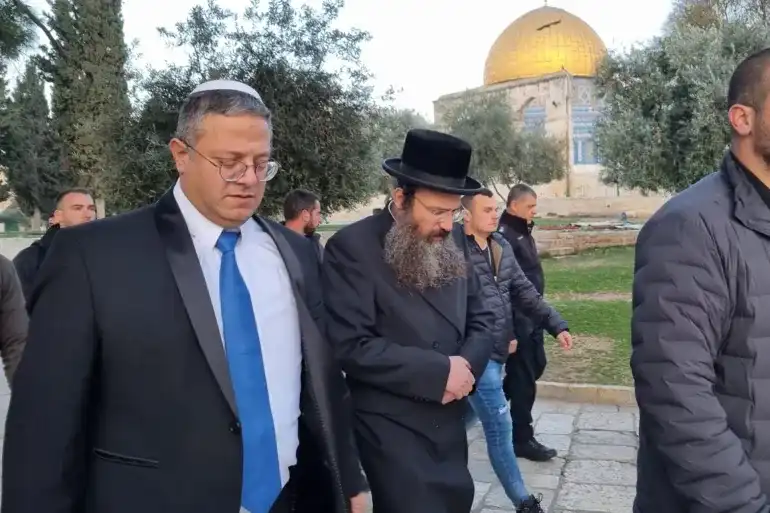
Yedioth Ahronoth: America is considering imposing sanctions on Ben Gvir

The Israeli newspaper Yedioth Ahronoth said that the US State Department is considering imposing sanctions on Israeli National Security Minister Itamar Ben-Gvir.


The extremist Israeli minister responded to the possibility of US sanctions against him by saying, "A believer has no fear."


The newspaper quoted informed sources as saying, "The purpose of this move is to counter criticism directed at Biden that he did not impose an arms embargo on Israel."


The same sources added that US State Department officials are urging Secretary of State Anthony Blinken to approve sanctions against Ben-Gvir, an unprecedented step in the history of US-Israel relations that would mark the first time the United States has imposed sanctions on an Israeli government minister, according to the newspaper.


The sources indicated that the sanctions include preventing Ben Gvir from visiting the United States and preventing American officials from transferring money to him.


The Americans expect the Trump administration to cancel the sanctions immediately after taking office on January 20, according to the newspaper.

PALESTINE

Wed 13 Nov 2024 8:46 am - Jerusalem Time

Officials: There is procrastination in presenting investigations related to the October 7 events

Israel Hayom newspaper quoted senior Israeli military officials as saying that there is procrastination in presenting investigations into the events of October 7, 2023, even though many of those investigations are ready to be presented to the Israeli Chief of Staff, and have been submitted to all lower levels.


The newspaper reported that the official position of the Israeli army justifies this postponement by the tense operational conditions in the north during recent months, in reference to the war on Lebanon.


Israeli Prime Minister Benjamin Netanyahu is pushing to form a "special" commission of inquiry into the failures of October 7, with the aim of avoiding the formation of an official commission of inquiry, which a broad public in Israel has been demanding since the beginning of the war on Gaza.


Finance Minister Bezalel Smotrich said last month that “I do not have a drop of confidence in the court and I am not prepared for the commission of inquiry to be headed by people who have a serious conflict of interest, such as those whose positions toward the government we know and whose conclusions we know in advance.”


"The greatest disaster that has befallen us since the establishment of the state cannot be ended by a decorative committee, nor in any other new context aimed at evading responsibility. Netanyahu, enough fabrications, enough procrastination. As the head of the (security) apparatus, forming an official commission of inquiry into the October disaster is your moral duty toward the dead, the bereaved families, the wounded, the kidnapped, and the entire nation," said Benny Gantz, head of the National Camp bloc.

OPINIONS

Wed 13 Nov 2024 8:42 am - Jerusalem Time

The starvation war continues in Gaza

op-ed "AlQuds" dot com

op-ed "AlQuds" dot com

Opinion Writer


Israel continues its starvation war in the northern Gaza Strip, in a programmed killing policy against civilians who refuse to leave, and their fate is martyrdom, either by the bullets of the occupation or by the starvation war that continues to devour the bodies of the innocent, at a time when the world is silent, and only the international health and food organizations raise the tragedy of the famine and the disasters it causes, in addition to the killing, destruction, displacement, division of the Strip, and expulsion of the residents of the north and forcing them to leave towards areas in the middle of the Strip, especially Al-Mawasi.

Israel has not only been satisfied with its deadly repressive measures, but has also practiced a policy of rejection and obstruction of the entry of aid, which the United Nations referred to yesterday when it said that 85 percent of attempts to coordinate the entry of aid convoys are rejected by Israel, which obstructs their arrival, and even prevents them. Thus, it is waging an open war on all levels, targeting citizens by starving them, which causes great concern for the remaining Palestinian citizens in the north.

After 98 requests were submitted to the United Nations Office for the Coordination of Humanitarian Affairs (OCHA) to bring in humanitarian aid to Gaza, only 15 trucks were allowed in. This indicates Israel’s intransigence and determination to kill Palestinians through this policy. Despite its awareness of the enormous needs of the citizens for aid, it ignores this and insists on spreading famine, in addition to the violent campaign of extermination targeting the people of Gaza.

Despite this war on humanity and the unprecedented crime, Israel has raised the level of its boasting to the highest level, as it sent the Minister of Strategic Affairs Ron Dermer to the United States in the hope of pressuring its officials to allow an extension of the deadline that Washington gave Tel Aviv to improve humanitarian aid in Gaza, in order to avoid facing possible restrictions on American military aid, to claim that it has responded to most of the Palestinians’ requests, and this is a great slander of reality, because Israel only wants to promote a narrative to world public opinion, and with the imminent declaration of areas of the Strip as famine zones, Israel has denied that it has caused famine to the population, and in fact it is committing all forms of violence and aggression, including the unjust starvation war, and everything it does is under official American cover, and the rounds, dialogues and even criticisms that are happening are nothing more than under-the-table agreements between the Americans and the Israelis to kill and annihilate Gaza.

ARAB AND WORLD

Wed 13 Nov 2024 8:40 am - Jerusalem Time

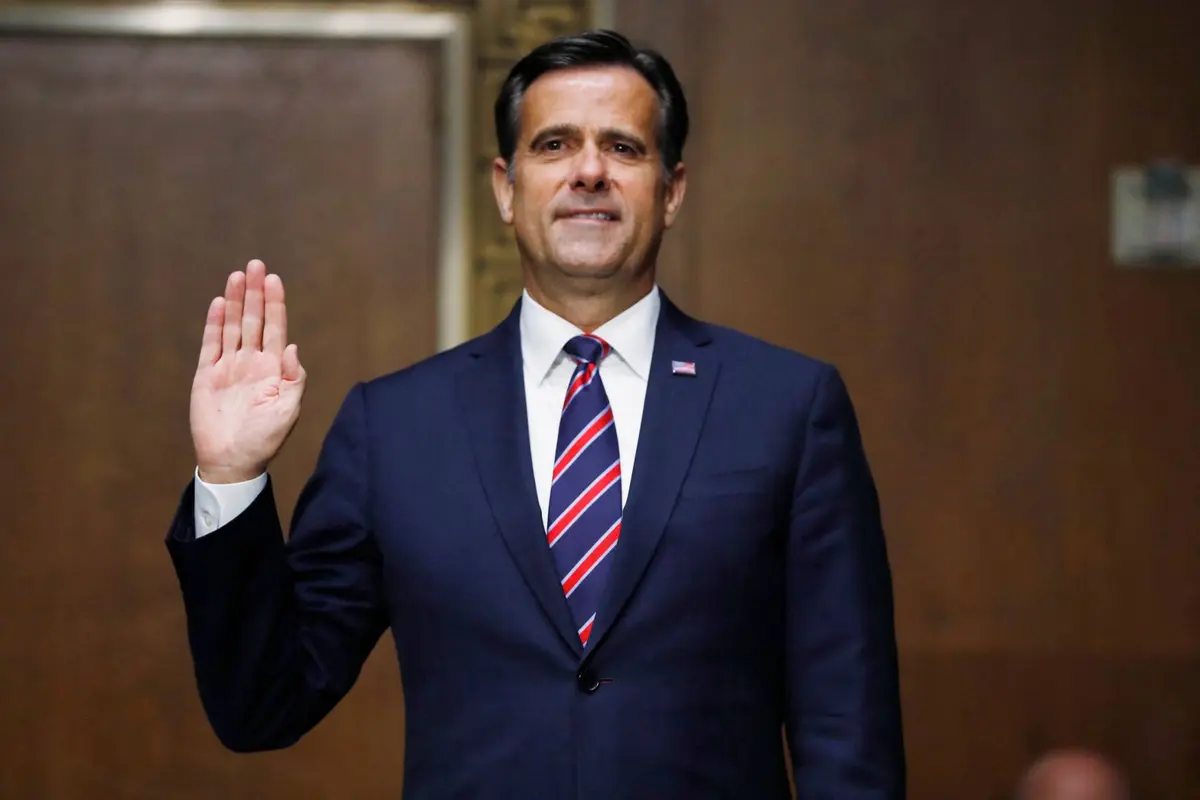
Trump picks John Ratcliffe as CIA director

President-elect Donald Trump on Tuesday announced his choice of John Ratcliffe to be the next director of the Central Intelligence Agency.

Ratcliffe, a former congressman from Texas, was director of national intelligence in Trump's first term.

“I look forward to John being the first person ever to hold our nation’s top two intelligence officers,” Trump said in a statement Tuesday evening. “He will be a courageous fighter for the constitutional rights of all Americans, while ensuring the highest levels of national security and peace through strength.”

Ratcliffe, who served as the U.S. representative for Texas's 4th District from 2015 to 2020, was a controversial choice for director of national intelligence in Trump's first term — so much so that the first attempt to install him in 2019 failed.

Ratcliffe was also a federal prosecutor in Texas, and boasted on his website that he had “put terrorists in prison.” No US media outlet has been able to verify any evidence that he ever prosecuted terrorism cases. He also misrepresented his role in a “terrorist financing case” between the US and the Holy Land Foundation (a Palestinian charity), NBC News previously reported.

Following those stories, Trump announced last term that Ratcliffe had removed himself from consideration for the position of Director of National Intelligence.

Trump nominated Ratcliffe again in 2020, and the Republican-controlled Senate confirmed him.

Congressional aides say Ratcliffe is unlikely to face much difficulty in being confirmed for the CIA job in another Republican-controlled Senate.

Former intelligence officers who have worked with Ratcliffe say he is a relatively constructive figure compared with some of Trump’s other potential appointees who are more hostile to the spy agencies. But it is unclear whether Ratcliffe is willing to push back against proposals from the Trump team that observers say are seeking to politicize the CIA.

As a member of the House, Ratcliffe gained White House attention for his sharp criticism of the investigation into Russian interference in the 2016 presidential election, suggesting that FBI and intelligence officials showed political bias and may have committed crimes.

In his 2020 confirmation hearing before the Senate Intelligence Committee, Ratcliffe tried to distance himself from Trump's repeated allegations about how a "deep state" of federal officials within intelligence agencies was conspiring to undermine him.

When asked if he believed there was a “deep state” within the intelligence community, Ratcliffe hinted that he did, saying, “I don’t know what it is.”

Ratcliffe is expected to carry out Trump’s agenda; Trump has vowed to root out what he calls “rogue” civil servants across the federal government. He has focused his ire on the intelligence agencies in particular, claiming they are seeking to undermine him.

Trump supporters have called for the removal of security clearances for former senior intelligence officials who speak to the media without permission from intelligence agency leadership.

Ratcliffe spoke out in favor of Trump’s decision to revoke the security clearance of former CIA Director John Brennan. As director of national intelligence, Ratcliffe appeared to do his best to help Trump politically, but he reportedly backed off after the election when Trump and his aides sought to overturn the results of the 2020 election.

In September 2020, Ratcliffe declassified intelligence about an alleged Russian assessment that others have described as unreliable or potentially disinformation, in which the Russians alleged that former Secretary of State Hillary Clinton personally approved an effort to “soil U.S. presidential candidate Donald Trump by linking him to Putin and the Russians’ hacking of the Democratic National Committee.”

At the “disclosure” stage of the investigation, Ratcliffe said the U.S. intelligence community “does not know the accuracy of this allegation or the extent to which the Russian intelligence analysis may reflect exaggeration or fabrication.” The move drew sharp criticism from Democrats. But some saw Ratcliffe in a more positive light when former Trump White House staffer Cassidy Hutchinson testified in a video testimony during the congressional investigation into the Jan. 6, 2021, attack on the Capitol that Ratcliffe had warned White House staffers about trying to overturn the 2020 presidential election.

“I understood that Director Ratcliffe didn’t want to do much in the post-election period,” Hutchinson testified. “Director Ratcliffe felt that this was not something the White House should be pursuing.”

Former intelligence officials and Democratic lawmakers worry that Trump’s obsession with political loyalty and rooting out anti-democratic federal bureaucrats is hurting the spy agencies’ work.

At Ratcliffe’s confirmation hearing in 2020, Maine Sen. Angus King warned of an “ongoing struggle” with intelligence agencies trying to provide presidents with information that fits their political agendas.

OPINIONS

Wed 13 Nov 2024 8:39 am - Jerusalem Time

Famine, famine!

Ibrahim Melhem

Ibrahim Melhem

Opinion Writer

It is the most dangerous and brutal stage; the Gazans cross its dark tunnel without any glimmer of hope looming near the end of the Via Dolorosa and the Path of Calvary in the rolling war of extermination. It is as if it is the rock of Sisyphus, whenever the exhausted arms lift it, it soon rolls back to close the door of hope, and the space of hope that is stifled by explosive barrels, and the roaring tanks on the doors of homes, and the displacement tents in the shelters that have become shooting ranges.

Lines of hungry people are spreading throughout the besieged sector with columns of fire and destruction, while the killers do not stop trying all the tools of destruction to achieve their terrifying goals. Whoever does not die of murder dies of hunger and thirst, which is the most severe type of death, because the bodies melt like candles.

The sight of tender bodies slowly withering away before the eyes of parents is depressing. There is nothing worse or harsher than feeling unable to provide a piece of bread or a bottle of milk for your child, while he starves in your arms!

It is famine striking hard, gnawing at empty stomachs, and causing fear and terror for children crammed into the incinerator, as the individual share in the Strip has shrunk to less than a loaf of bread per day, while the continuation of the siege and the cutting off of food supplies threaten what remains of life’s treasuries.


Save the children of Gaza from famine and genocide crimes..!

PALESTINE

Wed 13 Nov 2024 8:33 am - Jerusalem Time

Continuous settler chaos in several areas in the Jordan Valley

The occupation forces seized water tanks and agricultural tractors belonging to citizens in the Wadi al-Maleh area in Tubas Governorate, while settlers prevented landowners and farmers in the village of “al-Burj” from reaching their lands, as part of the fierce attack that has escalated since the Israeli war on Gaza.


Citizen Musa Abu Aziz told Al-Quds that the settlers from the hilltop gangs practice daily provocations against them, from persecution and detention to restricting their movement without the occupation moving a finger, stressing that the army patrols give them free rein to harass farmers and herders. He added, "During the past few days, the settlers attacked farmers in several areas, and at gunpoint, forced us to leave our lands, and threatened us with arrest and beating in the future. They prevented water tankers from moving and supplying us with water, and they impose strict control over our movements, until we began to live in a state of anxiety and fear in light of the world's silence and the absence of any deterrent to put an end to the settlers' chaos."


Farmer Fathi Sawafta said that the occupation did not only control the water sources and divert them to the settlements, but also practices methods and policies to deprive us of water, destroy agricultural crops, and provide all support to the hill gangs that are active on a large scale and with full support from the occupation forces that detain and abuse farmers. He pointed out that the village of “Al-Burj,” which is 10 kilometers away from the Tubas Governorate, suffers daily from the practices of the occupation soldiers who besiege the village in the camps of Al-Maleh, Samra, Tayasir, and the settlement of Yazra.


The residents of Al-Burj village regret their lands, which were once full of crops, vegetables, and all the necessities of life, after the occupation deprived them of water. Citizen Mahyoub Fuqaha adds, “If it weren’t for the occupation and the lack of water, our land would be prosperous and rich in agricultural production today. The village is distinguished by its fertile soil, suitable for all types of agriculture. It has been famous throughout history for growing wheat, barley, beets, chickpeas, and all legumes, as it is an area rich in water.” He continues, “Gradually, the occupation destroyed the agricultural sector after it seized the highest water sources that the area enjoyed, so agriculture declined, which the residents relied on as a second source of livelihood. The occupation was not satisfied with that, as we were tired and toiling in cultivating and caring for the land while it was destroying. It deliberately spread stray dogs and wild pigs that destroyed the lands and crops and caused them heavy losses.”


For his part, the governor of Tubas and the northern Jordan Valley, Ahmad Al-Asaad, told “Y”, that the occupation’s settlement attack is escalating continuously in all Palestinian communities in the region, and within the policy of siege and pressure, and in the face of the steadfastness and determination of the farmers, a campaign was carried out during which several areas were demolished, and water tanks were confiscated to prevent it from reaching the citizens and their livestock. He said, “The occupation is waging an open war, disregarding all international norms and laws. There are no limits to the chaos and attacks of the hill gangs that steal crops, close lands, and recently prevented farmers from reaching their lands, which caused them heavy losses. Even the agricultural tractors were seized by the occupation along with the tanks and heavy fines were imposed on their owners in exchange for returning them with a pledge not to work in the region. This is a prelude to the plan of seizure and settlement expansion to impose a fait accompli policy,” warning of the occupation’s exploitation of the situation in Gaza, the massacres of genocide, and the world’s preoccupation, to impose a policy of racial cleansing in the Jordan Valley.


At the same time, and within the occupation’s plans to seize the lands and expel their owners, it still refuses to grant building permits in the village, whose residents live in tents and burlap tarpaulins, which have not been spared demolition under the pretext of building without a permit. Faqha says, “The occupation allows the construction and expansion of settlements that surround the Bedouin communities and surround them with settlements and livestock and provide them with all means of living, while our tents are demolished without regard for the children or women who are expelled and displaced in the open.” He adds, “We are constantly subjected to nightly military inspections, dozens of soldiers storm the tents, take everyone out at night and in the bitter cold and demand that we leave this land. A while ago, the occupation bulldozers paved a road in the Burj area about a kilometer long under the pretext of military training, but the truth is that it is trying to terrorize and frighten us in order to leave, but we are steadfast and steadfast, and we will not leave its soil, which will inevitably remain Palestinian, and we will remain on this land or die in it until… "Get rid of the occupation and the settlers."

PALESTINE

Wed 13 Nov 2024 8:29 am - Jerusalem Time

Gaza touches the line of "catastrophic hunger" according to the international classification

The guillotine of generals claims more lives

Gaza touches the line of "catastrophic hunger" according to the international classification


Sami Mshasha: The Gaza Strip has reached the stage of "catastrophic hunger" to the point of death, and its children are facing the specter of destruction

Dr. Riad Al-Aila: An immediate decision is required from the Security Council to stop the genocide and international intervention to bring in basic materials

Dr. Hassan Khater: What is happening in Gaza from the beginning has been a comprehensive war of extermination, and starvation is a pre-planned part of it.

Basil Al-Akkour: International reports have contributed to exposing the crimes of genocide and starvation, but they have no real impact on the ground

Dr. Mukhaimer Abu Saada: Using starvation as a tool to empty northern Gaza, and the international community seems incapable of helping the Palestinians

Dr. Hossam Al-Dajani: UN warnings are insufficient unless they are translated into binding decisions under Chapter VII of the UN Charter


UN analysts and experts have warned that the famine in the Gaza Strip has reached the level of "catastrophic hunger" to the point of death, which is the highest global classification of hunger levels. They explained that the causes of the famine were present since the first day of the aggression on the Gaza Strip, through the comprehensive siege and the destruction of all available means of life, from agricultural lands, factories, infrastructure, water wells and any means of continuing life.

They added in statements to "I" that Gaza is starving and thirsty with the aim of forced displacement, as humanitarian aid is prevented from entering Gaza, and the arrival of food, water and medicine is obstructed, pointing out that there are children crying from hunger and their swollen stomachs screaming for help.

They called on the UN Secretary-General to play his humanitarian role and officially declare famine in Gaza, demanding that member states work to open the crossings and take serious steps to suspend Israel's membership in the United Nations.

They explained that the Gaza Strip is currently divided into three areas: North Gaza, Gaza City, and South Gaza, where Israel imposes a military cordon on each area with the aim of emptying it of its inhabitants through deliberate and pre-planned starvation and killing policies, calling on the Security Council to take an immediate decision to stop this genocide, and they also called for urgent international intervention to enable humanitarian institutions to bring essential materials into the Strip.


Systematic starvation policy aimed at displacement


“It is a famine to the point of death,” said Sami Mshasha, a former spokesman for the United Nations Relief and Works Agency for Palestine Refugees in the Near East (UNRWA), describing the tragic situation in northern Gaza, where tens of thousands of residents are facing the risk of starvation due to the systematic starvation policy practiced by the Israeli occupation army for many months.

He said: According to the World Classification Committee, which includes experts specializing in monitoring famine and malnutrition, Gaza has reached the stage of "catastrophic hunger" to the point of death, which is the highest global classification for hunger levels.

Mshasha pointed out that there is no longer time for analysis or interpretation, as the situation is clear and well-known: Gaza is being starved and thirsty for the purpose of forced displacement, as humanitarian aid is prevented from entering, and the arrival of food, water and medicine is being obstructed.

Mshasha called for an end to attempts to "smart" and hold those who tried to defend Gaza responsible, stressing that there are children crying from hunger and their swollen bellies screaming for help.


UN Secretary-General Calls for Official Declaration of Famine in Gaza


Sami Mshasha appealed to the UN Secretary-General to play his humanitarian role and officially declare famine in Gaza, and urged member states to open the crossings to save the Strip or take serious steps such as suspending Israel's membership in the United Nations.

Mish'sha' also called on Arab and Islamic countries, regional organizations, and all peoples, and even sports fans around the world, to move and show solidarity with starving Gaza, pointing out that there is nothing preventing heads of state and world leaders from heading to the crossing from the Egyptian gate and entering Gaza to save its people from destruction.


Plans to uproot the Palestinian people from their land


Dr. Riyad Al-Aila, Professor of Political Science at Al-Azhar University, explained that since October 7, 2023, the Netanyahu government has been developing plans to implement what Netanyahu and the Israeli right wing dreamed of, which is based on uprooting the Palestinian people from their land and Canaanite roots, through all means, and it began with bombing, killing, and destroying people, trees, and stones.

Al-Aila pointed out that the number of martyrs, wounded, missing and disabled exceeded 200,000, adding that the forced displacement operations target citizens under the pretext of transferring them to "safe" areas, to be bombed later as part of the policy of genocide.

Dr. Al-Aila explained that the Gaza Strip is currently divided into three regions: North Gaza, Gaza City, and South Gaza, where Israel imposes a military cordon on each region with the aim of emptying it of its residents.

He stressed that northern Gaza has been suffering from famine and thirst for 42 days, with food and medical supplies prevented from entering.

He pointed out that the ongoing bombing included the destruction of homes, health facilities and water wells, which led to the exacerbation of the humanitarian situation amid the silence of the international community.

Dr. Al-Aila called on the Security Council to take an immediate decision to stop this genocide, demanding urgent international intervention to enable humanitarian organizations to bring in essential supplies.

He expressed his hope that the US administration would move, especially after the elections, to achieve an immediate cessation of the aggressive operations and allow the Palestinians to exercise their legitimate rights to freedom and to live in dignity.


The causes of famine were present since the first day of the aggression.


Dr. Hassan Khater, Director of the Jerusalem International Center, stated that the talk of international institutions about famine in Gaza and the warnings about it contain a great deal of misleading and deception of the international community, pointing out that what is happening in Gaza from the beginning has been a comprehensive war of extermination and deliberate and pre-planned starvation.

Dr. Khater explained that the causes of famine were present from the first day through the siege imposed on the Gaza Strip and the destruction of all available means of life, including agricultural lands, factories, infrastructure, water wells, and any means of sustaining life.

He pointed out that this famine began to worsen from the first day, to the point that it became part of the genocide, and such an international description is no longer useful in this very advanced stage of aggression and genocide being practiced against our people in the Strip.

He added: The repetition of such a description by international institutions is, from a certain perspective, an actual participation in what is happening and an underestimation of the extent of this catastrophe that the sector is experiencing, and a deception for those following the scene that what is happening in Gaza is still far from or close to famine.


The sector is drowning in famine just as it is drowning in genocide.


He stressed that the truth is that the Gaza Strip is drowning in this famine, just as it is drowning in this genocide that everyone is watching live.

Khater pointed out that "the international community and UN institutions cannot wait for the situation to reach a stage where they see the people of Gaza dying in the streets as a result of hunger and lack of livelihood, as this will make everyone partners in this catastrophe, including the institutions that are supposed to support people in such crises, and act in accordance with international resolutions, humanitarian treaties and human rights."

Khater called on international institutions to take immediate action and take firm decisions and policies to change this reality, and not to be satisfied with the role of observers and issuing statements of condemnation and denunciation, considering that this approach is similar to the role of media institutions that are satisfied with describing events instead of taking tangible steps to confront the crimes of the occupation.


UN warnings in the face of the Israeli and Western narratives


Jordanian journalist Basil Al-Akkour believes that international warnings may contribute to exposing the crimes, violations, acts of genocide and siege that the Palestinians are experiencing, as it confronts the recognition of international organizations of the occurrence of these violations and refutes the official Western denial, especially from the United States, some Western capitals and Israel.

Al-Akkour believes that this recognition contributes to strengthening popular solidarity in the West with the Palestinian cause, a solidarity that has proven to be more committed to human values and principles than the official solidarity shown by Arab and Islamic countries.
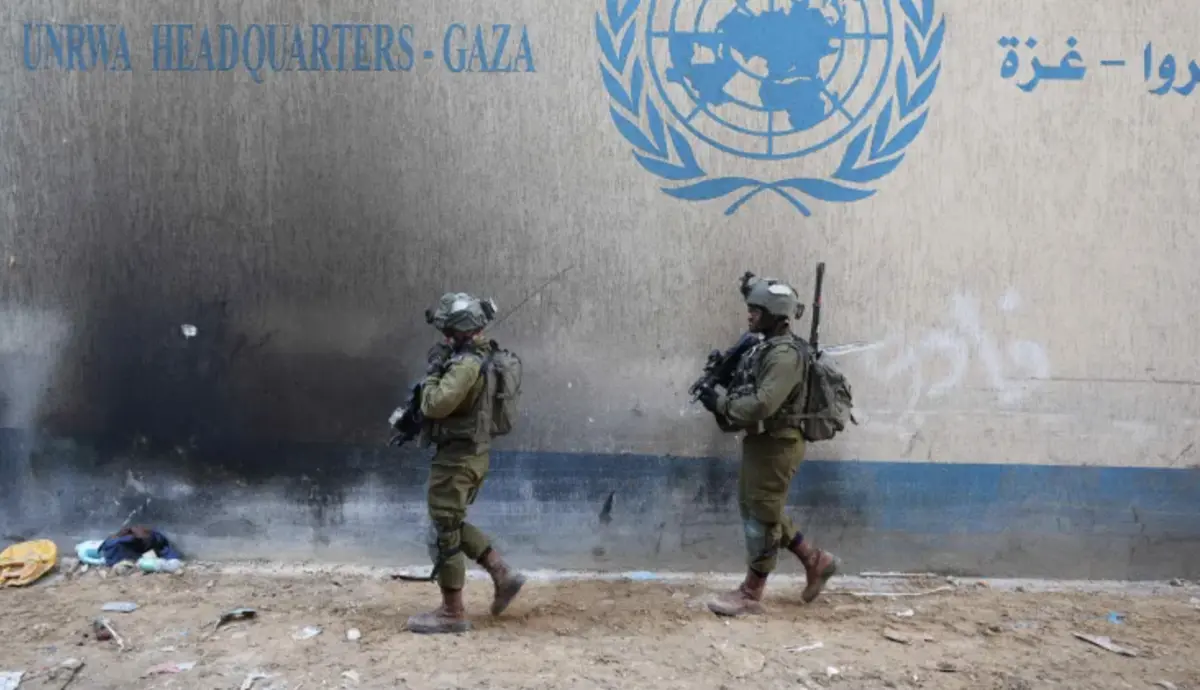
Al-Akkour asserts that these international reports played a role in spreading awareness about the reality of the situation and the crimes committed by the Israeli entity, but they did not lead to a fundamental change in official political positions or the adoption of decisive decisions in the Security Council, nor did they contribute to reducing the official American and European bias in favor of Israel.


The decline of the influence of international law and the West’s abandonment of its principles


He points out that this shows the decline in the influence of international law and the West's abandonment of its principles in favor of supporting the occupation.

Al-Akkour adds that international reports are important in terms of documentation and revealing the facts to new generations who have begun to understand what is happening in the region, but they do not have any real impact on the ground.

He believes that this crisis has contributed to revealing the nature of political systems in the West, which appear to be unpatriotic, and has shown that these political elites have agendas that do not reflect the desires of their people calling for an end to the aggression, which reflects a crisis in Western democracy that has been revealed by the events in Gaza.


An attempt to sound the alarm without any actual steps.


Dr. Mukhaimer Abu Saada: Using starvation as a tool to empty northern Gaza and the international community is unable to help the Palestinians

In turn, Dr. Mukhaimer Abu Saada, Professor of Political Science at Al-Azhar University, said: The northern Gaza Strip is suffering from a near-famine as a result of Israel preventing the entry of food and medical aid.

He stressed that the Israeli policy aims to empty and expel the population from the northern Gaza Strip by cutting off basic supplies of food, water and medicine.

Abu Saada pointed out that the international community seems unable to help the Palestinians, and that the current warnings are an attempt to sound the alarm without any actual steps or warning of the dangers of what is coming.

He stressed that the Security Council and the countries supporting Israel should assume their responsibilities and use their influence to pressure Israel to avoid the imminent disaster in the Strip.


Urging countries and peoples to move to save Gaza


Dr. Hussam Al-Dajani, Professor of Political Science at Al-Ummah University in Gaza, stressed that the warnings issued by the United Nations should serve as an alarm bell for the international community to take immediate action to stop the systematic policy of starvation and thirst practiced by the Israeli occupation forces against the Palestinian people in the Gaza Strip, which has pushed the Strip towards famine, in clear violation of international humanitarian law.

Dr. Al-Dajani believed that these warnings are not sufficient unless they are translated into binding resolutions under Chapter VII of the United Nations Charter, especially in light of Israel’s rejection of many UN resolutions following Operation Flood of Al-Aqsa.

He stressed the need to hold Israel accountable for its violations, calling on international organizations to urge countries and peoples to take action to save what can be saved in Gaza.

He also stressed the importance of having a comprehensive media strategy to clarify the reality of what is happening in Gaza to the world, to ensure that a clear message is sent to the international community about the seriousness of the humanitarian situation there.

ARAB AND WORLD

Wed 13 Nov 2024 7:42 am - Jerusalem Time

First US comment on Smotrich's statements about "annexing the West Bank"

US State Department spokesman Matthew Miller says that comments made by Israeli Minister Bezalel Smotrich regarding annexing the West Bank are “certainly not conducive to building a lasting peace.”


Miller stressed that these statements “are incredibly inconsistent with the principles that Secretary (of State) Antony Blinken laid out in Tokyo last year.”


The Israeli finance minister sparked controversy with his statements on Monday regarding imposing sovereignty over the West Bank, when he considered Trump’s victory in the US elections an “opportunity” to annex the West Bank to Israel.


The Times of Israel newspaper quoted “informed” sources on Tuesday that “at least two former Trump administration officials warned senior Israeli ministers against assuming that Trump would support plans to annex the West Bank during his second term.”


The newspaper indicated that these warnings came before Smotrich’s announcement, which means that the hard-line ministers in Benjamin Netanyahu’s government did not pay attention to these warnings.

OPINIONS

Wed 13 Nov 2024 7:05 am - Jerusalem Time

Analysis | Netanyahu Pushes on With Occupying Gaza, but Trump May Force a Change in the War

Haaretz

Haaretz

Opinion Writer

By Amos Harel

As Israel lays the infrastructure for a creeping occupation of northern Gaza and plans its next step in Lebanon, it's waiting to see if Biden gets tough in his last two months with stingier arms supplies and a possible harder line at the UN Security Council


Donald Trump's election as U.S. president last week seems to have the best chance to shake things up in the Middle East and maybe extract Israel from its long war of attrition on multiple fronts.

Prime Minister Benjamin Netanyahu is feeling confident that he can harness Trump and further his own goals, as happened in the past. But since the 45th president's big victory on Tuesday, Trump has been sending hard-to-decipher messages, as usual. Things may only become clearer when he enters the White House on January 20.

Meanwhile, the Biden administration is considering harsh moves against Israel during the transition period, including tighter restrictions on arms supplies and a possible failure to veto anti-Israel resolutions at the UN Security Council.


After Netanyahu fired Defense Minister Yoav Gallant last week, the retired general told the truth to the hostage families in a farewell meeting with them. He said that conditions were ripe for a deal and that there was no security or diplomatic justification for Israel to stay in the Philadelphi corridor on the Egypt-Gaza border.


"There is nothing left to do in Gaza. We've already accomplished the major achievements," Gallant told them, adding that he feared that Netanyahu's refusal to withdraw Israeli forces "comes from a desire to remain there. This isn't a worthy purpose for risking soldiers' lives."

In fact, the picture is even bleaker: The government has no interest in a hostage deal. The far right of the governing coalition opposes the freeing of any Palestinian prisoners, and Netanyahu is completely dependent on the hard right for his political survival, as he keeps trying to postpone his testimony in his corruption trial.


On the other hand, tremendous effort is being put into preparations for long-term control of northern Gaza, which the right seeks to parlay into a full-fledged occupation and the building of settlements.

Last week, Haaretz reported on moves designed to push the entire Palestinian population out of the northern quarter of the Gaza Strip. Over the weekend, Yedioth Ahronoth reporter Yoav Zitun described his impressions from a visit to the east-west Netzarim corridor south of there: The width of this strip that the Israel Defense Forces created during the war has expanded to 7 kilometers (4.3 miles).


The army is putting up outposts there suitable for a permanent presence and is installing water systems and gear for cellular reception. Zitun predicts that "after another 20 or 30 hostages die in captivity, no Israeli leadership will give Hamas the prize in return": a corridor bisecting the Strip "that was initially meant to be a bargaining chip."

Meanwhile, Netanyahu has tapped Yechiel Leiter, his former chief of staff, to be Israel's ambassador to the United States. Leiter is a member of the settlers' ideological wing (and his son Moshe, a reservist deputy battalion commander in the Paratroopers Brigade, was killed in action last year in northern Gaza).


This appointment gives an indication of the prime minister's ambition to win U.S. recognition of an annexation of the West Bank settlements (which he failed to obtain in Trump's 2020 "deal of the century"). Netanyahu also seems to be angling for a creeping occupation of northern Gaza. The basis for this is already being laid.


In Lebanon, the IDF has essentially completed its main mission: surveying and destroying terrorist infrastructure in the first line of villages up to 5 kilometers from the border. Now the army is preparing for the possibility of advancing to the second line.

Such a move would entail two major challenges: the worsening autumn weather and the need for another large call-up of reservists despite the increasing complaints about the burden being shouldered by too small a segment of the population.


Netanyahu's office is projecting optimism about the chances of attaining a diplomatic solution and cease-fire in Lebanon soon, though it's unclear what this prediction is based on. Either way, the aim appears to be an upgraded version of UN Resolution 1701, which ended the Second Lebanon War in 2006.


This would be far from total victory, but Israel could at take satisfaction in its considerable achievements against Hezbollah in recent months and hope that the next time it will be able to more strictly enforce violations of the agreement by the terror group.

In Gaza, the baton is gradually passing to Trump. It's not hard to imagine that the idea of securing a deal to end both the war and the hostage families' tragedy appeals to him. He surely remembers the precedent of the Iranian regime freeing the American hostages in 1981 on the day Ronald Reagan took office, ending a saga that haunted Jimmy Carter for 14-plus months at the end of his presidency.

Trump and his people have even bigger plans for the future of the region, like expanding the Abraham Accords to include an Israeli-Saudi normalization and massive deals between Washington and Riyadh.

In yet another example of how difficult Trump is to predict, the president-elect has announced that Mike Pompeo and Nikki Haley, two of the most prominent figures in his previous administration, will not have roles this time around. They both were on very friendly terms with Netanyahu.

Many of the key people in Trump's orbit have isolationist views and aim to reduce America's military presence around the world. It remains to be seen if one of them receives a key position in the administration.


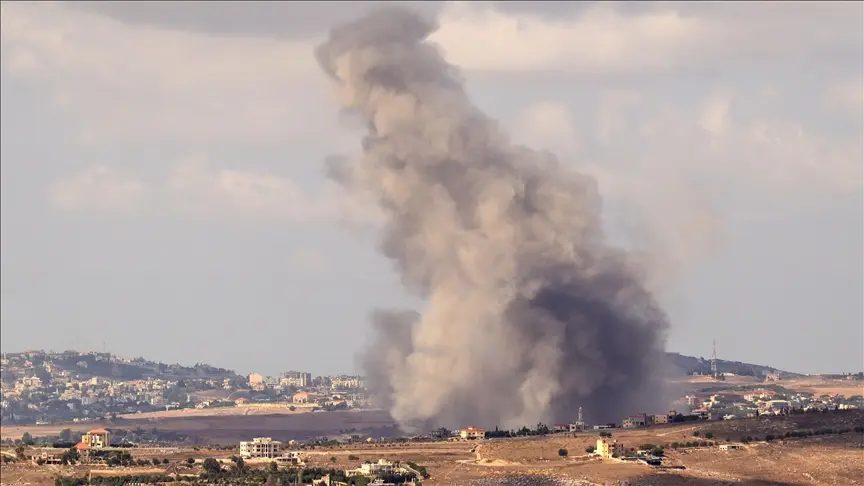
The aftermath of an Israeli strike in Mashghara, in the western part of Lebanon's Bekaa Valley, on Sunday. Netanyahu's office is projecting optimism about the chances of attaining a diplomatic solution and cease-fire in Lebanon soon, though it's unclear what this prediction is based on.

Waiting for frustration to boil over

In Israel, suspicions continue to pile up about people in Netanyahu's close orbit, and criminal investigations seem to be gradually approaching. This is a long and dreary saga that combines two main trends: evidence of alleged offenses by people at the Prime Minister's Office that dwarf past scandals, and attempts to rewrite history for the boss' sake.

This rewriting would obscure Netanyahu's responsibility for the failures that allowed the October 7 massacre to happen. It would also blur the picture regarding missed opportunities in the hostage talks and shift responsibility for failures to Gallant and other top security officials.

The mounting revelations are heightening the panic at the Prime Minister's Office, especially the assessments that Eli Feldstein, the spokesman who has been arrested, is cooperating with the investigation.

But at this stage, there are no direct suspicions of malfeasance by Netanyahu, and let's remember that he emerged unscathed from similar scandals in the past. Moreover, law enforcement has been significantly weakened since the wave of investigations into Netanyahu began in 2016. This can be seen in the conduct of the police and in the judges' timid responses to his constantly growing demands during his trial.


Netanyahu crossed the fear threshold with his dismissal of Gallant last week, which sparked a pale imitation of the protests that made him backtrack after he tried to fire Gallant in March 2023. It's no wonder that threats are in the air to offload other officials standing in the prime minister's way.

The threat to the government comes from two other issues; the public's disgust over the criminal culture being revealed is still in the background.

The first and perhaps most important issue is the impossible burden being put on the reservists, which includes the dangers that all the combat troops are facing. Against this backdrop, the government is absolutely determined to pass legislation perpetuating the ultra-Orthodox community's dodging of the draft.

The second issue is the public's deep anguish over the fate of the 101 hostages, half of whom are believed to have died. At some point we may reach the stage where frustration from all these things, on top of the economic crisis and the government's complete ineptitude in addressing all areas of the public's needs, bring Israelis back out into the streets.

For now, the coalition appears stable, and Trump seems to be the main person who could force a change in the war – if he has any desire to do so.

OPINIONS

Wed 13 Nov 2024 6:56 am - Jerusalem Time

Freeing Palestine? What Iran is Really Looking For

Translation for "Alquds" dot com- Orientxxi

Translation for "Alquds" dot com- Orientxxi

Opinion Writer

By Bernard Hourcade

What dictates Tehran’s policy in the Middle East? More than support for Palestine, the Islamic Republic’s primary goal is to oppose a restructuring of the region dictated by Israel and the United States that would marginalize it, while it is trying to reconcile with the Gulf countries.
Yasser Arafat’s visit to Tehran on February 17, 1979, a few days after the fall of the imperial regime, was a trauma for Israel. Iran, an ally of the United States, was a major part of the “second circle” of non-Arab countries (with Ethiopia and Turkey), beyond hostile neighbors, and supplied Israel with oil while the Mossad maintained effective collaboration with Savak, the political police of Shah Mohammad Reza Pahlavi.

In all areas, the seizure of power in Tehran by an alliance of liberals, Marxists and especially Islamists, all close to the Palestinians, was going to shake the old regional order. The Israeli embassy became that of Fatah and Palestine, a symbol and a tool, even a passport, for Shiite Iran in its plans to export the revolution to a Middle East with an Arab and Sunni majority. Ayatollah Ruhollah Khomeini, whose hostility to Israel was unwavering, however, put things right by specifying to his supporters trained in the Palestinian camps of Lebanon or Syria that "there is no Palestinian cause, but an Islamic cause". The national and ideological stakes of the Iraq-Iran war (1980-1988) then dominated all other conflicts, including the too local one of Palestine. 


"THE ROAD TO JERUSALEM PASSES THROUGH KERBALA"

In fact, beyond the fiery speeches, the Islamic Republic has remained cautious in the face of Palestinian movements such as Fatah, which is nationalist and not very religious. When Israel occupied Lebanon in 1982 and forced Yasser Arafat to take refuge in Tunisia, Ayatollah Khomeini blocked the departure of armed militants who wanted to "liberate Jerusalem" by telling them that "the road to Jerusalem passes through Kerbala1". The priority was to defend Iranian national territory attacked by Saddam Hussein's Iraq.

From then on, Iran began to very actively support the creation of Hezbollah, a Shiite and Lebanese movement that could both fight Israel and its Western allies while collaborating with Syria, Iran's only Arab ally. Realpolitik also led Israel to supply weapons to Iran2 and to collaborate in destroying the Iraqi nuclear power plant in Osirak. Iraq was then the only real enemy of Israel and Iran.

Subsequently, Tehran did not hold back its support for Islamic Jihad and the Islamic Resistance Movement, Hamas, which opened an office in Tehran in 1988. But the Islamic Republic was not a major player in the two Intifadas (1987-1993; 2000-2005), despite the presence of military advisers from the Revolutionary Guards in Syria and Lebanon. It worked primarily to strengthen the Lebanese Hezbollah, which would play a central role in its regional policy, to oppose Israel, but especially the United States and its European allies, as well as the Sunni Arab states. The election of the reformist president Mohammad Khatami (1997-2005), an expert on Lebanon and supporter of the Palestinian cause, marked a shift. He was not opposed to compromise solutions with Israel. After the Oslo Accords (1993), he intended to “be no more Palestinian than the Palestinians”. This conciliatory attitude and support for the emergence of a Palestinian state, however, ran into opposition from the leader Ali Khamenei and conservative factions, and it was shattered by the emergence of the “Iranian nuclear threat” from 2002.


THE NUCLEAR SCARECROW

The discovery in 2002 of the hitherto clandestine Iranian nuclear program triggered debates, controversies, colloquiums, conferences, publications, films, speeches, at the highest level of states as well as among the populations concerned. All other issues in the Middle East became secondary. The Islamic Republic was designated as the main threat to Western Europe and also to Israel. Iran replaced the recently defunct Soviet Union in world politics. A place, perhaps, oversized for a country that then had only a few grams of enriched uranium compared to Israel's 300 nuclear warheads and the arsenal of the five major nuclear powers.

While Israel had always had a cult of secrecy in matters of defense, it was surprising to note that the "Iranian nuclear threat" was the subject of information and passionate debates in the Israeli press and media. It was presented as existential for Israel. In this context, President Mahmoud Ahmadinejad's statement of October 26, 2005, "Israel must be wiped off the map," became proof of the need for Israel to eradicate this threat as a priority. Palestine, locked behind a wall, was no longer a major problem. While at the UN, Benjamin Netanyahu, with the support of the West, accused Tehran, Israel continued with impunity the colonization of the West Bank. Signed in Vienna on July 14, 2015, the JCPOA offered a framework agreement to control the civilian use of Iranian nuclear power in exchange for a gradual lifting of sanctions. It had been endorsed by the P5+1 countries (the five permanent members of the United Nations Security Council plus Germany), as well as by the European Union. But in 2018, President Donald Trump decided to withdraw from it under Israeli pressure. The Israeli military had nevertheless recognized that this compromise was a real step forward in terms of security, but for the Netanyahu government, the risk was the lifting of sanctions, and therefore the “normalization” of Iran. The unspoken fear was that Iran, with its large, highly educated population, would become in the short/medium term a strong and stable regional power, capable of challenging Israel’s regional ambitions to reshape the entire region to its own ends.

This hostility also concerned the "hegemonic ambitions of Iran" which supported many non-state forces in the context of conflicts with Israel, but also with Saudi Arabia, then in its fight against the Islamic State Organization (ISO) in Iraq and Syria or to support the Syrian regime. These issues were a consensus between Western countries and Israel, and placed little Palestine outside the international priorities.

With a view to a confrontation to eradicate the "Iranian threat", Donald Trump's government took a decisive step in 2020 with the signing of the Abraham Accords. The recognition of Israel by several Muslim states, including the United Arab Emirates (UAE), concretized the Israeli-American desire to encircle the Islamic Republic. The prospect of Saudi Arabia joining them risked destroying the national and consensual ambitions between the different factions in power in Iran: to become a regional power.


CHINA IMPOSES ITSELF DISCREETLY

Saudi Arabia and Iran were on the brink of war when, on March 10, 2023, China forced the two “Gulf policemen” to normalize their relations. This marked the beginning of a new phase in Middle Eastern geopolitics. Despite the rhetoric, Iran’s nuclear program is no longer at the heart of the debate. The debate is now centered on the opposition between two perspectives for reshaping the Middle East: either around Israel and the United States, or more independently, under the aegis of Iran and Saudi Arabia, emerging regional powers, with the support of the countries of the South and the BRICS (Brazil, Russia, India, China, and South Africa).

This Iranian desire was already explicit after the election of Hassan Rouhani to the presidency in 2013, then with the signing of the Joint Comprehensive Plan of Action (JCPOA) and the normalization of the country’s international relations. Iran, with the agreement of the Supreme Leader, had then prioritized building good relations with all its border countries from which a threat could come, as in 1980 with Iraq or in 2015 with the IS. Building peaceful relations with Riyadh has become a priority. China's intervention has made it possible to quickly conclude the indirect discussions that had been underway for a long time to put an end to the multiple local conflicts in progress, particularly in Yemen. Among the thousand issues to be resolved, one observation seems to have reached consensus: the need to quickly find a just and lasting solution to the "Palestinian question" which concerned the entire region, and even the entire Muslim world. Any project to reshape the region was illusory as long as this injustice persisted. This compromise project on the "return" of Palestine came about in the worst conditions with the violence of the intervention of the military branch of Hamas on October 7, 2023, then the war against Gaza and against Lebanon.


NOT GETTING DRIVEN

We will not return to these events here, except to note that Iran sought to avoid being drawn into a “local” Israeli-Palestinian conflict. The Islamic Republic certainly wanted to protect Hezbollah and its powerful arsenal in order to maintain a credible means of deterrence against Israel, and to maintain its potential for influence in Lebanon. But it did not want to give in to Israeli provocations that could lead to a large-scale war involving the United States.

Iran does not have the military means to “win” a war against Israel 1,200 km away. In addition, it would ruin its hopes of quickly becoming a regional power coexisting with Saudi Arabia. A conflict could also cause radical changes in an Islamic Republic worn down by 45 years of power, by internal divisions exacerbated by the fear of popular revolts, and by an unprecedented economic crisis. The priority of the new reformist government of Massoud Pezeshkian, with the support of the Supreme Leader, therefore remains the lifting of the sanctions imposed again since 2018, and therefore the normalization of relations with the United States. Without success for the moment, and despite strong internal opposition, this policy of openness and caution is consistently pursued by Iran. Tehran is distancing itself from its allies in the Resistance axis, forcing Hezbollah not to massively attack northern Israel, which could have relieved Hamas in Gaza, and not to use its most powerful missiles after the assassination of Hassan Nasrallah. During the Friday prayer of October 5, 2024, the Guide paid a moving tribute to the courage of the Hamas and Hezbollah fighters who had shown that they could now defend themselves alone! After the death of Hamas leader Yahya Sinwar, an Iranian statement stated that it was not responsible for the drone attack on Netanyahu’s residence on October 19, and Hezbollah claimed responsibility for the operation.

The attack on Israel by more than 350 Iranian drones and missiles on April 13, 2024 marks a historic date in Iran’s new strategy of retreating to its national interests and the defense of its territory. This demonstration of technical and military force, announced in advance, was intended to show that to defend itself, Iran had the means to face its enemies alone, without the help of its proxies. The Israeli response was initially symbolic, unlike the massive air attack of October 26, which responded to this first demonstration of force rather than to the 180 missiles launched by Iran on October 1. Israel has demonstrated—without causing major damage—the remarkable capabilities of its air force and Iran’s weaknesses in countering this type of attack. Both adversaries have proven that a large-scale conflict would be absurd.

The most interesting thing to note is not the pressure from the United States, paralyzed by the election campaign, for Israel not to bomb Iranian nuclear and oil sites, but the new attitude of the Arab countries that have refused to allow Israeli bombers and missiles to fly over their territory. All of them—even Egypt, Jordan, and Bahrain—have denounced or regretted the “aggression against Iranian national territory.” Of course, this tentative change in attitude toward Iran is the result of the work of Iranian diplomats, but it is also linked to fundamental questions about relations with Israel and the United States. As Israel’s scorched earth policy in Gaza and Lebanon began to call into question the West’s unconditional support for Israel, Saudi Arabia and Egypt participated in the BRICS summit in Kazan, Russia, in late October. In this context, the prospects for political reconstruction in the region with Iran’s participation became credible by imposing a just solution for Palestine on Israel. A “victory” that would also have the support of the populations of the Arab and Muslim world.


A NATIONALIST AMBITION

The Gaza war has changed the balance of power. By directly opposing Israel, state to state, Iran is flattering the nationalist sentiment shared by the 90 million Iranians and the pride of the Muslim populations, and this national ambition for power could take precedence over the defense of Palestine. Furthermore, Israeli provocations against Iran and speeches once again stirring up the danger of its nuclear program are seeking to rally Europe and the Arab monarchies, as in the 2000s, and to make people forget Palestine. This risk is reinforced by the most conservative Iranian factions, particularly in parliament, which have just relaunched the debate so that Tehran chooses military nuclear power over Israel.

With the demonstrations of military force having been made, Iran is now prioritizing politics. The Islamic Republic presents itself as an actor of peace by relying on the fact that Israel's hubris in Gaza and Lebanon discredits the image of this country as a "democratic bulwark of civilization" and brings it closer to Saudi Arabia and the oil monarchies. The reformers who have returned to power since June 2024, with the support of Guide Ali Khamenei, are trying to be accepted, as in 2015, as a valid interlocutor by the "international community", starting with neighboring Arab countries, to contribute to the political reconstruction of the region. In vain so far. By highlighting its face-to-face with Iran, Israel is seeking to divert attention from its colonization of Palestine, and the efforts of the Iranian state are also - first of all? - a way of giving the Islamic Republic a credible reprieve. A dual priority, nationalist and ideological, which could once again make people forget distant Palestine.

So0urce: OrientXXI

OPINIONS

Wed 13 Nov 2024 6:40 am - Jerusalem Time

“Gaza: Analysis of a Tragedy” – 5 questions for Yves Aubin de La Messuzière

Pascal Boniface Editorials

Pascal Boniface Editorials

Opinion Writer

French diplomat, former Ambassador to Italy, Tunisia, Iraq and Chad and specialist in the Middle East, Yves Aubin de La Messuzière answers my questions on the occasion of the publication of his book Gaza: Analysis of a Tragedy published by Maisonneuve Larose and Hemisphères.


You believe that France has lost the credibility it had on the Israeli-Palestinian issue…


France’s loss of credibility on the Israeli-Palestinian issue is clear under Emmanuel Macron’s mandate. I believed, along with others, that France’s voice had gradually faded away on a structuring aspect of our foreign policy. Since the signing of the Abraham Accords in 2020 between Israel and several Gulf countries, European diplomacy wrongly considered that the Palestinian question had lost its centrality and could be managed as a low-intensity conflict. The improvised initiatives of the President of the Republic, since October 7, 2023, have revealed a lack of global strategic vision on the conflicts that are shaking the Near and Middle East region. Our diplomacy, which has become illegible, due to contradictory presidential statements regarding the Gaza war and the situation in Lebanon, has offended our Israeli and Arab partners. The "at the same time" does not work in foreign policy. The Quai d'Orsay is marginalized, so much so that there is talk of developing a "diplomacy without diplomats".


You believe that Hamas, even weakened, will survive this war.


Hamas’ military wing is largely disorganized, due to its losses and the elimination of Yahya Sinwar, who replaced Ismail Haniyeh at the head of the movement. The political wing, whose leaders are in Qatar, will take over and could be willing to resume negotiations for the conclusion of a ceasefire and the release of the hostages. Hamas, which has permeated Gazan society for decades, is undoubtedly more popular in the West Bank. It will survive this war and we can hope that its new leaders, including Khaled Meshaal, will focus on a form of normalization, which could involve integration into the PLO, which remains for the international community the only legitimate representative of the Palestinian people.


Is the Palestinian Authority reformable?


From the beginning of the war, Joe Biden called for the return to Gaza of a “revitalized” Palestinian Authority. With the support of Arab countries and Europeans, the Palestinian Authority is reformable, provided that Mahmoud Abbas is removed and corruption within it is eradicated. With the support of Europeans, particularly France, institutions were set up in the 1990s by the Palestinian Authority with a view to creating a state based on the rule of law. 139 UN member countries recognize the Palestinian State. France remains in the background, even though it had been at the forefront of its creation.


Benyamin Netanyahu’s response is unambiguous: “neither Hamastan nor Fatahstan” to rule the enclave. Tsahal has opened a new front in the West Bank, eliminating Fatah leaders, encouraging the expansion of colonization and covering up the exactions of the settlers.


Does the emergence of the “Global South” change the situation?


The Gaza war has opened a new fracture between the West and the "Global South" that is becoming a geopolitical reality, despite its lack of structure. China, which aspires to take the leadership, brought together all the Palestinian factions in Beijing, after having promoted the resumption of relations between Riyadh and Tehran.


Can international justice become efficient?


International justice has set in motion. At the end of 2023, South Africa filed a request with the International Court of Justice (ICJ) accusing Israel of violating the 1948 Convention on the Prevention of the Crime of Genocide. Without ruling on the merits, the UN's supreme legal body issued warnings to Israel urging it to take measures to prevent possible crimes of genocide. A dozen countries have joined Pretoria's approach. By coincidence, the ICJ ruled, in particularly severe terms, in July 2024 on the illegality of the occupation of the Palestinian Territories and of colonization.

For his part, the prosecutor of the International Criminal Court (ICC) has issued arrest warrants for three Hamas leaders (since eliminated), as well as Benjamin Netanyahu and the Minister of Defense, for war crimes or crimes against humanity. To be effective, the warrants must be confirmed by three ICC judges, who are subject to strong pressure. Described as anti-Semitic by Netanyahu, the ICC is playing for its credibility.


In his recent speech to the UN General Assembly, the Israeli Prime Minister violently vilified the United Nations, accusing him of “spilling his anti-Semitic bile.” Its Secretary-General, Antonio Guterres, has been declared persona non grata in Israel. The IDF’s attacks on UNRWA in Gaza and UNIFIL in Lebanon are part of this strategy aimed at removing the United Nations from any prospect of a political solution.

OPINIONS

Wed 13 Nov 2024 6:34 am - Jerusalem Time

The West buries a genocide – by making victims of Israel’s football thugs

Middle East Eye

Middle East Eye

Opinion Writer

By JONATHAN COOK

If the West was really worried about Europe’s Nazi past, it would be better advised to stop stoking an all-too-real new antisemitism: incitement against Arab and Muslim minorities


There has never been a harder time to do political and media analysis than right now. Each day, the western establishment unmoors itself further from reality. Its priorities are so inverted, so obscene, that the most appropriate response is ridicule.

The latest example was the reaction late last week to violent clashes in Amsterdam before and after a match between Maccabi Tel Aviv and the local team Ajax.

The ridiculous framing from western politicians, assisted by mainstream media outlets, was that the visiting Israelis were “hunted down” in what supposedly amounted to a “pogrom” by Dutch street gangs, comprising mainly youths of Arab and Muslim heritage.

According to this official narrative, the violence on Amsterdam’s streets was further proof of a rising tide of antisemitism sweeping Europe and imported from the Middle East. More, the attacks were presented as having disturbing echoes of Europe’s Nazi past.

Outgoing US President Joe Biden claimed the Israeli fans faced “despicable” attacks that “echo dark moments in history when Jews were persecuted”.

Israel, of course, helpfully stoked this idea by promising “emergency flights” to “rescue” its football fans – seeking to evoke memories of its airlifts in the 1980s of Ethiopian Jews to escape famine and reports of persecution, or possibly of the 1975 airlift of US embassy staff from Saigon.

Nazi comparisons

Dutch politicians with their own ugly, racist agendas, as well as the country’s king, rushed to join Israel in fuelling the hysteria. Geert Wilders, the racist, far-right leader of the largest party in the Dutch parliament, said “multicultural scum” had carried out a “Jew hunt”.

Germany’s foreign minister, Annalena Baerbock, gave her country’s official stamp of approval to portray events in Amsterdam as a potential “second Holocaust”, calling the scenes “horrific and deeply shameful”. 

She added: “The outbreak of such violence against Jews crosses all boundaries. There is no justification whatsoever for such violence. Jews must be safe in Europe.”

This is the same Germany where videos daily show Arab and Muslim demonstrators – in fact, anyone waving a Palestinian flag – being brutally assaulted by German police officers for protesting against Israel’s genocide in Gaza.

Baerbock seems just fine with crossing those kinds of boundaries – whether it be eradicating the right to protest or fostering a political climate that authorises Islamophobic violence, not from random football hooligans but from functionaries of the German state.

Meanwhile, Israeli Prime Minister Benjamin Netanyahu exploited the opening offered by Baerbock to compare the violence in Amsterdam to the Nazi pogroms against Jews in 1938 known as Kristallnacht.

And, of course, British Foreign Secretary David Lammy took his cue from Washington, declaring he was “horrified”. He wrote on X: “I utterly condemn these abhorrent acts of violence and stand with Israeli and Jewish people across the world.”

Celebrating genocide

It is not support for violence, let alone for antisemitism, to point out that this portrayal of events was utterly divorced from reality.

Videos on social media showed the visiting Israeli fans wilfully provoking confrontation as soon as they arrived in Amsterdam. 

In the days leading up to the match, they had torn down and burned Palestinian flags in the city centre. They had hunted down Dutch taxi drivers and passers-by suspected of being Arab or Muslim. They had chanted genocidal death threats against Arabs. 

At the game itself, they raucously disturbed a minute’s silence in the stadium for the victims of Spain’s floods by singing, “There are no more schools in Gaza because we killed all the kids”.

Spain is apparently reviled by Israeli fans because, in line with international law but against Israel’s wishes, it has recognised Palestine as a state.

Video of the Israeli fans arriving home at Tel Aviv airport showed them unbowed. They chanted the same genocidal songs: “Let the IDF win and fuck the Arabs. Ole ole, ole ole ole. Why is school out in Gaza? There are no children left there!”

Like Wilders, the Israeli fans had used their time in Amsterdam to vent their bigotry at “multicultural scum”. 

Even after the match, when they felt the backlash from incensed local residents, it was clear that Israeli fans were initiating the violent clashes as much as getting caught up in them.

A video shot by a young Dutch Ajax fan following the Maccabi Tel Aviv hooligans as they rampaged through Amsterdam after the match went viral on social media. It shows a large gang of Israelis prowling through Amsterdam armed with batons, throwing stones and aggressively confronting local police.

 Astonishingly, Dutch police are shown either absent or keeping their distance for much of the time as the Israelis look for trouble. Notably, not one Israeli fan has been arrested.

Islamophobic bile

The western media’s coverage of these events was as strangely deferential to these genocide-inciting thugs as the Dutch police’s handling of their violence.

Had visiting British fans behaved this way in Amsterdam, the police would have made mass arrests immediately. 

Similarly, had British hooligans found themselves on the receiving end of violence in such circumstances, the British media would have shown little sympathy. 

The clashes would rightly have been understood as ugly tribalism, a not-unfamiliar sight at football matches.

The difference here was that the clashes unleashed by the Israeli fans’ provocations had a much larger context than simple antipathy between rival teams. It was fuelled by tensions surrounding horrifying events taking place on the international stage. 

There is nothing shocking or especially sinister about Dutch fans, especially those with Arab or Muslim heritage, responding with their own violence to Israeli youths – some of them presumably fresh from military service in Gaza – trying to export their own genocidal anti-Arab and anti-Muslim incitement to Amsterdam. 

All the more so when the Israeli fans were amplifying the bigoted, Islamophobic bile of leading Dutch politicians.

It should have been even less surprising given the wider context: that Maccabi Tel Aviv fans were celebrating in someone else’s city the Israeli military’s genocide in Gaza, among Dutch citizens who don’t view Arab life as worthless or Muslims as “human animals”. 

Sadly, that is exactly how the western establishment has viewed Palestinians over the past 13 months, as Israel has slaughtered them in the ever-shrinking concentration camp that is Gaza.

Paradoxically, it was left to an Israeli politician, Ofer Cassif, who belongs to the tiny Hadash party, the only joint Jewish-Arab party in the Israeli parliament, to bring some perspective.

He wrote on X: “[Israeli] fans go on a violent rampage, carry out beatings, tear up Palestinian flags in the streets as if they were an occupying force, and shout Nazi slogans in favour of the extermination of a nation [Palestinians], and then whine when the situation degenerates into complete chaos and violence returns to them like a boomerang.”

‘Victims of pogroms’

As ever, the establishment media dutifully regurgitated the official presentation of events in Amsterdam. Its reporting is best characterised as industrial-scale trolling.

Headlines like this one from the New York Times took it as read that the Israeli fans were victims of antisemitism who needed saving: “Antisemitic attacks prompt emergency flights for Israeli soccer fans.”

Other outlets uncritically reported unhinged statements from Dutch officials: “We failed Jewish community during football fan attacks as we did under the Nazis, says Dutch king.”

Or, as with this Reuters headline, the media used quotation marks to justify peddling disinformation: “Amsterdam bans protests after ‘antisemitic squads’ attack Israeli soccer fans.”

The BBC, which trumpets its dedication to accurate reporting with its Verify service, didn’t bother to verify images from Amsterdam it used to supposedly illustrate attacks on Israeli fans.

https://twitter.com/medialens/status/1855134397634150608

In fact, as the Dutch photographer who shot an image used by the BBC pointed out, it showed the exact opposite: Israeli youths beating up a local Dutch resident.

The misuse of these images – disinformation – was repeated by CNN, the Guardian, the New York Times, and other major outlets, as all raced to bolster the fake news narrative being imposed by the western political class. 

The photographer has since demanded apologies and corrections from media organisations that used her footage incorrectly and without authorisation. By Saturday, she had received only one – from the German news programme Tagesschau.

Wellspring of thuggery

The degree to which the establishment media intentionally sought to deceive audiences to promote a distorted official narrative was illustrated by Sky News’ coverage. 

Initially, before the politicians had had a chance to frame events more conveniently for their agenda, Sky’s journalist in Amsterdam reported the violence as being initiated by the Maccabi Tel Aviv fans – a club already notorious for the aggressive anti-Arab racism of its supporters.

Her report was soon pulled, however, as Israel, Wilders, Baerbock, Biden and Lammy reformulated the narrative in terms of antisemitism and pogroms. A note from the channel’s editors claimed the video “didn’t meet Sky News’ standards for balance and impartiality”.

A new, heavily re-edited video was posted that played down the Israeli fans’ violence and foregrounded Dutch politicians claiming the Maccabi Tel Aviv fans were victims of unprovoked, antisemitic attacks. A Maccabi fan was even given space to suggest the clashes recalled Hamas’ attack on Israel on 7 October 2023.

In fact, there was a parallel with 7 October but not in the sense suggested by the Israeli fan or western politicians.

Media coverage of Hamas’ attack 13 months ago has consistently scrubbed out any of the preceding context: decades of illegal, violent Israeli military occupation of Gaza; a 17-year Israeli siege that denied the Palestinian population there the essentials of life; and many months of Israeli snipers executing and crippling Palestinians who tried to protest against their imprisonment. 

The Amsterdam violence was similarly decontextualised. 

The media’s uncritical acceptance of this new, overtly politicised narrative paved the way for Amsterdam’s mayor to then impose a martial law-style crackdown on protest. 

Predictably, the city’s police then used the ban as a pretext to arrest anti-genocide protesters en masse in Amsterdam on Sunday when residents came out to denounce the provocations and genocidal incitement by Israeli fans over the preceding days.

Conveniently for western politicians and their accomplices in the establishment media, they have provided themselves with yet another opportunity to present protests in the West against Israel’s genocide as inherently dangerous to the safety of Jews.

European antisemitism can be snuffed out, so their logic goes, only by stamping out the right to protest against Israel’s slaughter of Palestinian children. 

There is a double deception being perpetrated here. That Jews were attacked in Amsterdam for being Jews rather than for being Israeli football thugs all too visibly trying to provoke confrontation. 

And that the only proper response is to further accommodate not just Israeli football fans’ thuggery but the wellspring of that thuggery: Israel’s genocidal actions in Gaza.

Israelis, not Jews

Western politicians and the establishment media, meanwhile, have made it all too evident that they share the racist sentiments of Israel and its proudly racist, thuggish football emissaries.

Contrary to what western politicians and the media would have us believe, “taking offence” isn’t something reserved only for Israelis and for Zionist Jews. Other groups have sensitivities, too, even if western politicians and media systematically denigrate those sensitivities.

Lost once again in the political and media frenzy is the fact that people can feel angry towards Israel and its citizens, especially when they glorify the mass slaughter of Palestinian children, without hating Jews. 

Israel, after all, has been carrying out a live-streamed genocide for 13 months, backed by almost its entire population. Anyone opposed to genocide – sadly, not enough of us, it seems – probably isn’t feeling too warmly towards Israel right now. That is a moral position. Confusing it with antisemitism is pure sophistry.

The sophistry is dangerous, to boot. It creates the very reality it claims to be trying to stop. It suggests there is some connection between being Jewish and supporting genocide. That truly is antisemitism.

In echoing Israel’s own mischievous conflations of Israeliness and Jewishness, western politicians and the establishment media have helped to intensify tribalisms that can only lead to damaging polarisation, violence and repression.

Some Europeans fete Israel, and are willing to indulge its genocide, because they wrongly imagine that this is the best way to protect Jews. Other Europeans, though small in number, end up blaming Jews for Israel’s genocidal actions. 

Both of those sides are living in an entirely false and anti-democratic reality, one created for them by the deceptions of western politicians and the establishment media.

Those who reject either position – a sane, embattled majority – suffer constant gaslighting and find themselves lumped in with the genuine antisemites.

The BBC’s reporter in Amsterdam replicated precisely this type of confused narrative on Friday night, arguing that Israeli fans had been attacked for their “nationality”, while also echoing her colleagues in arguing that this amounted to antisemitism. 

But “Jewish” is very obviously not a nationality (whatever Israel may claim), and loudly cheering on Israel’s Zionist ideology of Jewish supremacism over Middle Eastern, Arab populations is a political act – and at the moment, complicity in a monstrous genocide. It is not victimhood or “innocence”. 

Burying the story

There are two, related reasons why the media have been so ready to whip up yet another antisemitism furore out of thin air.

The media have blown up this football hooliganism story into a major international scandal, with front pages concerned for the welfare of violent Israeli football fans, at the same time as they ignore the latest chapter in Israel’s horrifying, 13-month genocide in Gaza.

Israel is currently carrying out the so-called “Generals’ Plan“: bombing and starving Palestinian men, women and children in northern Gaza to force out the 400,000 of them who have been living amid its ruins.

Israel has said this population will never be allowed to return home. In other words, it is formally announcing that these Palestinians are being ethnically cleansed. 

Any Palestinian who refuses to move into the concentration camp Israel has made of southern Gaza – one constantly bombed too – faces being executed as a “terrorist”.

One might imagine these horrors upon horrors would be a major news story. Not so. Nowadays, there is always some other story, however unimportant, to take precedence. 

On Friday night the BBC dedicated not one second to the genocide in Gaza because the corporation, like the rest of the media, was too busy focusing on the suffering in Amsterdam of Israeli football hooligans. Those fans, remember, had threatened to murder Arabs and Muslims in Europe, to replicate what has been happening in Gaza. 

The media’s priorities here are beyond obscene.

Stoking hatred

What the coverage is seeking to do is not just bury the Gaza genocide and turn Israel and Israelis into the victims even as they commit genocide.

It is also intended to stoke Islamophobic hatred towards Arabs and Muslims for being present in Europe, and for insisting that we not forget about Gaza. It is to import into the West the same racist assumptions and discourse that led to Israel’s genocide.

Western establishments have willed this outcome. They are enabling it through their rhetoric and actions. 

What possible justification can there be for banning Russian teams and sportspeople from international competitions the moment Moscow invaded Ukraine, when Israeli teams like Tel Aviv Maccabi are still being welcomed in Europe after 13 months of genocide?

How is it possible that fans of Israeli teams not only find themselves embraced by western leaders but treated as victims when they parade their anti-Arab, anti-Muslim bigotry – and their glorification of genocide – in European cities?

The Israeli national team is due to play France in a Uefa Nations League match in Paris on 14 November. Clashes are all too predictable. They could be easily averted by imposing a ban – similar to the Russian one – on Israeli involvement in international competitions. 

What the coverage demonstrates so clearly is that the aim of leading western politicians, aided by the establishment media, is to recast Europe’s Arab and Muslim populations as a threat, as barbaric, as antisemitic, as impossible to integrate into a supposed western “civilisation”.

In other words, the transparent goal is to turn Europe’s Arab and Muslim communities into Europe’s Jews of the 1930s – reviled, distrusted and seen as a menace.

By supporting every monstrous Israeli crime, by pandering to Israel’s genocide-inciting football hooligans, western politicians and the media know they are bound to inflame tensions, especially with domestic populations of Arab and Muslim heritage. That is what they wish to do.

The aim is to promote the demonisation of Europe’s Arab and Muslim minorities. 

Worthless lives

We know where European bigotry towards Jews led. To the gas chambers. 

And increasingly we can see precisely where western politicians and the establishment media want to take their publics in endlessly promoting Israeli-style bigotry towards Arabs and Muslims. 

Already western establishments have rationalised their active complicity in the genocidal murder of Palestinians in Gaza, and the destruction of south Lebanon, by supplying weapons and diplomatic immunity. 

Already they have cast Israel’s blockade of aid and the mass starvation of the 2.3 million people of Gaza as “self-defence”, and as a “legitimate war” to eliminate Hamas. 

Already they have insisted that the lives of Palestinians are so worthless, so insignificant, that they can be butchered in their tens of thousands – or, more likely, hundreds of thousands – in revenge for the deaths of barely more than 1,000 Israelis on 7 October 2023. 

Already they have inverted reality to depict genocidal Israel as the innocent victim and the tens of thousands of Palestinian children killed and maimed in its slaughterous rampage as the guilty party. 

None of this has happened by accident. A mood is being cynically cultivated in the West, just as it was in parts of Europe in the 1930s, to suggest that some groups are sub-human, that some minorities must be expelled, or rounded up and disappeared.

That is the proper context for understanding what really happened in Amsterdam last week, as the police treated violent Israeli hooligans with kid gloves and the politicians and media recast the villains as victims.

If our politicians and media are really worried about Europe’s not-too-distant Nazi past, they would be far better advised to stop stoking an all-too-real new antisemitism: incitement against Arab and Muslim minorities. 

The darkest days in Europe’s history are indeed back with us. But not because a bunch of Israeli football hooligans ended up receiving as much violence as they tried to dish out.

It is back because the West is all too ready to embrace Israel’s anti-Arab, anti-Muslim bigotry. Day by day we inch ever closer to renewed pogroms. 

Not against Jews or Israelis, who enjoy the support and protection of western politicians, media and police. Rather those in most danger are the “new Jews”, the Middle Eastern populations those same politicians, media and police constantly vilify, insult, incite against and assault. 

Western racism never went away. Europe’s ruling class just found a new target, and a new scapegoat. 

The dark clouds from Amsterdam are gathering across Europe. Authoritarianism and fascism are once again in the ascendant. It is those trying to keep us tethered to reality who will be first in the firing line.

OPINIONS

Wed 13 Nov 2024 6:24 am - Jerusalem Time

What a Trump presidency means for the Middle East

The New York Times

The New York Times

Opinion Writer

As president, Donald Trump was a staunch supporter of Israel, recognizing Jerusalem as its capital, cutting off aid to the U.N. agency that supports Palestinian refugees and presenting a peace plan that favored Israel. Yet he has also publicly called for the war in Gaza to stop, saying in April, “Israel has to be very careful, because you’re losing a lot of the world.”

Members of Israel’s right-wing government believe that a Trump administration will allow it to end its wars in Gaza and Lebanon on favorable terms. But the president-elect’s comments about Israel’s actions in Gaza have also led some on the Palestinian side to hold out hope that Trump may be swayed, and on Friday he had a call with Mahmoud Abbas, the leader of the Palestinian Authority.

We asked Patrick Kingsley, the Jerusalem bureau chief, to explain what may lie in store for the region.

Donald Trump has promised in the past to bring peace to the Middle East. With the region in tumult, how plausible is that goal?

When last in office, Donald Trump helped forge landmark diplomatic ties between Israel and three Arab countries, ties that remain intact. Once back in power, he may aim to forge a similar pact between Israel and Saudi Arabia.

But he will find it far harder to seal a deal between Israel and the Palestinians — without which it will be impossible to achieve lasting peace in the region. And while it’s likely that early in his tenure there will be cease-fires in Gaza and Lebanon, those truces would likely have been reached under a Harris presidency, too.

What changes might we see for the relationship between Israel and the U.S.?

Many on the Israeli right hope that a Trump presidency will give them greater political cover to install Jewish settlers in Gaza, entrench Israeli control over the West Bank, overhaul the Israeli judicial system and launch bigger strikes on Iran.

But Trump is unpredictable, and his interests may not always align with Israel’s. For example, he suggested last month that he would not support regime change in Iran, a goal for some Israeli leaders.

How could Trump’s approach to the war in Gaza differ from that of the Biden administration?

Trump has said that he wants the war to end with a decisive Israeli victory. That suggests he would tolerate an even more forceful Israeli campaign than Biden. But equally, he may prove less patient with Israel if the war isn’t ended quickly.

What has Trump indicated about his vision for a postwar Gaza?

Under a peace plan proposed by Trump during his last tenure, the entirety of Gaza would have become part of a Palestinian state. But a half-decade later, the Israeli government is even less likely to accept Palestinian sovereignty, particularly after the atrocities committed by Hamas on Oct. 7, 2023. So Trump may ultimately prove more willing than Biden to accept Israeli civilian control over parts of the territory.


Trump’s allies and adversaries eye his next moves

Eight years after his initial victory, Donald Trump returns to the White House with revenge on his mind. He spent much of the campaign focused on exacting “retribution” for all the ways he believed he had been wronged, leaving friends and foes alike anticipating a wave of payback after he takes office again in January.

Whether he will carry out those threats is unclear. He may not go after the biggest figures, like President Biden or Vice President Kamala Harris, but allies expect him to pursue at least some of the targets he has singled out after years of multiple impeachments, investigations, indictments and lawsuits.

OPINIONS

Wed 13 Nov 2024 5:58 am - Jerusalem Time

The not-so-secret history of Netanyahu’s support for Hamas

972+ Magazine

972+ Magazine

Opinion Writer

From sabotaging Oslo to funneling Qatari cash into Gaza, Bibi has spent his career bolstering Hamas to help perpetuate the conflict. Even after Oct. 7, argues historian Adam Raz, he's still advancing the same strategy.


ByGhousoon Bisharat


When Israeli historian and human rights activist Adam Raz set out to write “The Road to October 7: Benjamin Netanyahu, the Production of the Endless Conflict and Israel’s Moral Degradation,” he knew he was tackling a blind spot in Israeli public discourse. The vast majority of Israelis, Raz believes, fail to grasp the full extent of Netanyahu’s involvement in bolstering Hamas before the current war, and in perpetuating an unending state of conflict.

Raz’s book, released in May of this year, sheds light on a controversial policy whereby Netanyahu’s governments for years routinely approved and encouraged the transfer of Qatari funds into Gaza to prop up Hamas. While noting that the Israeli media has devoted more attention to this policy in the aftermath of October 7, Raz told +972 that this is “just a sliver of the bigger picture,” which is rooted in Netanyahu’s broader opposition to a just resolution to the conflict. “People need to understand the full scope of Netanyahu’s strategy,” he said.

According to Raz, Netanyahu’s priority is not maintaining Israel’s security but preventing any real chance of resolving the Israeli-Palestinian conflict through the division of land, ending the occupation, or a two-state solution. Keeping the cash flowing to Hamas served this objective by ensuring the Palestinian national movement remained splintered between Hamas in Gaza and the Fatah-controlled Palestinian Authority (PA) in the West Bank, thus allowing Israel to maintain its dominance over the whole of the land. Even after the devastating events of October 7, Raz warns that Netanyahu’s playbook remains unchanged.Top of Form


This book isn’t a history lesson about the conflict, Raz emphasizes, but rather a damning exploration of a political alliance that continues to degrade Israel’s moral fabric. “I didn’t write this book, I yelled it on the pages,” he said. 

I spoke with Raz about the long history of Netanyahu’s symbiotic relationship with Hamas and its recently-killed leader Yahya Sinwar; why the current war represents a continuation of, not a break from, the prime minister’s strategy vis-a-vis the Palestinians as a whole; and why even after more than a year of war and the death of Sinwar, for Netanyahu little has changed. The interview has been edited for length and clarity.

While reading your book, I couldn’t help feeling that you’re a bit obsessed with Netanyahu — that there are no political and security elites in Israel, no national security interests, no public opinion, no media. You write as if it’s just Bibi-land. As a Palestinian, this feels like a way to remove the blame from other decisionmakers and Israeli society writ large and instead place it exclusively on Netanyahu.

This is a book about Netanyahu. I didn’t set out to write the story of the occupation under Netanyahu, the history of Hamas, or the collision between the two national movements. It’s the story of the relationship between Netanyahu and Sinwar. I’m trying to understand the motivation of the two most important actors in this game, who have been holding their societies by the neck.  

Israel is Bibi-land. Whatever is at stake in Israel, whether it’s the Palestinians, the Iran nuclear deal, or any other foreign policy issue, it’s all in Netanyahu’s hands. In my book you can read how this came to be, and how Bibi changed Israeli politics. It’s true that the security establishment was against Netanyahu’s policy toward Hamas, but in every crucial crossroads where he went head to head with them, Netanyahu won. 


One of the central arguments in your book is that Netanyahu’s opposition to a Palestinian state is the main pillar of his policy toward the Palestinians. How did this policy shape his relationship with Hamas, going back to the 1990s?

Netanyahu is the number one opponent of a two-state solution. In broad terms, Fatah and the PLO are in favor of this solution, while Hamas is against it, which means that on this very crucial point, Netanyahu and Hamas’ interests align. So since 1996 [when he was first elected prime minister], and especially since his second term in office from 2009, Netanyahu has been working hard to strengthen Hamas.

From the initial signing of the Oslo Accords in 1993 until the assassination of Prime Minister Yitzhak Rabin in 1995 [by an Israeli who opposed the peace process], the PLO and Israel worked together against the influence of both Jewish and Islamic fundamentalism. There was a sort of informal agreement not to build new West Bank settlements and outlining where the settlements that already existed could expand. This marked a shift from the [Yitzhak] Shamir government [that preceded Rabin], which oversaw the construction of approximately 7,000 [settlement] housing units per year. 

One of the first things Netanyahu did as prime minister [in 1996] was to approve the construction of the Har Homa neighborhood in East Jerusalem. During his first term in office, 24 new settlements were built in the occupied territories. Of course, under Rabin, the Israelis did keep expanding the settlements, but this was something the Palestinian negotiators felt they could live with. 

The second important thing Netanyahu did was to open the Western Wall tunnels in the Old City of Jerusalem, triggering the first violent clashes between Palestinians and the Israeli army since the Oslo process began. There had been discussions about this during Rabin’s government, which planned to open the tunnels in coordination with the Muslim Waqf and the Jordanians in exchange for the Waqf receiving control over Solomon’s Stables [an area of the Al-Aqsa compound/Temple Mount]. However, Netanyahu chose to disregard these recommendations and make unilateral changes in one of the most sensitive and sacred sites for all three Abrahamic religions. 

It was clear that this would lead to a crisis — and that is exactly what happened. Netanyahu decided to open the tunnels of his own accord, without informing the government or the security establishment. The top security and military personnel heard about it on the radio. The protests that followed the opening of the tunnels, across East Jerusalem, the West Bank, and the Gaza Strip, resulted in the killing of 59 Palestinians and 16 Israelis. 

The third important thing Netanyahu did, which also went against the advice of the security establishment, was to withdraw Israel’s extradition request for Hamas’ political bureau chief Mousa Abu Marzouq [the leader of the movement’s radical wing at the time who advocated for continuing armed resistance, and the most important Hamas figure outside of Gaza]. That request had been approved by Rabin after Abu Marzouq was arrested while in the United States in 1995. Netanyahu’s decision to withdraw it [and therefore avoid putting Abu Marzouq on trial in Israel] came at a time when many Hamas leaders, including the movement’s founder, Sheikh Ahmed Yassin, were in Israeli jails and there was an internal debate going on about the right way to continue the struggle. 


These three events strengthened Hamas and the people who wanted to see the conflict as a religious one. 

In your book, you mention several occasions in which Netanyahu did publicly express support for some kind of Palestinian state, including his signing of the Wye River Memorandum in October 1998, the famous “Bar Ilan speech” in June 2009, his speech at Congress in May 2011, and his support for Trump’s “Deal of the Century” in 2019-20. How do you make sense of these?

Every time he spoke about it publicly, there was a reason to do so. Take his Bar Ilan speech, for example, which was the best-known instance of Netanyahu “accepting” the two-state solution. There was a foreign policy aspect to this: it was a short time after Barack Obama entered office, and right after Obama’s famous Cairo speech. And there was a domestic aspect: back then, Netanyahu was trying to build a coalition with the center-left. But you can read in my book that the U.S. diplomat, Martin Indyk, understood it was a scam. 

There are different reasons and motivations for why he spoke in favor of dividing the land each time. But as a political historian, my methodology is not only to look at what politicians are saying, but what they are doing. 


How did Netanyahu continue strengthening Hamas when he came back into office in 2009? 

Since coming back to power, Netanyahu has resisted any attempt, be it military or diplomatic, that might bring an end to the Hamas regime in Gaza.

Until 2009, the Israeli army — together with the PA — was trying to eliminate the movement’s power in the occupied territories. Then, Netanyahu gave an order to stop the cooperation between the Israeli military and the PA security forces in their fight against Hamas. All other forms of security coordination continued, but this specific aspect ceased. From then on, Netanyahu enacted a policy of not negotiating with the Palestinians under the pretext that their leadership is divided, while at the same time trying to undermine every attempt at reconciliation talks between Hamas and the PA.

Fast forward to 2018, when PA President Mahmoud Abbas stopped transferring money to Gaza completely, leaving Hamas on the brink of collapse. Instead of letting the PA return to Gaza [after it was kicked out by Hamas in 2006, following elections], Netanyahu saved Hamas by allowing in suitcases full of cash from Qatar. He was actually the mastermind and the architect of this Mafia-style money transfer. 

Did the transfer of Qatari money into Gaza only begin in 2018?

Qatar actually started transferring money to Hamas in 2012, though this was via bank wires and it was very small amounts. This changed fundamentally in 2018, when Netanyahu persuaded his cabinet to approve bigger transfers and change the mechanism of transfer to cash. After that, a car carrying suitcases full of almost $30 million in cash would pass through Rafah Crossing every month from the summer of 2018 until October 2023. 

As far as we know, most of the security establishment was against this move, but it was very important for Netanyahu and he succeeded. The minutes of that cabinet meeting are not and may never be open to the public, but it is clear this was a move designed to weaken the PA.


In your book, you mention a message that Sinwar sent to Netanyahu shortly after the major transfers began. Can you explain what that was?

Israel and Hamas did not communicate with each other officially, but they did engage in secret talks about what Israel calls the “hasdara,” or the arrangement by which Israel allowed Qatari money to flow into Gaza. In 2018, after the suitcases started arriving, the Israeli representative in these talks, the then National Security Adviser Meir Ben-Shabbat, received a Hebrew note from Sinwar addressed to Netanyahu, which was titled “Calculated risk.” 

I remember being amazed to read about it when the note was published in the Israeli media [in 2022]. Why would the head of Hamas write to the Israeli prime minister, and why did he choose these specific words? What is the “risk”? 

It was a very clever thing to write because both Sinwar and Netanyahu took a calculated risk with this agreement [to continue weakening the PA and eliminating the possibility of a negotiated solution]. Netanyahu knew that Hamas was not going to use the money for the welfare of Gaza’s children or for modernizing the Strip, but rather for building tunnels and purchasing weapons, turning Gaza into a Spartan state at war with Israel. Yet still he did it for the sake of eliminating the possibility of a two-state solution. 

The Israeli security establishment repeatedly warned Netanyahu that Hamas was preparing for the next round of fighting. Throughout 2023, he received a number of specific warnings that Hamas was planning to launch an attack on Israel to kill and kidnap people. But nobody, including Netanyahu, thought it would be as big as it was.

In August 2023, when Israelis were demonstrating against the judicial overhaul, Palestinians in Gaza were demonstrating against Hamas. Sinwar was afraid of losing power in Gaza, so Hamas put down these protests with clubs and weapons. Public opinion polls in September and October 2023 in Gaza showed that over 50 percent were in favor of the two-state solution. This means Hamas had failed: despite half of the population in Gaza living most of their lives under its fundamentalist doctrine, the majority remained in favor of dividing the land. 

With the [October 7] attack, Sinwar helped Netanyahu by eliminating any opposition to his rule inside Israel and the possibility of peace talks in the near future. Sinwar knew that Hamas wasn’t going to conquer Israel on October 7; he didn’t think he was starting a war to eliminate the Zionist project. It was a show of force. And he knew what the response would be.

Most Palestinians view Hamas as a resistance movement and an integral part of Palestinian political life, whether or not they personally support it. In your book, you call Hamas the enemy of the Palestinian national movement. Isn’t this a bit patronizing?

I think Hamas is part, maybe even a big part, of the Palestinian national movement. But I think it is the enemy of the segment inside the Palestinian national movement that wants to end the conflict and the occupation.


Even inside Hamas, you find different approaches and views. It is not a monolithic organization. In recent years, there has been a debate over the way the organization should continue its fight and who to align with — Egypt, Iran, Turkey, or Qatar. Sinwar, who was a rational politician, is not synonymous with Hamas, just as Netanyahu is not synonymous with Likud. 

But Sinwar was willing to put the lives of more than 2 million Gazans at risk. He deals in death. There have been quite a lot of quotes from senior Hamas officials explaining that Gazans are expected to shed their blood for the Palestinian cause. When Sinwar said [in 2022] that a good Palestinian is one who grabs a knife and stabs a Jew, he did not believe this was the path to ending the Zionist project. He knew that such actions would make the conflict even more entrenched and permanent. It is clear that Sinwar was an enemy of all who value justice and peace.


In the second part of the book, titled “The Pariah State: On the First Days of the Fighting in Gaza,” you say that Israel’s current onslaught is the continuation of Netanyahu’s policy. Can you elaborate on this? 

I think that in order to understand the war you need to understand its first 20 days. This was the “Dresdenization” of Gaza: an aerial bombing campaign before the ground operation started. 

On the evening of October 7, Netanyahu gave his first speech to the nation, during which he said — using a biblical term — that Israel is going to turn Gaza “into rubble.” The prime minister reportedly told Biden around this time, who expressed reservations, that Israel is going to do what the Americans did in Japan and Germany during World War II, meaning a strategic campaign of bombing entire cities. 

This Dresdenization was something that didn’t serve any political or strategic logic: it didn’t give any thought to the future of relations between the nations. During those first 20 days, Hamas’ fighters and the movement’s leadership were in tunnels underground; Israel’s Air Force bombed thousands of innocent civilians. It did not help Israel gain control of Gaza, and it made it more difficult to free the hostages. It served the logic of revenge, which is the logic of Sinwar and Netanyahu. 

The Dresdenization of Gaza helped Netanyahu. With it, he received the approval of the vast majority of Israeli society, and this is a stain on Jewish-Israeli society. This was a massacre, genocide, a crime against humanity — I don’t think the word is important. And this crime helped Netanyahu eliminate internal opposition. Domestically, Netanyahu’s policy made the Israeli public complicit in the crime. 


And what is Netanyahu’s policy toward Hamas now, after more than a year of war and the killing of Sinwar?

I think Netanyahu’s policy today remains the same as it was before the war. He is trying to strengthen Hamas, or more precisely, the interest that Hamas represents — that is, weakening support for a two-state solution, and keeping us all in a state of endless war. Sinwar and Hamas were not the main issue for him; his central interest is never-ending war, and Hamas was a tool to maintain the conflict while Israel had the upper hand.

Among the Israeli left, especially the Zionist left, many people are now saying that, after October 7, the “conception” [the word used to describe Israel’s policy of keeping Hamas in power while limiting its military capabilities] has been proven a failure. I try to explain that the “conception” worked. I don’t think anything fundamental has changed since October 7; the excel sheets of victims have become much longer, especially among Palestinians, but I don’t think that something fundamental has changed. 

Hamas is an ideology deeply embedded in the region’s social and political landscape. Its politics are driven by the realities on the ground. The rhetoric of “destroying Hamas” and Netanyahu’s claims of achieving “total victory” are just spin for the public. The key question is not how many weapons exist in Gaza — there will always be more — but rather the social and political conditions that prevail there. Not how many Kalashnikov rifles there are, but whether people are willing to use them. 

[After the past year,] we are talking about maybe 20-25 years of reconstruction in Gaza, meaning two generations of children in Gaza will grow up in tents and refugee camps. They will not have the opportunity to learn poetry and computer science; instead, they will struggle for basic survival: food, a warm room, a soft bed. Thousands of children will never feel the embrace of their parents. It’s heartbreaking. These are the conditions that fuel resistance and perpetuate segregation. The recruitment offices of Hamas will remain busier than ever.

I think one of the things both Sinwar and Netanyahu wanted was achieved: support for the two-state solution is at the lowest rates in the history of this conflict on both sides. Now, the question is what will happen in Ramallah: what is the plan of the PA and the PLO? 

How would you characterize the impact of the war on Israeli society?

In the second part of the book, I tried to deal with the question of morality, and what happened to the values of Jewish Israelis. I sought to understand the connection between the strategy of revenge and the strategy of denial.

Since October 7, Israel has been committing multiple war crimes in Gaza, which soldiers are photographing and filming and posting all over social media. I saw the photo of two soldiers who bombed the Central Archives of Gaza City just for fun, which left a mark on me because I spend most of my time in archives. You can see there is a policy of starvation, there is a policy of indiscriminate bombing, there is a policy of torture. 

People know, but they don’t know: this is the strategy of denial. Most Israelis do not read Haaretz or Local Call (+972’s Hebrew-language partner site), but they could go onto social media or visit any international outlet. I was amazed, during the bombing campaign at the start of the war, how people simply closed their eyes. But the denial is very important for us, the “chosen people,” to grant legitimacy to what we are doing in Gaza and what we are not doing for the hostages. 

I think that nearly 60 years of occupation has changed the heart of the average Israeli. Yeshayahu Leibowitz, the Orthodox Jewish intellectual and Hebrew University professor, said as early as 1968 that the occupation is a corrupting force. The occupation has truly corrupted us. 

When World War II ended in 1945, the [concentration] camps opened and the world was exposed to the most brutal form of extermination in history. I think something of this kind will happen when the gates of Gaza are opened. When that happens, the Israeli public will need to decide which road they’re going to take: responsibility or denial. I believe they will choose denial. And this is why I think Netanyahu won the war.


PALESTINE

Tue 12 Nov 2024 10:38 pm - Jerusalem Time

Security Council discusses catastrophic conditions and risks of famine in Gaza Strip

The UN Security Council discussed, in a session held on Tuesday evening, the catastrophic conditions and famine in the Gaza Strip.


The session was held at the request of Algeria, Guyana, Slovenia and Switzerland, following a recent report by the Integrated Food Security Phase Classification (IPC) Famine Review Committee (a team of leading independent international experts in food security, nutrition and mortality), which warned of an imminent and significant possibility of famine in northern Gaza due to the rapidly deteriorating situation in the Strip.


The Council heard briefings from officials from the UN Human Rights Office, the Food and Agriculture Organization (FAO), and the UN Office for the Coordination of Humanitarian Affairs.


In her briefing, Assistant Secretary-General for Human Rights Ilze Brands Kehris said that the humanitarian and human rights conditions of Palestinian civilians across Gaza are catastrophic.


She pointed out that the figures documented by the United Nations Human Rights Office indicate that nearly 70% of the martyrs in Gaza are women and children, adding that it is likely that "many of the dead and wounded are still under the rubble."


The UN official referred to the displacement of nearly 1.9 million people, "many of whom have been displaced multiple times, including pregnant women, people with disabilities, the elderly and children."


She said that Israeli raids on shelters and residential buildings kill an unreasonable number of civilians, "proving that there is no safe place in Gaza."


Rein Paulsen, Director of the FAO Office of Emergency and Resilience, spoke to the Council about the dire food security situation in northern Gaza.


He stated that "the Famine Review Committee found a strong possibility of famine occurring or imminent in areas within the northern Gaza Strip."


He stressed that "agricultural food systems have collapsed", and that "nearly 70 percent of agricultural land, which contributed about a third of daily consumption, has been damaged or destroyed since the war began last year", calling for a ceasefire.


He said FAO was ready to step up its efforts to respond to and mitigate the famine, but “we cannot forget that peace is a prerequisite for food security, and the right to food is a basic human right.”


ARAB AND WORLD

Tue 12 Nov 2024 10:20 pm - Jerusalem Time

Biden: You don't have to be Jewish to be a Zionist

US President Joe Biden said on Tuesday that you do not have to be Jewish to be a Zionist, in a new affirmation of his absolute support for Israel.


For his part, Israeli President Isaac Herzog told Biden, who received him at the White House today, "You are definitely a Zionist and I thank you for being a special friend of Israel." Herzog noted that he had a meeting that he described as constructive with the American president.


"There is a great commitment and effort to move forward. I sincerely hope that we will see certain results in the foreseeable future, in the next few days, in some of these efforts," Herzog told reporters after the meeting.


This is not the first time Biden has repeated the phrase "You don't have to be Jewish to be a Zionist," as he repeated it in mid-July in an attempt to attract Jewish voters in the United States before announcing his withdrawal from the presidential race in favor of Kamala Harris.


During Biden's term, which ends next January, Israel has received unlimited support in light of the ongoing war of extermination it is waging on the Gaza Strip and later including Lebanon.

ARAB AND WORLD

Tue 12 Nov 2024 9:44 pm - Jerusalem Time

Trump picks Mike Huckabee as US ambassador to Israel

US President-elect Donald Trump announced on Tuesday the selection of former Arkansas Governor Mike Huckabee as Washington's ambassador to Israel.


Former Arkansas Governor Mike Huckabee (AFP) Trump said in a statement that Huckabee "loves Israel and the people of Israel, and the people of Israel love him back. Mike will work tirelessly to restore peace to the Middle East."


The US president-elect is proceeding with selecting officials for his next administration, appointing to key positions people close to him who are known for their hardline approach towards China, such as influential Florida Senator Marco Rubio, who is likely to take over as Secretary of State.


Rubio also calls for tightening US sanctions on Iran over progress in its nuclear program.

PALESTINE

Tue 12 Nov 2024 9:31 pm - Jerusalem Time

To avoid international accountability, the occupation "investigates" the killing of Palestinians

The Israeli newspaper Haaretz reported on Tuesday that the Israeli occupation army is investigating whether its soldiers violated international law by killing hundreds of Palestinians in the northern Gaza Strip, but it ruled out that this would lead to condemnations.


Human rights organizations confirmed that these investigations are only used to cover up illegal acts.


This comes as the Israeli army continues to commit crimes of genocide against Palestinians in the northern Gaza Strip in particular for 39 days and throughout the Gaza Strip for more than a year.


Haaretz said that hundreds of Palestinian civilians have been killed in Israeli attacks since the start of the ground invasion of the northern Gaza Strip on October 5.


"The United Nations estimates that in the five weeks since the start of the invasion, more than a thousand people were killed in the area, including the cities of Jabalia, Beit Hanoun and Beit Lahia," she added.


She explained that "the vast majority of these were killed in attacks on residential buildings, temporary shelters and public buildings where civilians were hiding who insisted on staying in northern Gaza despite Israeli army orders to move south."


She pointed out that "unlike what happened in the first months of the war on Gaza, the Israeli army barely publishes information about the objectives of the invasion of the northern Gaza Strip, and the army did not publish photos or video clips documenting the confiscation of combat equipment or the discovery of Hamas tunnels in the area."


The newspaper said that "the army - apparently - also faces a problem in justifying the wide scope of the killings" there.


She revealed that the army claims that its investigation mechanism is currently investigating at least 16 attacks by its forces in the northern Gaza Strip between October 21 and November 2.


"Such an investigation is carried out in cases where there is suspicion that the policy of using fire was disproportionate or went beyond what is permitted by international law," she explained.


"The investigation mechanism will refer its recommendations to the military prosecutor, who will decide whether or not to open a criminal investigation," she added.


But human rights organizations, according to Haaretz, say that based on previous experiences, “the investigations will not lead to criminal investigations, and are only used to cover up illegal actions.”


These organizations add that these "investigations take years compared to days to weeks in other armies, and most of them are closed without a decision to open a criminal investigation against those involved."


She pointed out that "the investigation mechanism in the Israeli army was established to confront the demands of international bodies to investigate soldiers suspected of committing war crimes, as international law stipulates that if a comprehensive investigation is conducted in Israel, the case cannot be investigated simultaneously outside the country."


ARAB AND WORLD

Tue 12 Nov 2024 8:57 pm - Jerusalem Time

The Israeli occupation claims to have destroyed most of Hezbollah's missile factories

The Israeli occupation army claimed, on Tuesday evening, to have destroyed missile production sites and weapons warehouses belonging to Hezbollah in the southern suburbs of the Lebanese capital, Beirut.


"In an intensive effort over the past few months, the IDF has destroyed most of the missile production sites and ammunition depots established by Hezbollah under the (southern Beirut) suburb," the army said in a statement via the X platform.


The Israeli army claimed that "Hezbollah has established, in the past twenty years, dozens of production sites and ammunition depots in the heart of the Dahiyeh area, the party's center of power."


He continued his claim that "the targeted sites contained hundreds of missiles and rockets of various types that were intended to cause serious damage to the State of Israel, and were systematically hidden under civilian buildings."


He claimed that “one of the main sites that was attacked, was already exposed in 2020 at the United Nations, and was established in the heart of the Choueifat neighborhood, under a complex of five residential buildings housing about 50 families, and is located about 85 meters from a school.”


As of 17:40 (GMT), there was no immediate comment from Hezbollah regarding the Israeli army’s statement, but in previous statements it denied the existence of weapons depots or missile sites within residential neighborhoods in the Beirut suburb.


The Israeli claim comes at a time when Hezbollah is carrying out intensive missile attacks on northern and central Israel, causing casualties, deaths, and widespread fires, and millions fleeing to shelters in fear of the intensity of the shelling.


After clashes with factions in Lebanon, most notably Hezbollah, which began the day after Israel launched a genocidal war on the Gaza Strip on October 7, 2023, resulting in the killing and wounding of more than 146,000 Palestinians, Tel Aviv expanded the scope of the genocide since September 23 to include most areas of Lebanon, including the capital Beirut, through air strikes, and also began a ground invasion in the south.


The Israeli aggression on Lebanon resulted in a total of 3,287 martyrs and 14,222 wounded, including a large number of children and women, in addition to about 1.4 million displaced persons. Most of the victims and displaced persons were recorded after September 23, according to Anadolu Agency’s monitoring of official Lebanese data until Tuesday evening.


Every day, Hezbollah responds by launching missiles, drones, and artillery shells targeting military sites, intelligence headquarters, military gatherings, and settlements. While Israel announces some of its human and material losses, military censorship imposes a strict blackout on most of the losses, according to observers.

PALESTINE

Tue 12 Nov 2024 8:47 pm - Jerusalem Time

Suffocation injuries during Israeli occupation's storming of southern Bethlehem

A number of citizens were suffocated by toxic gas, Tuesday evening, during the Israeli occupation forces' storming of the town of Al-Khader, south of Bethlehem.


According to local sources, the occupation forces stormed the vicinity of the Grand Mosque and the areas of "Al-Tall" and "Al-Bawaba" in the town, amidst the firing of live bullets, sound bombs and toxic gas towards homes and vehicles, which led to a number of citizens suffering from suffocation, and some vehicles being damaged.


It is noteworthy that the occupation forces have recently escalated their daily raids on the town of Al-Khader and their attacks on citizens and their property.

ARAB AND WORLD

Tue 12 Nov 2024 8:32 pm - Jerusalem Time

US State Department confirms that Blinken discussed with Dermer Israeli steps to bring aid into Gaza

US State Department spokesman Matthew Miller confirmed that Secretary of State Antony Blinken met in Washington on Monday with Israeli Minister of Strategic Affairs and close associate of Israeli Prime Minister Ron Dermer.


According to the statement issued by the spokesman Miller, a copy of which was received by Al-Quds.com, “Secretary Blinken and Secretary Dermer reviewed the steps taken by Israel to improve the dire humanitarian situation inside Gaza in response to the letter sent by the Secretary and Secretary of Defense Austin on October 13.”


“Secretary Dermer briefed Secretary Blinken on the operational changes made by the IDF and COGAT, as well as the policy decisions taken by the Government of Israel to address the measures outlined in the letter. The Secretary emphasized the importance of ensuring that these changes lead to a real improvement in the dire humanitarian situation in Gaza, including through the provision of additional assistance to civilians throughout Gaza,” he added.


According to Miller, Secretary Blinken also stressed the importance of Israel taking every possible step to minimize harm to civilians, “and the Secretary stressed the importance of ending the war in Gaza and returning all hostages to their homes.


He stressed that charting a path forward in the post-conflict period that provides governance, security and reconstruction is the only way to ensure lasting peace and stability for both Israelis and Palestinians.


Miller concluded his statement by noting that "the two ministers discussed ongoing efforts to reach a diplomatic solution in Lebanon that will allow Lebanese and Israeli civilians to safely return to their homes. The Secretary affirmed the United States' unwavering commitment to Israel's security against threats from Iran and Iran-backed groups."

ARAB AND WORLD

Tue 12 Nov 2024 8:06 pm - Jerusalem Time

Saudi Arabia renews its call for world countries to join the "two-state solution" coalition

  1. ⅕Saudi Arabia renewed its call on the countries of the world to join the international coalition to implement the two-state solution launched by the Arab-Islamic Ministerial Committee headed by Saudi Arabia and in cooperation with the European Union and Norway, stressing its support for “the brothers in Palestine and Lebanon, to overcome the catastrophic humanitarian consequences resulting from the Israeli aggression.”


The Saudi position came during a cabinet session chaired by Crown Prince Mohammed bin Salman bin Abdulaziz, Prime Minister, in Riyadh on Tuesday. The council praised the summit’s outcomes, which will contribute to strengthening joint action and continuing cooperation with the international community to stop the war on the Gaza Strip, and achieve security and stability in the region.


The Council also welcomed the signing of the “Tripartite Mechanism Document to Support Palestine” between the Organization of Islamic Cooperation, the League of Arab States, and the African Union Commission, following its discussion of the contents of the extraordinary Arab and Islamic summit held in Riyadh on Monday, and the overall meetings of the Saudi Crown Prince with leaders of a number of sister countries.


At the beginning of the session, the Saudi Crown Prince informed the Council of Ministers of the content of the two messages received by the Custodian of the Two Holy Mosques, King Salman bin Abdulaziz, from Omar Sissoco Embalo, President of Guinea-Bissau, and Ousmane Azali, President of the Union of the Comoros.


The Crown Prince also briefed the Council on the content of his talks with Iranian President Massoud Pezeshkian and Japanese Prime Minister Shigeru Ishiba, and what the phone call with US President-elect Donald Trump included, which emphasized Saudi Arabia’s aspiration to strengthen the historical and strategic relations between the two countries.
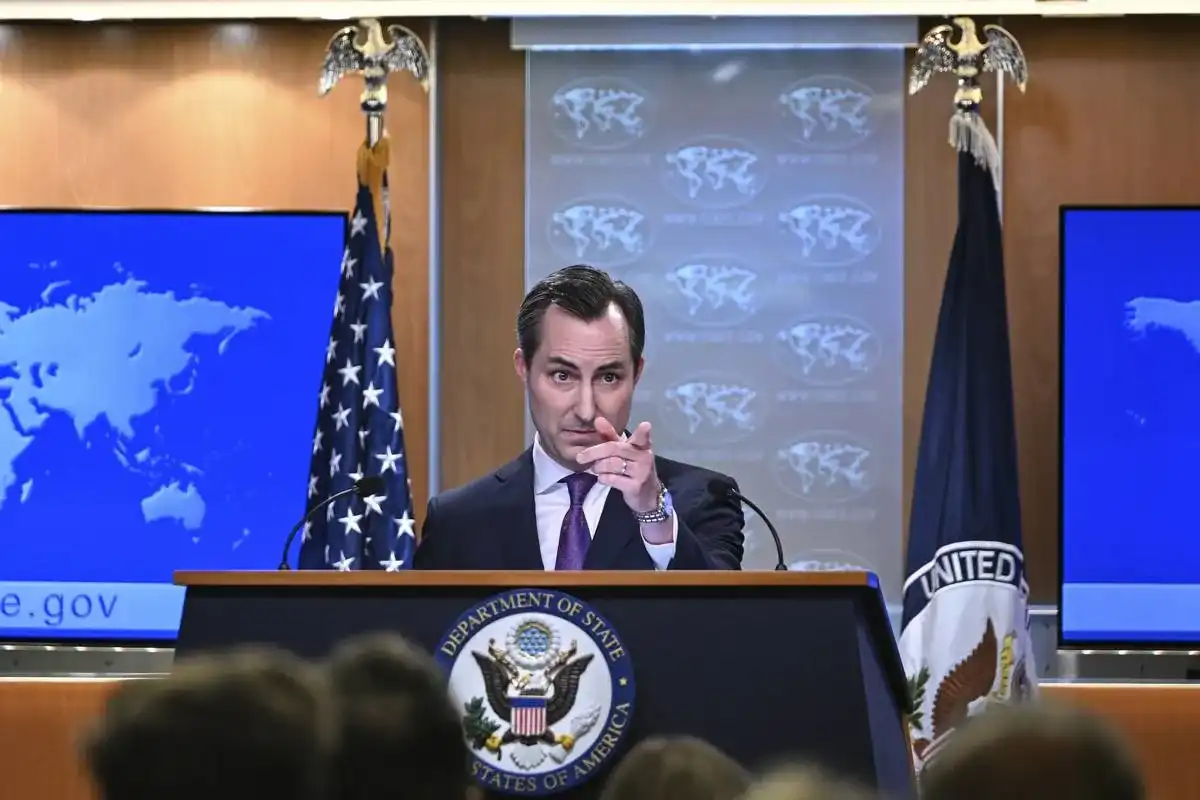

Prince Mohammed bin Salman chairs the Saudi Cabinet session in Riyadh (SPA)

The Council of Ministers reviewed Saudi Arabia's contributions and initiatives in support of international multilateral action, to be more effective and rapid in addressing the challenges of the present and the future and responding to urgent issues at the global level; in a way that consolidates development and prosperity, and strengthens common cultural and social ties.


The Council referred to what Saudi Arabia stressed during its participation in international meetings held in recent days, regarding the importance it attaches to enhancing cooperation with all countries of the world, consolidating aspects of joint coordination in various fields, and continuing its humanitarian and development role in helping the most needy countries and peoples affected by natural disasters and humanitarian crises.


Salman Al-Dosari, Saudi Minister of Media, explained that the Council of Ministers affirmed Saudi Arabia’s interest in supporting cultural communication between different cultures around the world, expressing in this context his thanks to everyone who contributed to the success of the “Arab Week at UNESCO” initiative launched by the Kingdom at the headquarters of the United Nations Educational, Scientific and Cultural Organization in the French capital, Paris.


On the local front, the Council members appreciated the Crown Prince’s reception of the Saudi medical team that successfully performed the world’s first complete heart transplant using a robot, and his continuous support for national competencies and enabling them to achieve leadership in all fields, based on the fact that the human being is the focus and foundation of development.


The Council of Ministers praised the (tenth) edition of the “Biban 24” Forum, which was held in Riyadh, for signing agreements and launchings worth more than 35.4 billion riyals ($9.44 billion) to support entrepreneurship in a number of sectors, and achieving national targets in raising the contribution of small and medium enterprises to the gross domestic product.


The Council praised the results of the summit, which will contribute to enhancing joint action (SPA)

The Council reviewed the topics on its agenda, including topics that the Shura Council participated in studying. It also reviewed the conclusions reached by the Political and Security Affairs Council, the Economic Affairs and Development Council, the General Committee of the Council of Ministers, and the Experts Authority of the Council of Ministers in this regard.


The Council issued a number of decisions, including approval of a memorandum of understanding between the Ministry of Economy and Planning in Saudi Arabia and the Federal Ministry of Labor and Economy in Austria for cooperation in the economic field, an air transport services agreement between the Government of Saudi Arabia and the Government of Mozambique in the field of air transport services, and a memorandum of understanding between the Government of Saudi Arabia and the Islamic Development Bank for cooperation in implementing the initiatives of the Petroleum Demand Sustainability Program.


The Council authorized the Minister of Education to set the rules and regulations regarding the Saudi School Sports Federation, while the Council decided that the implementation of the Official Communications Regulations and the preservation of documents and their information would be advisory for a period of one year from the date of its entry into force. It approved the final accounts of the Environment Fund and the King Fahd National Library for two previous fiscal years, and approved promotions to the (fifteenth) and (fourteenth) ranks.


The Council of Ministers also reviewed a number of general topics on its agenda, including annual reports from the Ministries of Commerce and Transport and Logistics Services, the Eastern Province Development Authority, the Control and Anti-Corruption Authority, the General Authority for Competition, the Capital Market Authority, King Abdulaziz City for Science and Technology, the National Program for the Development of the Information Technology Sector, and the Strategic Office for the Development of Al-Baha Region. The Council took the necessary measures regarding these topics.

PALESTINE

Tue 12 Nov 2024 7:58 pm - Jerusalem Time

Washington: Blinken stressed to Israel the importance of improving the humanitarian situation in Gaza

US Secretary of State Antony Blinken stressed the importance of improving the humanitarian situation in Gaza during a meeting with Israeli Strategic Affairs Minister Ron Dermer in Washington on Monday, the State Department said.


The ministry said in a statement on Tuesday that Dermer briefed Blinken on the operational changes and policy decisions Israel had made based on a letter sent by the United States in October.

ARAB AND WORLD

Tue 12 Nov 2024 6:53 pm - Jerusalem Time

Tehran: Developing relations with Riyadh is on the right track

Iranian First Vice President Mohammad Reza Aref said that the development of relations between Tehran and Riyadh is on the right track.


Iran's official IRNA news agency reported on Tuesday that Aref met with Saudi Crown Prince Mohammed bin Salman yesterday in Riyadh, on the sidelines of the extraordinary joint summit of the Organization of Islamic Cooperation and the Arab League.


During the meeting, Aref discussed strengthening bilateral relations and expanding economic, cultural and political cooperation between the two countries.

"The development of political relations between the two countries is on the right track. We hope that this relationship will continue seriously in the economic, cultural, scientific and technological fields," Aref said.


Aref stressed that these positive developments in the political field on the Tehran-Riyadh line will benefit the two countries and the region.


The Iranian First Vice President said that developing such relations is an "irreversible path."

PALESTINE

Tue 12 Nov 2024 6:39 pm - Jerusalem Time

UNRWA: The situation in Gaza is catastrophic and the aid that is arriving is not enough

The United Nations Relief and Works Agency for Palestine Refugees (UNRWA) has said that the delivery of humanitarian aid to Gaza is insufficient to address the "catastrophic" situation in the besieged Palestinian enclave.


Almost simultaneously with this announcement, the Israeli army indicated the opening of a new crossing at Qarara/Kissufim to bring humanitarian aid into the Gaza Strip, on the eve of the deadline set by the United States for the Israeli authorities to allow increased aid, according to Agence France-Presse.


Asked about the US warning, UNRWA official Louise Waterridge declined to comment at a news conference, but stressed that the situation in the Gaza Strip "is simply catastrophic."


She explained from Gaza that aid had reached its lowest levels in months, "and the average for last October was 37 trucks per day across the entire Gaza Strip, and this is not enough at all for a population of 2.2 million people who need everything."


“While we receive testimonies of people on the ground begging for crumbs of bread or water, the UN is still denied access to this area,” she said, stressing that no food has been allowed into the besieged area in northern Gaza for a whole month, and that all requests made by the UN to access the area “have been denied.”


She noted that "attempts" had been made since then, and the World Health Organization had carried out limited medical evacuations, adding, "But I can tell you that as of this week, I was supposed to do two missions in the north" and they were "rejected."


Last Saturday, UNRWA Commissioner-General Philippe Lazzarini warned of the possibility of famine in the northern Gaza Strip, which has been under siege under the weight of the occupation since October 5.


Lazzarini expressed his regret that the possibility of famine "is not surprising," noting that Israel has used hunger as a weapon, depriving people in Gaza of basics, even food to survive, amid growing international and UN warnings of a famine in northern Gaza.


For its part, the International Committee of the Red Cross delegation in the occupied Palestinian territories also expressed its concern today, writing via the X platform, “As the situation in northern Gaza deteriorates, the lack of access to appropriate medical care continues to affect civilians.”


This comes as Israel continues its war on Gaza since October 7, 2023, leaving more than 146,000 Palestinian martyrs and wounded, most of them children and women, and more than 10,000 missing, amid massive destruction and worsening famine.

ARAB AND WORLD

Tue 12 Nov 2024 6:30 pm - Jerusalem Time

Trump is betting on Netanyahu making “bold decisions” to end the war

Although Israeli Prime Minister Benjamin Netanyahu and his coalition leaders are delighted with the new appointments of members of US President-elect Donald Trump’s team, who are clearly pro-Israel, political circles in Tel Aviv confirm that the main message that Israel will hear from the incoming Trump administration is a firm demand to end the war, indicating that Trump is betting that Netanyahu will also make bold decisions to resolve the conflict.


These circles said that Israeli Minister of Strategic Affairs Ron Dermer, who is spending a four-day visit to the United States to meet with a number of senior officials in President Joe Biden's administration, first met with President-elect Trump at the Mar-a-Lago resort in Florida. According to the American website "Axios" and its correspondent in Tel Aviv, Barak Ravid, Dermer conveyed messages from Netanyahu to Trump and informed him of Israel's plans regarding Gaza, Lebanon and Iran over the next two months before the president-elect takes office in the White House. He said that Netanyahu is interested in knowing what the new president expects and wants because he wants to work closely with him.


“One of the things the Israelis wanted to work out with Trump was what issues the president-elect would prefer to see resolved before January 20, and what issues the Israelis would prefer to wait until he takes office,” one US official told the news site. Netanyahu specifically chose Dermer for the job because he is personally known to Trump and members of his team. He is American by birth. He served as Israel’s ambassador to Washington during Trump’s first term. He has built close ties with all segments of the Republican Party and has clashed with Democratic Party leaders. He has worked closely with Trump and maintained ties with him after his 2020 election defeat.


In this context, and in light of the enthusiasm shown by the extreme right and considering Trump’s election an opportunity to annex the West Bank to Israel and impose Israeli sovereignty over the settlements, the Times of Israel newspaper said that at least two officials on Trump’s team from the previous term warned senior Israeli ministers against assuming that the president-elect would support Israel’s annexation of the West Bank in his second term.


“I think it’s important for those in Israel who are celebrating President Trump’s victory to do so because of the strong support President Trump has for Israel, as evidenced by the many historic things he has done during his first term,” the newspaper quoted Jason Greenblatt, Trump’s former Middle East envoy, as saying. “But to some Israeli ministers who think that extending Israeli sovereignty into Judea and Samaria (the West Bank) is now a done deal, take a breath. Hold on. If I were an adviser to these ministers, I would recommend that they focus first on working closely with Prime Minister Netanyahu to enable him to strengthen Israel’s relationship with the United States and allow him to work on the enormous threats and challenges that Israel now faces. There will be time to have a discussion about Judea and Samaria, but the context and timing are important.”
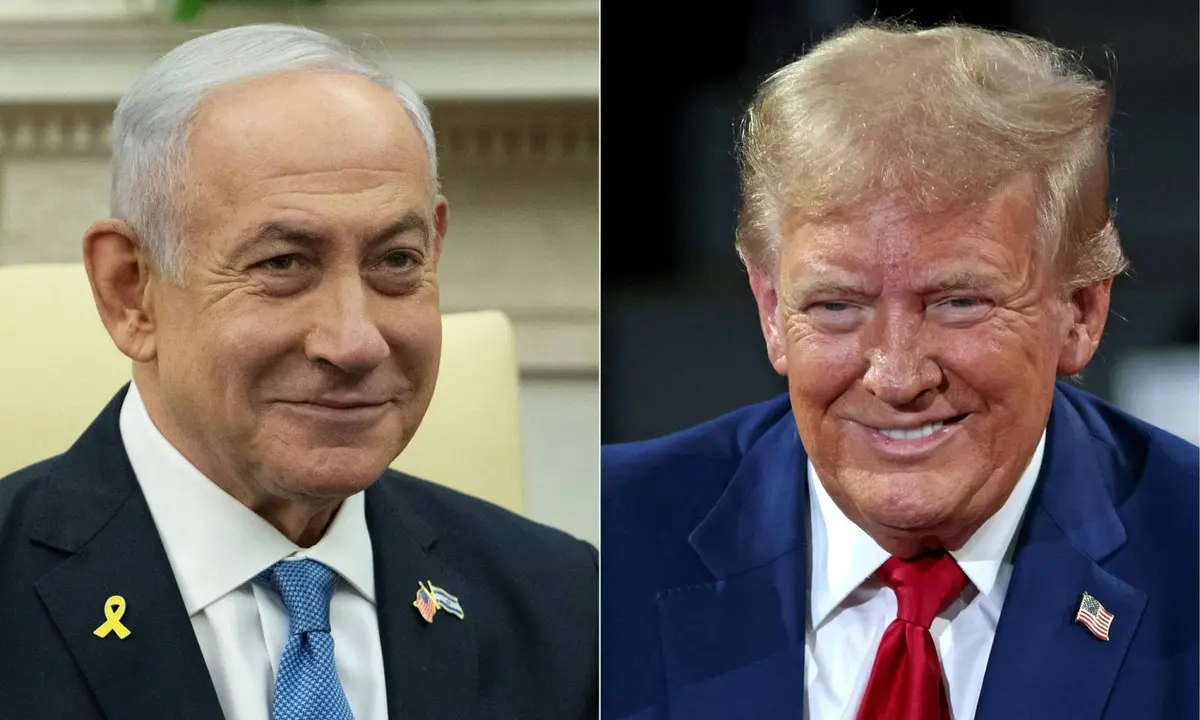
ARAB AND WORLD

Tue 12 Nov 2024 5:36 pm - Jerusalem Time

Drone explosion in Haifa, Israeli missiles reach new range in Lebanon

Sirens sounded continuously in various areas in northern Israel, and the army reported that a number of drones were spotted in the area. This coincided with raids targeting sites in Lebanon - including the Akkar region - the farthest point that Israeli missiles have reached since the start of its war on Lebanon.


The Israeli army announced that its helicopters were chasing a number of drones spotted in the skies of Acre coming from Lebanon.


Yedioth Ahronoth reported an explosion in a march near a community center in Nesher, east of Haifa.


This came after the Israeli Home Front Command announced the activation of sirens in Kiryat Shmona and its surroundings, and in the western Galilee and the northern coast.


The Israeli army said earlier that its defenses intercepted a march south of the occupied Syrian Golan coming from the east.


The Israeli army also confirmed earlier that it intercepted a march that infiltrated from the east into the Wadi Araba area in southern Israel.


The Israeli Broadcasting Authority also said that air interceptions took place in Eilat, southern Israel, while the Islamic Resistance in Iraq said that it had attacked a military target south of the occupied territories and another north of them with drones.


Israeli raids

On the other hand, Israeli raids continued on several towns in southern Lebanon and the eastern Bekaa.


The Lebanese Ministry of Health said that eight people were killed and 14 injured in an Israeli airstrike that targeted a residential building in the town of Ain Yaacoub in the northern Akkar Governorate last night.


A security source told Agence France-Presse that the building destroyed by the raid was inhabited by a displaced family from southern Lebanon, noting that the targeted person was one of its members and a member of Hezbollah.


The head of the union of municipalities in the region - to which the town belongs - confirmed to the agency that the raid targeted "a two-story house inhabited by displaced people," adding that this was the first time that this area, which is more than 100 kilometers from Lebanon's southern border, had been targeted.


The Ministry of Health also announced the martyrdom of 7 people in an Israeli raid on the Sidon district in southern Lebanon.


Al Jazeera's correspondent said that Israeli raids targeted, during the past hours, the surroundings of the towns of Kfar Reman and Siddiqin, and the towns of Shama, Majdal Zoun, Dabaal, Jabal al-Batm, and Zebqin in southern Lebanon.


The Israeli army issued new warnings to residents to evacuate a number of buildings in the southern suburb of Beirut.


Meanwhile, Israeli Defense Minister Yisrael Katz said there would be no ceasefire and no respite in the strikes against Hezbollah.


Katz, who held a meeting with the Public Defense Forum on Monday, added that Israel will continue to strike Hezbollah with all its might until the war's goals are achieved.


Katz pointed out that Israel will not agree to any arrangement that does not guarantee its right to reject and prevent what he called "terrorism" on its own, and to achieve the goals of the war in Lebanon of disarming Hezbollah, withdrawing it beyond the Litani, and returning the residents of northern Israel safely to their homes.