






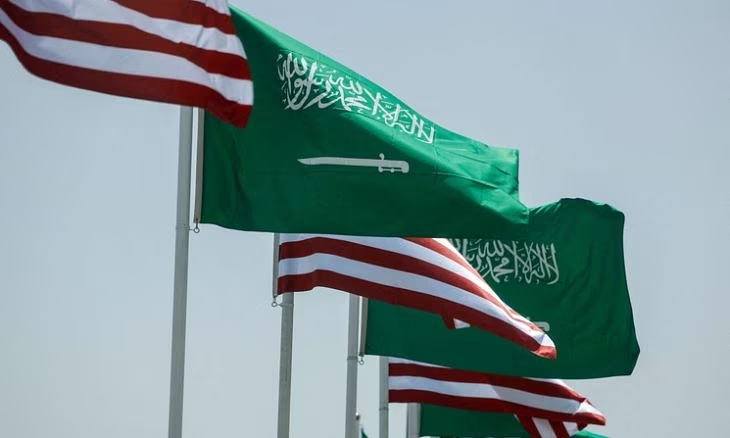
Informed sources revealed the Trump administration's intention to support a civil nuclear cooperation agreement with Saudi Arabia, granting Riyadh the right to enrich uranium and reprocess spent nuclear fuel. This move represents a shift in traditional US policy, which had insisted on a 'gold standard' preventing partner countries from possessing domestic enrichment capabilities.
Talks between Washington and Riyadh have been ongoing for many years, as the Kingdom seeks to acquire advanced American technology to build its nuclear reactors. This cooperation aims to enable American companies to win massive contracts to develop Saudi Arabia's nuclear energy infrastructure, enhancing US commercial and strategic influence in the region.
These reports raise serious concerns in Washington's political circles and among some regional allies, especially since the agreement does not include strict restrictions preventing the transfer of technology for military purposes. Observers point out that the absence of an 'Additional Protocol' for international oversight may reduce the International Atomic Energy Agency's ability to monitor any undeclared activities.
Economically, Saudi Arabia's desire to possess nuclear energy falls within 'Vision 2030,' led by Crown Prince Mohammed bin Salman. Through this program, the Kingdom aims to diversify energy sources and reduce reliance on burning oil and gas for electricity generation, which would free up larger quantities of crude for export and generate higher financial returns.
Data from the US Energy Information Administration indicates that Saudi Arabia consumes enormous quantities of oil for energy production, especially in the summer. This consumption reaches about 1.4 million barrels per day, which Riyadh considers a waste of resources that could be better invested in global markets if a nuclear alternative were available.
The Kingdom clearly announced in early 2025 that it would proceed with uranium enrichment to produce the 'yellowcake' needed for nuclear fuel. This statement presented the US administration with two options: either engage in the agreement to ensure oversight of the program, or leave the field open to international competitors such as China and Russia.
China and Russia are prominent competitors to the United States in this matter, as Beijing previously offered to build Saudi nuclear power plants. Moscow also has experience in the region after constructing the Dabaa plant in Egypt, giving Riyadh strong alternatives if negotiations with Washington falter.
The agreement faces a legal hurdle and strict scrutiny in the US Congress, as the Atomic Energy Act of 1954 requires review of any nuclear cooperation agreement. Members of Congress are demanding firm guarantees preventing Saudi Arabia from using the technology to develop nuclear weapons, especially in light of ongoing tensions with Iran.
The new trends raise questions about the consistency of US foreign policy, especially since Washington exerted maximum pressure on Tehran to abandon its enrichment program. Critics believe that granting Riyadh the right to enrich may weaken the American stance demanding nuclear disarmament in the region generally.
Regionally, Israel always expresses concern about any nuclear ambitions in its vicinity, even if for peaceful purposes. Despite Washington's efforts to link nuclear cooperation with the normalization issue, Riyadh still links any political progress with Tel Aviv to the necessity of finding a just solution to the Palestinian issue and establishing a state.
Sources reported that the US Secretary of Energy met with his Saudi counterpart last year, confirming that the two countries are on a positive path towards a civil nuclear agreement. However, ambiguity still surrounds the technical details related to the management of enrichment facilities, and whether they will be subject to a 'black box' system managed by Americans.
The issue of reprocessing spent nuclear fuel is another point of contention, as materials used in warheads can be extracted from it. The Saudi side asserts that its commitment to the Non-Proliferation Treaty is sufficient to reassure the international community, emphasizing its sovereign right to possess a complete fuel cycle.
Experts believe that reaching a nuclear agreement will give the United States greater ability to access details of the Saudi program compared to other partners. This access may help alleviate security concerns in the long term and ensure Riyadh remains within the Western technological and security system.
Ultimately, the decision to proceed with this agreement remains subject to political balances within Washington and the extent of Congress's acceptance of waiving the 'gold standard.' The coming months will determine whether Saudi Arabia will enter the nuclear club with an American partnership or turn eastward to secure its energy ambitions.
The proposed agreement provides a legal path for cooperation in the nuclear fuel cycle, but it does not obligate Washington to immediately transfer enrichment technology.




Share your opinion
Upcoming Nuclear Deal Between Washington and Riyadh Raises Questions About Enrichment Guarantees