







Washington Message
Washington – Said Erikat – 21/7/2026
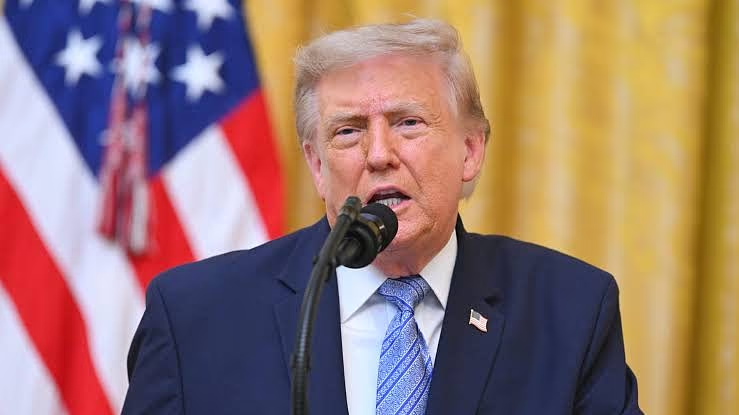
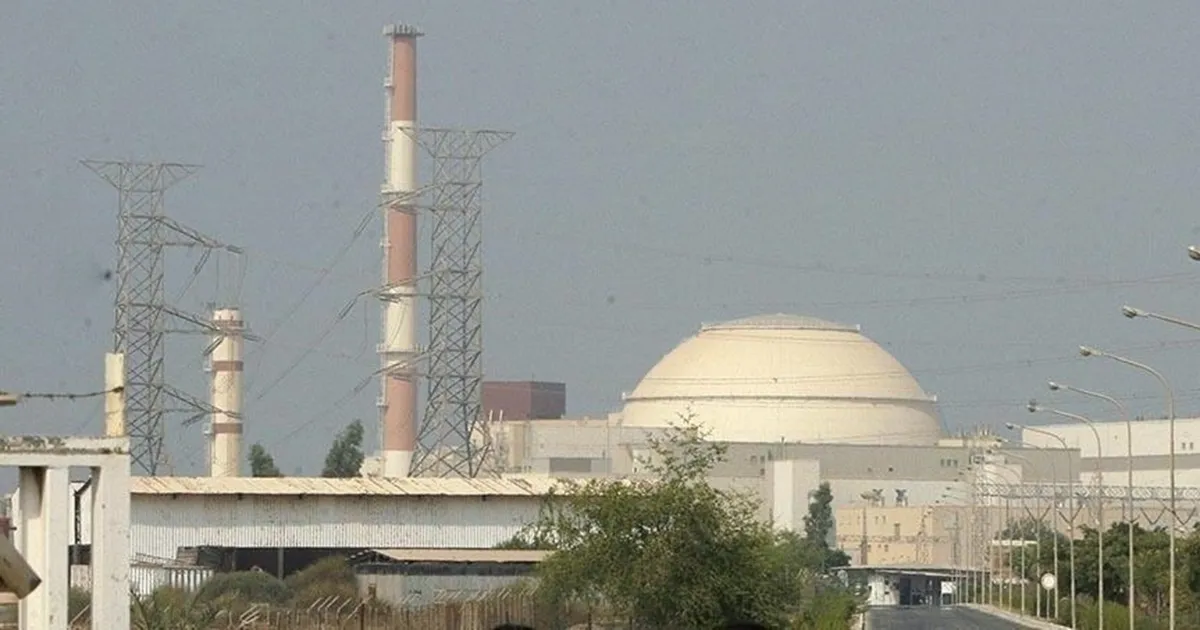
The confrontation between the United States and Iran has entered a more dangerous phase after US President Donald Trump vowed to punish Tehran for the killing of American soldiers, emphasizing that Iran "will pay a price many times over," indicating that Washington is preparing to expand its military operations, while Tehran continues to respond by targeting American sites, bases, and interests in the region, amid the collapse of the fragile truce and the failure of diplomatic efforts.
Trump's statements came hours after he confirmed that the recent American strikes, carried out for the ninth consecutive night, were in honor of three American soldiers recently killed, two in Jordan and the third in Iraq, a development that represents a significant turning point in the nature of the confrontation, as the death of American casualties has become a pressure factor on the US administration to adopt a stronger response.
The US Central Command (CENTCOM) announced that the strikes targeted military sites and communication facilities inside Iran, as part of a campaign aimed at reducing Tehran's ability to carry out attacks against ships transiting the Strait of Hormuz, which is one of the most important maritime passages for oil and gas transportation in the world.
In contrast, Iran announced that it targeted sites in Bahrain and Syria, and also attacked American aircraft in Jordan, while Iranian President Masoud Pezeshkian affirmed that his country is engaged in a "total war" with the United States, a description that reflects the transition of the conflict from a phase of limited mutual strikes to an open, multi-front confrontation.
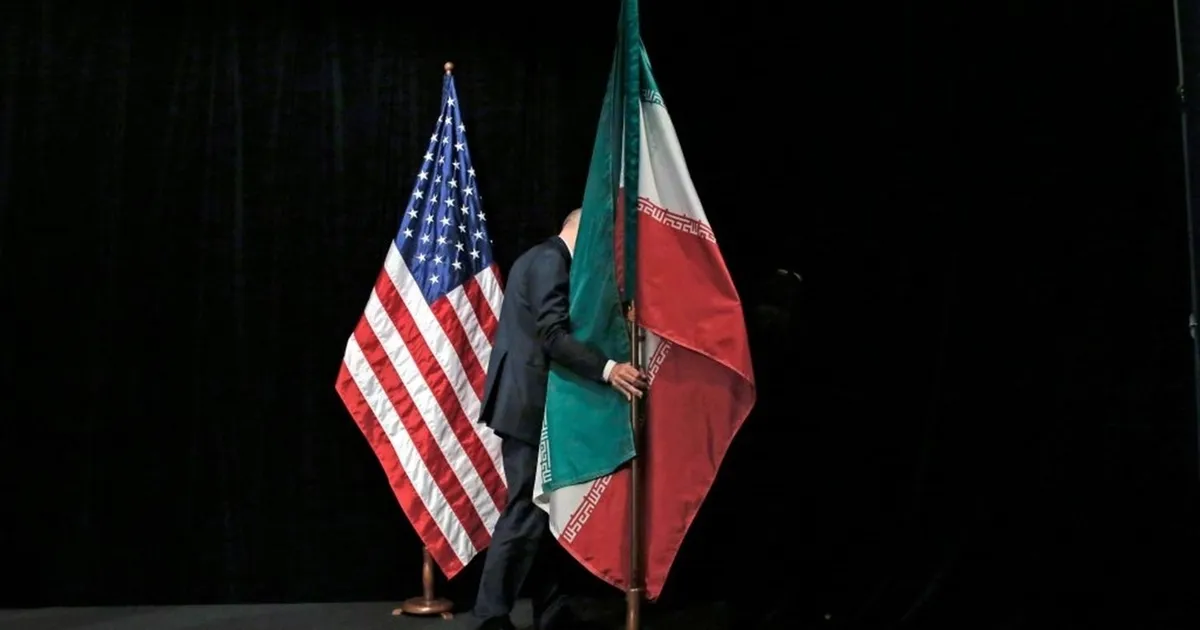
Despite the military escalation, Tehran revealed that diplomatic communications have not been completely cut off, and messages are still being exchanged through regional and international mediators, in an attempt to maintain a narrow window for dialogue, despite the collapse of the ceasefire agreement initially concluded in mid-June, and the halt of negotiations aimed at establishing a permanent settlement.
The scope of the confrontation expanded to include a number of neighboring countries, as the Jordanian army announced the interception of three Iranian missiles heading towards the kingdom's territory, while sirens blared in different areas warning of imminent attacks.
In Kuwait, the armed forces announced the interception of Iranian drones, while Bahrain confirmed that its air navigation systems were subjected to a drone attack, noting that air traffic was not directly affected.
Inside Iran, local media reported that several cities, including Tabriz, Chabahar, Konarak, Bandar Mahshahr, and Bandar Imam Khomeini, were subjected to American strikes, while official reports spoke of the explosion of two oil tankers while transiting the Strait of Hormuz.
The Iranian Revolutionary Guard announced that the two tankers were crossing what it described as the "unsafe southern route" of the strait, confirming that they exploded and stopped moving, while the US Central Command denied the validity of this account.
The Revolutionary Guard warned that the Strait of Hormuz "will not be safe for the passage of petrochemical products or oil and gas" as long as American strikes continue, vowing to carry out a "punitive operation" against the United States, a threat that raises global market fears of widespread disruptions in energy supplies.
The US Department of Defense had confirmed over the weekend the death of an American soldier in an Iranian attack in northern Iraq, after previously announcing the death of two other soldiers in an attack targeting a US base in Jordan. The department identified the deceased as Private Isabella Gonzalez, 19, and Lieutenant Tyler James Feehan, 25, while the search for a third soldier lost during the attack is still ongoing, after human remains that have not yet been identified were found.
Despite the ongoing military operations, US Secretary of State Marco Rubio affirmed that the United States remains open to a diplomatic solution, but at the same time stressed that the international community is required to decide its position on allowing Iran to control one of the most important international waterways, considering that Tehran uses the Strait of Hormuz as a political and military pressure tool to achieve strategic gains.
These developments come after the initial agreement that had temporarily halted fighting in mid-June collapsed, at a time when Trump announced on July 8 that the agreement was "over," leading to the failure of peace negotiations and the return of both parties to a policy of mutual military escalation.
Observers fear that the continuation of strikes and Iranian responses will expand the circle of conflict to include more countries in the region, especially with Jordan, Bahrain, and Kuwait directly entering the theater of defensive operations, which raises the probability of a regional confrontation whose repercussions will be difficult to contain.
The killing of American soldiers constitutes a strategic turning point in the conflict, because US administrations, regardless of their political orientations, face immense internal pressure to respond when American military personnel fall on the battlefields. This reality gives Trump a political justification to expand military operations, but in return, it raises the risks of sliding into a wide regional war that is difficult to control. Every larger American strike will likely be met with stronger Iranian responses, creating a cycle of mutual escalation that may go beyond deterrence goals to an open confrontation that exhausts both parties and increases instability in the Middle East.
The return of the Strait of Hormuz to the forefront of the confrontation confirms that the conflict is no longer only about Iran's nuclear program or the American military presence, but has become about global energy security. The strait represents a vital artery for oil and gas trade, and any prolonged disruption in it will have direct repercussions on global prices, markets, and supply chains. Hence, Washington seeks to prevent Iran from turning the strait into a strategic bargaining chip, while Tehran sees threatening navigation as providing it with an effective deterrent in the face of American military superiority.
Despite the mutual escalatory language, the continued exchange of messages through mediators reveals that both parties have not cut off the last threads of political communication. The United States realizes that a complete military decisive victory against Iran carries a high strategic and economic cost, while Tehran knows that the continuation of the war threatens its economy and internal stability. Therefore, military operations may continue in parallel with undeclared negotiations, in a model that combines field pressure and political bargaining, awaiting a moment that allows for the relaunch of a new negotiation path if appropriate regional and international conditions are available.
Share your opinion
Trump Vows Harsh Punishment for Iran After US Soldiers Killed, Military Escalation Threatens Wide Regional Confrontation