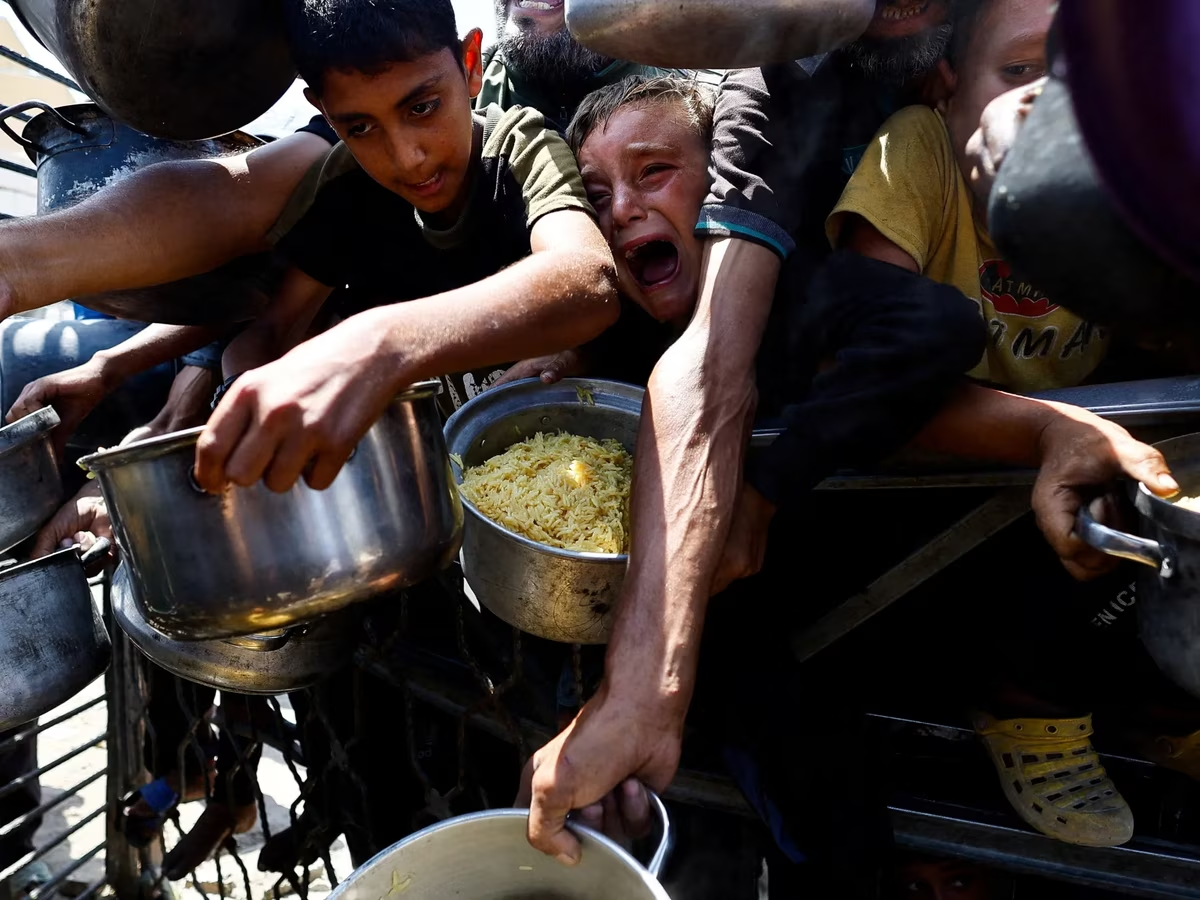







The United Nations Food and Agriculture Organization (FAO), in cooperation with the World Food Programme, issued strong warnings about millions of people sliding into catastrophic levels of hunger. The joint report explained that the overlap of armed conflicts with successive economic crises has led to the emergence of what it described as 'hotspots of hunger' in vast geographical areas.
The UN classification included four Arab countries suffering from severe humanitarian crises: Palestine, Sudan, Yemen, and Somalia, placing these countries on the list of areas most at risk. The report indicated that the continuation of these conditions threatens a complete collapse of local food security systems in these countries, which already suffer from structural fragility.
The report revealed a worrying decline in the volume of international funding allocated to relief organizations working in the field, with budgets recording a decrease of up to 60% during the period between 2022 and 2025. International bodies describe this gap as dangerous, as it hinders life-saving operations and increases rates of acute malnutrition among the most vulnerable groups.
For his part, Jean-Martin Bauer, an official at the World Food Programme, affirmed that countries such as Sudan, Palestine, Yemen, and Somalia are among the highest levels of international concern. Bauer explained that the populations in these areas face severe food insecurity that could lead to famine and mass death if urgent intervention is not made.
Regarding the Sudanese issue, the report considered the situation there to be the most tragic, with the specter of hunger threatening 14 regions, including Darfur and South Kordofan. Estimates indicate that the number of people facing catastrophic food conditions could rise to 200,000, with the crisis expected to continue until early 2027.
In the Gaza Strip, UN sources stressed that the risk of famine remains strong despite previous ceasefire agreements. This is mainly due to the continuous restrictions imposed by the occupation authorities on the entry of relief trucks, which has led to a sharp decline in commodity and food stocks for the population.
In Yemen, one of the world's worst humanitarian crises continues to worsen as a result of the deterioration of the local currency's value and the insane rise in basic commodity prices. Sources warned that the percentage of people in need of assistance in areas under the Yemeni government could increase by about 9% before the end of this year, putting additional pressure on international organizations.
Finally, Somalia has once again topped the list of extreme risk hotspots due to the combination of local conflicts with long droughts that have hit the country for years. Somalis in several areas face direct threats of famine, amid the inability of charitable kitchens and local institutions to meet the growing needs of displaced and affected populations.
These countries' populations face high levels of acute food insecurity, including famine and death.





Share your opinion
UN warnings: 4 Arab countries face famine risk and sharp decline in international funding