







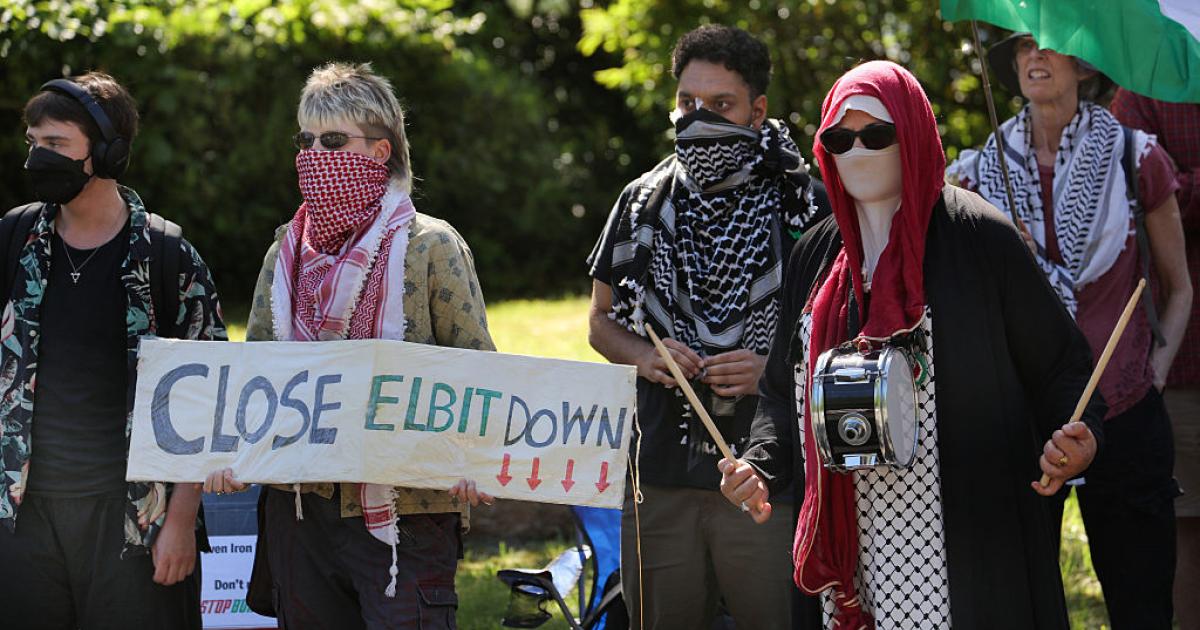
The announcement by Lebanese President Joseph Aoun of his country's intention to enter into direct negotiations with Israel in the American capital, Washington, next week, has sparked a wave of sharp division in the Lebanese street. This tension quickly manifested in field protests, with dozens of Hezbollah supporters demonstrating around the Grand Serail and various areas of the capital Beirut, raising slogans condemning this sudden political move.
In a related context, field sources observed widespread calls on social media platforms for popular mobilization in front of the Grand Serail this Saturday afternoon. These movements express an absolute rejection of the negotiation path announced by the presidency, amidst ongoing military operations and existing border tensions that have not yet subsided.
For its part, the Lebanese Army command quickly issued a strongly worded warning statement, emphasizing that it would not tolerate any movements that might threaten internal stability or civil peace. The statement clarified that the military institution respects the right to peaceful expression of opinion, but it will intervene firmly to prevent any aggression against public and private property or attempts to destabilize security in these delicate circumstances.
In its statement, the army stressed the need for citizens to exercise the highest degrees of awareness and national responsibility, calling on everyone to fully respond to the directives of the military units deployed in the field. These warnings come at a time when observers fear that the protests could escalate into internal confrontations, further complicating the already critical Lebanese scene.
On the political front, Hezbollah bloc MP Hassan Fadlallah expressed the party's absolute rejection of these negotiations, considering them a constitutional and legal violation that cannot be overlooked. Fadlallah pointed out that this step contributes to deepening internal division at a time when Lebanon needs national unity to confront external challenges and ongoing aggression.
Fadlallah clarified in his statements that tampering with the country's fate through nationally unagreed-upon negotiation channels threatens coexistence and civil peace. He affirmed that the priority should be to preserve the cohesion of the internal front rather than engaging in political paths that the party considers illegitimate and serving external agendas.
According to a statement issued by the Lebanese President's office, a tripartite phone call took place involving the Lebanese and Israeli ambassadors to Washington, in the presence of the US ambassador to Beirut, who is currently in the United States. This call resulted in an agreement to hold the first meeting between the two parties next Tuesday at the US State Department headquarters to discuss thorny issues.
The anticipated meeting aims to discuss mechanisms for announcing a ceasefire and setting a timetable for the start of official negotiations under direct American patronage. President Aoun had previously expressed his readiness for direct dialogue with the Israeli side, especially after the expansion of military confrontations that began in early March.
In contrast, the Israeli ambassador to Washington, Yehiel Leiter, confirmed Tel Aviv's approval to begin official peace negotiations with the Lebanese government. Leiter clarified in an official statement that Israel seeks to reach an agreement with the Lebanese state, but at the same time rejects any discussion regarding a ceasefire with Hezbollah, which it describes as a terrorist organization.
The Israeli ambassador considered Hezbollah to be the main obstacle to achieving peace between the two states, noting that Israeli military operations target the party's infrastructure. These statements confirm the wide gap in visions between the concerned parties regarding the nature of the required truce and who it should include in the next phase.
On the other hand, press sources quoted a Lebanese government official confirming that Beirut's official position stipulates achieving a comprehensive ceasefire before engaging in any negotiation details. This position comes amidst continued intensive Israeli raids on various Lebanese regions, which Hezbollah responds to with counter-rocket attacks, making the prospects for a political solution fraught with risks.
The negotiations represent a blatant violation of the Lebanese Charter, Constitution, and laws, and a manipulation of the country's fate and future.
Share your opinion
Sharp Lebanese division and military warnings after Aoun's announcement of direct negotiations with Israel