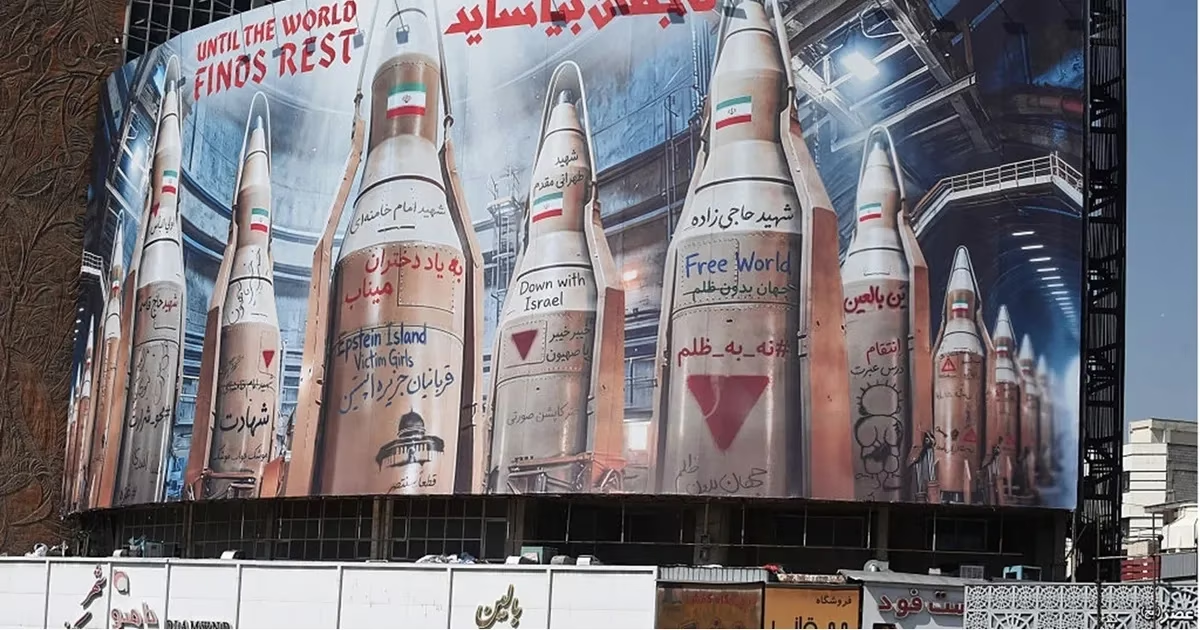







International press reports revealed today, Monday, that diplomatic efforts led by mediators from Turkey, Egypt, and Pakistan, aimed at pushing Iran to sit at the negotiating table with the United States, have faltered. These intensive moves aim to reach an agreement that ends the current state of war or at least ensures a temporary ceasefire in the region.
Sources indicated that the American administration showed possible flexibility regarding waiving some of its previous demands in order to make progress in the negotiation process. However, these attempts still face significant obstacles due to the parties' adherence to their initial positions, making it difficult to reach tangible understandings at present.
In a related context, informed officials reported that the Iranian side categorically rejected a proposal to reopen the strategic Strait of Hormuz in exchange for a temporary cessation of hostilities. Tehran believes that the current American demands to end the war are unacceptable and do not meet its minimum political and security conditions.
Tehran informed international mediators that it is unwilling to hold any meetings with American officials in the Pakistani capital, Islamabad, in the coming period. This rigid Iranian stance comes amid a conviction among the Iranian leadership that Washington is not serious about reaching a formula for a permanent and comprehensive ceasefire.
For his part, a high-ranking Iranian official stressed that his country will not succumb to an ultimatum policy or external pressures aimed at extracting field concessions. He affirmed that the proposal to open the Strait of Hormuz cannot be exchanged for a temporary calm, noting that Tehran is currently studying a framework presented by Pakistan but will not rush to make a decision.
Regarding diplomatic initiatives, Pakistan has prepared an integrated framework to end hostilities, which was delivered to both Tehran and Washington in recent hours. This proposal is based on a two-phase approach, the first beginning with an immediate and comprehensive ceasefire, followed by a second phase to draft a final and comprehensive agreement.
Sources indicate that Pakistan is currently acting as the sole and direct communication channel between the two parties in an attempt to bridge views and avoid further military escalation. Mediators are seeking to reach an agreement on all essential elements of the initiative as quickly as possible to formulate them into a formal memorandum of understanding.
Despite both parties receiving the Pakistani plan, doubts still surround the possibility of its actual implementation due to the lack of mutual trust. Informed sources insist that the success of any initiative requires full agreement on all technical and political details before announcing any field de-escalation.
Regional and international capitals are cautiously monitoring the results of these diplomatic moves, especially given the significant impact of the continued closure of the Strait of Hormuz on global energy supplies. The current bet remains on the ability of mediators to find a middle ground that ensures a cessation of fighting without compromising the red lines set by each party.
Tehran will not reopen the Strait of Hormuz in exchange for a temporary ceasefire, and will not succumb to ultimatums or pressure to make a decision.
Share your opinion
International mediation efforts to hold direct negotiations between Washington and Tehran falter