







An analysis published by 'Foreign Affairs' magazine revealed a deep gap between the pragmatic claims of US President Donald Trump's administration and the reality of its foreign policy implementation on the ground. Researchers Rebecca Lissner and Mira Rapp-Hooper pointed out that the current war against Iran demonstrated an approach based on excessive force and coercion, far from the strategic discipline imposed by the realist school.
Despite attempts by Trump's team to portray its global moves as part of a 'flexible realism' inspired by classical intellectual traditions, the facts on the ground indicate the exact opposite. The realist school, which rejects idealism and focuses on protecting strict national interests, now finds itself in contradiction with the administration's decisions that have drawn Washington into an unresolved regional conflict.
Data indicates that this war, which entered its twenty-sixth day, has cost the US Treasury at least $20 billion by the end of March. This massive spending comes at a time when the administration suffers from a lack of a clear vision on how to translate this military power into tangible political gains or sustainable stability in the region.
Continuous strikes have led to the depletion of vital ammunition and the transfer of strategic assets, such as missile defense systems and radars, from other vital areas. Observers believe that this trend weakens the US military's readiness to confront larger challenges in the Indo-Pacific, undermining strategic deterrence against major powers like China and Russia.
In stark contrast to his electoral promises to end 'endless wars,' Trump adopted the goal of 'regime change' in Tehran as a central pillar of his military campaign. This approach is rejected by realist thinkers who believe that the costs of changing the internal nature of states are often exorbitant and lead to geopolitical chaos that does not serve national interests.
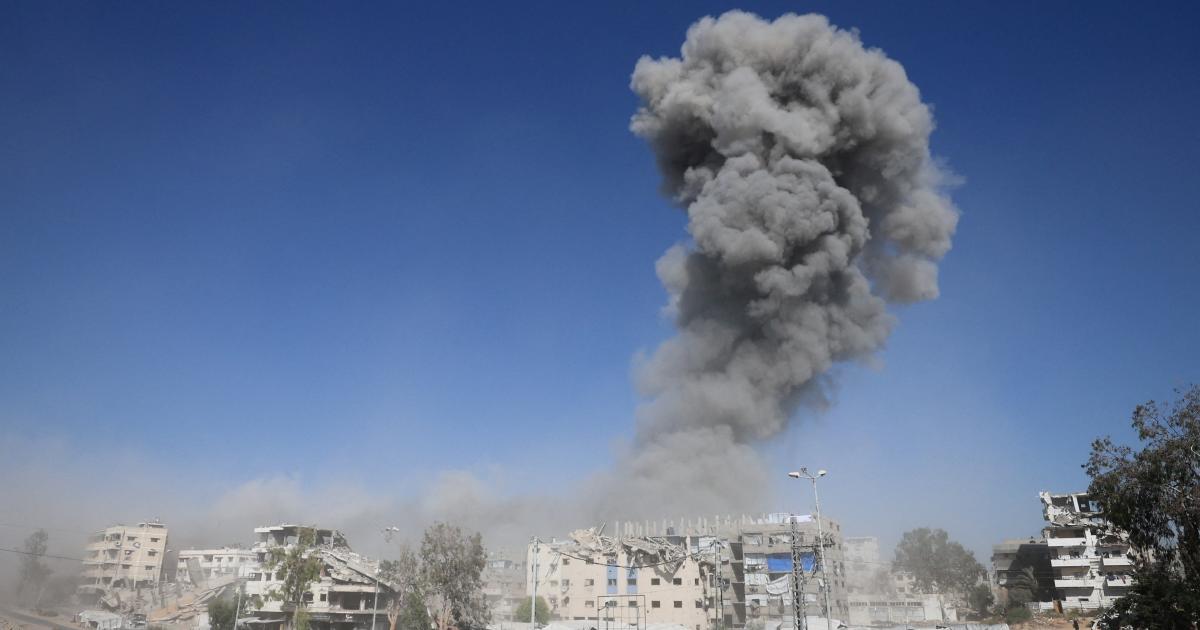
On the ground, the war has caused a near-complete paralysis of navigation in the Strait of Hormuz, with shipping traffic declining by up to 97%. This disruption has not only affected global energy supplies but has also led to severe economic losses for the Arab region, estimated at approximately $63 billion within just two weeks of fighting.
Diplomatically, sources reported that Trump showed a surprising willingness to negotiate by announcing a five-day halt to attacks on Iranian energy facilities. This signal came after his envoy, Steve Witkoff, received approval from Iranian Supreme Leader Mojtaba Khamenei to begin talks, in an attempt to contain the escalating situation that had spiraled out of control.
Domestically, Trump faces increasing public pressure as his approval rating has fallen to 36%, with 61% of Americans opposing the continuation of military operations. It appears that the American voter who cast their ballot for Trump based on promises of 'America First' and avoiding foreign interventions now feels deceived by the engagement in a new Middle Eastern conflict.
Reports confirm that the US administration rushed into the conflict without an accurate assessment of escalation dynamics, as the evacuation of diplomats from the region was delayed until hostilities actually began. The President also expressed surprise at the sharp rise in global oil prices, reflecting a lack of coordination between military objectives and macroeconomic repercussions.
The regional aviation sector also suffered losses, with over 18,400 flights canceled at nine major airports in the region. These losses, amounting to $1.9 billion, reflect the extent of damage to civilian and economic infrastructure resulting from the war decision, which was described as reckless and ill-considered.
In a related context, sources revealed that Mossad Director David Barnea presented plans to Netanyahu claiming that targeting Iranian leaders would lead to a popular uprising and the collapse of the regime. It appears that these intelligence estimates, adopted by circles close to Trump such as Jared Kushner, were what pushed for the current military escalation and bypassed diplomatic options.
The concept of 'flexible realism' promoted by the 2025 National Security Strategy seems to be a cover to justify the use of force without legal or international constraints. Statements describing the world as governed only by 'laws of force and coercion' ignore the importance of alliances and international law in maintaining long-term American hegemony.
Instead of focusing on strategic competition with China, Washington found itself bogged down in the sands of the Middle East once again, giving Beijing an opportunity to strengthen its economic and political influence. This strategic distraction is precisely what true realists warned against, advocating for avoiding 'overextension' that drains the state's resources and power.
In conclusion, Trump's war on Iran represents an opportunity for American political forces to re-evaluate the course of foreign policy and return to a more disciplined approach. The popular demand for a practical foreign policy that respects financial and political constraints has become an urgent necessity to restore the United States' respect and position in an increasingly complex international system.
Igniting a regional war in the Middle East without convincing justification or a clear theory to advance US interests starkly contradicts the fundamental principles of political realism.
Share your opinion
Foreign Affairs: Trump's Military Adventure in Iran Undermines Principles of Political Realism