






Jerusalem - Muhammad Abu Khdeir - "Al-Quds" dot com - The town of Silwan, located south of the blessed Al-Aqsa Mosque, is witnessing a dangerous escalation in forced displacement operations carried out by the occupation authorities and settler groups. These operations come within the framework of a comprehensive plan officially approved by the occupation government, aiming to empty this sensitive, strategic, and archaeological area of its citizens and replace them with settlers, exploiting regional and international circumstances. In an operation described as coordinated and systematic, Jerusalemite citizen Yaqoub Al-Rajabi described what happened yesterday, stating that occupation forces stormed his home in the Batan al-Hawa neighborhood and began emptying its contents in preparation for settlers to seize it. He added that the occupation forces evacuated 11 homes belonging to the Al-Rajabi family, comprising about 65 individuals, including 4 apartments belonging to him and his brothers, with the aim of seizing them and forcibly expelling them. Al-Rajabi pointed out that his family has been fighting legal battles in the occupation courts for 11 years, after receiving eviction orders under the false claim of land ownership by Jews of Yemeni origin since 1881. He continued: "Over the past years, we tried to present official documents and ownership papers, but the Israeli courts continued to issue decisions in favor of settlement associations without any evidence or proof." "We are not guests in our city." In statements to "Al-Quds," Zuhair Al-Rajabi, head of the Batan al-Hawa neighborhood committee, said: "These decisions are purely political, not judicial, as the occupation tries to portray them. The goal is to control the neighborhood and replace its original inhabitants with settlers. We have been here for hundreds of years and are not strangers or guests; this is our land and our homes." Al-Rajabi expressed that there is a state of great concern among the residents, but on the other hand, there is a greater determination to remain steadfast. He added: "The residents live under immense psychological pressure, but everyone agrees that we will not leave, no matter the cost." Al-Rajabi affirmed that "the Israeli courts are completely biased in favor of the settlers, but we resort to them to assert our rights and keep our cause alive before public opinion." He said: "Our cause is just, and even if these courts do not issue a decision in our favor, history and international law are on our side." Basbous family: Displacement after 63 years. As for the Basbous family, they have been subjected to successive seizure operations. On Sunday, March 22, 2026, settlers seized two apartments belonging to citizens Raed and Muhammad Basbous. Then, on March 25, 2026, this was followed by the seizure of two additional apartments belonging to a citizen and his father, where the family was forcibly evicted and the young man Anas Raafat Basbous was arrested after the eviction. In a moving testimony, the elderly Youssef Basbous, who spent 63 years in his home, said: "I have lived in this house since 1963, and today I am being expelled from it so that settlers can live in it, and we do not know where we will go, after we have become homeless. I built this house stone by stone, I put everything I own in it, it contains our memories and our lives, how can we be expelled from it and displaced to allow settlers to live in it?" Basbous affirmed that his family bought the land in 1963 and possesses all documents and papers proving its ownership, but the courts rejected these documents, stating that the courts classify the land as property belonging to Jews of Yemeni origin "without any evidence." 80 apartments under eviction orders. In a statement issued by the Wadi Hilweh Information Center and according to the Ir Amim association, the center explained that the number of residential apartments that have been seized or for which eviction orders have been issued in the Batan al-Hawa neighborhood alone has exceeded 80 apartments, belonging to dozens of Jerusalemite families. The center pointed out that these policies have led to the displacement of dozens of Palestinian families from their homes in Silwan, with direct support from the occupation authorities who provide security protection for settlement organizations during seizure operations. Ir Amim: This is part of a plan to consolidate settlement control around the Old City. In a statement, the Ir Amim organization said: "The settlement in Batan al-Hawa, which the Ateret Cohanim association is working to develop, is an integral part of the efforts of settlement organizations and Israeli authorities to consolidate Jewish control over the Old City and its surrounding Palestinian neighborhoods, and to create an irreversible reality in the Holy Basin around the Old City, which deliberately undermines efforts to reach an agreed political settlement on Jerusalem." The organization added in another statement: "Settlement organizations, under the auspices of a discriminatory system, are working to strip the Palestinian community of its homes and uproot it from them, and to strip Israel of any chance for a future diplomatic solution." More than 2200 Jerusalemites threatened with displacement. For its part, the Israeli human rights organization B'Tselem warned that Silwan residents face a "real danger" of displacement and land seizure. The organization said in a statement that evictions in Batan al-Hawa and Wadi Hilweh, along with home demolitions in Al-Bustan, have led to the displacement of hundreds of people over the past two years. B'Tselem explained that more than 2200 people (about 90 families) in Batan al-Hawa are threatened with displacement, including about 200 children, in addition to about 1500 residents from 150 families in the Al-Bustan neighborhood. The organization revealed that more than 30 Palestinian families have been displaced from Batan al-Hawa since 2015, with settlers seizing their homes. It added that the courts rejected multiple appeals before ordering 157 residents to leave their homes in rulings issued in late 2025. Mechanism of displacement: Making life unbearable. B'Tselem pointed out that settlers in the neighborhood, supported by private security guards funded by the Israeli Ministry of Housing, harass citizens and incite violent confrontations, frequently leading to the arrest of Palestinians by the police on various pretexts. It added that with the settlers moving into the neighborhood, the presence of Israeli police and border guards has significantly increased. Officers also use violence against Palestinians, issue threats, detain minors, and disrupt daily life. B'Tselem concluded: "Thus, even before they are physically expelled from their homes, the residents of Batan al-Hawa suffer from relentless abuse, fully supported by Israeli state institutions and security forces, making their lives unbearable and aiming to push them to leave 'voluntarily'." New settlement classification divides Silwan into two parts. Within the framework of the comprehensive Israeli plan, the Alternative Planning Center team stated that there are "disturbing" technical and field changes to the official maps of the occupation municipality in occupied Jerusalem. The center explained that these changes show a deliberate reduction of the municipal boundaries of Silwan town, with the re-annexation of vital areas to the so-called "City of David" settlement. In this context, the expert in maps and settlement affairs, Khalil Tafakji, explained that this change effectively divides Silwan town into two parts; an Arab part and a Jewish-settlement part. Tafakji pointed out that the occupation municipality now considers the annexed parts of Wadi Hilweh neighborhood as part of the (Jewish neighborhood) whose borders are constantly expanding westward and eastward. Objectives of the plan: Comprehensive demographic change. National and religious authorities and the Jerusalem Governorate stated that these measures are null and illegitimate, and aim primarily to restructure the spatial and political landscape of the Holy City. They added that this step aims to dismember Palestinian neighborhoods and villages adjacent to the Old City and link Palestinian neighborhoods to a false heritage framework that serves the Zionist narrative in the areas surrounding the Old City. Through this demarcation, the occupation authorities seek to transform the Al-Bustan, Wadi al-Rababa, and Wadi Hilweh neighborhoods into areas of a complete Jewish character. These annexed areas enjoy various privileges and services aimed at strengthening the settlement presence at the expense of the indigenous Palestinian population who face the risk of displacement. Area of the planned Jewish neighborhood in the heart of Silwan. Jerusalemite experts estimate the area of the planned Jewish neighborhood in the heart of Silwan at about two square kilometers, all located within the so-called "Holy Basin." This plan aims to strengthen control over occupied East Jerusalem and link it to the western part of the city within a comprehensive Judaization vision that cancels the 1967-1948 armistice line. Tafakji believes that this redrawing of borders stems this time from religious-biblical motives that serve expansionist political goals, as the occupation authorities claim that parts of Silwan represent the historical "City of King David." These religious narratives are used as a legal cover for land confiscation and changing the demographic reality in the area adjacent to the blessed Al-Aqsa Mosque. "King's Garden" project - the most dangerous projects. The "King's Garden" project stands out as one of the most dangerous projects that threatens to displace more than 1000 Palestinians from the Al-Bustan neighborhood in Silwan. In this context, the Israeli human rights organization Ir Amim explained that this plan aims to establish a tourist and archaeological park (Plan 18000) extending from the "City of David" south to include the entire Al-Bustan neighborhood, reaching the settlement outpost in Batan al-Hawa where the Ateret Cohanim settlement association is active. The Ir Amim human rights association says that this plan represents a smooth extension of the tourist attractions in the "City of David," leading to the erosion of the neighborhood's character and living fabric, leading to the forced displacement of an entire community. The occupation municipality presented this plan in 2010, but reactivated it in recent years (2025-2030) after feeling emboldened by supportive American policies after the transfer of the American embassy from Tel Aviv to occupied Jerusalem and after the return of US President Trump to the White House. In a dangerous field development, the Israeli human rights organization B'Tselem reported that in early February 2026, four bulldozers belonging to the occupation municipality entered the Al-Bustan neighborhood and began demolishing walls, fences, storage structures, gates, and commercial properties belonging to the residents of the neighborhood, Palestinian citizens, without prior notice. This demolition was justified through the manipulative use of an Israeli municipal regulation supporting settlement and settlers, ostensibly aimed at "removing obstacles from the street," although the targeted structures had been standing for years on land never designated as a street. Mass displacement. B'Tselem warned that about 70 homes in the Al-Bustan neighborhood face imminent demolition, threatening more than 1000 individuals from one community with the risk of mass displacement. The organization pointed out that the occupation municipality submitted an objection to the court in late February 2026 against the residents' request to extend the demolition freeze, indicating its intention to fully revive the plan and collectively expel Palestinian citizens from their homes. "Pilgrims' Path" project and heritage projects. These moves are linked to major Judaization projects previously implemented, such as the suspended bridge that was temporarily frozen, the "Kidem" settlement project, in addition to the "Pilgrims' Path" tunnel. All these projects aim to create a settlement strip that cuts off the connection of Palestinian neighborhoods in occupied East Jerusalem and separates them from the rest of the West Bank. "Wadi Hilweh" project and expansion of "City of David." In the Wadi Hilweh neighborhood, settlers, through the Elad association, which has managed the "City of David" archaeological settlement site since the 1990s, aim to Judaize the neighborhood and expel its Palestinian residents. B'Tselem revealed that these settlement associations work in close cooperation with the occupation authorities, receiving special security guards funded by the Israeli Ministry of Housing with hundreds of millions of shekels annually. Plan to expand the "National Park" at the expense of Palestinian lands. The new plan aims to transform 334 dunams of the town's land into a "national park" that Palestinians are prohibited from using or building on. This comes within efforts to impose the alleged "historical sovereignty" of the occupation, and to transform the area into an open museum that promotes Talmudic myths and erases Arab and Islamic identity. Absentee Property Law and the General Custodian mechanism. B'Tselem documents the (allegedly legal) mechanisms used by the occupation authorities to implement the displacement plan, most notably the Absentee Property Law of 1950, which applies to Palestinian properties in occupied Jerusalem, and the Legal and Administrative Matters Law of 1970, which effectively allows only Jews to claim ownership of properties owned before 1948, knowing that Jerusalemites own 97% of West and East Jerusalem. B'Tselem adds that another mechanism used by settlement organizations to seize properties operates through the office of the "General Custodian," a government agency established after the Absentee Property Law, which has the authority to manage "Jewish trusts" (hekdesh) in occupied East Jerusalem. The General Custodian often allows far-right organizations to purchase properties managed by that settlement custodian where Palestinian families live without title or documents. Seizure of Al-Rajabi family lands. In this context, B'Tselem explained that in 2002, the lands on which the buildings inhabited by most of the families threatened with displacement are located were transferred to this trust by the General Custodian - under the pretext that they were absentee properties, and an additional three-dunam plot of land, including 10 other Palestinian families, was sold to the trust in 2005. Racial discrimination in planning and services. B'Tselem affirmed that the blatant discrimination between Jews and Palestinians within the Israeli apartheid system is not limited to discriminatory laws, but is also manifested in planning, budgets, and service provision. While Palestinian residents in Silwan suffer from deliberate neglect supported by systematic violence from the Israeli government, police, and municipality, settlers in the settlement outposts in the neighborhood enjoy round-the-clock security facilities and modern services and infrastructure, including paved roads, wider and better-lit streets, partially funded by taxpayers' money and exempt from all taxes. United Nations confirms: Forced displacement violates international law. In a press statement, the United Nations Office of Human Rights in the Occupied Palestinian Territory confirmed that the pace of forced displacement of Palestinians in East Jerusalem is accelerating, with demolitions and evictions in the Silwan neighborhood south of the Old City. The statement read: "As confirmed by the International Court of Justice in July 2024, Israel's policies in the Occupied Palestinian Territory, including forced evictions and widespread home demolitions, are contrary to the prohibition of forced transfer under the Fourth Geneva Convention. The Court called on Israel to end its illegal presence in the Occupied Palestinian Territory, including immediately halting all new settlement activities and evacuating all settlers from the territory." The future of Batan al-Hawa neighborhood and Silwan in general remains suspended between the will of the Jerusalemite residents to remain steadfast on their land, and the will of the occupation to end the Palestinian presence in the area adjacent to the blessed Al-Aqsa Mosque, in a race against time to impose a new demographic and geographical reality in occupied East Jerusalem.

MORE FROM PALESTINE

Israeli escalation in the West Bank: Demolition of homes, displacement of dozens of families, and a wide arrest campaign

Mother loses fetus after occupation forces obstruct ambulance at Huwara checkpoint south of Nablus
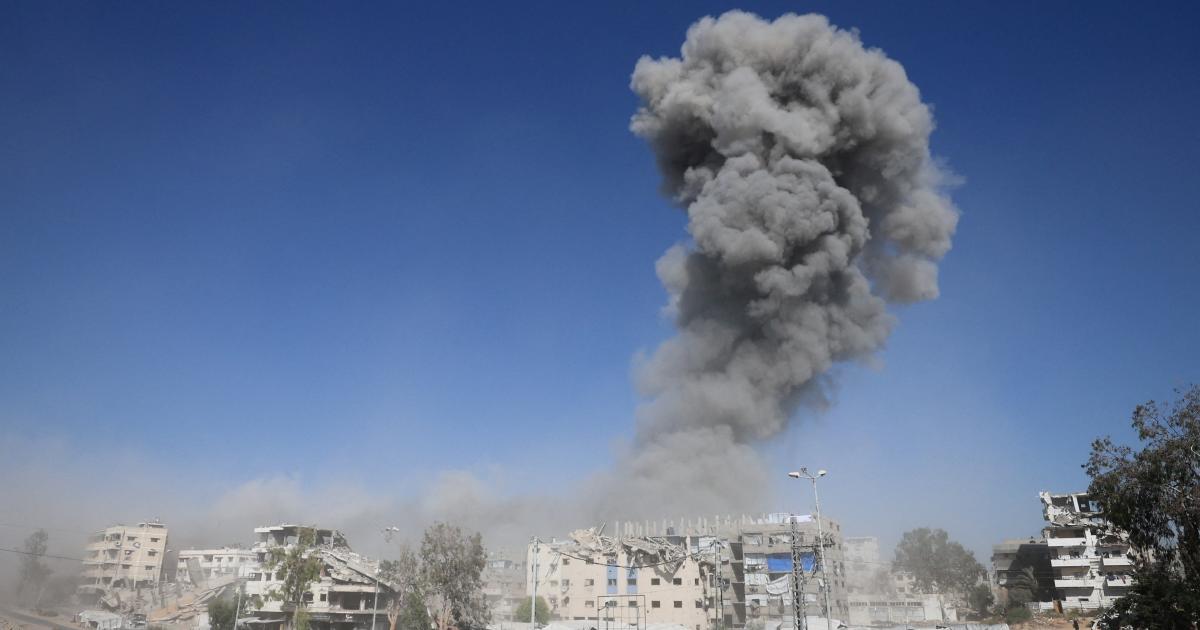
Occupation destroys women's association in Gaza, and the Cabinet approves the deployment of an international force in Rafah


Share your opinion
70 homes in Al-Bustan neighborhood face imminent demolition, 1000 Jerusalemites threatened with displacement... 65 individuals from 11 apartments in Batan al-Hawa displaced for the benefit of settlers