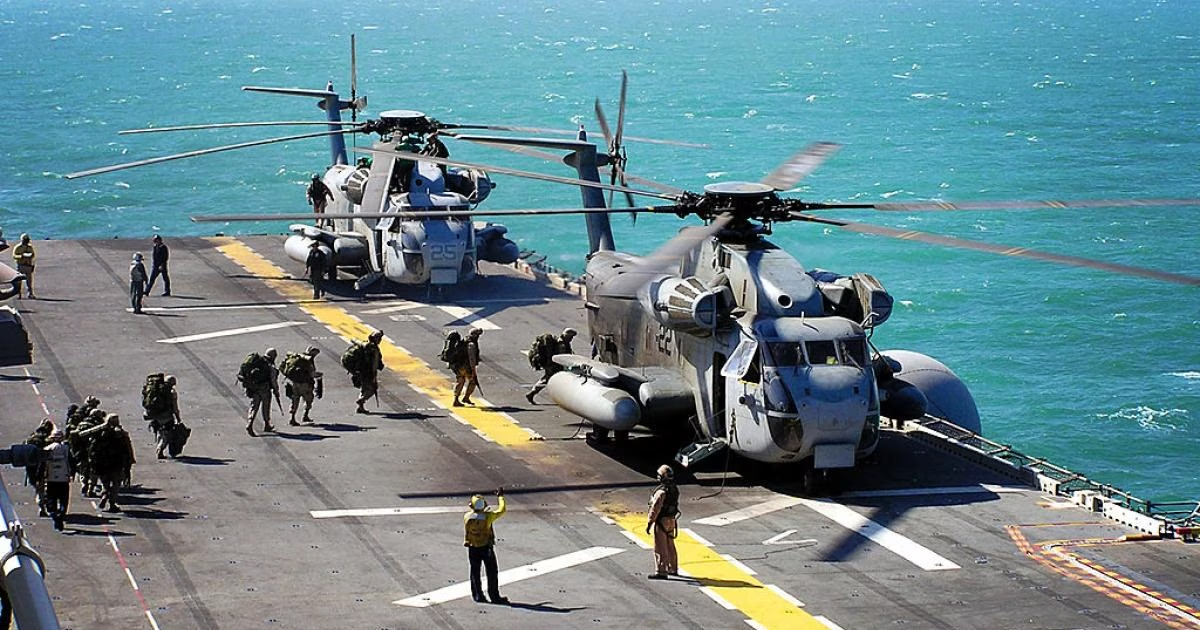







The United States of America has begun taking practical steps to raise its military and operational readiness level in the Middle East, as part of preparations for a potential confrontation with Iran. Washington is moving towards adopting faster and more decisive options by summoning specialized rapid intervention units known in media circles as 'Force 911', which are rarely used forces aimed at immediate intervention in major crises.
Sources reported that this step comes amid escalating regional tensions and the widening scope of threats that require flexible military tools capable of rapid movement. Military experts believe that summoning these units reflects Washington's desire to move away from the pattern of traditional long-term confrontations, and instead rely on specialized units capable of resolving situations in critical moments.
The term 'Force 911' is a media description for Marine Expeditionary Units (MEU), and not an official designation within the organizational structure of the US military. It acquired this name due to its role as an emergency force summoned when sudden crises occur that require an immediate response, just as the emergency number is called in civilian situations.
Each expeditionary unit consists of about 2,500 soldiers, and is designed to be a specialized force capable of carrying out precise and complex missions away from massive military crowds. Its primary missions include conducting limited raids, temporary control of sensitive points such as ports, airports, and sea straits, in addition to evacuation operations and protecting vital state facilities.
These units possess high combat capabilities that enable them to carry out amphibious and airborne landings in complex coastal environments and under difficult weather conditions. They are also intensively trained to deal with unconventional threats, such as suicidal fast boats, naval mines, and small moving targets that may obstruct international navigation.
Marine Expeditionary Units are part of a broader system that includes 31 units within the US Marine Corps, and are usually stationed in advanced strategic locations around the world. Among their most prominent locations is Okinawa, Japan, where they remain on constant alert to move to any flashpoint that ignites in the Pacific or Indian Oceans, extending to the Middle East.
'Force 911' is distinguished by its superior ability to operate completely independently from floating bases at sea, which gives it operational flexibility not available to traditional ground forces. This mode of operation reduces the reliance of US forces on fixed land bases in allied countries, and allows them to remain close to the theater of operations for long periods.
Military observers suggest that the summoning of these forces is directly linked to securing the Strait of Hormuz, which is one of the most important shipping lanes for energy trade in the world. The current confrontation is no longer limited to air strikes, but has extended to include direct threats to maritime navigation that require the presence of field forces capable of direct engagement and securing ships.
The current challenges in the region require the presence of forces capable of rapid control of strategic points when absolutely necessary to prevent the closure of waterways. Although Washington has not officially disclosed the specific missions of these units at present, the timing of their deployment carries political and military implications that go beyond mere routine redeployment operations.
Force 911 is not just a numerical reinforcement, but a tool for immediate intervention in critical moments and control of strategic points.
Share your opinion
Washington summons 'Force 911' units to raise combat readiness in the Middle East