







Investigative journalist Warren Gitler confirmed that US President Donald Trump has succeeded in overcoming initial opposition within Congress regarding his intensified military campaign against Iran. Despite the Senate's move to vote on a resolution forcing the administration to end airstrikes, expectations indicate that this move will not be able to bring about real change in the course of operations.
Gitler believes that Trump relies on a cohesive Republican majority in Congress, which provides him with the necessary political cover to bypass the War Powers Act. This law, enacted during the Vietnam War era, now appears to be merely a simple procedural obstacle to the current administration's ambitions to reshape the balance of power in the Middle East.
Reports indicate that the United States has effectively entered what can be called the 'Third Gulf War,' a comprehensive confrontation aimed at overthrowing the Iranian regime and dismantling its nuclear and missile capabilities. Trump clearly defined these objectives by the end of the first week of military operations, in which Israel is directly participating.
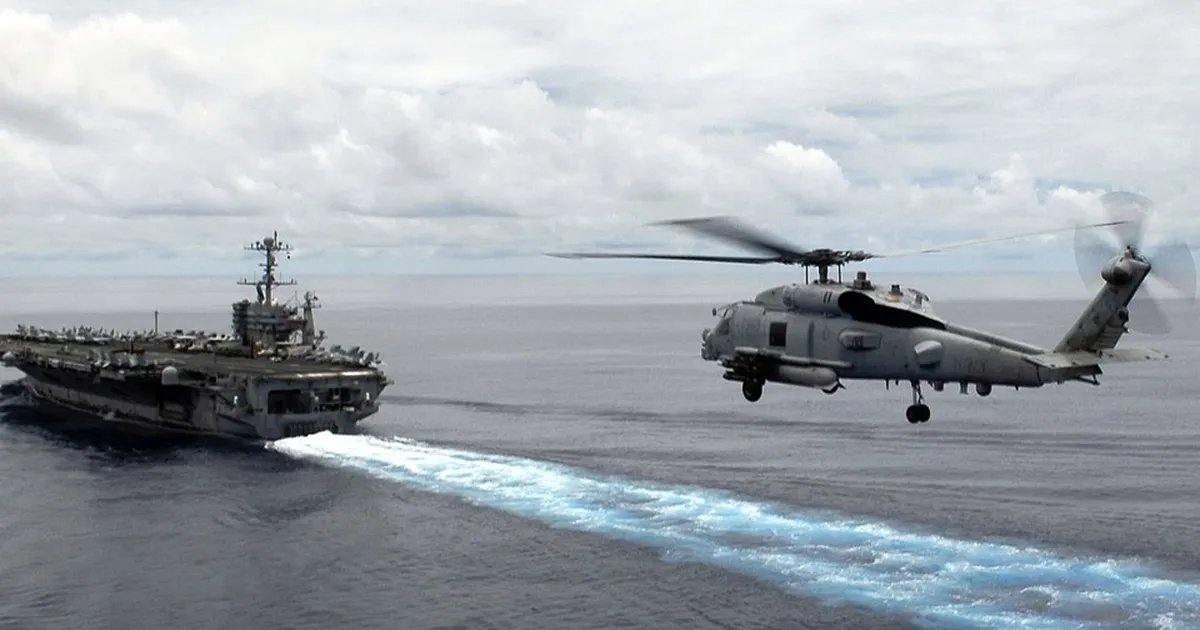
On the ground, American-Israeli strikes have succeeded in targeting Iranian central command, missile launch platforms, and naval vessels. However, the extent of damage to American bases in the region due to the Iranian response with ballistic missiles and drones remains significant and alarmingly continuous.
This confrontation differs from the First Gulf War in the nature of the weapons used, as it now relies on highly accurate and widely destructive guided missiles. Despite relatively low American casualties so far, concerns are growing about an increase in civilian casualties in the region's countries and within Iran.
The global economy has begun to be directly affected by the conflict, especially with escalating disputes in the Strait of Hormuz, which is a lifeline for 20% of global oil supplies. This tension has led to sharp jumps in energy prices, putting additional pressure on major capitals to find a way out of the crisis.
Strategic questions arise about the effectiveness of air bombardment alone in changing regimes, as history has proven that defeating an entrenched enemy requires more than just missiles. Washington and Tel Aviv are currently testing the hypothesis that military pressure will incite the Iranian people to revolt, which has not happened tangibly so far.
There are fears that widespread attacks could backfire by fueling anti-foreign nationalist sentiment among Iranians. This feeling could strengthen the internal front behind the regime instead of weakening it, a danger analysts have warned about since the beginning of planning the military campaign.
Domestically in Washington, there is concern about the depletion of advanced air defense systems such as 'Patriot,' 'Aegis,' and 'THAAD.' Sources indicate that the continuation of the war at the current pace could lead to the depletion of these interceptor missiles within a few weeks, leaving American forces and their allies exposed.
Senior military leaders have repeatedly warned Trump that the United States does not have sufficient stockpiles for a sustained air campaign aimed at regime change in a country the size of Iran. The administration is currently considering difficult options, including transferring defensive systems from vital American bases in South Korea to fill the deficit in the Middle East.
Iran, with a population of 92 million, possesses rugged mountainous terrain and the strongest missile arsenal in the region thanks to billions of dollars in investment. Its experience in developing drones, which have been effectively used in other international conflicts, gives it the ability to deliver painful strikes despite concentrated bombardment.
President Trump is hesitant to make a decision to send ground troops, fearing entanglement in a human quagmire that could affect his chances in the upcoming midterm elections. But experts question the possibility of achieving 'regime change' without boots on the ground, recalling the need for 400,000 troops in previous experiences.
Attention is now turning to the possibility of Washington resorting to Kurdish forces in Syria and Iraq to form a ground spearhead within Iranian territory. However, the question remains about the extent of the Kurds' response to this call, especially after previous experiences where they felt abandoned by the United States at critical moments.
Amid this ambiguity, international capitals such as London, Paris, and Berlin are demanding clear answers about an exit strategy from this war. As 2026 enters a major missile conflict phase, the most important question remains: what will success look like in Washington's eyes, and what will be the ultimate price the world pays?
The idea that American and Israeli strikes will be sufficient to urge the Iranian people to reclaim their destiny is being severely tested today in the absence of a tangible revolutionary uprising.

Share your opinion
Gitler: Trump Leads 'Third Gulf War' Against Iran Without Clear Exit Strategy