







Military reports have revealed a state of apprehension within the Israeli occupation army regarding the possibility of surprise attacks on its northern and eastern borders. These fears come in the wake of the first aerial strike targeting Iranian missile systems, with estimates suggesting a potential repeat of the 'Al-Aqsa Flood' scenario across the Syrian or Jordanian borders.
Media sources reported that the joint attack carried out by Israeli and American forces primarily aimed to neutralize Iranian deterrence capabilities, represented by ballistic missile launch platforms. The first wave of raids focused on destroying ready-to-launch sites, whether above ground or in fortified underground facilities, in addition to targeting command and control centers.
According to military analyses, the attack also sought to undermine the remaining Iranian air defense network, including short-range systems. This measure aims to secure the routes of American 'Tomahawk' missiles and ensure their arrival at their targets without interception, paving the way for broader destructive waves targeting the joints of the sovereign system.
Field data indicates that the first strike inflicted severe damage on Tehran's ability to centrally manage missile launches. According to informed sources, current launches of drones and ballistic missiles are carried out by local commanders in areas not affected by the raids, who resort to rapid launches for fear of their depots being destroyed.
Field commanders in Iran face significant logistical challenges, as directing missiles towards American bases and Israeli facilities requires continuous replanning under the pressure of bombardment. This explains the launch of missiles in small, continuous groups instead of dense, coordinated volleys, which gives air defenses a greater chance to deal with them despite settlers remaining in shelters.
In a related context, the occupation army began an intensive military buildup along the borders with Lebanon and Syria, with close monitoring of the Jordanian borders based on intelligence reports. Fears prevail that Iraqi armed factions, in cooperation with the Houthis and the remaining Radwan force, may carry out a rapid ground infiltration using four-wheel-drive vehicles and vans through the Golan region.
Israeli fears are not limited to Iran-linked factions but also extend to movements of extremist elements in the Daraa region of southern Syria. Analysts believe that the potential state of chaos could push armed groups to exploit security loopholes and carry out offensive operations targeting the Israeli interior from unexpected directions, thus confusing internal front calculations.
These joint operations bring to mind previous military scenarios carried out by the United States against Iranian nuclear and military facilities in previous years. The current coordination aims to eliminate all threats that American bases deployed in the Middle East might face before full engagement in a comprehensive confrontation, while maintaining the element of strategic surprise.
On the naval front, sources reported that the American aircraft carrier 'Lincoln' played a pivotal role in targeting southwestern Iran and naval facilities belonging to the Revolutionary Guard. The raids included the strategic port of Bandar Abbas, in a preemptive move to prevent Iran from carrying out its threats to close the Strait of Hormuz and disrupt international navigation and global energy supplies.
Prior to the start of the attack on the Iranian interior, the occupation army launched intensive raids on Hezbollah sites in Lebanon, targeting surveillance and early warning systems. The aim of these strikes was to disable the party's ability to notify Tehran of the movement of warplanes, which contributed to delaying the initial Iranian reaction to the first wave of bombing.
On the ground in Tehran, the bombing hit vital streets, the vicinity of sovereign ministries, and Mehrabad Airport, while Iranian Supreme Leader Ali Khamenei was secured in a secret location outside the capital. This coincided with Yisrael Katz's announcement that the preemptive attack was carried out in full coordination with Washington to ensure the paralysis of Iranian offensive capabilities before they were launched.
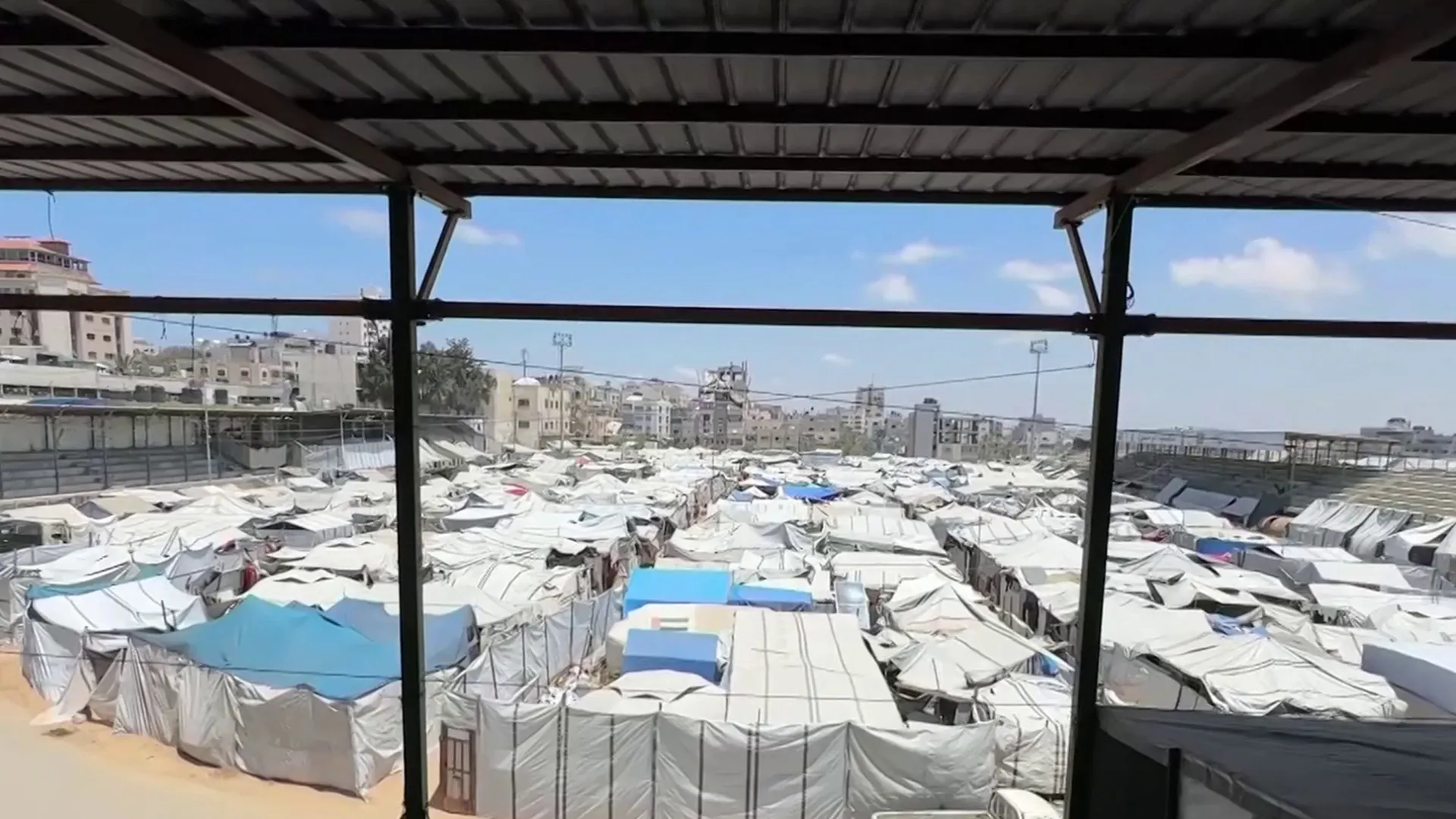
Amidst this regional escalation, the occupation continues its aggression on the Gaza Strip, where 7 Palestinians were martyred in new raids on Friday. This raises the death toll in the Strip to more than 72,000 martyrs since October 2023, amidst the continued suffocating siege and destruction of infrastructure, coinciding with the ignition of regional fronts.
In conclusion, the region awaits the results of this unprecedented direct clash between the Israeli-American axis and Iran, amidst a complete closure of airspace in Iraq, Israel, and Iran. Questions remain about the ability of American air defenses to withstand potential Iranian response waves, especially with reports indicating a shortage of interceptor missiles.
The goal of the joint Israeli-American attack is to neutralize the first ready Iranian missile barrage on launch platforms.




Share your opinion
Israeli alert on northern and Jordanian fronts for fear of coordinated reactions after Iran strike