






A strategic analysis published by the Hebrew newspaper 'Maariv', by Brigadier General (res.) Amit Yaari of the Israeli occupation army, discussed Israel's accelerating moves towards strengthening relations with India. The analysis clarified that these moves aim to build what he described as an 'axis of opportunities', which seeks to overcome traditional security threats and focus on common economic interests.
According to the vision presented by Yaari, the United States and Israel are working to establish a new regional system in the Middle East. This system is not based on tribal or religious affiliations, but rather primarily on the energy, trade, and cross-border economic partnerships sectors.
This ambitious plan relies on creating a modern 'Silk Road' extending from the Far East to the Western world and Europe. The Middle East is positioned at the heart of this project as a vital corridor connecting India and Europe, in what is known as the (IMEC) global economic corridor project.
According to the outlined plan, India will represent the major eastern gateway for this corridor due to its growing economic weight. In contrast, Israel will play the role of the western gateway leading to the European continent, giving it unprecedented geopolitical weight in the region.
The analysis indicates that countries such as the UAE, Saudi Arabia, and Jordan represent the 'heart of the corridor', where they will be used as land routes for transporting goods and energy after being unloaded from ships. This land connection aims to accelerate global trade movement and reduce reliance on traditional long maritime routes.
On the western front, Israel has succeeded in establishing a defensive and economic wing through alliances with Cyprus and Greece. This alliance ensures the flow of Israeli exports, whether goods or energy via pipelines, to reach the European interior through Greek and French ports.
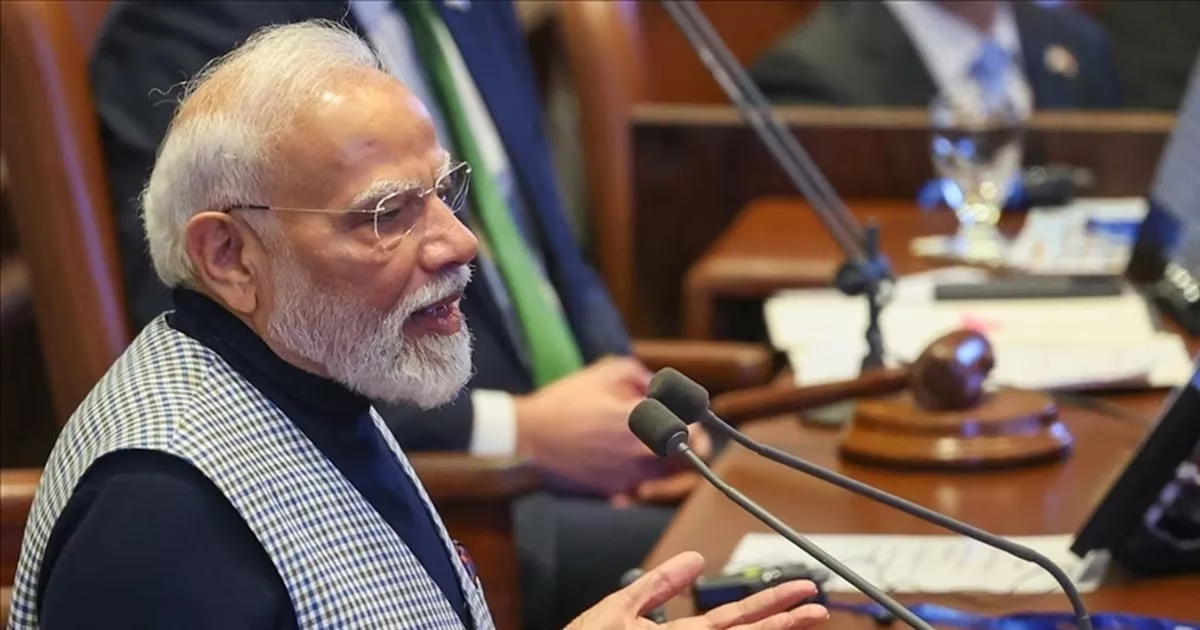
The recent visit of the Indian Prime Minister is of great importance, as the Israeli analyst considered it an official announcement of the inauguration of the eastern wing of the axis. This step aims to solidify Israel's position as an indispensable element in any future regional or international arrangements.
From a security perspective, Yaari believes that the extensive defense agreements with India and Greece are not merely measures to protect borders. Rather, they are institutional tools aimed at strengthening strategic partnership and building an integrated regional infrastructure that protects the economic interests of the corridor participants.
In contrast, regional challenges to this plan emerge, as Turkey and Qatar seek to undermine this path by proposing alternatives that bypass Israel. These alternatives rely on directing trade flows from the East through Jordan and Syria to Turkish territories and from there to Europe.
The analysis also points to a conflict of influence aimed at affecting the Saudi and Emirati positions towards this project. Some parties are trying to push the UAE to abandon its close alliance with Israel, while Israel seeks to find alternative routes that overcome any political obstacles.
Among the proposed solutions to overcome geographical challenges, the trend towards recognizing 'Somaliland' stands out. This interest comes due to its strategic location controlling the southern entrance to the Red Sea, which provides additional security for navigation routes.
Regarding ports, the movements of Abu Dhabi Ports Group in the Jordanian port of Aqaba stand out as part of this integration. The group signed a long-term agreement to manage and operate the port, which enhances the efficiency of land and sea connectivity within the (IMEC) corridor system.
Adani, the Indian company that manages the port of Haifa, also plays a pivotal role in connecting with Europe through partnerships with the port of Marseille in France. This interconnectedness between ports managed by a single entity facilitates the movement of goods and reduces logistical barriers between East and West.
Yaari concluded his analysis by indicating that Israel's success in establishing the eastern and western wings of the axis proves its strategic value to the United States. He added that the project may expand in the future to include other countries if political conditions change, ensuring the dominance of this economic path.
Israel seeks to solidify its central position in the new regional fabric, so that it cannot be ignored in a system based on economy and energy.



Share your opinion
War of Economic Corridors: An Israeli Plan to Establish a New Regional System Connecting India to Europe