







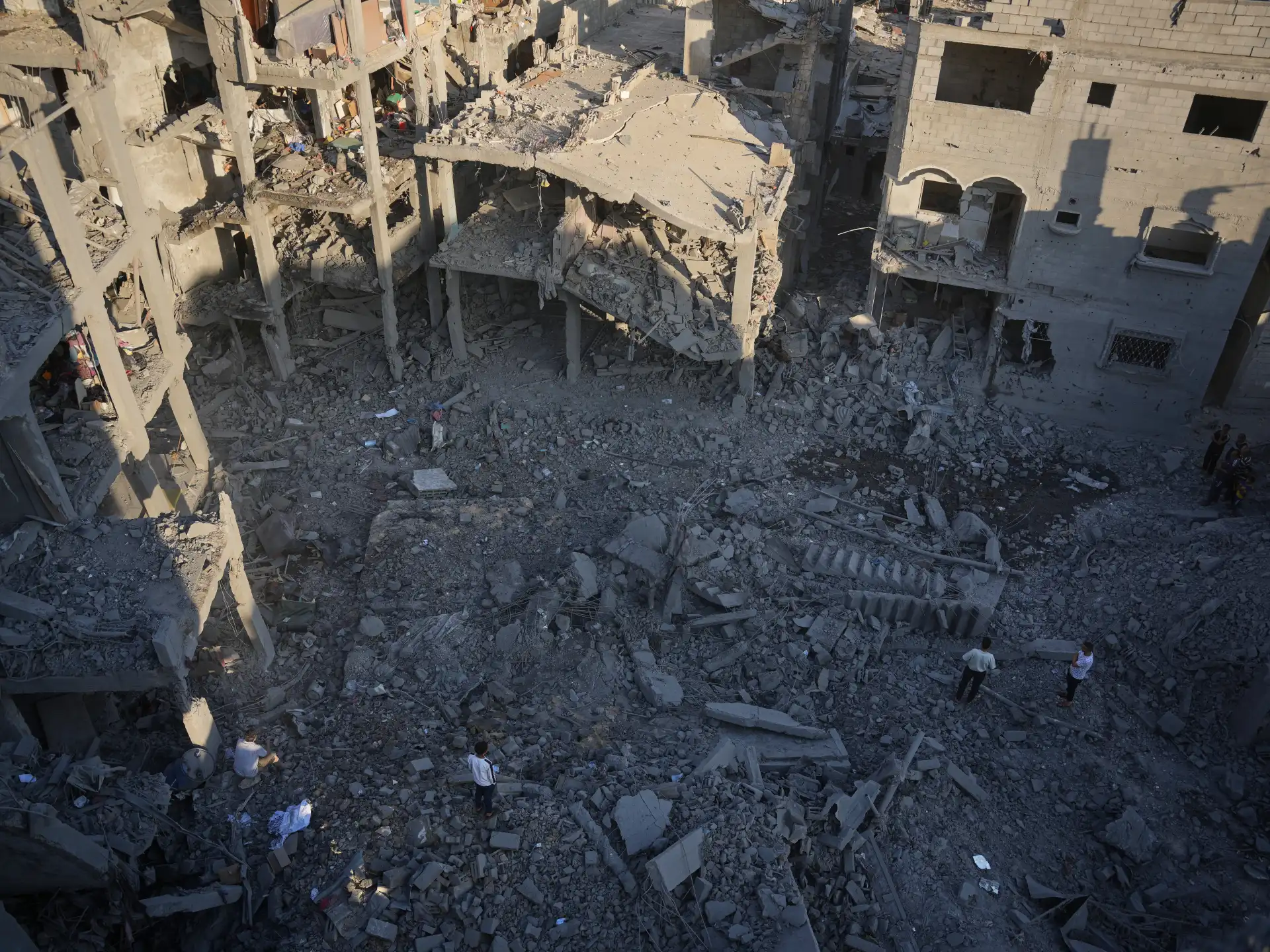
Northeastern Lebanon witnessed a wave of intense Israeli airstrikes, with shelling concentrated on infrastructure around the city of Baalbek. Field sources reported that warplanes heavily targeted the Baalbek and Harbetta outskirts, leading to massive explosions that shook the border region with Syria.
The Israeli occupation army claimed that the aerial operations targeted eight camps belonging to the 'Radwan Force,' Hezbollah's elite unit, in the Beqaa region in the eastern part of the country. The attacks also included the outskirts of the town of Shmestar and the outskirts of the town of Boudai, in addition to raids targeting the vicinity of the city of Hermel in the far northeast.
In the southern sector, the aggression was not limited to airstrikes in the Beqaa; the attacks also extended to the outskirts of Nabatieh al-Fawqa. An Israeli drone carried out an attack targeting Ali al-Taher forest, raising fears of an expansion of targeting to include forested areas and the outskirts of populated villages.
On the defensive field, the Lebanese Army completed its military reinforcements in the Serda area, part of the Marjayoun district. Engineering units installed barbed wire along the recently erected earthen berm to block any potential ground infiltration attempts from the direction of Hamamess Hill towards the south of Khiam town.
These military movements by the Lebanese Army come after a newly established observation point in the Serda area was subjected to gunfire by occupation forces. The army command confirmed that an Israeli drone flew over the point at a low altitude and issued threats to the personnel, prompting the command to issue explicit orders to remain at the site and respond to any future aggression.
In a related context, Lebanese Foreign Minister Yusuf Raji expressed the Lebanese state's concern about the possibility of targeting vital and civilian installations. Raji indicated during his presence in Geneva that the regional escalation between major powers might push Israel to carry out retaliatory strikes targeting Lebanon's already dilapidated infrastructure.
Diplomatic reports revealed that indirect Israeli messages reached the Lebanese government carrying strongly worded threats. These messages included a warning to strike Beirut International Airport and public facilities with force, should Hezbollah engage in any large-scale military confrontation involving regional parties.
At the international level, the United States took precautionary measures reflecting the seriousness of the security situation in the Lebanese capital. The US State Department instructed its embassy staff in Beirut and their families to leave the country immediately, attributing this to the rapidly deteriorating security and field conditions.
The Lebanese arena is experiencing a state of intense anticipation amid the continued heavy overflights of warplanes and reconnaissance aircraft over various regions. Popular and official fears are growing of the situation sliding into an all-out war that may spare no region, especially with the occupation's intransigence and its continuation of deep targeting policies.
The Lebanese Army Command issued orders to reinforce the border point, remain there, and respond immediately to sources of Israeli fire.

Share your opinion
Widespread Israeli Escalation Targets Baalbek and Hermel, Lebanese Army Bolsters Border Defenses