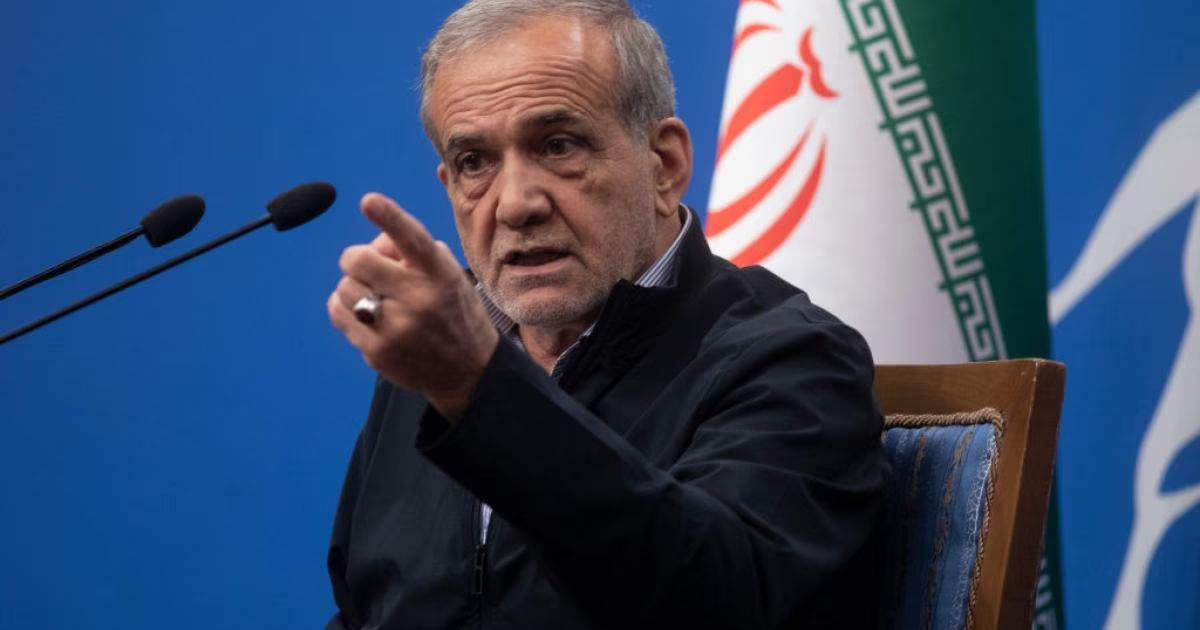







Iranian President Masoud Pezeshkian reiterated that the Islamic Republic does not aim to acquire nuclear weapons in any form. Pezeshkian clarified that this stance is based on a religious fatwa and a firm ideological position announced by Supreme Leader Ali Khamenei, noting that the political leadership does not have the authority to override these religious constants.
These statements coincide with the start of the third round of indirect negotiations between Tehran and Washington in Geneva, Switzerland. These talks, mediated by the Sultanate of Oman, aim to break the deadlock in the nuclear file and find a consensual formula to end the crisis that has persisted for years.
In the context of military warnings, the Iranian President stressed that any American aggression against his country would be met with a firm and strong response. He indicated that targeting the leadership would not weaken the state, but would lead to the emergence of new generations capable of managing and protecting the country, emphasizing the importance of national unity in confronting external threats.
For his part, Iranian Foreign Ministry spokesman Ismail Baqaei stated that the Iranian delegation is entering this round with full seriousness and flexibility aimed at achieving tangible results. Baqaei affirmed that the agenda of the current talks is strictly limited to technical nuclear issues and the lifting of economic sanctions imposed on Tehran.
On the sidelines of the negotiations, Omani Foreign Minister Badr Al Busaidi held a meeting with the Director-General of the International Atomic Energy Agency (IAEA), Rafael Grossi. The meeting addressed the technical aspects of the Iranian nuclear file, in addition to reviewing new ideas and proposals on the negotiation table between the Iranian and American sides.
The Omani Ministry of Foreign Affairs affirmed in a statement the importance of the role played by the international agency in ensuring transparency and credibility during the negotiation process. The statement indicated that Omani mediation seeks to provide a suitable environment for dialogue that ensures the governance of technical procedures related to Iranian nuclear activities.
The current round of talks was preceded by intensive meetings between the Omani minister and his Iranian counterpart, Abbas Araghchi, to discuss new Iranian proposals. Although the details of these proposals were not disclosed, informed sources indicate that they include flexibility in some technical aspects in exchange for clear economic guarantees.
It is worth noting that the current negotiation path resumed in Muscat early this February, after a period of hiatus due to military escalation in the region last year. The current Geneva round is the third in a few weeks, reflecting the parties' desire to avoid sliding into a comprehensive confrontation.
The United States adheres to firm demands, including the complete cessation of uranium enrichment and addressing the issue of Iran's ballistic missile program. In contrast, Tehran rejects these conditions and considers them an infringement on its national sovereignty, accusing Washington of using the nuclear file as a pretext to interfere in its internal affairs.
The negotiation scene in Geneva remains open to all possibilities, oscillating between the desire to reach an agreement that lifts sanctions and the readiness for military options. Regional and international powers are cautiously monitoring the results of this round, given its direct impact on the stability of the Middle East and its balance of power.
Our Supreme Leader has previously declared that we will never possess nuclear weapons, and even if I wanted to pursue that path, I would not be able to do so from an ideological perspective.
Share your opinion
Pezeshkian confirms Tehran is not seeking nuclear weapons as third round of Geneva negotiations begins