







Since the beginning of 2025, the Middle East has witnessed radical transformations that have transcended traditional tensions, pushing the region into a comprehensive reshaping of its security and political equations. The occupation government, led by Benjamin Netanyahu, is at the forefront of this scene through an unprecedented escalation in rhetoric directed against Tehran, moving beyond conventional deterrence policies towards demanding a fundamental change in the regional rules of the game.
This escalatory rhetoric has been accompanied by field military movements and long-range aerial maneuvers, aimed at sending clear messages about the readiness of the Israeli air force to reach Iranian depth. Through these movements, Israel seeks to prevent Tehran from approaching the nuclear threshold, which places the entire region on the brink of an explosion that could be triggered by any miscalculated spark.
In contrast, Iran has not remained a mere spectator, but has established a counter-deterrence equation by showcasing its advanced missile capabilities and intensifying naval maneuvers in strategic waterways. Tehran has also activated its regional alliance network to ensure that any military strike targeting it will not be confined to a single geography, but its effects will extend to multiple fronts.
As for the American position under Donald Trump, it seemed to be trying to balance absolute commitment to Israel's security with avoiding a slide into a comprehensive and exhausting war. Washington realizes that engaging in a wide conflict with Iran could weaken its ability to confront rising Chinese competition and the ongoing complexities of the Russian-Ukrainian issue.
As a result of these calculations, the US administration moved to strengthen air defenses in the region and deploy strategic naval units in the Gulf waters, while maintaining a gray area between deterrence and direct involvement. This area is inherently dangerous, as it keeps all possibilities open for any field escalation that could spiral out of control at any moment.
With the transition to the second half of 2025, the confrontation shifted to the level of indirect operations and intense cyber warfare between the two parties. The Syrian arena witnessed successive Israeli strikes, coinciding with an increase in the intensity of clashes on the southern Lebanon front between the occupation forces and Hezbollah, creating a low-intensity but high-risk state of war.
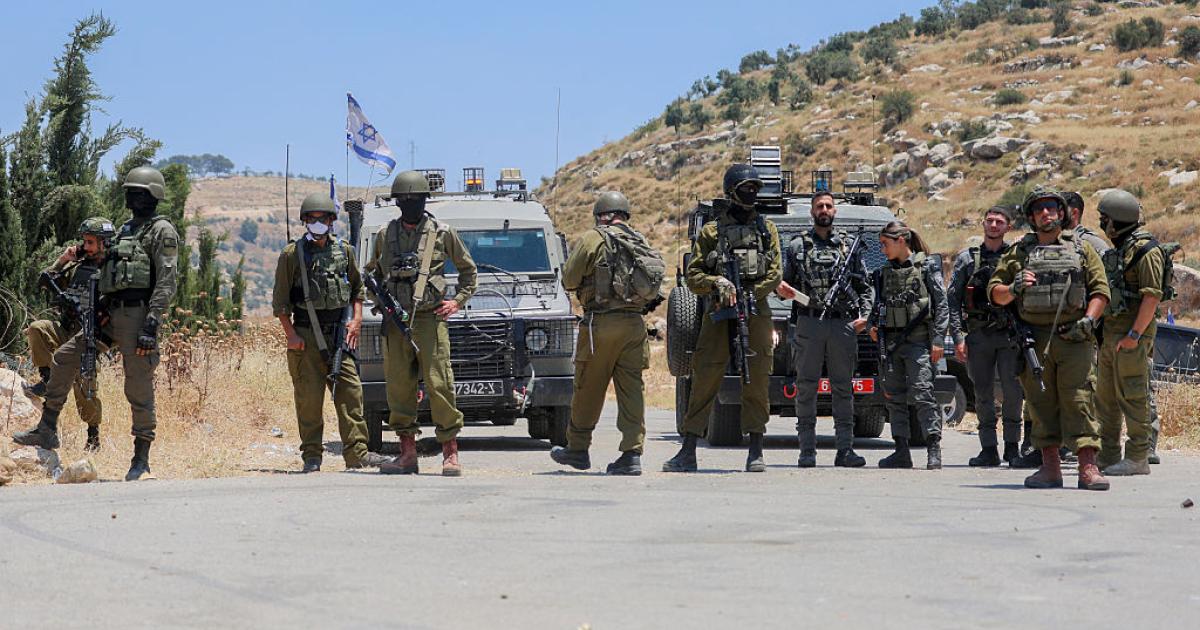
Palestine returned to be at the heart of this complex equation, not only as a daily arena of conflict, but as a vital part of the region's mutual deterrence system. The occupation authorities tried to link the field escalation in the West Bank and Gaza Strip to what they described as 'Iranian incitement,' in a transparent attempt to legitimize the expansion of their military operations against Palestinians.
For their part, Palestinian resistance factions believe that any major confrontation in the region will not leave Palestine isolated, but rather it will be an integral part of its repercussions. With the advent of 2026, mutual statements began to take on the character of psychological and political preparation for the possibility of an imminent direct confrontation between the warring parties.
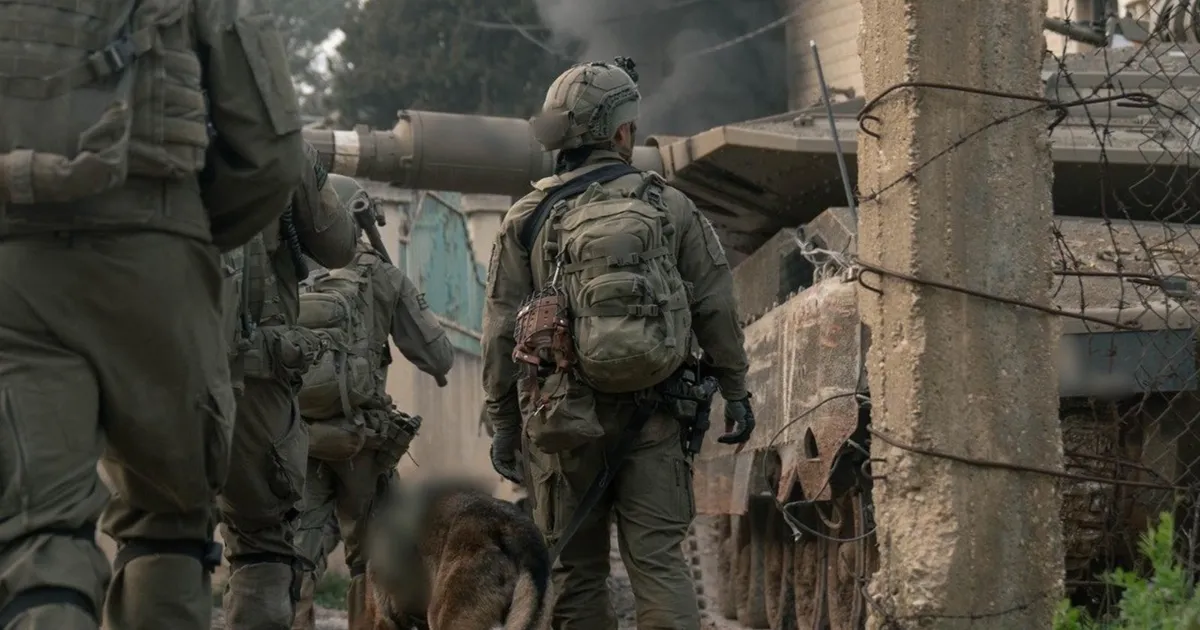
Field data indicates an intensification of Israeli aerial maneuvers and the deployment of additional American defense systems, countered by an explicit Iranian declaration that the response to any targeting will be direct. This scene places the Israeli entity before a harsh internal test, especially with the possibility of opening simultaneous fronts extending from the Gulf to the Lebanese and Palestinian borders.
Palestine lives in these historical moments in the eye of the storm, facing the challenge of political marginalization in the corridors of international diplomacy preoccupied with the nuclear file. At the same time, field escalation imposes itself strongly, where any security event in the occupied territories turns into a political and military message within the conflict of major axes.
The greatest danger lies in the occupation's exploitation of the regional state of emergency to implement annexation and settlement plans and accelerate the Judaization of Jerusalem away from international attention. Observers fear that a war with Iran could become an ideal cover for redrawing the demographic and geographic map in the West Bank and imposing new realities that will be difficult to reverse in the future.
On the international level, Russia emerges as a beneficiary of the confusion in American policy in the region, despite its unwillingness for a comprehensive explosion that threatens its interests in Syria. Meanwhile, China maintains extreme caution, placing the security of energy lines and global trade at the top of its priorities, making the Middle East an arena for the intersection of great power interests.
The possibility of an explosion remains strong due to the intensity of military mobilization and continuous inflammatory rhetoric, where any tactical error could lead to a comprehensive confrontation. The most dangerous aspect of this stage is the region's habituation to the idea of war and the transformation of threats into daily reality, which prepares the political environment to accept conflict as a natural and sole option.
In conclusion, Palestine stands between the hammer of the occupation, which invests in regional chaos, and the anvil of conflict, which could open multiple fronts without clear political guarantees. Nevertheless, the certainty remains that any future arrangements for the Middle East will not be complete without a just solution to the Palestinian issue, which remains the core of stability or explosion in this region.
Any reshaping of the Middle East will not be complete without Palestine, because the core of the crisis in this region has always been linked to this land.

Share your opinion
Palestine in the Eye of the Storm: Scenarios of the Major Confrontation Between the Occupation and Iran Until 2026