







Dr. Imtanes Shihadeh: Protest is not just anger, but an act of empowering society and a message of refusing submission and fear
Amir Makhoul: We need organized collective action alongside popular initiatives, as together they form the power of change
Sawsan Surour: What is happening can no longer be reduced to numbers but to real suffering, especially among bereaved families
Dr. Thaer Abu Ras: The Palestinian society inside has woken up and said: Enough, we want a solution to the cancer of violence and crime
Wadie Awawdeh: There are attempts to drown us in the search for safety instead of focusing on the core issue
Wadie Abu Nassar: Protest is important but not enough without strengthening education and awareness to reduce violent crimes and crime
Exclusive to Al-Quds
The national day of disruption, called for by the families of murder victims in the 1948 territories last Tuesday, represents an additional development in the course of popular protests against the escalation of crime and violence, in parallel with official neglect from the Israeli government.
According to writers, analysts, and specialists in separate interviews with "Al-Quds," crime in Palestinian society within the 1948 territories is not merely a disturbing social phenomenon or numbers that dominate headlines, but has transformed into an existential crisis threatening personal security, economic stability, and the cohesion of the entire social fabric. Amidst an unprecedented rise in the number of victims and the expansion of violence, there is a growing general feeling that society stands at a crucial crossroads: either surrender to the reality of blood and fear, or move towards organized collective action that forces real change.
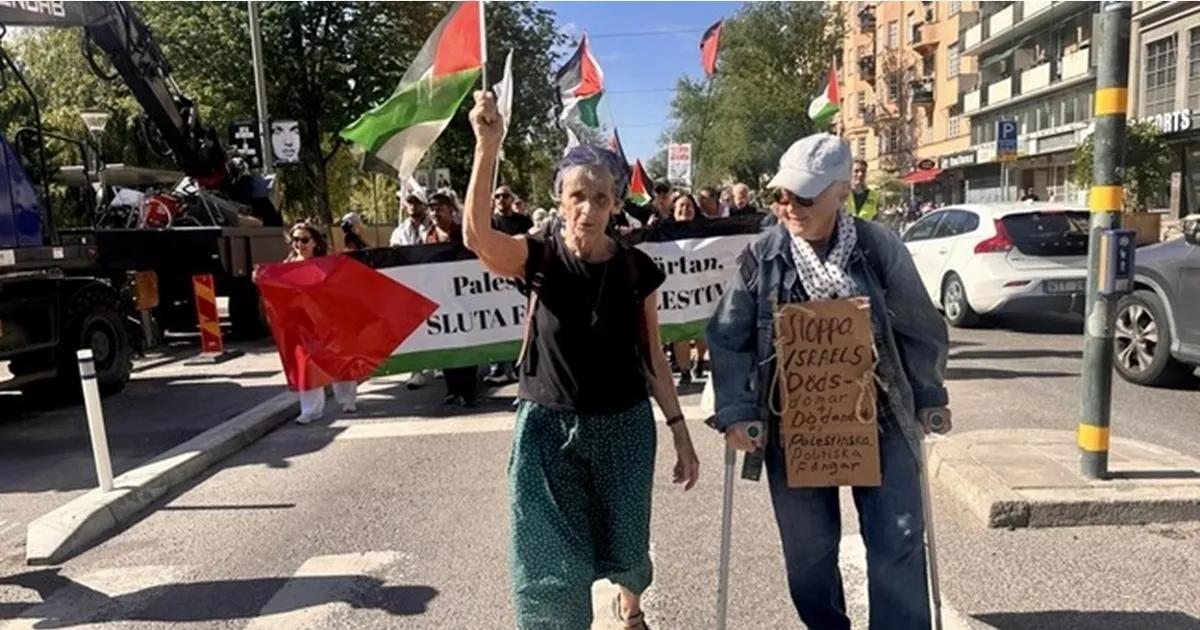
In this context, popular protests emerged as a pivotal moment in the confrontation; not just as a cry of anger, but as a practical step aimed at moving the issue from the margin of suffering to the center of action. These movements carried a dual message: direct pressure on the Israeli government to assume its responsibilities, and an internal message confirming that society is no longer willing to remain silent or coexist with the imposed reality of crime.
Analyses indicate an expanding circle of accusation to include the ruling establishment and law enforcement agencies, amidst accusations of deliberate negligence, and even complicity, in light of glaring gaps in dealing with crime between Arab and Jewish communities. As calls for protest and escalation to civil disobedience increase, a broad popular movement is crystallizing, led by victims' families and various civil segments, in an attempt to secure safety and impose a change in policies.
Political Crime.. A Tool to Fragment Society
Dr. Imtanes Shihadeh, Director of Israel Studies Programs at Mada al-Carmel, believes that the phenomenon of crime and violence in the interior has clearly emerged over the past ten years within Arab society, under the patronage and complicity of the ruling establishment, especially the police.
He points to common interests between criminal gangs and some official bodies, whose goal is to fragment Arab society, weaken it, and spread fear among its ranks.
Shihadeh adds that part of these outcomes leads to emigration, as a significant percentage of middle-class individuals, including youth, intellectuals, and teachers, now see that personal security is no longer tolerable, and economic development has become difficult due to the spread of "protection money" and the control of criminal gangs, posing a direct threat to life and stability.
Shihadeh emphasizes that this phenomenon is a form of punishment directed against Arab society, and part of what can be described as social and economic genocide. While the Palestinian people in Gaza are subjected to a war of extermination, and the West Bank witnesses continuous occupation, settlement expansion, and incursions and attacks by settlers, Palestinians in the interior face the terrorism of criminal gangs.
Shihadeh stresses that the central address of responsibility is the police, who must bear their full responsibilities, asserting that without a clear political decision, the phenomena of crime and violence cannot be seriously addressed.
Protest as an Act of Empowerment, Not Just a Cry of Anger
Shihadeh adds that protests represent part of empowering society, and they are a cry of anger expressing rejection of this phenomenon. He says that they aim first to influence the ruling establishment through demonstrations and strikes, which may make it fear the accumulation of organized political action, and second, to send an internal message to Arab society about the necessity of staying away from this path, rejecting involvement in it, and not succumbing to fear of violence and crime gangs.
Shihadeh emphasizes that the phenomenon is very disturbing and dangerous, and threatens the cohesion of Arab society in the interior, both socially and economically, which necessitates a collective reaction from various components of Palestinian society in the interior, including civil society institutions, the Follow-up Committee, and trade unions, to confront this escalating phenomenon.
A Qualitative Leap in the Path of Struggle
Amir Makhoul, a specialist in Israeli affairs, says that the national day of disruption is effectively a blessed and necessary step.
He adds that there is a role for organizers and organizations, while the importance of the participation of new sectors, such as doctors and universities, stands out, which indicates broader prospects for future work, as he affirmed that this work is cumulative, as organized crime cannot be eliminated or policy changes imposed on the state in a short breath.
Makhoul points out that there is a broad struggle led by the Follow-up Committee and the political movement in general, referring to the High Follow-up Committee for Arab Citizens in Israel, as the entity framework for this society, which has been following this file for many years and seeks to change policies or impose their change.
Makhoul confirms that the disruption constitutes a qualitative leap, as happened days ago in the disruption march towards Jerusalem and the office of Prime Minister Netanyahu.
He says: "We stand by and support the movement we have witnessed recently. Our people in the interior need both: organized collective action and popular initiatives."
Escalating Popular Disobedience
Makhoul believes that there are hundreds of popular initiatives in every town, every residential gathering, and every city, playing a truly enormous role, and it is these, alongside the Follow-up Committee, that have kept the flame of struggle alive throughout the past years. This latest launch also came after the qualitative act of disobedience carried out by shop owners in Sakhnin, led by Mr. Ali Al-Zubaydat about two weeks ago, which stirred the street and launched a widespread popular solidarity operation, not just mere solidarity or political adoption.
He adds: "Today we are witnessing a major transformation in this context, towards multiple forms of disobedience against policies, leading to their change. However, we do not expect the Israeli government to change its policies, as it is not interested in doing so in the first place, because crime is part of its policy and not outside it. There is a political function for the crime system, which is to maintain right-wing rule, weaken society, and strike at the cohesion of Palestinian society from within, a policy applied to sabotage Palestinian society wherever it exists, not only in the interior."
The Importance of Protest for Policy Change
Makhoul adds: "Days ago, we heard about the scandal of smuggling goods into Gaza with the participation of the brother of the head of the Shin Bet, but more dangerous than that is the flow of tens of thousands of dangerous narcotic pills used to sabotage Palestinian society wherever it is, with the aim of undermining it, facilitating policies of displacement and ethnic cleansing, and distancing it from politics and work.
Makhoul believes that the crime file constitutes a top priority, with the need for organized collective action and spontaneous action, along with the importance of protesting every incident that occurs in any town, as well as supporting and strengthening popular work and popular initiatives, while emphasizing that all these paths converge in one path, which is the path of popular struggle to change policies, and this is the basis.
Makhoul explains that it is natural, given that the Palestinian people within the 1948 territories are a national group in their land and homeland, to have their own entities, and for all activities to support this basis, and for the Palestinian Arab masses to lead this struggle, whether at the national level, or through the Follow-up Committee, or through various popular bodies and initiatives, and for them to determine their own destiny.
He emphasizes the importance of organizing victims' families and their involvement in activities, which was clearly evident in the recent disruption actions, as this organization represents a moral voice that adds an important moral dimension to political work. Therefore, we need integration between all these efforts.
Makhoul explains that the Palestinian people in the occupied interior face real Israeli fascism, and need the support of all concerned forces, including progressive Jewish forces, not out of pity or courtesy, but in order to confront fascism and impose policy changes on the Israeli government.
Numbers Breaking Records and Escalating Bloodshed
For her part, journalist and critic of the political scene in Israel, Sawsan Surour, asks how many victims of crime have there been in Palestinian society in the interior?! This question is asked by every journalist from the Palestinians of the interior every morning!
She says: "So far, the number of Palestinian Arab victims in Israel has reached 45 killed since the beginning of this year, while the number of victims at the same time last year was 31, knowing that last year was burdened with the blood of victims and the heavy weight of rampant crime, reaching an unprecedented level."
She clarified: "252 victims is a heavy number that breaks the previous record set in 2023 with 244 victims, making 2025 the bloodiest year in the history of Palestinian society within the 1948 territories, and we are still in the middle of the second month of this year, so how many will the list of victims close with?!"
Surour adds, for comparison only, 66 Jews were killed in 2024, and 38 Jews in 2023, knowing that the number of Jews in Israel is about four times that of Arabs.
Israeli Police Negligence in Confronting Crime
Surour confirms that, according to data, the Israeli police solve 65% of murder cases in Jewish society, while this percentage does not exceed 20% in Arab society, all of which are data that cast their harsh and dire shadows on the reality and existence of Palestinians in the country.
Surour believes that the Israeli police's negligence in confronting the escalation of crime in Palestinian society in the interior is deliberate, and Prime Minister Benjamin Netanyahu bears responsibility for it, as he almost never speaks about the phenomenon of crime in Palestinian society, but he touched upon it, days ago, by praising Police Minister Itamar Ben-Gvir following the police campaign carried out in the village of Tarabin Al-Sane in the Negev and the killing of citizen Muhammad Hussein Al-Tarabin by police gunfire.
She points out that according to data published by the Taub Center for Social Policy Studies in "Israel," until 2015, the ratio of murder crimes in Arab society to Jewish society was 4 Arab victims for every one Jewish victim, and this ratio rose in 2023 to 13 Arab victims for every one Jewish victim, and rose in 2024 to 14 Arab victims for every one Jewish victim. After these numbers, will silence remain the master of the situation for Palestinians in Israel? The answer, of course, is no, and this is what actually happened.
Surour says that because the public discourse among Palestinians in "Israel" has recently taken a remarkable turn in dealing with crime, it no longer focuses on the number of dead, and crime is no longer reduced to a daily number or an annual toll only. Bereaved and affected families, civil bodies, and activists have launched a remarkable social movement, playing a prominent and advanced role compared to official institutions and elected leaders, which has brought about an important transitional development in dealing with crime, especially if opportunities, fields, and capabilities are provided to them and to the social movement in finding a lifeline.
Surour continues, from the cry of pain of businessman Abu Ibrahim Ali Zubeidat, which gave birth to the dignity uprising and the rejection of extortion in Sakhnin, to the almost daily demonstrations or activities condemning the spread of crime and the compliance of official leaders with these pressures and their submission to the request to unify Arab parties and not continue the fragmentation among them and to re-form the Joint List for the sake of the supreme goal of protecting people, a step that, it seems, was necessary, and left no opportunity for any opponent to refuse.
Participation of Bereaved Families Translates the Pains of Crime
Surour emphasizes that the undeniable truth is that the steps taken by the National Committee of Heads of Arab Local Authorities, and the Follow-up Committee for Arab Citizens in "Israel," against crime and violence have proven ineffective in isolation from the social movement, which is led by the sighs and pains of bereaved families and orphans of crime, and those physically, psychologically, and economically affected, who can translate the losses of crime not only in numbers but in real pains and suffering.
Surour believes that the days of disruption witnessed by the country last week were important, but they attracted a very fragile segment from all over the country, not exceeding a few thousand, as this activity succeeded in attracting some Hebrew media outlets, after coverage was previously limited to Arab media.
She described it by saying: "The feeling and reality confirm that what happened in terms of activities was just a summer cloud that passed."
Surour clarifies the necessity of continuing and escalating the non-partisan civil social movement so that its impact remains noticeable and influential, both on the ordinary citizen and on decision-makers in the Israeli government.
A State of Emergency Before a General Strike
Surour considers the Follow-up Committee's decision to call a general strike for three days to condemn the spread of crime a blessed step, "but until the date of this strike (supposed to start two months from now), a state of emergency must be declared immediately, while continuing to organize and implement disruptions, demonstrations, and unifying activities, if not daily then weekly, leading to civil disobedience, if necessary, in order to make the struggle successful and not lose the compass that has long pointed and always points to the radical solutions that must first come from the Israeli government," according to her.
The Peak of a Movement Not Seen in the Interior for 25 Years
Political analyst Dr. Thaer Abu Ras believes that the national day of disruption is the culmination of several diverse activities in the interior over the past two weeks, and this is the central point in his opinion.
He adds: "We are facing the peak of political action or political mass activity that we have not seen for at least 25 years in the Palestinian interior. There is a general feeling that society has woken up and said: Enough, we want a solution to the cancer of violence and crime that has been spreading within society for many years."
Abu Ras emphasizes that under the current Israeli government, the data has reached numbers that people can no longer accept; the period between 2022 and 2023 witnessed an increase of more than 200% in murder victims, and from 2023 until today there has been a continuous and significant increase in the number of victims. Even in 2026, during the first month or month and a half, the number of deaths and shooting incidents reached unbelievable levels.
The Most Violent in the World
Abu Ras points out that if Arab society in the interior were an independent state, it would be among the most violent countries in the world, even more than countries with a bad reputation in this field such as Colombia or Mexico, for example.
Abu Ras believes that this mass organization alone is the most prominent event, and what helped it succeed is that, for the first time, it did not come from the leadership and was not imposed by political elites on society, but emerged from the womb of Arab society itself; those who practically initiated the first strike, and then the Sakhnin demonstration, which was the largest in the history of the Arab masses, were actually from the merchant class in Sakhnin, who protested against the phenomenon of "protection money" in Arab society, and against the state's inability or unwillingness, as well as the Israeli police's, to deal with this phenomenon.
An Election Year Changes the Rules
Abu Ras asked: Will there be continuity for this momentum? And will it be exploited to impose the crystallization of a real action plan on the Israeli government to deal with this issue, especially since we are in an election year, which is the most important variable?
Abu Ras says: "Being in an election year means that there are listening ears in the Israeli government and the Israeli political elite, which may allow the possibility of taking some step in the end."
He also points out that the Israeli government is not interested in the Arab masses coming out to vote in the upcoming elections, and it knows that the issue of violence provokes these masses, and may be an incentive for them to go to the polls, and perhaps this is what may push the Israeli government to feel the need to do something, so that the Arab masses do not use this file against it in the next elections.
A Strategic Threat Requires a Strategic Response
Israeli affairs specialist Wadie Awawdeh says that the Palestinian people in the occupied interior face a strategic threat, and therefore the reaction must be strategic from the Palestinian Arabs in "Israel."
Awawdeh emphasizes the need to prepare an action plan, a persistent plan, and a long breath, and to search for partners and allies on the Jewish side.
A Complicit Government Setting the House on Fire from Within
Awawdeh adds: "We are facing a government that is insensitive, blatantly and flagrantly complicit with criminal gangs against us, in an attempt to set the house on fire from within, and distract us from the core political issue, whether local or the Palestinian issue related to our people, and drown us in issues of searching for safety and security, which is the basic and primary right of every citizen and every human being."
Awawdeh stresses the need for pressure and continued protest. Palestinian Arab society in "Israel" stands before a major strategic challenge that threatens all that has been achieved previously, and that threatens the Palestinian past, present, and future.
Silent Displacement Through Spreading Despair
Awawdeh explains, describing it: "It threatens our past because it squanders what we have achieved in terms of steadfastness, development, and preservation of identity and its flame; it corrupts our present because it occupies us with side issues that should not have overshadowed our priorities, and distances us from fundamental and core issues; and it threatens our future because it opens the door to emigration, and perhaps that is the intended goal, which is to push young people to despair and emigrate from here."
Awawdeh adds that this is part of this government's vision to resolve the conflict with Palestinians through displacement, including silent displacement, by spreading despair and hopelessness and so on.
Awawdeh emphasizes that the response must be a long breath, perseverance, broad participation, and unity of ranks, based on the principle that what happens today to my neighbor may happen tomorrow in my home. And whoever thinks that he will be immune from these situations, and does not intervene or participate in the protest, is mistaken.
Awawdeh concluded by saying: "Unfortunately, political and civil activities and their capabilities in mobilization, rallying, and dealing with this file need a lot of support and a lot of reform. The discourse has become ossified, the mobilization language is weak, and there is no clear action plan or integrated vision. In fact, I doubt the existence of an action program and a clear vision among the leaders, as a result of obsolescence, political corruption, and the decline of political work, among other things."
Official Indifference Fuels Crime
For his part, political analyst Wadie Abu Nassar confirms that the escalation of crime within Arab society in the interior is dangerous and infuriating, and causes great concern, as there is no longer a safe place, nor a feeling that conditions are improving, but on the contrary, there is a sense of continuous decline.
He points out that the primary responsibility lies with the state, especially the Israeli government, which seems not only silent, but deals with a degree of indifference, as if it is fueling crime instead of seriously and effectively combating it.
Abu Nassar adds that despite the contribution of the majority of our community members to protesting the rampant crime through various means, the government and state institutions still ignore these movements, and do not play their role in fighting crime as they do in Jewish society.
Strengthening the Educational System Limits the Spread of Crime
In contrast, Abu Nassar stresses the need not to overlook the existence of an educational imbalance among some members of society, for while acknowledging the state's shortcomings, it must be noted that Arab citizens have suffered from racial discrimination since the establishment of the state, and this discrimination has significantly worsened in recent years.
Abu Nassar emphasizes that what is required is not limited to protest, despite its importance, but extends to strengthening education and awareness starting from the family and school, which contributes to limiting the spread of crime within society.
Abu Nassar believes that the matter requires great efforts, especially under the right-wing government that does not respond to strikes, demonstrations, and demands, pointing out the importance of seeking to internationalize the issue by urging influential international parties, especially the United States of America and diaspora Jews, to pressure the Israeli government to assume its responsibilities in this regard.


Share your opinion
Day of Disruption Inside.. A Loud Cry to Stop Police Complicity with Crime