







The issue of disarming the Hamas movement has once again taken center stage in the international political arena, with the current US administration presenting it as a fundamental condition for moving towards the reconstruction of the Gaza Strip and arrangements for what is known as 'the day after'. This move comes amidst sharp divergence in visions among the concerned parties, as Washington seeks to impose a new security reality that ensures an end to military threats emanating from the Strip.
Political observers believe that the Hamas movement does not definitively close the door to discussing the arms file, but it categorically rejects doing so according to Israeli dictates or without international guarantees and mutual commitments. Informed sources clarified that what is currently being proposed does not rise to the level of serious negotiations, but rather reflects an Israeli desire to strip the resistance of its power while continuing to violate ceasefire understandings.
In a related context, media reports revealed that Tel Aviv informed the US administration of the necessity of carrying out an additional and extensive military operation in the Gaza Strip in the coming period. The Israeli government considers this military move essential for transitioning towards the vision adopted by President Donald Trump's administration to reshape the security situation in the region in general.
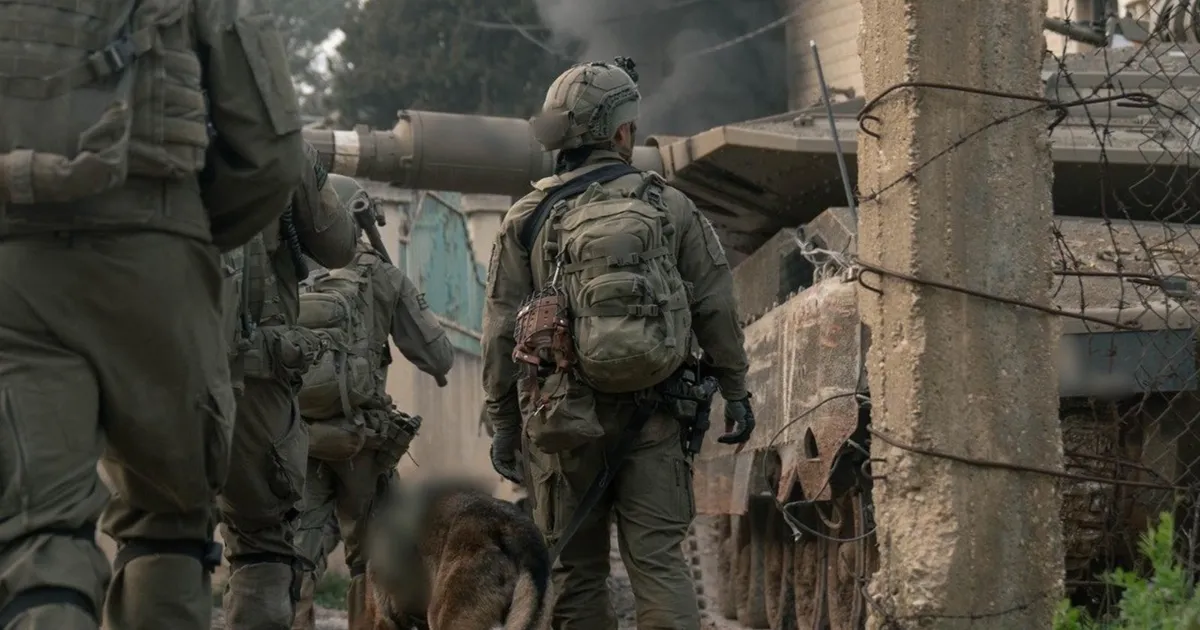
Field assessments indicate that the war, ongoing for nearly two years, has led to a tangible depletion of the military capabilities of Palestinian factions, both in terms of equipment and the complex network of tunnels. Despite the occupation army's control over large parts of the military infrastructure, the resistance still holds onto its weapons as a key negotiating tool to ensure the achievement of political gains.
For their part, experts in Israeli affairs believe that the demand for disarmament lacks clear operational definitions, especially regarding the classification of 'heavy weapons'. It is believed that this ambiguity is intentional to be used as a pretext for evading the transition to advanced stages of truce agreements, which include military withdrawals and the full opening of crossings.
A striking contradiction emerges in Israeli behavior, as reports speak of a tendency to arm local militias within the Strip to ensure loyalty, while simultaneously demanding the disarmament of factions. This contradiction raises doubts about the true objectives of security demands, and makes the idea of a 'demilitarized Gaza' merely a tool for political obstruction rather than a realistic security approach.
On the American side, disarmament represents the cornerstone of the Trump administration's Middle East plan, with Washington recognizing the difficulty of achieving this through pure military force. The US administration seeks to link this file to a long-term political path that includes changing the governance structure in Gaza and introducing international or regional forces to ensure stability.
Proposed drafts from Washington indicate the possibility of accepting a formula that allows factions to retain only light weapons, in exchange for handing over all strategic weapons such as long-range missiles and anti-tank projectiles. This vision aims to gradually reduce Hamas's military influence and link it to a timeline associated with reconstruction phases and political recognition.
Diplomatic sources confirm that any disarmament scenario will not be immediate or comprehensive as some parties promote, but will be subject to complex containment mechanisms. The success of these mechanisms is linked to the ability of mediators to offer security and political alternatives acceptable to the active Palestinian forces on the ground, away from the logic of military surrender.
In light of these facts, the disarmament plan appears more like a negotiating leverage used by each party to improve its terms in any future agreement. Hamas's refusal of gratuitous disarmament is met with Israeli insistence on continuing military pressure, leaving the crisis stagnant without radical solutions in the near future.
In conclusion, the issue of Gaza's weapons remains subject to changes in the balance of power on the ground and the seriousness of the international community in imposing a comprehensive settlement that ends the occupation. Without a real political horizon that guarantees Palestinian rights, any attempt at disarmament could turn into a spark for igniting new rounds of armed conflict in the region.
Hamas does not reject in principle discussing the arms file, but it rejects disarming under Israeli conditions and without mutual commitments.


Share your opinion
Gaza Disarmament Between American Vision and Israeli Intransigence: A Political Settlement or a Prelude to a New Round of Escalation?