







News Analysis
The "Hind Rajab Foundation" (HRF) has filed a legal complaint with the competent authorities in the United States against Adi Carney, an Israeli citizen and former sergeant in the 603rd Combat Engineering Battalion of the Israeli army, demanding a criminal investigation against him on the basis of accusations related to committing war crimes and acts "amounting to genocide" during the Israeli war on the Gaza Strip.
This step comes within an escalating path followed by the Foundation in prosecuting former Israeli military personnel in more than one country, based on the principle of activating judicial jurisdiction in countries whose laws allow the prosecution of those accused of serious international crimes, especially in cases of suspected crimes against humanity, war crimes, or genocide. According to what the Foundation announced, the complaint filed in the United States is not the first against Carney, as it was preceded by complaints in several jurisdictions around the world, including Peru, where – according to the Foundation – a formal criminal investigation was opened against Carney on charges of genocide. It also indicated that it had submitted additional files in other countries, as part of what it described as a strategy of "activating jurisdiction wherever the accused is found," so that his movement outside Israel becomes fraught with potential legal procedures, which may include investigation, summons, or even arrest.
The American complaint acquires special importance because Carney is currently in the United States, which – according to the Foundation – opens the door for the activation of American jurisdiction, and gives the case an urgent character, especially with its announcement that Carney is scheduled to give a public speech at Boston University this evening. This detail goes beyond being a procedural piece of information; it places the case at a sensitive intersection between law and politics, where hosting a former military figure becomes a public test of the meaning of "accountability" in the American public sphere, not in courtrooms alone.
Observers note that the move of the battle to the American arena is not only linked to the weight of the United States as a political power, but also to the nature of the internal debate within it about the war on Gaza, as universities have become a central stage for the struggle over narrative and legitimacy. In this context, the complaint – even before it turns into a full judicial procedure – becomes a political and legal message at the same time: a message that says that the time for dealing with accusations as an "ethical disagreement" or a "point of view" may recede in favor of turning them into litigable legal files.
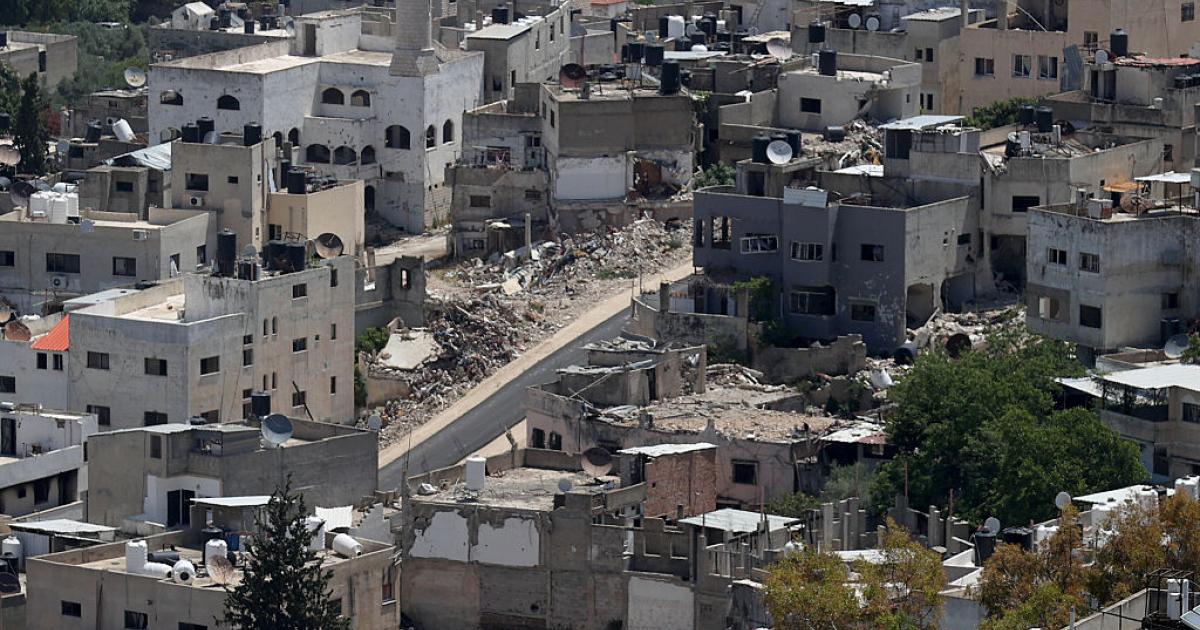
The "Hind Rajab Foundation" says that its files include materials it considers "evidence" or "indicators" of Carney's involvement in military operations during the war on Gaza, and believes that these operations were not just ordinary military participation, but were linked to a broader context of widespread destruction that affected residential areas and civilian infrastructure, amid increasing international accusations against Israel of committing grave violations of international humanitarian law. The Foundation also stresses that it targets "individual accountability" and not just government accountability, considering that impunity – in its view – begins when the boundaries between political decision and field implementation are blurred.
However, this type of action raises a deeper problem that goes beyond the name of the accused: the legal battle against specific individuals reflects a shift in human rights pressure tools, but at the same time reveals the limitations of the international system, which often falters in the face of the political calculations of major powers. Even when serious accusations such as genocide and war crimes are available, the most sensitive question remains: Do national judicial systems have the will to open files that might anger powerful allies? Or will international law remain in many cases more of a moral language than an executive mechanism?
On the other hand, others believe that repeated filing of complaints in several countries is not just "distraction," but a calculated strategy based on a simple principle: if doors are not opened in one capital, they may be opened in another. Hence the importance of the "Peru experience," where the Foundation says that a formal investigation has already been opened, indicating that some judicial systems may be more amenable to interacting with these files than others. This approach is based on the idea that international justice, when it falters in major institutions, may find alternative paths through national courts, albeit slowly.
In the United States, observers expect the case to spark widespread debate, not only among legal professionals, but also within universities and civil institutions, where the question of justice intertwines with the question of freedom of expression and the limits of hosting. Between those who see hosting Israeli military figures as part of "open debate," and those who consider it normalization with practices accused of committing international crimes, the political and moral gap widens. The presence of the accused on American soil also adds a practical dimension that cannot be ignored, because the case – if it proceeds – will test the limits of American law in dealing with crimes committed outside its borders.
While no official comment has yet been issued by the American authorities regarding the complaint, the Foundation's move reflects a growing trend to transform the war on Gaza into a multi-track international accountability file, where the confrontation is not limited to political statements or human rights reports, but extends to the courts. Ultimately, the case may not be merely an attempt to condemn a specific person, but an attempt to redefine the larger question: who holds accountable, and how, and where, when the destruction becomes so widespread that it exceeds the world's ability to merely condemn verbally?
In this context, the American complaint appears to be part of a broader shift in how the conflict is approached; instead of relying on major international initiatives that may falter due to vetoes or political balance calculations, active institutions are moving to open parallel judicial paths, hoping that the accumulation of cases and the overlap of jurisdictions will lead to the creation of a new legal reality at some point. Between the success or failure of these endeavors, the constant remains that the war on Gaza is no longer fought with weapons alone, but is also managed by law and documents, and by a narrative battle that seeks to establish the meaning of crime and define the meaning of responsibility.

Share your opinion
"Hind Rajab Foundation" files complaint in the United States against former Israeli soldier on charges of war crimes and genocide in Gaza