







News Analysis
Politico magazine surveyed the opinions of 17 leading foreign policy experts, diplomats, and academics from around the world, in an attempt to answer a pressing question: What remains of the global order led by the United States since the end of World War II?
This article is an analytical summary of what was reported in an extensive 18-page investigation published by Politico on Tuesday, re-deconstructed and its key findings extracted, in light of the tumultuous transformations the world is witnessing with Donald Trump's return to the White House, and the accompanying political earthquakes that shook the foundations of Western alliances and the rules-based international order.
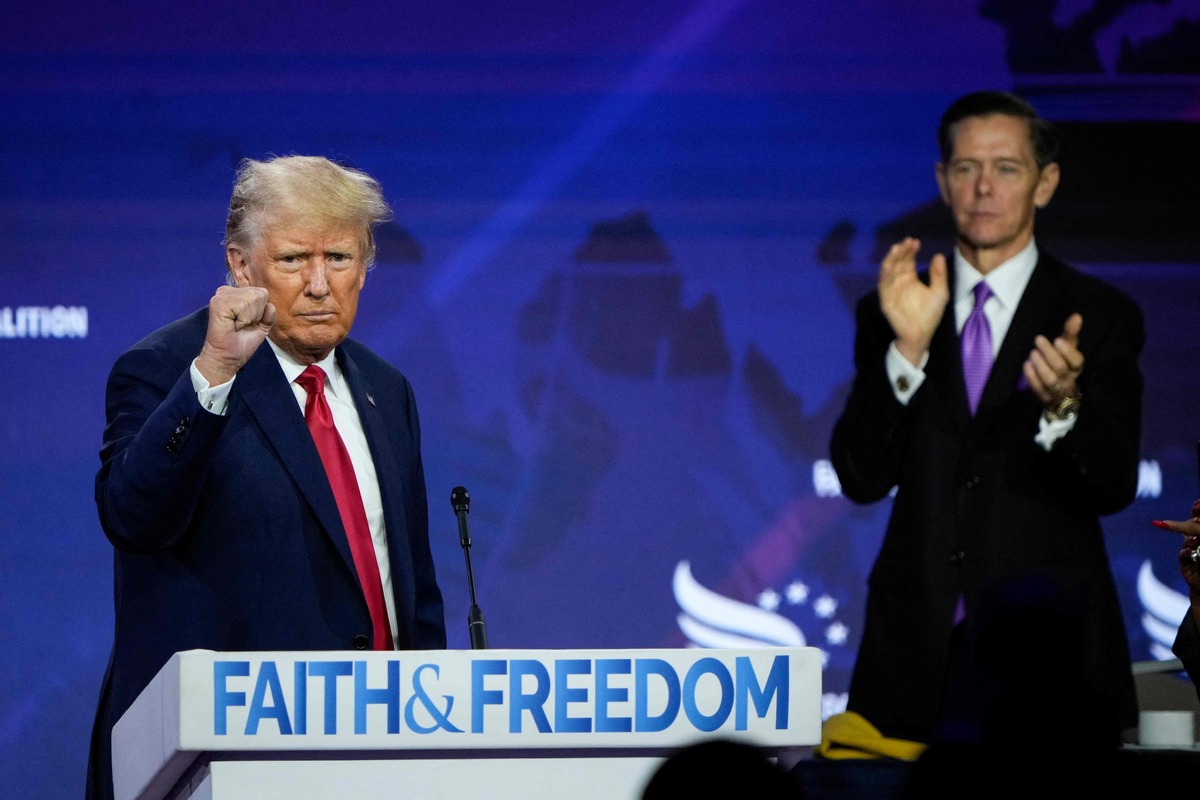
The discussion is no longer about whether the international system is eroding, but about the fact that this system has entered its death throes. Trump's return was not merely a change in style or rhetoric, but revealed a structural shift in the position of the United States itself: from a guardian of the global order to a power that treats it as a burden, and even a tool that can be dismantled and reshaped according to the logic of power and immediate self-interest.
From Guarantor of the Order to Source of Threat
The moment of the American threat to take control of Greenland – despite the subsequent retraction – constituted a deep symbolic shock. The issue was not in the execution, but in the principle: for the first time, an American president openly threatened to use force or blackmail against the territory of an Atlantic ally. At this point, many Western capitals began to realize that the American umbrella was no longer an absolute guarantee, and that the idea of a "safe ally" had become questionable.
At the Davos forum, Canadian Prime Minister Mark Carney expressed this shift with unprecedented clarity, speaking of a "rupture" in the rules-based order, and calling on what are known as "middle powers" to unite to build a new global order. This was not rhetorical speech, but an announcement of the realization that Washington was no longer the ultimate authority of the international system.
Ukrainian President Volodymyr Zelensky went further, demanding that Europe abandon the illusion of strategic dependence on the United States, and build its independent military and security capabilities. The war in Ukraine, as many experts see it, not only revealed Russia's brutality, but also the fragility of Western commitments when their cost becomes politically or economically high.
The Crisis of "Middle Powers": Between Incapacity and the Search for Alternatives
The experts surveyed by Politico agree that middle powers – such as Canada, Europe, Japan, Australia, India, and Turkey – find themselves today in a highly complex position. They are neither great powers capable of imposing an alternative order, nor marginal states that can seek refuge in neutrality. They are caught in the void between rusty American hegemony and unsettling Chinese ascendance.
Europe, in particular, seems the most confused. Since the end of the Cold War, it has built its security on the assumption of stable American commitment. Today, it finds itself required to build "strategic autonomy" in the fields of defense, energy, and industry, after decades of deliberate dismantling of its military capabilities. However, experts warn against the illusion of quick solutions: building a real deterrent force requires many years, huge investments, and a missing political consensus.
As for Canada, its problem is deeper. Geography and economics link it to the United States in an almost fated way. Therefore, some analysts warn that any Canadian attempt to directly confront Washington might remind Ottawa of the meaning of the "Monroe Doctrine" in its modern form. Talk of middle alliances does not negate the reality of the imbalance of power.
The Disintegration of the Illusion of Multilateralism
One of the most pessimistic conclusions in the Politico survey is the skepticism about the ability of "middle powers" to act as a cohesive bloc. These countries differ in their geopolitical priorities, threats, and economic calculations. The experience of previous blocs – from "BRICS" to various multilateral initiatives – has shown that slogans are not enough to build an effective front.
However, this does not mean the absence of options. The prevailing trend today is what experts call "strategic hedging": diversifying partnerships, reducing dependence on one power, and building self-capabilities in economy, technology, and defense. It is a policy of "risk management" not "system creation."
India is presented as a model for this approach. New Delhi maintains close cooperation with Washington, without severing its strong ties with Moscow, and at the same time seeks to manage its relationship with Beijing. This pragmatic balance does not reflect confidence in the international system, but a deep awareness of its fluidity and danger.
Asia and the Pacific: Silent Concern
In East Asia, Japan and Australia appear to be in a critical position. They rely on the United States for security in confronting China, but they have become doubtful of the reliability of this dependence. Japan, for example, chose not to openly challenge Washington, but quickly increased its defense spending, strengthened its economic security, and invested in alternative supply chains, in anticipation of any shake-up in the alliance.
Australia, in turn, realizes that the Greenland lesson does not concern Europe alone. If an Atlantic ally is not safe from American pressure, what guarantees the security of a geographically distant ally in the Pacific?
The End of the System... and the Beginning of the Unknown
The conclusion that almost all experts agree on is that the world has entered a phase of "between two systems." The old system is disintegrating, without a stable alternative on the horizon. The United States is no longer willing to play the role of guarantor, and China is unable – or unwilling – to offer a unifying model, while the logic of power and coercion returns to govern international relations.
In this vacuum, middle powers find themselves facing two choices: either slow and painful investment in resilience, flexibility, and building flexible cooperation networks, or drifting into a world governed by deals and blackmail, where sovereignty becomes a privilege, not a right.
What this survey reveals is not only the decline of the American role, but the collapse of the illusion that accompanied the liberal order for decades. The system did not fall because it was just, but because it was supported by American power. When this power declined or its political mood changed, the fragility of rules and institutions was exposed. We are facing a world not governed by laws, but by the ability of states to protect themselves from the fluctuations of the great powers.
The dangerous aspect of the current stage is not the rise of China (as some promote) or Trump's tendencies (as others exaggerate), but the world's habituation to the logic of coercion. When open threats, sanctions, and the blackmail of allies become normal tools in international politics, sovereignty loses its legal meaning. Middle powers are today required not only to protect their interests, but to defend the very idea of order, even at its minimum, before the world turns into an open arena of conflict without controls.



Share your opinion
The World After Washington: How 17 International Experts See the Disintegration of the Global Order