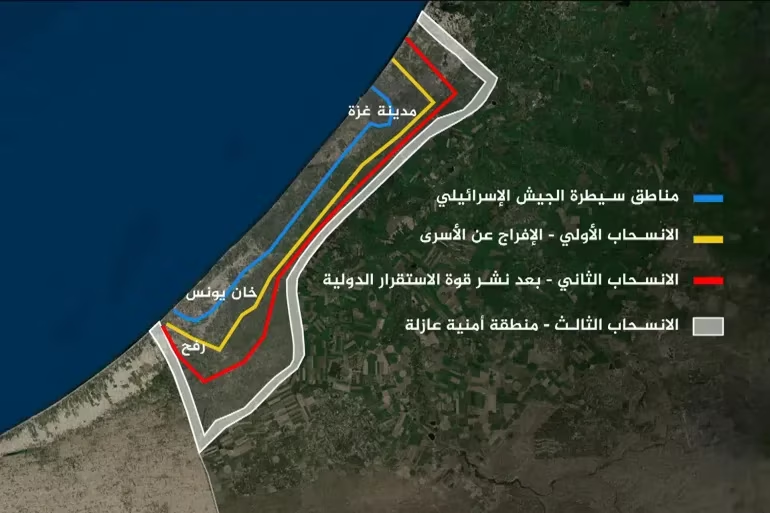







Developments in the Gaza war ceasefire agreement reveal a widening gap between what was stipulated in its provisions and what was actually implemented on the ground, as Israel transitioned from treating the agreement as a framework for de-escalation to a tool for re-establishing new field and security realities. According to the text of the agreement, Israeli forces were supposed to withdraw to the "Yellow Line" inside the Gaza Strip, as a sole line of contact where military operations would cease and the battlefield would be frozen behind it, in preparation for a subsequent phase including prisoner exchange, partial opening of crossings, gradual return of civilians, and the start of reconstruction.
However, this withdrawal was practically coupled with Israel maintaining control over more than half of the Strip's area, and linking any subsequent withdrawals to the disarmament of the Palestinian resistance and long-term security arrangements. On the ground, Israel did not treat the Yellow Line as a fixed withdrawal line, but rather as a starting point for redrawing the boundaries and depth of its control within Gaza, according to a report broadcast by sources.
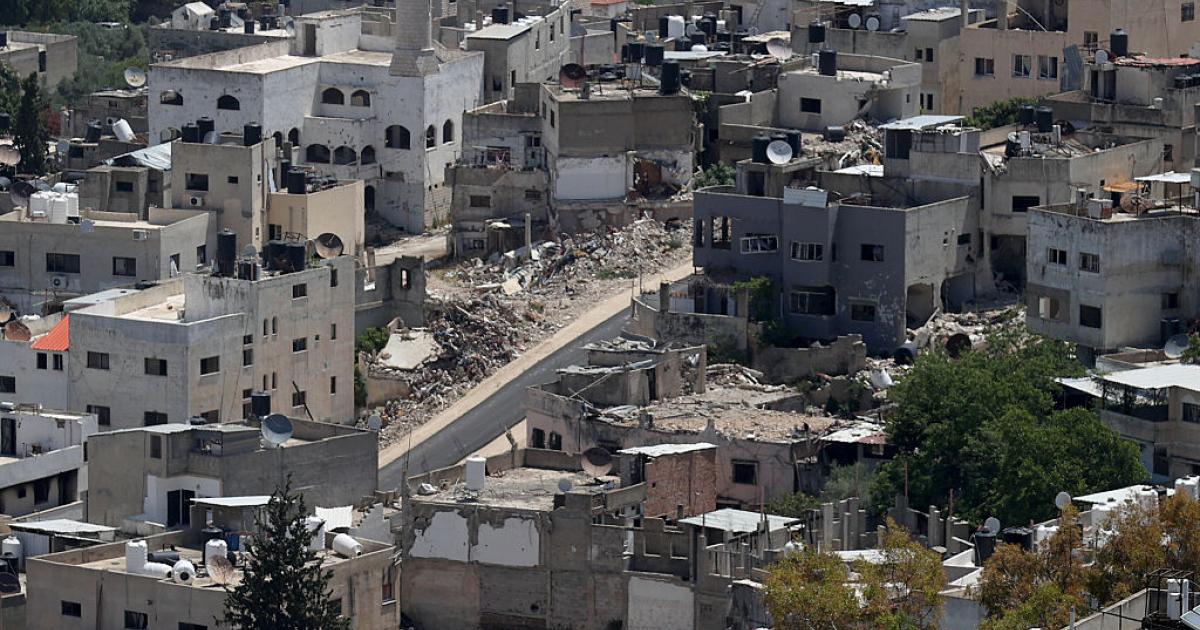
Journalistic investigations supported by satellite images showed that concrete barriers were first placed at the location of the line as drawn on maps, before being pushed hundreds of meters inward into residential neighborhoods, after the destruction of dozens of buildings located between the lines. Demolition operations did not stop with the entry into force of the truce, but continued to clear entire areas around army positions and turn them into security belts devoid of residents.
During what was called a "ceasefire," hundreds of Palestinians were killed by direct Israeli fire, either by soldiers' bullets, drones, or shelling of inhabited homes, under the pretext of targeting wanted individuals or dealing with field threats. UN reports confirm that these operations occurred within areas supposedly covered by the truce, and that the Yellow Line itself was not fixed.
Regarding the crossings, the Rafah crossing emerged as a stark example of the gap between text and application. While the first phase spoke of a gradual opening of the crossing for humanitarian cases and movement of individuals, the crossing remained subject to strict restrictions, which transformed it from a supposed humanitarian lifeline into an additional pressure tool. In parallel, the occupation army announced during the truce the destruction of tunnels 4 kilometers long inside the Strip, considering that this was done "according to the agreement" because it was behind the Yellow Line.
With the announced transition to the second phase, the Yellow Line is no longer presented as a temporary ceasefire line, but is being established as a new security boundary, similar to what is known as the "Blue Line," which the United Nations drew in 2000 to confirm Israel's withdrawal from southern Lebanon. The Chief of Staff of the occupation army, Eyal Zamir, explicitly described the "Yellow Line" as a "new border line," and a line of defense and attack at the same time, in reference to a military approach that treats it as a permanent demarcation, not a transitional phase.
This reality leaves Israel in control of about 53% of the Gaza Strip, awaiting progress in the disarmament process, the deployment of an international force, and the completion of "technocratic governance" arrangements and reconstruction according to the American vision. In contrast, the United Nations affirmed its rejection of any change in the Strip's borders, considering that turning the Yellow Line into a new boundary contradicts the letter and spirit of the ceasefire agreement.
Israel did not treat the Yellow Line as a fixed withdrawal line, but rather as a starting point for redrawing the boundaries and depth of its control within Gaza.
Share your opinion
Agreement without withdrawal.. Israel redefines the Gaza war ceasefire on the ground