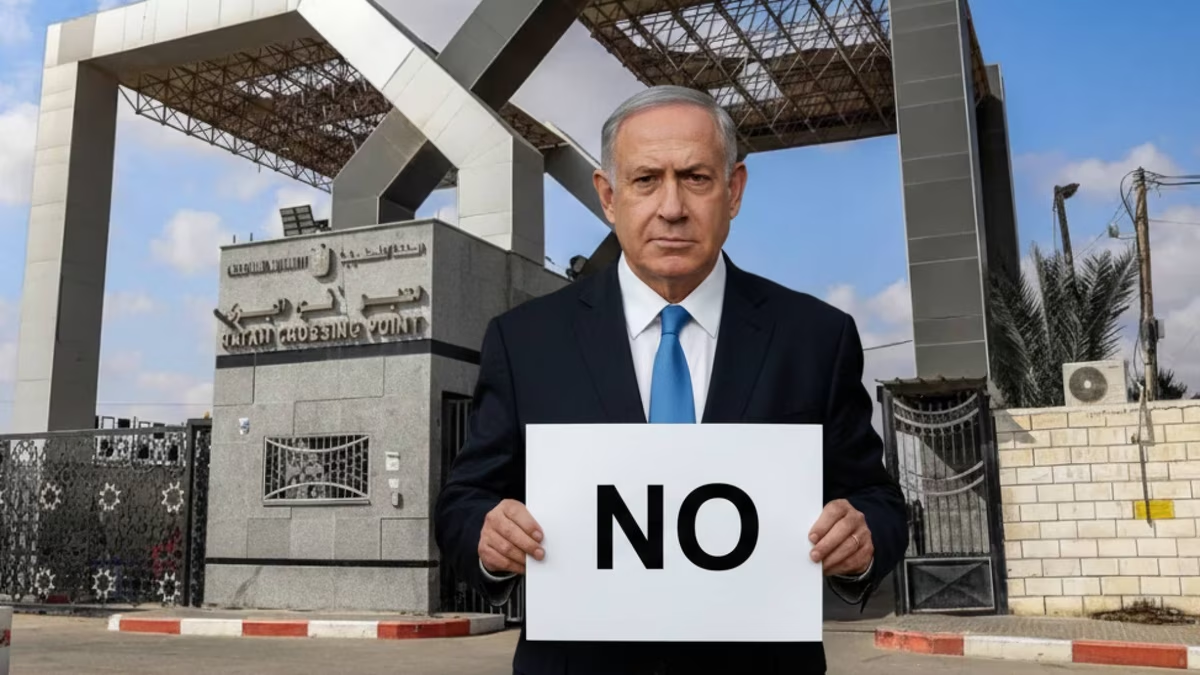







Hebrew media revealed Tel Aviv's intentions to establish a "new crossing" near Rafah. All eyes are on Sunday's crucial meeting of the mini-"Israeli" cabinet (the Cabinet) to discuss the implementation of the second phase of the war cessation agreement in Gaza, particularly the thorny issue of the Rafah crossing, amidst sharp disagreements between Prime Minister Benjamin Netanyahu and US envoys.
The "Yedioth Ahronoth" newspaper revealed that a meeting held yesterday between Netanyahu and US President's envoys, Jared Kushner and Steve Witkoff, showed differing positions. Netanyahu linked the reopening of the crossing to two conditions:
Retrieval of the last body of a detainee (which reports indicate is a policeman).
Disarming the Hamas movement.
In contrast, the newspaper quoted an "Israeli" official saying that Kushner and Witkoff "objected to linking the opening of the crossing to the return of the body," considering the opening of the crossing a "necessary civilian step" to support de-escalation and achieve long-term peace.
In a related context, Hebrew media revealed Tel Aviv's intentions to establish a "new crossing" near Rafah, to be an alternative to the traditional crossing, according to a mechanism that ensures indirect Israeli security dominance:
Field administration: The European Union will manage the Palestinian side in coordination with Palestinian intelligence.
Security control: Passenger lists (entry and exit) will pass to the "Israeli" internal security service (Shin Bet) for final review.
Inspection procedures: Include thorough X-ray and fingerprint checks and identity verification under direct "Israeli" supervision.
This "Israeli" intransigence comes despite statements by Ali Shaath, head of the Palestinian National Committee for Gaza Administration, last Thursday in Davos, that "the crossing will open within days."
It is worth noting that "Israel" did not adhere to the provisions of the first phase (which began on October 10) regarding the opening of transportation, violating the truce, which led to the martyrdom of 477 Palestinians during the ceasefire period.
The second phase of the agreement, which the Cabinet is discussing today, includes fundamental steps, most notably:
Additional withdrawal of the "Israeli" army.
Deployment of an international force in the Strip.
Beginning of reconstruction: which the United Nations estimates will cost about $70 billion, after a two-year war that left more than 71,000 martyrs and destroyed 90% of the infrastructure.
Netanyahu linked the reopening of the crossing to two conditions: the retrieval of the last body of a detainee and the disarming of the Hamas movement.
Share your opinion
Alternative Crossing Plan.. US Pressure to Open Rafah and Netanyahu Demands the "Last Body"