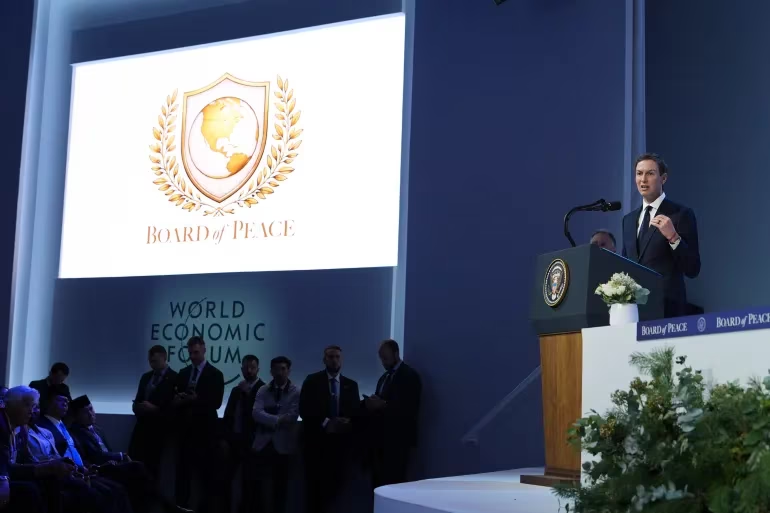







The advisor to the US President and member of the recently formed Peace Council, Jared Kushner, presented a comprehensive plan for the Gaza Strip, carrying a new vision for its reconstruction and transformation into a massive investment destination. The map, unveiled at the Davos Economic Forum on the sidelines of the announcement of the World Peace Council, includes a detailed division of urban, agricultural, industrial, and tourist areas, in addition to a seaport, airport, and border crossing, promoting a bright future for the Strip, which is suffering from the effects of a devastating war. While Kushner said that "New Gaza can be a source of hope and a destination in itself," many political, economic, and security caveats and concerns come to the fore when scrutinizing the details of the anticipated map.
Political and Security In a reading of Kushner's plan, Rami Khreis, director of the Palestinian Center for Policy Studies, believes that it cannot be dealt with as a humanitarian vision or a rescue project for a devastated sector, as much as it is an integrated political project disguised under an economic and urban cover, which explains the extent of Palestinian doubts and reservations towards it at all political and technical levels.
Sources confirmed that the political dimension of the plan is its true essence, as the reconstruction file in it is linked to a set of clear conditions that reflect what he described as deliberate political engineering, stressing that this plan cannot be separated from the general context of American policy, which has historically been biased towards Israel and aligned with it in many fundamental issues.
He gave an example of this by stipulating the disarmament of the Palestinian resistance in the areas where reconstruction is supposed to begin, considering that this does not represent a technical detail, but rather reveals the nature of the American approach that uses reconstruction as a tool for political pressure and blackmail, and an economic and security measure at the same time.
Khreis added that linking the Palestinian's right to rebuild his home to the dismantling of the resistance's structure makes the chances of the plan's success dependent on a highly complex path, especially given the resistance's understanding that the issue of disarmament is not a technical demand, but a project aimed at ending its deterrent capability.
In his opinion, the economic vision aligns with what Israeli Prime Minister Benjamin Netanyahu, wanted by the International Criminal Court for war crimes in Gaza, proposed in previous periods about economic peace based on improving living conditions without addressing the roots of the conflict and the rights of the Palestinian people.
He stressed that Kushner's plan represents an attempt to reformulate the political and field reality in the Gaza Strip through policies of domestication, subjugation, and control, and to fragment the Palestinian issue into economic and administrative files, while marginalizing fundamental issues such as the right of return for refugees, prisoners, and national sovereignty.
Gaza map as presented by Kushner's plan for the reconstruction of the Strip at the Davos Forum (from Al-Hakeem's account on X) The map presented by Kushner shows the gradual construction of Gaza in stages from south to north, as if the plan seeks to impose a new reality, area by area according to a specific timetable.
The plan divides the Strip into a coast designated for towers and tourism, and eastern industrial border areas that form what is closer to a buffer zone devoid of inhabitants. It also includes a port, airport, railway, and a triple crossing in the far southeast of Rafah, adjacent to the border, making its operation dependent on Israel.
Khreis explained that looking at the maps presented by Kushner raises serious questions about the nature of this plan, considering that what is being proposed reflects precise control engineering, and presents a model of a fragmented city with separate areas and projects that seem designed to serve political and security considerations more than being an actual response to the needs of the residents. Moreover, the arrangement of the reconstruction phases, which begins with certain areas over others, suggests that the process will be linked to the degree of political and security compliance, not to the extent of destruction or humanitarian priorities.
He warned that the absence of urban connectivity between the proposed cities opens the door to questions about whether this engineering aims to facilitate security control and population management, rather than achieving integrated urban development.
The plan, according to Khreis, raises crucial questions related to land ownership, the entities that will manage the projects, who determines the priorities of reconstruction, in addition to the fate of camps and refugees, and whether the residents of Gaza will become mere appendages to the requirements of investors and Israeli security considerations.
Messages and Risks From his side, political writer and analyst Wissam Afifa said that Kushner's new plan sends three central messages about the future of Gaza: the priority of economics over politics, where the discourse accompanying the vision presents material prosperity as an alternative to political rights and national sovereignty. Demographic engineering based on gathering people in functionally planned residential blocks makes society under constant surveillance and management. Conditional reconstruction, as international reports indicate that reconstruction is linked to new security and administrative arrangements, making the building of every stone dependent on a political concession.
It is worth noting that US President Donald Trump praised Kushner's plan immediately after its presentation at the Davos Forum, and emphasized the importance of the Strip's geographical location, saying, "Gaza is a beautiful piece of land on the sea, and it can become a great place if invested in properly. Those who live in difficult conditions now can enjoy a much better life, and everything starts with the location."
Economically, expert Ahmed Abu Qamar believes that Kushner's project in its current form faces fundamental and complex challenges, starting from political conditions and not ending with the ambiguity of funding and the fate of the population and human resources.
He explained that the most dangerous aspect surrounding it is that it is conditional on disarmament and the transformation of Gaza into a massive investment project, which makes it entirely exposed to high risks and places it in a state of uncertainty.
He added that the announced funding remains vague and unclear, both in terms of its sources and mechanisms of injection, which raises the level of economic risk and serious questions about its feasibility.
He pointed out that one of the most prominent questions that the plan did not answer is the fate of Gaza's residents, asking, "How will they be dealt with? How will those affected be compensated? And where will they live during the implementation phases?"
Abu Qamar stressed that ignoring these questions opens the door to dangerous scenarios, foremost among them forced or voluntary displacement, which the far-right Israeli government had previously announced on previous occasions.
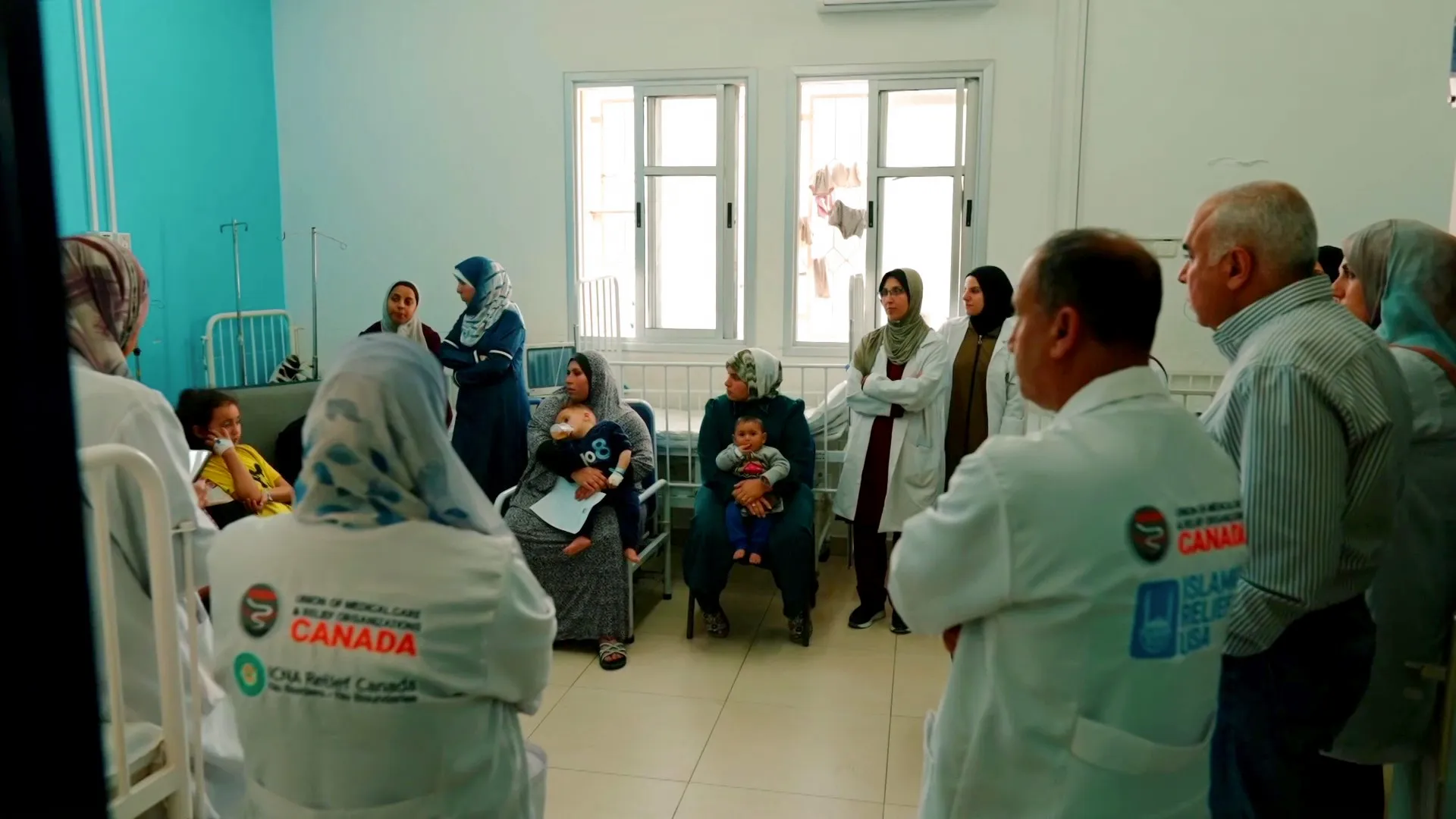
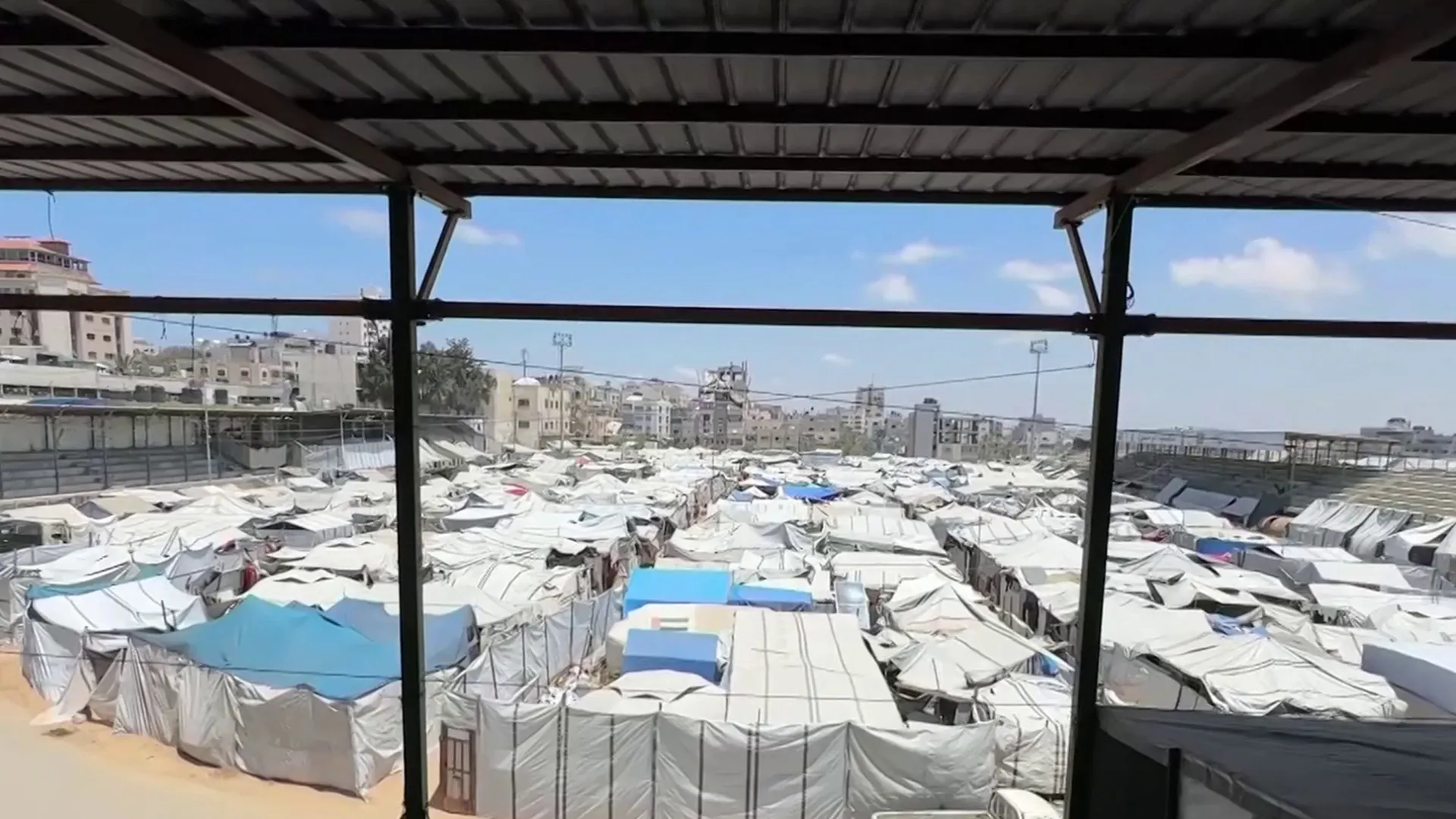
While plans for the reconstruction of Gaza are being put forward, its residents are still living the effects of the devastating war.
Challenges Many challenges stand before the New Gaza project, most notably the challenge of transforming it into a massive investment project in light of this high population density, and within a limited geographical area, a structural challenge that could lead to the failure of the project if it is not addressed with a comprehensive humanitarian and economic vision.
Expert Abu Qamar pointed to several unannounced scenarios circulating in reports regarding housing and property issues, including the inclusion of landowners as small investors, or the purchase of their properties, or the redistribution of properties, which reflects the state of ambiguity and lack of clarity in the future vision.
Regarding human resources, he confirmed that the project did not clearly address the identity of the workforce that will participate in the reconstruction, even though the Gaza Strip has significant human potential, an unemployment rate exceeding 80%, in addition to skilled labor that was historically in demand in regional markets.
He considered the gas file off the coast of Gaza to be one of the unannounced economic motives behind the increasing international interest in the Strip, and the ambitions in it are old and renewed, but the stalled exploration operations are due to the complex political and security conditions.
It is worth noting that two gas fields off the coast of Gaza were discovered more than 25 years ago without actual investment. Their estimated reserve volume is about 28 billion cubic meters, a quantity sufficient to cover the energy needs of the Strip and the West Bank for 15 years according to current consumption rates.
It cannot be dealt with as a humanitarian vision or a rescue project for a devastated sector, as much as it is an integrated political project disguised under an economic and urban cover.

Share your opinion
Does the "New Gaza" project meet the needs of the Strip's residents?